Download to read offline

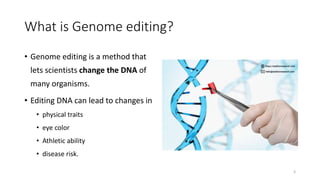









Genome editing is a method to change an organism's DNA. It can treat genetic diseases like cancer and sickle cell anemia. The CRISPR-Cas9 system is currently the most widely used genome editing method due to its simplicity, accuracy, and low cost. While research using CRISPR in animals has provided insights, human trials are limited due to safety and ethical concerns. Germline editing could affect future generations but is not allowed in many countries. Somatic gene therapy has shown promise for treating diseases but risks of off-target edits remain. International discussions are ongoing around the responsible use of this developing technology.


