Social and Personality
Development
Definitions
Personality – Term used to describe patterns in
the way children and adults to people and
objects in the world around them.
Psychoanalytic Perspectives – Theories of
human development.
Self Concept – The individual belief about
himself or herself.
Psychoanalytic
Perspectives in
InfancyFreud
Oral stage, from birth
to age 2, infants derive
satisfaction through the
mouth. Freud believed
that the weaning
process should not be
frustrated nor
overgratified.
Consequences on
either could lead to nail
biting and swearing.
Erikson
Erickson believed that
nursing and weaning
are important but that
they are only one
aspect of the overall
social environment. He
believed that talking
and comforting him are
just as important. Trust
vs. mistrust.
Psychoanalytic
Perspectives in
Early ChildhoodFreud
Anal Stage
Sense of independence.
Toilet training is important
focus of independence.
Inappropriate response to
toilet training can lead to
negative results in the
future.
Erickson
Autonomy versus shame
and doubt.
New physical skills lead to
demand for more choices.
Child learns self care
Self Concept For Infancy
and
Early Childhood
Subjective Self – An infants ability to
know that he or she are different from other
people. They are also aware that they can act
on the environment.
Canadian Researchers show that children have
the ability to differentiate objects before object
permanence occurs. They are also able to
differentiate images of themselves and other
infants.
Psychoanalytic
Perspectives in
Middle ChildhoodFreud
Latency stage
The libido interests are
suppressed.
The development of
ego and superego to
the period.
Time of exploration.
Erickson
Intimacy versus
inferiority
Competence
Cultural skills and
norms including school
skills, failure to master
these leads to sense of
inferiority.
Self Concept in Middle
Childhood
Psychological self
Knowing ones
enduring psychological
characteristics.
Basic information
about unique
characteristics and self
judgments of
competency.
Valued self
Self esteem
May understand ones
own personal traits and
Self efficacy but fail to
see his or her value
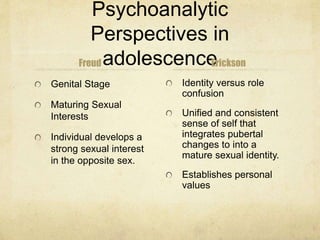
Psychoanalytic
Perspectives in
adolescenceFreud
Genital Stage
Maturing Sexual
Interests
Individual develops a
strong sexual interest
in the opposite sex.
Erickson
Identity versus role
confusion
Unified and consistent
sense of self that
integrates pubertal
changes to into a
mature sexual identity.
Establishes personal
values
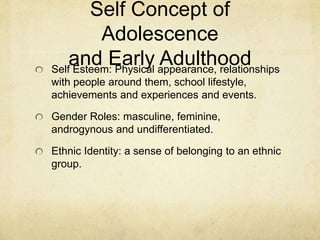
Self Concept of
Adolescence
and Early AdulthoodSelf Esteem: Physical appearance, relationships
with people around them, school lifestyle,
achievements and experiences and events.
Gender Roles: masculine, feminine,
androgynous and undifferentiated.
Ethnic Identity: a sense of belonging to an ethnic
group.
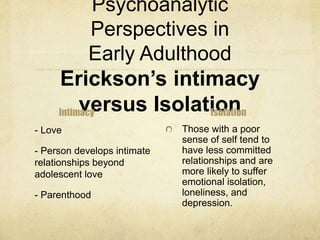
Psychoanalytic
Perspectives in
Early Adulthood
Erickson’s intimacy
versus IsolationIntimacy
- Love
- Person develops intimate
relationships beyond
adolescent love
- Parenthood
Isolation
Those with a poor
sense of self tend to
have less committed
relationships and are
more likely to suffer
emotional isolation,
loneliness, and
depression.
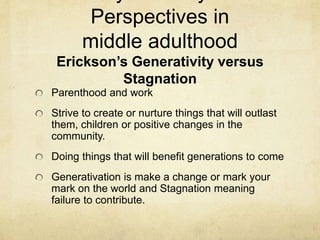
Perspectives in
middle adulthood
Erickson’s Generativity versus
Stagnation
Parenthood and work
Strive to create or nurture things that will outlast
them, children or positive changes in the
community.
Doing things that will benefit generations to come
Generativation is make a change or mark your
mark on the world and Stagnation meaning
failure to contribute.
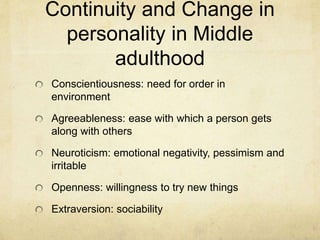
Continuity and Change in
personality in Middle
adulthood
Conscientiousness: need for order in
environment
Agreeableness: ease with which a person gets
along with others
Neuroticism: emotional negativity, pessimism and
irritable
Openness: willingness to try new things
Extraversion: sociability
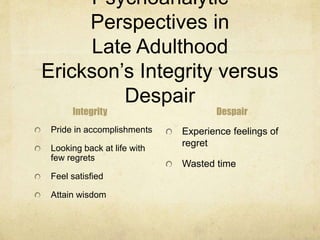
Psychoanalytic
Perspectives in
Late Adulthood
Erickson’s Integrity versus
Despair
Integrity
Pride in accomplishments
Looking back at life with
few regrets
Feel satisfied
Attain wisdom
Despair
Experience feelings of
regret
Wasted time
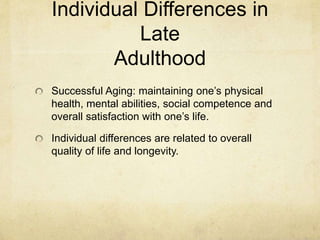
Individual Differences in
Late
Adulthood
Successful Aging: maintaining one’s physical
health, mental abilities, social competence and
overall satisfaction with one’s life.
Individual differences are related to overall
quality of life and longevity.
Interest in topic
The reason I chose this topic was to learn more
about what I eventually want to do. I am
interested in psychology as a whole, but I hope
to become a research psychologist in the future. I
want to focus on personality disorders which is
why learning about how our personalities are
developed was intriguing.
References
Boyd, D. (2015). Lifespan Development (Vol. 5th). Toronto:
Pearson.
Cherry, K. (2012, January 15). Freud's Stages of
Psychosexual Development. Retrieved January 15, 2015,
from About Education:
http://psychology.about.com/od/theoriesofpersonality/ss/ps
ychosexualdev.htm#step6
Meyer, J. (2002, january 15). Five advances in how
Psychologists see personality. Retrieved january 15, 2015,
from Psychology today:
https://www.psychologytoday.com/blog/the-personality-
analyst/201404/five-advances-in-how-psychologists-view-
personality

Human development - Social and Personality Development

  • 1.
  • 2.
    Definitions Personality – Termused to describe patterns in the way children and adults to people and objects in the world around them. Psychoanalytic Perspectives – Theories of human development. Self Concept – The individual belief about himself or herself.
  • 3.
    Psychoanalytic Perspectives in InfancyFreud Oral stage,from birth to age 2, infants derive satisfaction through the mouth. Freud believed that the weaning process should not be frustrated nor overgratified. Consequences on either could lead to nail biting and swearing. Erikson Erickson believed that nursing and weaning are important but that they are only one aspect of the overall social environment. He believed that talking and comforting him are just as important. Trust vs. mistrust.
  • 4.
    Psychoanalytic Perspectives in Early ChildhoodFreud AnalStage Sense of independence. Toilet training is important focus of independence. Inappropriate response to toilet training can lead to negative results in the future. Erickson Autonomy versus shame and doubt. New physical skills lead to demand for more choices. Child learns self care
  • 5.
    Self Concept ForInfancy and Early Childhood Subjective Self – An infants ability to know that he or she are different from other people. They are also aware that they can act on the environment. Canadian Researchers show that children have the ability to differentiate objects before object permanence occurs. They are also able to differentiate images of themselves and other infants.
  • 6.
    Psychoanalytic Perspectives in Middle ChildhoodFreud Latencystage The libido interests are suppressed. The development of ego and superego to the period. Time of exploration. Erickson Intimacy versus inferiority Competence Cultural skills and norms including school skills, failure to master these leads to sense of inferiority.
  • 7.
    Self Concept inMiddle Childhood Psychological self Knowing ones enduring psychological characteristics. Basic information about unique characteristics and self judgments of competency. Valued self Self esteem May understand ones own personal traits and Self efficacy but fail to see his or her value
  • 8.
    Psychoanalytic Perspectives in adolescenceFreud Genital Stage MaturingSexual Interests Individual develops a strong sexual interest in the opposite sex. Erickson Identity versus role confusion Unified and consistent sense of self that integrates pubertal changes to into a mature sexual identity. Establishes personal values
  • 9.
    Self Concept of Adolescence andEarly AdulthoodSelf Esteem: Physical appearance, relationships with people around them, school lifestyle, achievements and experiences and events. Gender Roles: masculine, feminine, androgynous and undifferentiated. Ethnic Identity: a sense of belonging to an ethnic group.
  • 10.
    Psychoanalytic Perspectives in Early Adulthood Erickson’sintimacy versus IsolationIntimacy - Love - Person develops intimate relationships beyond adolescent love - Parenthood Isolation Those with a poor sense of self tend to have less committed relationships and are more likely to suffer emotional isolation, loneliness, and depression.
  • 11.
    Perspectives in middle adulthood Erickson’sGenerativity versus Stagnation Parenthood and work Strive to create or nurture things that will outlast them, children or positive changes in the community. Doing things that will benefit generations to come Generativation is make a change or mark your mark on the world and Stagnation meaning failure to contribute.
  • 12.
    Continuity and Changein personality in Middle adulthood Conscientiousness: need for order in environment Agreeableness: ease with which a person gets along with others Neuroticism: emotional negativity, pessimism and irritable Openness: willingness to try new things Extraversion: sociability
  • 13.
    Psychoanalytic Perspectives in Late Adulthood Erickson’sIntegrity versus Despair Integrity Pride in accomplishments Looking back at life with few regrets Feel satisfied Attain wisdom Despair Experience feelings of regret Wasted time
  • 14.
    Individual Differences in Late Adulthood SuccessfulAging: maintaining one’s physical health, mental abilities, social competence and overall satisfaction with one’s life. Individual differences are related to overall quality of life and longevity.
  • 15.
    Interest in topic Thereason I chose this topic was to learn more about what I eventually want to do. I am interested in psychology as a whole, but I hope to become a research psychologist in the future. I want to focus on personality disorders which is why learning about how our personalities are developed was intriguing.
  • 16.
    References Boyd, D. (2015).Lifespan Development (Vol. 5th). Toronto: Pearson. Cherry, K. (2012, January 15). Freud's Stages of Psychosexual Development. Retrieved January 15, 2015, from About Education: http://psychology.about.com/od/theoriesofpersonality/ss/ps ychosexualdev.htm#step6 Meyer, J. (2002, january 15). Five advances in how Psychologists see personality. Retrieved january 15, 2015, from Psychology today: https://www.psychologytoday.com/blog/the-personality- analyst/201404/five-advances-in-how-psychologists-view- personality