Inspection, reporting and
assessment of reported defects and
damages
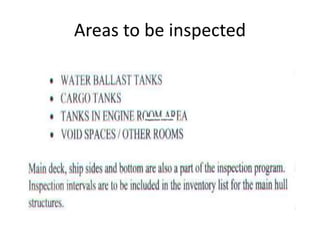
Areas to be inspected
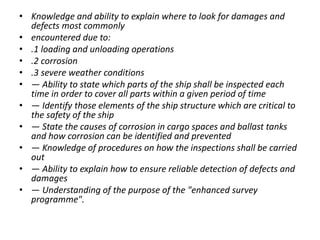
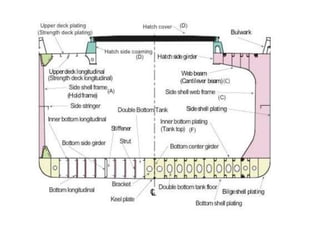
• Knowledge and ability to explain where to look for damages and
defects most commonly
• encountered due to:
• .1 loading and unloading operations
• .2 corrosion
• .3 severe weather conditions
• — Ability to state which parts of the ship shall be inspected each
time in order to cover all parts within a given period of time
• — Identify those elements of the ship structure which are critical to
the safety of the ship
• — State the causes of corrosion in cargo spaces and ballast tanks
and how corrosion can be identified and prevented
• — Knowledge of procedures on how the inspections shall be carried
out
• — Ability to explain how to ensure reliable detection of defects and
damages
• — Understanding of the purpose of the "enhanced survey
programme".
Inspections
Preparation
• Interpret previous reports on identified problems (including notices
with reference to sister vessels)
• Determine critical areas to inspect
• Explain the factors that increase the quality and efficiency of
inspections
• Give examples of reasons for cleaning prior to inspections
• Give examples of substances that can be removed by cleaning
• Assess if area to be inspected is cleaned to an acceptable standards
• Determine means of access, considering location and criticality of
area
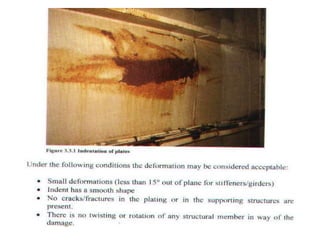
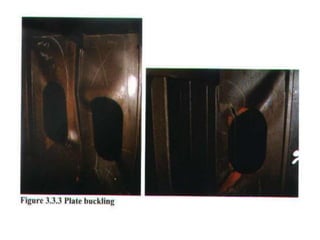
Buckling & Indents
• Describe the difference between the loads causing buckling
and indents
• Identify which defect is most critical, buckling or indents
• Identify the most critical areas for buckling (general and
ship type specific)
• Identify the most critical areas for indents (general and ship
type specific)
• Give examples of events causing indents
• Recognise buckling
• Recognise indents
• Distinguish between buckling and indents I
Fatigue cracks
• Describe how a fatigue crack occurs
• Identify what loads are causing fatigue damages
• Recognise fatigue cracks
• Explain the importance of expanding the inspection if a
fatigue crack is found in one detail of many
• Describe the growth rate of a fatigue crack
• Identify the most critical areas for fatigue cracks
(general and ship type specific)
• Identify possible consequences (on structure) due to
fatigue cracks
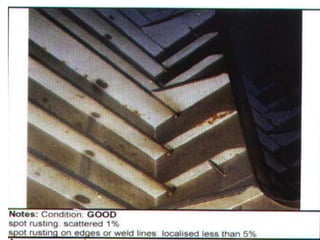
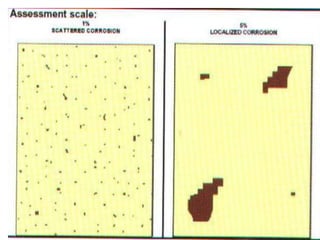
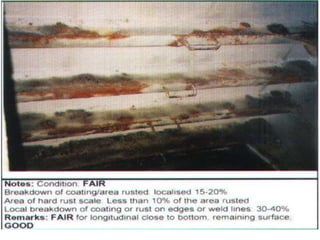
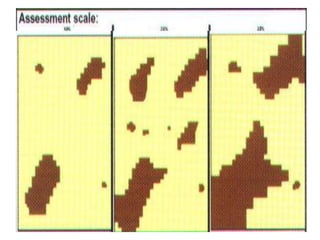
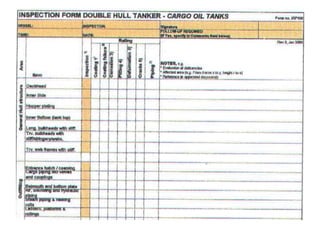
Coating and Corrosion
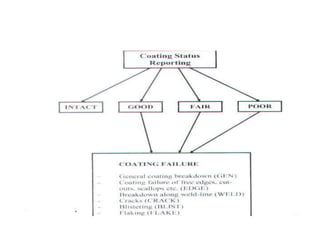
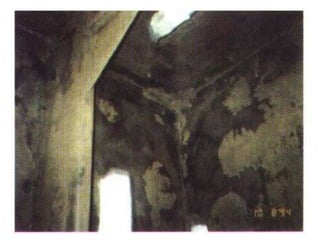
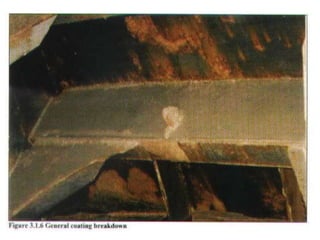
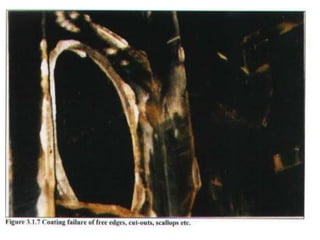
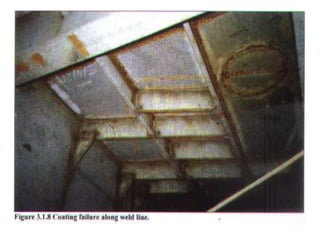
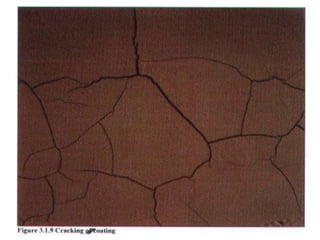
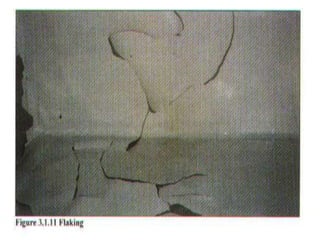
• Name types of coating break down
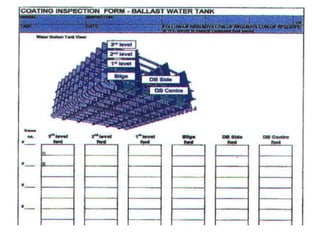
• Categorise what to look for during coating inspections
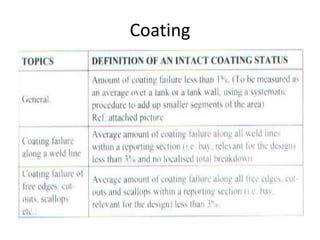
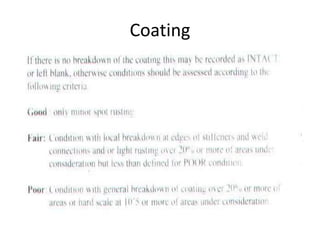
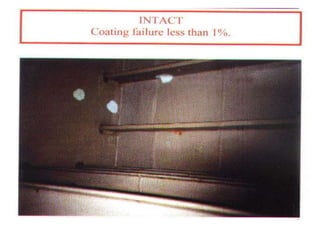
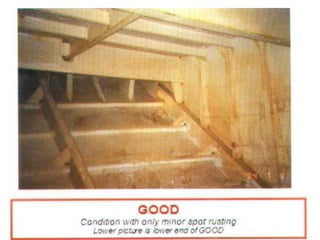
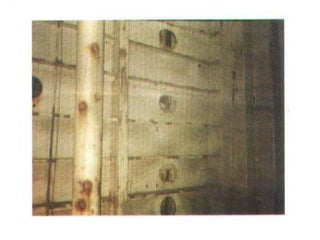
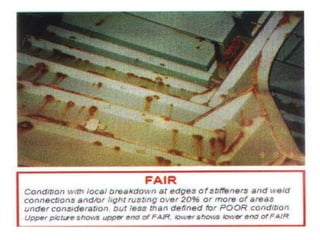
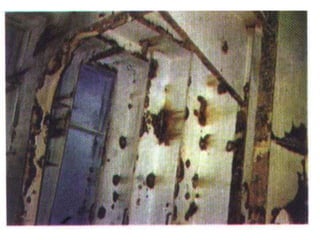
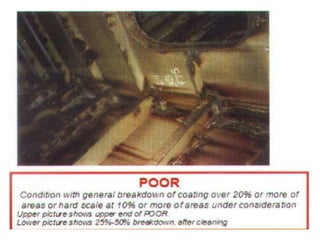
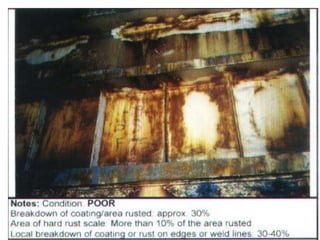
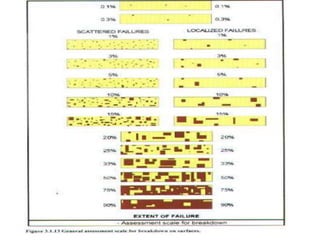
• Assess coating breakdown and its severity (different grades – IACS)
• Explain triggers for corrosion (rate, factors)
• Identify possible consequences of corrosion
• Identify the most critical areas for corrosion (general and ship type
specific)
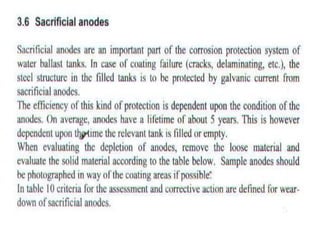
• Distinguish between the two principles for corrosion protection
(coating and anodes)
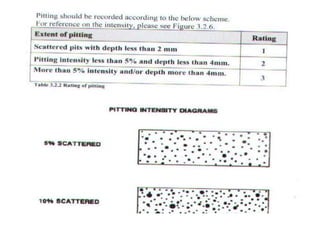
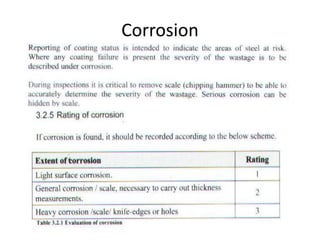
• Identify the characteristics of the following types of corrosion:
general corrosion, local corrosion, pitting corrosion, edge
• corrosion, grooving and galvanic corrosion
Documenting- Reporting
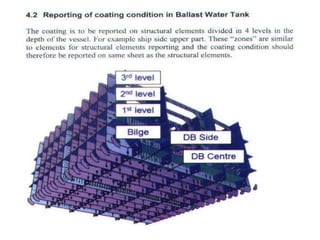
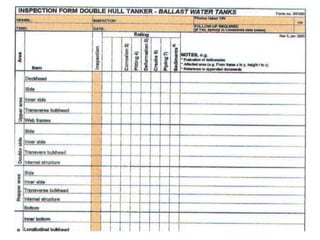
• Describe the elements for which the condition should be reported
• List different types of structural defects
• List items to be reported for cracks
• List important factors when reporting fatigue cracks
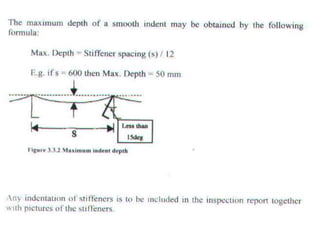
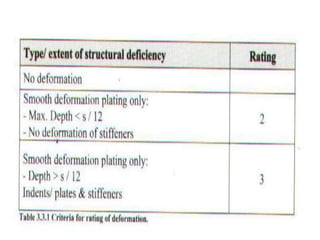
• List items to be reported for indents
• List items to be reported for buckles
• List items to be reported for corrosion
• Explain the importance of reporting exact observations
• Give examples of what the report will be used for (maintenance planning, court
cases, fleet and vessel condition monitoring,specification of repairs)
• Explain why pictures should be taken close-up as well as from some distance and
labelled
• Explain why copies of drawings should be used in reports
• Formulate identified problems encountered during an inspection, with reference
to hull damage, structural damages and coating / corrosion problems
• I
• 3.1.13 Explain the reporting route for identified problems
Coating
Coating
Corrosion
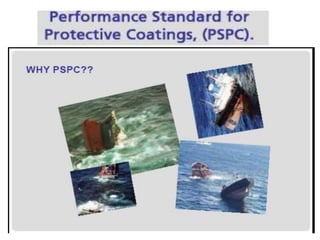
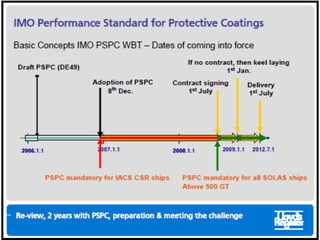
• The ballast tank Performance Standards for
Protective Coatings (PSPC) is now incorporated in
SOLAS and standards for oil tank coatings are
being finalized.
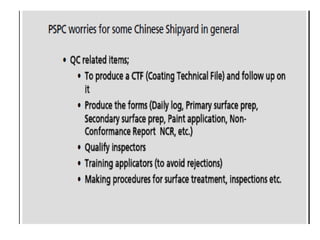
• These regulations also require the shipowners to
maintain a Coating Technical Files (CTF) to record
details of the coating system and its
maintenance.
• This file will be subject to regular audit by Class.
Hull inspection
Hull inspection
Hull inspection
Hull inspection
Hull inspection
Hull inspection
Hull inspection
Hull inspection
Hull inspection
Hull inspection

Hull inspection

  • 1.
    Inspection, reporting and assessmentof reported defects and damages
  • 2.
    Areas to beinspected
  • 6.
    • Knowledge andability to explain where to look for damages and defects most commonly • encountered due to: • .1 loading and unloading operations • .2 corrosion • .3 severe weather conditions • — Ability to state which parts of the ship shall be inspected each time in order to cover all parts within a given period of time • — Identify those elements of the ship structure which are critical to the safety of the ship • — State the causes of corrosion in cargo spaces and ballast tanks and how corrosion can be identified and prevented • — Knowledge of procedures on how the inspections shall be carried out • — Ability to explain how to ensure reliable detection of defects and damages • — Understanding of the purpose of the "enhanced survey programme".
  • 9.
    Inspections Preparation • Interpret previousreports on identified problems (including notices with reference to sister vessels) • Determine critical areas to inspect • Explain the factors that increase the quality and efficiency of inspections • Give examples of reasons for cleaning prior to inspections • Give examples of substances that can be removed by cleaning • Assess if area to be inspected is cleaned to an acceptable standards • Determine means of access, considering location and criticality of area
  • 10.
    Buckling & Indents •Describe the difference between the loads causing buckling and indents • Identify which defect is most critical, buckling or indents • Identify the most critical areas for buckling (general and ship type specific) • Identify the most critical areas for indents (general and ship type specific) • Give examples of events causing indents • Recognise buckling • Recognise indents • Distinguish between buckling and indents I
  • 11.
    Fatigue cracks • Describehow a fatigue crack occurs • Identify what loads are causing fatigue damages • Recognise fatigue cracks • Explain the importance of expanding the inspection if a fatigue crack is found in one detail of many • Describe the growth rate of a fatigue crack • Identify the most critical areas for fatigue cracks (general and ship type specific) • Identify possible consequences (on structure) due to fatigue cracks
  • 12.
    Coating and Corrosion •Name types of coating break down • Categorise what to look for during coating inspections • Assess coating breakdown and its severity (different grades – IACS) • Explain triggers for corrosion (rate, factors) • Identify possible consequences of corrosion • Identify the most critical areas for corrosion (general and ship type specific) • Distinguish between the two principles for corrosion protection (coating and anodes) • Identify the characteristics of the following types of corrosion: general corrosion, local corrosion, pitting corrosion, edge • corrosion, grooving and galvanic corrosion
  • 13.
    Documenting- Reporting • Describethe elements for which the condition should be reported • List different types of structural defects • List items to be reported for cracks • List important factors when reporting fatigue cracks • List items to be reported for indents • List items to be reported for buckles • List items to be reported for corrosion • Explain the importance of reporting exact observations • Give examples of what the report will be used for (maintenance planning, court cases, fleet and vessel condition monitoring,specification of repairs) • Explain why pictures should be taken close-up as well as from some distance and labelled • Explain why copies of drawings should be used in reports • Formulate identified problems encountered during an inspection, with reference to hull damage, structural damages and coating / corrosion problems • I • 3.1.13 Explain the reporting route for identified problems
  • 17.
  • 18.
  • 38.
  • 44.
    • The ballasttank Performance Standards for Protective Coatings (PSPC) is now incorporated in SOLAS and standards for oil tank coatings are being finalized. • These regulations also require the shipowners to maintain a Coating Technical Files (CTF) to record details of the coating system and its maintenance. • This file will be subject to regular audit by Class.

Editor's Notes

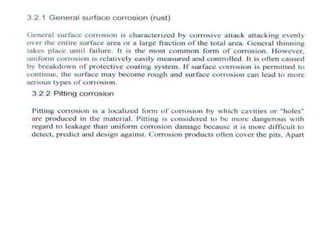
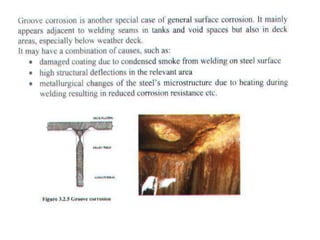
  • #39 General corrosion, Pitting corrosion, Grooving corrosion