
NEED - Non-domestic Energy Efficiency Data Framework   Hugh Neffendorf (Katalysis), Harry Bruhns (UCL), Andrew Harrison (LandInform), Bruce Yeoman (EGiC), Peter Wyatt (University of Reading), Tim Wood (Consulus)
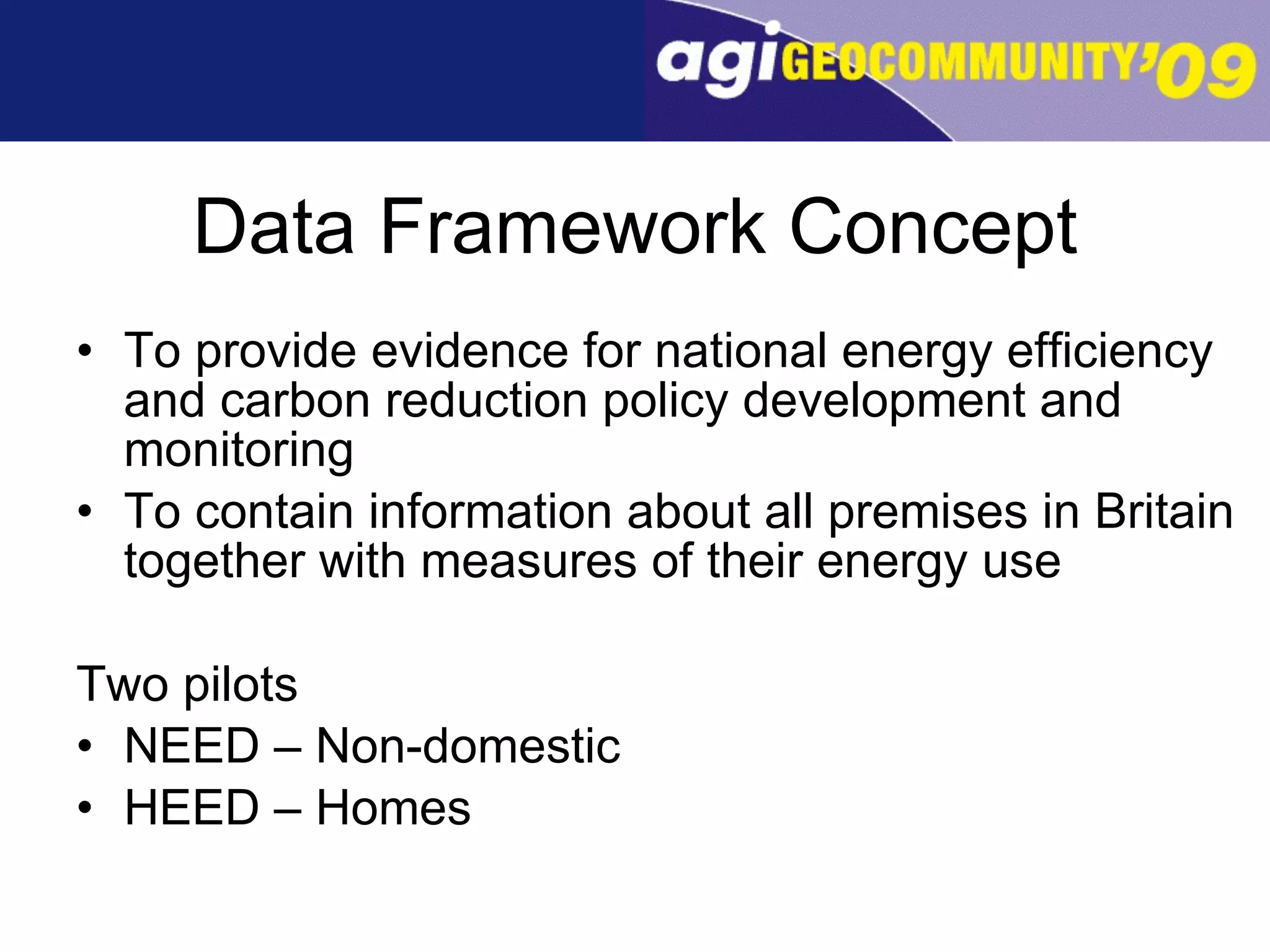
Data Framework Concept To provide evidence for national energy efficiency and carbon reduction policy development and monitoring To contain information about all premises in Britain together with measures of their energy use Two pilots NEED – Non-domestic HEED – Homes
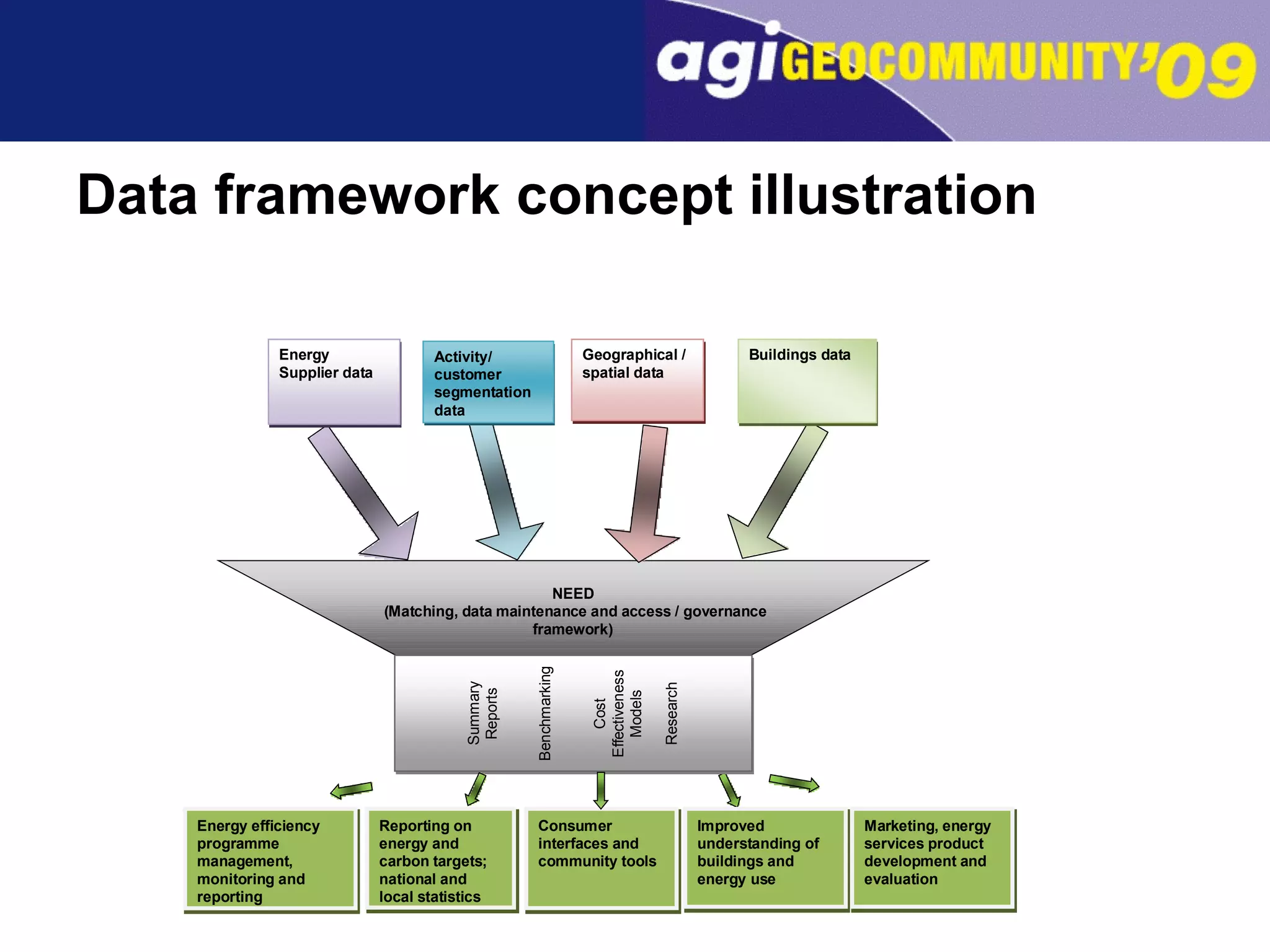
Data framework concept illustration
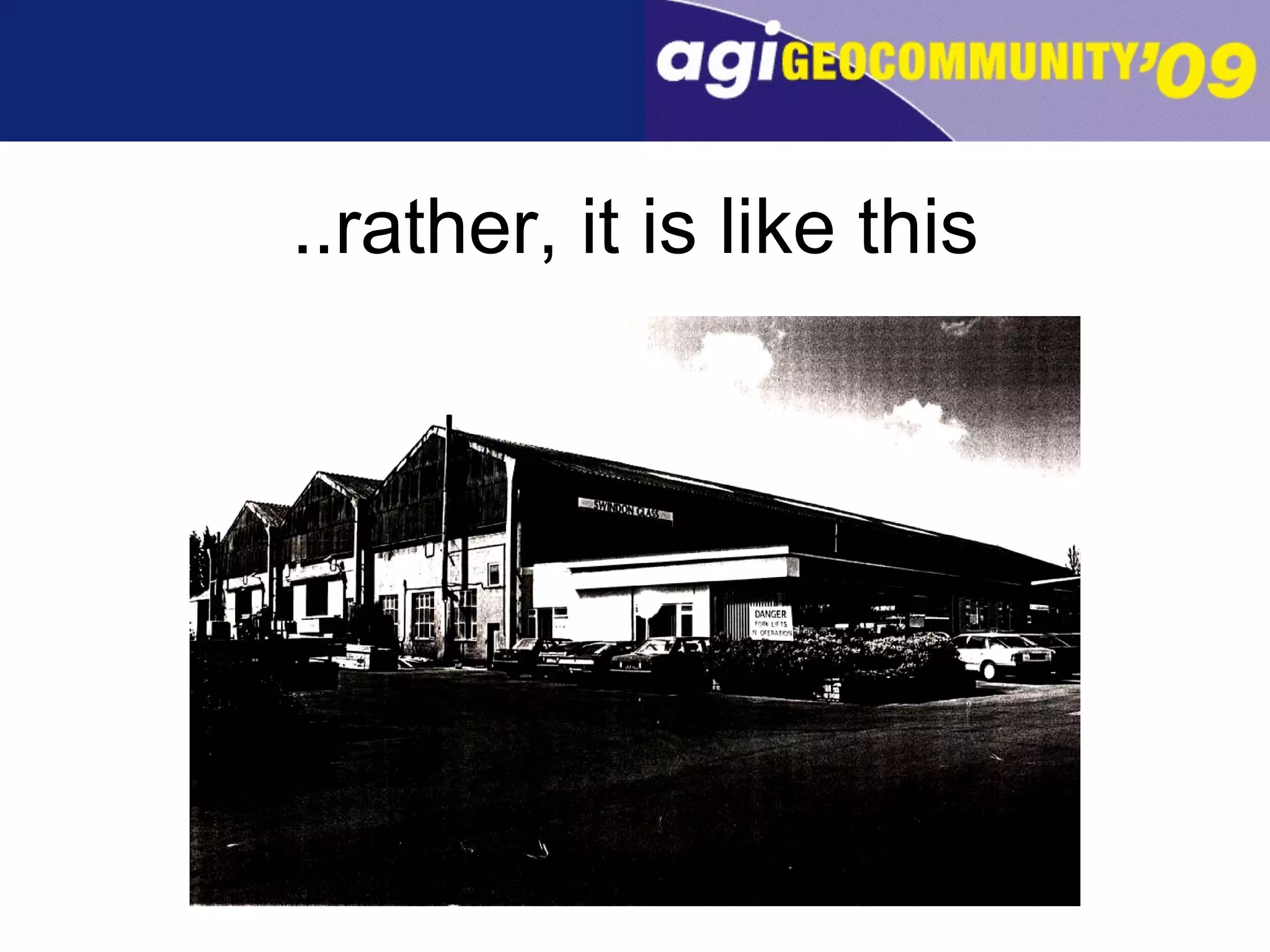
Much of the built stock is not like this..
..rather, it is like this
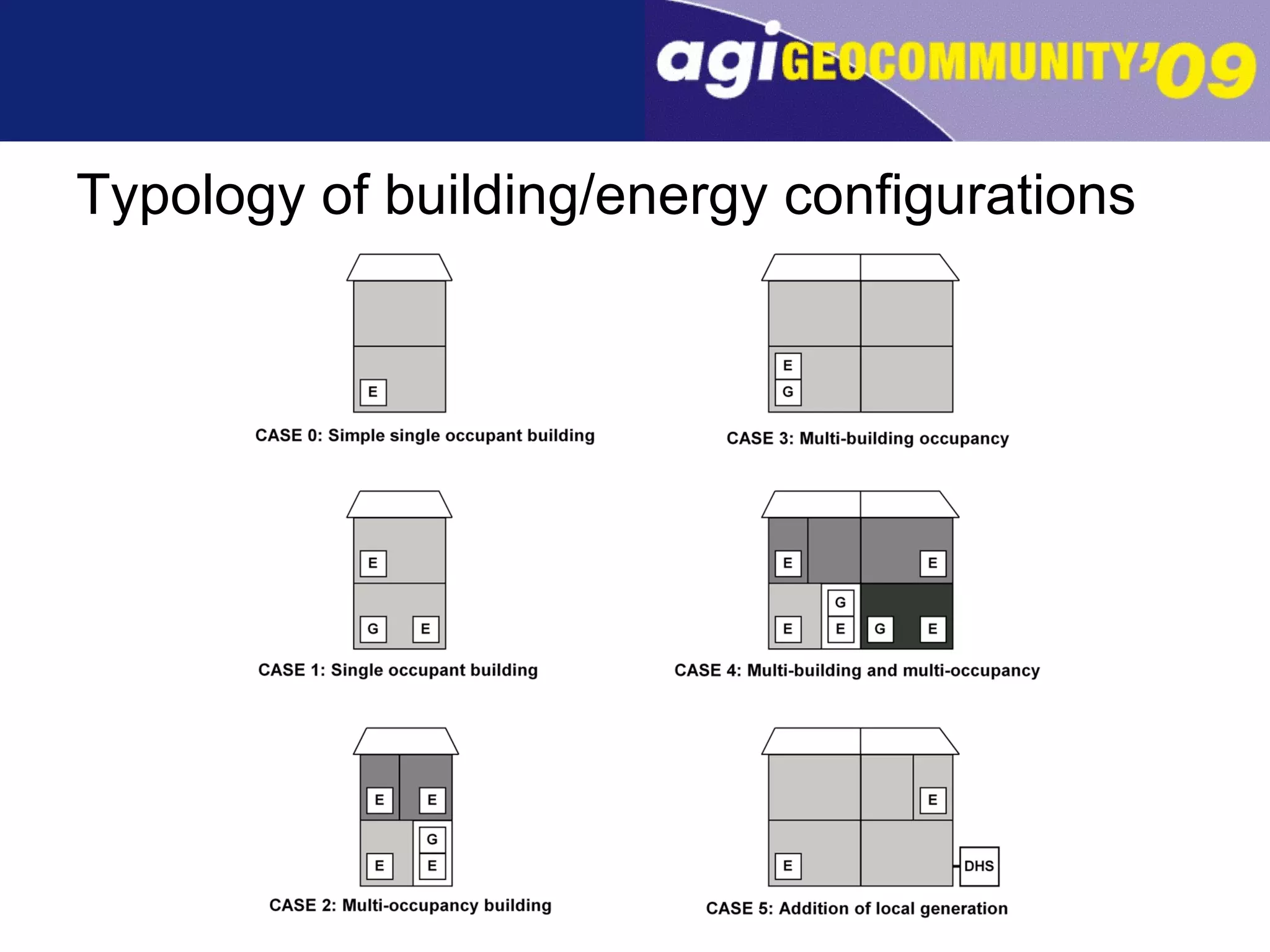
Typology of building/energy configurations
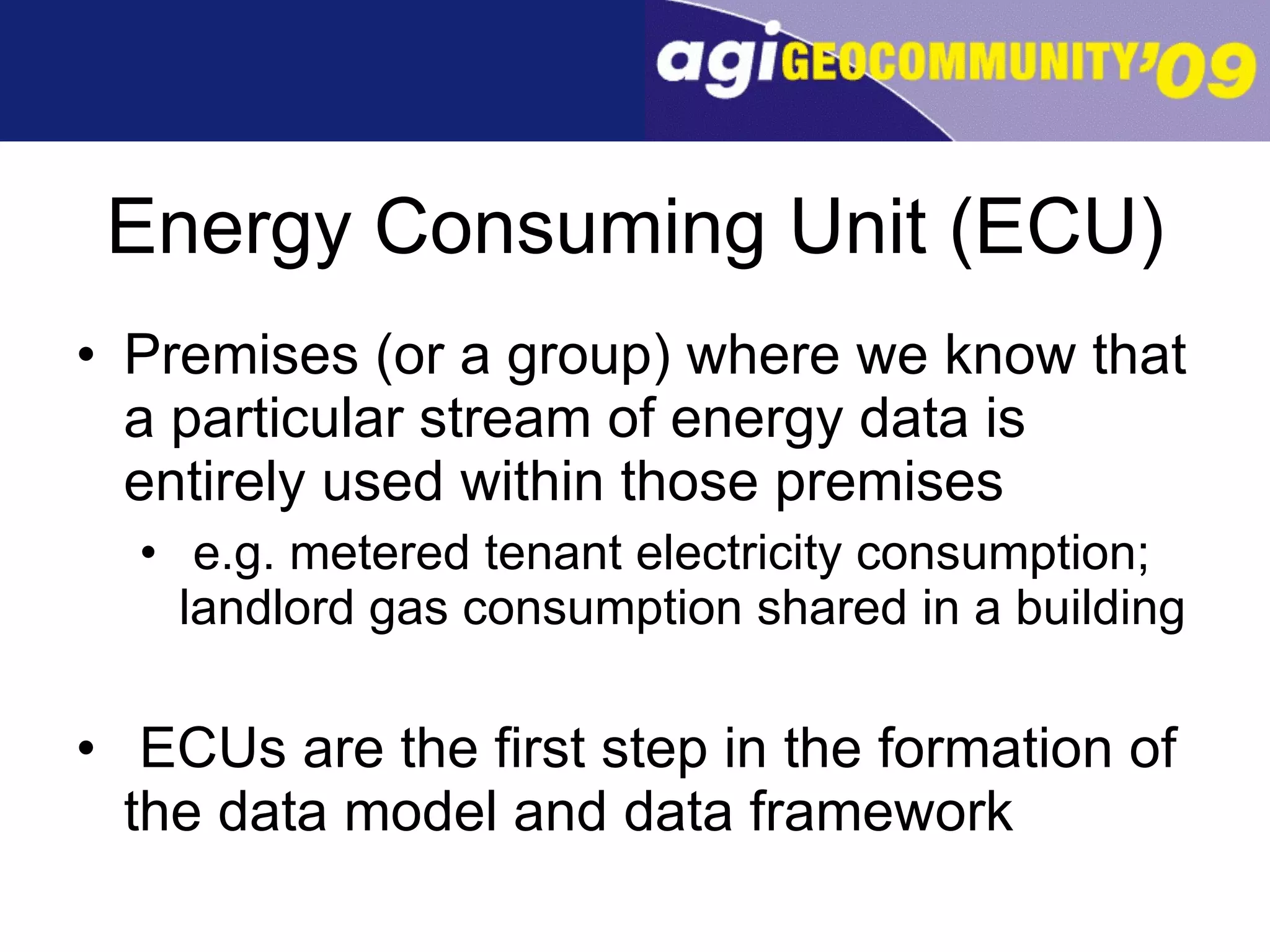
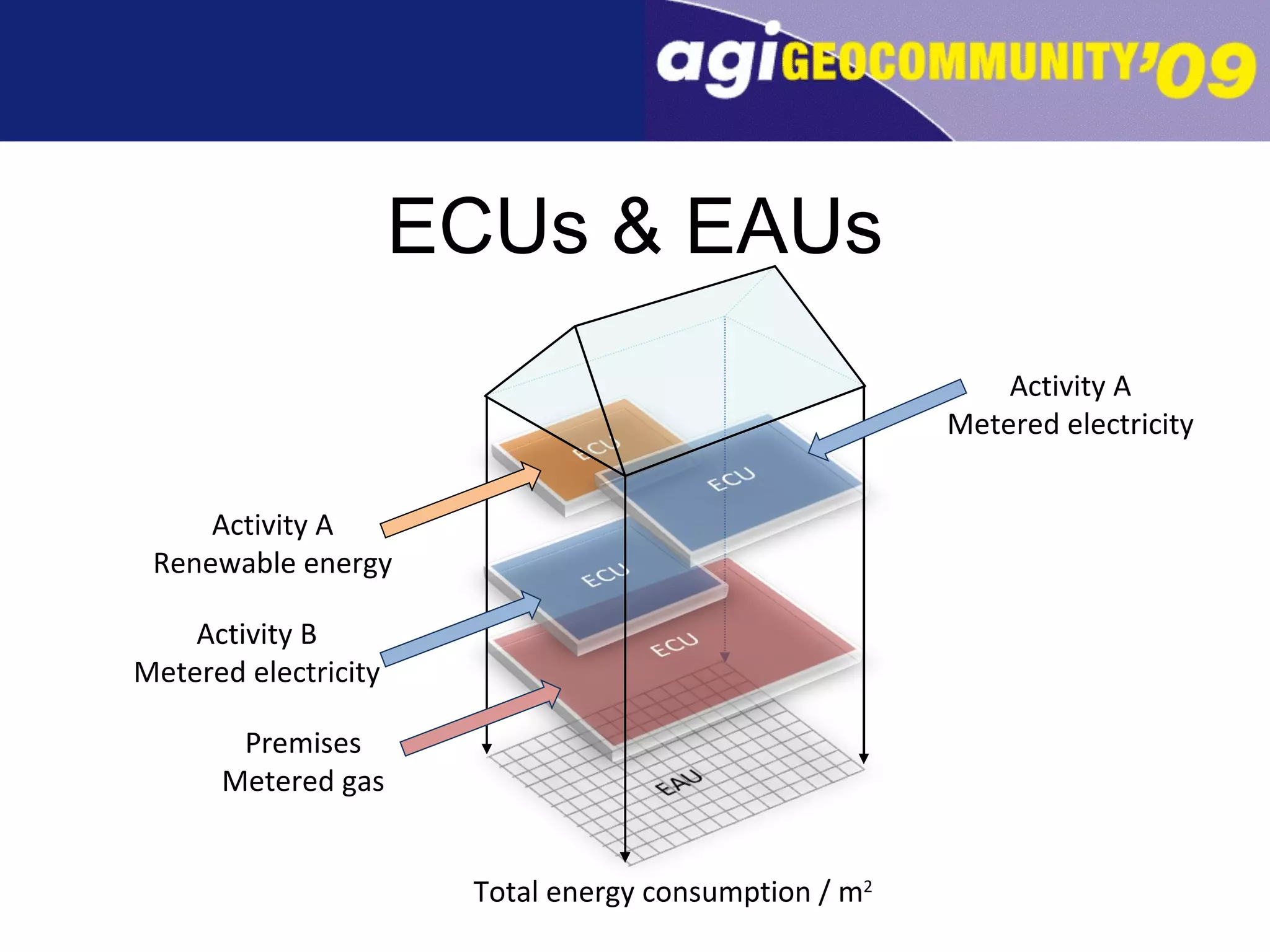
Energy Consuming Unit (ECU) Premises (or a group) where we know that a particular stream of energy data is entirely used within those premises e.g. metered tenant electricity consumption; landlord gas consumption shared in a building ECUs are the first step in the formation of the data model and data framework
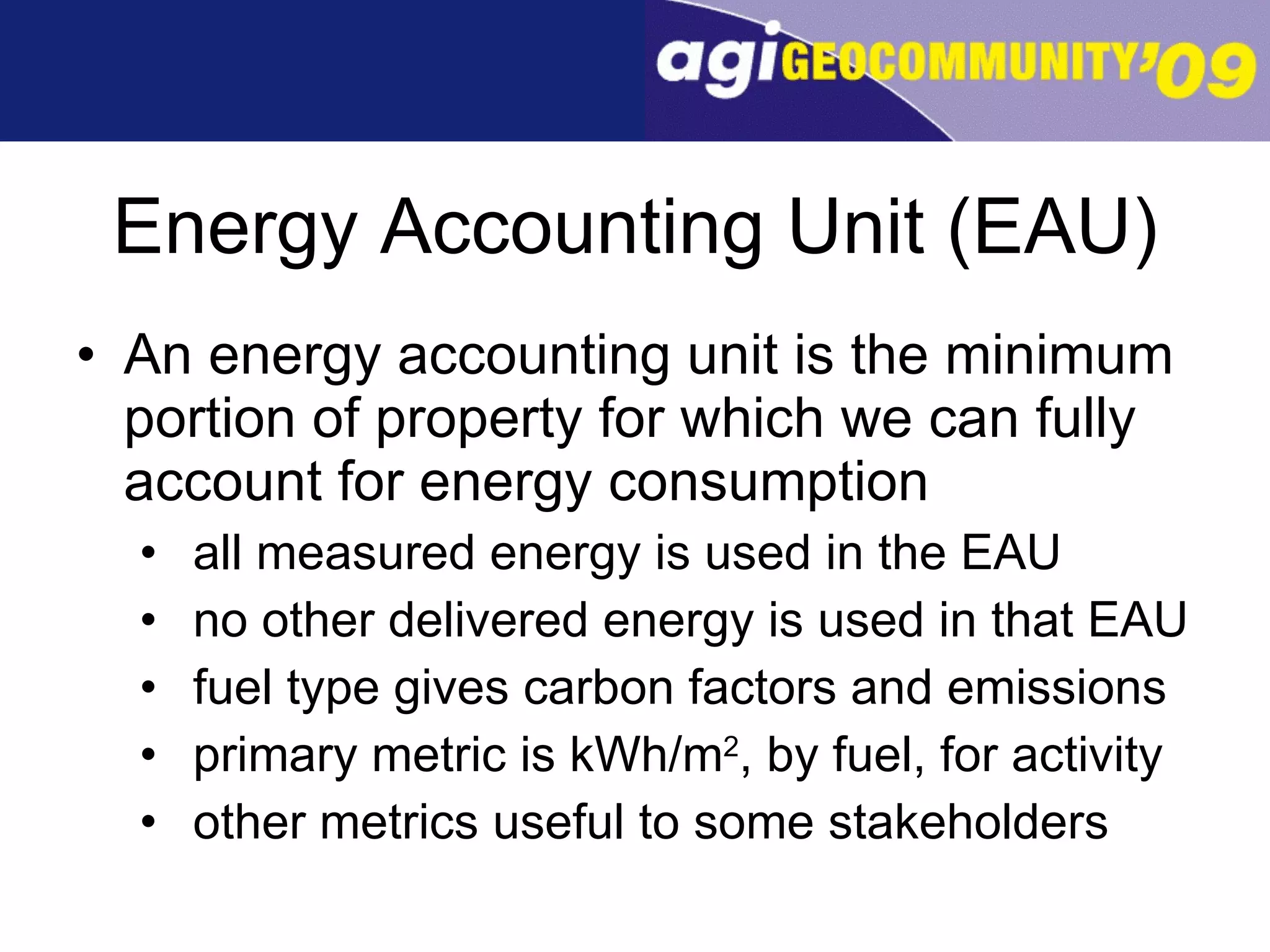
Energy Accounting Unit (EAU) An energy accounting unit is the minimum portion of property for which we can fully account for energy consumption  all measured energy is used in the EAU no other delivered energy is used in that EAU fuel type gives carbon factors and emissions primary metric is kWh/m 2 , by fuel, for activity other metrics useful to some stakeholders
ECUs & EAUs Activity A Renewable energy Activity A Metered electricity Premises Metered gas Total energy consumption / m 2 Activity B Metered electricity
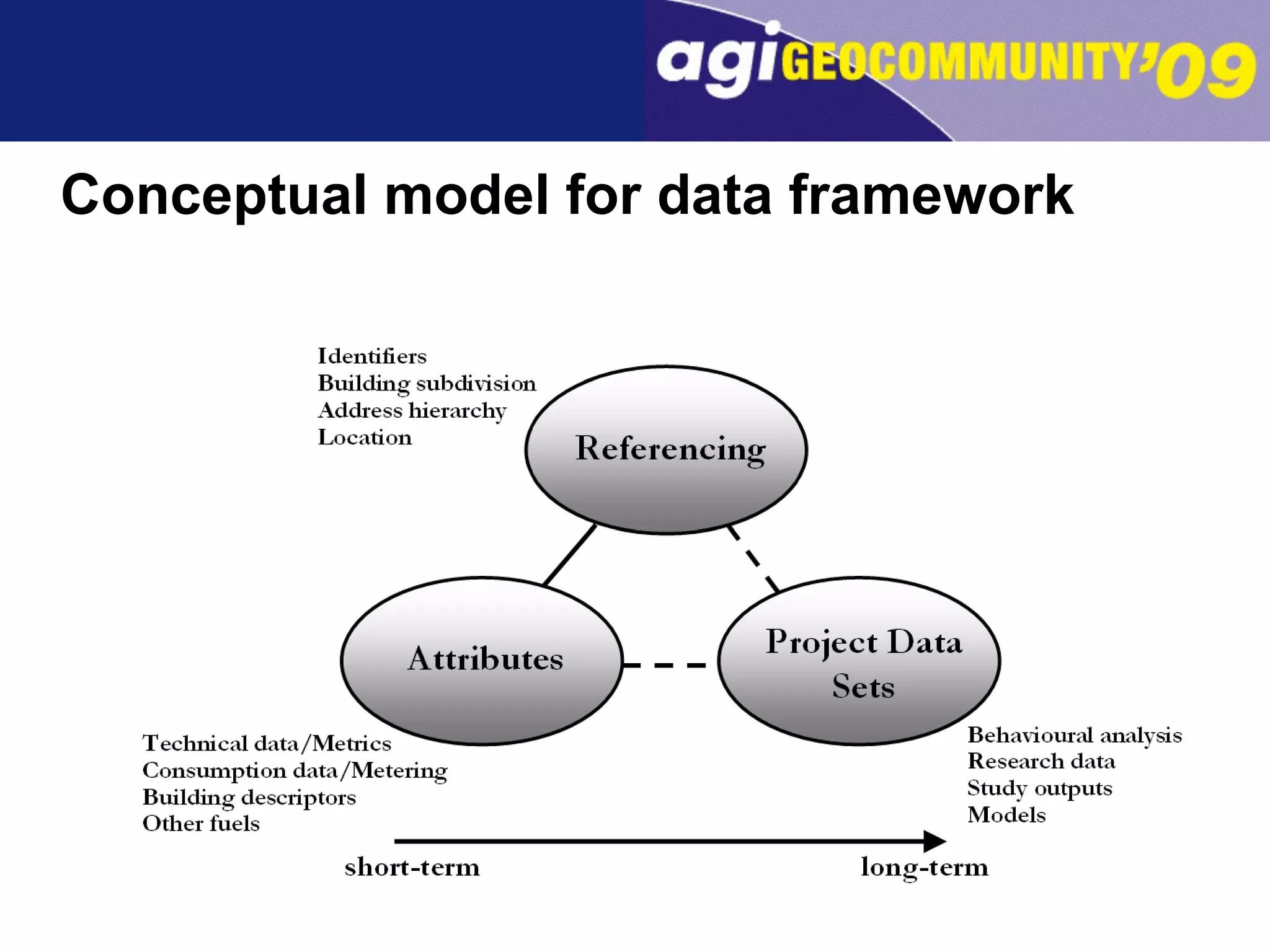
Conceptual model for data framework
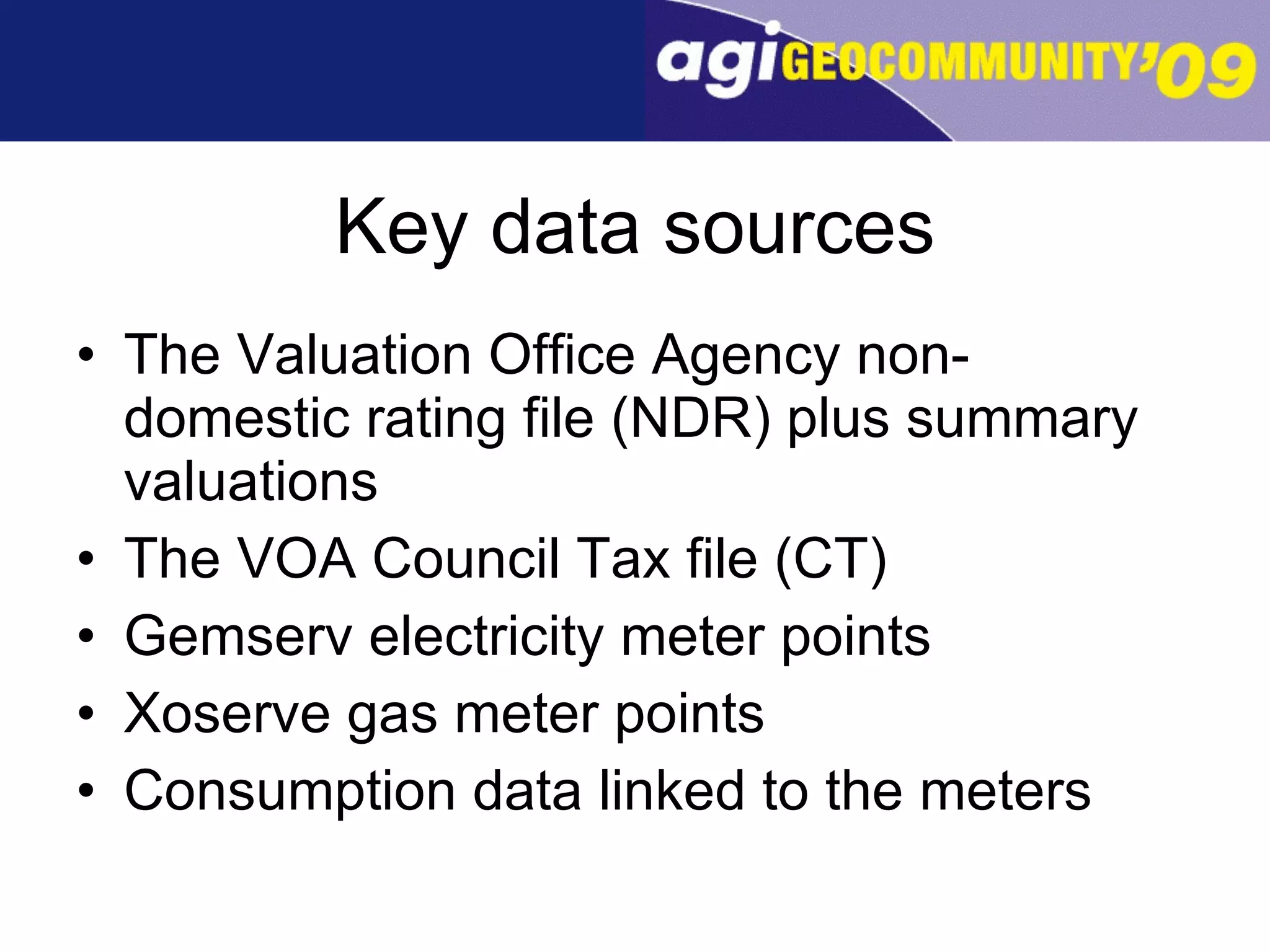
Key data sources The Valuation Office Agency non-domestic rating file (NDR) plus summary valuations The VOA Council Tax file (CT) Gemserv electricity meter points Xoserve gas meter points Consumption data linked to the meters
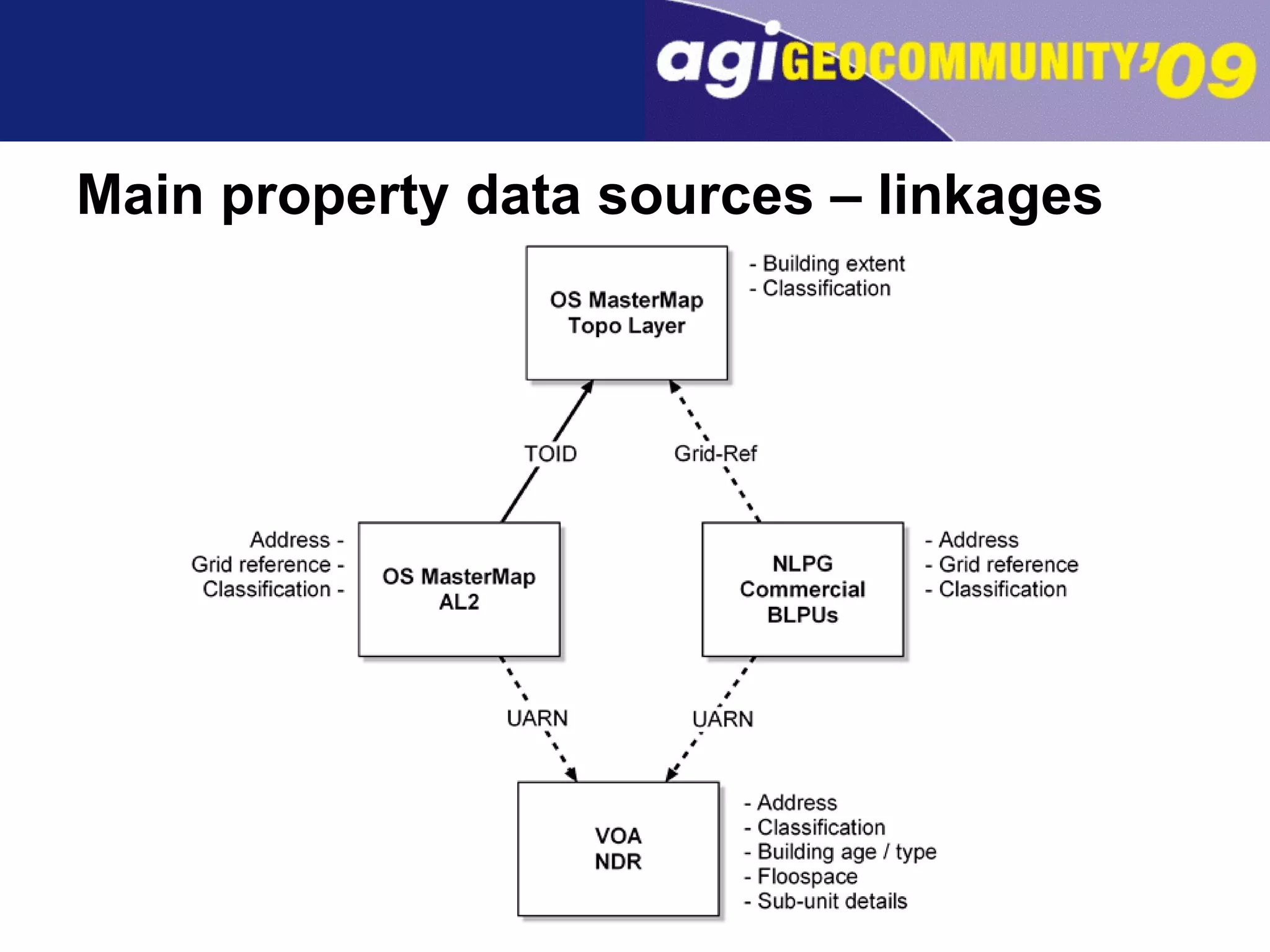
Main property data sources – linkages
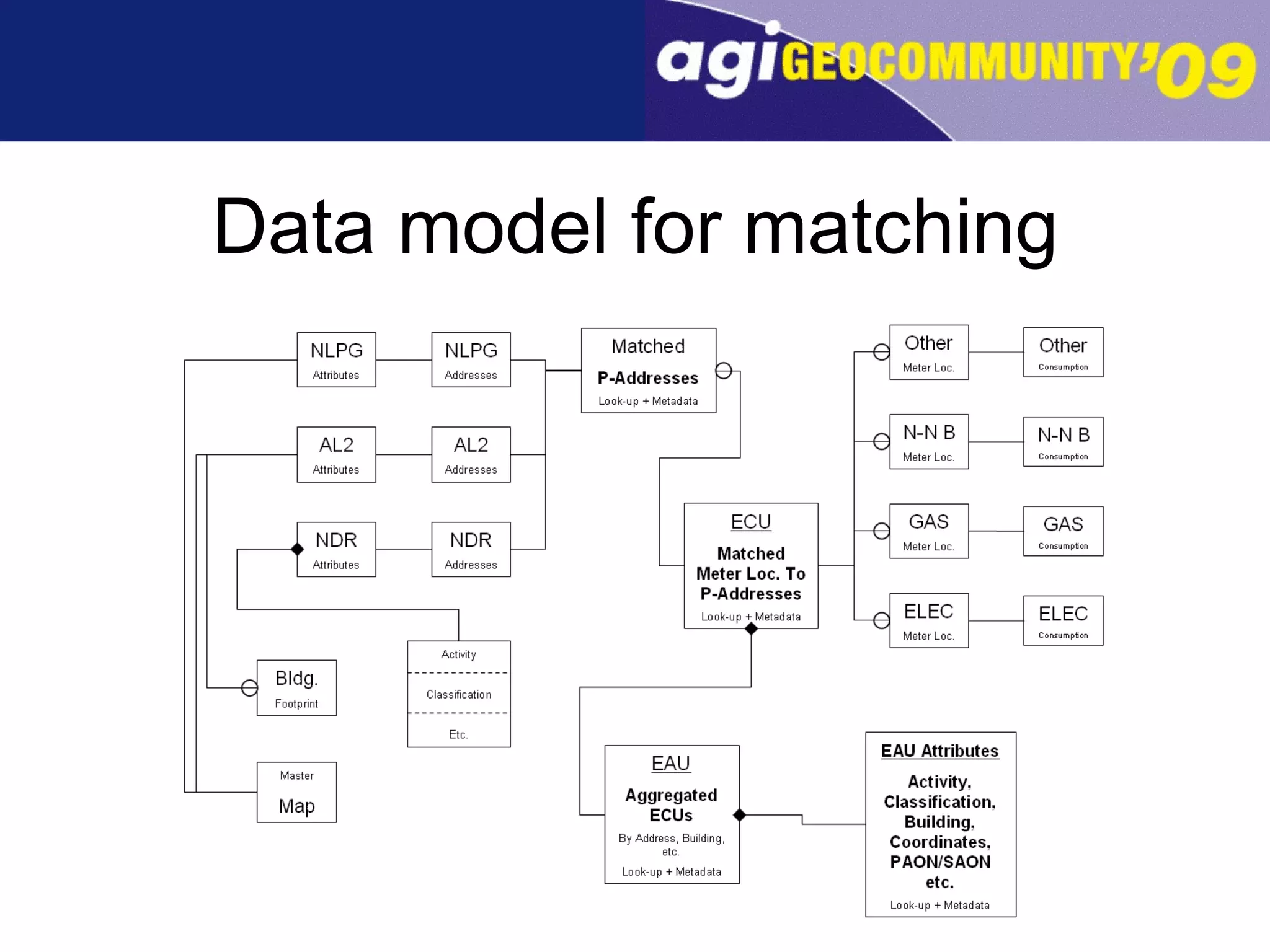
Data model for matching
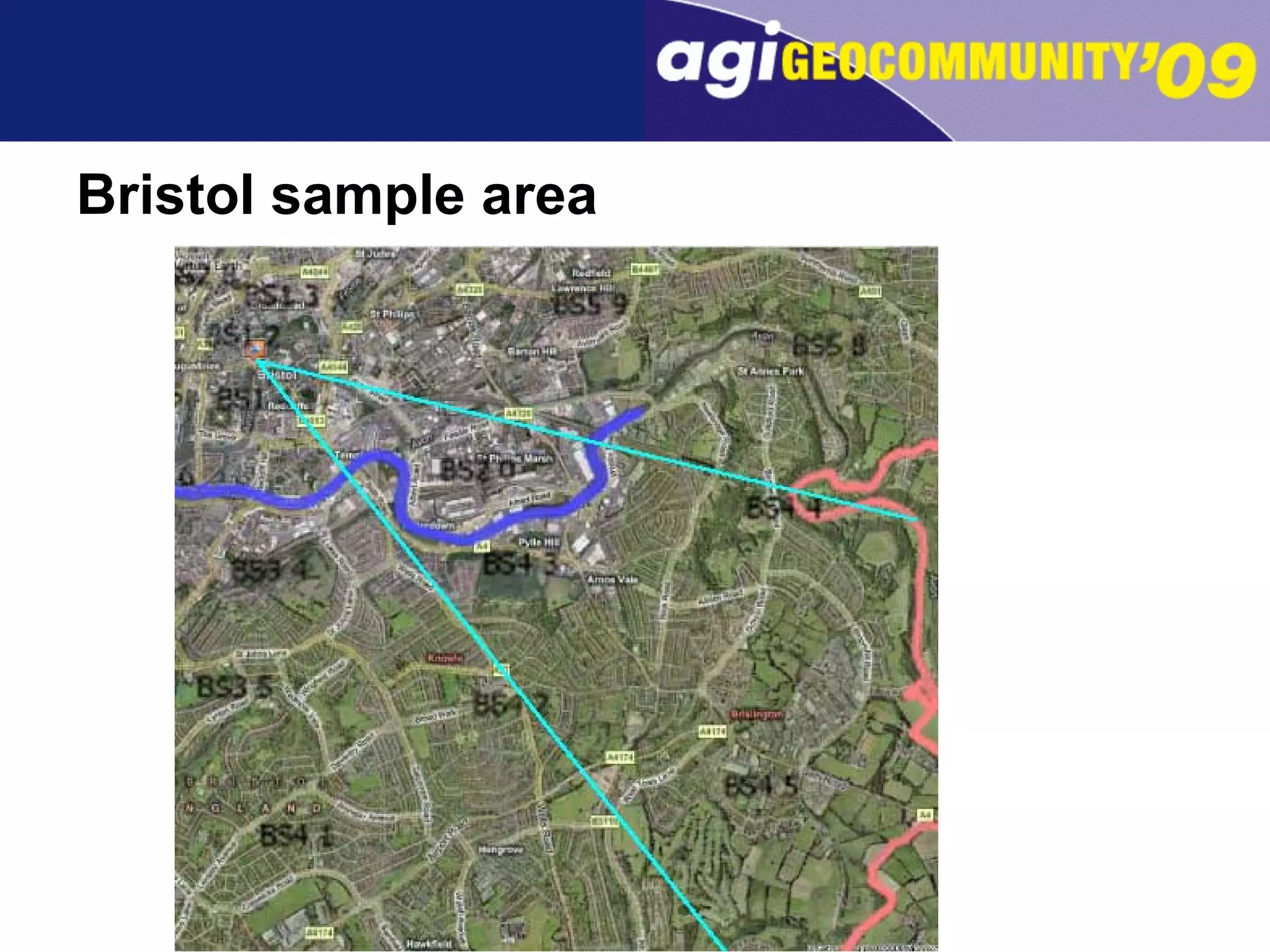
Matching methods Manual matching  – In a sample area some 1000 premises in seven distinct areas. Reliable sample for testing of processes and for field investigation File cross-matching  – Computerised matching used to match files across all of Bristol.  Match correspondence was very low Matching within an operational process  – Intelligent Addressing undertook a trial match of the meter data with the NLPG, first standardising the meters to BS7666 format.  Achieved a high correspondence.  Through the link that IA maintains with the VOA non-domestic rates file, a derived match rate of about 30% was achieved between the meters and the NDR
Bristol sample area
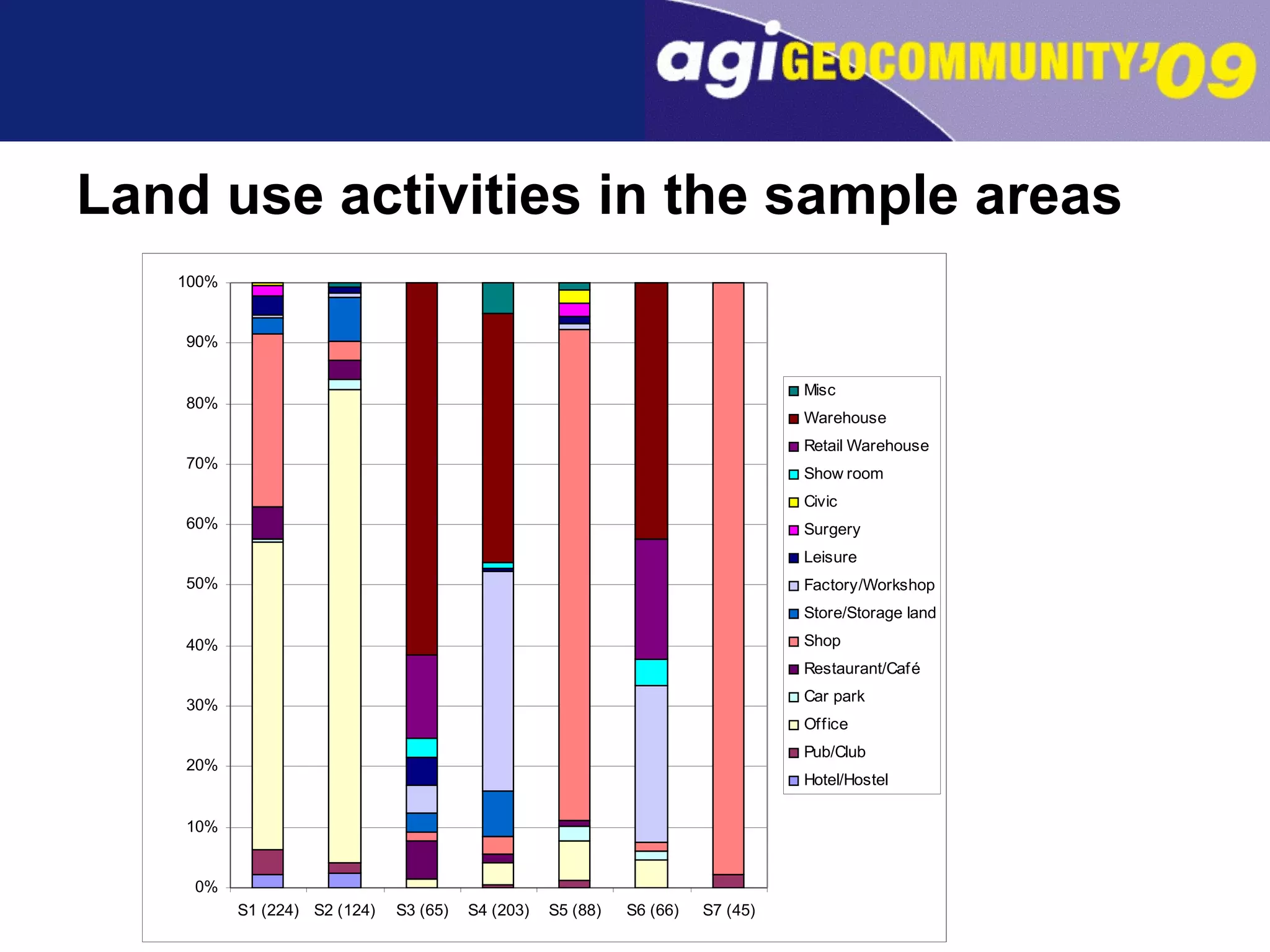
Land use activities in the sample areas
Desk and field study VOA has detailed information about premises Searched files for each sample property Identified extra or missing properties Reviewed two sample areas on the ground A valuable resource for a national system
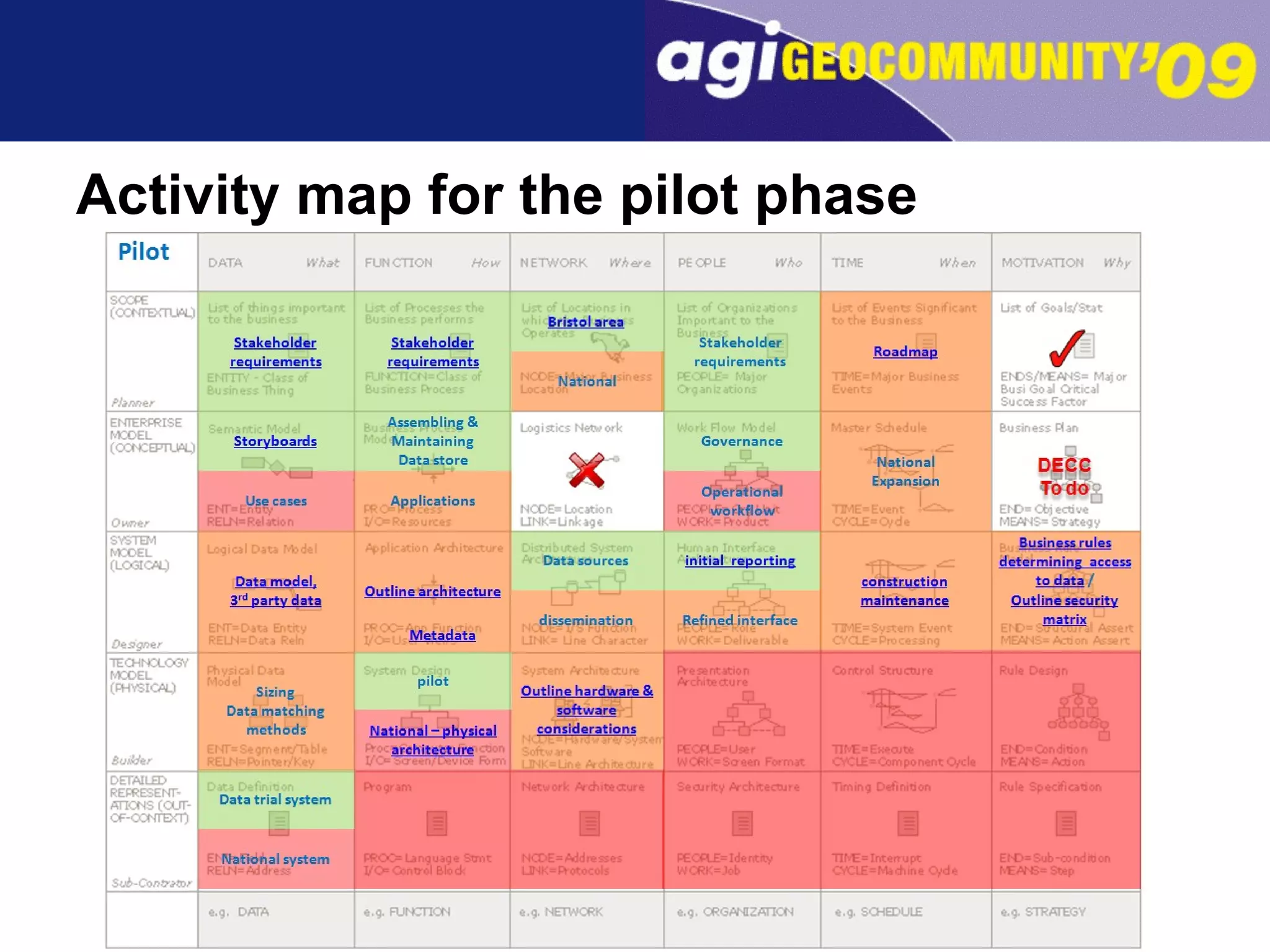
Activity map for the pilot phase
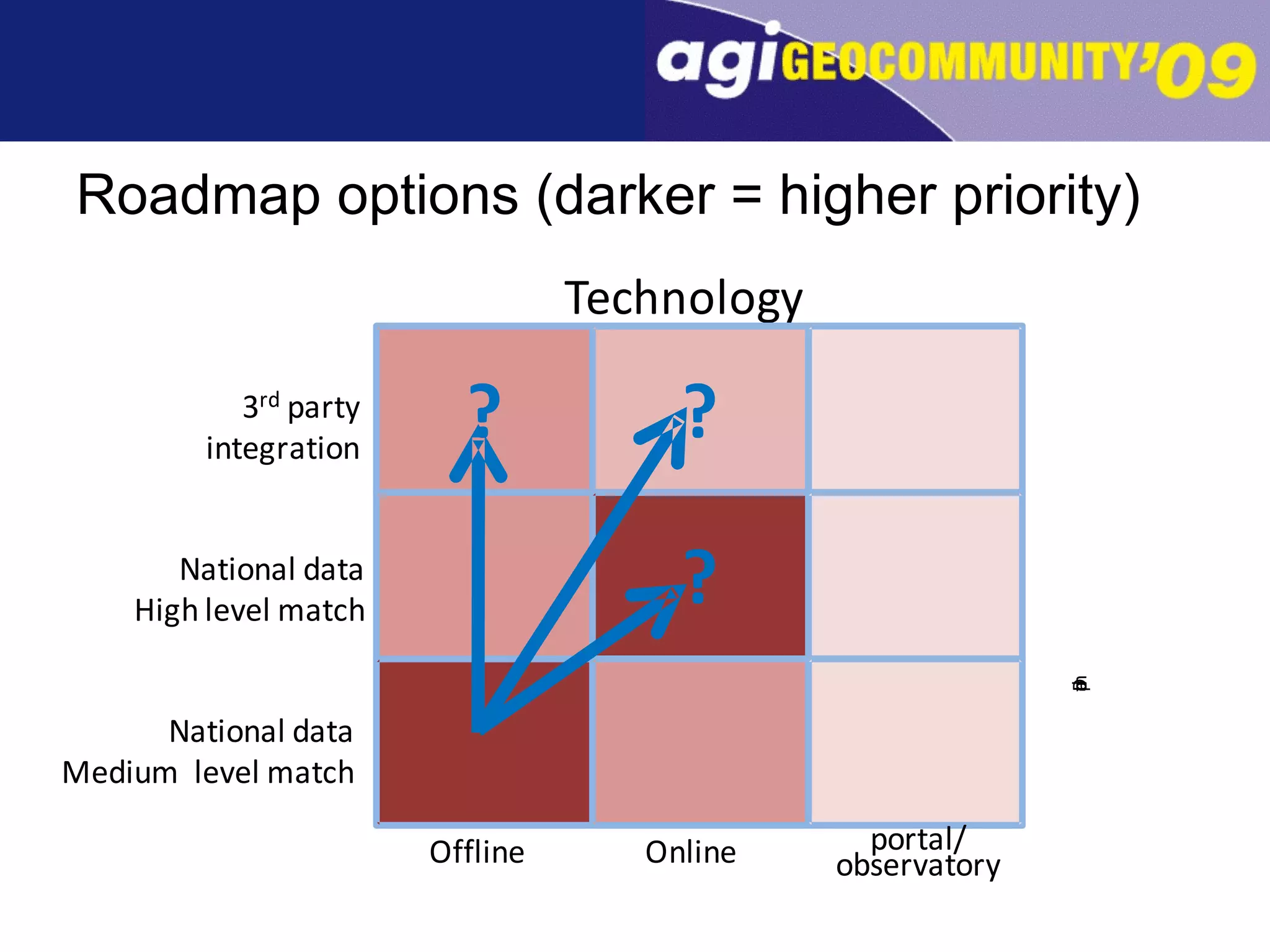
Roadmap options (darker = higher priority)
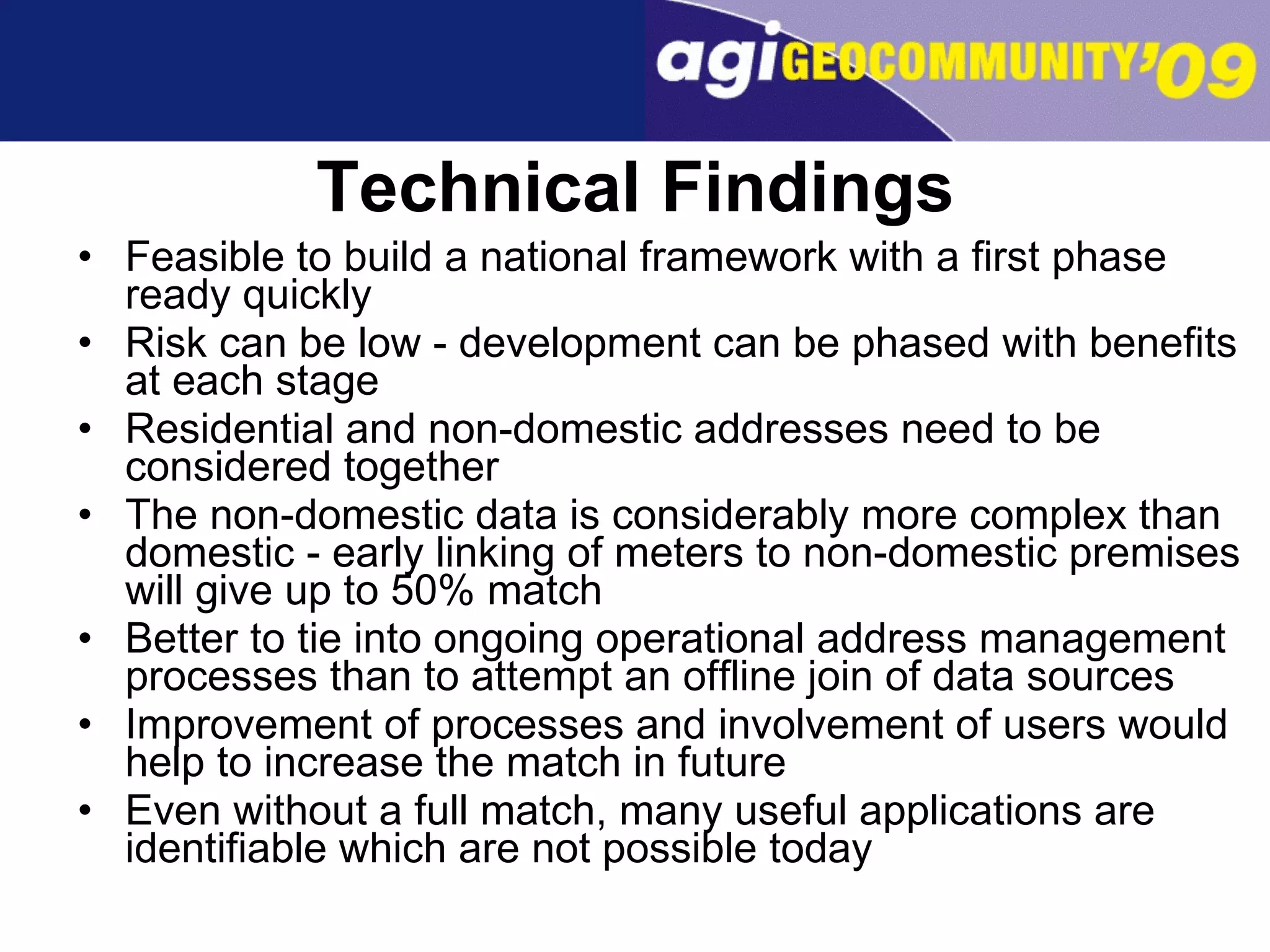
Technical Findings Feasible to build a national framework with a first phase ready quickly Risk can be low - development can be phased with benefits at each stage Residential and non-domestic addresses need to be considered together The non-domestic data is considerably more complex than domestic - early linking of meters to non-domestic premises will give up to 50% match Better to tie into ongoing operational address management processes than to attempt an offline join of data sources Improvement of processes and involvement of users would help to increase the match in future Even without a full match, many useful applications are identifiable which are not possible today

Hugh Neffendorf: NEED - Non-domestic Energy Efficiency Data Framework

  • 1.
    NEED - Non-domesticEnergy Efficiency Data Framework Hugh Neffendorf (Katalysis), Harry Bruhns (UCL), Andrew Harrison (LandInform), Bruce Yeoman (EGiC), Peter Wyatt (University of Reading), Tim Wood (Consulus)
  • 2.
    Data Framework ConceptTo provide evidence for national energy efficiency and carbon reduction policy development and monitoring To contain information about all premises in Britain together with measures of their energy use Two pilots NEED – Non-domestic HEED – Homes
  • 3.
  • 4.
    Much of thebuilt stock is not like this..
  • 5.
    ..rather, it islike this
  • 6.
  • 7.
    Energy Consuming Unit(ECU) Premises (or a group) where we know that a particular stream of energy data is entirely used within those premises e.g. metered tenant electricity consumption; landlord gas consumption shared in a building ECUs are the first step in the formation of the data model and data framework
  • 8.
    Energy Accounting Unit(EAU) An energy accounting unit is the minimum portion of property for which we can fully account for energy consumption all measured energy is used in the EAU no other delivered energy is used in that EAU fuel type gives carbon factors and emissions primary metric is kWh/m 2 , by fuel, for activity other metrics useful to some stakeholders
  • 9.
    ECUs & EAUsActivity A Renewable energy Activity A Metered electricity Premises Metered gas Total energy consumption / m 2 Activity B Metered electricity
  • 10.
    Conceptual model fordata framework
  • 11.
    Key data sourcesThe Valuation Office Agency non-domestic rating file (NDR) plus summary valuations The VOA Council Tax file (CT) Gemserv electricity meter points Xoserve gas meter points Consumption data linked to the meters
  • 12.
    Main property datasources – linkages
  • 13.
  • 14.
    Matching methods Manualmatching – In a sample area some 1000 premises in seven distinct areas. Reliable sample for testing of processes and for field investigation File cross-matching – Computerised matching used to match files across all of Bristol. Match correspondence was very low Matching within an operational process – Intelligent Addressing undertook a trial match of the meter data with the NLPG, first standardising the meters to BS7666 format. Achieved a high correspondence. Through the link that IA maintains with the VOA non-domestic rates file, a derived match rate of about 30% was achieved between the meters and the NDR
  • 15.
  • 16.
    Land use activitiesin the sample areas
  • 17.
    Desk and fieldstudy VOA has detailed information about premises Searched files for each sample property Identified extra or missing properties Reviewed two sample areas on the ground A valuable resource for a national system
  • 18.
    Activity map forthe pilot phase
  • 19.
    Roadmap options (darker= higher priority)
  • 20.
    Technical Findings Feasibleto build a national framework with a first phase ready quickly Risk can be low - development can be phased with benefits at each stage Residential and non-domestic addresses need to be considered together The non-domestic data is considerably more complex than domestic - early linking of meters to non-domestic premises will give up to 50% match Better to tie into ongoing operational address management processes than to attempt an offline join of data sources Improvement of processes and involvement of users would help to increase the match in future Even without a full match, many useful applications are identifiable which are not possible today