Eating Disorders
Body MassIndex (BMI)
• Commonly used index of adiposity
• Controls for effects of height when assessing
weight
• BMI= weight in kg divided by height (in
meters) squared
• Used in actuarial tables
• BMI 20-25 associated with lower morbidity
and mortality in eating disorders.
• Indians and other Asians 23.5 or above BMI is
considered as obesity.
Eating Disorders
Epidemiology, Gender& Culture: Anorexia
• Average age of onset= 15-19
• Most common cause of:
• Weight loss in teen girls
• Life history--1% in 20 yr old women
• Increased risk of comorbidities
• 90% female prevalence
• Rationale varies across cultures
• Somatic
• Ascetic
• Media-endorsed thinness
9.
Eating Disorders
Epidemiology, Gender& Culture:
Bulimia & Binge Eating DIsorder
• Emergence corresponds with:
• Media glorification of thinness
• High calorie snack food
• Loss of mealtimes
• Peak age of onset=15-20 yrs
• Average clinical presentation after 10 yrs
• 12% adolescent girls have some form
• Gay boys may be more vulnerable
• Increasing prevalence in men>15 yrs
10.
Eating Disorders
Aetiology &Risk Factors
• Complex genetic factors
• Concordance: mono> dizygotic twins
• Possible increase of anorexia in autism
• Anorexia: family with high perfectionistic and
obsessive traits
• Bulimia or bingeing: family with obesity,
depression, substance misuse
• Eating disorders comorbid with borderline
personality disorder
• Environmental risk possible in families
Eating Disorders
Clinical Featuresand Diagnosis: Anorexia
• Restricted eating leading to deliberate weight
loss or failure to grow and increase in weight
and height as expected according to age and
gender with:
• Fear of weight gain and/or persistent failure to
maintain a normal weight for age and height,
and:
• Disturbance of body image, which translates
any distress into a perception that their
body is too fat
13.
Eating Disorders
Clinical Featuresand Diagnosis: Anorexia
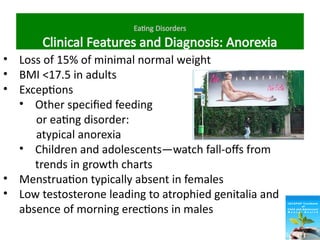
• Loss of 15% of minimal normal weight
• BMI <17.5 in adults
• Exceptions
• Other specified feeding
or eating disorder:
atypical anorexia
• Children and adolescents—watch fall-offs from
trends in growth charts
• Menstruation typically absent in females
• Low testosterone leading to atrophied genitalia and
absence of morning erections in males
14.
Eating Disorders
Important Information:Anorexia
• Weight loss timeline
• Collateral information about
consequences
• Highest, lowest, and preferred weight
• Menstruation
• Current daily food and liquid intake
• Alcohol, drugs, medications
• Vomiting, compulsive exercise, laxatives, diet pills
• Herbal medicines, exposure to cold
• Body-checking , avoidance
• Social withdrawal or conflict
• Physical diseases: diabetes, thyrotoxicosis, cystic fibrosis,
bowel disease, malignancies
15.
Eating Disorders
SCOFF Questionnaire:Anorexia
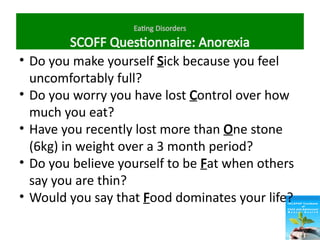
• Do you make yourself Sick because you feel
uncomfortably full?
• Do you worry you have lost Control over how
much you eat?
• Have you recently lost more than One stone
(6kg) in weight over a 3 month period?
• Do you believe yourself to be Fat when others
say you are thin?
• Would you say that Food dominates your life?
Eating Disorders
Binge EatingDisorder
• Recurrent regular binge eating (weekly x 3 months)
• Larger amount of food than most people would eat in 2
hour period
• Sense of lack of control
• No purging, vomiting, fasting or compulsive exercise
• Body image concern not a requirement
• Marked distress
• At least 3 other symptoms
• Eating more rapidly than normal
• Eating until uncomfortably full
• Large amounts of food when not hungry
• Eating alone due to embarrassment
• Feeling disgusted, depressed, or guilty afterward
19.
Eating Disorders
Bulimia Nervosa
•Binge symptoms
• Purge symptoms
• Self-induced vomiting
• Misuse of laxatives, diuretics, other medications
• Fasting
• Excessive exercise
• Both symptoms occur weekly x 3 months
• Self-evaluation unduly influenced by body shape and
weight
• Usually normal weight
• Bulimic Inventory Test (BITE):
http://www.davidfaeh.ch/fileadmin/media/pdf_norm/bite.pdf
20.
Eating Disorders
Other Disorders
DSM-5:Other Specified Feeding or Eating Disorders (OSFED)
Atypical Anorexia Nervosa
Subthreshold bulimia nervosa
Binge-eating disorder (of low frequency or limited duration)
Purging disorder
Night eating syndrome
Avoidant Restrictive Food Intake Disorder (ARFID)
Unspecified Feeding or Eating Disorder (UFED)
21.
Eating Disorders
Rating Scales
•The Eating Disorders Examination (EDE-Q)
• Eating Disorders Inventory-3
• The Children’s Eating Attitudes Test
• Morgan-Russell Average Outcome Scale
(MRAOS)
• Bulimic Investigatory Test (BITE)
22.
Eating Disorders
Investigation ofPhysical Conditions and
Psychological Symptoms
• Physical investigations
• Food diaries
• Growth charts
• Psychiatric assessment
• Family history and involvement
• Observation of family meal
• Height and weight
• Routine blood tests: glucose, thyroid, electrolytes, liver
function tests, pregnancy, complete blood count
• Electrocardiogram
• Bone density
Anorexia
• One ofthe most lethal
psychiatric conditions
• ~40% achieve full
recovery
• Small percentage severe
and enduring course
• Ave time to recovery=
6-7 years
Bulimia
• May remit
spontaneously in young
• >50% achieve remission
at 5 yrs
• Untreated symptoms
likely to persist with
significant impact
Eating Disorders
Course and Burden
25.
Eating Disorders
Management ofAnorexia: Issues to Consider
• Challenging management of acute physical risk
• Precipitous weight loss >1kg/week
• Purging
• Substance use
• Weakness in emaciated patients
• Behavioral risk
• Urgency to refeeding underweight children
• Consequences of starvation on developing brain and cognition
• Importance of family/caregiver education
• Specialist dietetic input
• Family-based therapy most effective
• Individual therapy for depression before re-nutrition likely
ineffective
26.
Eating Disorders
Management ofAnorexia: Principles of
Maudsley Model of Family Therapy
• Family encouraged to take illness very seriously
• Anorexia externalized ~life-threatening illness
• Therapy NOT focused on causes/avoids blaming
family
• Responsibility for recovery IS placed with family
and professionals
• Family assumed to know best how to feed child
• Adults re-take control to child can feed self
• Appropriate autonomy encouraged ONLY when
adequately nourished
27.
Eating Disorders
Management ofAnorexia:
Motivational Approach
Help children see links between anorexia and
symptoms they dislike:
• Weariness
• Agitation
• Obsessionality
• Preoccupation with food and its avoidance
• Sleep problems
• Feeling cold
• Lost friendships
• Inability to join in socially
• Falling sport/academic performance
• “Fussing” by parents
28.
Eating Disorders
Management ofAnorexia:
Motivational Approach
Help children see benefits of weight gain:
• More energy
• Clear headedness
• Resistance to cold
• Growing in height
• Capacity for fun with friends
• Being well enough to join in games
29.
Eating Disorders
Management ofAnorexia: Acknowledgement of
benefits of eating disorder
• Power to oblige people to care and placate
• Relief from social and sexual demands
• Sense that body is controlled vs terrifyingly
unpredictable
***Young patients need new techniques for coping
with these aspects of life rather than starving
themselves***
30.
Eating Disorders
Management ofAnorexia: Medication
• Food is medicine
• Food must be taken in amounts prescribed and at the
times specified
• Choice for the child is how they take the medicine
• Orally as food
• Orally as supplement drink
• Naso-gastric tube
• Little evidence for psychoactive medication
• Important to avoid medication with QTc prolongation
• Some evidence for olanzapine or other antipsychotic
to help with rumination and aid weight gain in
anorexia
31.
Eating Disorders
Management ofAnorexia:
Home vs Inpatient
• Outcome better in outpatient clinics with
eating disorder specialists
• Even general outpatient child and adolescent
psychiatrists brought about better outcomes
than inpatient
• Guidelines now recommend outpatient care if
patients with anorexia are medically stable
• Where no outpatient clinic available, consider
outreach medicine and telemedicine for
home-based care
(Gowers et al 2007)
32.
Eating Disorders
Anorexia Treatment:Refeeding Syndrome
• Potentially fatal shift in electrolytes and fluids
• Too fast, imperfectly balanced, artificial or oral
feeding
• Hypophosphatemia, hypomagnesemia,
hypokalemia, gastric dilation, congestive
cardiac failure, severe edema, confusion,
coma, death
• Criticism: current guidelines are over cautious
• Should not occur with adequate monitoring,
especially phosphate
33.
Eating Disorders
Management ofBulimia Nervosa and Binge-
Eating Disorder
• Antidepressants—fluoxetine 60 mg
• Cognitive Behavioral Therapy targeting bulimic
symptoms = gold standard
• Self-help books, CDs, web-based programs
when no trained therapist available
• Interpersonal Therapy model for bulimia
• Fairburn’s CBT-E for patients 15 and older and
with BMI=15
34.
Eating Disorders
Models ofService Delivery for Eating Disorders
• Coordinated systemic response is key
• Return to school
• Less supervision
• Competitive academic environment as trigger
• Group therapy
• Potential for competition in anorexia
• Successful for bulimia and binge eating disorder
• Growing evidence for multi-family groups
• Adjunctive web-based and CD-ROM manualized
treatment
• Getting Better Bit(e) by Bit(e)
(Schmidt & Treasure, 1993)
35.
Eating Disorders
Course andPrognosis: Anorexia
• Older studies: ~20% mortality rate
• Now: 10 x that in general population
• Average time to recovery 6-7 years
• Younger, more intensively treated show more rapid improvement
• Tolerant, respectful relationship vs rewarding/punishing based on
weight
• Effects on fertility
• High death rates
• Ambivalent overdoses
• Substance abuse at low weight
• Perforations from vomiting
• Cold climates: exercise, hypothermia, and infections
• Hot climates: dehydration and enteric infections
36.
Eating Disorders
Prevention
• Usuallyin groups at schools, clinics or athletic
clubs
• Results mixed
• Targeted programs more effective
• Minimum BMI for dancers and models
• Anti-obesity campaigns
• emphasis on healthy nutrition and exercise
rather than weight reduction important
37.
Eating Disorders
Barriers tothe Implementation of Care in
Developing Countries
• Until recently, culture in developing countries
protective vs eating disorders
• Structured regular eating patterns
• Eat what is put in front of you
• Eat alongside others
• Thin body image ideal not endorsed
• Disordered and obsessive body image values
transmitted by TV, internet, other media
• Anorexia treatment, especially, related to level of
experience of clinician
• Families are most likely source of recovery
38.
Eating Disorders
Avoidant /Restrictive food intake disorder
Epidemiology - Between 15 and 35 percent of infants and young children. In 9 and 12
year olds, found in 0.6 percent children.
Avoidant/restrictive food intake disorder is formerly known as feeding disorder of
infancy or early childhood, is characterized by a lack of interest in food, or its
avoidance based on the sensory features of the food or the perceived consequences
of eating. This condition newly included adolescents and adults DSM-5.
Clinical features -
The disorder is manifested by a persistent failure to meet nutritional or energy needs,
as evidenced by one or more of the following: significant weight loss or failure to
achieve expected weight, nutritional deficiency, dependence on enteral feedings or
nutritional supplements, or marked interference with psychosocial functioning. It may
take the form of outright food refusal, food selectivity, eating too little, food
avoidance, and delayed self-feeding. We should not make the diagnosis in the context
of anorexia nervosa or bulimia nervosa, or if caused by a medical condition, by
another mental disorder, or by a genuine lack of available food.
39.
ARFID
Differential diagnosis -
Allergyto specific food group (e.g., dairy), Constipation, Swallowing
difficulties, other eating disorder, e.g., anorexia nervosa, bulimia nervosa,
Other medical or psychiatric disorder that fully explains food restriction
(not requiring additional clinical attention), e.g., depression, anxiety, OCD,
malignancy, diabetes mellitus, inflammatory bowel disease, thyroid disease
etc, Lack of available food and Culturally sanctioned practices.
The treatment includes -
Education for the parents regarding the temperamental traits of the infant,
exploration of the parents’ anxieties about the infant’s nutrition, and
training for the parents regarding changing their behaviors to promote
internal regulation of eating in the infant. Parents are encouraged to feed
the infant regularly at 3 to 4 hour intervals and offer only water between
meals. The parents learn to deliver praise to the infant for any self-feeding
efforts, regardless of the amount of food ingested.
#2 By the end of this presentation, you should understand the following about eating disorders in children and adolescents
#3 There are many types of eating and feeding disorders. This powerpoint will focus on anorexia and bulimia nervosa, and to a lesser extent binge eating disorder.
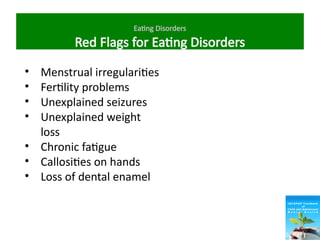
#4 Menstrual irregularities, fertility problems, unexplained seizures, “funny turns”, and chronic fatigue should alert us to a possible eating disorder.
#5 Defining anorexia vs bulimia
Disordered eating is only one of the symptoms of anorexia nervosa and bulimia nervosa. It may be more helpful to consider them as disorders of obsessive fear of weight gain, involving a range of different compulsions designed to avoid the dreaded consequence. The term anorexia which literally means “lack of hunger” is particularly unsuitable for an illness in which the sufferers are constantly obsessed by thoughts – and even dreams – of food, and tormented by calculating how to resist their extreme hunger in order to avoid weight gain.
Restriction of eating is obviously a prominent feature, but there are many other compensatory behaviors, such as over-exercising, various forms of purging and repeated checking and reassurance-seeking by weighing, measuring or mirror gazing, for instance. The precise definition is a matter of some controversy, since psychiatric diagnosis is evolving. The DSM (American Psychiatric Association, 2013) and ICD (World Health Organization, 1992) are gradually moving closer to describing syndromes that embody statistically valid symptom clusters, reflect growing genetic and neurological understanding, and predict responses to treatment. These considerations make it worthwhile, even in children and adolescents, to divide the disorders into anorexia nervosa and bulimia nervosa, acknowledging some overlap and acknowledging also that using weight or body mass index (BMI) to distinguish between the two may not be an accurate proxy for the nature of the core psychological disorder. Young people with bulimia nervosa, who by definition have a normal weight, share the drive for thinness. However, people who maintain low weight for long periods by restriction alone or with exercise may be genetically different from those who end up bingeing and purging (Kiezebrink at al, 2009).
#6 Body Mass Index (BMI)
• Body mass index (BMI, Quatelet’s
index) is a commonly used index of adiposity that controls for the effects
of height when assessing weight
• BMI = weight in kg divided by height (in meters) squared
• BMI is used in actuarial tables, since a BMI of 20 to 25
is associated with lower morbidity and mortality
• Children and adolescents are in
a state of perpetual and irregular growth, so that BMI may be blind to a fall-off in expected height as well as weight
#7 Disorders of concern about body image are increasingly seen in pre-pubertal children of both genders. Nomenclature is misleading to non-specialists. On one hand there are so-called “feeding” disorders, such as avoidant restrictive food intake disorder, where food is shunned for reasons other than its fattening capacity, occurring in the context of other physical and psychological disorders. On the other hand anorexia nervosa is characterized by a deliberate drive for thinness. Avoidant restrictive food intake disorder, characterised by an obsessive food avoidance without body image concern, can closely resembles anorexia nervosa.
#8 The average age of onset for anorexia nervosa is around 15 to19 years. It is the commonest cause of weight loss in teenage girls and the commonest cause of inpatient admission to child and adolescent services. Eric Stice and colleagues (2013) found that around 1% of 20 year old women had a life history of anorexia nervosa or atypical anorexia. This is close to the incidence reported in a range of epidemiological studies. Similar outcomes have been reported in Australian adolescents. However, having a full or subthreshold eating disorder in adolescence has been found to be associated with increased risk of other mental health problems in adulthood (Patton et al, 2003).
Whilst more than 90% of anorexia sufferers are female when prevalence is measured across the life span, in young children the sex difference in prevalence narrows (Madden et al, 2009). There is also growing awareness that body image concerns may take a different form in adolescent boys. Some male sufferers describe striving for a muscular body rather than merely a thin one. Compulsive exercise rather than food restriction may be the earliest sign of the disorder in these cases. Some boys become addicted to exercise without body image concerns at first, although these often develop later.
Rationale for food avoidance varies across cultures, with religious explanations for fasting and self-denial prevalent in some, whilst Blake Woodside (2003) has described Indian patients who endorse gastro-intestinal symptoms as their reason for not eating. Interestingly, if these individuals are treated in groups with sufferers from Western anorexia, they often develop fear of becoming fat and body image concerns that replace their earlier somatic concerns. Even in Western settings, some patients start out with somatic or ascetic preoccupations but go on to re-ascribe their behavior to the media-endorsed value of thinness.
The epidemiology of avoidant restrictive food intake disorder is unknown. However in very young children it may be a sizable minority of presentations to clinics and is more common than anorexia nervosa in boys (Nicely et al, 2014).
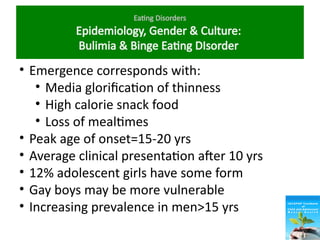
#9 The emergence of bulimia nervosa in the late 20th century corresponds with both media glorification of a thin body image, for both bulimia nervosa and binge eating disorder, with increasing availability of palatable high calorie snack food, and the loss of ceremonious communal mealtimes. The peak age of onset is similar to anorexia nervosa – 15-20 years (Kessler et al, 2013). Symptoms are easier to conceal than in anorexia nervosa, however, and the average medical presentation does not occur until the sufferer has been aware of the disorder for up to 10 years.
Up to 12% of adolescent girls may experience bulimia nervosa, binge eating disorder or a specified (OSFED) or uspecified feeding and eating disorder (UFED) form of bulimic or binge eating disorders (Stice et al, 2013). It is not yet know how many boys are affected, but an increasing emphasis on boys’ appearance may be contributing to an increase, and it is believed that boys in the gay community are more vulnerable to develop bulimia nervosa. In studies of people over the age of 15 there is an increasing and large minority of men with eating disorders and binge eating disorder in particular (Mitchison et al, 2014).
#10 There are many types of eating and feeding disorders.
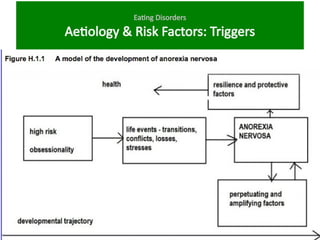
#11 Puberty and adolescence are undoubtedly major triggers (Mitchison et
al, 2014). Young people simultaneously experience the challenge of living with
a changing and growing body, new hormone-driven urges, the new cultural
expectations, sexual, intellectual and social demands, and the need to process all these with a brain that is itself anatomically and chemically in a state of flux.
However, it may be observed that these are non-specific triggers. In young people with different pre-disposing vulnerabilities, such triggers may precipitate different disorders, such as a depressive illness, obsessive compulsive disorder or substance
misuse. In particular, people with binge eating disorder and bulimia nervosa may develop a problem when binge eating is used to alleviate low mood.
In particular, the onset of both anorexia and bulimia nervosa may be
triggered by identical precipitants and may even appear similar for some time.
Teenagers with bulimia nervosa may initially lose some weight before binges undo this, and some sufferers follow a fluctuating course, moving between different diagnoses. This unsatisfactory state of affairs makes it difficult to use current definitions and classifications to distinguish between disorders which may well have different genetic roots and perhaps respond to different treatments.
#12 Psychiatric classifications such as ICD-10 and DSM-5 define anorexia
nervosa as:
• Restricted eating leading to deliberate weight loss, or failure to grow
and increase in weight and height as expected according to age and
gender with
• Fear of weight gain and/or persistent failure to maintain a normal
weight for age and height, and
• Disturbance of body image, which translates any distress into a
perception that their body is too fat.
#13 For patients to meet the diagnostic criteria, there should be at least a loss of
15% of minimum normal weight or, according to ICD-10, a BMI below 17.5 in
fully grown adults. Menstruation is typically absent (though women who take the contraceptive pill may have withdrawal bleeds). In males, low testosterone causes atrophied genitalia and absence of morning erections. In the restrictive subtype, low weight is achieved by starvation alone or with over-activity. The binge-purge subtype involves purging by means of vomiting, use of laxatives, diuretics or slimming pills to get rid of calories. It is widely agreed that these criteria exclude many who may fit into the spirit of the diagnosis and DSM-5 has introduced a new category under the other specified feeding or eating disorder (OSFED): atypical anorexia nervosa where the person may have lost a substantive amount of weight but is not technically underweight.
In children and teenagers it is even more important not to adhere to strict
definitions of normal weight and DSM-5 does not specify an upper limit of
underweight criteria. This recognises that weight and height are moving targets in a growing body. A healthy 12 year old boy on the 50th centile for both weight and height will have a BMI of around 17.5 – which would be underweight for most adult women. On the other hand the teenage daughter of tall parents may have a BMI within the normal range but have severely restricted her intake so that her metabolic rate slows down; she fails to grow and experiences severe obsessive symptoms. She would now be diagnosed with atypical anorexia nervosa.
It is best practice to plot the weight and height of young patients on
standard growth charts to compare progression and trends with what is expected. Information about parental height improves the perspective in which growth is assessed. The outward weight and height trajectory of a child is our best proxy for the healthy nutrition of the developing brain within. As already discussed, current definitions and classifications fail to discriminate between probable differences in genetic susceptibility, but adolescents whose eating disorder causes starvation must be re-fed to prevent physical and neurological stunting, regardless of precise aetiology.
#14 It is best practice to plot the weight and height of young patients on
standard growth charts to compare progression and trends with what is expected. Information about parental height improves the perspective in which growth is assessed. The outward weight and height trajectory of a child is our best proxy for the healthy nutrition of the developing brain within. As already discussed, current definitions and classifications fail to discriminate between probable differences in genetic susceptibility, but adolescents whose eating disorder causes starvation must be re-fed to prevent physical and neurological stunting, regardless of precise aetiology.
Anorexia nervosa patients are usually protective of their habits, or so
focused on losing weight they no longer notice or admit the physical and social consequences of starvation, so it is important to also hear from parents, siblings or other informants. It is recommended to document the timeline of weight loss, the patient’s highest and lowest weight, preferred weight, and menstruation. Clinicians need to know about current daily food intake, liquids consumed, including low calorie and caffeine-containing drinks, alcohol, drugs and medications. Is there self-induced vomiting, compulsive activity and exercise, use of laxatives, diet pills, herbal medicines, and deliberate exposure to the cold? These behaviors interfere with health and social functioning as well as prevent weight gain. Sufferers typically engage in a mixture of both body-checking behaviors (repeated weighing, measuring, mirror gazing, touching, prodding, pinching, trying on particular garments and comparison with others) and avoidance (such as not appearing in swimming costumes or without makeup, or being unable to take a bath because of looking down on their body). Social withdrawal and conflict are both common, and shy, obedient girls may become verbally or physically violent, or self-harming if their eating disordered rules are challenged. Those with bulimic difficulties may become so desperately hungry that they steal or hoard food.
Surprisingly, even very low weight can be missed when young patients dress
and make up smartly. Family members who see the person daily may not notice insidious changes. It is helpful if there is a climate of awareness in schools and among primary care clinicians. We can make it a habit to routinely ask young patients about their eating habits. The SCOFF questionnaire (Morgan et al, 1999) is a validated, brief instrument to screen for eating disorders, similar in concept to the CAGE questionnaire for alcohol problems (see Box). It is important to actively seek the psychological symptoms of eating disorders rather than proceed simply by excluding physical diseases. In our concern not to overlook diabetes,
thyrotoxicosis, cystic fibrosis, bowel diseases, malignancies or other causes of weight loss, young people are often over-investigated while the possibility of anorexia nervosa is neglected.
#15 It is best practice to plot the weight and height of young patients on
standard growth charts to compare progression and trends with what is expected. Information about parental height improves the perspective in which growth is assessed. The outward weight and height trajectory of a child is our best proxy for the healthy nutrition of the developing brain within. As already discussed, current definitions and classifications fail to discriminate between probable differences in genetic susceptibility, but adolescents whose eating disorder causes starvation must be re-fed to prevent physical and neurological stunting, regardless of precise aetiology.
Anorexia nervosa patients are usually protective of their habits, or so
focused on losing weight they no longer notice or admit the physical and social consequences of starvation, so it is important to also hear from parents, siblings or other informants. It is recommended to document the timeline of weight loss, the patient’s highest and lowest weight, preferred weight, and menstruation. Clinicians need to know about current daily food intake, liquids consumed, including low calorie and caffeine-containing drinks, alcohol, drugs and medications. Is there self-induced vomiting, compulsive activity and exercise, use of laxatives, diet pills, herbal medicines, and deliberate exposure to the cold? These behaviors interfere with health and social functioning as well as prevent weight gain. Sufferers typically engage in a mixture of both body-checking behaviors (repeated weighing, measuring, mirror gazing, touching, prodding, pinching, trying on particular garments and comparison with others) and avoidance (such as not appearing in swimming costumes or without makeup, or being unable to take a bath because of looking down on their body). Social withdrawal and conflict are both common, and shy, obedient girls may become verbally or physically violent, or self-harming if their eating disordered rules are challenged. Those with bulimic difficulties may become so desperately hungry that they steal or hoard food.
Surprisingly, even very low weight can be missed when young patients dress
and make up smartly. Family members who see the person daily may not notice insidious changes. It is helpful if there is a climate of awareness in schools and among primary care clinicians. We can make it a habit to routinely ask young patients about their eating habits. The SCOFF questionnaire (Morgan et al, 1999) is a validated, brief instrument to screen for eating disorders, similar in concept to the CAGE questionnaire for alcohol problems (see Box). It is important to actively seek the psychological symptoms of eating disorders rather than proceed simply by excluding physical diseases. In our concern not to overlook diabetes,
thyrotoxicosis, cystic fibrosis, bowel diseases, malignancies or other causes of weight loss, young people are often over-investigated while the possibility of anorexia nervosa is neglected.
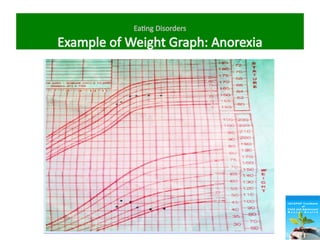
#16 At the end of primary school, this girl was amongst the tallest of her peers, though in healthy proportion in terms of weight for height. However, she developed anorexia nervosa and lost weight over a matter of months. From the onset of the illness she also stopped gaining height and was overtaken by her classmates.
#18 This diagnosis is made where there is recurrent regular binge eating in the absence of purging, vomiting, fasting or compulsive exercise as compensatory behaviour. These weight control behaviors may occur but do not meet threshold frequency for a diagnosis of bulimia nervosa. Unlike anorexia and bulimia nervosa, body image concern is not a requirement. However, marked distress and at least three other symptoms consequent to the binge eating (such as guilt and disgust) are required.
#19 This diagnosis is usually made from the binge-purge behavior of a normal weight sufferer – the BITE questionnaire (see Appendix) is a useful way to assess the range and severity of symptoms. Menstrual irregularities, fertility problems, unexplained seizures, “funny turns”, and chronic fatigue should alert us to a possible eating disorder. Gastro-intestinal complaints can be both the consequence of and the excuse for an eating disorder (as in the case vignette of Sita). More psychological presentations include depression, anxiety, obsessional symptoms and relationship problems. Girls are of course at higher risk, but boys with unexplained weight loss should be also asked about diet, exercise and attitudes to their physique. Observation in a hospital or day clinic may reveal symptoms a patient does not tell clinicians.
#20 Other disorders
DSM-5 specifies five other specified feeding or eating disorder (OSFED) categories:
Atypical anorexia nervosa
Subthreshold bulimia nervosa
Binge-eating disorder (of low frequency or limited duration)
Purging disorder, and
Night eating syndrome.
People who do not meet criteria for OSFED or avoidant/restrictive food intake disorder (ARFID) (food avoidance/restriction with physical or psychological consequence in absence of body image concern) may be diagnosed with unspecifed feeding or eating disorder (UFED). The revision of the ICD (ICD-11) is likely to also introduce ARFID and subthreshold categories.
#21 Useful questionnaires and rating scales
The Eating Disorders Examination, self-
report version (EDE-Q; Fairburn & Beglin, 1994). This instrument is freely available and one
of the most widely used self-report questionnaires; suitable for adolescents but not for younger children.
Eating Disorders Inventory-3 (Garner,
2004). Self-rated questionnaire covering 12 domains of eating cognitions, behaviours and social function; validated for younger patients and sensitive to change.
The Children’s Eating Attitudes Test (ChEAT; Maloney et al, 1988). Version of the adult EAT, also self-report questionnaire
Morgan-Russell Average Outcome
Scale (MRAOS; Morgan & Hayward, 1988). Interviewer- based measure of global outcome in anorexia nervosa (not copyright).
Bulimic Investigatory Test (BITE; Freeman & Henderson, 1997). Self-report questionnaire validated for
adult patients but also suitable for adolescents; highly sensitive to change in bulimic symptoms, thus useful to track progress in treatment (not copyright).
#22 Eating and feeding disorders need a multi-disciplinary evaluation involving physical investigations, food diaries, growth charts, and psychiatric assessment. Family history and involvement are crucial; it is illuminating to observe a family meal, preferably in the home. Alternatively, the family can be asked to bring a picnic meal to be eaten in the clinic.
It’s essential to measure and weigh patients – extreme reluctance to be weighed is likely to be a symptom of excessive body image concern. This can help to explain that patients who co-operate with physical monitoring can be more safely managed as outpatients that those who are uncooperative, where the severity of starvation can only be estimated. Physicians sometimes decline to admit patients whose diagnosis is a psychiatric one, and may need to be supported by specialist consultation liaison services, so that treatment for the physical sequelae of starvation are not undermined by the patient’s psychopathological concerns.
Routine blood tests are helpful in excluding most of the common differential diagnoses of weight loss. Glucose is low in anorexia (except with comorbid, poorly controlled diabetes). The thyroid is often protectively and reversibly underactive in anorexia nervosa, with normal or slightly low TSH, whereas T4 will be high with suppressed TSH if weight loss is caused by thyrotoxicosis. Electrolytes may show low (reflecting protein intake) or high urea (reflecting dehydration) and low potassium (vomiting). Liver function tests may suggest comorbid drug or alcohol problems, though extreme starvation alone can cause liver damage. Anorexia often causes anemia, and if white cell count is not low, this may reflect infection. Neutropenia is usual in starved patients – if significantly below one, the patient needs to be protected from exposure to infection. ECGs are helpful to monitor electrolyte and cardiac status. Annual bone density scans, if available, allow monitoring the risk of osteoporosis but at this stage may not change management.
Young women may become pregnant at an unhealthy low weight and vomiting makes oral contraception unreliable. It is wise always to consider pregnancy as a possibility in young women with weight change, vomiting and amenorrhea. If there is both an eating disorder and pregnancy, the patient needs to be monitored physically, nutritionally and psychologically with great care throughout the pregnancy and beyond, so that the mother-baby pair can build a healthy relationship and survive the eating disorder together. Eating disorders, even if sub-clinical, can impair fertility and increase the risk of damage to an unborn child. Both pregnancy and labor may be more difficult. Up-to-date information should be sought about the relative risks of medication versus untreated disorders during pregnancy and lactation. Mothers who have suffered from an eating disorder themselves may need support to learn the skills of healthy playful toddler feeding. It follows that it is always advisable to discuss issues related to conception in a sensitive and supportive manner.
Always assess mood and anxiety symptoms – this is a helpful way to find common ground with patients who reject physical concerns. Moreover the risk of self-harm and suicide is raised in all eating disorders (Arcelus et al, 2011).
#23 In addition to considering the following conditions as differential diagnoses, it is important to recognize their co-existence with eating disorders.
Psychological co-morbidity:
Depression. Low mood and dysphoria secondary to starvation needs to be distinguished from a co-morbid major depressive episode
Anxiety and obsessionality. In some cases the eating disorder is one
of a range of symptoms of extreme anxiety. Social anxiety is the most common comorbidity (Swinbourne et al, 2012). Starvation also causes obsessive symptoms around food and body image (Keys, 1950).
Autistic spectrum disorders
Emerging borderline personality disorder. Binge eating is a common emotion regulating behavior seen in borderline personality disorder but in this context occurs without weight or shape overvaluation
Substance abuse. Steroids may be used to increase body musculature and stimulants to reduce weight. Opiates cause nausea and reduced appetite, young people may use all available money for drugs rather than food
Chronic fatigue syndrome. It may be associated with eating disorders and is unlikely to respond to treatment unless all symptoms are tackled simultaneously.
Physical comorbidity:
Diabetes. Insulin omission is a common practice in people with insulin-dependent diabetes, particularly girls, who use it as a way to lose weight. The result is that even if weight remains in the normal range and no other purging behaviors are present, lasting damage can be done to the body because of poor glycemic control. Mortality in people with comorbid diabetes and an eating disorder is many times the mortality for either condition separately
Cystic fibrosis is another condition where under-treatment of the disease results in weight loss, which may be welcomed by the young person, but at the unrealized expense to overall health
Gastrointestinal conditions, epilepsy and even cancer may predispose body-image conscious youth to neglect any treatment which increases body weight
Obesity. Increasingly people with bulimia nervosa and binge eating disorder are overweight/obese.
#24 Anorexia nervosa is one of the most lethal of psychiatric conditions and whilst around 40% may achieve a full recovery, a small percentage have a severe and enduring course; the average time to recovery (where it occurs) is six to seven years (Strober et al, 1997; Steinhausen, 2002; Steinhausen et al, 2003). As a result, patients with anorexia are a substantial burden on psychiatric services and on their families, with morbidity in carers on a par with that experienced by those caring for patients with schizophrenia (Whitney, 2007). Whilst symptoms of bulimia nervosa may remit spontaneously in the young, there is still disagreement as to whether early diagnosis and intervention bring about better outcomes or whether they merely reflect the natural course of the disorder in teenagers. Over fifty percent of individuals with bulimia nervosa or binge eating disorder will achieve remission at five years of follow-up (Steinhausen & Weber, 2009) but untreated symptoms are likely to persist with significant impact on health related quality of life (Hay et al, 2012).
#25 In anorexia nervosa, clinicians are faced with the challenge of managing the acute physical risk, being aware of how psychopathology increases that risk beyond that of the physical condition alone. Precipitous weight loss (>1kg/week, less in small children) is dangerous. Mortality is further increased by purging or substance abuse. Such patients should be urgently discussed with specialists. Some need hospital admission – and involuntary treatment if necessary to save life. Particular danger signs in emaciated patients are weakness (climbing stairs, rising from a squat), chest pain, and cognitive slowing.
Physical indices of risk such as blood tests or weight measurements fail to take account of the behavioral risk, which would be absent in patients with similar results from other illness, as the latter can be expected to co-operate with advice and treatment rather than opposing and undermining it. Thus general medical wards need extra support in nursing children and young people with eating disorders in order to compassionately but firmly deal with their damaging behaviors.
There is particular urgency about refeeding underweight children; the smaller the child, the faster the dehydration and deterioration. Children’s metabolism is faster than adults’. Physical growth and exposure to infections add further demands. Starvation at times of crucial physiological growth may cause long-term damage. For example, starvation in 10-14 year olds during the siege of Leningrad was associated with higher blood pressure, cholesterol levels, and overall mortality in long term survivors. The Dutch famine of 1944 (Stein et al, 1975), showed similar consequences including second generation consequences of starvation, such as obesity in the offspring of starved pregnant women. There may be permanent stunting of height in those starved during puberty and effects on a still developing brain. The brain, particularly the frontal lobes, continues developing during adolescence, with both myelination and pruning of neural connections (Giedd, 2008), reflected in growing social skills and capacity for abstract thought, but many patients with severe anorexia nervosa can continue to function showing academic success and superficial maturity.
Cognitive function is impaired by short-term starvation and by vomiting – with enormous individual variation. Considerable recovery occurs with re- nutrition, allowing better engagement in psychological therapies. Social and psychological development can be compromised by illness and by hospitalization. Happily, there is evidence that a well-supported family engaged in family-based treatment can provide an alternative to inpatient care, can maintain progress and allow earlier discharged from hospital (Madden et al, 2014).
Families become understandably frightened, helpless and angry when children starve themselves, and high levels of arousal make eating even harder. Family education needs to avoid blame but welcome responsibility, acknowledge the seriousness and difficulty of the situation, and teach firmness with calm. It’s helpful if carers can understand the child’s fears but not let go of the conviction that the symptoms are unacceptable and damaging. Neither collusion nor bullying is as effective in facilitating healthy change as concerned firmness.
It is helpful to communicate with schools and other agencies involved.
Teachers and youth leaders may not want to supervise meals, but they can set appropriate boundaries on exercise and activity and arrange privacy at mealtimes. School activity trips may not be safe for low weight children or ritualistic eaters.
Dietetic expertise is essential on inpatient wards and it is important for outpatients to have specialist dietetic input. However, the problem lies far less in terms of knowing what to eat – learning how to tolerate the absorption of sufficient calories is the struggle. Re-nutrition is central to treatment and recovery cannot occur without this. Restoration of weight against the patient’s will can only lead to recovery if therapy – or life itself – can persuade the patient to voluntarily maintain a healthy weight. Therapy, preferably family based, is needed to support non-negotiable benefit from therapy not only to prevent burnout and depression, but because family based treatment has been demonstrated to be thus far the most effective long term treatment for the disorder and is recommended by international guidelines (NICE, 2004; Hay et al, 2014). Well-meaning efforts to treat depression in an extremely low weight patient are likely to meet with limited success unless re-nutrition is in progress.
#26 Principles of the Mausdsley model of family therapy in anorexia nervosa
The family is encouraged to take the illness very seriously
Anorexia is externalized; that is, it is spoken of as an entity in itself (“the anorexia”) and treated as a life-threatening illness rather than the child’s choice
Therapy is not focused on the causes of the illness and avoids blaming the family for their child’s illness
On the other hand responsibility for recovery is explicitly placed with the family in partnership with professionals. It is assumed families “know best” how to feed their children.
The adults re-take control until the child can feed herself autonomously again. They are urged to use all their existing skills and to learn new ones where necessary to bring this about
Only when adequate nutrition is successfully achieved and maintained there is an examination of developmental issues and age-appropriate autonomy facilitated..
#27 Sadly, it is not common for an intelligent child who is shown the physical dangers of starvation to be frightened into eating normally again. Indeed the child’s indifference, in contrast with adults’ increasingly fearful concern, may widen the gulf between them. The best approach is to gradually and repeatedly help children see the links between the symptoms they dislike – weariness, agitation, obsessionality, being preoccupied with food and its avoidance, sleep problems, feeling the cold, loss of friendships, inability to join in socially, falling sport or academic performance, “fussing” by parents – and the anorexic illness.
#28 It is useful as children progresses to help them notice how weight gain brings the corresponding benefits: more energy, clear headedness, resistance to cold, growing
in height (it’s generally “cool” to be tall), capacity to have fun with friends, and being well enough to join in games again.
#29 We should acknowledge sympathetically, not angrily, the benefits which undoubtedly come with a serious eating disorder: its power to oblige people to care and placate, the relief from social and sexual demands, the sense that one’s body is now controlled rather than terrifyingly unpredictable. Young patients need new techniques for coping with these aspects of life without having to starve themselves.
The principles of motivational interviewing have been adapted for use in the management of eating disorders from the Miller and Rollnick (2008) approach to substance misuse disorders. They are not intended to constitute a stand-alone treatment but to enable the development of a therapeutic relationship in otherwise unpromising circumstances (Geller, 2005). The clinician encourages the patients to explore the consequences of anorexic behavior as openly and scientifically as possible, so that patients are the ones to articulate the disadvantages as much as possible. When a therapist tells patients what to do, they resort automatically to an oppositional stance (even the best clinicians find this but can recover by realizing that the pattern is happening.) There are a number of workbooks available to foster playful motivation techniques, such as writing “love letters” and “rejection letters” to anorexia.
Clinicians who explore ambivalence sensitively, seeking to understand both pros and cons of the eating disorder, are more likely to find themselves on the side of the patient against the disorder. Patients find it less daunting to give up their eating disorder if they can learn alternative coping skills.
#30 One useful metaphor in work with anorexia nervosa is that food is the medicine. This means that food has to be prescribed and taken at the times specified and in the amounts prescribed. It is the task of the nurses or parents to dispense the medicine in the right dose and ensure that the child takes it. It is the child’s job to take the medicine and not get rid of it, even though they may not enjoy the taste or may be upset by the side-effects (weight gain). This is non-negotiable ; the choice for the young person is limited to how they take their medicine – orally as food, orally as commercially available supplement drinks (if available) or by a naso-gastric tube.
There is little evidence to support prescribing of psychoactive medication in the treatment of eating disorders, and in fact it is important to avoid drugs which may prolong the QTc interval and thus threaten the weakened heart (e.g., first generation antipsychotics, tricyclic antidepressants, some antihistamines and macrolide antibiotics). Initial reports that fluoxetine might reduce relapse in weight-recovered anorexic patients failed to be replicated in later studies, unfortunately.
A growing body of evidence supports the prescription of relatively low doses (2.5-10mg) of olanzapine or other antipsychotic to reduce rumination and improve tolerance of weight gain in both adults and young people with anorexia nervosa and it is safe (Couturier & Lock, 2007). It may be preferred to benzodiazepines in promoting relief from anxiety and, if necessary, tranquillization to allow insertion of nasogastric tubes.
#31 Admit to hospital or manage at home?
Gowers et al (2007)
found that, when it was safe to manage anorexic patients on an outpatient basis, the outcome was significantly better if treatment was delivered
by an outpatient clinic
with specialist expertise
in eating disorders. Even general outpatient child and adolescent psychiatrists brought about greater physical and psychosocial improvement than did inpatient treatment.
Guidelines now recommend outpatient
care for medically stable adolescents with anorexia nervosa. Where there
is no outpatient clinic available, outreach services and telemedicine are increasingly able to deliver home-based care.
#32 The refeeding syndrome is a potentially fatal shift in fluids and electrolytes that can
occur in malnourished patients receiving too
fast, imperfectly balanced, artificial or even oral feeding. It may encompass a mixture of biochemical, electrolyte, fluid balance and metabolic changes that may include—or lead to—hypophosphatemia, hypomagnesaemia, hypokalemia, gastric dilation, congestive cardiac failure, severe edema, confusion, coma, and death.
The refeeding syndrome was a common cause
of death in the early management of anorexia as well as other starved patients. However, there has been criticism that current guidelines on refeeding are over-cautious and lead to initial further weight loss with increased risk and longer stays in hospital. With adequate medical monitoring and replacement, especially
of phosphate, refeeding syndrome should not occur.
Refeeding at home can be undertaken more safely by avoiding sudden changes to the diet and using
high phosphate products such as milk as a major constituent of the diet.
#33 Bulima nervosa in young people appears to benefit from antidepressants as in adults – typically fluoxetine 60mg daily (Couturier & Lock, 2007) and these are also reported effective in binge eating disorder. However, cognitive behavioral therapy (CBT), targeting bulimic symptoms, is the gold standard treatment for both disorders in adolescents as in adults (Pretorius et al, 2009). Where no trained therapists are available there are good results reported using self-help books, CDs, or web-based programs, guided or directed by a professional if possible. The interpersonal therapy (IPT) model of Kerman and Weissman has also been successfully used in the treatment of bulimia nervosa in young adults, and is potentially a reasonable alternative to CBT for adolescents (Fairburn et al, 1995).
It would appear reasonable to employ CBT for low weight as well as normal weight eating disorders, and indeed Fairburn’s CBT-E – an enhanced version of CBT – has been recommended by the originator as suitable for all eating disorders in patients down to age 15 and down to a BMI of 15 (Fairburn, 2009); unfortunately, many young patients will not fall into this category.
#34 The key to safe and effective treatment of anorexia nervosa is the orchestration of a coordinated systemic response. This is harder than it sounds when the patients instinctively behave in a way which protects anorexic behavior and brings about maximum confusion and disruption to the therapeutic process. School can be a particularly difficult place for teenagers who need to be monitored – their return to school may not turn out to be a journey towards health and progress but a retreat from adult supervision, allowing anorexic behaviors to flourish. The competitive environment of school examinations often further drives anorexic and obsessive responses to stress, and adults often hesitate to interrupt public examinations to prioritize treatment.
Group therapy may appear on the face of it to be a more economical way to deliver treatment. However, anorexia nervosa patients tend to avoid groups or use them to compete with other sufferers. Group therapy has however been used successfully with patients who have bulimia nervosa or binge-eating disorder. Families also benefit considerably from the support offered by other struggling parents and there is growing evidence for the value of multi-family groups (Eisler, 2005).
When a bulimia nervosa patient is maintaining a normal weight and is able to access minimal medical monitoring, web-based and CD-ROM manualized treatments can provide a useful initial treatment (Hay & Claudino, 2015). Schmidt’s team (Pretorius et al, 2009) have modified these materials specifically for adolescents from the authors’ own self-help book Getting Better Bit(e) by Bit(e) (Schmidt & Treasure, 1993).
#35 Sten Theander’s (1985) early follow up studies found that a shocking 20% of anorexic patients died of causes related to the disorder. Even now, mortality in anorexia is ten times that in the general population and is among the top three or four causes of death in teenagers in Western countries. Today’s lower mortality figures partly reflect changes in diagnostic criteria – since the publication of DSM III-R in 1987 we require only 15% body weight to be lost (or a BMI below 17.5) before making the diagnosis, compared with 25% (BMI below 15) previously. As a result, the population of people diagnosed with anorexia nervosa has expanded, whilst the number of people so starved by the disorder that they die remains fairly constant, so that when expressed as a percentage, it would appear superficially that the death rate is decreasing.
Treatment for fully established anorexia nervosa is slow and difficult: the average time to recovery is six to seven years though treatment is likely to be episodic rather than continuous over this period. Younger, intensively-treated patients often show a more rapid improvement, and it is likely that some cases will have resolved even without treatment.
Improved management may also contribute to longer survival – it is now acknowledged that a tolerant, respectful relationship allows long-term physical monitoring and support to be offered. Early treatments for anorexia nervosa tended to involve strict behavioural regimes whereby patients started hospital admission on bed-rest and were allowed privileges such as using a toilet rather than a bed-pan, or being allowed to receive visitors only in return for weight gain. Such regimes are no longer seen as either useful or acceptable, although sadly, the spirit of “rewarding” or “punishing” patients based on their weight, seems to persist in some centres. This may be an instinctive response to the nature of anorexia nervosa itself, which is to offer a sense of reward for weight lost or punishment for weight gained. A significant minority of patients with anorexia nervosa fail to fully recover but these patients may at least be enabled to live valuable and tolerable lives. It is not possible to identify which patients will fall into this category whilst they are still in their teens, and young people should not be regarded as chronic sufferers until many years of treatment have passed.
Starvation and malnutrition from all causes reduce fertility. The minimum weight needed for menstruation and fertility varies between individuals. Young people with anorexia and their families often fear that fertility is irredeemably damaged by the disorder, when in fact with restoration of adequate weight and healthy eating patterns, fertility returns given time. Patients in their thirties and forties, with longstanding primary amenorrhoea have been shown to be ovulating normally after weight recovery.
Sadly, though, the death rate from anorexia nervosa is still high (Arcelus et al, 2011). The excess mortality is partly as a result of the physical damage associated with the illness and partly because of suicide. Some deaths may result from ambivalently-taken overdoses that would not have killed individuals with a healthy weight. Likewise, the effects of substance abuse are greatly amplified at low weight. In cold countries, the majority of deaths occur in the winter months when hypothermia and infections (including tuberculosis) account for many fatalities. The starved heart is especially vulnerable when over-exercised in cold temperatures. In hot countries dehydration and enteric infections are important risks. Patients who have induced vomiting can harm the gastrointestinal system, predisposing them to fatal perforation.
#36 Prevention programs are typically conducted with groups of children or adolescents in school or clinic settings or with youth groups such as athletics clubs. Overall, the outcome of prevention programs has been mixed. Targeted programs show small to moderate effect sizes, whereas universal ones have been found to be largely ineffective. The most efficacious interventions focus on improving self- esteem, media literacy training and a specific approach, cognitive dissonance training individually or in groups (Stice et al, 2007). Some countries have introduced legislation to require a minimum BMI for fashion models and already some schools of dance require minimum as well as maximum BMI bands. It is too soon as yet to evaluate the preventative effects of such policies, but they give a sound message to the public.
Concern has been raised that anti-obesity campaigns may have the undesirable side-effect of promoting eating disorders in the vulnerable. It has been demonstrated, however, that thoughtfully delivered health promotion that examines healthy nutrition and exercise (rather than focussing on weight reduction) can actually protect against both obesity and body-image related eating disorders (Schwarz & Henderson, 2009).
#37 Until recently, traditional and ceremonial eating practices and family influences offered developing countries relative protection against the development of eating disorders, together with an ideal setting in which to treat those who have succumbed to the illness. The structured regular eating patterns of specialist units and the ethos that patients eat what is put in front of them without quibbling and with respect to people eating alongside them is very close to the traditional attitudes to eating that can keep humans healthy physically, psychologically and socially. The thin body image ideal has not been endorsed by non-Western cultures until lately and, even now, countries where AIDS is feared tend not to admire an emaciated body.
It is a sad irony that whilst disordered and obsessive body image values have been widely transmitted by TV, the Internet and other media, it is more difficult for health services to keep up with the harm. Although the treatment of eating disorders in young people does not need to rely on sophisticated or expensive medications, education and training in structured psychotherapies is equally – if not more – expensive. Bulimia nervosa and other eating disorders respond well to CBT delivered in self-help or guided self-help form, but there is evidence that in anorexia nervosa outcome relates more closely to the level of experience of the clinician than to any specific model of therapy (Hay et al, 2014). Anorexia nervosa, though devastating, is often hidden not only by sufferers but also by ashamed families, so that general clinicians are unlikely to build up expertise, whilst specialist centres are too expensive and too far geographically to serve much of the world’s population.
In the final analysis it is the family – or surrogate family – which will need to come to the rescue of the child with anorexia nervosa. The style of parenting
required can seem counter-intuitive to western middle-class families and may also be counter-intuitive to families afflicted by the same obsessionality as the affected child. However, family based treatment is both manualized and described in a lay paperback so that it is accessible to all English speaking literate families (Lock et al, 2001; Lock & Le Grange, 2005). Rather than the cause of eating disorders modern research has demonstrated that families are the most likely source of recovery.
#38 Websites
Most of the websites of larger professional or
major charitable bodies
are reliable and up to date. There are many excellent lay-run sites and also many dangerously misinformed and even “pro-anorexia” sites, often short-lived or outdated.
The Centre for Eating and Dieting Disorders (Australia)
The American-based but internationally
represented Academy of Eating Disorders offers useful information, including guidelines for medical management.
The site of the Royal College of Paediatrics and Child Health
has a section which makes WHO Growth Charts available (click Child Heath/Research Projects/Growth Charts)
The Royal College of Psychiatrists’ website has useful information both for professionals, carers and sufferers of all ages.
“BEAT”, formerly the UK Eating Disorders Association, offers information and help for lay people on all aspects of eating disorders.
“Diabetics With Eating Disorders” (DWED)
a website by and for diabetics with eating disorders.
“Men get eating disorders too” by and for men and boys.
“Something Fishy” is an English language website that provides links to sites in other languages.
The Butterfly Foundation (Australia)