Jennifer Bennett @JenBennettCVA
CVA, Senior Manager, Education & Training
What we’re talking about today
• Moving volunteers from a nice to have to key component
in your organization’s success
• Creating an emotional connection to the work
• Transitioning to Mission-Driven volunteer opportunities
• Share your mission-driven story of volunteer
engagement
• Getting started in your own program
2
Shifting how you think about volunteers
• Think about volunteers as being a key
component to your organization’s success
– Shift away from a traditional, nice to have, resource
• Instead of focusing on the “I just want to help”
statements ask volunteers about their
motivations
– What are they getting out of volunteering? Can and
should be personal. Ask them to answer Why?
• Include impact and outcomes in your recognition
– Don’t just say thank you, share “because you
volunteered…”
3
Create a personal connection to the work
When developing mission-driven work it is
important to create a connection to the work
• Some have the most personal connection
– Support others in the same way they were supported
– Can be powerful, but this motivation (like any other)
needs to be managed and those volunteers need to
practice good self-care
• This emotion, gratitude, can be a good example
of why this work matters
• Volunteers, clients, families – this is where our
stories about mission-driven work comes from
4
Mission-driven volunteer opportunities
Making the transition to mission-driven opportunity
design may take a shift in thinking
• Some roles, activities, responsibilities, may not
change, but the way we talk about them has to
• Friendly Visitor becomes Patient Caregiver
– Create a clear description of the responsibilities and
the role on the team.
– Work with physicians, social workers, etc. Support the
patient and family emotionally.
– Emphasize the skills, characteristics of a good patient
caregiver, rather than it being just stopping by and
saying “Hi”
5
Mission-driven volunteer opportunities
• Office/Clerical Assistant becomes Record
Manager, Organizational Wizard
– Put the focus on why the work matters, not the
specific work.
– Must be able to type 50 wpm, instead put your
organizational skills to use to help people during a
difficult time.
– Not everyone wants to, or can, provide direct client
services. Organizational skills, strong attention to
details allows for accurate reporting, easier process
for clients and community.
6
Roles still need to be accurate
Don’t misrepresent the work, but focus on the
outcomes and impacts rather than the tasks.
• Remember what your volunteers, clients, and
community members told you about the work
and their experiences
– What mattered about the work?
– How did the work make an impact?
– Why are they volunteering with you in this way?
• Match this information to the roles, activities, and
responsibilities
7
Mission-driven opportunities
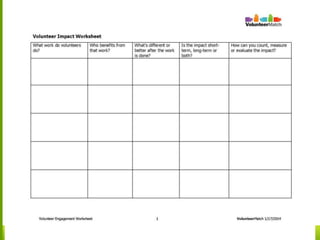
• What work do volunteers do?
– Think about the outcomes or deliverables not just the
tasks. Stuff envelopes becomes prepare fundraising
mailing
• Who benefits from the work?
– Think about both internal and external outcomes
• What’s different or better after the work is done?
– Deliverables or outcomes plus client interactions and
impacts
• Is the impact short-term, long-term, or both?
• How can you count, measure or evaluate the
impact?
8
Understand the story you need to tell
Not everyone may have the same idea about the
value of the work volunteers do.
• Talk to your stakeholders
– Volunteers, clients, community members, program
managers, executive staff, leadership staff, etc.
– Ask what they think about volunteers/work and listen.
– Ask for examples but don’t try to defend or change
minds
• Use this information to start sharing the story of
your volunteers
9
Understand the story you need to tell
• Remember the goal is to help others understand
that:
– Volunteers have valuable (and invaluable) impacts on
your organization. They are more important than just
a head count or number of hours.
– The work they do is mission-critical, not something
that is just nice to have
– Volunteers are doing real work – your job is not just to
keep them busy and happy
• You have complete control over how you talk
about volunteers and the work they do!
10
Share this story with your organization
and the community
• Change the way you talk about volunteer
accomplishments in day-to-day conversations
and emails.
• Include the impact and outcomes in recognition
events – to the volunteers and to others.
– Share these outcomes with stakeholders – especially
leaders/decision makers.
• Tell the story of why volunteers matter to your
community.
– Videos, interviews, narratives – include as many
stakeholders as you can
11
12
Getting Started!
• Learn what matters to your volunteers
– Consider recruiting a team of volunteers to help
– Surveys, interviews, what they tell their friends &
family, why they volunteer
• Look at your current opportunities/position
descriptions
– Incorporate outcomes/impacts
– Design new roles with your mission and impact in mind
– Another great role for volunteers!
13
Getting Started!
• Change how you talk about volunteers
– You can’t control what others think, but you can control
how you talk about the work they do and why it matters
– Tell your story every day and make sure to include the
impacts and the Why!
• Start small
– Think about a pilot program or focus on one
role/department at a time
– You don’t have to change everything all at once
– Don’t leave your volunteers out of the process. They
are the most invested in how things are/will be.
Thanks for attending!
Join us online:
Like us on Facebook: www.Facebook.com/VolunteerMatch
Follow us on Twitter: @VolunteerMatch
Visit Engaging Volunteers, our nonprofit blog:
blogs.volunteermatch.org/engagingvolunteers/
Learning Center
http://learn.volunteermatch.org
For any questions contact:
Jennifer Bennett
@JenBennettCVA
jbennett@volunteermatch.org
14
15

Re=Energize Your Volunteer Program: Creating Mission-Driven Opportunities

  • 1.
    Jennifer Bennett @JenBennettCVA CVA,Senior Manager, Education & Training
  • 2.
    What we’re talkingabout today • Moving volunteers from a nice to have to key component in your organization’s success • Creating an emotional connection to the work • Transitioning to Mission-Driven volunteer opportunities • Share your mission-driven story of volunteer engagement • Getting started in your own program 2
  • 3.
    Shifting how youthink about volunteers • Think about volunteers as being a key component to your organization’s success – Shift away from a traditional, nice to have, resource • Instead of focusing on the “I just want to help” statements ask volunteers about their motivations – What are they getting out of volunteering? Can and should be personal. Ask them to answer Why? • Include impact and outcomes in your recognition – Don’t just say thank you, share “because you volunteered…” 3
  • 4.
    Create a personalconnection to the work When developing mission-driven work it is important to create a connection to the work • Some have the most personal connection – Support others in the same way they were supported – Can be powerful, but this motivation (like any other) needs to be managed and those volunteers need to practice good self-care • This emotion, gratitude, can be a good example of why this work matters • Volunteers, clients, families – this is where our stories about mission-driven work comes from 4
  • 5.
    Mission-driven volunteer opportunities Makingthe transition to mission-driven opportunity design may take a shift in thinking • Some roles, activities, responsibilities, may not change, but the way we talk about them has to • Friendly Visitor becomes Patient Caregiver – Create a clear description of the responsibilities and the role on the team. – Work with physicians, social workers, etc. Support the patient and family emotionally. – Emphasize the skills, characteristics of a good patient caregiver, rather than it being just stopping by and saying “Hi” 5
  • 6.
    Mission-driven volunteer opportunities •Office/Clerical Assistant becomes Record Manager, Organizational Wizard – Put the focus on why the work matters, not the specific work. – Must be able to type 50 wpm, instead put your organizational skills to use to help people during a difficult time. – Not everyone wants to, or can, provide direct client services. Organizational skills, strong attention to details allows for accurate reporting, easier process for clients and community. 6
  • 7.
    Roles still needto be accurate Don’t misrepresent the work, but focus on the outcomes and impacts rather than the tasks. • Remember what your volunteers, clients, and community members told you about the work and their experiences – What mattered about the work? – How did the work make an impact? – Why are they volunteering with you in this way? • Match this information to the roles, activities, and responsibilities 7
  • 8.
    Mission-driven opportunities • Whatwork do volunteers do? – Think about the outcomes or deliverables not just the tasks. Stuff envelopes becomes prepare fundraising mailing • Who benefits from the work? – Think about both internal and external outcomes • What’s different or better after the work is done? – Deliverables or outcomes plus client interactions and impacts • Is the impact short-term, long-term, or both? • How can you count, measure or evaluate the impact? 8
  • 9.
    Understand the storyyou need to tell Not everyone may have the same idea about the value of the work volunteers do. • Talk to your stakeholders – Volunteers, clients, community members, program managers, executive staff, leadership staff, etc. – Ask what they think about volunteers/work and listen. – Ask for examples but don’t try to defend or change minds • Use this information to start sharing the story of your volunteers 9
  • 10.
    Understand the storyyou need to tell • Remember the goal is to help others understand that: – Volunteers have valuable (and invaluable) impacts on your organization. They are more important than just a head count or number of hours. – The work they do is mission-critical, not something that is just nice to have – Volunteers are doing real work – your job is not just to keep them busy and happy • You have complete control over how you talk about volunteers and the work they do! 10
  • 11.
    Share this storywith your organization and the community • Change the way you talk about volunteer accomplishments in day-to-day conversations and emails. • Include the impact and outcomes in recognition events – to the volunteers and to others. – Share these outcomes with stakeholders – especially leaders/decision makers. • Tell the story of why volunteers matter to your community. – Videos, interviews, narratives – include as many stakeholders as you can 11
  • 12.
    12 Getting Started! • Learnwhat matters to your volunteers – Consider recruiting a team of volunteers to help – Surveys, interviews, what they tell their friends & family, why they volunteer • Look at your current opportunities/position descriptions – Incorporate outcomes/impacts – Design new roles with your mission and impact in mind – Another great role for volunteers!
  • 13.
    13 Getting Started! • Changehow you talk about volunteers – You can’t control what others think, but you can control how you talk about the work they do and why it matters – Tell your story every day and make sure to include the impacts and the Why! • Start small – Think about a pilot program or focus on one role/department at a time – You don’t have to change everything all at once – Don’t leave your volunteers out of the process. They are the most invested in how things are/will be.
  • 14.
    Thanks for attending! Joinus online: Like us on Facebook: www.Facebook.com/VolunteerMatch Follow us on Twitter: @VolunteerMatch Visit Engaging Volunteers, our nonprofit blog: blogs.volunteermatch.org/engagingvolunteers/ Learning Center http://learn.volunteermatch.org For any questions contact: Jennifer Bennett @JenBennettCVA jbennett@volunteermatch.org 14
  • 15.