Designing Process
 Name Regd. No
 Amna Zulfikar. 16-Arid-1513.
 Anwal. 16-Arid-1514.
 H.Rida Murad. 16-Arid-1531.
 Saad Nadeem. 16-Arid-1550.
An engineering design is a model of the product or
structure to be engineered. The model is used to
 Evaluate suitability of proposed product/system
 Communicate proposed product to others
An engineering design process describes a set of steps
for constructing an engineering design.
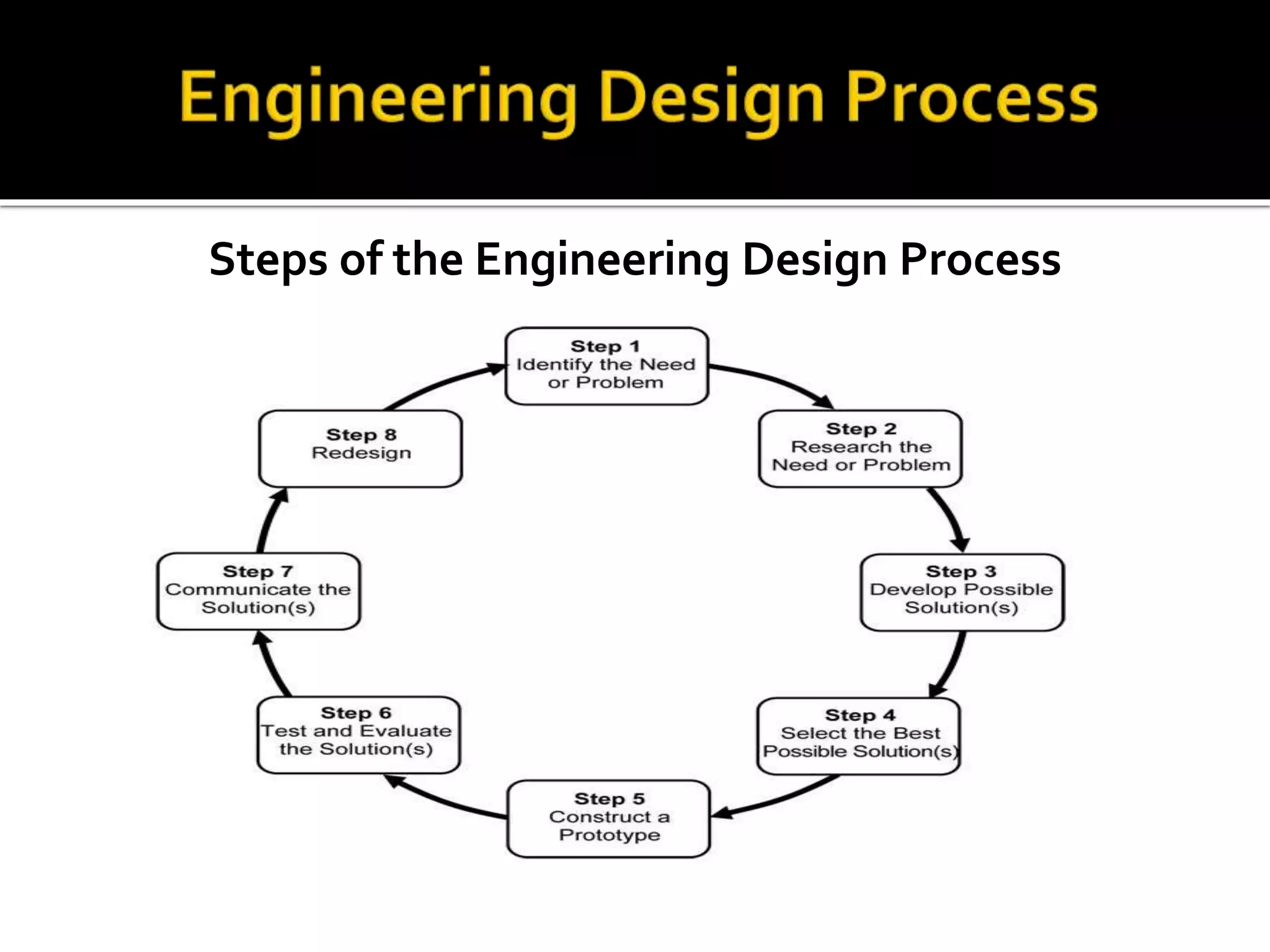
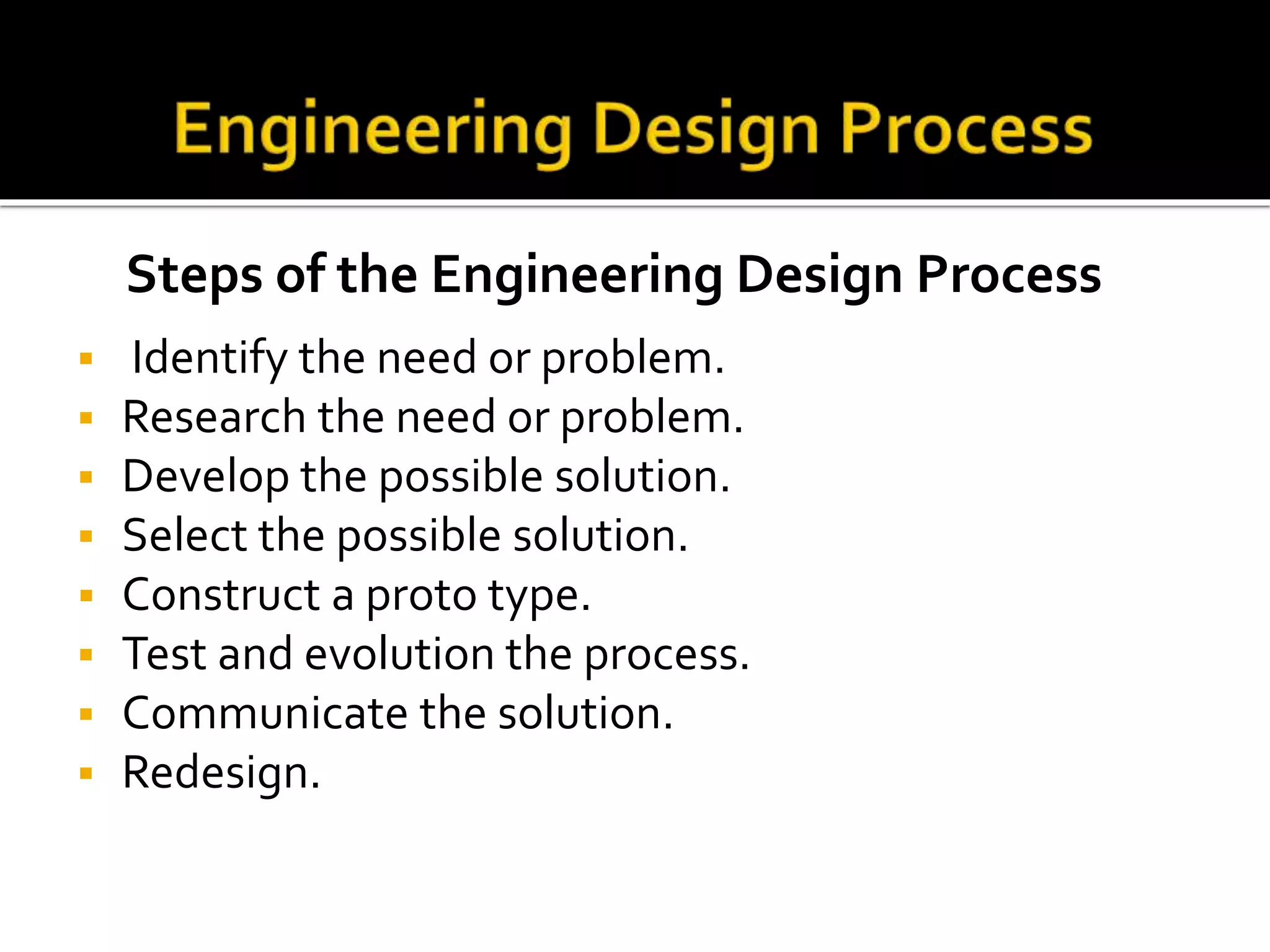
Steps of the Engineering Design Process
 Identify the need or problem.
 Research the need or problem.
 Develop the possible solution.
 Select the possible solution.
 Construct a proto type.
 Test and evolution the process.
 Communicate the solution.
 Redesign.
Steps of the Engineering Design Process
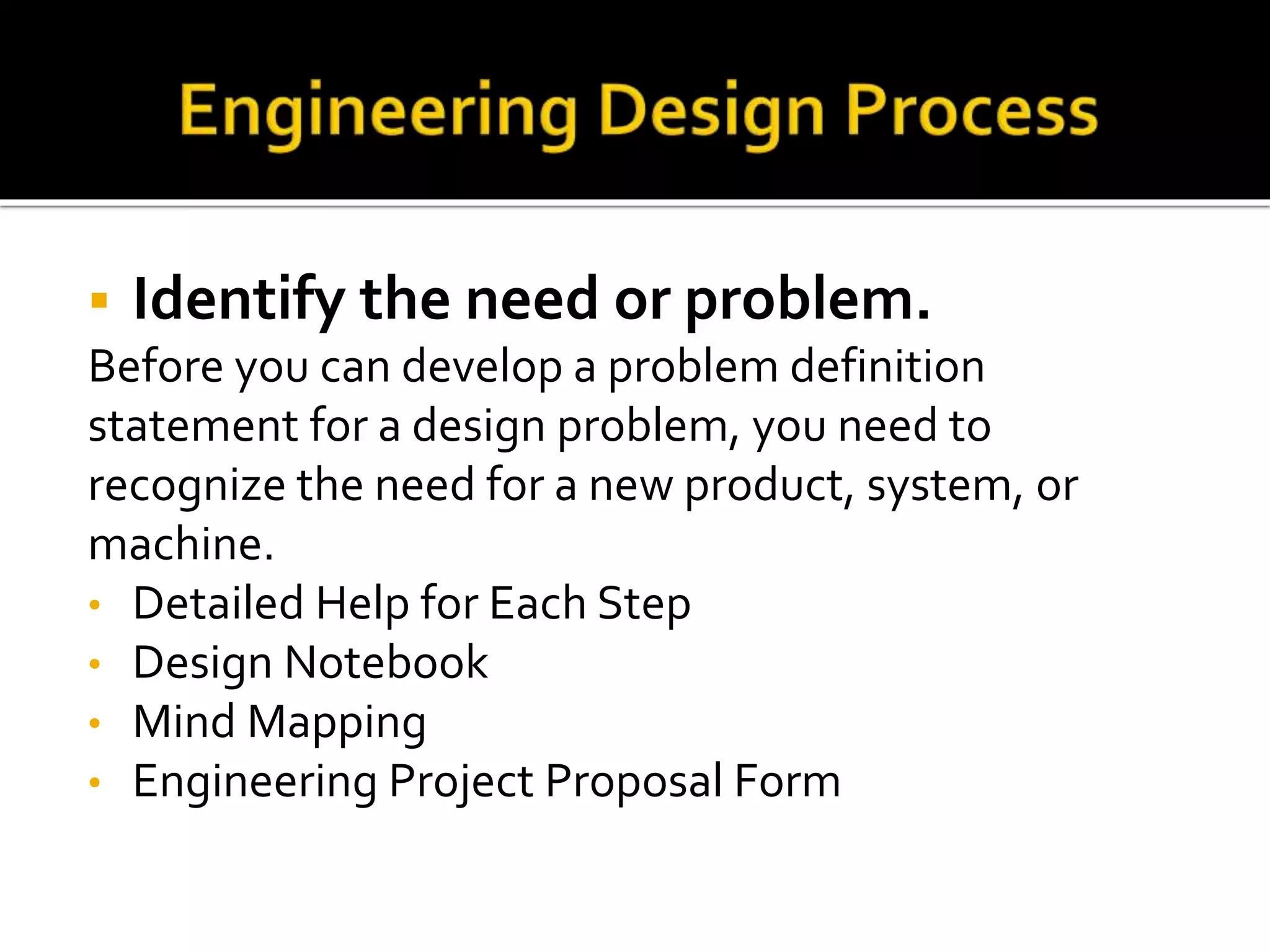
 Identify the need or problem.
Before you can develop a problem definition
statement for a design problem, you need to
recognize the need for a new product, system, or
machine.
• Detailed Help for Each Step
• Design Notebook
• Mind Mapping
• Engineering Project Proposal Form
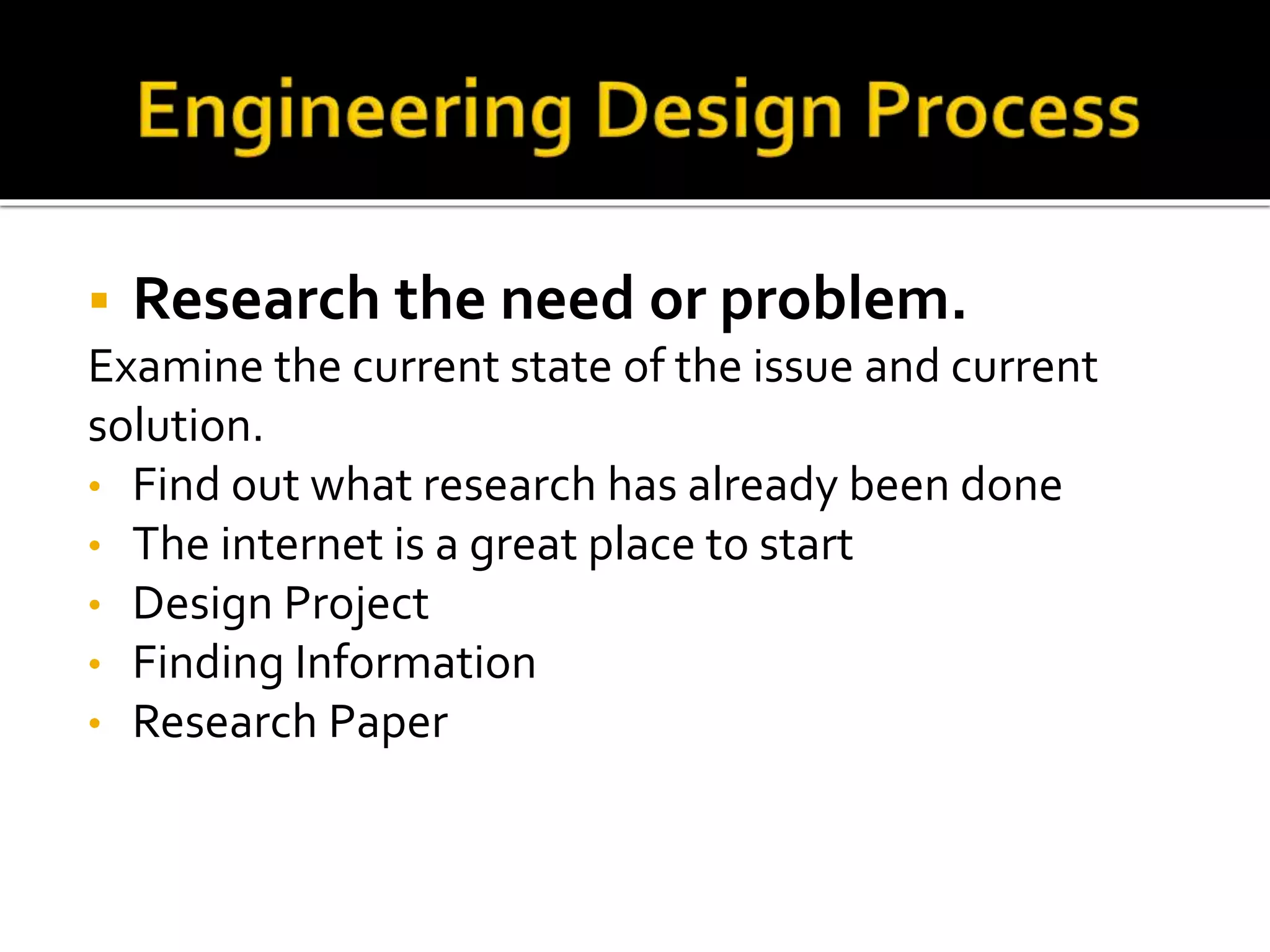
 Research the need or problem.
Examine the current state of the issue and current
solution.
• Find out what research has already been done
• The internet is a great place to start
• Design Project
• Finding Information
• Research Paper
 Develop the possible solution.
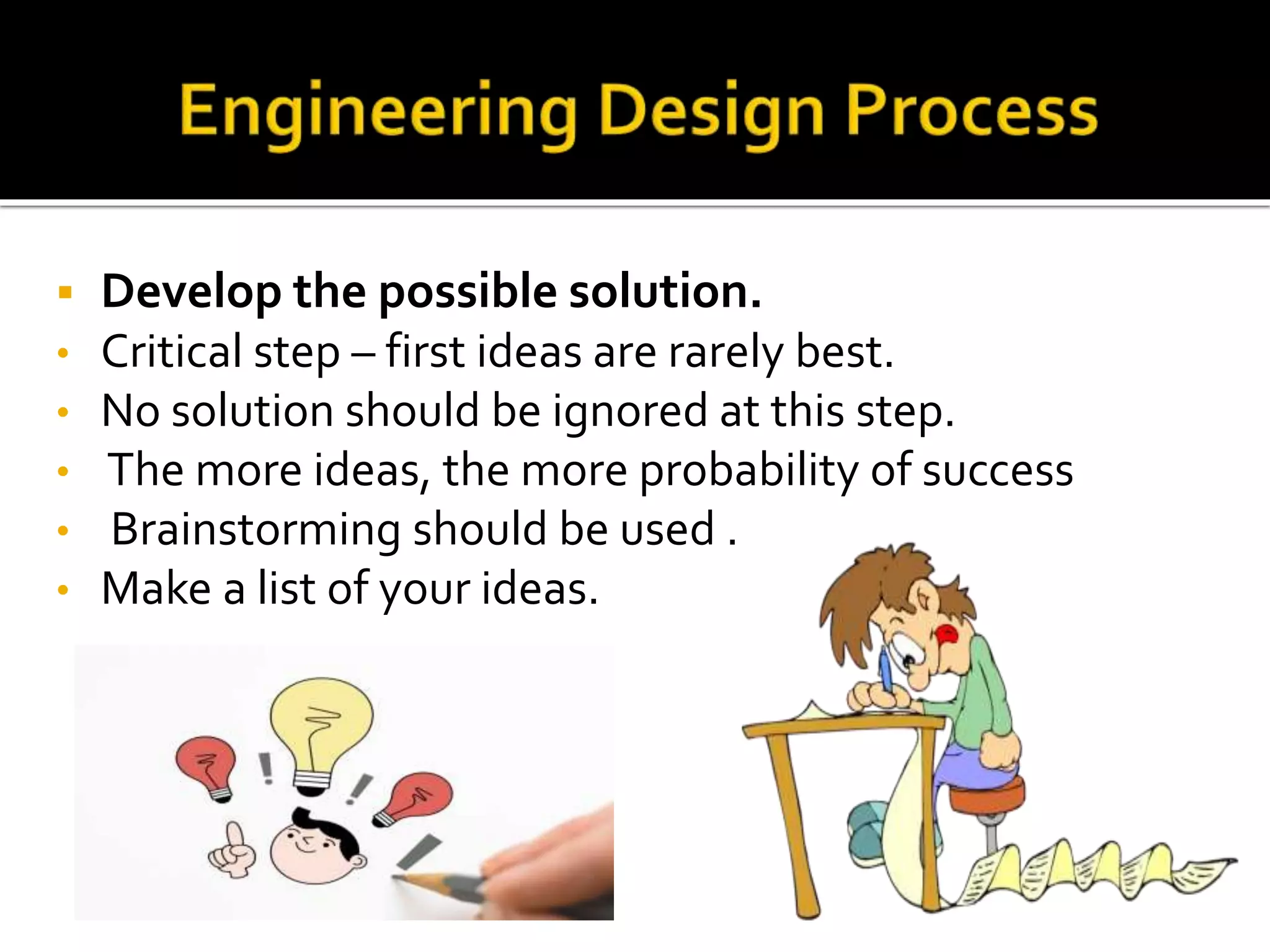
• Critical step – first ideas are rarely best.
• No solution should be ignored at this step.
• The more ideas, the more probability of success
• Brainstorming should be used .
• Make a list of your ideas.
 Select the possible solution.
Determine which solution best meet the original need
or solve the original problem.
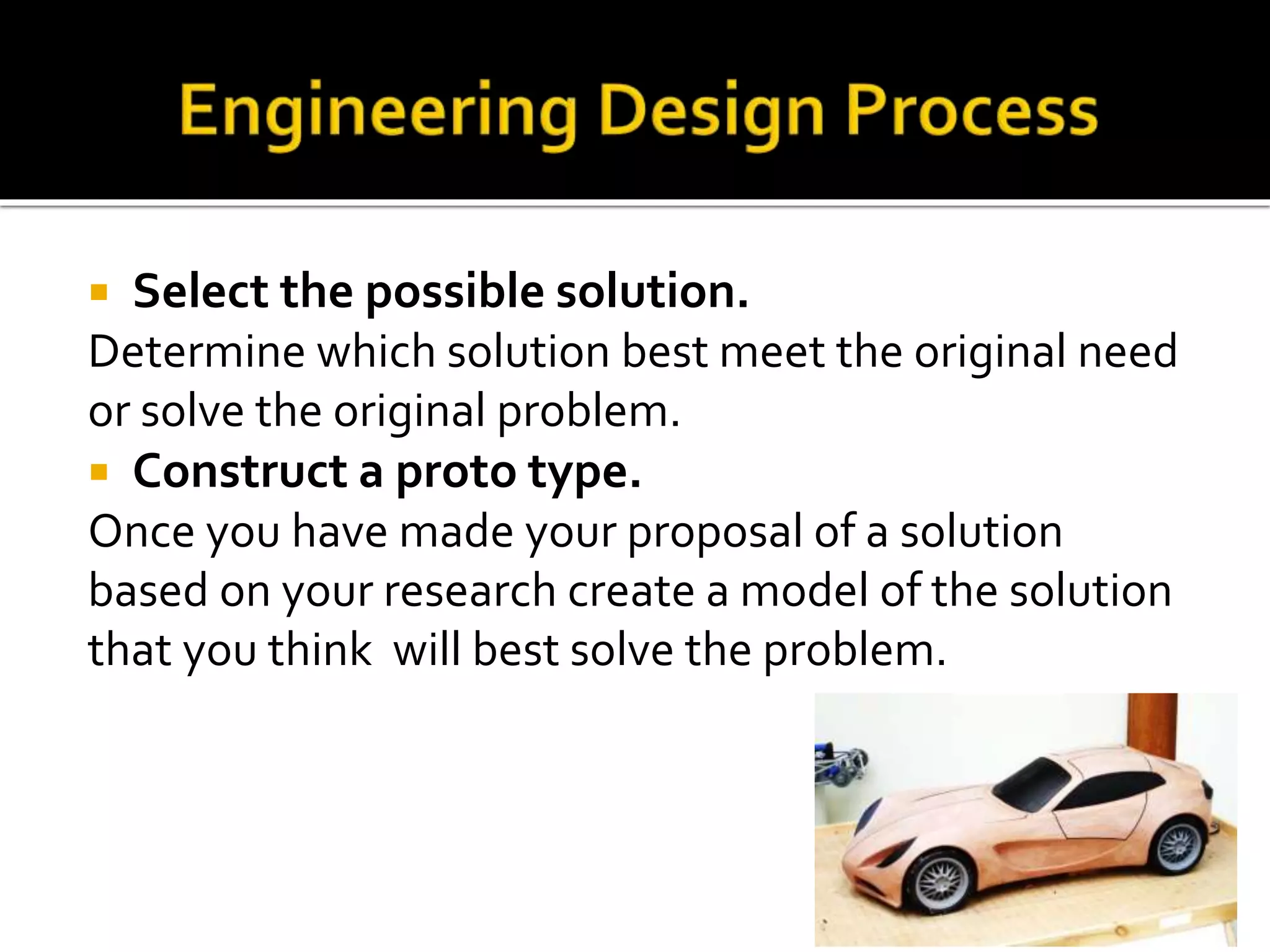
 Construct a proto type.
Once you have made your proposal of a solution
based on your research create a model of the solution
that you think will best solve the problem.
 Test and evolution the process.
• You will need to create a test for your solution.
• Some projects may be destroyed after testing, So
might went to come up with non- destructive tests.
 Communicate the solution.
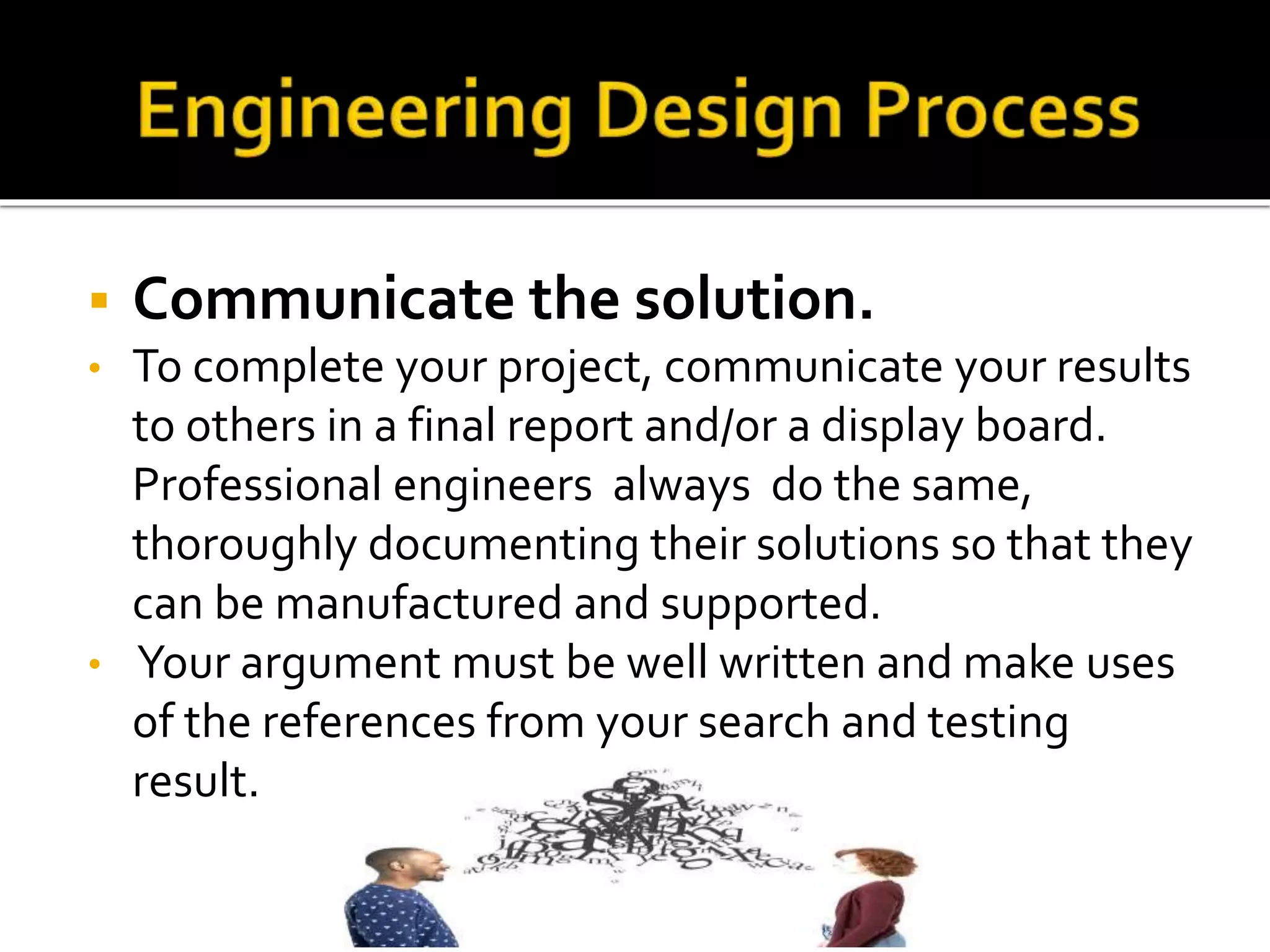
• To complete your project, communicate your results
to others in a final report and/or a display board.
Professional engineers always do the same,
thoroughly documenting their solutions so that they
can be manufactured and supported.
• Your argument must be well written and make uses
of the references from your search and testing
result.
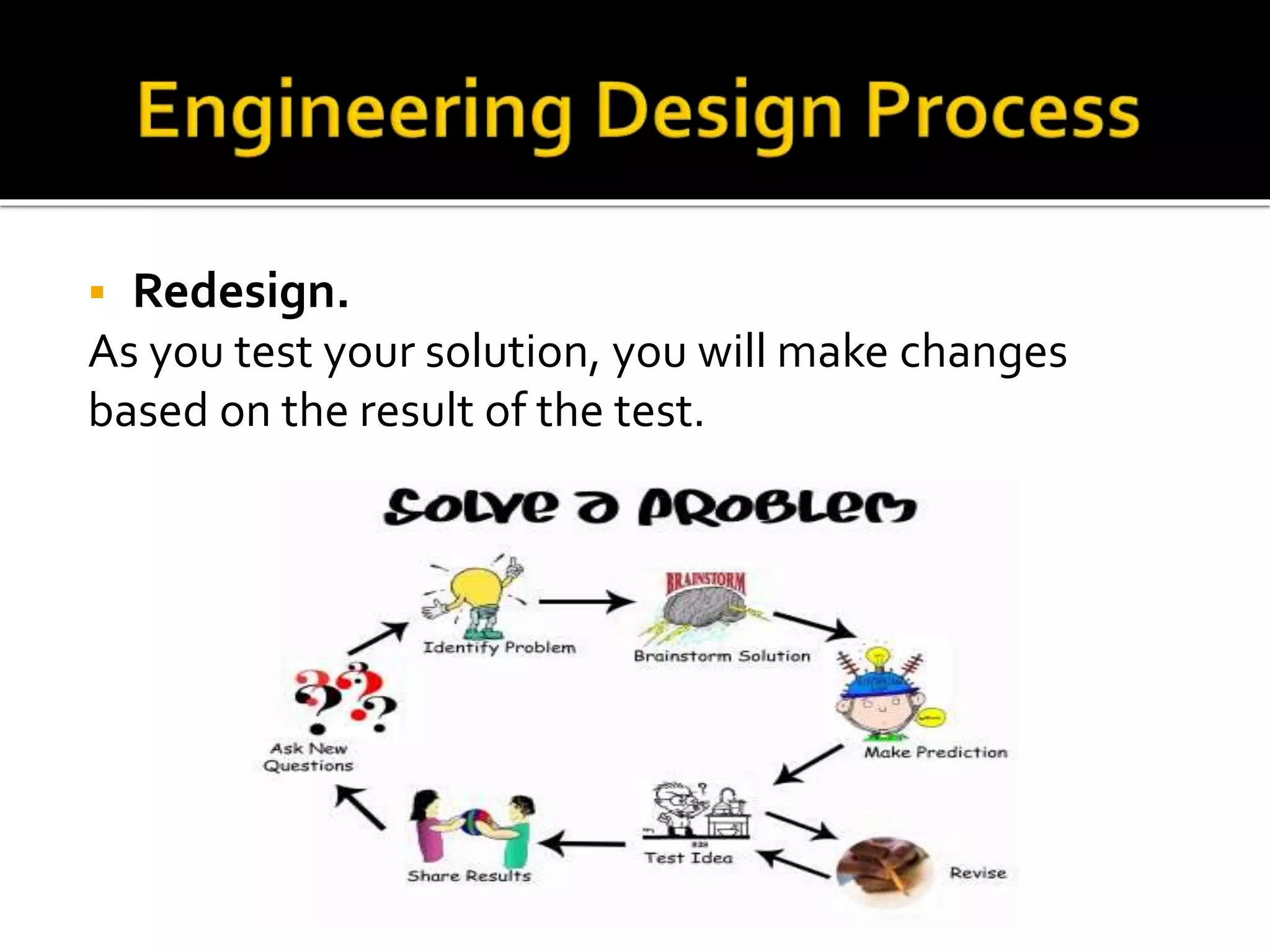
 Redesign.
As you test your solution, you will make changes
based on the result of the test.
 The Benefits of Process Engineering
• significant and wide ranging.
• eliminating unneeded steps from a process. making the
process or system safer and increasing the quality.
• consistency.
Design Process

Design Process

  • 1.
  • 2.
     Name Regd.No  Amna Zulfikar. 16-Arid-1513.  Anwal. 16-Arid-1514.  H.Rida Murad. 16-Arid-1531.  Saad Nadeem. 16-Arid-1550.
  • 4.
    An engineering designis a model of the product or structure to be engineered. The model is used to  Evaluate suitability of proposed product/system  Communicate proposed product to others An engineering design process describes a set of steps for constructing an engineering design.
  • 5.
    Steps of theEngineering Design Process
  • 6.
     Identify theneed or problem.  Research the need or problem.  Develop the possible solution.  Select the possible solution.  Construct a proto type.  Test and evolution the process.  Communicate the solution.  Redesign. Steps of the Engineering Design Process
  • 7.
     Identify theneed or problem. Before you can develop a problem definition statement for a design problem, you need to recognize the need for a new product, system, or machine. • Detailed Help for Each Step • Design Notebook • Mind Mapping • Engineering Project Proposal Form
  • 8.
     Research theneed or problem. Examine the current state of the issue and current solution. • Find out what research has already been done • The internet is a great place to start • Design Project • Finding Information • Research Paper
  • 9.
     Develop thepossible solution. • Critical step – first ideas are rarely best. • No solution should be ignored at this step. • The more ideas, the more probability of success • Brainstorming should be used . • Make a list of your ideas.
  • 10.
     Select thepossible solution. Determine which solution best meet the original need or solve the original problem.  Construct a proto type. Once you have made your proposal of a solution based on your research create a model of the solution that you think will best solve the problem.
  • 11.
     Test andevolution the process. • You will need to create a test for your solution. • Some projects may be destroyed after testing, So might went to come up with non- destructive tests.
  • 12.
     Communicate thesolution. • To complete your project, communicate your results to others in a final report and/or a display board. Professional engineers always do the same, thoroughly documenting their solutions so that they can be manufactured and supported. • Your argument must be well written and make uses of the references from your search and testing result.
  • 13.
     Redesign. As youtest your solution, you will make changes based on the result of the test.
  • 14.
     The Benefitsof Process Engineering • significant and wide ranging. • eliminating unneeded steps from a process. making the process or system safer and increasing the quality. • consistency.