






HR Demand


Presented By: Karman Hoang, Krista Laurie
             & Melanie Perera
Learning
      Objectives
• Index/Trend Analysis
• Expert Forecasting
• Two Expert Forecasting
  Techniques
   a.) Delphi Technique
   b.) Nominal Group Technique
• Participation/Game
• Conclusion
HR Demand


What are some reasons why is it
important for organizations to
   forecast for the future?
No Organization is
Psychic …
Index/Trend
             Analysis

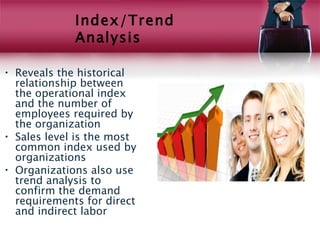
• Reveals the historical
  relationship between
  the operational index
  and the number of
  employees required by
  the organization
• Sales level is the most
  common index used by
  organizations
• Organizations also use
  trend analysis to
  confirm the demand
  requirements for direct
  and indirect labor
5 Steps to Conduct an Effective Trend
               Analysis


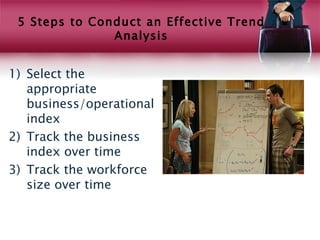
1) Select the
   appropriate
   business/operational
   index
2) Track the business
   index over time
3) Track the workforce
   size over time
More Index/Trend
    Analysis
4) Calculate the average ratio of the
   business index to the workforce size
  = Level of sales for each year of
   historical data/ number of employees
   required to produce that year’s level of
   sales
5)Calculate the forecasted demand for
   labor
= Annual forecast for business index /
   average employee requirement ratio for
   each year
 
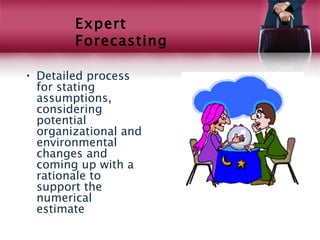
        Expert
        Forecasting

• Detailed process
  for stating
  assumptions,
  considering
  potential
  organizational and
  environmental
  changes and
  coming up with a
  rationale to
  support the
  numerical
  estimate
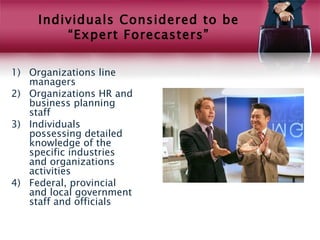
Individuals Considered to be
         “Expert Forecasters”

1) Organizations line
   managers
2) Organizations HR and
   business planning
   staff
3) Individuals
   possessing detailed
   knowledge of the
   specific industries
   and organizations
   activities
4) Federal, provincial
   and local government
   staff and officials
Delphi
Technique
About
         Delphi
• This forecasting technique was created in
  1950
• This technique is a qualitative method for
  deciding on specific detailed ideas of long-
  run HR demand
• The Delphi Method is based on a structured
  process for collecting and distilling
  knowledge from a group of experts by means
  of a series of questionnaires interspersed
  with controlled opinion feedback
• A key aspect of this demand forecasting
  technique is that the group of experts that
  are chose never meet face to face
Advantages of
               Delphi
• As the experts do not meet face
  to face this avoids many of the
  issues that may occur during
  face to face communication
  among groups as some may feel
  reluctant to participate due to:
 1.) shyness
 2.) perceived lower status or
  authority
 3.) perceived communication
  deficiencies
 4.) issues of individual dominance
• Therefore this technique can
  allow for each individual to
  participate equally and allow for
  valid feedback from everyone
• This technique also uses expert
  from vase geographical regions
  allowing for various inputs
Disadvantages of Delphi


 • Can be timely and costly as opposed to
   using other forecasting techniques
 • Since the results cannot be validated
   statistically, this process is greatly
   dependent on the individual knowledge
   and commitment of each of the experts
   involved
 • If the experts are from one particular
   field, they may end up giving
   information from this field only as
   apposed to be more innovative and
   creative
Six Steps of the Delphi
         Technique

1.) Define and Refine the Issue or
    Question

2.) Identify the Experts, Terms, and
Time Horizon

3.) Orient the Experts
Six Steps of the Delphi
       Technique
4.) Issue the First-Round
Questionnaire

5.) Issue the First-Round
Questionnaire Summary and the
Second Round of Questionnaires

6.) Continue Issuing Questionnaires
Nominal Group
  Technique
What Is
               It?

• A long run forecasting technique that
  uses expert assessments 
• Studies have shown that NGT is effective
  during brainstorming sessions because
  it allows all participants to have an
  equal voice  
• The study also predicted that NGT will
  replace focus groups as the qualitative
  research method of choice and reduce
  the need for administrative surveys
How Is It Different From
        The Delphi Technique

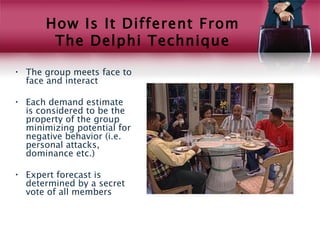
• The group meets face to
  face and interact 

• Each demand estimate
  is considered to be the
  property of the group
  minimizing potential for
  negative behavior (i.e.
  personal attacks,
  dominance etc.) 

• Expert forecast is
  determined by a secret
  vote of all members
The Seven Steps To
Carry Out The NGT
Process
There are seven steps to carry out the NGT process
 

3.Define and refine the issue or question and the
relevant time horizon 
4.Select the experts 
5.Issue the HR demand statements to the experts 
6.Apply expert knowledge, state assumptions and
prepare an estimate 
7.Meet face to face 
8.Discuss the demand estimates and assumptions 
9.Vote secretly to determine the expert demand
assessment
It’s Game Time!


        BANK IT!
Reference
           s
Belcourt, McBey, Strategic Human
Resources Planning, Nelson
Canada, 4th edition.

HR Demand

  • 1.
    HR Demand Presented By:Karman Hoang, Krista Laurie & Melanie Perera
  • 2.
    Learning Objectives • Index/Trend Analysis • Expert Forecasting • Two Expert Forecasting Techniques a.) Delphi Technique b.) Nominal Group Technique • Participation/Game • Conclusion
  • 3.
    HR Demand What aresome reasons why is it important for organizations to forecast for the future?
  • 4.
  • 5.
    Index/Trend Analysis • Reveals the historical relationship between the operational index and the number of employees required by the organization • Sales level is the most common index used by organizations • Organizations also use trend analysis to confirm the demand requirements for direct and indirect labor
  • 6.
    5 Steps toConduct an Effective Trend Analysis 1) Select the appropriate business/operational index 2) Track the business index over time 3) Track the workforce size over time
  • 7.
    More Index/Trend Analysis 4) Calculate the average ratio of the business index to the workforce size = Level of sales for each year of historical data/ number of employees required to produce that year’s level of sales 5)Calculate the forecasted demand for labor = Annual forecast for business index / average employee requirement ratio for each year
  • 8.
      Expert Forecasting • Detailed process for stating assumptions, considering potential organizational and environmental changes and coming up with a rationale to support the numerical estimate
  • 9.
    Individuals Considered tobe “Expert Forecasters” 1) Organizations line managers 2) Organizations HR and business planning staff 3) Individuals possessing detailed knowledge of the specific industries and organizations activities 4) Federal, provincial and local government staff and officials
  • 10.
  • 11.
    About Delphi • This forecasting technique was created in 1950 • This technique is a qualitative method for deciding on specific detailed ideas of long- run HR demand • The Delphi Method is based on a structured process for collecting and distilling knowledge from a group of experts by means of a series of questionnaires interspersed with controlled opinion feedback • A key aspect of this demand forecasting technique is that the group of experts that are chose never meet face to face
  • 12.
    Advantages of Delphi • As the experts do not meet face to face this avoids many of the issues that may occur during face to face communication among groups as some may feel reluctant to participate due to: 1.) shyness 2.) perceived lower status or authority 3.) perceived communication deficiencies 4.) issues of individual dominance • Therefore this technique can allow for each individual to participate equally and allow for valid feedback from everyone • This technique also uses expert from vase geographical regions allowing for various inputs
  • 13.
    Disadvantages of Delphi • Can be timely and costly as opposed to using other forecasting techniques • Since the results cannot be validated statistically, this process is greatly dependent on the individual knowledge and commitment of each of the experts involved • If the experts are from one particular field, they may end up giving information from this field only as apposed to be more innovative and creative
  • 14.
    Six Steps ofthe Delphi Technique 1.) Define and Refine the Issue or Question 2.) Identify the Experts, Terms, and Time Horizon 3.) Orient the Experts
  • 15.
    Six Steps ofthe Delphi Technique 4.) Issue the First-Round Questionnaire 5.) Issue the First-Round Questionnaire Summary and the Second Round of Questionnaires 6.) Continue Issuing Questionnaires
  • 16.
    Nominal Group Technique
  • 17.
    What Is It? • A long run forecasting technique that uses expert assessments  • Studies have shown that NGT is effective during brainstorming sessions because it allows all participants to have an equal voice   • The study also predicted that NGT will replace focus groups as the qualitative research method of choice and reduce the need for administrative surveys
  • 18.
    How Is ItDifferent From The Delphi Technique • The group meets face to face and interact  • Each demand estimate is considered to be the property of the group minimizing potential for negative behavior (i.e. personal attacks, dominance etc.)  • Expert forecast is determined by a secret vote of all members
  • 19.
    The Seven StepsTo Carry Out The NGT Process There are seven steps to carry out the NGT process   3.Define and refine the issue or question and the relevant time horizon  4.Select the experts  5.Issue the HR demand statements to the experts  6.Apply expert knowledge, state assumptions and prepare an estimate  7.Meet face to face  8.Discuss the demand estimates and assumptions  9.Vote secretly to determine the expert demand assessment
  • 20.
  • 21.
    Reference s Belcourt, McBey, Strategic Human Resources Planning, Nelson Canada, 4th edition.

Editor's Notes

  • #11 http://trendsoutheast.org/2011/all-issues/issue-02/delphi-method/