Code of Conduct


Code of conduct is ser of conventional
principles and expectations that are
considered binding on any person who is
a member of a particular group
Features of the code of
Conduct
 1.The code of conduct is a government
 induced self-imposed and mutually
 agreed voluntary principle of discipline.
 2. It aims at preventing disputes
 3.It restrains both the parties from
 unilateral action
 4. The code compels the parties not to
 indulge in strike and lockouts without
 notice
5. It requires that constructive co-operation should
  be encouraged between workers and
  managements at all levels.
6. It enjoins upon the management to take prompt
  action for the settlement of grievances, and
  implementations of awards and agreements.
7. Any action that stands in the way of cordial
  relations and is against the spirit of the code on
  the part of both managements and trade unions
  should be avoided.
8. Both the central and state governments should
  rectify any shortcomings in the machinery they
  constitute for the administrations of labor laws.
9. Employers are required to recognize the
  majority union in an establishment.
10. The code of discipline stipulates: ”In order to
  maintain discipline in industry both the public
  and private sectors.
Factors guiding code of
conduct
1.Honesty and Integrity
2.Disclosure of Information
3. Harassment
4. Outside Employment
5. Conflict of Interest
6.Confidentiality
7. Equal Opportunity Employer
8.Misusing Company Resources
9.Health and safety
10.Payment and Gifts
Industrial Conflicts

 According to the Industrial Disputes Act
 1947,”Industrial Disputes mean any
 dispute or difference between employers
 and employers, or between employers
 and workmen,organisation or between
 workmen and workmen, which is
 connected with the employment or non
 employment or with the conditions of
 labor of any person
Nature of Industrial Disputes

 Industrial Conflict is Human Conflict
 Urge for Higher Wages and Profit
 Conflict among Workers and Employers
 Conflict is not Personal
 Limitations of the system
 Labour Power
 Conflict of interests
 Profit maximization
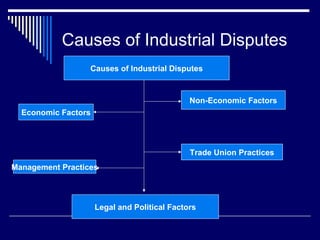
Causes of Industrial Disputes
                  Causes of Industrial Disputes


                                              Non-Economic Factors
  Economic Factors


                                              Trade Union Practices
Management Practices


                     Legal and Political Factors
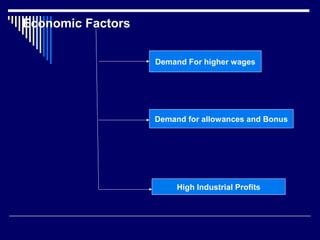
Economic Factors

                   Demand For higher wages


                   Demand for allowances and Bonus


                        High Industrial Profits
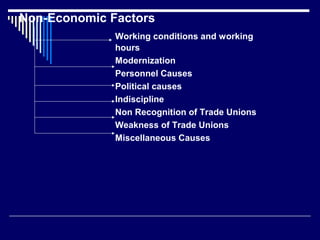
Non-Economic Factors
              Working conditions and working
              hours
              Modernization
              Personnel Causes
              Political causes
              Indiscipline
              Non Recognition of Trade Unions
              Weakness of Trade Unions
              Miscellaneous Causes
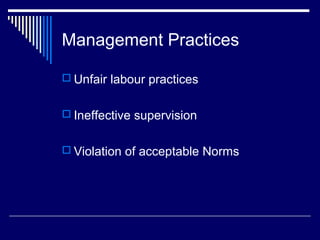
Management Practices

 Unfair labour practices


 Ineffective supervision


 Violation of acceptable Norms
Trade Union Practices


 Union Rivalry


 No cooperative Approach
Legal and Political Factors


 Multiplicity of Labor laws
 Political Interference

Code of conduct

  • 1.
    Code of Conduct Codeof conduct is ser of conventional principles and expectations that are considered binding on any person who is a member of a particular group
  • 2.
    Features of thecode of Conduct 1.The code of conduct is a government induced self-imposed and mutually agreed voluntary principle of discipline. 2. It aims at preventing disputes 3.It restrains both the parties from unilateral action 4. The code compels the parties not to indulge in strike and lockouts without notice
  • 3.
    5. It requiresthat constructive co-operation should be encouraged between workers and managements at all levels. 6. It enjoins upon the management to take prompt action for the settlement of grievances, and implementations of awards and agreements. 7. Any action that stands in the way of cordial relations and is against the spirit of the code on the part of both managements and trade unions should be avoided.
  • 4.
    8. Both thecentral and state governments should rectify any shortcomings in the machinery they constitute for the administrations of labor laws. 9. Employers are required to recognize the majority union in an establishment. 10. The code of discipline stipulates: ”In order to maintain discipline in industry both the public and private sectors.
  • 5.
    Factors guiding codeof conduct 1.Honesty and Integrity 2.Disclosure of Information 3. Harassment 4. Outside Employment 5. Conflict of Interest 6.Confidentiality 7. Equal Opportunity Employer 8.Misusing Company Resources 9.Health and safety 10.Payment and Gifts
  • 6.
    Industrial Conflicts Accordingto the Industrial Disputes Act 1947,”Industrial Disputes mean any dispute or difference between employers and employers, or between employers and workmen,organisation or between workmen and workmen, which is connected with the employment or non employment or with the conditions of labor of any person
  • 7.
    Nature of IndustrialDisputes  Industrial Conflict is Human Conflict  Urge for Higher Wages and Profit  Conflict among Workers and Employers  Conflict is not Personal  Limitations of the system  Labour Power  Conflict of interests  Profit maximization
  • 8.
    Causes of IndustrialDisputes Causes of Industrial Disputes Non-Economic Factors Economic Factors Trade Union Practices Management Practices Legal and Political Factors
  • 9.
    Economic Factors Demand For higher wages Demand for allowances and Bonus High Industrial Profits
  • 10.
    Non-Economic Factors Working conditions and working hours Modernization Personnel Causes Political causes Indiscipline Non Recognition of Trade Unions Weakness of Trade Unions Miscellaneous Causes
  • 11.
    Management Practices  Unfairlabour practices  Ineffective supervision  Violation of acceptable Norms
  • 12.
    Trade Union Practices Union Rivalry  No cooperative Approach
  • 13.
    Legal and PoliticalFactors  Multiplicity of Labor laws  Political Interference