


HPV Vaccination
when and why
DR KAWITA BAPAT
Plan of discussion
 Cervical cancer disease burden
 Prevention with HPV vaccination
 Vaccination of sexually active women
 Opportunity of Postpartum HPV vaccination
 Importance of genital warts prevention
 Real world effectiveness data
 Safety of HPV vaccine
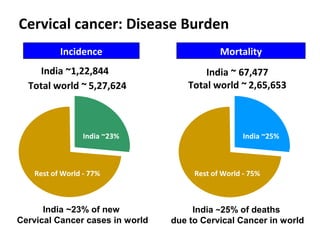
India ~1,22,844
Total world ~ 5,27,624
India ~23% of new
Cervical Cancer cases in world
India ~ 67,477
Total world ~ 2,65,653
India ~23%
Rest of World - 77%
India ~25% of deaths
due to Cervical Cancer in world
Rest of World - 73%
India - 27%
Cervical cancer: Disease Burden
Incidence Mortality
India ~25%
Rest of World - 75%
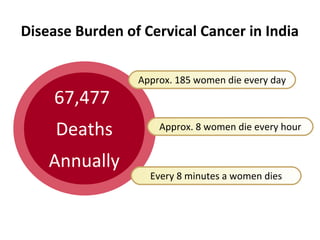
67,477
Deaths
Annually
Approx. 185 women die every day
Every 8 minutes a women dies
Approx. 8 women die every hour
Disease Burden of Cervical Cancer in India
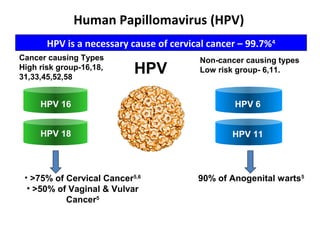
HPV 16
HPV 18
HPV 6
HPV 11
Cancer causing Types
High risk group-16,18,
31,33,45,52,58
Non-cancer causing types
Low risk group- 6,11.
• >75% of Cervical Cancer5,6
• >50% of Vaginal & Vulvar
Cancer5
90% of Anogenital warts5
HPV is a necessary cause of cervical cancer – 99.7%4
HPV
Human Papillomavirus (HPV)
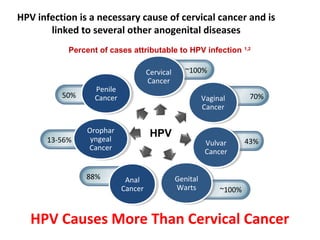
HPV infection is a necessary cause of cervical cancer and is
linked to several other anogenital diseases
Genital
Warts
Genital
Warts ~100%
70%
~100%
43%
88%
Cervical
Cancer
Cervical
Cancer
Vaginal
Cancer
Vaginal
Cancer
Vulvar
Cancer
Vulvar
Cancer
Anal
Cancer
Anal
Cancer
13-56%
Orophar
yngeal
Cancer
Orophar
yngeal
Cancer
50%
Penile
Cancer
Penile
Cancer
HPV
Percent of cases attributable to HPV infection 1,2
HPV Causes More Than Cervical Cancer
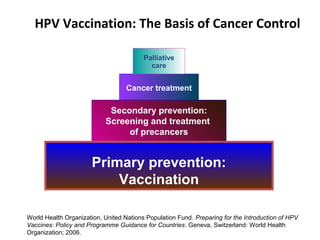
HPV Vaccination: The Basis of Cancer Control
World Health Organization, United Nations Population Fund. Preparing for the Introduction of HPV
Vaccines: Policy and Programme Guidance for Countries. Geneva, Switzerland: World Health
Organization; 2006.
Palliative
care
Cancer treatment
Secondary prevention:
Screening and treatment
of precancers
Primary prevention:
Vaccination
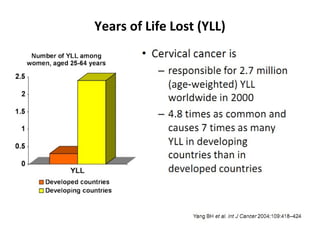
Years of Life Lost (YLL)
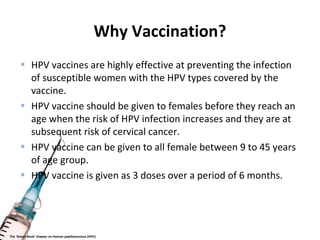
Why Vaccination?
• HPV vaccines are highly effective at preventing the infection
of susceptible women with the HPV types covered by the
vaccine.
• HPV vaccine should be given to females before they reach an
age when the risk of HPV infection increases and they are at
subsequent risk of cervical cancer.
• HPV vaccine can be given to all female between 9 to 45 years
of age group.
• HPV vaccine is given as 3 doses over a period of 6 months.
The ‘Green Book’ chapter on Human papillomavirus (HPV)
Is it worth vaccinating sexually
active women?
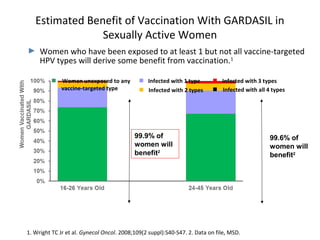
Estimated Benefit of Vaccination With GARDASIL in
Sexually Active Women
99.9% of
women will
benefit2
99.6% of
women will
benefit2
► Women who have been exposed to at least 1 but not all vaccine-targeted
HPV types will derive some benefit from vaccination.1
1. Wright TC Jr et al. Gynecol Oncol. 2008;109(2 suppl):S40-S47. 2. Data on file, MSD.
Infected with all 4 types
Infected with 3 types
Infected with 2 types
Infected with 1 typeWomen unexposed to any
vaccine-targeted type
a
Efficacy after 3 doses in women 24–45 years of age naïve to the relevant type at baseline.
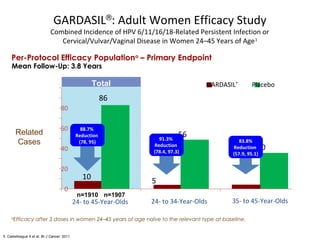
Per-Protocol Efficacy Populationa
– Primary Endpoint
Related
Cases
5510
86
56
30
0
20
40
60
80
24- to 45-Year-Olds 24- to 34-Year-Olds 35- to 45-Year-Olds
n=1910 n=1907
88.7%
Reduction
(78, 95)
91.3%
Reduction
(78.4, 97.3)
83.8%
Reduction
(57.9, 95.1)
GARDASIL®
PlaceboTotal
Mean Follow-Up: 3.8 Years
GARDASIL®
: Adult Women Efficacy Study
Combined Incidence of HPV 6/11/16/18-Related Persistent Infection or
Cervical/Vulvar/Vaginal Disease in Women 24–45 Years of Age1
1. Castellsagué X et al. Br J Cancer. 2011.
GARDASIL®
: FUTURE III: Adult Women Study (LTFU)
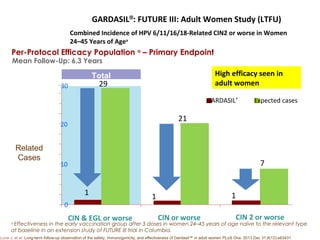
Combined Incidence of HPV 6/11/16/18-Related CIN2 or worse in Women
24–45 Years of Agea
a
Effectiveness in the early vaccination group after 3 doses in women 24–45 years of age naïve to the relevant type
at baseline in an extension study of FUTURE III trial in Columbia.
Per-Protocol Efficacy Population a
– Primary Endpoint
Related
Cases
1511
29
21
7
0
30
CIN & EGL or worse CIN or worse CIN 2 or worse
GARDASIL®
Expected cases
Total
Mean Follow-Up: 6.3 Years
1
20
10
Luna J, et al. Long-term follow-up observation of the safety, immunogenicity, and effectiveness of Gardasil™ in adult women PLoS One. 2013 Dec 31;8(12):e83431
High efficacy seen in
adult women
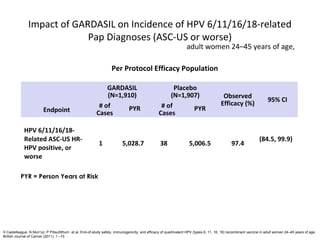
Impact of GARDASIL on Incidence of HPV 6/11/16/18-related
Pap Diagnoses (ASC-US or worse)
Endpoint
GARDASIL
(N=1,910)
Placebo
(N=1,907) Observed
Efficacy (%)
95% CI
# of
Cases
PYR # of
Cases
PYR
HPV 6/11/16/18-
Related ASC-US HR-
HPV positive, or
worse
1 5,028.7 38 5,006.5 97.4
(84.5, 99.9)
PYR = Person Years at Risk
Per Protocol Efficacy Population
X Castellsague, N Mun˜oz, P Pitisuttithum et al, End-of-study safety, immunogenicity, and efficacy of quadrivalent HPV (types 6, 11, 16, 18) recombinant vaccine in adult women 24–45 years of age,
British Journal of Cancer (2011), 1 –10
adult women 24–45 years of age,
Opportunity of HPV vaccination
during postpartum period
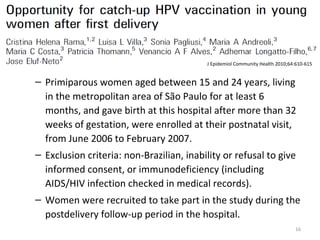
– Primiparous women aged between 15 and 24 years, living
in the metropolitan area of São Paulo for at least 6
months, and gave birth at this hospital after more than 32
weeks of gestation, were enrolled at their postnatal visit,
from June 2006 to February 2007.
– Exclusion criteria: non-Brazilian, inability or refusal to give
informed consent, or immunodeficiency (including
AIDS/HIV infection checked in medical records).
– Women were recruited to take part in the study during the
postdelivery follow-up period in the hospital.
16
J Epidemiol Community Health 2010;64:610-615
17
J Epidemiol Community Health 2010;64:610-615
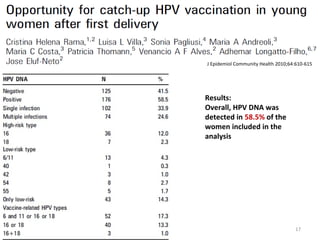
Results:
Overall, HPV DNA was
detected in 58.5% of the
women included in the
analysis
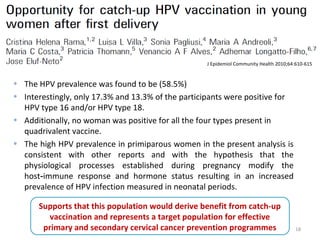
• The HPV prevalence was found to be (58.5%)
• Interestingly, only 17.3% and 13.3% of the participants were positive for
HPV type 16 and/or HPV type 18.
• Additionally, no woman was positive for all the four types present in
quadrivalent vaccine.
• The high HPV prevalence in primiparous women in the present analysis is
consistent with other reports and with the hypothesis that the
physiological processes established during pregnancy modify the
host immune response and hormone status resulting in an increased‑
prevalence of HPV infection measured in neonatal periods.
18
J Epidemiol Community Health 2010;64:610-615
Supports that this population would derive benefit from catch-up
vaccination and represents a target population for effective
primary and secondary cervical cancer prevention programmes
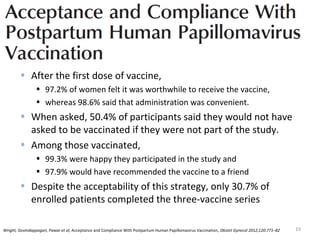
• After the first dose of vaccine,
• 97.2% of women felt it was worthwhile to receive the vaccine,
• whereas 98.6% said that administration was convenient.
• When asked, 50.4% of participants said they would not have
asked to be vaccinated if they were not part of the study.
• Among those vaccinated,
• 99.3% were happy they participated in the study and
• 97.9% would have recommended the vaccine to a friend
• Despite the acceptability of this strategy, only 30.7% of
enrolled patients completed the three-vaccine series
19Wright, Govindappagari, Pawar et al, Acceptance and Compliance With Postpartum Human Papillomavirus Vaccination, Obstet Gynecol 2012;120:771–82
How importance is prevention of other HPV
diseases e.g. Genital Wart (GW)
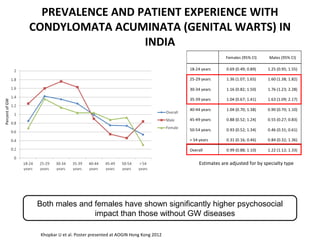
PREVALENCE AND PATIENT EXPERIENCE WITH
CONDYLOMATA ACUMINATA (GENITAL WARTS) IN
INDIA
Khopkar U et al. Poster presented at AOGIN Hong Kong 2012
PercentofGW
Estimates are adjusted for by specialty type
Both males and females have shown significantly higher psychosocial
impact than those without GW diseases
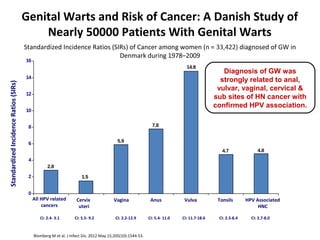
Genital Warts and Risk of Cancer: A Danish Study of
Nearly 50000 Patients With Genital Warts
Blomberg M et al. J Infect Dis. 2012 May 15;205(10):1544-53.
Standardized Incidence Ratios (SIRs) of Cancer among women (n = 33,422) diagnosed of GW in
Denmark during 1978–2009
2.8
1.5
5.9
7.8
14.8
4.7 4.8
0
2
4
6
8
10
12
14
16
All HPV related
cancers
Cervix
uteri
Vagina Anus Vulva Tonsils HPV Associated
HNC
StandardizedIncidenceRatios(SIRs)
CI: 2.4- 3.1 CI: 5.5- 9.2 CI: 2.2-12.9 CI: 5.4- 11.0 CI: 11.7-18.6 CI: 2.3-8.4 CI: 2.7-8.0
Diagnosis of GW was
strongly related to anal,
vulvar, vaginal, cervical &
sub sites of HN cancer with
confirmed HPV association.
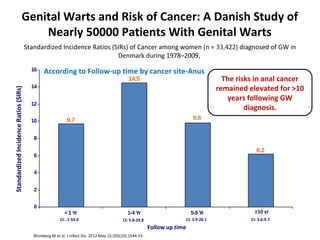
Genital Warts and Risk of Cancer: A Danish Study of
Nearly 50000 Patients With Genital Warts
Blomberg M et al. J Infect Dis. 2012 May 15;205(10):1544-53.
Standardized Incidence Ratios (SIRs) of Cancer among women (n = 33,422) diagnosed of GW in
Denmark during 1978–2009,
The risks in anal cancer
remained elevated for >10
years following GW
diagnosis.
9.7
14.5
9.8
6.2
0
2
4
6
8
10
12
14
16
<1 Yr 1-4 Yr 5-9 Yr ≥10 yr
StandardizedIncidenceRatios(SIRs)
Follow up time
CI: .1-54.0 CI: 5.8-29.8 CI: 3.9-20.1 CI: 3.6-9.7
According to Follow-up time by cancer site-Anus
Real world effectiveness of
QHPV vaccine
Post licensure monitoring of HPV
vaccine
 Post-licensure evaluation of vaccines plays an important role
in monitoring the progress of immunization programs,
demonstrating population impact of vaccines, and providing
data for ongoing policy decisions.
 Established cancer based registries will take decades before
the impact of vaccine on cervical cancer is observed.
 More proximal measures of vaccine impact include outcomes
such as prevalence of HPV vaccine types, incidence of
cervical precancers and genital warts.
Markowitz LE et al. Vaccine. 2010 Jul 5;28(30):4731-7.
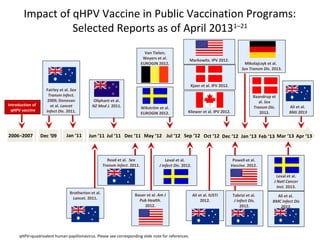
Impact of qHPV Vaccine in Public Vaccination Programs:
Selected Reports as of April 20131–21
qHPV=quadrivalent human papillomavirus. Please see corresponding slide note for references.
Markowitz. IPV 2012.
2006–2007 Dec ‘09 Jul ‘11Jan ‘11 Dec ‘11 May ‘12Jun ‘11 Jul ‘12 Jan ‘13Dec ‘12Oct ‘12
Introduction of
qHPV vaccine
Oliphant et al.
NZ Med J. 2011.
Bauer et al. Am J
Pub Health.
2012.
Wikström et al.
EUROGIN 2012.
Mikolajczyk et al.
Sex Transm Dis. 2013.
Baandrup et
al. Sex
Transm Dis.
2013.
Fairley et al. Sex
Transm Infect.
2009; Donovan
et al. Lancet
Infect Dis. 2011. Kliewer et al. IPV 2012.
Kjaer et al. IPV 2012.
Brotherton et al.
Lancet. 2011.
Van Tielen;
Weyers et al.
EUROGIN 2012.
Leval et al.
J Infect Dis. 2012.
Ali et al. IUSTI
2012.
Read et al. Sex
Transm Infect. 2011.
Powell et al.
Vaccine. 2012.
Tabrizi et al.
J Infect Dis.
2012.
2012
Sep ‘12 Feb ‘13
Leval et al.
J Natl Cancer
Inst. 2013.
Mar ‘13
Ali et al.
BMJ 2013
Apr ‘13
Ali et al.
BMC Infect Dis
2013.
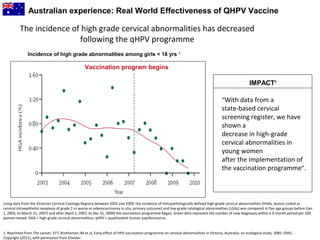
The incidence of high grade cervical abnormalities has decreased
following the qHPV programme
1. Reprinted from The Lancet, 377, Brotherton JM et al, Early effect of HPV vaccination programme on cervical abnormalities in Victoria, Australia: an ecological study, 2085–2092,
Copyright (2011), with permission from Elsevier.
Vaccination program begins
IMPACT1
“With data from a
state-based cervical
screening register, we have
shown a
decrease in high-grade
cervical abnormalities in
young women
after the implementation of
the vaccination programme”.
Using data from the Victorian Cervical Cytology Registry between 2003 and 2009, the incidence of histopathologically defined high-grade cervical abnormalities (HGAs, lesions coded as
cervical intraepithelial neoplasia of grade 2 or worse or adenocarcinoma in situ; primary outcome) and low-grade cytological abnormalities (LGAs) was compared in five age groups before (Jan
1, 2003, to March 31, 2007) and after (April 1, 2007, to Dec 31, 2009) the vaccination programme began. Green dots represent the number of new diagnoses within a 3-month period per 100
women tested. HGA = high-grade cervical abnormalities; qHPV = quadrivalent human papillomavirus.
Incidence of high grade abnormalities among girls < 18 yrs 1
Australian experience: Real World Effectiveness of QHPV Vaccine
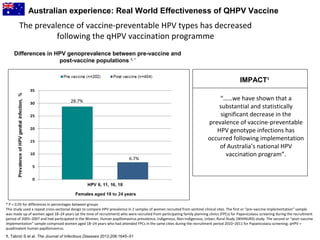
The prevalence of vaccine-preventable HPV types has decreased
following the qHPV vaccination programme
1. Tabrizi S et al. The Journal of Infectious Diseases 2012;206:1645–51
Differences in HPV genoprevalence between pre-vaccine and
post-vaccine populations 1, *
IMPACT1
“……we have shown that a
substantial and statistically
significant decrease in the
prevalence of vaccine-preventable
HPV genotype infections has
occurred following implementation
of Australia’s national HPV
vaccination program”.
* P < 0.05 for differences in percentages between groups
This study used a repeat cross-sectional design to compare HPV prevalence in 2 samples of women recruited from sentinel clinical sites. The first or “pre–vaccine implementation” sample
was made up of women aged 18–24 years (at the time of recruitment) who were recruited from participating family planning clinics (FPCs) for Papanicolaou screening during the recruitment
period of 2005–2007 and had participated in the Women, Human papillomavirus prevalence, Indigenous, Non-Indigenous, Urban, Rural Study (WHINURS) study. The second or “post–vaccine
implementation” sample comprised women aged 18–24 years who had attended FPCs in the same cities during the recruitment period 2010–2011 for Papanicolaou screening; qHPV =
quadrivalent human papillomavirus.
28.7%
6.7%
Australian experience: Real World Effectiveness of QHPV Vaccine
1. http://www.ema.europa.eu/ema/index.jsp?curl=pages/news_and_events/news/2009/11/news_detail_000389.jsp&mid=WC0b01ac058004d5c1 2. Centers for Disease control website. Available at:
http://www.cdc.gov/vaccinesafety/vaers/gardasil.htm- last accessed on 16.04.10. 3. RELEVE EPIDEMIOLOGIQUE HEBDOMADAIRE, No. 15, 2009, 84, http://www.who.int/wer 4. Press release Spain MINISTERIO DE SANIDAD Y POLÍTICA
SOCIAL 23.04.2009
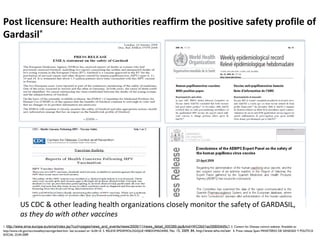
Post licensure: Health authorities reaffirm the positive safety profile of
Gardasil®
US CDC & other leading health organizations closely monitor the safety of GARDASIL,
as they do with other vaccines
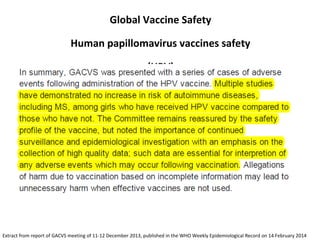
Global Vaccine Safety
Human papillomavirus vaccines safety
(HPV)
Extract from report of GACVS meeting of 11-12 December 2013, published in the WHO Weekly Epidemiological Record on 14 February 2014
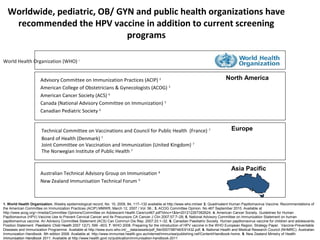
Worldwide, pediatric, OB/ GYN and public health organizations have
recommended the HPV vaccine in addition to current screening
programs
World Health Organization (WHO) 1
Advisory Committee on Immunization Practices (ACIP) 2
American College of Obstetricians & Gynecologists (ACOG) 3
American Cancer Society (ACS) 4
Canada (National Advisory Committee on Immunization) 5
Canadian Pediatric Society 6
North America
Asia Pacific
Australian Technical Advisory Group on Immunisation 8
New Zealand Immunisation Technical Forum 9
EuropeTechnical Committee on Vaccinations and Council for Public Health (France) 7
Board of Health (Denmark) 7
Joint Committee on Vaccination and Immunization (United Kingdom) 7
The Norwegian Institute of Public Health 7
1. World Health Organization. Weekly epidemiological record, No. 15, 2009, 84, 117–132 available at http://www.who.int/wer 2. Quadrivalent Human Papillomavirus Vaccine. Recommendations of
the American Committee on Immunization Practices (ACIP) MMWR, March 12, 2007 / Vol. 56.; 3. ACOG Committee Opinion. No 467 September 2010. Available at
http://www.acog.org/~/media/Committee Opinions/Committee on Adolescent Health Care/co467.pdf?dmc=1&ts=20121226T062624; 4. American Cancer Society. Guidelines for Human
Papillomavirus (HPV) Vaccine Use to Prevent Cervical Cancer and Its Precursors CA Cancer J Clin 2007;57:7–28; 5. National Advisory Committee on Immunization Statement on human
papillomavirus vaccine. An Advisory Committee Statement (ACS) Can Commun Dis Rep. 2007;33:1–32. 6. Canadian Paediatric Society. Human papillomavirus vaccine for children and adolescents.
Position Statement. Paediatric Child Health 2007 12(7): 599 –603; 7. WHO 2008. Preparing for the introduction of HPV vaccine in the WHO European Region. Strategy Paper. Vaccine-Preventable
Diseases and Immunization Programme. Available at http://www.euro.who.int/__data/assets/pdf_file/0007/98746/E91432.pdf; 8. National Health and Medical Research Council (NHMRC). Australian
Immunization Handbook. 9th edition 2008. Available at: http://www.immunise.health.gov.au/internet/immunise/publishing.nsf/Content/Handbook-home. 9. New Zealand Ministry of Health.
Immunisation Handbook 2011. Available at http://www.health.govt.nz/publication/immunisation-handbook-2011
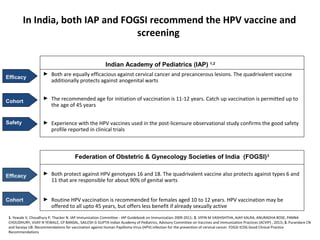
In India, both IAP and FOGSI recommend the HPV vaccine and
screening
► Both are equally efficacious against cervical cancer and precancerous lesions. The quadrivalent vaccine
additionally protects against anogenital warts
► The recommended age for initiation of vaccination is 11-12 years. Catch up vaccination is permitted up to
the age of 45 years
► Experience with the HPV vaccines used in the post-licensure observational study confirms the good safety
profile reported in clinical trials
Indian Academy of Pediatrics (IAP) 1,2
Efficacy
Cohort
Safety
1. Yewale V, Choudhury P, Thacker N. IAP Immunization Committee - IAP Guidebook on Immunization 2009-2011; 2. VIPIN M VASHISHTHA, AJAY KALRA, ANURADHA BOSE, PANNA
CHOUDHURY, VIJAY N YEWALE, CP BANSAL, SAILESH G GUPTA Indian Academy of Pediatrics, Advisory Committee on Vaccines and Immunization Practices (ACVIP) , 2013; 3. Purandare CN
and Saraiya UB. Recommendations for vaccination against Human Papilloma Virus (HPV) infection for the prevention of cervical cancer. FOGSI ICOG Good Clinical Practice
Recommendations
► Both protect against HPV genotypes 16 and 18. The quadrivalent vaccine also protects against types 6 and
11 that are responsible for about 90% of genital warts
► Routine HPV vaccination is recommended for females aged 10 to 12 years. HPV vaccination may be
offered to all upto 45 years, but offers less benefit if already sexually active
Federation of Obstetric & Gynecology Societies of India (FOGSI)3
Efficacy
Cohort
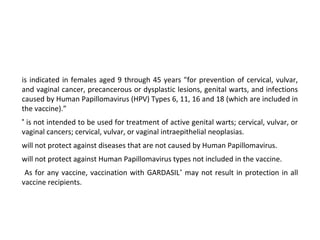
is indicated in females aged 9 through 45 years "for prevention of cervical, vulvar,
and vaginal cancer, precancerous or dysplastic lesions, genital warts, and infections
caused by Human Papillomavirus (HPV) Types 6, 11, 16 and 18 (which are included in
the vaccine).”
®
is not intended to be used for treatment of active genital warts; cervical, vulvar, or
vaginal cancers; cervical, vulvar, or vaginal intraepithelial neoplasias.
will not protect against diseases that are not caused by Human Papillomavirus.
will not protect against Human Papillomavirus types not included in the vaccine.
As for any vaccine, vaccination with GARDASIL®
may not result in protection in all
vaccine recipients.
Copyright 2014 Merck Sharp & Dohme Corp., a subsidiary of Merck & Co., Inc., Whitehouse Station, NJ, USA. All Rights
Reserved.
For further information kindly consult
MSD Pharmaceuticals Private Limited, Platina, 10th Floor, C-59, G Block, Bandra Kurla Complex, Bandra East,
Mumbai – 400098
VACC-1132804-0000-22/10/14-21/10/15
AGE FOR HPV VACCINATION
Dr SS Rawat
Child care Hospital
Indore
Plan of the day
• Relevant HPV Epidemiology
• Gender at risk for HPV Infection
• Age at risk for HPV Infection
• What determines vaccine efficacy in a given
individual
• Conclusion
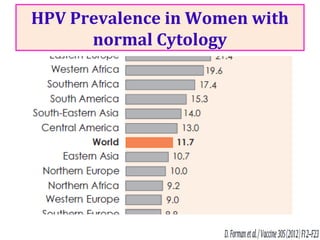
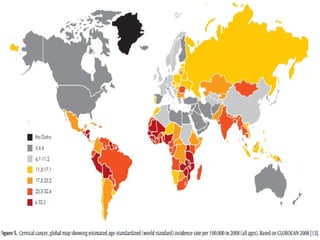
HPV Prevalence in Women with
normal Cytology
HPV Epidemiology
• Most common STD worldwide
• Average prevalence of HPV infection is 10.4%,
higher in women younger than 25(16.9%)
• HPV 16 recognized as a cause of Cervical
Cancer in 1992 by Harald Zur Hausen
• HPV type 16 & 18 accounts for roughly 70% of
all cervical cancers.
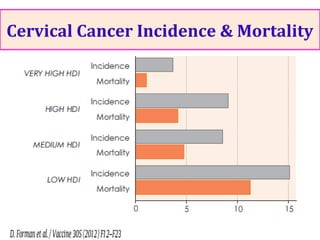
Cervical Cancer Incidence & Mortality
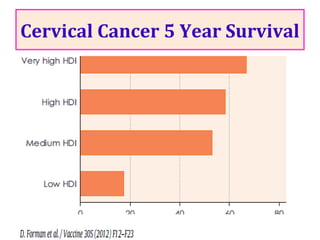
Cervical Cancer 5 Year Survival
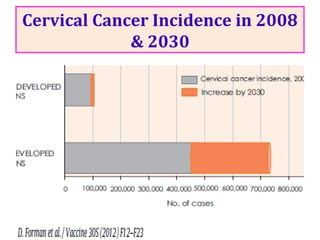
Cervical Cancer Incidence in 2008
& 2030
Vaccine Administration
• Prophylactic measure to prevent fatal
Infectious disease
• Dispensed when person is not Infected
• At a time when there is highest risk of
exposure to infectious disease
• To the gender where there would be highest
impact in terms of disease reduction in cost
effective manner
What Genders are infected by
Oncogenic HPV
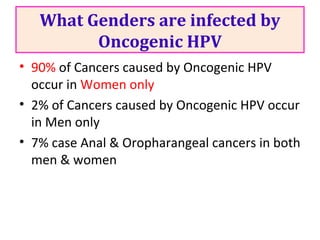
• 90% of Cancers caused by Oncogenic HPV
occur in Women only
• 2% of Cancers caused by Oncogenic HPV occur
in Men only
• 7% case Anal & Oropharangeal cancers in both
men & women
At what age Genital HPV Infection
detected ?
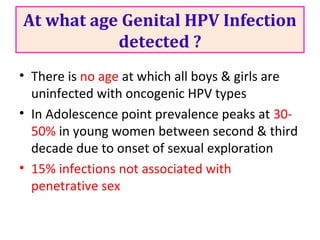
• There is no age at which all boys & girls are
uninfected with oncogenic HPV types
• In Adolescence point prevalence peaks at 30-
50% in young women between second & third
decade due to onset of sexual exploration
• 15% infections not associated with
penetrative sex
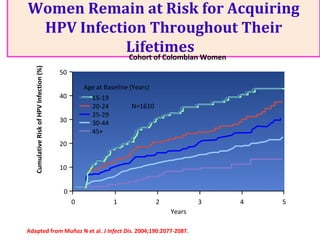
Women Remain at Risk for Acquiring
HPV Infection Throughout Their
Lifetimes
CumulativeRiskofHPVInfection(%)
Adapted from Muñoz N et al. J Infect Dis. 2004;190:2077-2087.
Cohort of Colombian Women
N=1610
Years
0
10
20
30
40
50
0 1 2 3 4 5
Age at Baseline (Years)
15-19
20-24
25-29
30-44
45+
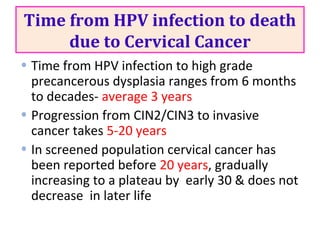
Time from HPV infection to death
due to Cervical Cancer
• Time from HPV infection to high grade
precancerous dysplasia ranges from 6 months
to decades- average 3 years
• Progression from CIN2/CIN3 to invasive
cancer takes 5-20 years
• In screened population cervical cancer has
been reported before 20 years, gradually
increasing to a plateau by early 30 & does not
decrease in later life
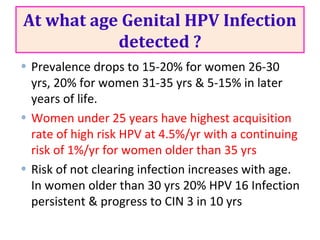
At what age Genital HPV Infection
detected ?
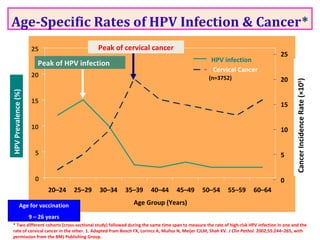
• Prevalence drops to 15-20% for women 26-30
yrs, 20% for women 31-35 yrs & 5-15% in later
years of life.
• Women under 25 years have highest acquisition
rate of high risk HPV at 4.5%/yr with a continuing
risk of 1%/yr for women older than 35 yrs
• Risk of not clearing infection increases with age.
In women older than 30 yrs 20% HPV 16 Infection
persistent & progress to CIN 3 in 10 yrs
0
5
10
15
20
25
20–24 25–29 30–34 35–39 40–44 45–49 50–54 55–59 60–64
Age Group (Years)
HPV infection
Cervical Cancer
HPVPrevalence(%)
CancerIncidenceRate(×105
)
25
20
15
10
5
0
(n=3752)
* Two different cohorts (cross-sectional study) followed during the same time span to measure the rate of high-risk HPV infection in one and the
rate of cervical cancer in the other. 1. Adapted from Bosch FX, Lorincz A, Muñoz N, Meijer CJLM, Shah KV. J Clin Pathol. 2002;55:244–265, with
permission from the BMJ Publishing Group.
Peak of HPV infection
Peak of cervical cancer
Age-Specific Rates of HPV Infection & Cancer*
Age for vaccination
9 – 26 years
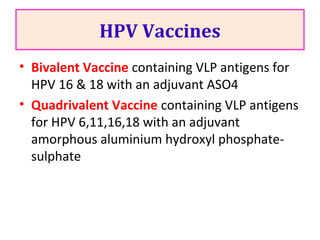
HPV Vaccines
• Bivalent Vaccine containing VLP antigens for
HPV 16 & 18 with an adjuvant ASO4
• Quadrivalent Vaccine containing VLP antigens
for HPV 6,11,16,18 with an adjuvant
amorphous aluminium hydroxyl phosphate-
sulphate
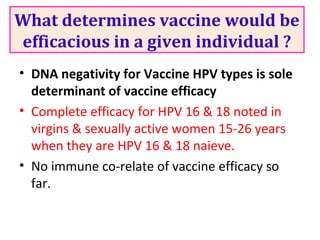
What determines vaccine would be
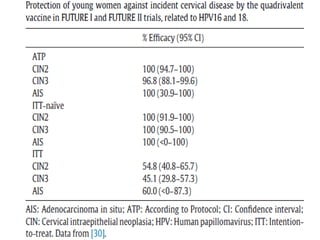
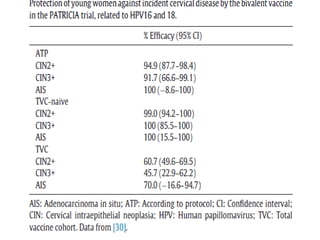
efficacious in a given individual ?
• DNA negativity for Vaccine HPV types is sole
determinant of vaccine efficacy
• Complete efficacy for HPV 16 & 18 noted in
virgins & sexually active women 15-26 years
when they are HPV 16 & 18 naieve.
• No immune co-relate of vaccine efficacy so
far.
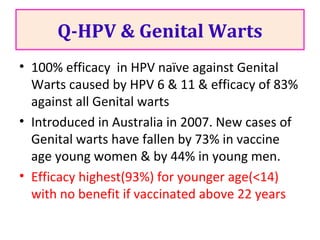
Q-HPV & Genital Warts
• 100% efficacy in HPV naïve against Genital
Warts caused by HPV 6 & 11 & efficacy of 83%
against all Genital warts
• Introduced in Australia in 2007. New cases of
Genital warts have fallen by 73% in vaccine
age young women & by 44% in young men.
• Efficacy highest(93%) for younger age(<14)
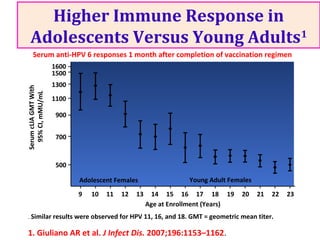
with no benefit if vaccinated above 22 years
9 10 11 12 13 14 15 16 17 18 19 20 21 22 23
Age at Enrollment (Years)
500
700
900
1100
1300
1500
1600
SerumcLIAGMTWith
95%CI,mMU/mL
Adolescent Females Young Adult Females
Serum anti-HPV 6 responses 1 month after completion of vaccination regimen
Higher Immune Response in
Adolescents Versus Young Adults1
. Similar results were observed for HPV 11, 16, and 18. GMT = geometric mean titer.
1. Giuliano AR et al. J Infect Dis. 2007;196:1153–1162.
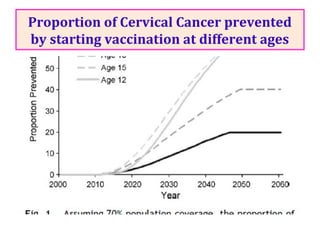
Proportion of Cervical Cancer prevented
by starting vaccination at different ages
Best age for HPV vaccination?
• Sexual debut in adolescents above 13 years
• Best immune response is observed in the
younger age groups1
the vaccine is best
administered in this age group
• WHO recommends vaccination at the age of
9-13 yrs
• Catch up vaccination recommended from 13 –
26 yrs
Harper DM. Prophylactic human Papillomavirus vaccines to prevent cervical
cancer: review of the Phase II and III trials. Therapy 2008 May 1;5(3):313-24
WHO SAGE Recommendations: Primary Target Population
for Vaccination1
SAGE = Strategic Advisory Committee of Experts; WHO = World Health Organization.
1. World Health Organization. Wkly Epidermal Rec. 2009;84:1–16.
Vaccination is most effective when given toVaccination is most effective when given to
females naïve to infection with vaccine-females naïve to infection with vaccine-
related HPV typesrelated HPV types
Primary target population is likely to be girls 9Primary target population is likely to be girls 9
or 10 through 13 years of ageor 10 through 13 years of age
Take home message
• HPV Infection & Cervical cancer is a major
problem in our region & all efforts must be
done to prevent it
• Highly efficacious vaccines against HPV
available
• Ideal age for vaccination: 9-13 years with
catch up vaccination from 13-26 years
• Vaccination of females is a priority at present
QUESTIONS ?

Hpv vaccination

  • 1.
    HPV Vaccination when andwhy DR KAWITA BAPAT
  • 2.
    Plan of discussion Cervical cancer disease burden  Prevention with HPV vaccination  Vaccination of sexually active women  Opportunity of Postpartum HPV vaccination  Importance of genital warts prevention  Real world effectiveness data  Safety of HPV vaccine
  • 3.
    India ~1,22,844 Total world~ 5,27,624 India ~23% of new Cervical Cancer cases in world India ~ 67,477 Total world ~ 2,65,653 India ~23% Rest of World - 77% India ~25% of deaths due to Cervical Cancer in world Rest of World - 73% India - 27% Cervical cancer: Disease Burden Incidence Mortality India ~25% Rest of World - 75%
  • 4.
    67,477 Deaths Annually Approx. 185 womendie every day Every 8 minutes a women dies Approx. 8 women die every hour Disease Burden of Cervical Cancer in India
  • 5.
    HPV 16 HPV 18 HPV6 HPV 11 Cancer causing Types High risk group-16,18, 31,33,45,52,58 Non-cancer causing types Low risk group- 6,11. • >75% of Cervical Cancer5,6 • >50% of Vaginal & Vulvar Cancer5 90% of Anogenital warts5 HPV is a necessary cause of cervical cancer – 99.7%4 HPV Human Papillomavirus (HPV)
  • 6.
    HPV infection isa necessary cause of cervical cancer and is linked to several other anogenital diseases Genital Warts Genital Warts ~100% 70% ~100% 43% 88% Cervical Cancer Cervical Cancer Vaginal Cancer Vaginal Cancer Vulvar Cancer Vulvar Cancer Anal Cancer Anal Cancer 13-56% Orophar yngeal Cancer Orophar yngeal Cancer 50% Penile Cancer Penile Cancer HPV Percent of cases attributable to HPV infection 1,2 HPV Causes More Than Cervical Cancer
  • 7.
    HPV Vaccination: TheBasis of Cancer Control World Health Organization, United Nations Population Fund. Preparing for the Introduction of HPV Vaccines: Policy and Programme Guidance for Countries. Geneva, Switzerland: World Health Organization; 2006. Palliative care Cancer treatment Secondary prevention: Screening and treatment of precancers Primary prevention: Vaccination
  • 8.
    Years of LifeLost (YLL)
  • 9.
    Why Vaccination? • HPVvaccines are highly effective at preventing the infection of susceptible women with the HPV types covered by the vaccine. • HPV vaccine should be given to females before they reach an age when the risk of HPV infection increases and they are at subsequent risk of cervical cancer. • HPV vaccine can be given to all female between 9 to 45 years of age group. • HPV vaccine is given as 3 doses over a period of 6 months. The ‘Green Book’ chapter on Human papillomavirus (HPV)
  • 10.
    Is it worthvaccinating sexually active women?
  • 11.
    Estimated Benefit ofVaccination With GARDASIL in Sexually Active Women 99.9% of women will benefit2 99.6% of women will benefit2 ► Women who have been exposed to at least 1 but not all vaccine-targeted HPV types will derive some benefit from vaccination.1 1. Wright TC Jr et al. Gynecol Oncol. 2008;109(2 suppl):S40-S47. 2. Data on file, MSD. Infected with all 4 types Infected with 3 types Infected with 2 types Infected with 1 typeWomen unexposed to any vaccine-targeted type
  • 12.
    a Efficacy after 3doses in women 24–45 years of age naïve to the relevant type at baseline. Per-Protocol Efficacy Populationa – Primary Endpoint Related Cases 5510 86 56 30 0 20 40 60 80 24- to 45-Year-Olds 24- to 34-Year-Olds 35- to 45-Year-Olds n=1910 n=1907 88.7% Reduction (78, 95) 91.3% Reduction (78.4, 97.3) 83.8% Reduction (57.9, 95.1) GARDASIL® PlaceboTotal Mean Follow-Up: 3.8 Years GARDASIL® : Adult Women Efficacy Study Combined Incidence of HPV 6/11/16/18-Related Persistent Infection or Cervical/Vulvar/Vaginal Disease in Women 24–45 Years of Age1 1. Castellsagué X et al. Br J Cancer. 2011.
  • 13.
    GARDASIL® : FUTURE III:Adult Women Study (LTFU) Combined Incidence of HPV 6/11/16/18-Related CIN2 or worse in Women 24–45 Years of Agea a Effectiveness in the early vaccination group after 3 doses in women 24–45 years of age naïve to the relevant type at baseline in an extension study of FUTURE III trial in Columbia. Per-Protocol Efficacy Population a – Primary Endpoint Related Cases 1511 29 21 7 0 30 CIN & EGL or worse CIN or worse CIN 2 or worse GARDASIL® Expected cases Total Mean Follow-Up: 6.3 Years 1 20 10 Luna J, et al. Long-term follow-up observation of the safety, immunogenicity, and effectiveness of Gardasil™ in adult women PLoS One. 2013 Dec 31;8(12):e83431 High efficacy seen in adult women
  • 14.
    Impact of GARDASILon Incidence of HPV 6/11/16/18-related Pap Diagnoses (ASC-US or worse) Endpoint GARDASIL (N=1,910) Placebo (N=1,907) Observed Efficacy (%) 95% CI # of Cases PYR # of Cases PYR HPV 6/11/16/18- Related ASC-US HR- HPV positive, or worse 1 5,028.7 38 5,006.5 97.4 (84.5, 99.9) PYR = Person Years at Risk Per Protocol Efficacy Population X Castellsague, N Mun˜oz, P Pitisuttithum et al, End-of-study safety, immunogenicity, and efficacy of quadrivalent HPV (types 6, 11, 16, 18) recombinant vaccine in adult women 24–45 years of age, British Journal of Cancer (2011), 1 –10 adult women 24–45 years of age,
  • 15.
    Opportunity of HPVvaccination during postpartum period
  • 16.
    – Primiparous womenaged between 15 and 24 years, living in the metropolitan area of São Paulo for at least 6 months, and gave birth at this hospital after more than 32 weeks of gestation, were enrolled at their postnatal visit, from June 2006 to February 2007. – Exclusion criteria: non-Brazilian, inability or refusal to give informed consent, or immunodeficiency (including AIDS/HIV infection checked in medical records). – Women were recruited to take part in the study during the postdelivery follow-up period in the hospital. 16 J Epidemiol Community Health 2010;64:610-615
  • 17.
    17 J Epidemiol CommunityHealth 2010;64:610-615 Results: Overall, HPV DNA was detected in 58.5% of the women included in the analysis
  • 18.
    • The HPVprevalence was found to be (58.5%) • Interestingly, only 17.3% and 13.3% of the participants were positive for HPV type 16 and/or HPV type 18. • Additionally, no woman was positive for all the four types present in quadrivalent vaccine. • The high HPV prevalence in primiparous women in the present analysis is consistent with other reports and with the hypothesis that the physiological processes established during pregnancy modify the host immune response and hormone status resulting in an increased‑ prevalence of HPV infection measured in neonatal periods. 18 J Epidemiol Community Health 2010;64:610-615 Supports that this population would derive benefit from catch-up vaccination and represents a target population for effective primary and secondary cervical cancer prevention programmes
  • 19.
    • After thefirst dose of vaccine, • 97.2% of women felt it was worthwhile to receive the vaccine, • whereas 98.6% said that administration was convenient. • When asked, 50.4% of participants said they would not have asked to be vaccinated if they were not part of the study. • Among those vaccinated, • 99.3% were happy they participated in the study and • 97.9% would have recommended the vaccine to a friend • Despite the acceptability of this strategy, only 30.7% of enrolled patients completed the three-vaccine series 19Wright, Govindappagari, Pawar et al, Acceptance and Compliance With Postpartum Human Papillomavirus Vaccination, Obstet Gynecol 2012;120:771–82
  • 21.
    How importance isprevention of other HPV diseases e.g. Genital Wart (GW)
  • 22.
    PREVALENCE AND PATIENTEXPERIENCE WITH CONDYLOMATA ACUMINATA (GENITAL WARTS) IN INDIA Khopkar U et al. Poster presented at AOGIN Hong Kong 2012 PercentofGW Estimates are adjusted for by specialty type Both males and females have shown significantly higher psychosocial impact than those without GW diseases
  • 23.
    Genital Warts andRisk of Cancer: A Danish Study of Nearly 50000 Patients With Genital Warts Blomberg M et al. J Infect Dis. 2012 May 15;205(10):1544-53. Standardized Incidence Ratios (SIRs) of Cancer among women (n = 33,422) diagnosed of GW in Denmark during 1978–2009 2.8 1.5 5.9 7.8 14.8 4.7 4.8 0 2 4 6 8 10 12 14 16 All HPV related cancers Cervix uteri Vagina Anus Vulva Tonsils HPV Associated HNC StandardizedIncidenceRatios(SIRs) CI: 2.4- 3.1 CI: 5.5- 9.2 CI: 2.2-12.9 CI: 5.4- 11.0 CI: 11.7-18.6 CI: 2.3-8.4 CI: 2.7-8.0 Diagnosis of GW was strongly related to anal, vulvar, vaginal, cervical & sub sites of HN cancer with confirmed HPV association.
  • 24.
    Genital Warts andRisk of Cancer: A Danish Study of Nearly 50000 Patients With Genital Warts Blomberg M et al. J Infect Dis. 2012 May 15;205(10):1544-53. Standardized Incidence Ratios (SIRs) of Cancer among women (n = 33,422) diagnosed of GW in Denmark during 1978–2009, The risks in anal cancer remained elevated for >10 years following GW diagnosis. 9.7 14.5 9.8 6.2 0 2 4 6 8 10 12 14 16 <1 Yr 1-4 Yr 5-9 Yr ≥10 yr StandardizedIncidenceRatios(SIRs) Follow up time CI: .1-54.0 CI: 5.8-29.8 CI: 3.9-20.1 CI: 3.6-9.7 According to Follow-up time by cancer site-Anus
  • 25.
    Real world effectivenessof QHPV vaccine
  • 26.
    Post licensure monitoringof HPV vaccine  Post-licensure evaluation of vaccines plays an important role in monitoring the progress of immunization programs, demonstrating population impact of vaccines, and providing data for ongoing policy decisions.  Established cancer based registries will take decades before the impact of vaccine on cervical cancer is observed.  More proximal measures of vaccine impact include outcomes such as prevalence of HPV vaccine types, incidence of cervical precancers and genital warts. Markowitz LE et al. Vaccine. 2010 Jul 5;28(30):4731-7.
  • 27.
    Impact of qHPVVaccine in Public Vaccination Programs: Selected Reports as of April 20131–21 qHPV=quadrivalent human papillomavirus. Please see corresponding slide note for references. Markowitz. IPV 2012. 2006–2007 Dec ‘09 Jul ‘11Jan ‘11 Dec ‘11 May ‘12Jun ‘11 Jul ‘12 Jan ‘13Dec ‘12Oct ‘12 Introduction of qHPV vaccine Oliphant et al. NZ Med J. 2011. Bauer et al. Am J Pub Health. 2012. Wikström et al. EUROGIN 2012. Mikolajczyk et al. Sex Transm Dis. 2013. Baandrup et al. Sex Transm Dis. 2013. Fairley et al. Sex Transm Infect. 2009; Donovan et al. Lancet Infect Dis. 2011. Kliewer et al. IPV 2012. Kjaer et al. IPV 2012. Brotherton et al. Lancet. 2011. Van Tielen; Weyers et al. EUROGIN 2012. Leval et al. J Infect Dis. 2012. Ali et al. IUSTI 2012. Read et al. Sex Transm Infect. 2011. Powell et al. Vaccine. 2012. Tabrizi et al. J Infect Dis. 2012. 2012 Sep ‘12 Feb ‘13 Leval et al. J Natl Cancer Inst. 2013. Mar ‘13 Ali et al. BMJ 2013 Apr ‘13 Ali et al. BMC Infect Dis 2013.
  • 28.
    The incidence ofhigh grade cervical abnormalities has decreased following the qHPV programme 1. Reprinted from The Lancet, 377, Brotherton JM et al, Early effect of HPV vaccination programme on cervical abnormalities in Victoria, Australia: an ecological study, 2085–2092, Copyright (2011), with permission from Elsevier. Vaccination program begins IMPACT1 “With data from a state-based cervical screening register, we have shown a decrease in high-grade cervical abnormalities in young women after the implementation of the vaccination programme”. Using data from the Victorian Cervical Cytology Registry between 2003 and 2009, the incidence of histopathologically defined high-grade cervical abnormalities (HGAs, lesions coded as cervical intraepithelial neoplasia of grade 2 or worse or adenocarcinoma in situ; primary outcome) and low-grade cytological abnormalities (LGAs) was compared in five age groups before (Jan 1, 2003, to March 31, 2007) and after (April 1, 2007, to Dec 31, 2009) the vaccination programme began. Green dots represent the number of new diagnoses within a 3-month period per 100 women tested. HGA = high-grade cervical abnormalities; qHPV = quadrivalent human papillomavirus. Incidence of high grade abnormalities among girls < 18 yrs 1 Australian experience: Real World Effectiveness of QHPV Vaccine
  • 29.
    The prevalence ofvaccine-preventable HPV types has decreased following the qHPV vaccination programme 1. Tabrizi S et al. The Journal of Infectious Diseases 2012;206:1645–51 Differences in HPV genoprevalence between pre-vaccine and post-vaccine populations 1, * IMPACT1 “……we have shown that a substantial and statistically significant decrease in the prevalence of vaccine-preventable HPV genotype infections has occurred following implementation of Australia’s national HPV vaccination program”. * P < 0.05 for differences in percentages between groups This study used a repeat cross-sectional design to compare HPV prevalence in 2 samples of women recruited from sentinel clinical sites. The first or “pre–vaccine implementation” sample was made up of women aged 18–24 years (at the time of recruitment) who were recruited from participating family planning clinics (FPCs) for Papanicolaou screening during the recruitment period of 2005–2007 and had participated in the Women, Human papillomavirus prevalence, Indigenous, Non-Indigenous, Urban, Rural Study (WHINURS) study. The second or “post–vaccine implementation” sample comprised women aged 18–24 years who had attended FPCs in the same cities during the recruitment period 2010–2011 for Papanicolaou screening; qHPV = quadrivalent human papillomavirus. 28.7% 6.7% Australian experience: Real World Effectiveness of QHPV Vaccine
  • 30.
    1. http://www.ema.europa.eu/ema/index.jsp?curl=pages/news_and_events/news/2009/11/news_detail_000389.jsp&mid=WC0b01ac058004d5c1 2.Centers for Disease control website. Available at: http://www.cdc.gov/vaccinesafety/vaers/gardasil.htm- last accessed on 16.04.10. 3. RELEVE EPIDEMIOLOGIQUE HEBDOMADAIRE, No. 15, 2009, 84, http://www.who.int/wer 4. Press release Spain MINISTERIO DE SANIDAD Y POLÍTICA SOCIAL 23.04.2009 Post licensure: Health authorities reaffirm the positive safety profile of Gardasil® US CDC & other leading health organizations closely monitor the safety of GARDASIL, as they do with other vaccines
  • 31.
    Global Vaccine Safety Humanpapillomavirus vaccines safety (HPV) Extract from report of GACVS meeting of 11-12 December 2013, published in the WHO Weekly Epidemiological Record on 14 February 2014
  • 32.
    Worldwide, pediatric, OB/GYN and public health organizations have recommended the HPV vaccine in addition to current screening programs World Health Organization (WHO) 1 Advisory Committee on Immunization Practices (ACIP) 2 American College of Obstetricians & Gynecologists (ACOG) 3 American Cancer Society (ACS) 4 Canada (National Advisory Committee on Immunization) 5 Canadian Pediatric Society 6 North America Asia Pacific Australian Technical Advisory Group on Immunisation 8 New Zealand Immunisation Technical Forum 9 EuropeTechnical Committee on Vaccinations and Council for Public Health (France) 7 Board of Health (Denmark) 7 Joint Committee on Vaccination and Immunization (United Kingdom) 7 The Norwegian Institute of Public Health 7 1. World Health Organization. Weekly epidemiological record, No. 15, 2009, 84, 117–132 available at http://www.who.int/wer 2. Quadrivalent Human Papillomavirus Vaccine. Recommendations of the American Committee on Immunization Practices (ACIP) MMWR, March 12, 2007 / Vol. 56.; 3. ACOG Committee Opinion. No 467 September 2010. Available at http://www.acog.org/~/media/Committee Opinions/Committee on Adolescent Health Care/co467.pdf?dmc=1&ts=20121226T062624; 4. American Cancer Society. Guidelines for Human Papillomavirus (HPV) Vaccine Use to Prevent Cervical Cancer and Its Precursors CA Cancer J Clin 2007;57:7–28; 5. National Advisory Committee on Immunization Statement on human papillomavirus vaccine. An Advisory Committee Statement (ACS) Can Commun Dis Rep. 2007;33:1–32. 6. Canadian Paediatric Society. Human papillomavirus vaccine for children and adolescents. Position Statement. Paediatric Child Health 2007 12(7): 599 –603; 7. WHO 2008. Preparing for the introduction of HPV vaccine in the WHO European Region. Strategy Paper. Vaccine-Preventable Diseases and Immunization Programme. Available at http://www.euro.who.int/__data/assets/pdf_file/0007/98746/E91432.pdf; 8. National Health and Medical Research Council (NHMRC). Australian Immunization Handbook. 9th edition 2008. Available at: http://www.immunise.health.gov.au/internet/immunise/publishing.nsf/Content/Handbook-home. 9. New Zealand Ministry of Health. Immunisation Handbook 2011. Available at http://www.health.govt.nz/publication/immunisation-handbook-2011
  • 33.
    In India, bothIAP and FOGSI recommend the HPV vaccine and screening ► Both are equally efficacious against cervical cancer and precancerous lesions. The quadrivalent vaccine additionally protects against anogenital warts ► The recommended age for initiation of vaccination is 11-12 years. Catch up vaccination is permitted up to the age of 45 years ► Experience with the HPV vaccines used in the post-licensure observational study confirms the good safety profile reported in clinical trials Indian Academy of Pediatrics (IAP) 1,2 Efficacy Cohort Safety 1. Yewale V, Choudhury P, Thacker N. IAP Immunization Committee - IAP Guidebook on Immunization 2009-2011; 2. VIPIN M VASHISHTHA, AJAY KALRA, ANURADHA BOSE, PANNA CHOUDHURY, VIJAY N YEWALE, CP BANSAL, SAILESH G GUPTA Indian Academy of Pediatrics, Advisory Committee on Vaccines and Immunization Practices (ACVIP) , 2013; 3. Purandare CN and Saraiya UB. Recommendations for vaccination against Human Papilloma Virus (HPV) infection for the prevention of cervical cancer. FOGSI ICOG Good Clinical Practice Recommendations ► Both protect against HPV genotypes 16 and 18. The quadrivalent vaccine also protects against types 6 and 11 that are responsible for about 90% of genital warts ► Routine HPV vaccination is recommended for females aged 10 to 12 years. HPV vaccination may be offered to all upto 45 years, but offers less benefit if already sexually active Federation of Obstetric & Gynecology Societies of India (FOGSI)3 Efficacy Cohort
  • 35.
    is indicated infemales aged 9 through 45 years "for prevention of cervical, vulvar, and vaginal cancer, precancerous or dysplastic lesions, genital warts, and infections caused by Human Papillomavirus (HPV) Types 6, 11, 16 and 18 (which are included in the vaccine).” ® is not intended to be used for treatment of active genital warts; cervical, vulvar, or vaginal cancers; cervical, vulvar, or vaginal intraepithelial neoplasias. will not protect against diseases that are not caused by Human Papillomavirus. will not protect against Human Papillomavirus types not included in the vaccine. As for any vaccine, vaccination with GARDASIL® may not result in protection in all vaccine recipients.
  • 36.
    Copyright 2014 MerckSharp & Dohme Corp., a subsidiary of Merck & Co., Inc., Whitehouse Station, NJ, USA. All Rights Reserved. For further information kindly consult MSD Pharmaceuticals Private Limited, Platina, 10th Floor, C-59, G Block, Bandra Kurla Complex, Bandra East, Mumbai – 400098 VACC-1132804-0000-22/10/14-21/10/15
  • 37.
    AGE FOR HPVVACCINATION Dr SS Rawat Child care Hospital Indore
  • 38.
    Plan of theday • Relevant HPV Epidemiology • Gender at risk for HPV Infection • Age at risk for HPV Infection • What determines vaccine efficacy in a given individual • Conclusion
  • 40.
    HPV Prevalence inWomen with normal Cytology
  • 41.
    HPV Epidemiology • Mostcommon STD worldwide • Average prevalence of HPV infection is 10.4%, higher in women younger than 25(16.9%) • HPV 16 recognized as a cause of Cervical Cancer in 1992 by Harald Zur Hausen • HPV type 16 & 18 accounts for roughly 70% of all cervical cancers.
  • 44.
  • 45.
    Cervical Cancer 5Year Survival
  • 46.
  • 47.
    Vaccine Administration • Prophylacticmeasure to prevent fatal Infectious disease • Dispensed when person is not Infected • At a time when there is highest risk of exposure to infectious disease • To the gender where there would be highest impact in terms of disease reduction in cost effective manner
  • 48.
    What Genders areinfected by Oncogenic HPV • 90% of Cancers caused by Oncogenic HPV occur in Women only • 2% of Cancers caused by Oncogenic HPV occur in Men only • 7% case Anal & Oropharangeal cancers in both men & women
  • 49.
    At what ageGenital HPV Infection detected ? • There is no age at which all boys & girls are uninfected with oncogenic HPV types • In Adolescence point prevalence peaks at 30- 50% in young women between second & third decade due to onset of sexual exploration • 15% infections not associated with penetrative sex
  • 50.
    Women Remain atRisk for Acquiring HPV Infection Throughout Their Lifetimes CumulativeRiskofHPVInfection(%) Adapted from Muñoz N et al. J Infect Dis. 2004;190:2077-2087. Cohort of Colombian Women N=1610 Years 0 10 20 30 40 50 0 1 2 3 4 5 Age at Baseline (Years) 15-19 20-24 25-29 30-44 45+
  • 51.
    Time from HPVinfection to death due to Cervical Cancer • Time from HPV infection to high grade precancerous dysplasia ranges from 6 months to decades- average 3 years • Progression from CIN2/CIN3 to invasive cancer takes 5-20 years • In screened population cervical cancer has been reported before 20 years, gradually increasing to a plateau by early 30 & does not decrease in later life
  • 52.
    At what ageGenital HPV Infection detected ? • Prevalence drops to 15-20% for women 26-30 yrs, 20% for women 31-35 yrs & 5-15% in later years of life. • Women under 25 years have highest acquisition rate of high risk HPV at 4.5%/yr with a continuing risk of 1%/yr for women older than 35 yrs • Risk of not clearing infection increases with age. In women older than 30 yrs 20% HPV 16 Infection persistent & progress to CIN 3 in 10 yrs
  • 53.
    0 5 10 15 20 25 20–24 25–29 30–3435–39 40–44 45–49 50–54 55–59 60–64 Age Group (Years) HPV infection Cervical Cancer HPVPrevalence(%) CancerIncidenceRate(×105 ) 25 20 15 10 5 0 (n=3752) * Two different cohorts (cross-sectional study) followed during the same time span to measure the rate of high-risk HPV infection in one and the rate of cervical cancer in the other. 1. Adapted from Bosch FX, Lorincz A, Muñoz N, Meijer CJLM, Shah KV. J Clin Pathol. 2002;55:244–265, with permission from the BMJ Publishing Group. Peak of HPV infection Peak of cervical cancer Age-Specific Rates of HPV Infection & Cancer* Age for vaccination 9 – 26 years
  • 54.
    HPV Vaccines • BivalentVaccine containing VLP antigens for HPV 16 & 18 with an adjuvant ASO4 • Quadrivalent Vaccine containing VLP antigens for HPV 6,11,16,18 with an adjuvant amorphous aluminium hydroxyl phosphate- sulphate
  • 57.
    What determines vaccinewould be efficacious in a given individual ? • DNA negativity for Vaccine HPV types is sole determinant of vaccine efficacy • Complete efficacy for HPV 16 & 18 noted in virgins & sexually active women 15-26 years when they are HPV 16 & 18 naieve. • No immune co-relate of vaccine efficacy so far.
  • 58.
    Q-HPV & GenitalWarts • 100% efficacy in HPV naïve against Genital Warts caused by HPV 6 & 11 & efficacy of 83% against all Genital warts • Introduced in Australia in 2007. New cases of Genital warts have fallen by 73% in vaccine age young women & by 44% in young men. • Efficacy highest(93%) for younger age(<14) with no benefit if vaccinated above 22 years
  • 59.
    9 10 1112 13 14 15 16 17 18 19 20 21 22 23 Age at Enrollment (Years) 500 700 900 1100 1300 1500 1600 SerumcLIAGMTWith 95%CI,mMU/mL Adolescent Females Young Adult Females Serum anti-HPV 6 responses 1 month after completion of vaccination regimen Higher Immune Response in Adolescents Versus Young Adults1 . Similar results were observed for HPV 11, 16, and 18. GMT = geometric mean titer. 1. Giuliano AR et al. J Infect Dis. 2007;196:1153–1162.
  • 60.
    Proportion of CervicalCancer prevented by starting vaccination at different ages
  • 61.
    Best age forHPV vaccination? • Sexual debut in adolescents above 13 years • Best immune response is observed in the younger age groups1 the vaccine is best administered in this age group • WHO recommends vaccination at the age of 9-13 yrs • Catch up vaccination recommended from 13 – 26 yrs Harper DM. Prophylactic human Papillomavirus vaccines to prevent cervical cancer: review of the Phase II and III trials. Therapy 2008 May 1;5(3):313-24
  • 62.
    WHO SAGE Recommendations:Primary Target Population for Vaccination1 SAGE = Strategic Advisory Committee of Experts; WHO = World Health Organization. 1. World Health Organization. Wkly Epidermal Rec. 2009;84:1–16. Vaccination is most effective when given toVaccination is most effective when given to females naïve to infection with vaccine-females naïve to infection with vaccine- related HPV typesrelated HPV types Primary target population is likely to be girls 9Primary target population is likely to be girls 9 or 10 through 13 years of ageor 10 through 13 years of age
  • 63.
    Take home message •HPV Infection & Cervical cancer is a major problem in our region & all efforts must be done to prevent it • Highly efficacious vaccines against HPV available • Ideal age for vaccination: 9-13 years with catch up vaccination from 13-26 years • Vaccination of females is a priority at present
  • 64.

Editor's Notes

  • #4 India’s population is approximately 1/6th of the world burden but the disease burden in India is more than 23%( 1/4th) and 25% (1/4Th) mortality
  • #28 1. Fairley CK et al. Sex Transm Infect. 2009;85:499–502. 2. Donovan B et al. Lancet Infect Dis. 2011;11:39–44. 3. Brotherton JM et al. Lancet. 2011;377:2085–2092. 4. Oliphant J et al. N Z Med J. 2011;124:51–58. 5. Read TRW et al. Sex Transm Infect. 2011;87:544–547. 6. Bauer HM et al. Am J Public Health. 2012;102:833–835. 7. Wikström A et al. Presented at: European Research Organisation on Genital Infection and Neoplasia (EUROGIN) 2012 International Multidisciplinary Congress; 8–12 July 2012; Prague, Czech Republic. Abstract SS 12-1. 8. Van Tielen R et al. Presented at: European Research Organisation on Genital Infection and Neoplasia (EUROGIN) 2012 International Multidisciplinary Congress; 8–12 July 2012; Prague, Czech Republic. Abstract P 2-1. 9. Weyers S et al. Presented at: European Research Organisation on Genital Infection and Neoplasia (EUROGIN) 2012 International Multidisciplinary Congress; 8–12 July 2012; Prague, Czech Republic. Abstract MSS-6-3. 10. Leval A et al. J Infect Dis. 2012;206:860–866. 11. Ali H et al. Presented at: International Union Against STI World Congress; October 2012; Melbourne, Australia. 12. Markowitz L et al. Presented at the IPV 2012 Conference; 30 November–6 December 2012; San Juan, Puerto Rico. 13. Krüger Kjaer S et al. Presented at: 28th International Papillomavirus (IPV) Conference; 30 November–6 December 2012; San Juan, Puerto Rico. Abstract 271. 14. Kliewer E et al. Presented at: 28th International Papillomavirus (IPV) Conference; 30 November–6 December 2012; San Juan, Puerto Rico. 15. Powell SE et al. Vaccine. 2012;31:109–113. 16. Tabrizi SN et al. J Infect Dis. 2012;206:1645–1651. 17. Mikolajczyk RT et al. Sex Transm Dis. 2013;40:28–31. 18. Baandrup L et al. Sex Transm Dis. 2013;40:130–135. 19. Leval A et al. J Natl Cancer Inst. 2013;105:469–474. 20. Ali H et al. BMC Infectious Diseases. 2013;13:140. 21. Ali H et al. BMJ. 2013;346:f2032.
  • #42 Zur Hausen awarded Nobel prize for medicine in 2008 One of the Most Important discovery in past 30 yeras
  • #48 HPV peculiar because infection occurs in adolescence but disease is going to occur much later
  • #49 Priority for females. Some countries have begun vaccination in males also.
  • #50 Incidence 3-10% in young children spread thru vertical transmission, Sexual abuse
  • #59 Strong Herd Immunity
  • #60 Key Point Higher neutralizing antibody responses were observed in female adolescents, compared with young adult women. Background This evaluation of anti-HPV levels induced by GARDASIL™ [Quadrivalent Human Papillomavirus (Types 6, 11, 16, 18) Recombinant Vaccine] in male and female subjects (N=12,343) showed that 1 month after the last vaccination (month 7) geometric mean titer (GMT) levels for all 4 HPV types were higher in younger female adolescents compared with older groups of female adolescents and young adult women.1 This slide presents the serum anti-HPV 6 GMTs at month 7 by age at first vaccination in the per-protocol immunogenicity population 9 to 23 years of age (females 24–26 years of age were excluded due to the small numbers of subjects). All GMTs were measured using the same cLIA.1 1. Giuliano AR, Lazcano-Ponce E, Villa L, et al. Impact of baseline covariates on the immunogenicity of a quadrivalent (types 6, 11, 16, and 18) human papillomavirus virus-like-particle vaccine. J Infect Dis. 2007;196:1153–1162.
  • #63 Key Point The World Health Organization (WHO) Strategic Advisory Committee of Experts (SAGE) recommended the primary target population for HPV vaccination is likely to be girls 9 or 10 through 13 years of age in most countries. Background The 2009 WHO SAGE recommendations emphasize that vaccination against HPV is most effective when given to females naïve to infection with vaccine-related types. Therefore, the primary target population for vaccination should be based on age of sexual initiation and feasibility of delivery infrastructure to reach young adolescent girls (ie, through schools, healthcare facilities, community-based methods). For most countries, this population is likely to be girls 9 or 10 through 13 years of age.1 1. World Health Organization. Meeting of the immunization Strategic Advisory Group of Experts, November 2008–conclusions and recommendations. Wkly Epidemiol Rec. 2009;84:1–16.