






Write an Effective Personal Statement
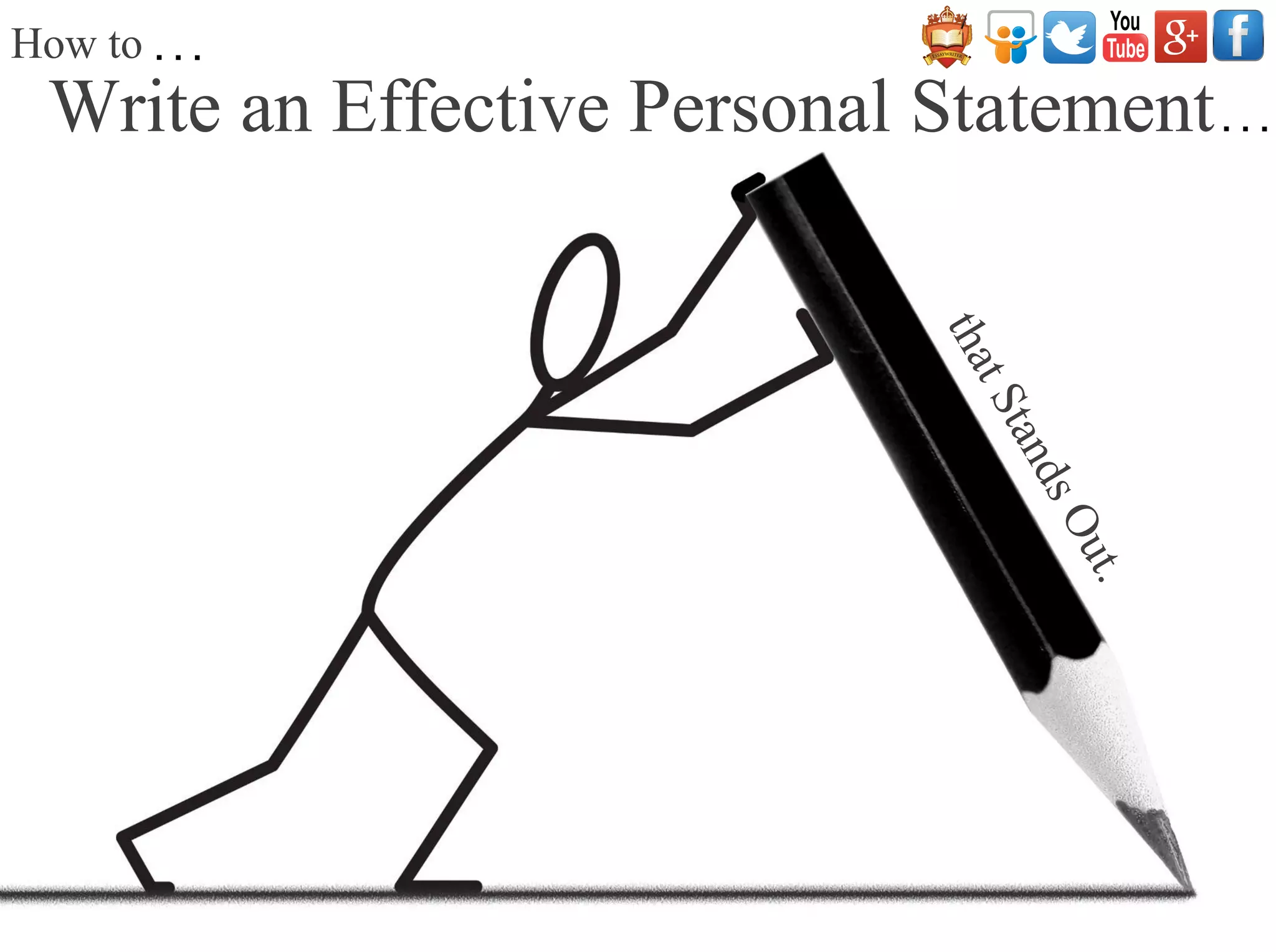
How to
thatStandsOut.
Here are pointers on how to write a personal statement
that is effective and will stand out from the rest.
Your personal statement should be
unique. The keyword here is
“personal.” It means individual; and as
such, it should be unique. Nevertheless,
the things you should include in your
writing is general or generic. What
should be unique are the specific
information you include and how you
state them. These are what will make
your personal statement effective and
stand out.
In their place, you can write using some better alternatives.
First, you should avoid what
admissions tutors do not
want to see on personal
statements.
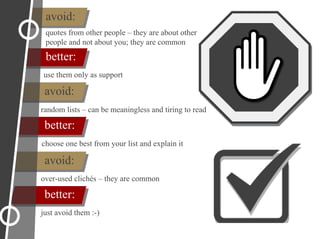
avoid:
better:
just avoid them :-)
avoid:
better:
quotes from other people – they are about other
people and not about you; they are common
avoid:
use them only as support
better:
random lists – can be meaningless and tiring to read
choose one best from your list and explain it
over-used clichés – they are common
avoid:
better:
avoid:
better:
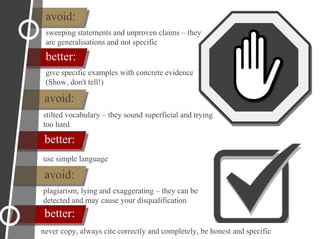
sweeping statements and unproven claims – they
are generalisations and not specific
avoid:
better:
give specific examples with concrete evidence
(Show, don't tell!)
stilted vocabulary – they sound superficial and trying
too hard
use simple language
plagiarism, lying and exaggerating – they can be
detected and may cause your disqualification
never copy, always cite correctly and completely, be honest and specific
avoid:
better:
avoid:
better:
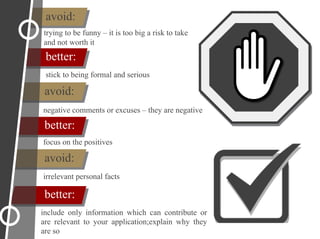
trying to be funny – it is too big a risk to take
and not worth it
avoid:
better:
stick to being formal and serious
negative comments or excuses – they are negative
focus on the positives
irrelevant personal facts
include only information which can contribute or
are relevant to your application;explain why they
are so
After knowing what to
avoid, you can now proceed
with what you should
include in your writing.
Here are some pointers for effective and outstanding writing based on
interviews with admissions tutors and some examples of personal statements.
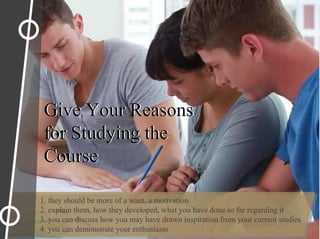
Give Your Reasons
for Studying the
Course
Give Your Reasons
for Studying the
Course
1. they should be more of a want, a motivation
2. explain them, how they developed, what you have done so far regarding it
3. you can discuss how you may have drawn inspiration from your current studies
4. you can demonstrate your enthusiasm
1. meet the criteria
2. have researched the course or profession
3. understand what you will be studying
4. are prepared for what you will be studying
Show that You are Suitable
for the Course
Demonstrate with evidence that you:
tip: stay on topic
Include What You Have Done
Outside the Classroom
Write about, for example:
1. how you have pursued your interest in the
subject beyond your current syllabus
2. how you have done a further reading around
the subject (and give your critical views or
reflective opinion about it)
examples:
Mention Materials of Further
Reading and Research:
books, quality newspapers, credible websites, periodicals,
journals, films, documentaries, blogs, radio programmes,
podcasts, public lectures, etc.
tip:
avoid mentioning
wider reading done by
everyone else
● reflecting on them and explaining what you have
learned from them; and/or
● how they have contributed in developing your interest
in the subject
Show Relevance to Your Course
Show that your experiences are relevant to the course by:
examples:
Experiences
work, volunteering, university taster session,
outreach programme, summer school,
museum, gallery, a visit to places related to
the course and profession like excavations for
archaeological courses
Show Relevance to Your Chosen
Career
Show Relevance to Your Chosen
Career
Show that your experiences
are relevant to your chosen
career by:
● describing the knowledge and skills you have developed from them; and
● how it has increased your understanding of and enthusiasm for the
profession or career you are aspiring for
Show that your experiences
are relevant to your chosen
career by:
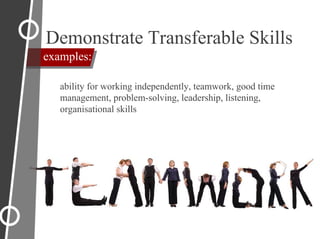
Demonstrate Transferable Skills
examples:
ability for working independently, teamwork, good time
management, problem-solving, leadership, listening,
organisational skills
Expand on the Most
Relevant Skills
1. demonstrate how you have developed, used/applied and improved the
skills which relate most readily to the course you are applying to
2. use specific examples
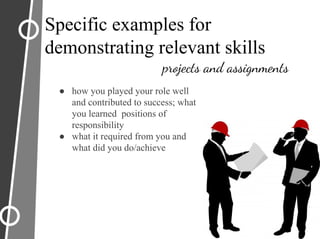
Specific examples for
demonstrating relevant skills
projects and assignments
● how you played your role well
and contributed to success; what
you learned positions of
responsibility
● what it required from you and
what did you do/achieve
● what you learned from your role; how did you contribute
to the group volunteering or weekend job
● what do you do; what have you observed, what extra
responsibilities you have taken on
what were the biggest challenges you have faced, why they are so and how did you overcome them
Sport or performing arts
additional:
Demonstrate that You are a Critical
Thinker
A short and simple description of
how you have developed and used
independent and analytical
thinking will show that you are
suitable for university level
thinking.
How you developed it with your A-level
subjects, a BTEC assignment or placement
or additional studies like the Extended
Project Qualification
examples:
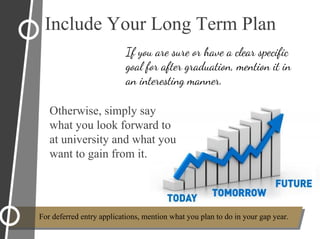
For deferred entry applications, mention what you plan to do in your gap year.
If you are sure or have a clear specific
goal for after graduation, mention it in
an interesting manner.
Include Your Long Term Plan
Otherwise, simply say
what you look forward to
at university and what you
want to gain from it.
Be and Stay Positive
Begin by not panicking. Start writing about your
strengths. Focus on your
Personal statement writing is a difficult important task.
Start by being positive and stay that way.
enthusiasm for the
course. Talk
positively about
yourself.
EssayWriter.co.uk
About Us

How To Write An Effective Personal Statement That Stands Out

  • 1.
    Write an EffectivePersonal Statement How to thatStandsOut.
  • 2.
    Here are pointerson how to write a personal statement that is effective and will stand out from the rest. Your personal statement should be unique. The keyword here is “personal.” It means individual; and as such, it should be unique. Nevertheless, the things you should include in your writing is general or generic. What should be unique are the specific information you include and how you state them. These are what will make your personal statement effective and stand out.
  • 3.
    In their place,you can write using some better alternatives. First, you should avoid what admissions tutors do not want to see on personal statements.
  • 4.
    avoid: better: just avoid them:-) avoid: better: quotes from other people – they are about other people and not about you; they are common avoid: use them only as support better: random lists – can be meaningless and tiring to read choose one best from your list and explain it over-used clichés – they are common
  • 5.
    avoid: better: avoid: better: sweeping statements andunproven claims – they are generalisations and not specific avoid: better: give specific examples with concrete evidence (Show, don't tell!) stilted vocabulary – they sound superficial and trying too hard use simple language plagiarism, lying and exaggerating – they can be detected and may cause your disqualification never copy, always cite correctly and completely, be honest and specific
  • 6.
    avoid: better: avoid: better: trying to befunny – it is too big a risk to take and not worth it avoid: better: stick to being formal and serious negative comments or excuses – they are negative focus on the positives irrelevant personal facts include only information which can contribute or are relevant to your application;explain why they are so
  • 7.
    After knowing whatto avoid, you can now proceed with what you should include in your writing. Here are some pointers for effective and outstanding writing based on interviews with admissions tutors and some examples of personal statements.
  • 8.
    Give Your Reasons forStudying the Course Give Your Reasons for Studying the Course 1. they should be more of a want, a motivation 2. explain them, how they developed, what you have done so far regarding it 3. you can discuss how you may have drawn inspiration from your current studies 4. you can demonstrate your enthusiasm
  • 9.
    1. meet thecriteria 2. have researched the course or profession 3. understand what you will be studying 4. are prepared for what you will be studying Show that You are Suitable for the Course Demonstrate with evidence that you: tip: stay on topic
  • 10.
    Include What YouHave Done Outside the Classroom Write about, for example: 1. how you have pursued your interest in the subject beyond your current syllabus 2. how you have done a further reading around the subject (and give your critical views or reflective opinion about it)
  • 11.
    examples: Mention Materials ofFurther Reading and Research: books, quality newspapers, credible websites, periodicals, journals, films, documentaries, blogs, radio programmes, podcasts, public lectures, etc. tip: avoid mentioning wider reading done by everyone else
  • 12.
    ● reflecting onthem and explaining what you have learned from them; and/or ● how they have contributed in developing your interest in the subject Show Relevance to Your Course Show that your experiences are relevant to the course by:
  • 13.
    examples: Experiences work, volunteering, universitytaster session, outreach programme, summer school, museum, gallery, a visit to places related to the course and profession like excavations for archaeological courses
  • 14.
    Show Relevance toYour Chosen Career Show Relevance to Your Chosen Career Show that your experiences are relevant to your chosen career by: ● describing the knowledge and skills you have developed from them; and ● how it has increased your understanding of and enthusiasm for the profession or career you are aspiring for Show that your experiences are relevant to your chosen career by:
  • 15.
    Demonstrate Transferable Skills examples: abilityfor working independently, teamwork, good time management, problem-solving, leadership, listening, organisational skills
  • 16.
    Expand on theMost Relevant Skills 1. demonstrate how you have developed, used/applied and improved the skills which relate most readily to the course you are applying to 2. use specific examples
  • 17.
    Specific examples for demonstratingrelevant skills projects and assignments ● how you played your role well and contributed to success; what you learned positions of responsibility ● what it required from you and what did you do/achieve
  • 18.
    ● what youlearned from your role; how did you contribute to the group volunteering or weekend job ● what do you do; what have you observed, what extra responsibilities you have taken on what were the biggest challenges you have faced, why they are so and how did you overcome them Sport or performing arts additional:
  • 19.
    Demonstrate that Youare a Critical Thinker A short and simple description of how you have developed and used independent and analytical thinking will show that you are suitable for university level thinking. How you developed it with your A-level subjects, a BTEC assignment or placement or additional studies like the Extended Project Qualification examples:
  • 20.
    For deferred entryapplications, mention what you plan to do in your gap year. If you are sure or have a clear specific goal for after graduation, mention it in an interesting manner. Include Your Long Term Plan Otherwise, simply say what you look forward to at university and what you want to gain from it.
  • 21.
    Be and StayPositive Begin by not panicking. Start writing about your strengths. Focus on your Personal statement writing is a difficult important task. Start by being positive and stay that way. enthusiasm for the course. Talk positively about yourself.
  • 22.