Welcome 
to the Workshop Presentation on 
How to Write a Research Proposal? 
BAYES AHMED 
PhD Researcher, 
University College London, UK 
Date: 30 August 2014
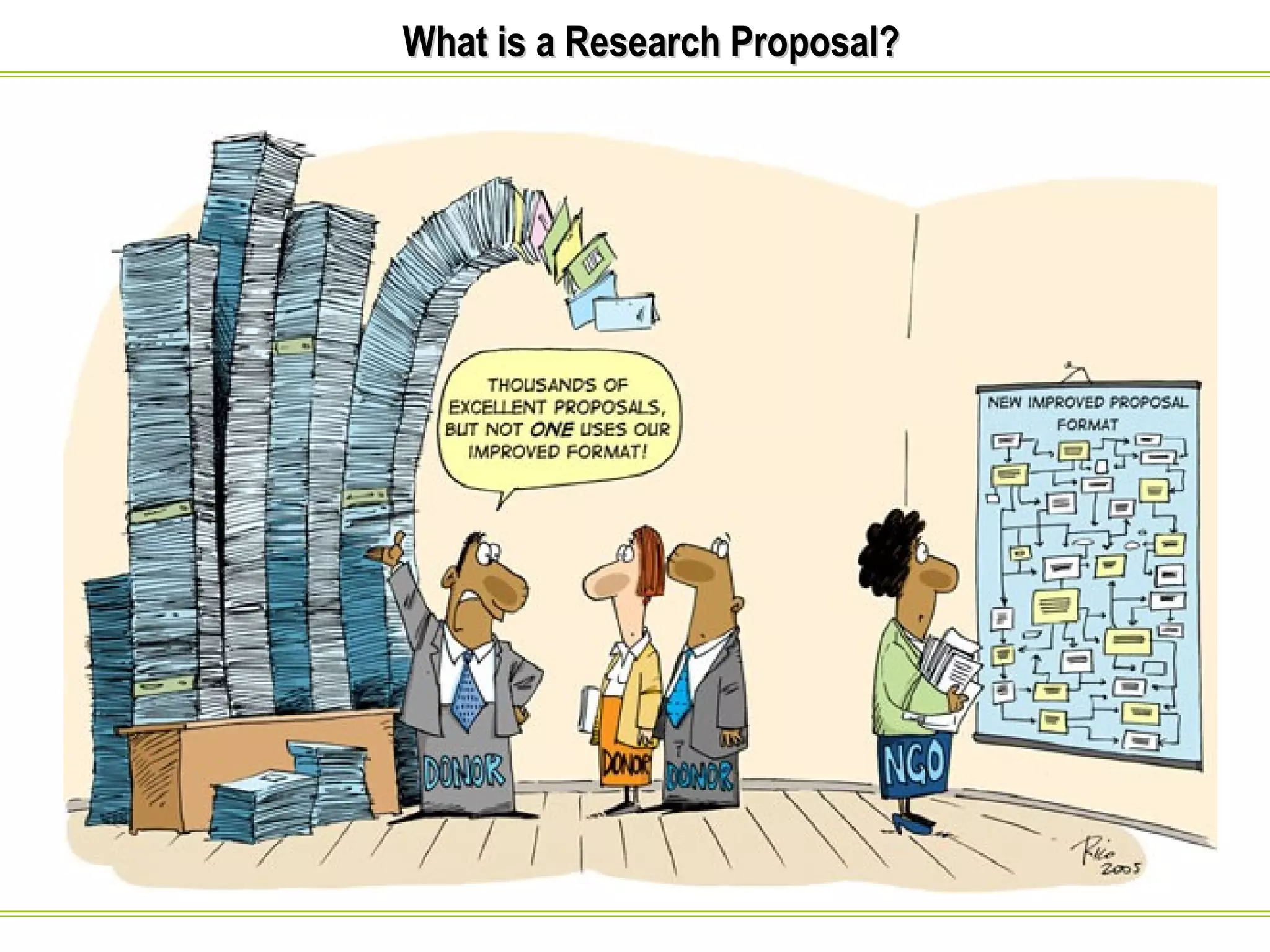
WWhhaatt iiss aa RReesseeaarrcchh PPrrooppoossaall?? 
A research proposal is a document of usually three to 
seven pages that informs others of a proposed piece 
of research. 
The purpose of the proposal is to help you to focus 
and define your research plans.
CClliieenntt’’ss SSaattiissffaaccttiioonn!! 
Client = Supervisor or Funding Agency 
Every proposal scans for clear answers to three questions: 
a)What are we going to learn that we do not know now? 
b)Why it is worth knowing? 
c)How will we know that the conclusions are valid? 
** Follow the Research Interests or Instructions (ToR)!
SSttrruuccttuurree ooff aa PPrrooppoossaall 
1. Cover page 
2. Table of contents 
3. Background/ Problem Identification 
4. Need for the study/ Rationale 
5. Aim and objectives of the study 
6. Review of the literature 
7. Research design (methodology) 
8. Forming a team 
9. Timetable and Budget 
10.Significance/ Expected outcomes of the study 
11. Appendices 
12. References
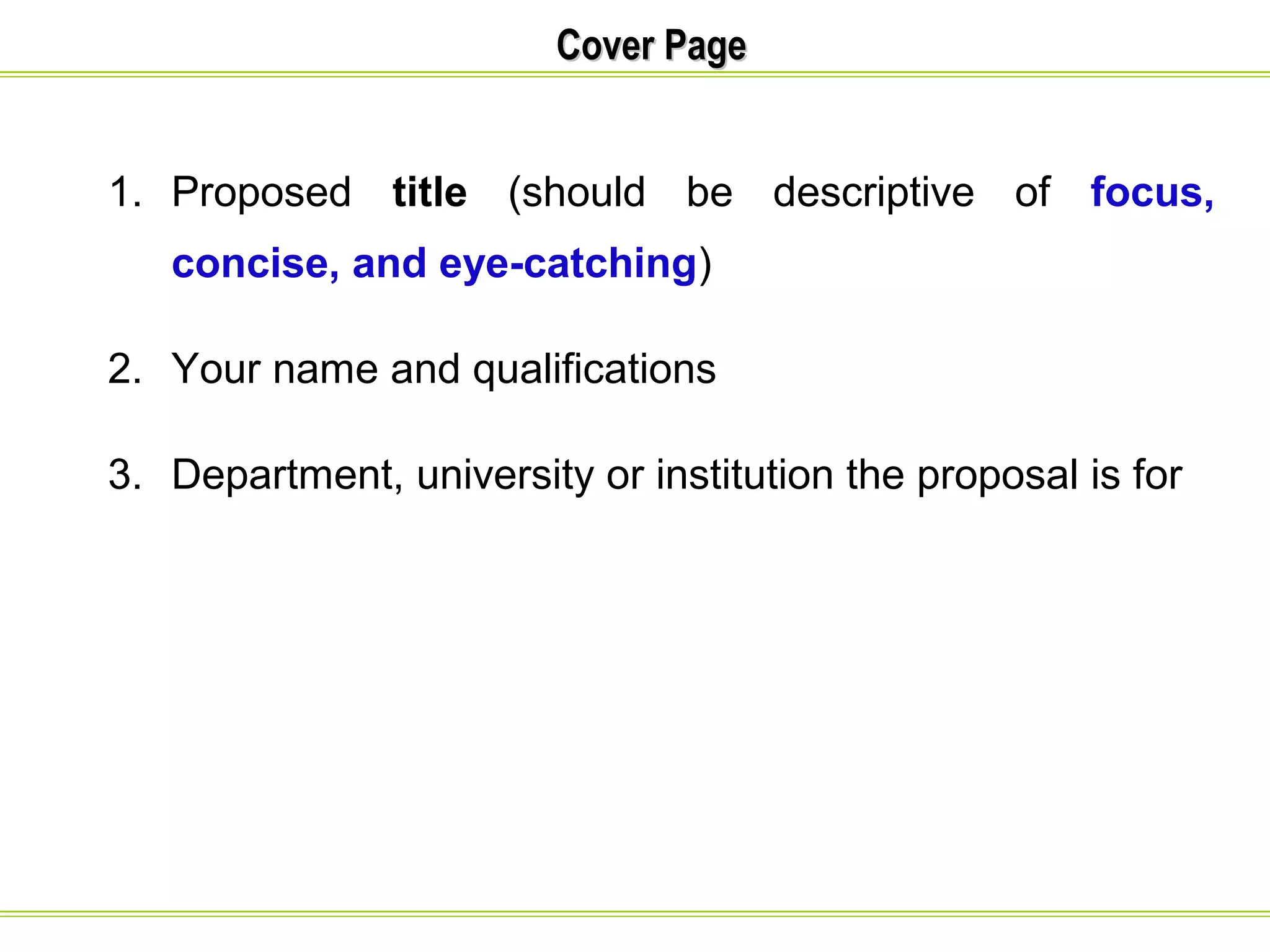
CCoovveerr PPaaggee 
1. Proposed title (should be descriptive of focus, 
concise, and eye-catching) 
2. Your name and qualifications 
3. Department, university or institution the proposal is for
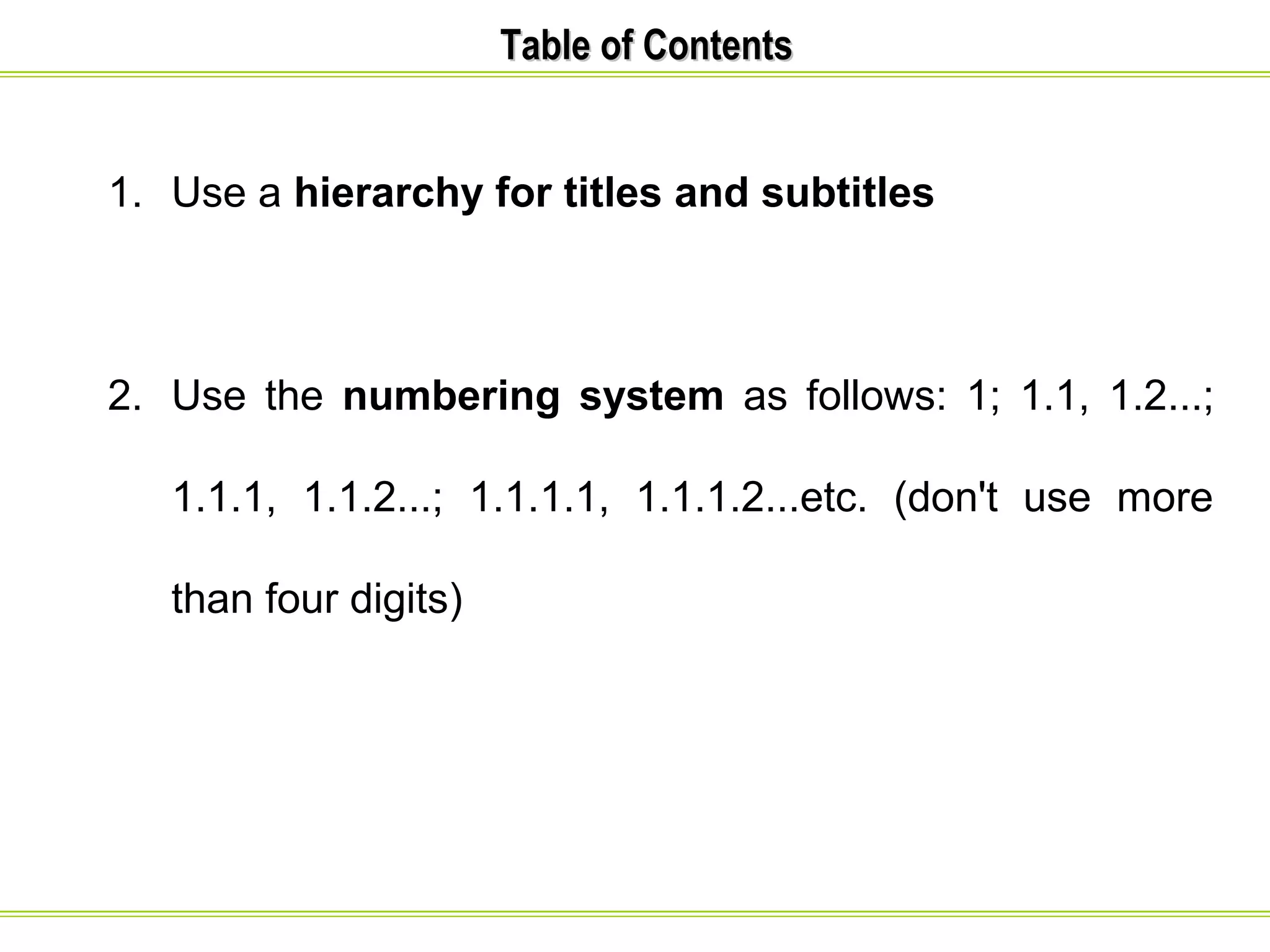
TTaabbllee ooff CCoonntteennttss 
1. Use a hierarchy for titles and subtitles 
2. Use the numbering system as follows: 1; 1.1, 1.2...; 
1.1.1, 1.1.2...; 1.1.1.1, 1.1.1.2...etc. (don't use more 
than four digits)
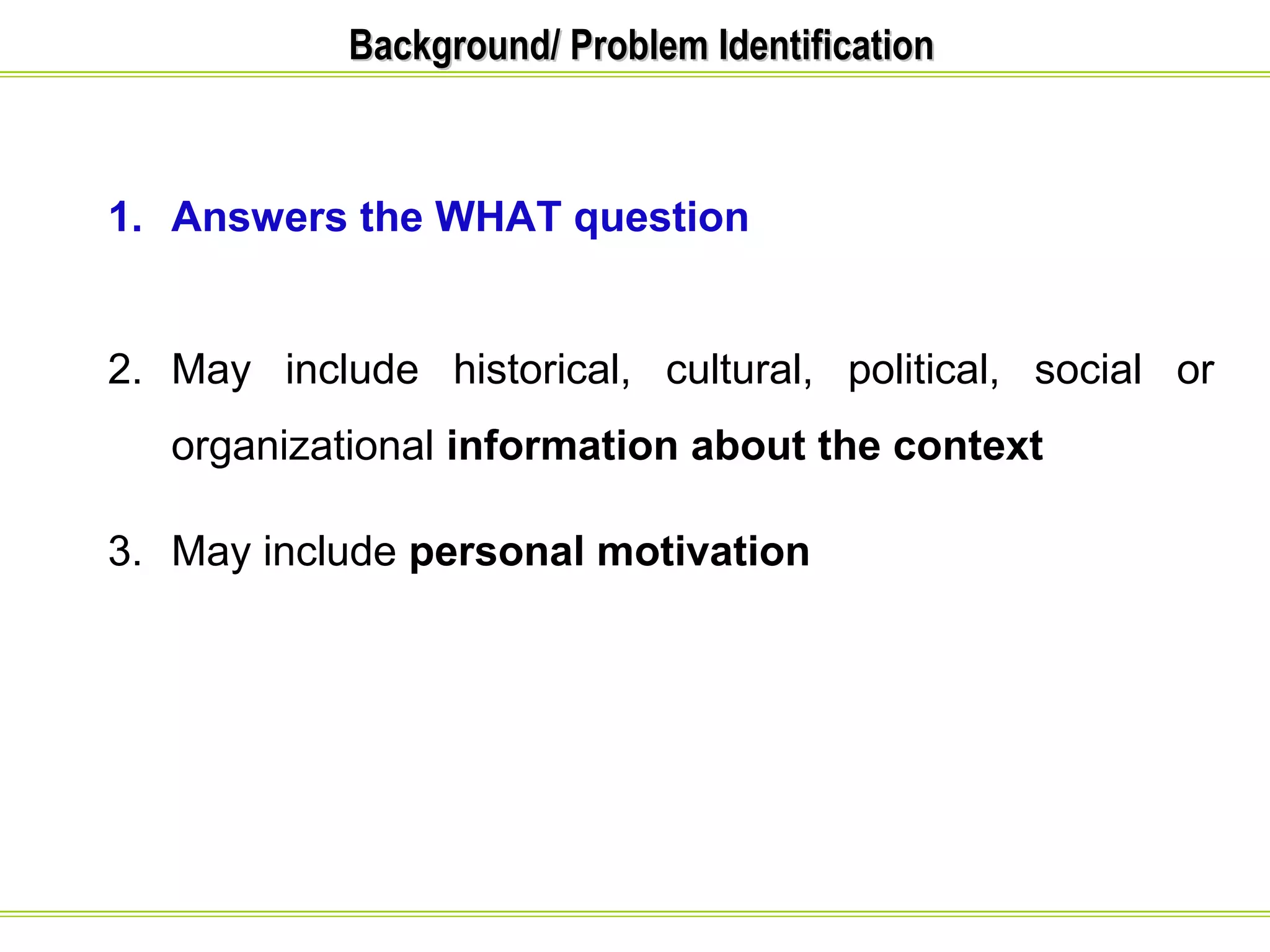
BBaacckkggrroouunndd// PPrroobblleemm IIddeennttiiffiiccaattiioonn 
1. Answers the WHAT question 
2. May include historical, cultural, political, social or 
organizational information about the context 
3. May include personal motivation
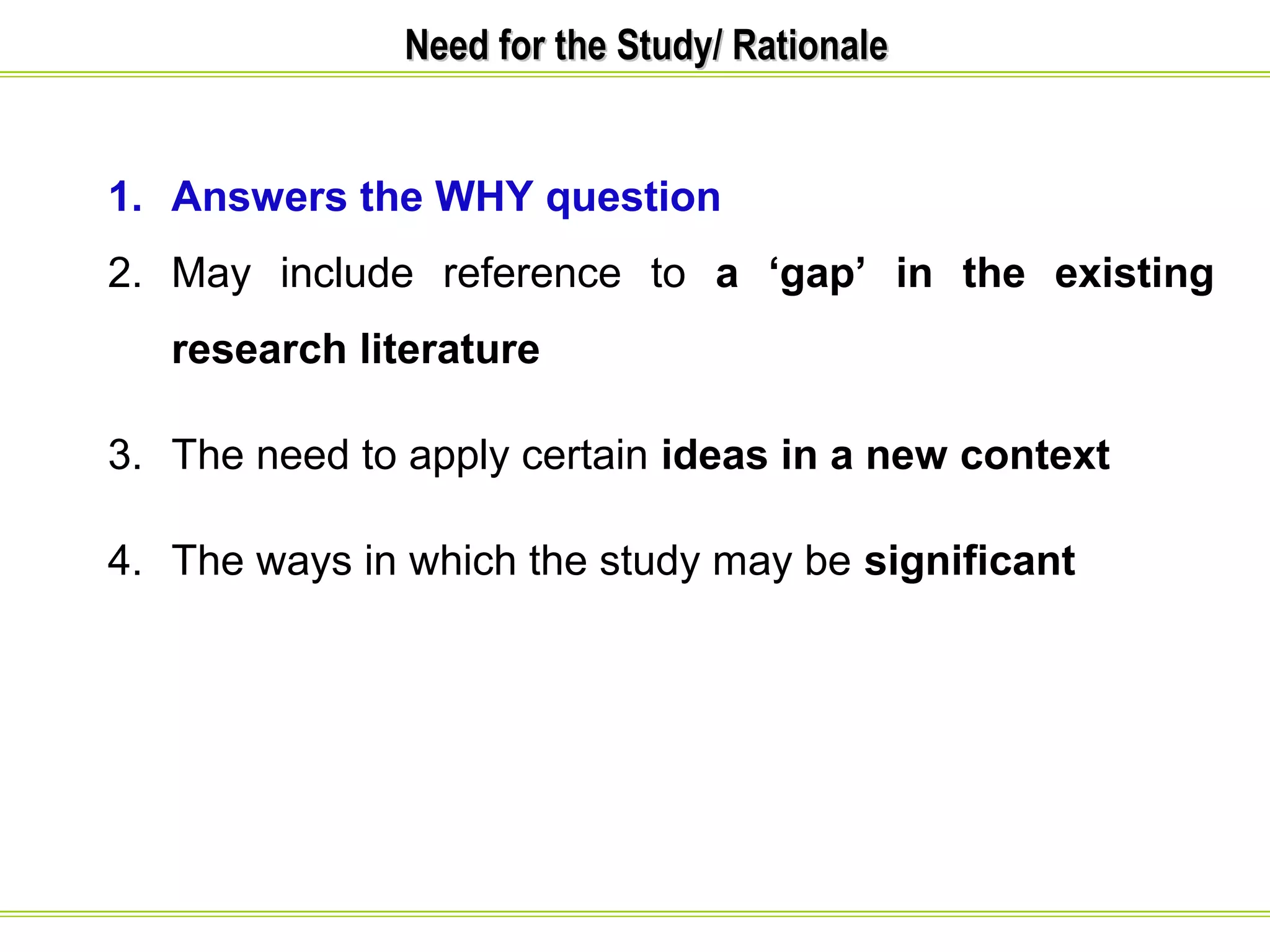
NNeeeedd ffoorr tthhee SSttuuddyy// RRaattiioonnaallee 
1. Answers the WHY question 
2. May include reference to a ‘gap’ in the existing 
research literature 
3. The need to apply certain ideas in a new context 
4. The ways in which the study may be significant
AAiimm aanndd OObbjjeeccttiivveess ooff tthhee SSttuuddyy 
1. The aim will represent the overall theme of the 
research 
2. The objective is expressed in terms of the broader 
context of the study 
3. The research questions (usually What, How, Why) – for 
each objective should be few, so that the focus is 
manageable
RReevviieeww ooff tthhee LLiitteerraattuurree 
1. This is not expected to be extensive for the proposal 
2. You should conduct an initial survey of the past/recent 
major theories to establish your directions 
3. Your review should be shaped by your argument 
based on your objectives
RReesseeaarrcchh DDeessiiggnn ((MMeetthhooddoollooggyy)) 
1. Answers the HOW question 
1. Includes rationale for selection of study area, methods 
of data collection and analysis, procedures you will use 
to ensure ethical practice, validity and reliability
TTiimmeettaabbllee aanndd BBuuddggeett 
1. This may take the form of a chart, timeline or flowchart 
2. Strictly follow the timeframe and total cost of the project 
3. At first; you have to form a project team (or 
independent researcher) and responsibilities 
4. Now break-down each activity and estimate the 
relevant costs (if applicable) 
5. Be realistic and don’t be over-ambitious!
NNeeww KKnnoowwlleeddggee// EExxppeecctteedd OOuuttccoommeess 
** May be excluded if the rationale for the study has 
been well developed earlier in the proposal
AAppppeennddiicceess 
May include documents, pilot study material, maps, 
questions for interviews, survey instruments, explanatory 
statement to participants etc.
RReeffeerreenncceess 
Use the American Psychological Association (APA) Style 
Guide or conventions recommended by your supervisor/ 
funding agency or use ENDNOTE as appropriate
CChheecckklliisstt 
The proposal is expected to: 
1.Show that you are engaging in genuine enquiry 
2.Link your proposed work with the work of others 
3.Establish your methodological approach, and 
4.Show you have thought about the ethical issues
QUESTIONS? 
Thank You All
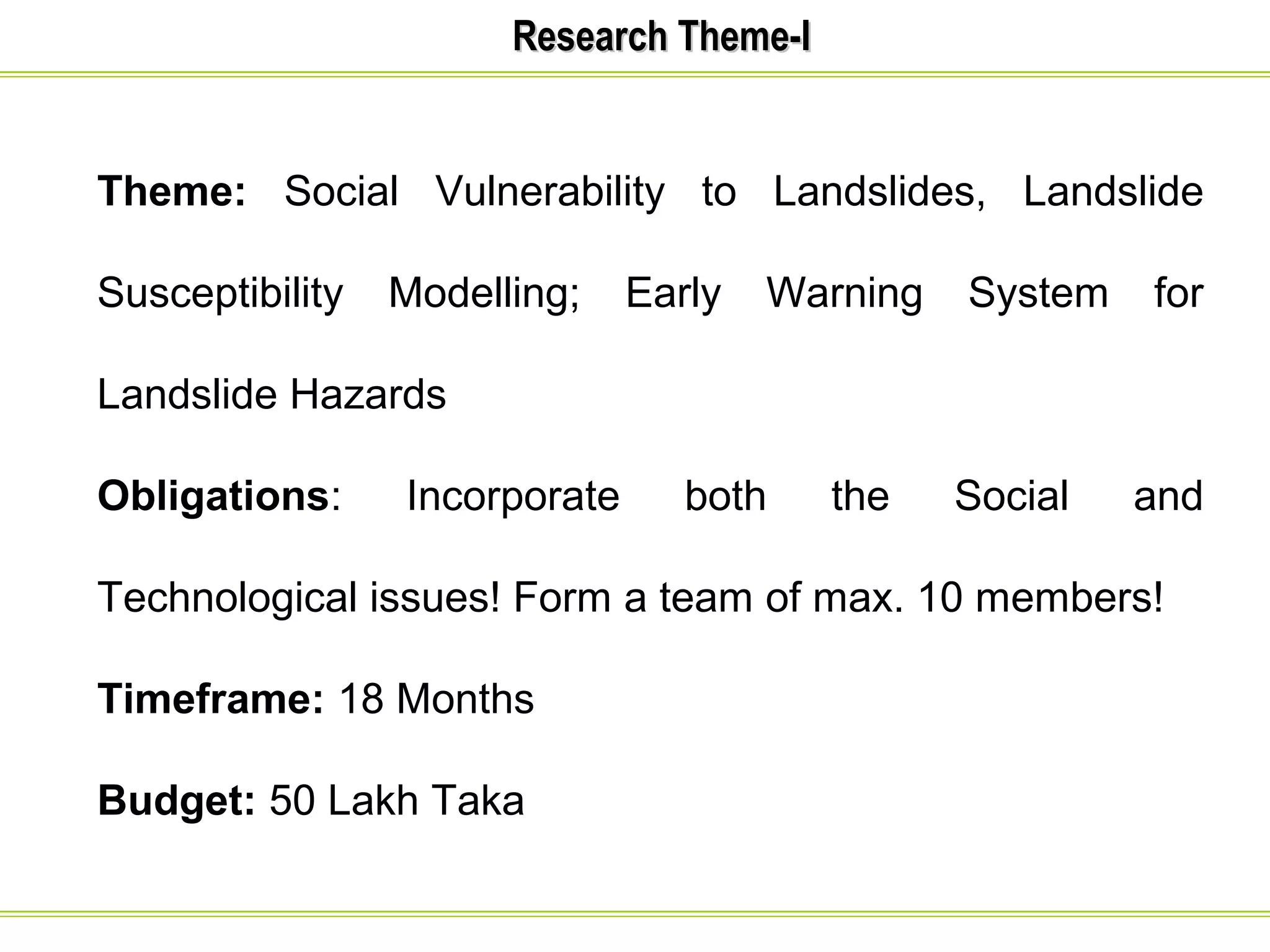
RReesseeaarrcchh TThheemmee--II 
Theme: Social Vulnerability to Landslides, Landslide 
Susceptibility Modelling; Early Warning System for 
Landslide Hazards 
Obligations: Incorporate both the Social and 
Technological issues! Form a team of max. 10 members! 
Timeframe: 18 Months 
Budget: 50 Lakh Taka

How to Write a Research Proposal?

  • 1.
    Welcome to theWorkshop Presentation on How to Write a Research Proposal? BAYES AHMED PhD Researcher, University College London, UK Date: 30 August 2014
  • 2.
    WWhhaatt iiss aaRReesseeaarrcchh PPrrooppoossaall?? A research proposal is a document of usually three to seven pages that informs others of a proposed piece of research. The purpose of the proposal is to help you to focus and define your research plans.
  • 3.
    CClliieenntt’’ss SSaattiissffaaccttiioonn!! Client= Supervisor or Funding Agency Every proposal scans for clear answers to three questions: a)What are we going to learn that we do not know now? b)Why it is worth knowing? c)How will we know that the conclusions are valid? ** Follow the Research Interests or Instructions (ToR)!
  • 4.
    SSttrruuccttuurree ooff aaPPrrooppoossaall 1. Cover page 2. Table of contents 3. Background/ Problem Identification 4. Need for the study/ Rationale 5. Aim and objectives of the study 6. Review of the literature 7. Research design (methodology) 8. Forming a team 9. Timetable and Budget 10.Significance/ Expected outcomes of the study 11. Appendices 12. References
  • 5.
    CCoovveerr PPaaggee 1.Proposed title (should be descriptive of focus, concise, and eye-catching) 2. Your name and qualifications 3. Department, university or institution the proposal is for
  • 6.
    TTaabbllee ooff CCoonntteennttss 1. Use a hierarchy for titles and subtitles 2. Use the numbering system as follows: 1; 1.1, 1.2...; 1.1.1, 1.1.2...; 1.1.1.1, 1.1.1.2...etc. (don't use more than four digits)
  • 7.
    BBaacckkggrroouunndd// PPrroobblleemm IIddeennttiiffiiccaattiioonn 1. Answers the WHAT question 2. May include historical, cultural, political, social or organizational information about the context 3. May include personal motivation
  • 8.
    NNeeeedd ffoorr tthheeSSttuuddyy// RRaattiioonnaallee 1. Answers the WHY question 2. May include reference to a ‘gap’ in the existing research literature 3. The need to apply certain ideas in a new context 4. The ways in which the study may be significant
  • 9.
    AAiimm aanndd OObbjjeeccttiivveessooff tthhee SSttuuddyy 1. The aim will represent the overall theme of the research 2. The objective is expressed in terms of the broader context of the study 3. The research questions (usually What, How, Why) – for each objective should be few, so that the focus is manageable
  • 10.
    RReevviieeww ooff tthheeLLiitteerraattuurree 1. This is not expected to be extensive for the proposal 2. You should conduct an initial survey of the past/recent major theories to establish your directions 3. Your review should be shaped by your argument based on your objectives
  • 11.
    RReesseeaarrcchh DDeessiiggnn ((MMeetthhooddoollooggyy)) 1. Answers the HOW question 1. Includes rationale for selection of study area, methods of data collection and analysis, procedures you will use to ensure ethical practice, validity and reliability
  • 12.
    TTiimmeettaabbllee aanndd BBuuddggeett 1. This may take the form of a chart, timeline or flowchart 2. Strictly follow the timeframe and total cost of the project 3. At first; you have to form a project team (or independent researcher) and responsibilities 4. Now break-down each activity and estimate the relevant costs (if applicable) 5. Be realistic and don’t be over-ambitious!
  • 13.
    NNeeww KKnnoowwlleeddggee// EExxppeecctteeddOOuuttccoommeess ** May be excluded if the rationale for the study has been well developed earlier in the proposal
  • 14.
    AAppppeennddiicceess May includedocuments, pilot study material, maps, questions for interviews, survey instruments, explanatory statement to participants etc.
  • 15.
    RReeffeerreenncceess Use theAmerican Psychological Association (APA) Style Guide or conventions recommended by your supervisor/ funding agency or use ENDNOTE as appropriate
  • 16.
    CChheecckklliisstt The proposalis expected to: 1.Show that you are engaging in genuine enquiry 2.Link your proposed work with the work of others 3.Establish your methodological approach, and 4.Show you have thought about the ethical issues
  • 17.
  • 18.
    RReesseeaarrcchh TThheemmee--II Theme:Social Vulnerability to Landslides, Landslide Susceptibility Modelling; Early Warning System for Landslide Hazards Obligations: Incorporate both the Social and Technological issues! Form a team of max. 10 members! Timeframe: 18 Months Budget: 50 Lakh Taka