Part OneThe Basics
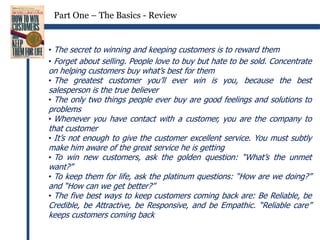
The greatest business secret in the world...Reward customers, and you’ll create and keep them.Fail to reward customers and you’re out of business.
Better than selling principleIt’s tough to resist someone who sincerely wants to help you.The most important goal of any employee, including salespersons, is to create and keep customersThere’s a big difference between selling and helping people to buyPeople love to buy but hate to be sold
The greatest customer you’ll ever win is...YOU
The only two things people ever buy...Good feelingsSolutions to problems- people buy emotionally and justify with logic.-  people spend money when and where they feel good.
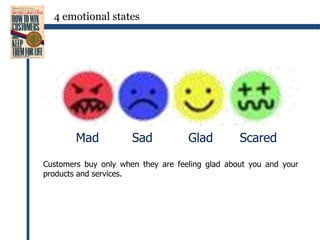
4 emotional states     Mad   	   Sad	 Glad	      ScaredCustomers buy only when they are feeling glad about you and your products and services.
Solutions to problems – 2 vital questions“What do you have?” (What’s the situation now?) “What do you want?” (How would you like it to be?)Once you have the answers to those two questions, you can decide if and how you can solve the problem.
Good feelings – The right touchIf the customer feels good, he will buy and come backPut yourself in the glad emotional stateNever tell customers your problemsRemember that customers buy for their reasons, not oursAct as if you are the only personal contact that the customer has with the company and behave as if the entire company’s image depends on youUse both logic and emotion to win and keep customersUse the problem-solving approach to move customers from mad, sad, or scared to glad
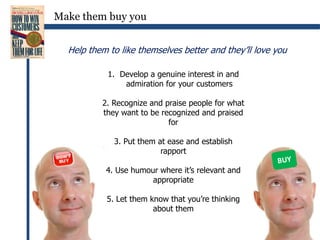
Make them buy you 	Help them to like themselves better and they’ll love youDevelop a genuine interest in and admiration for your customers2. Recognize and praise people for what they want to be recognized and praised for3. Put them at ease and establish rapport4. Use humour where it’s relevant and appropriate5. Let them know that you’re thinking about themBUY
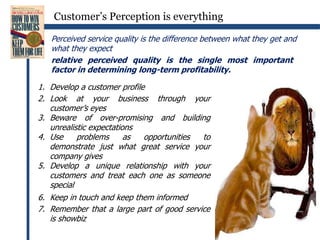
Customer’s Perception is everythingPerceived service quality is the difference between what they get and what they expectrelative perceived quality is the single most important factor in determining long-term profitability.Develop a customer profileLook at your business through your customer’s eyesBeware of over-promising and building unrealistic expectationsUse problems as opportunities to demonstrate just what great service your company givesDevelop a unique relationship with your customers and treat each one as someone specialKeep in touch and keep them informedRemember that a large part of good service is showbiz
The GOLDEN question – to win new customersWhat’s the unmet want?Always start by defining markets instead of your company’s talents and strengthsAsk your customers and potential customers the golden questionCreate new products and services by giving the familiar a new twistBrainstorm ideas for creating new customersBe a trend-spotterLook before you leapOnce you decide to go ahead, move quicklyBe prepared for a large number of ideas that don’t work out.
The PLATINUM questions – to keep customers for lifeHow are we doing?How can we get better? The customer’s perception of your quality of service- What to do in order to increase that perceptionrelative perceived quality is the single most important factor in determining long-term profitability.
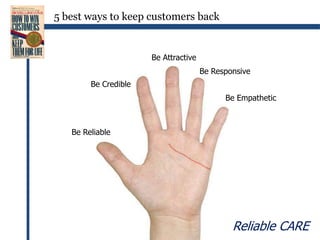
5 best ways to keep customers backBe AttractiveBe ResponsiveBe CredibleBe EmpatheticBe ReliableReliable CARE
Part TwoManaging the Moments of Truth
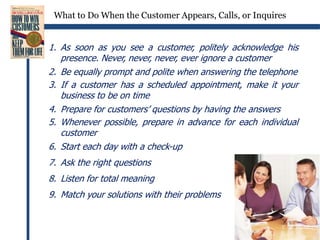
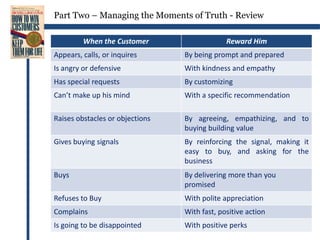
What to Do When the Customer Appears, Calls, or InquiresAs soon as you see a customer, politely acknowledge his presence. Never, never, never, ever ignore a customerBe equally prompt and polite when answering the telephoneIf a customer has a scheduled appointment, make it your business to be on timePrepare for customers’ questions by having the answersWhenever possible, prepare in advance for each individual customerStart each day with a check-upAsk the right questionsListen for total meaningMatch your solutions with their problems
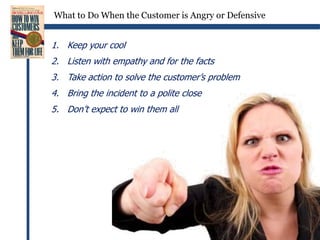
What to Do When the Customer is Angry or DefensiveKeep your coolListen with empathy and for the factsTake action to solve the customer’s problemBring the incident to a polite closeDon’t expect to win them all
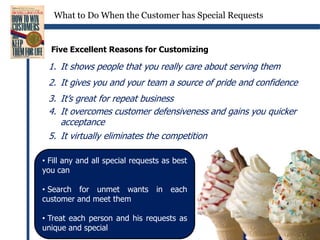
What to Do When the Customer has Special RequestsFive Excellent Reasons for CustomizingIt shows people that you really care about serving themIt gives you and your team a source of pride and confidenceIt’s great for repeat businessIt overcomes customer defensiveness and gains you quicker acceptanceIt virtually eliminates the competition Fill any and all special requests as best you can
 Search for unmet wants in each customer and meet them
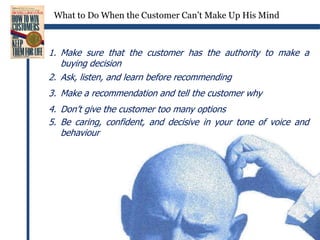
 Treat each person and his requests as unique and specialWhat to Do When the Customer Can’t Make Up His MindMake sure that the customer has the authority to make a buying decisionAsk, listen, and learn before recommendingMake a recommendation and tell the customer whyDon’t give the customer too many optionsBe caring, confident, and decisive in your tone of voice and behaviour
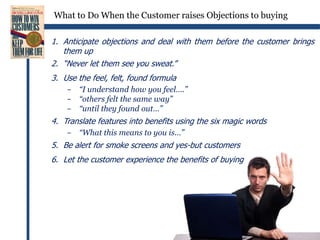
What to Do When the Customer raises Objections to buyingAnticipate objections and deal with them before the customer brings them up“Never let them see you sweat.”Use the feel, felt, found formula“I understand how you feel….”
“others felt the same way”
“until they found out…”Translate features into benefits using the six magic words“What this means to you is…”Be alert for smoke screens and yes-but customersLet the customer experience the benefits of buying
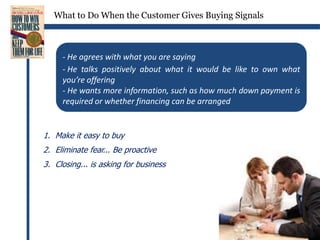
What to Do When the Customer Gives Buying Signals He agrees with what you are saying
 He talks positively about what it would be like to own what you’re offering
 He wants more information, such as how much down payment is required or whether financing can be arrangedMake it easy to buyEliminate fear... Be proactiveClosing... is asking for business
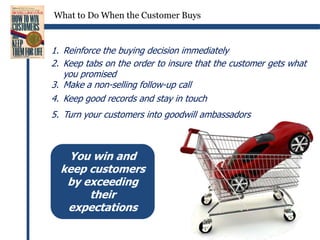
What to Do When the Customer BuysReinforce the buying decision immediatelyKeep tabs on the order to insure that the customer gets what you promisedMake a non-selling follow-up callKeep good records and stay in touchTurn your customers into goodwill ambassadorsYou win and keep customers by exceeding their expectations
What to Do When the Customer Refuses to BuyMake every moment of truth countThink long term and keep the big picture in mindDon’t take refusals personally or let them immobilize youResolve to learn something from every refusalCultivate the habit of intelligent persistence
What to Do When the Customer ComplainsComplaints point out areas that need improvement
Complaints give you a second chance to provide service and satisfaction to dissatisfied customers
Complaints are a wonderful opportunity to strengthen customer loyaltySeek out and welcome complaintsTake every complaint seriouslyGet people at the top actively involved in both listening to and helping people resolve customer complaintsConsider setting up a system to document and classify complaintsSet goals for resolving complaintsLearn and get better from complaints
What to Do When the Customer ComplainsListen with understandingParaphrase and record what the customer tells youFind out what the customer wantsPropose a solution and get his supportIf the customer doesn’t like your solution, ask him what he would consider a fair settlementMake a follow-up call to insure satisfactionNever let the customer lose face
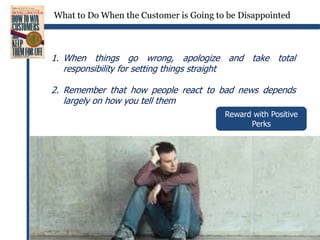
What to Do When the Customer is Going to be DisappointedWhen things go wrong, apologize and take total responsibility for setting things straightRemember that how people react to bad news depends largely on how you tell themReward with Positive Perks

How to win customers and keep them for life

  • 2.
  • 3.
    The greatest businesssecret in the world...Reward customers, and you’ll create and keep them.Fail to reward customers and you’re out of business.
  • 4.
    Better than sellingprincipleIt’s tough to resist someone who sincerely wants to help you.The most important goal of any employee, including salespersons, is to create and keep customersThere’s a big difference between selling and helping people to buyPeople love to buy but hate to be sold
  • 5.
    The greatest customeryou’ll ever win is...YOU
  • 6.
    The only twothings people ever buy...Good feelingsSolutions to problems- people buy emotionally and justify with logic.- people spend money when and where they feel good.
  • 7.
    4 emotional states Mad Sad Glad ScaredCustomers buy only when they are feeling glad about you and your products and services.
  • 8.
    Solutions to problems– 2 vital questions“What do you have?” (What’s the situation now?) “What do you want?” (How would you like it to be?)Once you have the answers to those two questions, you can decide if and how you can solve the problem.
  • 9.
    Good feelings –The right touchIf the customer feels good, he will buy and come backPut yourself in the glad emotional stateNever tell customers your problemsRemember that customers buy for their reasons, not oursAct as if you are the only personal contact that the customer has with the company and behave as if the entire company’s image depends on youUse both logic and emotion to win and keep customersUse the problem-solving approach to move customers from mad, sad, or scared to glad
  • 10.
    Make them buyyou Help them to like themselves better and they’ll love youDevelop a genuine interest in and admiration for your customers2. Recognize and praise people for what they want to be recognized and praised for3. Put them at ease and establish rapport4. Use humour where it’s relevant and appropriate5. Let them know that you’re thinking about themBUY
  • 11.
    Customer’s Perception iseverythingPerceived service quality is the difference between what they get and what they expectrelative perceived quality is the single most important factor in determining long-term profitability.Develop a customer profileLook at your business through your customer’s eyesBeware of over-promising and building unrealistic expectationsUse problems as opportunities to demonstrate just what great service your company givesDevelop a unique relationship with your customers and treat each one as someone specialKeep in touch and keep them informedRemember that a large part of good service is showbiz
  • 12.
    The GOLDEN question– to win new customersWhat’s the unmet want?Always start by defining markets instead of your company’s talents and strengthsAsk your customers and potential customers the golden questionCreate new products and services by giving the familiar a new twistBrainstorm ideas for creating new customersBe a trend-spotterLook before you leapOnce you decide to go ahead, move quicklyBe prepared for a large number of ideas that don’t work out.
  • 13.
    The PLATINUM questions– to keep customers for lifeHow are we doing?How can we get better? The customer’s perception of your quality of service- What to do in order to increase that perceptionrelative perceived quality is the single most important factor in determining long-term profitability.
  • 14.
    5 best waysto keep customers backBe AttractiveBe ResponsiveBe CredibleBe EmpatheticBe ReliableReliable CARE
  • 15.
    Part TwoManaging theMoments of Truth
  • 16.
    What to DoWhen the Customer Appears, Calls, or InquiresAs soon as you see a customer, politely acknowledge his presence. Never, never, never, ever ignore a customerBe equally prompt and polite when answering the telephoneIf a customer has a scheduled appointment, make it your business to be on timePrepare for customers’ questions by having the answersWhenever possible, prepare in advance for each individual customerStart each day with a check-upAsk the right questionsListen for total meaningMatch your solutions with their problems
  • 17.
    What to DoWhen the Customer is Angry or DefensiveKeep your coolListen with empathy and for the factsTake action to solve the customer’s problemBring the incident to a polite closeDon’t expect to win them all
  • 18.
    What to DoWhen the Customer has Special RequestsFive Excellent Reasons for CustomizingIt shows people that you really care about serving themIt gives you and your team a source of pride and confidenceIt’s great for repeat businessIt overcomes customer defensiveness and gains you quicker acceptanceIt virtually eliminates the competition Fill any and all special requests as best you can
  • 19.
    Search forunmet wants in each customer and meet them
  • 20.
    Treat eachperson and his requests as unique and specialWhat to Do When the Customer Can’t Make Up His MindMake sure that the customer has the authority to make a buying decisionAsk, listen, and learn before recommendingMake a recommendation and tell the customer whyDon’t give the customer too many optionsBe caring, confident, and decisive in your tone of voice and behaviour
  • 21.
    What to DoWhen the Customer raises Objections to buyingAnticipate objections and deal with them before the customer brings them up“Never let them see you sweat.”Use the feel, felt, found formula“I understand how you feel….”
  • 22.
    “others felt thesame way”
  • 23.
    “until they foundout…”Translate features into benefits using the six magic words“What this means to you is…”Be alert for smoke screens and yes-but customersLet the customer experience the benefits of buying
  • 24.
    What to DoWhen the Customer Gives Buying Signals He agrees with what you are saying
  • 25.
    He talkspositively about what it would be like to own what you’re offering
  • 26.
    He wantsmore information, such as how much down payment is required or whether financing can be arrangedMake it easy to buyEliminate fear... Be proactiveClosing... is asking for business
  • 27.
    What to DoWhen the Customer BuysReinforce the buying decision immediatelyKeep tabs on the order to insure that the customer gets what you promisedMake a non-selling follow-up callKeep good records and stay in touchTurn your customers into goodwill ambassadorsYou win and keep customers by exceeding their expectations
  • 28.
    What to DoWhen the Customer Refuses to BuyMake every moment of truth countThink long term and keep the big picture in mindDon’t take refusals personally or let them immobilize youResolve to learn something from every refusalCultivate the habit of intelligent persistence
  • 29.
    What to DoWhen the Customer ComplainsComplaints point out areas that need improvement
  • 30.
    Complaints give youa second chance to provide service and satisfaction to dissatisfied customers
  • 31.
    Complaints are awonderful opportunity to strengthen customer loyaltySeek out and welcome complaintsTake every complaint seriouslyGet people at the top actively involved in both listening to and helping people resolve customer complaintsConsider setting up a system to document and classify complaintsSet goals for resolving complaintsLearn and get better from complaints
  • 32.
    What to DoWhen the Customer ComplainsListen with understandingParaphrase and record what the customer tells youFind out what the customer wantsPropose a solution and get his supportIf the customer doesn’t like your solution, ask him what he would consider a fair settlementMake a follow-up call to insure satisfactionNever let the customer lose face
  • 33.
    What to DoWhen the Customer is Going to be DisappointedWhen things go wrong, apologize and take total responsibility for setting things straightRemember that how people react to bad news depends largely on how you tell themReward with Positive Perks

Editor's Notes

  • #4 Every behaviour has consequences... Future behaviour is largely based on the consequences of past and present behaviour
  • #5 The goal should not be to sell 10 TVs... It should be to get 10 customers and this can only be done by helping out customers, help them buy whats best for them and make them feel good abt it
  • #7 In most cases, we buy not what we need but what we want.. Eg., u need food but u want a pizza
  • #10 1. Put yourself in the glad emotional state. (Act the way you want to feel and soon you’ll feel the way you act)2. Never tell customers your problems. (Most of them don’t care.Telling people your problems makes them sad, and sad people don’tbuy as often)3. Remember that customers buy for their reasons, not ours. – every customer is different.4. Act as if you are the only personal contact that the customer has withthe company and behave as if the entire company’s image depends onyou.5. Use both logic and emotion to win and keep customers. (emotion makes them buy but logic keeps them coming back)- post decision remorse6. Use the problem-solving approach to move customers from mad, sad,or scared to glad.
  • #11 Tact is the art of seeing people as they wish to be seen
  • #13 There has to be mice for ppl to buy mousetraps