Customer service skills
Who is a customer? Is he dependant? An intrusion A statistic Why is he important?
What do customers really want? Benefits from the products? Services offered A solution to problems Good service, reliability and quality Continuity
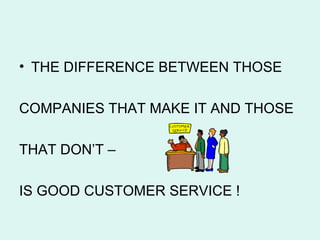
THE DIFFERENCE BETWEEN THOSE  COMPANIES THAT MAKE IT AND THOSE  THAT DON’T –  IS GOOD CUSTOMER SERVICE !
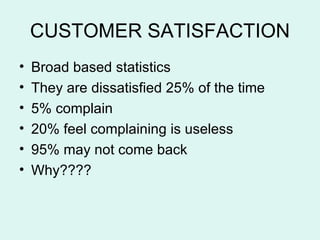
CUSTOMER SATISFACTION Broad based statistics They are dissatisfied 25% of the time 5% complain 20% feel complaining is useless 95% may not come back Why????
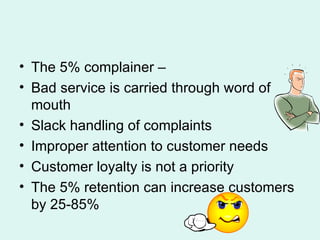
The 5% complainer – Bad service is carried through word of mouth Slack handling of complaints Improper attention to customer needs Customer loyalty is not a priority The 5% retention can increase customers by 25-85%
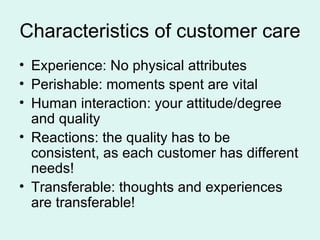
Characteristics of customer care Experience: No physical attributes Perishable: moments spent are vital Human interaction: your attitude/degree and quality Reactions: the quality has to be consistent, as each customer has different needs! Transferable: thoughts and experiences are transferable!
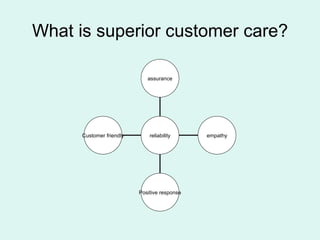
What is superior customer care? Customer friendly Positive response empathy assurance reliability
Superior customer care The big five factors Reliability Assurance Customer friendly – tangible Empathy response
PARCH POLITE- at all times ATTENTIVE-full concentration RESPECTFUL: and focused  CONSIDERATE: showing  concern HELPFUL: without being asked
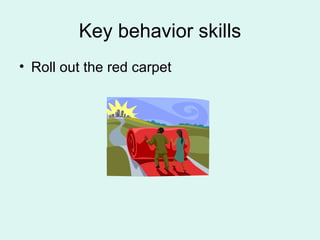
Key behavior skills Roll out the red carpet
Key behavior patterns A neat and tidy appearance A clean face Neat hair A tidy work counter Good speech and action Correct address: sir/madam/mr/miss Genuine speech volume
Contd: Be clear  Modulate your tone Suitable gestures Listen Maintain correct posture Effective smiling
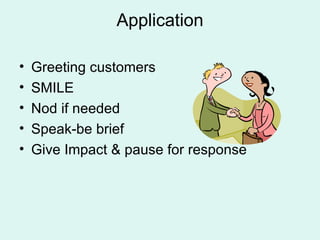
Application Greeting customers SMILE Nod if needed Speak-be brief  Give Impact & pause for response
Offering assistance Offer in specific terms Appropriate gestures If unable to do so, make a general offer And be prepared for a negative response Never argue Difference in CAN AND MAY
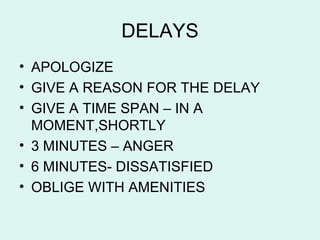
DELAYS APOLOGIZE GIVE A REASON FOR THE DELAY GIVE A TIME SPAN – IN A MOMENT,SHORTLY 3 MINUTES – ANGER 6 MINUTES- DISSATISFIED OBLIGE WITH AMENITIES
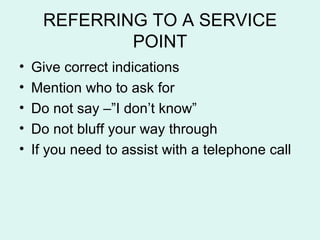
REFERRING TO A SERVICE POINT Give correct indications Mention who to ask for Do not say –”I don’t know” Do not bluff your way through If you need to assist with a telephone call
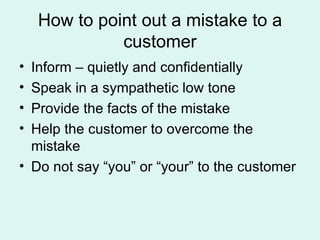
How to point out a mistake to a customer Inform – quietly and confidentially Speak in a sympathetic low tone Provide the facts of the mistake Help the customer to overcome the mistake Do not say “you” or “your” to the customer
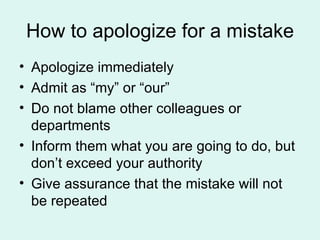
How to apologize for a mistake Apologize immediately Admit as “my” or “our” Do not blame other colleagues or departments Inform them what you are going to do, but don’t exceed your authority Give assurance that the mistake will not be repeated
How to say NO Never start with a NO Isolate the customer Apologize for saying NO Give information and show attentiveness Use a low tone – if it is unpleasant news Handle the situation quietly – ask for alternatives he would like you  make!
assistance Offer assistance to mothers with prams. Assist people in wheelchairs Inform them of facilities provided for them Enquire if they need assistance Offer any assistance to the handicapped, people with spastic children, or families with a senior citizen
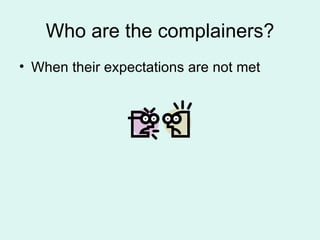
Who are the complainers? When their expectations are not met
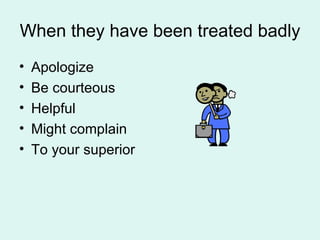
When they have been treated badly Apologize Be courteous Helpful Might complain To your superior
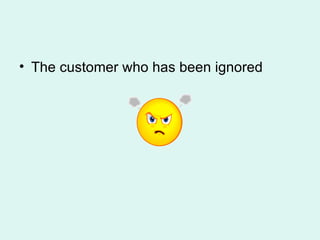
The customer who has been ignored
Dealing with difficult customers Give individual attention Put yourself in their shoes Use positive and friendly words Ask pertinent questions-remain in control of the situation Remain calm Ensure that you and the customer see the problem in the same light
Never be afraid to say SORRY Do not blame another customer or colleague

Customer Service Skills

  • 1.
  • 2.
    Who is acustomer? Is he dependant? An intrusion A statistic Why is he important?
  • 3.
    What do customersreally want? Benefits from the products? Services offered A solution to problems Good service, reliability and quality Continuity
  • 4.
    THE DIFFERENCE BETWEENTHOSE COMPANIES THAT MAKE IT AND THOSE THAT DON’T – IS GOOD CUSTOMER SERVICE !
  • 5.
    CUSTOMER SATISFACTION Broadbased statistics They are dissatisfied 25% of the time 5% complain 20% feel complaining is useless 95% may not come back Why????
  • 6.
    The 5% complainer– Bad service is carried through word of mouth Slack handling of complaints Improper attention to customer needs Customer loyalty is not a priority The 5% retention can increase customers by 25-85%
  • 7.
    Characteristics of customercare Experience: No physical attributes Perishable: moments spent are vital Human interaction: your attitude/degree and quality Reactions: the quality has to be consistent, as each customer has different needs! Transferable: thoughts and experiences are transferable!
  • 8.
    What is superiorcustomer care? Customer friendly Positive response empathy assurance reliability
  • 9.
    Superior customer careThe big five factors Reliability Assurance Customer friendly – tangible Empathy response
  • 10.
    PARCH POLITE- atall times ATTENTIVE-full concentration RESPECTFUL: and focused CONSIDERATE: showing concern HELPFUL: without being asked
  • 11.
    Key behavior skillsRoll out the red carpet
  • 12.
    Key behavior patternsA neat and tidy appearance A clean face Neat hair A tidy work counter Good speech and action Correct address: sir/madam/mr/miss Genuine speech volume
  • 13.
    Contd: Be clear Modulate your tone Suitable gestures Listen Maintain correct posture Effective smiling
  • 14.
    Application Greeting customersSMILE Nod if needed Speak-be brief Give Impact & pause for response
  • 15.
    Offering assistance Offerin specific terms Appropriate gestures If unable to do so, make a general offer And be prepared for a negative response Never argue Difference in CAN AND MAY
  • 16.
    DELAYS APOLOGIZE GIVEA REASON FOR THE DELAY GIVE A TIME SPAN – IN A MOMENT,SHORTLY 3 MINUTES – ANGER 6 MINUTES- DISSATISFIED OBLIGE WITH AMENITIES
  • 17.
    REFERRING TO ASERVICE POINT Give correct indications Mention who to ask for Do not say –”I don’t know” Do not bluff your way through If you need to assist with a telephone call
  • 18.
    How to pointout a mistake to a customer Inform – quietly and confidentially Speak in a sympathetic low tone Provide the facts of the mistake Help the customer to overcome the mistake Do not say “you” or “your” to the customer
  • 19.
    How to apologizefor a mistake Apologize immediately Admit as “my” or “our” Do not blame other colleagues or departments Inform them what you are going to do, but don’t exceed your authority Give assurance that the mistake will not be repeated
  • 20.
    How to sayNO Never start with a NO Isolate the customer Apologize for saying NO Give information and show attentiveness Use a low tone – if it is unpleasant news Handle the situation quietly – ask for alternatives he would like you make!
  • 21.
    assistance Offer assistanceto mothers with prams. Assist people in wheelchairs Inform them of facilities provided for them Enquire if they need assistance Offer any assistance to the handicapped, people with spastic children, or families with a senior citizen
  • 22.
    Who are thecomplainers? When their expectations are not met
  • 23.
    When they havebeen treated badly Apologize Be courteous Helpful Might complain To your superior
  • 24.
    The customer whohas been ignored
  • 25.
    Dealing with difficultcustomers Give individual attention Put yourself in their shoes Use positive and friendly words Ask pertinent questions-remain in control of the situation Remain calm Ensure that you and the customer see the problem in the same light
  • 26.
    Never be afraidto say SORRY Do not blame another customer or colleague