


How to Speak “Manager” 
Nicole Forsgren Velasquez, PhD 
Professor of Accounting and MIS 
@nicolefv 
Jon M. Huntsman School of Business 
Utah State University
The Gap 
Business is 
here 
IT is here
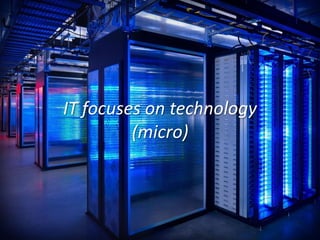
IT focuses on technology 
(micro)
Business focuses at a higher level 
(macro)
We Are Here to Bridge The Gap
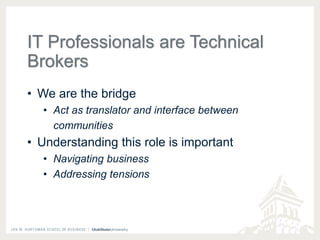
IT Professionals are Technical 
Brokers 
• We are the bridge 
• Act as translator and interface between 
communities 
• Understanding this role is important 
• Navigating business 
• Addressing tensions
IT Professionals are Technical 
Brokers 
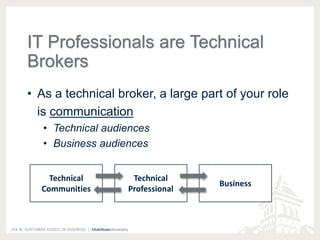
• As a technical broker, a large part of your role 
is communication 
• Technical audiences 
• Business audiences 
Technical 
Professional 
Business 
Technical 
Communities
Challenges: Visibility and Content 
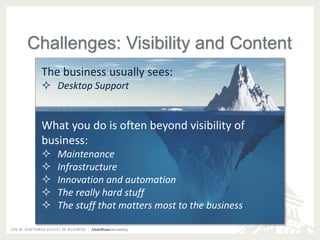
The business usually sees: 
 Desktop Support 
What you do is often beyond visibility of 
business: 
 Maintenance 
 Infrastructure 
 Innovation and automation 
 The really hard stuff 
 The stuff that matters most to the business
Talking to Tech 
• Who is your audience? 
• What language is 
appropriate? 
• e.g., security, desktop support, senior 
/ junior 
• How do you communicate 
something to each? 
• Technical 
• Expertise
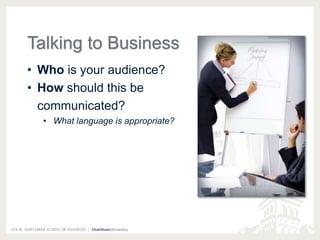
Talking to Business 
• Who is your audience? 
• How should this be 
communicated? 
• What language is appropriate?
Who is Business? 
• Common ground: 
• Need for funding 
• Success measures 
• Demonstrated value
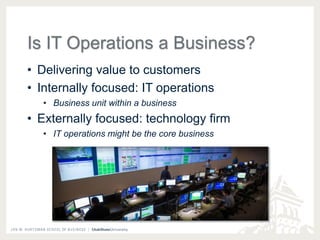
Is IT Operations a Business? 
• Delivering value to customers 
• Internally focused: IT operations 
• Business unit within a business 
• Externally focused: technology firm 
• IT operations might be the core business
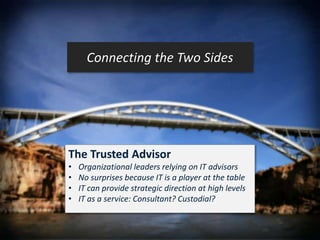
Connecting the Two Sides 
The Trusted Advisor 
• Organizational leaders relying on IT advisors 
• No surprises because IT is a player at the table 
• IT can provide strategic direction at high levels 
• IT as a service: Consultant? Custodial?
Positioning of IT Operations 
• How are IT decisions made and 
who makes them? 
• Who else influences? 
• What is the role of CIO in your organization? 
• Who are your customers? 
• How do they impact service delivery? 
• What are your core competencies? 
• How do they align with organizational needs?
Key: How Can IT Help 
• What do you think organizational 
leaders need from IT to make your 
organization stronger? 
• Regulation compliance 
• Improved competitiveness in your industry 
 Increased research funding 
 Making and keeping customers 
 Increased sales 
• Increased internal efficiency 
• Better use of technology to further mission
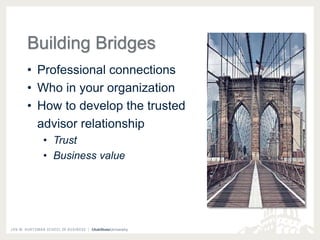
Building Bridges 
• Professional connections 
• Who in your organization 
• How to develop the trusted 
advisor relationship 
• Trust 
• Business value
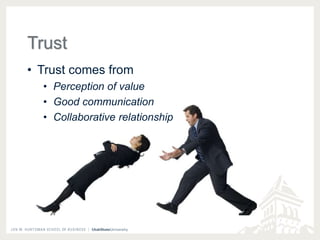
Trust 
• Trust comes from 
• Perception of value 
• Good communication 
• Collaborative relationship
How to Create Trust 
• Put connection before technical concepts 
• Don’t pretend 
• Focus on the customer’s perspective (who is your 
audience) 
• Face problems and unhappy customers head-on 
• Listen 
• Don’t pull your punches 
• Document when it matters 
• Nothing is too small if it’s important to the customer 
• It isn’t a competition
Business Value 
• Depend upon IT and type of business 
• Internal – Organizational efficiency 
• Productivity enhancements 
• e.g., reducing complexity 
• Complexity often takes 90% of internal 
resources leaving little headroom for innovation 
• Cost reduction 
• Streamlining internal business practices
Business Value (cont.) 
• External – Increases competitiveness in your 
marketplace 
• Increased profits 
• Competitive advantage 
• e.g., streamlined customer management 
• Both internal and external
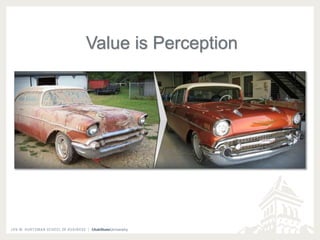
Value is Perception
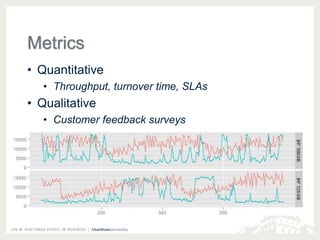
Metrics 
• Quantitative 
• Throughput, turnover time, SLAs 
• Qualitative 
• Customer feedback surveys
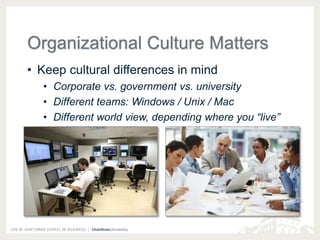
Organizational Culture Matters 
• Keep cultural differences in mind 
• Corporate vs. government vs. university 
• Different teams: Windows / Unix / Mac 
• Different world view, depending where you “live”
Know Your Audience 
• Put yourself in their shoes 
• Communicate at the right level 
• How much to communicate
Written Communication 
• Email 
• Basics: subject, structure 
• Outage management 
• Communication to customers 
• Emails to organizational leaders 
• Texting, social media 
• Think professional, not Facebook
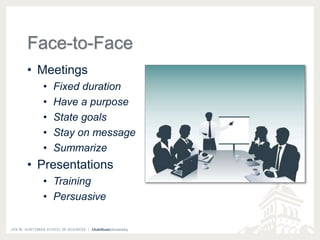
Face-to-Face 
• Meetings 
• Fixed duration 
• Have a purpose 
• State goals 
• Stay on message 
• Summarize 
• Presentations 
• Training 
• Persuasive
The Elevator Pitch 
“Very concise presentation of an idea covering all 
of its critical aspects, and delivered within a few 
minutes” 
Useful even if you don’t have an 
elevator 
• Describe the value proposition in clear 
language 
• Written, verbal
The Collaborative Relationship 
• Trusted advisor 
• Being responsive to requests from above 
• Being a solutions provider 
• Be there when needed
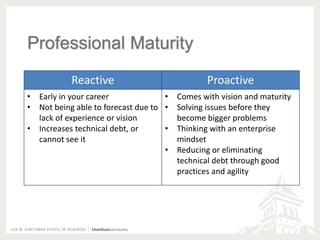
Professional Maturity 
Reactive Proactive 
• Early in your career 
• Not being able to forecast due to 
lack of experience or vision 
• Increases technical debt, or 
cannot see it 
• Comes with vision and maturity 
• Solving issues before they 
become bigger problems 
• Thinking with an enterprise 
mindset 
• Reducing or eliminating 
technical debt through good 
practices and agility
How Do You Know When You’ve 
Arrived? 
• Organizational leaders ask your opinion before 
spending $$ on IT solutions 
• Leaders ask others to go through you for approval 
before investing in IT 
• You’re invited to be part of the organization’s 
management team 
• When you speak, leaders listen and respect your 
opinions
Where to Begin 
• Look at specifics of your organization 
• Who are your core customers? 
• What impact can IT operations have? 
• What does business need from you? 
• At what level can you personally make a 
difference? 
• Is there a point-person to connect with 
organizational leaders? 
• You 
• Your boss?
Action Items 
• Assess your organization before beginning 
• Look for opportunities to increase visibility 
• Sell these concepts to the rest of your team 
• IT operations should look for opportunities to 
engage organizational leaders on issues 
impacted by IT
Thank you 
Questions? 
nicolefv@gmail.com 
@nicolefv

How to Speak "Manager"

  • 1.
    How to Speak“Manager” Nicole Forsgren Velasquez, PhD Professor of Accounting and MIS @nicolefv Jon M. Huntsman School of Business Utah State University
  • 3.
    The Gap Businessis here IT is here
  • 4.
    IT focuses ontechnology (micro)
  • 5.
    Business focuses ata higher level (macro)
  • 6.
    We Are Hereto Bridge The Gap
  • 7.
    IT Professionals areTechnical Brokers • We are the bridge • Act as translator and interface between communities • Understanding this role is important • Navigating business • Addressing tensions
  • 8.
    IT Professionals areTechnical Brokers • As a technical broker, a large part of your role is communication • Technical audiences • Business audiences Technical Professional Business Technical Communities
  • 9.
    Challenges: Visibility andContent The business usually sees:  Desktop Support What you do is often beyond visibility of business:  Maintenance  Infrastructure  Innovation and automation  The really hard stuff  The stuff that matters most to the business
  • 10.
    Talking to Tech • Who is your audience? • What language is appropriate? • e.g., security, desktop support, senior / junior • How do you communicate something to each? • Technical • Expertise
  • 11.
    Talking to Business • Who is your audience? • How should this be communicated? • What language is appropriate?
  • 12.
    Who is Business? • Common ground: • Need for funding • Success measures • Demonstrated value
  • 13.
    Is IT Operationsa Business? • Delivering value to customers • Internally focused: IT operations • Business unit within a business • Externally focused: technology firm • IT operations might be the core business
  • 14.
    Connecting the TwoSides The Trusted Advisor • Organizational leaders relying on IT advisors • No surprises because IT is a player at the table • IT can provide strategic direction at high levels • IT as a service: Consultant? Custodial?
  • 15.
    Positioning of ITOperations • How are IT decisions made and who makes them? • Who else influences? • What is the role of CIO in your organization? • Who are your customers? • How do they impact service delivery? • What are your core competencies? • How do they align with organizational needs?
  • 16.
    Key: How CanIT Help • What do you think organizational leaders need from IT to make your organization stronger? • Regulation compliance • Improved competitiveness in your industry  Increased research funding  Making and keeping customers  Increased sales • Increased internal efficiency • Better use of technology to further mission
  • 17.
    Building Bridges •Professional connections • Who in your organization • How to develop the trusted advisor relationship • Trust • Business value
  • 18.
    Trust • Trustcomes from • Perception of value • Good communication • Collaborative relationship
  • 19.
    How to CreateTrust • Put connection before technical concepts • Don’t pretend • Focus on the customer’s perspective (who is your audience) • Face problems and unhappy customers head-on • Listen • Don’t pull your punches • Document when it matters • Nothing is too small if it’s important to the customer • It isn’t a competition
  • 20.
    Business Value •Depend upon IT and type of business • Internal – Organizational efficiency • Productivity enhancements • e.g., reducing complexity • Complexity often takes 90% of internal resources leaving little headroom for innovation • Cost reduction • Streamlining internal business practices
  • 21.
    Business Value (cont.) • External – Increases competitiveness in your marketplace • Increased profits • Competitive advantage • e.g., streamlined customer management • Both internal and external
  • 22.
  • 23.
    Metrics • Quantitative • Throughput, turnover time, SLAs • Qualitative • Customer feedback surveys
  • 24.
    Organizational Culture Matters • Keep cultural differences in mind • Corporate vs. government vs. university • Different teams: Windows / Unix / Mac • Different world view, depending where you “live”
  • 25.
    Know Your Audience • Put yourself in their shoes • Communicate at the right level • How much to communicate
  • 26.
    Written Communication •Email • Basics: subject, structure • Outage management • Communication to customers • Emails to organizational leaders • Texting, social media • Think professional, not Facebook
  • 27.
    Face-to-Face • Meetings • Fixed duration • Have a purpose • State goals • Stay on message • Summarize • Presentations • Training • Persuasive
  • 28.
    The Elevator Pitch “Very concise presentation of an idea covering all of its critical aspects, and delivered within a few minutes” Useful even if you don’t have an elevator • Describe the value proposition in clear language • Written, verbal
  • 29.
    The Collaborative Relationship • Trusted advisor • Being responsive to requests from above • Being a solutions provider • Be there when needed
  • 30.
    Professional Maturity ReactiveProactive • Early in your career • Not being able to forecast due to lack of experience or vision • Increases technical debt, or cannot see it • Comes with vision and maturity • Solving issues before they become bigger problems • Thinking with an enterprise mindset • Reducing or eliminating technical debt through good practices and agility
  • 31.
    How Do YouKnow When You’ve Arrived? • Organizational leaders ask your opinion before spending $$ on IT solutions • Leaders ask others to go through you for approval before investing in IT • You’re invited to be part of the organization’s management team • When you speak, leaders listen and respect your opinions
  • 32.
    Where to Begin • Look at specifics of your organization • Who are your core customers? • What impact can IT operations have? • What does business need from you? • At what level can you personally make a difference? • Is there a point-person to connect with organizational leaders? • You • Your boss?
  • 33.
    Action Items •Assess your organization before beginning • Look for opportunities to increase visibility • Sell these concepts to the rest of your team • IT operations should look for opportunities to engage organizational leaders on issues impacted by IT
  • 34.
    Thank you Questions? nicolefv@gmail.com @nicolefv