The document discusses how to foster autonomy in the classroom by making students interested in learning outside of class time. It recommends identifying students' learning strategies through questionnaires and helping them develop techniques like note-taking, organizing assignments, and using dictionaries. The document also suggests giving students reflection time to evaluate their learning, encouraging student-driven homework and learning journals.
Introduction to the concept of fostering autonomy in educational settings.
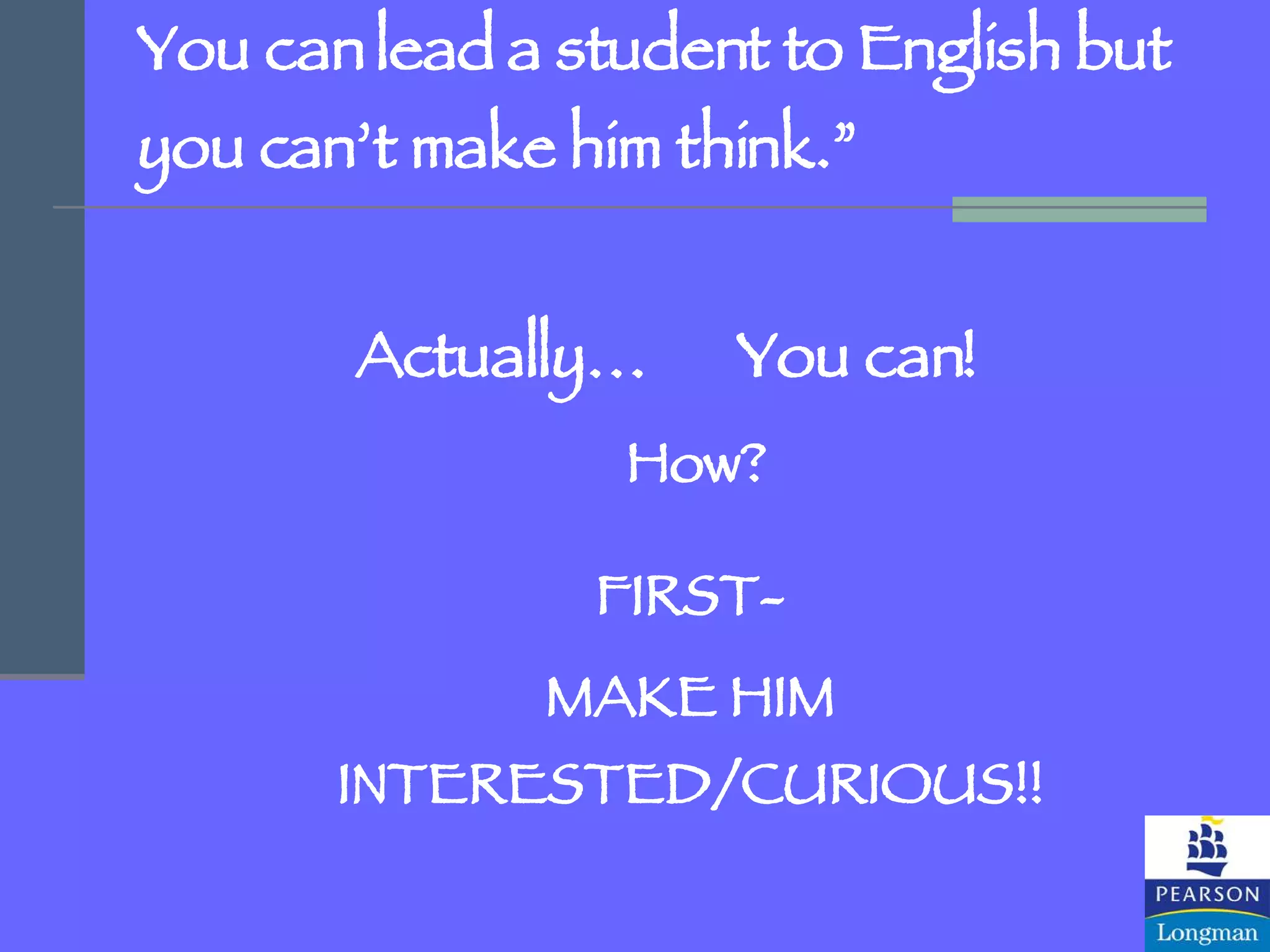
Students need to be engaged and curious to learn effectively, similar to making a horse thirsty.
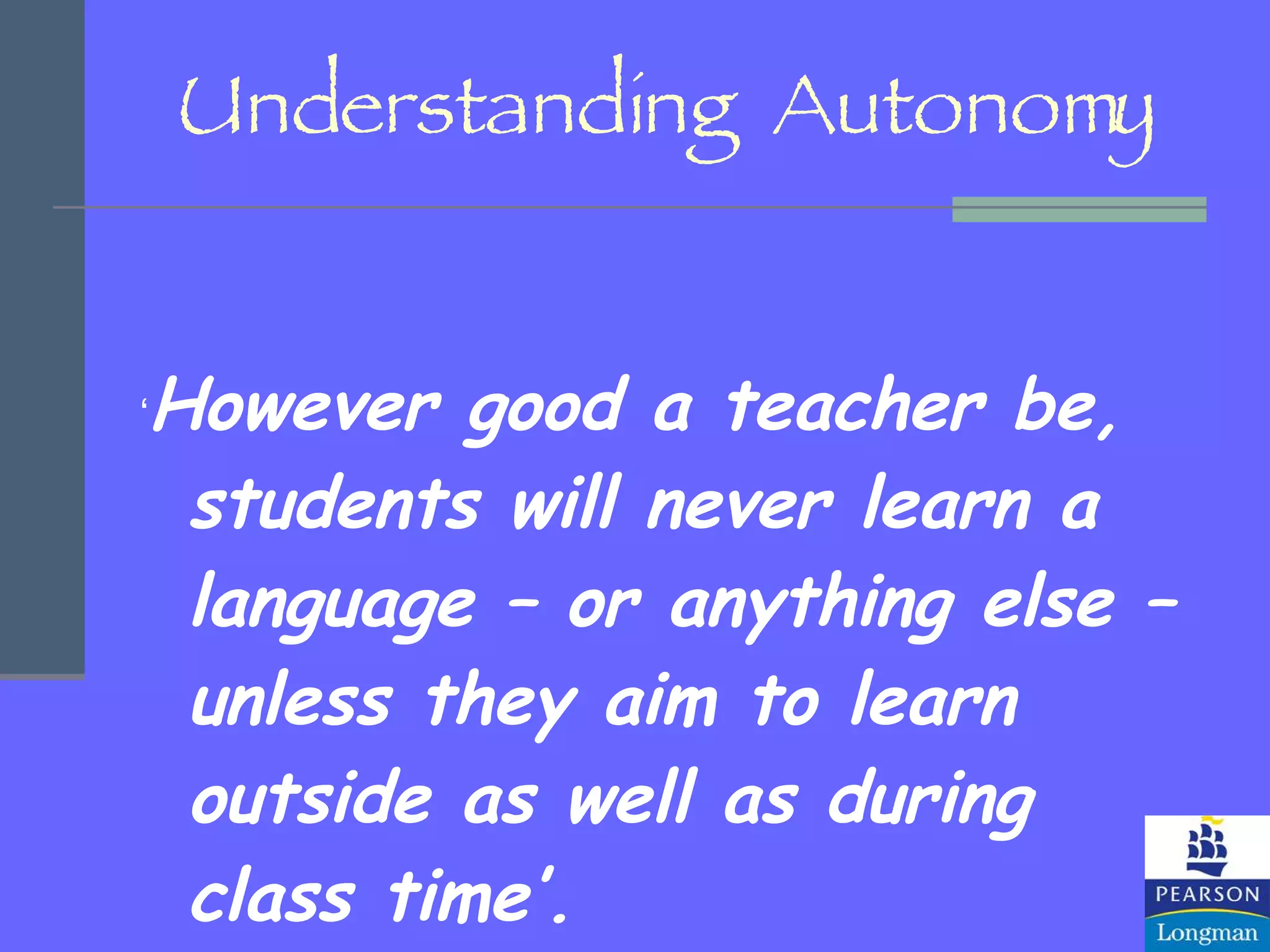
Students must learn outside of class for effective language acquisition as emphasized by Jeremy Harmer.
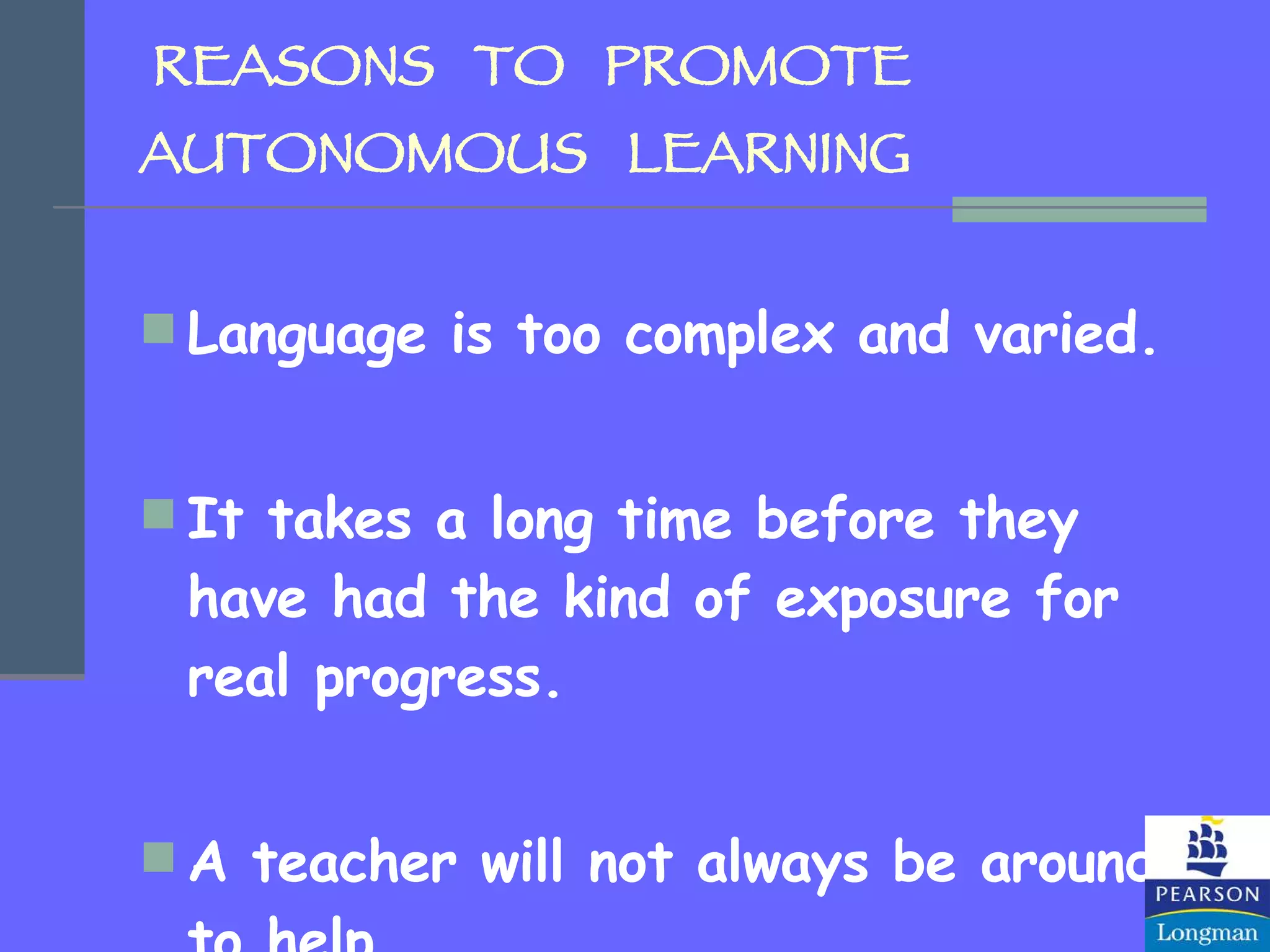
Promoting autonomous learning is crucial as language learning is complex and requires sustained effort.
Strategies to develop learner autonomy include identifying learning strategies and incorporating various techniques. Training learners through reflections, strategies for activities, learning journals, and self-access centers.
Encouraging continuous language use after course ends through recommendations like reading and watching media.
A good teacher fosters critical thinking and reasoning over mere memorization, emphasizing love for teaching.
Thanking the audience and providing contact information.
“ You canlead a horse to water but you can’t make him drink.” Actually… … You can! How? FIRST- MAKE HIM THIRSTY!!
3.
You can leada student to English but you can’t make him think.” Actually… You can! How? FIRST- MAKE HIM INTERESTED/CURIOUS!!
4.
Understanding Autonomy‘ However good a teacher be, students will never learn a language – or anything else – unless they aim to learn outside as well as during class time’. Jeremy Harmer
5.
REASONS TO PROMOTE AUTONOMOUS LEARNING Language is too complex and varied. It takes a long time before they have had the kind of exposure for real progress. A teacher will not always be around to help.
6.
How can wedevelop learner autonomy? Identify your students’ learning strategies. Questionnaires, charts, will be helpful. Help your students develop different learning strategies. Note taking, organizing their homework assignments, how to use a dictionary, etc.
7.
LEARNING STRATEGIES TECHNIQUESSTUDENTS USE TO LEARN: METACOGNITIVE STRATEGIES: Planning, evaluating and monitoring. COGNITIVE STRATEGIES: Actually doing the learning, guessing words, repeating. SOCIAL STRATEGIES: Working with others, asking for help etc.
8.
Learner Training Inthe classroom: Have reflection time on the way they learn. Give them strategies for dealing with different kinds of activities (e.g. ‘ Read the title… what is the listening/reading about?’ ) Ask students to describe their favorite lessons. Say which lessons or parts of lessons they found the easiest or most difficult and why.
9.
Learner Training Outsidethe classroom: Students create their own vocabulary notebook. Staying in touch with the language: TV, radio, movies, magazines, books, etc. Show your students how they can use different websites.
10.
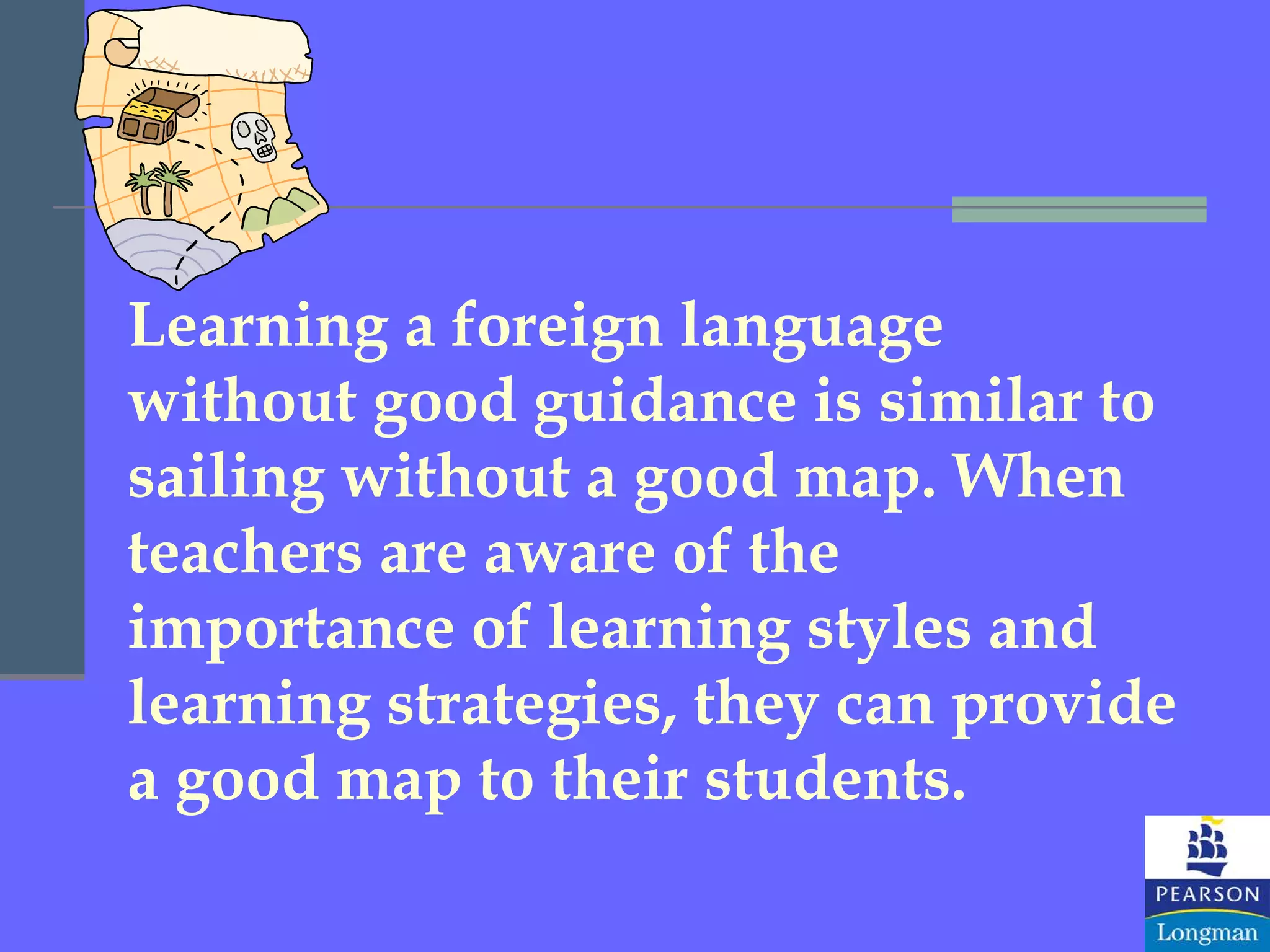
Learning a foreignlanguage without good guidance is similar to sailing without a good map. When teachers are aware of the importance of learning styles and learning strategies, they can provide a good map to their students.
11.
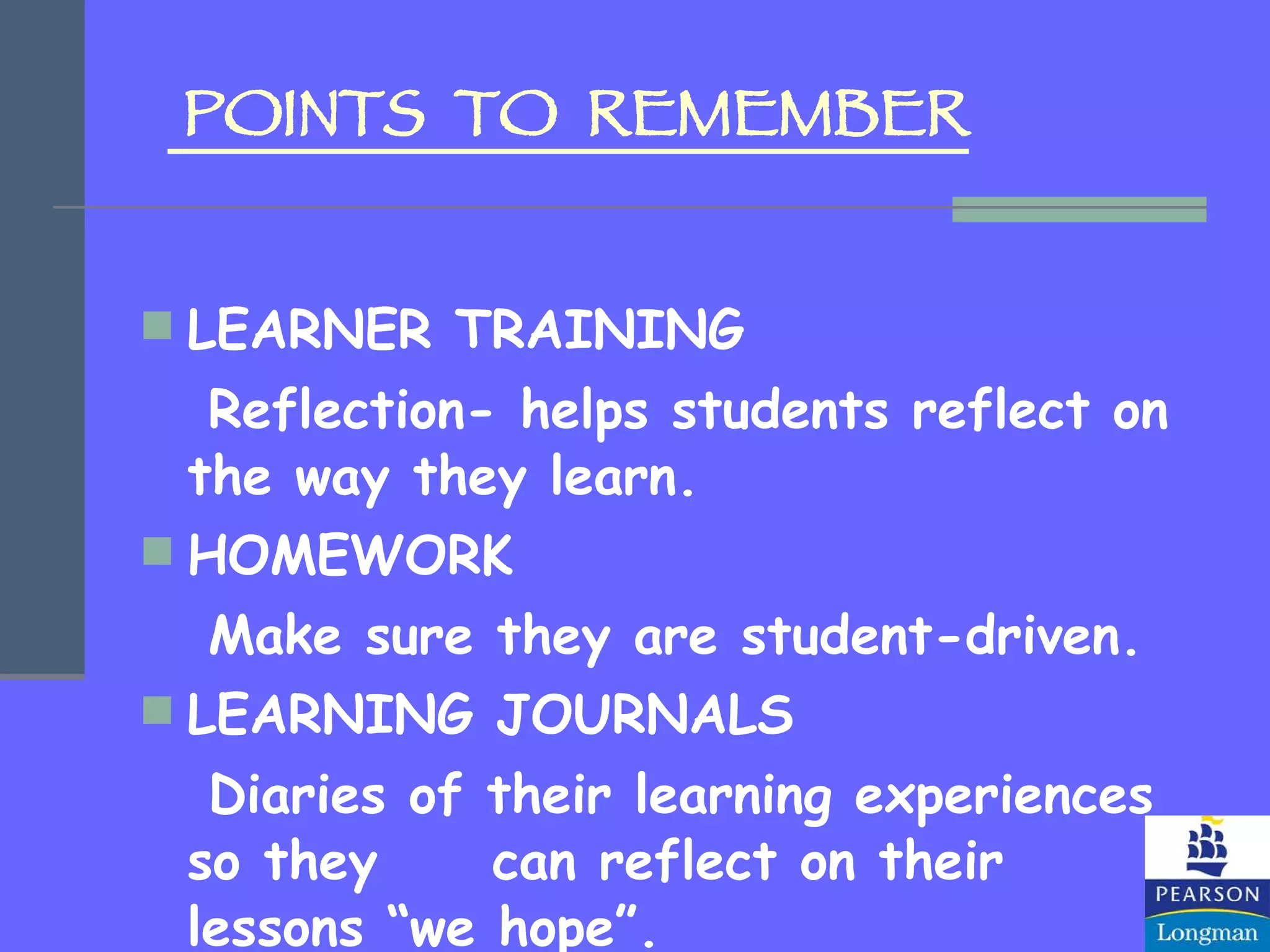
LEARNER TRAINING Reflection-helps students reflect on the way they learn. HOMEWORK Make sure they are student-driven. LEARNING JOURNALS Diaries of their learning experiences so they can reflect on their lessons “we hope”. POINTS TO REMEMBER
12.
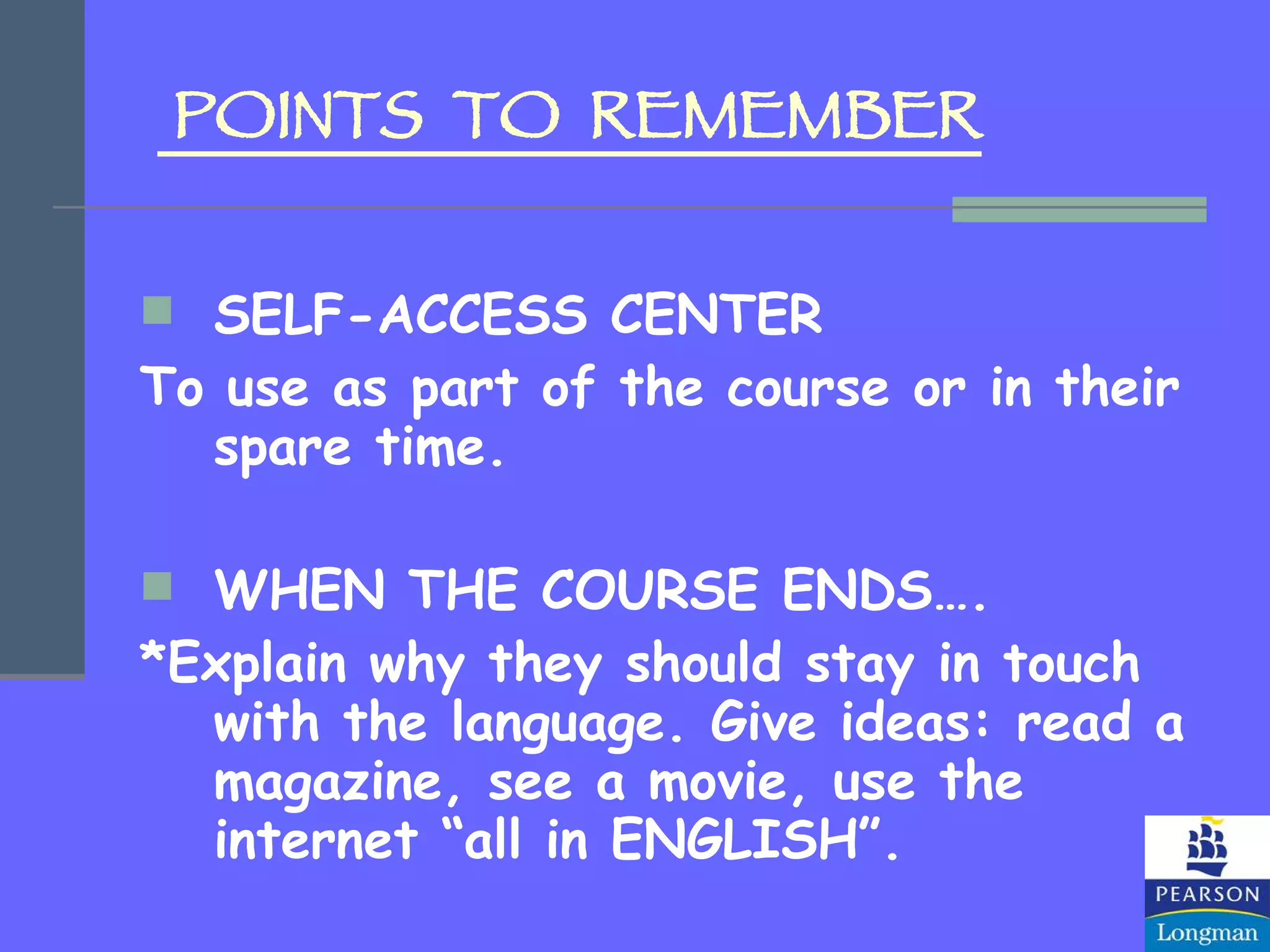
POINTS TO REMEMBER SELF-ACCESS CENTER To use as part of the course or in their spare time. WHEN THE COURSE ENDS…. *Explain why they should stay in touch with the language. Give ideas: read a magazine, see a movie, use the internet “all in ENGLISH”.
13.
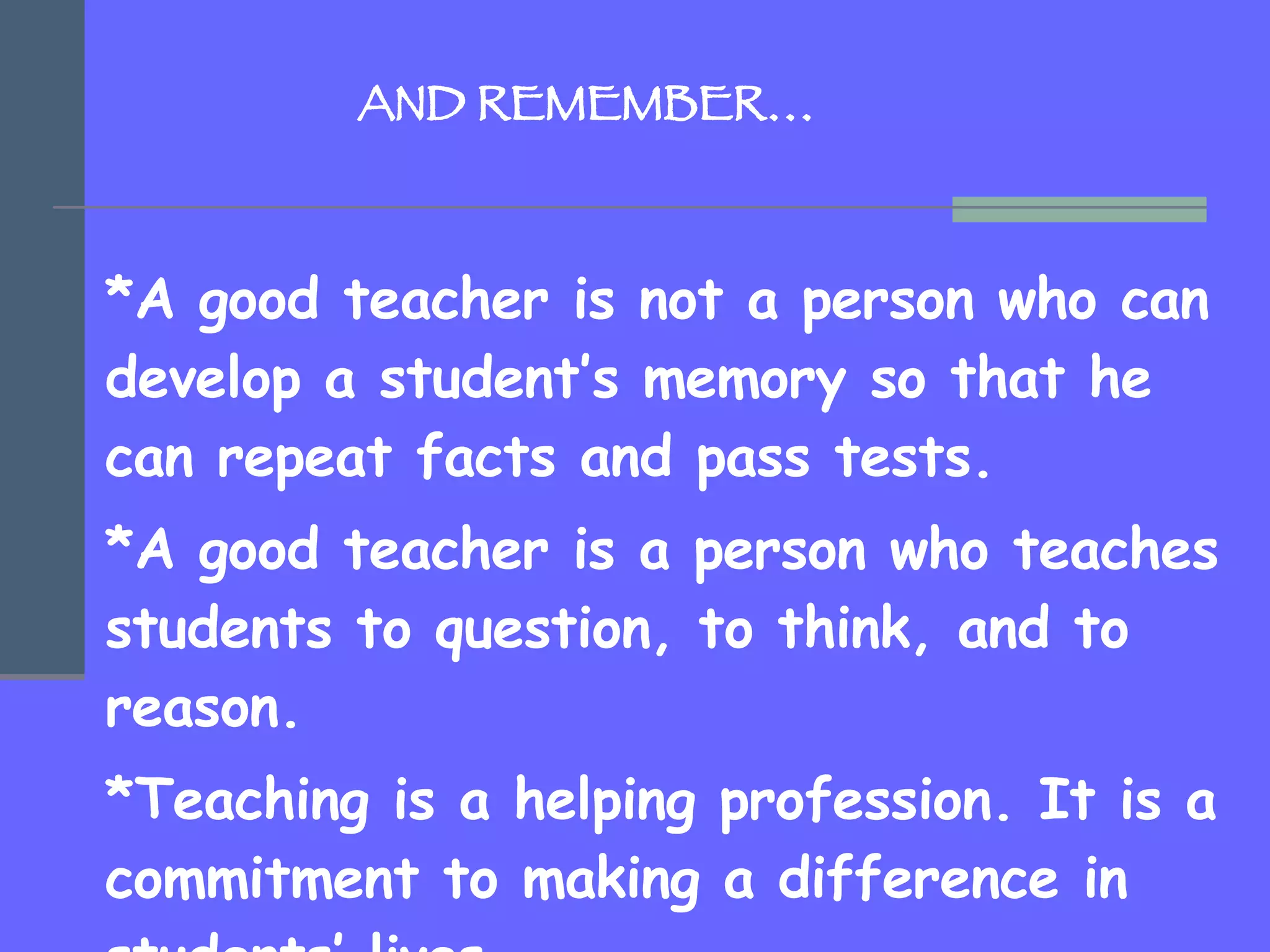
ANDREMEMBER… *A good teacher is not a person who can develop a student’s memory so that he can repeat facts and pass tests. *A good teacher is a person who teaches students to question, to think, and to reason. *Teaching is a helping profession. It is a commitment to making a difference in students’ lives. * Teaching is primarily a matter of love.


![THANKS FOR THE INVITATION !!! [email_address]](https://image.slidesharecdn.com/how-to-foster-autonomypppversion-1-1220367881120408-8/75/How-To-Foster-Autonomy-Ppp-Version-1-14-2048.jpg)


