How to Address Labour Issues in Your Supply Chain Rachel Wilshaw and Alex Cole-Hamilton
OutlineWhy do we need to address labour issues in supply chains.What are the effective ways to address labour issues.How buying strategies can directly impact your ethical trade programme.What are the business benefits.
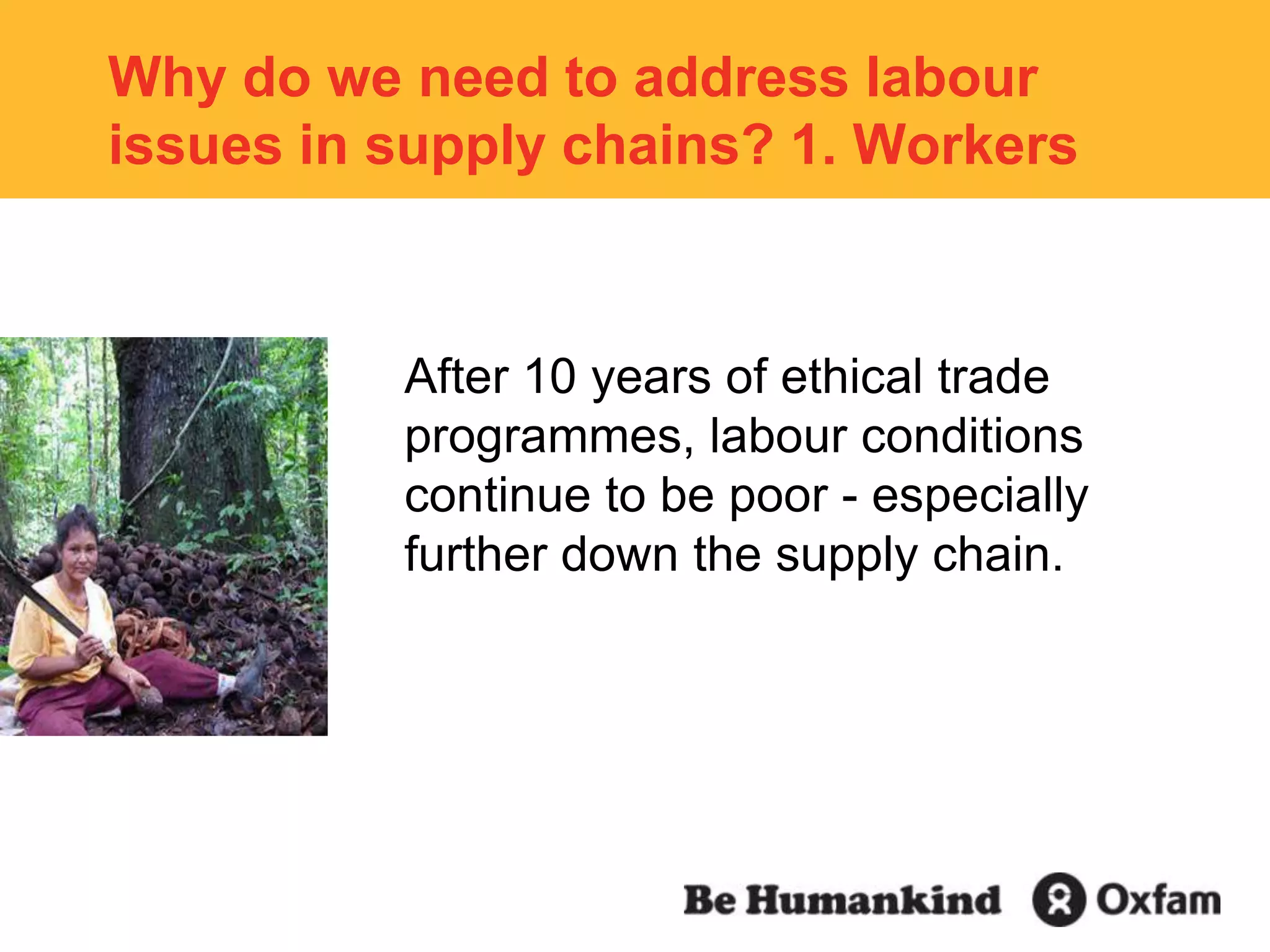
Why do we need to address labour issues in supply chains? 1. WorkersAfter 10 years of ethical trade programmes, labour conditions continue to be poor - especially further down the supply chain.
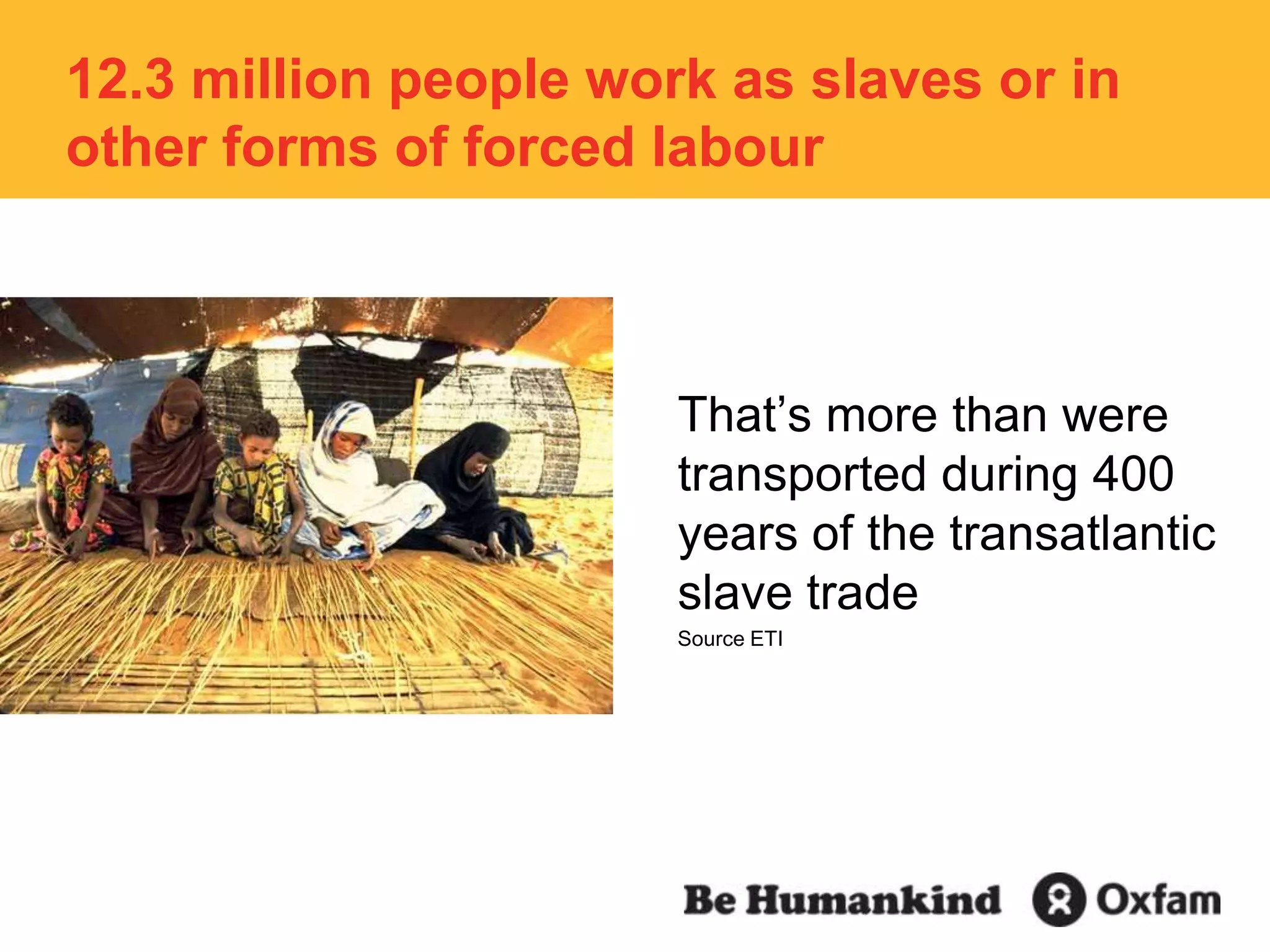
12.3 million people work as slaves or in other forms of forced labourThat’s more than were transported during 400 years of the transatlantic slave tradeSource ETI
126 million children work in dirty dangerous and demanding conditionsThat’s twice the number of children of that age living in the EU27Source WFCL
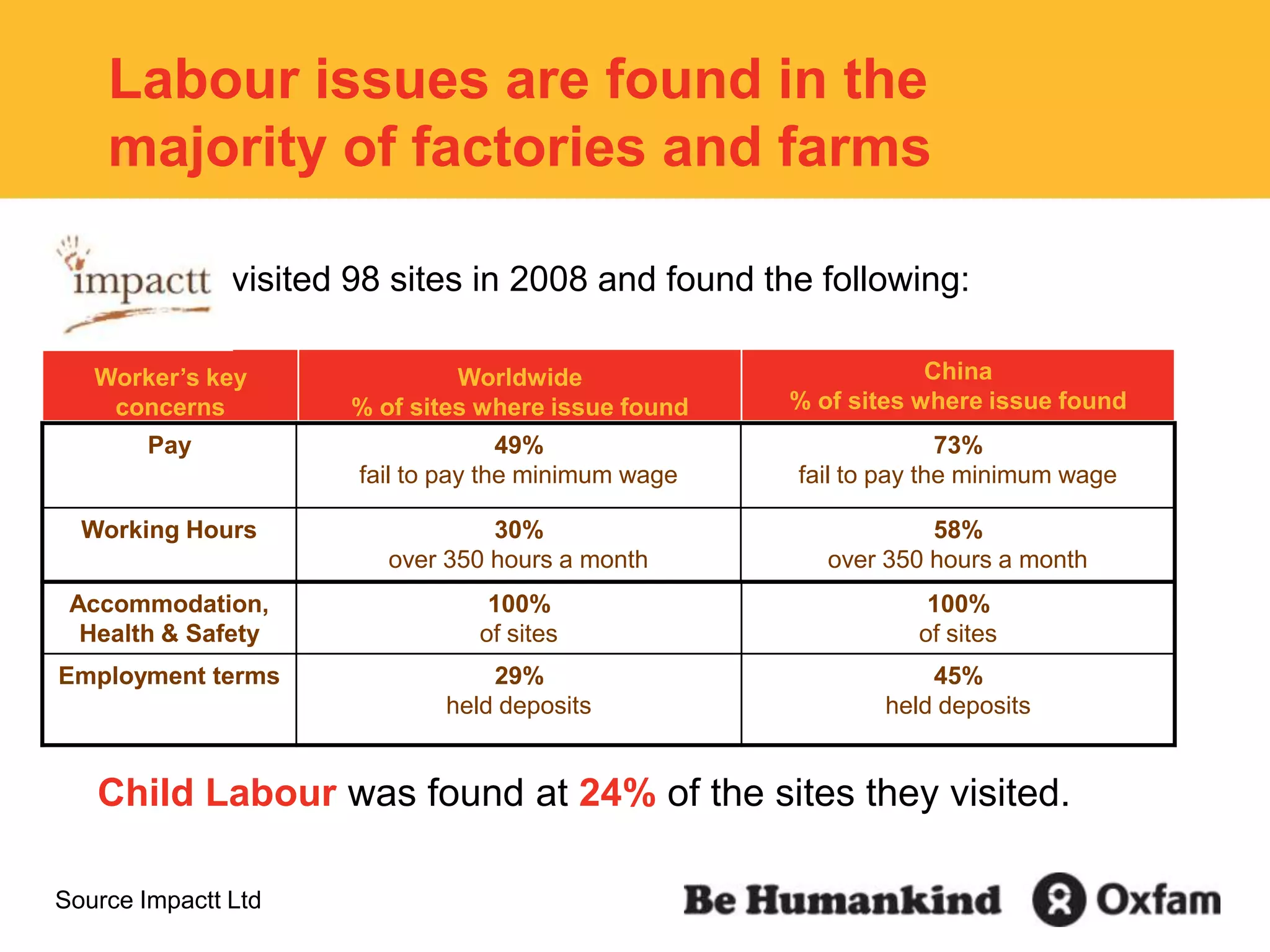
Labour issues are found in the majority of factories and farmsvisited 98 sites in 2008 and found the following:Child Labourwas foundat 24% of the sites they visited.  Source Impactt Ltd
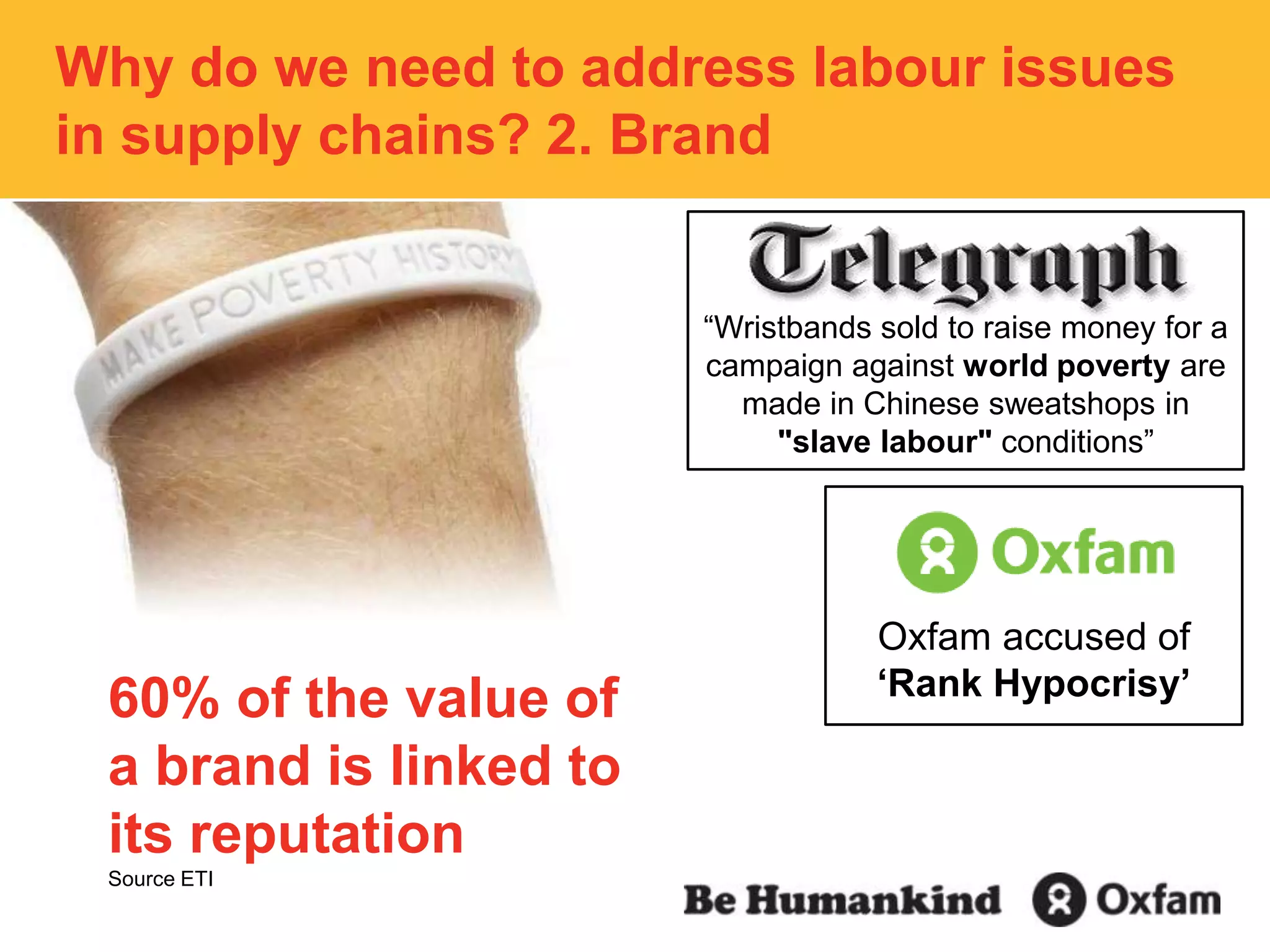
Why do we need to address labour issues in supply chains? 2. Brand“Wristbands sold to raise money for a campaign against world poverty are made in Chinese sweatshops in "slave labour" conditions”Oxfam accused of ‘Rank Hypocrisy’60% of the value of a brand is linked to its reputationSource ETI
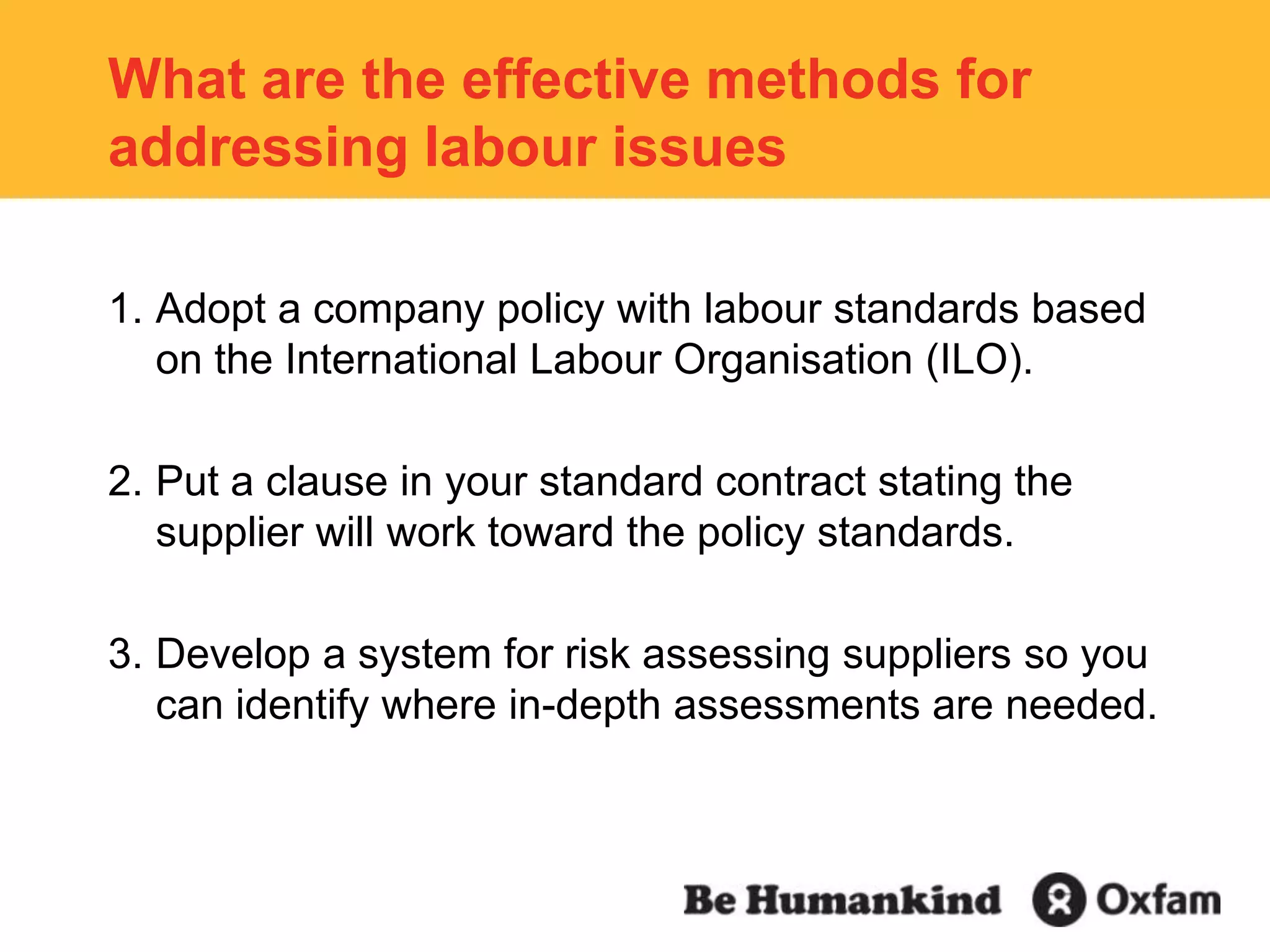
What are the effective methods for addressing labour issuesAdopt a company policy with labour standards based on the International Labour Organisation (ILO).Put a clause in your standard contract stating the supplier will work toward the policy standards.Develop a system for risk assessing suppliers so you can identify where in-depth assessments are needed.
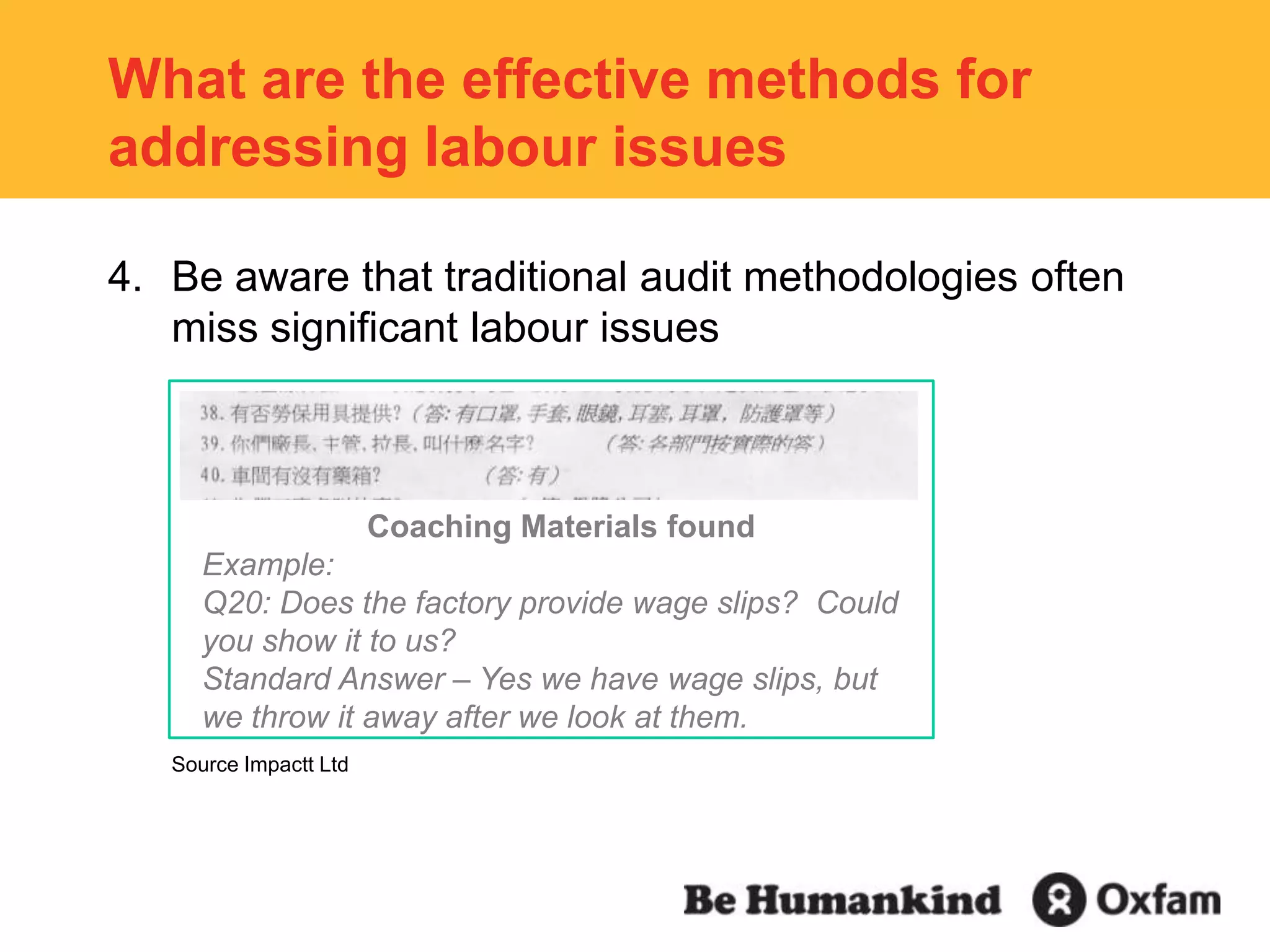
What are the effective methods for addressing labour issuesBe aware that traditional audit methodologies often miss significant labour issuesSource Impactt LtdCoaching Materials foundExample:Q20: Does the factory provide wage slips?  Could you show it to us?  Standard Answer – Yes we have wage slips, but we throw it away after we look at them.
What are the effective methods for addressing labour issuesUse ‘forensic’ ethical assessment methodologies where appropriate. Work with NGOs, not for profit assessment organisations, unions, and local resources.Support a culture of openness, honesty and a genuine commitment to continuous improvement
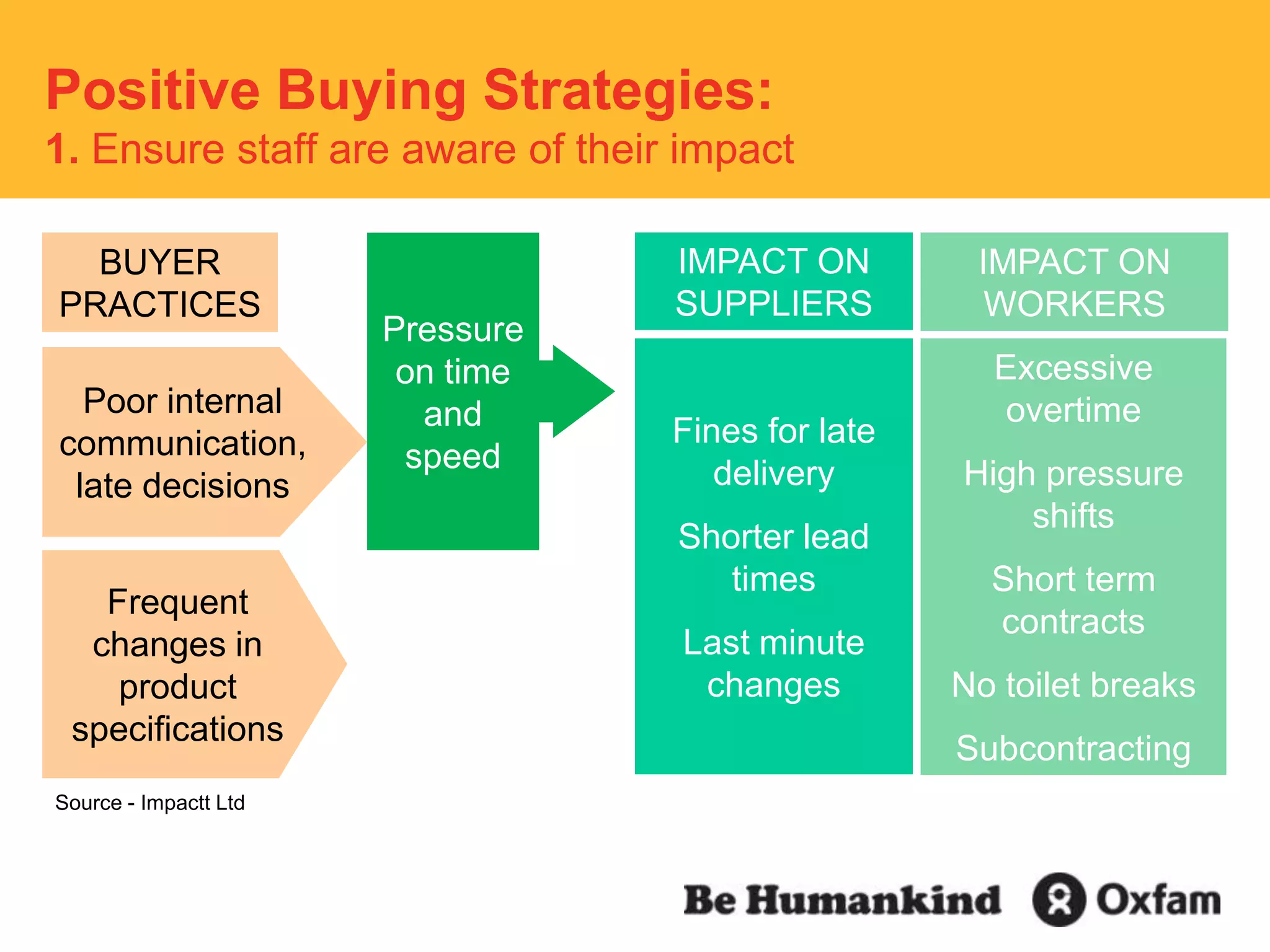
Positive Buying Strategies:  1. Ensure staff are aware of their impact Pressure on time and speedIMPACT ON SUPPLIERSIMPACT ON WORKERSBUYER PRACTICESFines for late deliveryShorter lead timesLast minute changesExcessive overtimeHigh pressure shiftsShort term contractsNo toilet breaksSubcontractingPoor internal communication, late decisionsFrequent changes in product specificationsSource - Impactt Ltd
Incentivise staff to address labour issues.Assess attitude and ability to address labour standards when selecting your suppliers.Encourage honesty about labour issues.It’s about working toward your policy and stated standardsThis message needs to cascade to factories and farmsPositive Buying Strategies:  2. Integrate ethics in to your business
Positive Buying Strategies: 3. Develop longer term relationships with fewer suppliersWork with suppliers to understand their capacity and develop their product range.Reward suppliers which are actively working toward your ethical purchasing policy standards.
Positive Buying Strategies:  4. When leverage is low or the relationship is short term…Find out who else they supply.Ask for copies of ethical audits and support the corrective action process.Encourage the supplier to join a database such as SEDEX.
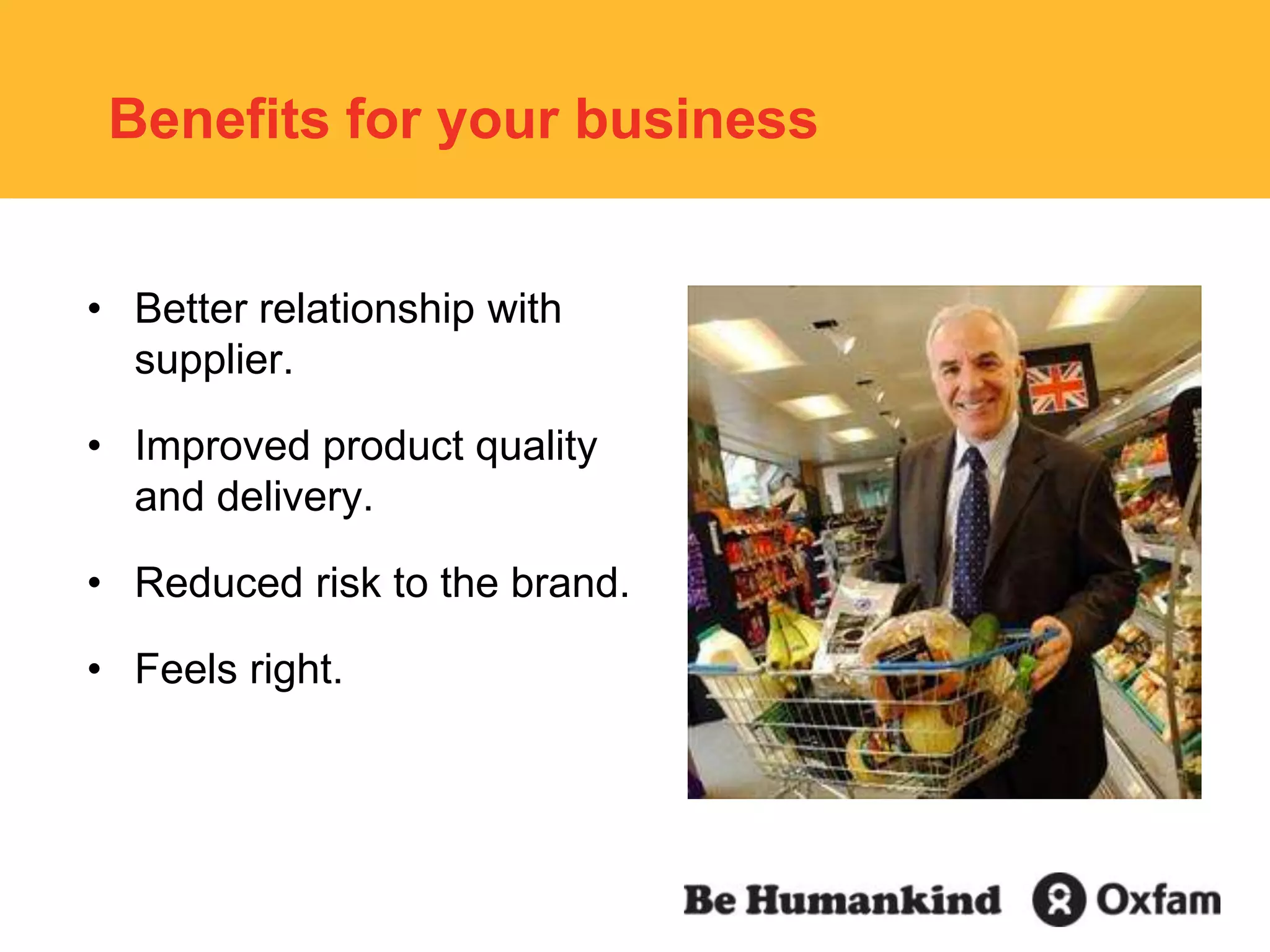
Benefits for your businessBetter relationship with supplier.Improved product quality and delivery.Reduced risk to the brand.Feels right.
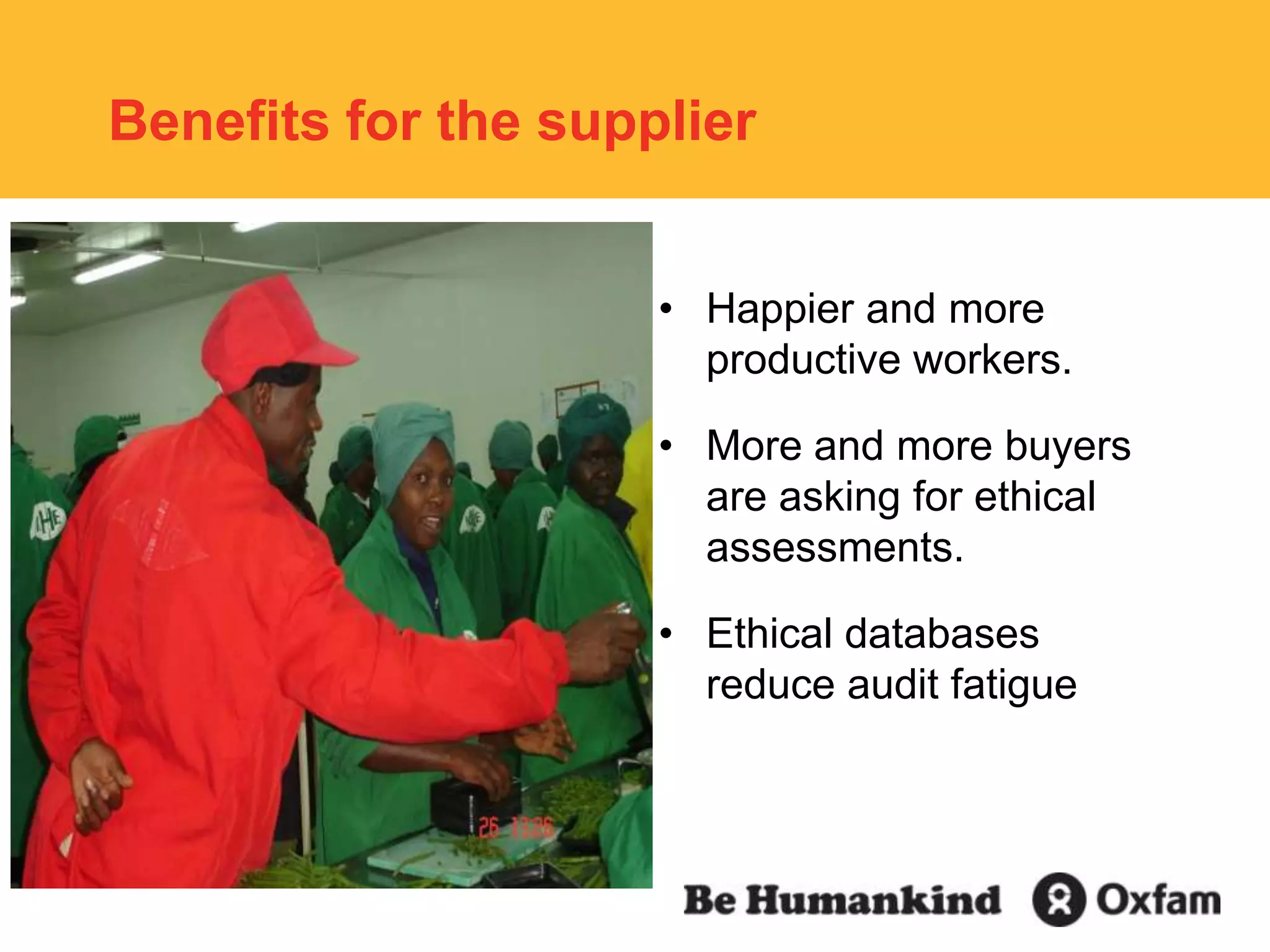
Benefits for the supplierHappier and more productive workers.More and more buyers are asking for ethical assessments.Ethical databases  reduce audit fatigue
Be part of the solution
email betterbusiness@oxfam.org.ukwww.oxfam.org.uk/businessOxfam now provides an advice service on Ethical Trade.

How to address labour issues in your supply chain

  • 1.
    How to AddressLabour Issues in Your Supply Chain Rachel Wilshaw and Alex Cole-Hamilton
  • 2.
    OutlineWhy do weneed to address labour issues in supply chains.What are the effective ways to address labour issues.How buying strategies can directly impact your ethical trade programme.What are the business benefits.
  • 3.
    Why do weneed to address labour issues in supply chains? 1. WorkersAfter 10 years of ethical trade programmes, labour conditions continue to be poor - especially further down the supply chain.
  • 4.
    12.3 million peoplework as slaves or in other forms of forced labourThat’s more than were transported during 400 years of the transatlantic slave tradeSource ETI
  • 5.
    126 million childrenwork in dirty dangerous and demanding conditionsThat’s twice the number of children of that age living in the EU27Source WFCL
  • 6.
    Labour issues arefound in the majority of factories and farmsvisited 98 sites in 2008 and found the following:Child Labourwas foundat 24% of the sites they visited. Source Impactt Ltd
  • 7.
    Why do weneed to address labour issues in supply chains? 2. Brand“Wristbands sold to raise money for a campaign against world poverty are made in Chinese sweatshops in "slave labour" conditions”Oxfam accused of ‘Rank Hypocrisy’60% of the value of a brand is linked to its reputationSource ETI
  • 8.
    What are theeffective methods for addressing labour issuesAdopt a company policy with labour standards based on the International Labour Organisation (ILO).Put a clause in your standard contract stating the supplier will work toward the policy standards.Develop a system for risk assessing suppliers so you can identify where in-depth assessments are needed.
  • 9.
    What are theeffective methods for addressing labour issuesBe aware that traditional audit methodologies often miss significant labour issuesSource Impactt LtdCoaching Materials foundExample:Q20: Does the factory provide wage slips? Could you show it to us? Standard Answer – Yes we have wage slips, but we throw it away after we look at them.
  • 10.
    What are theeffective methods for addressing labour issuesUse ‘forensic’ ethical assessment methodologies where appropriate. Work with NGOs, not for profit assessment organisations, unions, and local resources.Support a culture of openness, honesty and a genuine commitment to continuous improvement
  • 11.
    Positive Buying Strategies: 1. Ensure staff are aware of their impact Pressure on time and speedIMPACT ON SUPPLIERSIMPACT ON WORKERSBUYER PRACTICESFines for late deliveryShorter lead timesLast minute changesExcessive overtimeHigh pressure shiftsShort term contractsNo toilet breaksSubcontractingPoor internal communication, late decisionsFrequent changes in product specificationsSource - Impactt Ltd
  • 12.
    Incentivise staff toaddress labour issues.Assess attitude and ability to address labour standards when selecting your suppliers.Encourage honesty about labour issues.It’s about working toward your policy and stated standardsThis message needs to cascade to factories and farmsPositive Buying Strategies: 2. Integrate ethics in to your business
  • 13.
    Positive Buying Strategies:3. Develop longer term relationships with fewer suppliersWork with suppliers to understand their capacity and develop their product range.Reward suppliers which are actively working toward your ethical purchasing policy standards.
  • 14.
    Positive Buying Strategies: 4. When leverage is low or the relationship is short term…Find out who else they supply.Ask for copies of ethical audits and support the corrective action process.Encourage the supplier to join a database such as SEDEX.
  • 15.
    Benefits for yourbusinessBetter relationship with supplier.Improved product quality and delivery.Reduced risk to the brand.Feels right.
  • 16.
    Benefits for thesupplierHappier and more productive workers.More and more buyers are asking for ethical assessments.Ethical databases reduce audit fatigue
  • 17.
    Be part ofthe solution
  • 18.