Recap Week 7 29/8/2013
 Administration is vital for the organisation to run
effectively.
 You will need to have an understanding of the
centre’s administration systems to know where
and how certain documents are stored.
 You will also need to be informed about basic
day to day operations such as;
Staff rosters
How to use specific equipment in relation to your job
How to advise of shortage of materials and resources
Procedures on how to accept any fees or cash on behalf of
the centre
Use of appropriate written forms
Week 8 5/09/2013
 As previously discussed the child care industry is
bound by may laws, regulations, standards and
codes of practice.
 There are also standards that are developed by
particular groups within the industry and are
meant to regulate the work behaviour of all
people working in this industry
 National Quality Framework Standards usually set
out “best practice” standards for services and
aim to ensure that organisations continually
maintain a high standard of service delivery.
 Belonging, Being & Becoming: The Early Years
Learning Framework is a federally endorsed
framework to guide quality practice in early
childhood services
ACTIVITY 1
Using the whiteboard –
students are to list some
examples of what they think
working ethically means.
 What does the word “Ethics” mean?
The moral principles by which a person is guided
The rules of conduct recognised in certain
association.
 Ethics is concerned with morals and more
specifically with how we go about or work in
regard to our professional morals
 There are some important documents that
will assist you in understanding more
specifically how ethics works within
community service organisations.
 2 of these documents specific to children’s
services are:
www.acecqa.gov.au – Australian Children's
Education and Care Quality Authority. This is
specific to the National Quality Framework –
regulations, law, standards, assessment processes,
ratings EYLF and MTMP.
eca.org.au/code.html - Early Childhood
Associations’ Code of Ethics.
ACTIVITY 2
 Revisit the handout (extract from the Australian Early
Childhood Australia – Code of Ethics
aeca.org.au/code.html).
 Identify the sections or parts of the handout that
focuses specifically on;
 workplace relationships
 workers behaviour
 standards of work
 
 What are some key points in this document that
would help you determine the standard of work in a
child care centre i.e. maintaining confidentiality
 Although there are many policies, procedures,
standards and regulations to follow in the
children’s services industry, workers must
constantly make ethical decisions about their
actions and professional behaviour that is in the
best interest of their clients, co-workers and the
organisation
 When making decisions, a worker should not
consider their private or personal interests
 All decisions that are made should have the
following qualities;
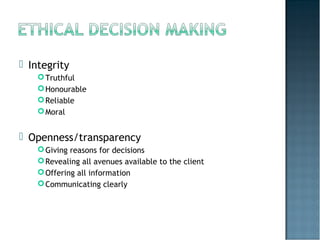
 Integrity
Truthful
Honourable
Reliable
Moral
 Openness/transparency
Giving reasons for decisions
Revealing all avenues available to the client
Offering all information
Communicating clearly
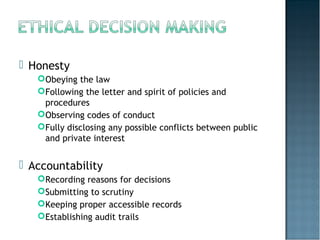
 Honesty
Obeying the law
Following the letter and spirit of policies and
procedures
Observing codes of conduct
Fully disclosing any possible conflicts between public
and private interest
 Accountability
Recording reasons for decisions
Submitting to scrutiny
Keeping proper accessible records
Establishing audit trails
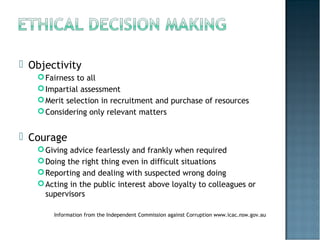
 Objectivity
Fairness to all
Impartial assessment
Merit selection in recruitment and purchase of resources
Considering only relevant matters
 Courage
Giving advice fearlessly and frankly when required
Doing the right thing even in difficult situations
Reporting and dealing with suspected wrong doing
Acting in the public interest above loyalty to colleagues or
supervisors
Information from the Independent Commission against Corruption www.icac.nsw.gov.au
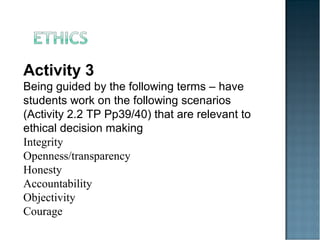
Activity 3
Being guided by the following terms – have
students work on the following scenarios
(Activity 2.2 TP Pp39/40) that are relevant to
ethical decision making
Integrity
Openness/transparency
Honesty
Accountability
Objectivity
Courage
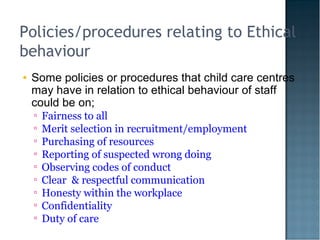
Policies/procedures relating to Ethical
behaviour
• Some policies or procedures that child care centres
may have in relation to ethical behaviour of staff
could be on;
▫ Fairness to all
▫ Merit selection in recruitment/employment
▫ Purchasing of resources
▫ Reporting of suspected wrong doing
▫ Observing codes of conduct
▫ Clear & respectful communication
▫ Honesty within the workplace
▫ Confidentiality
▫ Duty of care

Wk 8 follow policies

  • 1.
    Recap Week 729/8/2013  Administration is vital for the organisation to run effectively.  You will need to have an understanding of the centre’s administration systems to know where and how certain documents are stored.  You will also need to be informed about basic day to day operations such as; Staff rosters How to use specific equipment in relation to your job How to advise of shortage of materials and resources Procedures on how to accept any fees or cash on behalf of the centre Use of appropriate written forms
  • 3.
  • 4.
     As previouslydiscussed the child care industry is bound by may laws, regulations, standards and codes of practice.  There are also standards that are developed by particular groups within the industry and are meant to regulate the work behaviour of all people working in this industry
  • 5.
     National QualityFramework Standards usually set out “best practice” standards for services and aim to ensure that organisations continually maintain a high standard of service delivery.  Belonging, Being & Becoming: The Early Years Learning Framework is a federally endorsed framework to guide quality practice in early childhood services
  • 6.
    ACTIVITY 1 Using thewhiteboard – students are to list some examples of what they think working ethically means.
  • 7.
     What doesthe word “Ethics” mean? The moral principles by which a person is guided The rules of conduct recognised in certain association.  Ethics is concerned with morals and more specifically with how we go about or work in regard to our professional morals
  • 8.
     There aresome important documents that will assist you in understanding more specifically how ethics works within community service organisations.  2 of these documents specific to children’s services are: www.acecqa.gov.au – Australian Children's Education and Care Quality Authority. This is specific to the National Quality Framework – regulations, law, standards, assessment processes, ratings EYLF and MTMP. eca.org.au/code.html - Early Childhood Associations’ Code of Ethics.
  • 9.
    ACTIVITY 2  Revisitthe handout (extract from the Australian Early Childhood Australia – Code of Ethics aeca.org.au/code.html).  Identify the sections or parts of the handout that focuses specifically on;  workplace relationships  workers behaviour  standards of work    What are some key points in this document that would help you determine the standard of work in a child care centre i.e. maintaining confidentiality
  • 10.
     Although thereare many policies, procedures, standards and regulations to follow in the children’s services industry, workers must constantly make ethical decisions about their actions and professional behaviour that is in the best interest of their clients, co-workers and the organisation  When making decisions, a worker should not consider their private or personal interests  All decisions that are made should have the following qualities;
  • 11.
     Integrity Truthful Honourable Reliable Moral  Openness/transparency Givingreasons for decisions Revealing all avenues available to the client Offering all information Communicating clearly
  • 12.
     Honesty Obeying thelaw Following the letter and spirit of policies and procedures Observing codes of conduct Fully disclosing any possible conflicts between public and private interest  Accountability Recording reasons for decisions Submitting to scrutiny Keeping proper accessible records Establishing audit trails
  • 13.
     Objectivity Fairness toall Impartial assessment Merit selection in recruitment and purchase of resources Considering only relevant matters  Courage Giving advice fearlessly and frankly when required Doing the right thing even in difficult situations Reporting and dealing with suspected wrong doing Acting in the public interest above loyalty to colleagues or supervisors Information from the Independent Commission against Corruption www.icac.nsw.gov.au
  • 14.
    Activity 3 Being guidedby the following terms – have students work on the following scenarios (Activity 2.2 TP Pp39/40) that are relevant to ethical decision making Integrity Openness/transparency Honesty Accountability Objectivity Courage
  • 15.
    Policies/procedures relating toEthical behaviour • Some policies or procedures that child care centres may have in relation to ethical behaviour of staff could be on; ▫ Fairness to all ▫ Merit selection in recruitment/employment ▫ Purchasing of resources ▫ Reporting of suspected wrong doing ▫ Observing codes of conduct ▫ Clear & respectful communication ▫ Honesty within the workplace ▫ Confidentiality ▫ Duty of care