Supply Chain Social Responsibility
Webinar
David Millington, M.Sc.QSM, NPDP, CL6σBB, SPP℠, SPSM3®, CM®
Director of Education
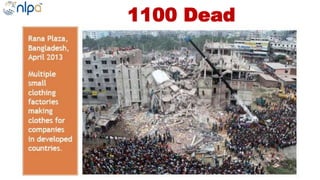
1100 Dead
• A concept where a company takes responsibility for social and
environmental effects of its business operations. It applies to company
efforts that go beyond what is required by law and regulation.
• Whose laws? They vary.
• Yours
• Suppliers’
• Customers’
• There may be laws regarding child labor or the environment in your
country but not in the supplier’s country. You might not be able to simply
say your suppliers must follow the law. Or even assume they do.
• Your customers might put a requirement onto you that is
tighter than what your law requires
• So, while the definition is “going beyond the laws” you might have to ask your
suppliers to go beyond their laws.
What is Social Responsibility?
• Part of a Corporate Social Responsibility program
• Not a stand-alone program
• Often the most difficult part
• Applies to purchasing and incoming logistics
• Often applies to suppliers’ suppliers
• Companies can control their own employees more easily than purchasing
can control suppliers.
• Success requires great negotiating, persuading and sourcing skills.
Supply Chain Social Responsibility
 An ongoing corporate social responsibility program
 Active very top management support and involvement
- Costs might go up
- Sales do increase but can be hard to prove
- If you find a socially responsible supplier costs an extra
$100K, that might look huge on your personal scorecard but
small to a top manager who sponsors this program
Don’t do this without…
World wide issue
• Not only developing countries
• Google “sweatshops in ________”
• More likely in developing countries
• Sweatshops in the United States got 114,000 hits on google
• There’s a correlation. Lower GDP leads to higher scores on a
“corruption index”. However, there are corrupt wealthy countries
and ethical developing countries
Areas of concern at suppliers
• Labor
• Coerced labor*
• Children
• Adults
• Uncoerced child labor
• Worker safety
• Excess overtime
• Freedom to associate and unionize
*Law: California Supply Chain Transparency Act
Environmental issues
• Pollution
• Air
• Water
• Land
• Humane treatment of animals
Humane treatment of animals: Obvious if you are a food or perhaps cosmetics company. But
do you have a company cafeteria? Where are they getting their food supply from? Is their
supplier humane?
• Carbon/energy/sustainability
• Supplier processes
• Shipping to you
Carbon/energy…your choice of supplier and shipping method has a big impact on your “carbon
footprint.”
Political/Citizenship issues
• Corruption and bribery
• By supplier
• By your company
• Conflict minerals
• Ores for tungsten, tin, tantalum and gold
• Law: Dodd-Frank Act
• Small and disadvantaged suppliers
• Exporting jobs
Other issues
• Damage or injury to customers and your employees due to
poor process change control at your supplier
•Lead in paint on toys
• Sulfur in wallboards
Critical note:
Both of these can involve process changes at a supplier.
Samples and initial production can be fine but things can
change later on. Be careful!
Damage to your company
Direct financial damage
- Legal and contractual liabilities
Reputational damage
- Can affect sales
- Stronger effect if you sell a consumer product
Your tool kit
Preventive sourcing techniques
Supplier Code of Conduct
Contractual clauses
Internal codes of conduct
Supplier audits
Sourcing techniques
• Try to avoid problem country-industry combinations
• US Department of Labor database
• http://tinyurl.com/coercedlabor
• 134 products, 17 countries
• Doesn’t mention any U.S. industries but be careful about
U.S. agriculture: 12 year olds can work in agriculture
 Avoid intermediaries
Agents, brokers
Sourcing techniques, continued
Visit the supplier’s facility that you will be using
Be realistic about the power of contracts
Be sure the supplier has a system to get customer approval for key
process changes
Don’t be a supplier’s first export customer
Consider an International Purchasing Office
Give local suppliers a chance
Supplier Code of Conduct
Describes how you expect suppliers to act
Usually referred to in contracts
Length varies from two to eight pages
Introduction should address extended supply chain
requirements
- When should your supplier require its suppliers to comply
with your code?
Realistic view of contracts
• “We assumed the supplier would follow our contract” is not an effective
defense in eyes of the public
• International lawsuits are slow and expensive
• You need to visit the supplier periodically to assure compliance
• You could subcontract part but not all of this task to an audit firm
• Build the cost of doing this into your landed cost analysis when
choosing suppliers
• Your standards should be as high as you expect your suppliers’ conduct
to be
• Need restrictions on bribery and gift giving
 Receiving bribes and gifts
• Offering bribes and gifts
Internal standards of conduct Walk the Talk
Auditing
• Checking on site that the supplier is meeting:
• Laws
• Your Code of Conduct
• Your contract
• Reserve for special cases
• Expensive to do effectively
• Can prevent relationships with good suppliers from developing
• Chose which suppliers to audit
• Suggest limiting to problem country-product situations
• Develop an audit standard
• Hire an audit firm
• Only big companies can do it themselves
Supplier selection
• If possible, don’t buy from suppliers you have to audit
• Sometimes not practical or even possible
• Build costs of audit into landed costs when choosing supplier
• Cost of quality and compliance audits may make higher priced suppliers the
cheaper suppliers
• Call on top management for decision when a responsible supplier is more
expensive
Getting started
Get a top management champion
Write a supplier code of conduct
Get key suppliers to agree
Build compliance into your supplier selection scorecard
Modify contract to cover process changes and subcontracting
Write an audit document, hire an audit firm
Start reporting results on your list of Purchasing’s
achievements

Supply Chain Social Responsibility

  • 1.
    Supply Chain SocialResponsibility Webinar David Millington, M.Sc.QSM, NPDP, CL6σBB, SPP℠, SPSM3®, CM® Director of Education
  • 3.
  • 4.
    • A conceptwhere a company takes responsibility for social and environmental effects of its business operations. It applies to company efforts that go beyond what is required by law and regulation. • Whose laws? They vary. • Yours • Suppliers’ • Customers’ • There may be laws regarding child labor or the environment in your country but not in the supplier’s country. You might not be able to simply say your suppliers must follow the law. Or even assume they do. • Your customers might put a requirement onto you that is tighter than what your law requires • So, while the definition is “going beyond the laws” you might have to ask your suppliers to go beyond their laws. What is Social Responsibility?
  • 5.
    • Part ofa Corporate Social Responsibility program • Not a stand-alone program • Often the most difficult part • Applies to purchasing and incoming logistics • Often applies to suppliers’ suppliers • Companies can control their own employees more easily than purchasing can control suppliers. • Success requires great negotiating, persuading and sourcing skills. Supply Chain Social Responsibility
  • 6.
     An ongoingcorporate social responsibility program  Active very top management support and involvement - Costs might go up - Sales do increase but can be hard to prove - If you find a socially responsible supplier costs an extra $100K, that might look huge on your personal scorecard but small to a top manager who sponsors this program Don’t do this without…
  • 7.
    World wide issue •Not only developing countries • Google “sweatshops in ________” • More likely in developing countries • Sweatshops in the United States got 114,000 hits on google • There’s a correlation. Lower GDP leads to higher scores on a “corruption index”. However, there are corrupt wealthy countries and ethical developing countries
  • 8.
    Areas of concernat suppliers • Labor • Coerced labor* • Children • Adults • Uncoerced child labor • Worker safety • Excess overtime • Freedom to associate and unionize *Law: California Supply Chain Transparency Act
  • 9.
    Environmental issues • Pollution •Air • Water • Land • Humane treatment of animals Humane treatment of animals: Obvious if you are a food or perhaps cosmetics company. But do you have a company cafeteria? Where are they getting their food supply from? Is their supplier humane? • Carbon/energy/sustainability • Supplier processes • Shipping to you Carbon/energy…your choice of supplier and shipping method has a big impact on your “carbon footprint.”
  • 10.
    Political/Citizenship issues • Corruptionand bribery • By supplier • By your company • Conflict minerals • Ores for tungsten, tin, tantalum and gold • Law: Dodd-Frank Act • Small and disadvantaged suppliers • Exporting jobs
  • 11.
    Other issues • Damageor injury to customers and your employees due to poor process change control at your supplier •Lead in paint on toys • Sulfur in wallboards Critical note: Both of these can involve process changes at a supplier. Samples and initial production can be fine but things can change later on. Be careful!
  • 12.
    Damage to yourcompany Direct financial damage - Legal and contractual liabilities Reputational damage - Can affect sales - Stronger effect if you sell a consumer product
  • 13.
    Your tool kit Preventivesourcing techniques Supplier Code of Conduct Contractual clauses Internal codes of conduct Supplier audits
  • 14.
    Sourcing techniques • Tryto avoid problem country-industry combinations • US Department of Labor database • http://tinyurl.com/coercedlabor • 134 products, 17 countries • Doesn’t mention any U.S. industries but be careful about U.S. agriculture: 12 year olds can work in agriculture  Avoid intermediaries Agents, brokers
  • 15.
    Sourcing techniques, continued Visitthe supplier’s facility that you will be using Be realistic about the power of contracts Be sure the supplier has a system to get customer approval for key process changes Don’t be a supplier’s first export customer Consider an International Purchasing Office Give local suppliers a chance
  • 16.
    Supplier Code ofConduct Describes how you expect suppliers to act Usually referred to in contracts Length varies from two to eight pages Introduction should address extended supply chain requirements - When should your supplier require its suppliers to comply with your code?
  • 17.
    Realistic view ofcontracts • “We assumed the supplier would follow our contract” is not an effective defense in eyes of the public • International lawsuits are slow and expensive • You need to visit the supplier periodically to assure compliance • You could subcontract part but not all of this task to an audit firm • Build the cost of doing this into your landed cost analysis when choosing suppliers
  • 18.
    • Your standardsshould be as high as you expect your suppliers’ conduct to be • Need restrictions on bribery and gift giving  Receiving bribes and gifts • Offering bribes and gifts Internal standards of conduct Walk the Talk
  • 19.
    Auditing • Checking onsite that the supplier is meeting: • Laws • Your Code of Conduct • Your contract • Reserve for special cases • Expensive to do effectively • Can prevent relationships with good suppliers from developing • Chose which suppliers to audit • Suggest limiting to problem country-product situations • Develop an audit standard • Hire an audit firm • Only big companies can do it themselves
  • 20.
    Supplier selection • Ifpossible, don’t buy from suppliers you have to audit • Sometimes not practical or even possible • Build costs of audit into landed costs when choosing supplier • Cost of quality and compliance audits may make higher priced suppliers the cheaper suppliers • Call on top management for decision when a responsible supplier is more expensive
  • 21.
    Getting started Get atop management champion Write a supplier code of conduct Get key suppliers to agree Build compliance into your supplier selection scorecard Modify contract to cover process changes and subcontracting Write an audit document, hire an audit firm Start reporting results on your list of Purchasing’s achievements

Editor's Notes

  • #4 Not something you want to see news about your supplier. A tragedy. An embarrassment to the purchasing profession. The companies involved said they didn’t authorize production there. An extreme case, and eye opener and I hope a catalyst for change.
  • #20 The Procurement Function is primarily responsible for Suppliers and Inputs