Palestine case study
Mustafa Ismael
February 2014
MECIS learning event
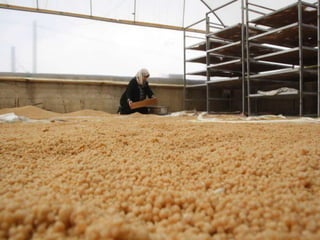
Dora Cooperative for Agricultural
Processing
“ A Model of Rural Women Enterprise”
Women’s products and markets
Problems?
Access to the market and services in remote and marginalized
places in Palestine:
1) Understanding market, and the available opportunities.
2) Farmers capacity.
3) Involve and stimulate private sector.
4) Specialization versus multiple functioning.
5) Build a culture of paying for the service.
6) Involving more women to become decision-makers.
How did relationships established
with key actors?
The project team build a professional and
distinguished relationship with many actors in the
country, this relationship built based on mutual
respect to develop and reform national standard
for Couscous produce and replicate this for other
traditional products.
1. GDoC at the MoL (PA)
2. Palestinian Standards Institute
3. Local and international NGOs and regional
authority
What worked well?
OPTI
• Build and strengthen members’ capacity
• Involve and stimulate private sector,
• Specializations and production quality and
quantity,
• More women involved in the decision making
process
• Build a culture of paying service,
Impact
• Income generation for 45 members through
distribution the gained net profit.
• Increasing working opportunities from 3 to 13
3-full time and 10 at part-time bases.
• 1n 2012 they made net profit £5000
•The coop become well known as active women
representative body
0
5
10
15
20
25
30
Capacity
Production
Sales
Capacity
Production
Sales
Capacity
Production
Sales
Capacity
Production
Sales
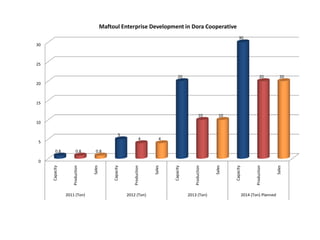
2011 (Ton) 2012 (Ton) 2013 (Ton) 2014 (Ton) Planned
0.8 0.8 0.8
5
4 4
20
10 10
30
20 20
Maftoul Enterprise Development in Dora Cooperative
what didn’t worked well?
• Child-care,
• Quality Control,
• Marketing,
• Attract more members to the co-ops,
How could you change what you
are doing in future?
• We would advice the revolving loans to be channelled
through MFI.

Opt enterprise dev opt presentation mi 2014

  • 1.
    Palestine case study MustafaIsmael February 2014 MECIS learning event
  • 2.
    Dora Cooperative forAgricultural Processing “ A Model of Rural Women Enterprise” Women’s products and markets
  • 4.
    Problems? Access to themarket and services in remote and marginalized places in Palestine: 1) Understanding market, and the available opportunities. 2) Farmers capacity. 3) Involve and stimulate private sector. 4) Specialization versus multiple functioning. 5) Build a culture of paying for the service. 6) Involving more women to become decision-makers.
  • 5.
    How did relationshipsestablished with key actors? The project team build a professional and distinguished relationship with many actors in the country, this relationship built based on mutual respect to develop and reform national standard for Couscous produce and replicate this for other traditional products. 1. GDoC at the MoL (PA) 2. Palestinian Standards Institute 3. Local and international NGOs and regional authority
  • 6.
    What worked well? OPTI •Build and strengthen members’ capacity • Involve and stimulate private sector, • Specializations and production quality and quantity, • More women involved in the decision making process • Build a culture of paying service,
  • 7.
    Impact • Income generationfor 45 members through distribution the gained net profit. • Increasing working opportunities from 3 to 13 3-full time and 10 at part-time bases. • 1n 2012 they made net profit £5000 •The coop become well known as active women representative body
  • 8.
    0 5 10 15 20 25 30 Capacity Production Sales Capacity Production Sales Capacity Production Sales Capacity Production Sales 2011 (Ton) 2012(Ton) 2013 (Ton) 2014 (Ton) Planned 0.8 0.8 0.8 5 4 4 20 10 10 30 20 20 Maftoul Enterprise Development in Dora Cooperative
  • 9.
    what didn’t workedwell? • Child-care, • Quality Control, • Marketing, • Attract more members to the co-ops,
  • 10.
    How could youchange what you are doing in future? • We would advice the revolving loans to be channelled through MFI.