Marketing Management
A South Asian Perspective
Chapter 14: Designing and Managing Integrated Marketing Channels
How should
companies integrate
channels and
manage channel
conflicts?
Channel Integration
and Systems
Vertical
Marketing
Systems
VMS includes the producer, wholesaler(s) and retailer(s)
acting as a unified system
There are three types of VMS:
1. Corporate VMS
2. Administered VMS
3. Contractual VMS
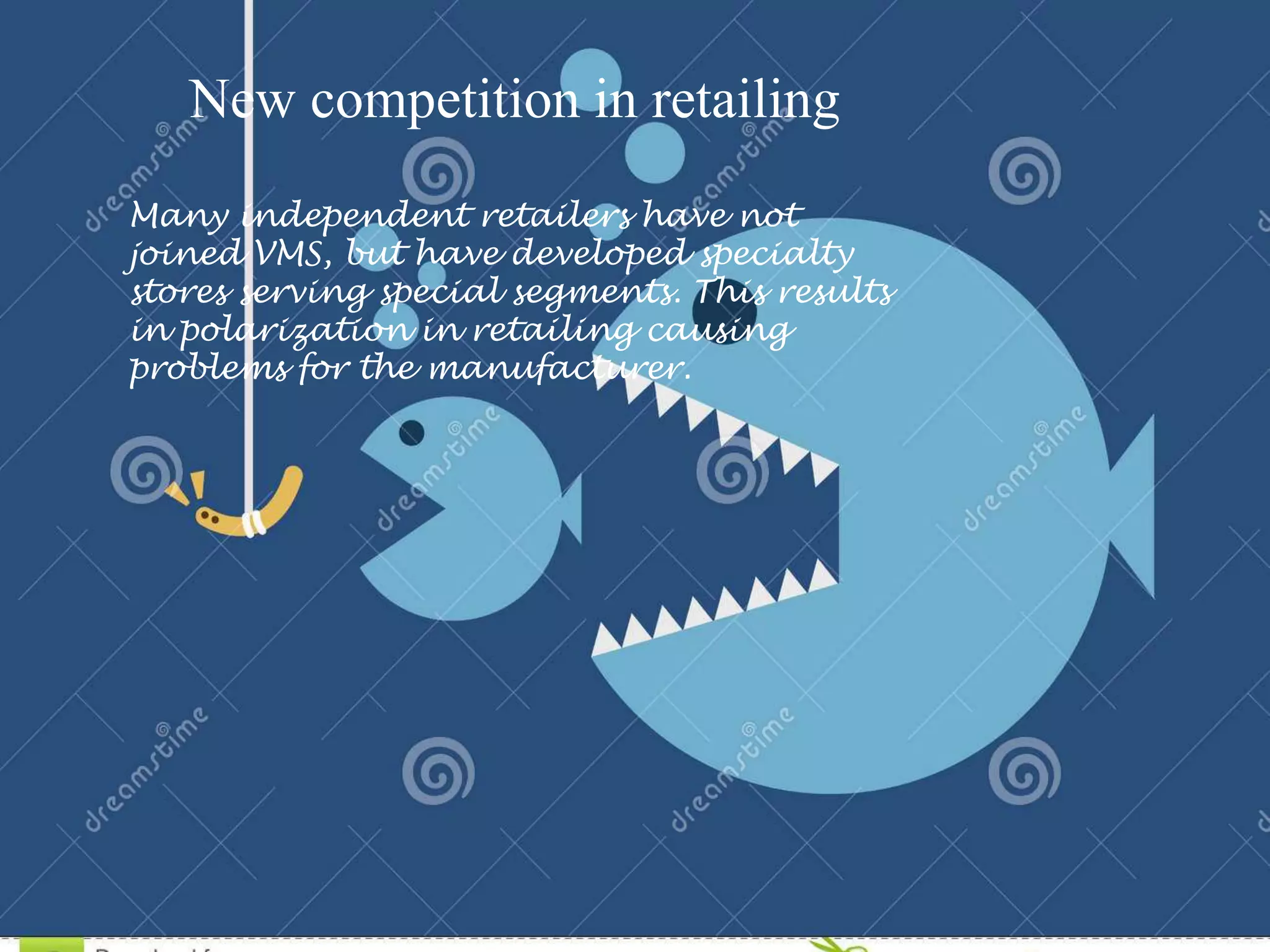
New competition in retailing
Many independent retailers have not
joined VMS, but have developed specialty
stores serving special segments. This results
in polarization in retailing causing
problems for the manufacturer.
Horizontal
Marketing
Systems
Two or more unrelated
companies put together
resources to exploit an
emerging market opportunity.
An integrated marketing channel is one in
which the strategies and tactics of selling
through one channel reflect the strategies
and tactics of selling through one or more
other channels
Three benefits from adding more channels:
1. Increased market coverage
2. Lower channel cost
3. More customized selling
But new channels typically introduce
conflict and problems with control and
cooperation.
Conflict, Cooperation and Competition
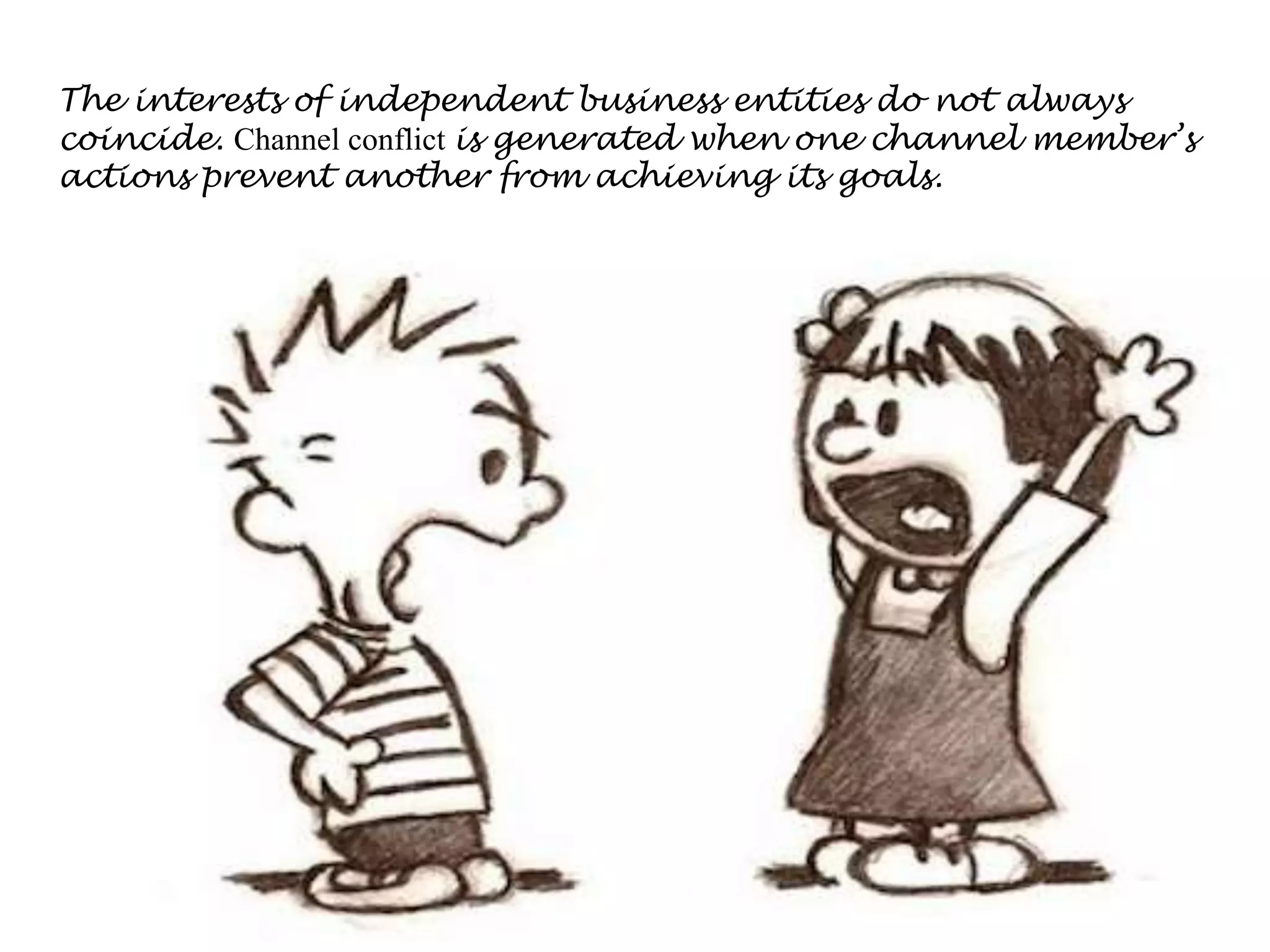
The interests of independent business entities do not always
coincide. Channel conflict is generated when one channel member’s
actions prevent another from achieving its goals.
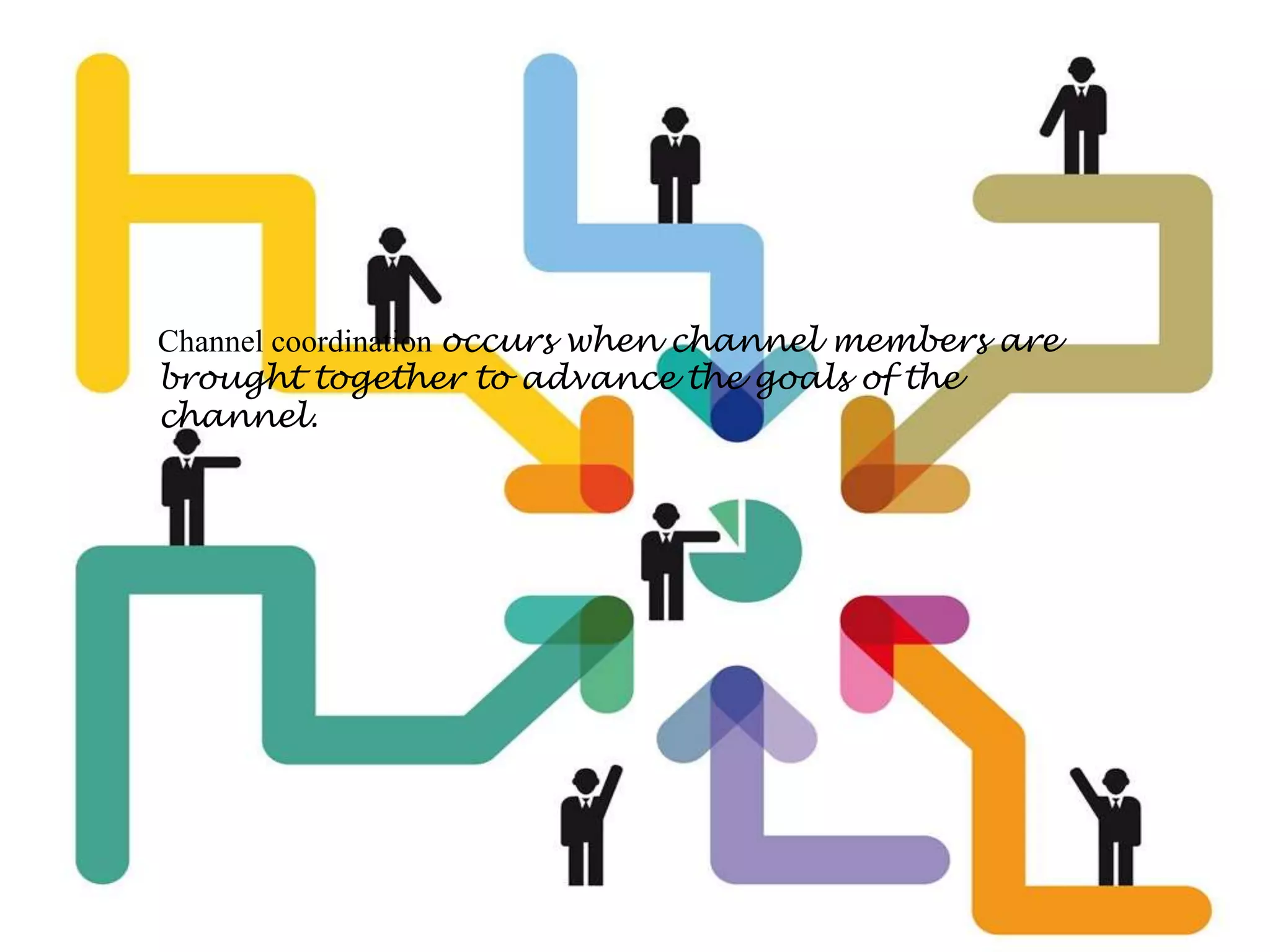
Channel coordination occurs when channel members are
brought together to advance the goals of the
channel.
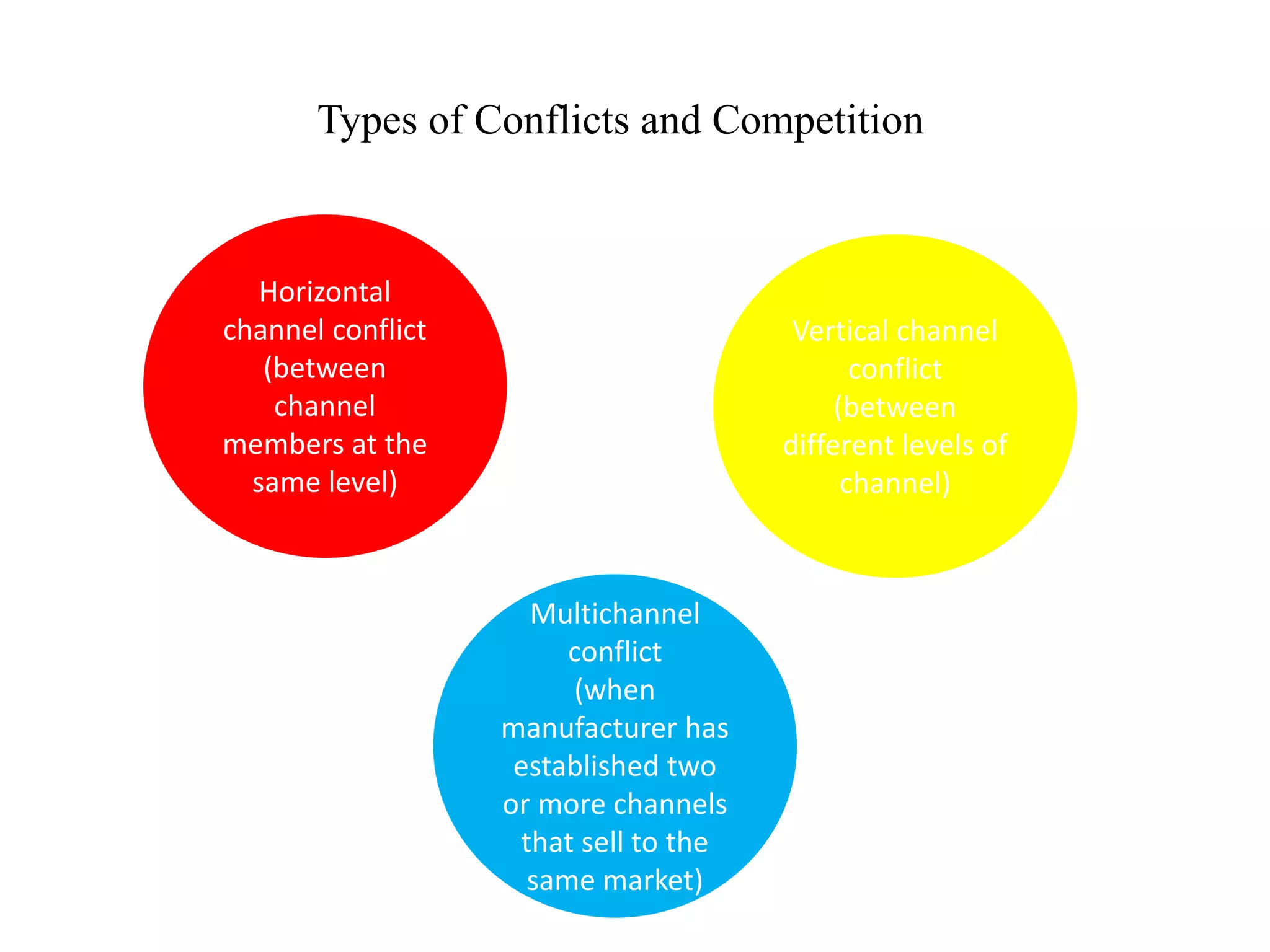
Types of Conflicts and Competition
Horizontal
channel conflict
(between
channel
members at the
same level)
Vertical channel
conflict
(between
different levels of
channel)
Multichannel
conflict
(when
manufacturer has
established two
or more channels
that sell to the
same market)
Causes of Channel Conflict
•Goal incompatibility
•Unclear roles and rights
•Difference in perception of market environment
•Intermediaries’ dependence on the manufacturer
Managing Channel Conflict
•Strategic justification
•Dual compensation
•Superordinate goals
•Employee exchange
•Joint membership
•Co-optation
•Diplomacy, mediation and Arbitration
•Legal recourse
Dilution and
Cannibalization
Marketers must be careful
not to dilute their brands
through inappropriate
channels, particularly
luxury brands.
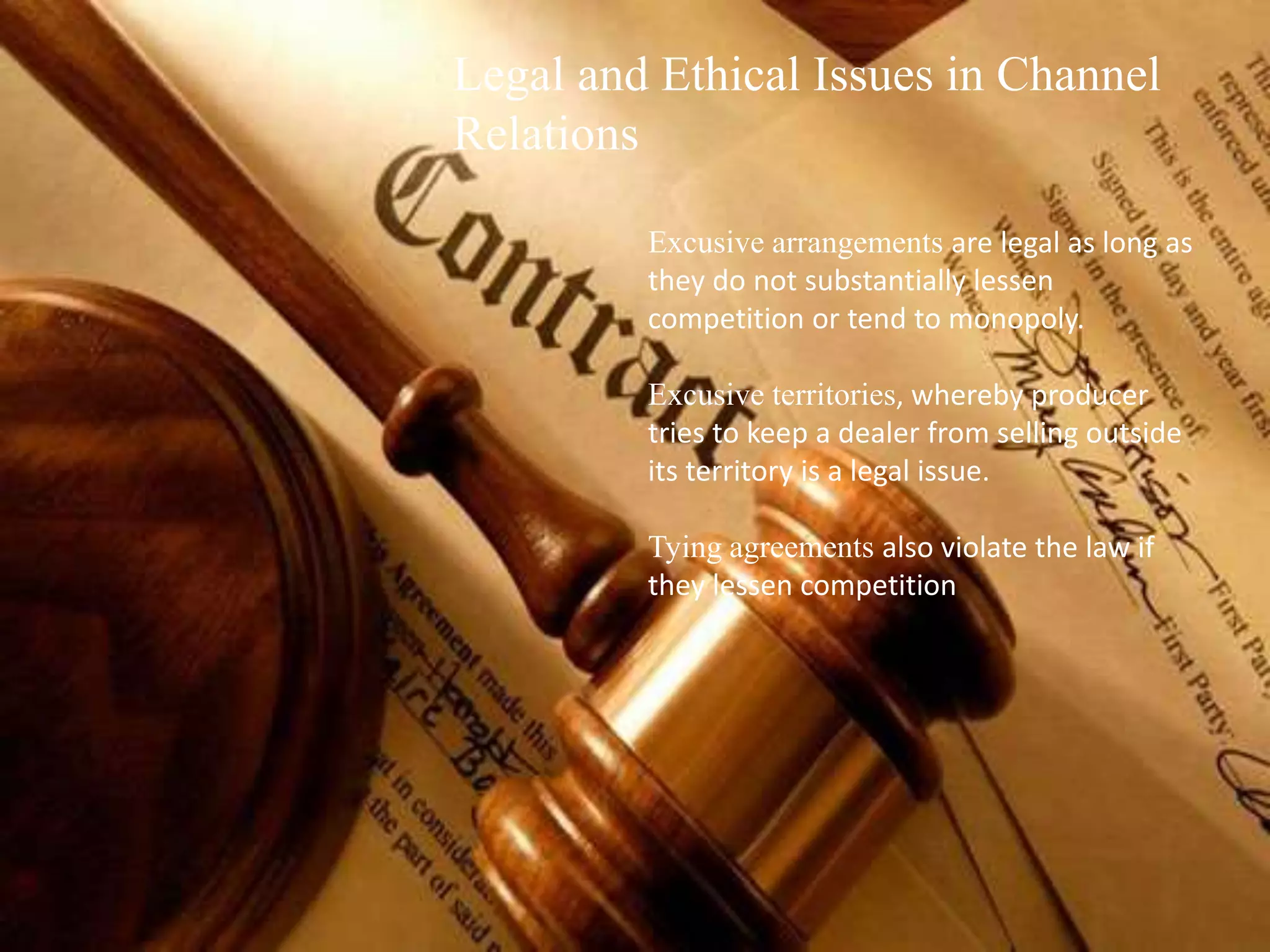
Legal and Ethical Issues in Channel
Relations
Excusive arrangements are legal as long as
they do not substantially lessen
competition or tend to monopoly.
Excusive territories, whereby producer
tries to keep a dealer from selling outside
its territory is a legal issue.
Tying agreements also violate the law if
they lessen competition
thank you
Priti Verma
LSR
How should comapnies integrate channels and manage conflicts

How should comapnies integrate channels and manage conflicts

  • 1.
    Marketing Management A SouthAsian Perspective Chapter 14: Designing and Managing Integrated Marketing Channels
  • 2.
    How should companies integrate channelsand manage channel conflicts?
  • 3.
  • 4.
  • 5.
    VMS includes theproducer, wholesaler(s) and retailer(s) acting as a unified system There are three types of VMS: 1. Corporate VMS 2. Administered VMS 3. Contractual VMS
  • 6.
    New competition inretailing Many independent retailers have not joined VMS, but have developed specialty stores serving special segments. This results in polarization in retailing causing problems for the manufacturer.
  • 7.
  • 8.
    Two or moreunrelated companies put together resources to exploit an emerging market opportunity.
  • 9.
    An integrated marketingchannel is one in which the strategies and tactics of selling through one channel reflect the strategies and tactics of selling through one or more other channels Three benefits from adding more channels: 1. Increased market coverage 2. Lower channel cost 3. More customized selling But new channels typically introduce conflict and problems with control and cooperation.
  • 10.
  • 11.
    The interests ofindependent business entities do not always coincide. Channel conflict is generated when one channel member’s actions prevent another from achieving its goals.
  • 12.
    Channel coordination occurswhen channel members are brought together to advance the goals of the channel.
  • 13.
    Types of Conflictsand Competition Horizontal channel conflict (between channel members at the same level) Vertical channel conflict (between different levels of channel) Multichannel conflict (when manufacturer has established two or more channels that sell to the same market)
  • 14.
    Causes of ChannelConflict •Goal incompatibility •Unclear roles and rights •Difference in perception of market environment •Intermediaries’ dependence on the manufacturer
  • 15.
    Managing Channel Conflict •Strategicjustification •Dual compensation •Superordinate goals •Employee exchange •Joint membership •Co-optation •Diplomacy, mediation and Arbitration •Legal recourse
  • 16.
    Dilution and Cannibalization Marketers mustbe careful not to dilute their brands through inappropriate channels, particularly luxury brands.
  • 17.
    Legal and EthicalIssues in Channel Relations Excusive arrangements are legal as long as they do not substantially lessen competition or tend to monopoly. Excusive territories, whereby producer tries to keep a dealer from selling outside its territory is a legal issue. Tying agreements also violate the law if they lessen competition
  • 18.