

Place Managing marketing channels Chapter 20
Managing the marketing channels Firms are increasingly paying greater attention to how they manage their marketing channels, so that products and services are delivered at the right time, right place and the right price. The marketing channel participants are vital partners in the value delivery network.
Supply chains and the value delivery network Upstream partners  are the suppliers of raw materials, components, parts, information, finance and expertise to the organisation. Downstream partners  are the wholesalers and retailers who connect the firm with the customer.
The nature and importance of marketing channels The marketing or distribution channel is comprised of a set of interdependent organisations involved in the process of making a product or service available for use or consumption by the consumer or an industrial user. The new forms of marketing channels have evolved based on robust partnerships, with long-term commitment to each other and the customer.
How channel members add value Transactional value :  Risk moves to the intermediary, who also gets to know the specialist market. Logistical value :  Intermediaries assemble an assortment that is compatible with the needs of the ultimate customers. Facilitating value :  Intermediaries often offer credit to customers, may offer training in the use of products, and collect and deliver marketing information.
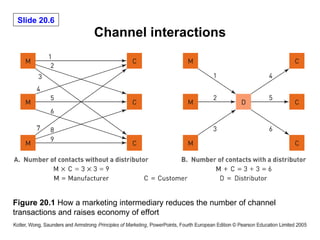
Figure 20.1  How a marketing intermediary reduces the number of channel transactions and raises economy of effort Channel interactions
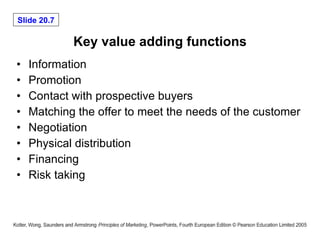
Key value adding functions Information Promotion Contact with prospective buyers Matching the offer to meet the needs of the customer Negotiation Physical distribution Financing Risk taking
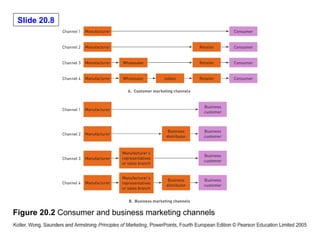
Figure 20.2  Consumer and business marketing channels
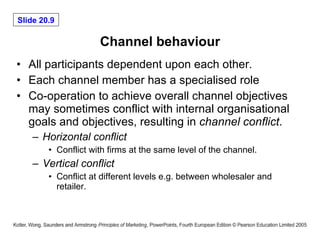
Channel behaviour All participants dependent upon each other. Each channel member has a specialised role Co-operation to achieve overall channel objectives may sometimes conflict with internal organisational goals and objectives, resulting in  channel conflict . Horizontal conflict Conflict with firms at the same level of the channel. Vertical conflict Conflict at different levels e.g. between wholesaler and retailer.
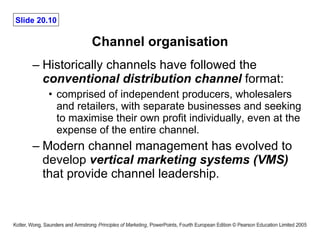
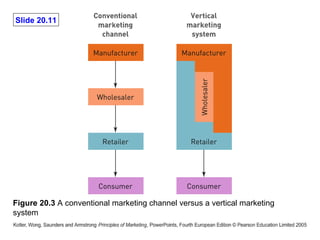
Channel organisation Historically channels have followed the  conventional distribution channel  format: comprised of independent producers, wholesalers and retailers, with separate businesses and seeking to maximise their own profit individually, even at the expense of the entire channel. Modern channel management has evolved to develop  vertical marketing systems (VMS)  that provide channel leadership.
Figure 20.3  A conventional marketing channel versus a vertical marketing system
Vertical marketing systems Vertical marketing systems (VMS)  are structured, interdependent producers, wholesalers and retailers that act as a unified system.  There are also different constructs of  VMS  for various types of industries.
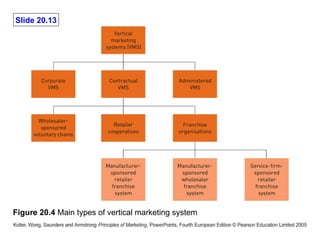
Figure 20.4  Main types of vertical marketing system
Corporate VMS Combines successive stages of production and distribution under single ownership. Breweries and petrol stations are examples.
Contractual VMS Independent firms at different levels join contractually to create efficiencies and economies of scale that could not be achieved alone. 3 types: Wholesaler-sponsored voluntary chains  of independent retailers organised to help compete against large organisations. Retailer co-operatives  Franchise
Franchise VMS Reduced set-up costs Contractual relationship Proven system and established brand name Centralised buying power Expertise in operational, managerial, legal matters Forfeit some control Performance against exacting standards Aggressive targets
Administered VMS VMS that co-ordinates successive stages of production and distribution through the size and power of one of the parties.
Other channel variations Horizontal marketing systems Channel arrangement in which two or more companies at one level join together to follow a new marketing opportunity. Hybrid marketing systems Multi channel distribution targeting different market segments. Changing channel organisation Major trend to disintermediation through elimination of intermediaries and traditional sellers and replacement by radically new types of intermediaries.
Channel retailing trends  New retail forms and shortening of the retail life-cycles ‘ Wheel of retailing’ , new types of retailer, usually begin as low-margin, low-price, low-status operations but later evolve to higher priced, higher service operations and eventually become like the conventional retailers that they replaced Growth of non-store retailing ‘ click and brick’ retailers Retail convergence Rise of mega-retailers Growing importance of retail technology Global expansion of retailers
Channel wholesaling trends Face considerable challenges Formation of hybrid operators such as the cash and carry concepts.

Chapter 20

  • 1.
    Place Managing marketingchannels Chapter 20
  • 2.
    Managing the marketingchannels Firms are increasingly paying greater attention to how they manage their marketing channels, so that products and services are delivered at the right time, right place and the right price. The marketing channel participants are vital partners in the value delivery network.
  • 3.
    Supply chains andthe value delivery network Upstream partners are the suppliers of raw materials, components, parts, information, finance and expertise to the organisation. Downstream partners are the wholesalers and retailers who connect the firm with the customer.
  • 4.
    The nature andimportance of marketing channels The marketing or distribution channel is comprised of a set of interdependent organisations involved in the process of making a product or service available for use or consumption by the consumer or an industrial user. The new forms of marketing channels have evolved based on robust partnerships, with long-term commitment to each other and the customer.
  • 5.
    How channel membersadd value Transactional value : Risk moves to the intermediary, who also gets to know the specialist market. Logistical value : Intermediaries assemble an assortment that is compatible with the needs of the ultimate customers. Facilitating value : Intermediaries often offer credit to customers, may offer training in the use of products, and collect and deliver marketing information.
  • 6.
    Figure 20.1  Howa marketing intermediary reduces the number of channel transactions and raises economy of effort Channel interactions
  • 7.
    Key value addingfunctions Information Promotion Contact with prospective buyers Matching the offer to meet the needs of the customer Negotiation Physical distribution Financing Risk taking
  • 8.
    Figure 20.2  Consumerand business marketing channels
  • 9.
    Channel behaviour Allparticipants dependent upon each other. Each channel member has a specialised role Co-operation to achieve overall channel objectives may sometimes conflict with internal organisational goals and objectives, resulting in channel conflict . Horizontal conflict Conflict with firms at the same level of the channel. Vertical conflict Conflict at different levels e.g. between wholesaler and retailer.
  • 10.
    Channel organisation Historicallychannels have followed the conventional distribution channel format: comprised of independent producers, wholesalers and retailers, with separate businesses and seeking to maximise their own profit individually, even at the expense of the entire channel. Modern channel management has evolved to develop vertical marketing systems (VMS) that provide channel leadership.
  • 11.
    Figure 20.3  Aconventional marketing channel versus a vertical marketing system
  • 12.
    Vertical marketing systemsVertical marketing systems (VMS) are structured, interdependent producers, wholesalers and retailers that act as a unified system. There are also different constructs of VMS for various types of industries.
  • 13.
    Figure 20.4  Maintypes of vertical marketing system
  • 14.
    Corporate VMS Combinessuccessive stages of production and distribution under single ownership. Breweries and petrol stations are examples.
  • 15.
    Contractual VMS Independentfirms at different levels join contractually to create efficiencies and economies of scale that could not be achieved alone. 3 types: Wholesaler-sponsored voluntary chains of independent retailers organised to help compete against large organisations. Retailer co-operatives Franchise
  • 16.
    Franchise VMS Reducedset-up costs Contractual relationship Proven system and established brand name Centralised buying power Expertise in operational, managerial, legal matters Forfeit some control Performance against exacting standards Aggressive targets
  • 17.
    Administered VMS VMSthat co-ordinates successive stages of production and distribution through the size and power of one of the parties.
  • 18.
    Other channel variationsHorizontal marketing systems Channel arrangement in which two or more companies at one level join together to follow a new marketing opportunity. Hybrid marketing systems Multi channel distribution targeting different market segments. Changing channel organisation Major trend to disintermediation through elimination of intermediaries and traditional sellers and replacement by radically new types of intermediaries.
  • 19.
    Channel retailing trends New retail forms and shortening of the retail life-cycles ‘ Wheel of retailing’ , new types of retailer, usually begin as low-margin, low-price, low-status operations but later evolve to higher priced, higher service operations and eventually become like the conventional retailers that they replaced Growth of non-store retailing ‘ click and brick’ retailers Retail convergence Rise of mega-retailers Growing importance of retail technology Global expansion of retailers
  • 20.
    Channel wholesaling trendsFace considerable challenges Formation of hybrid operators such as the cash and carry concepts.