
HOW
Artificial
Intelligence
is Transforming
Pharma
In the bringing of the industries of Pharmacy in the 21st century, drug discovery
and artificial intelligence is the key as there needs to be a basic shift.In the 21st
century, for meeting the needs of patients and also society will be met if, there
will be a dramatic shift in the current drug discovery process. Hence, it's
repeatedly said how it'll help the industries to do R and D differently. During the
early drug development process let the companies reach greater and efficient
heights of success within a smaller period. On the other hand, if we really
investigate more we find some really worth advantages of long term.The used
resources and huge amount of money for the making of medicines and drugs
and their processes will later be fetched more effectively as the delivery of
medicines which can cure serious diseases will be taking place. All this takes
place due to the current investment in the industry.
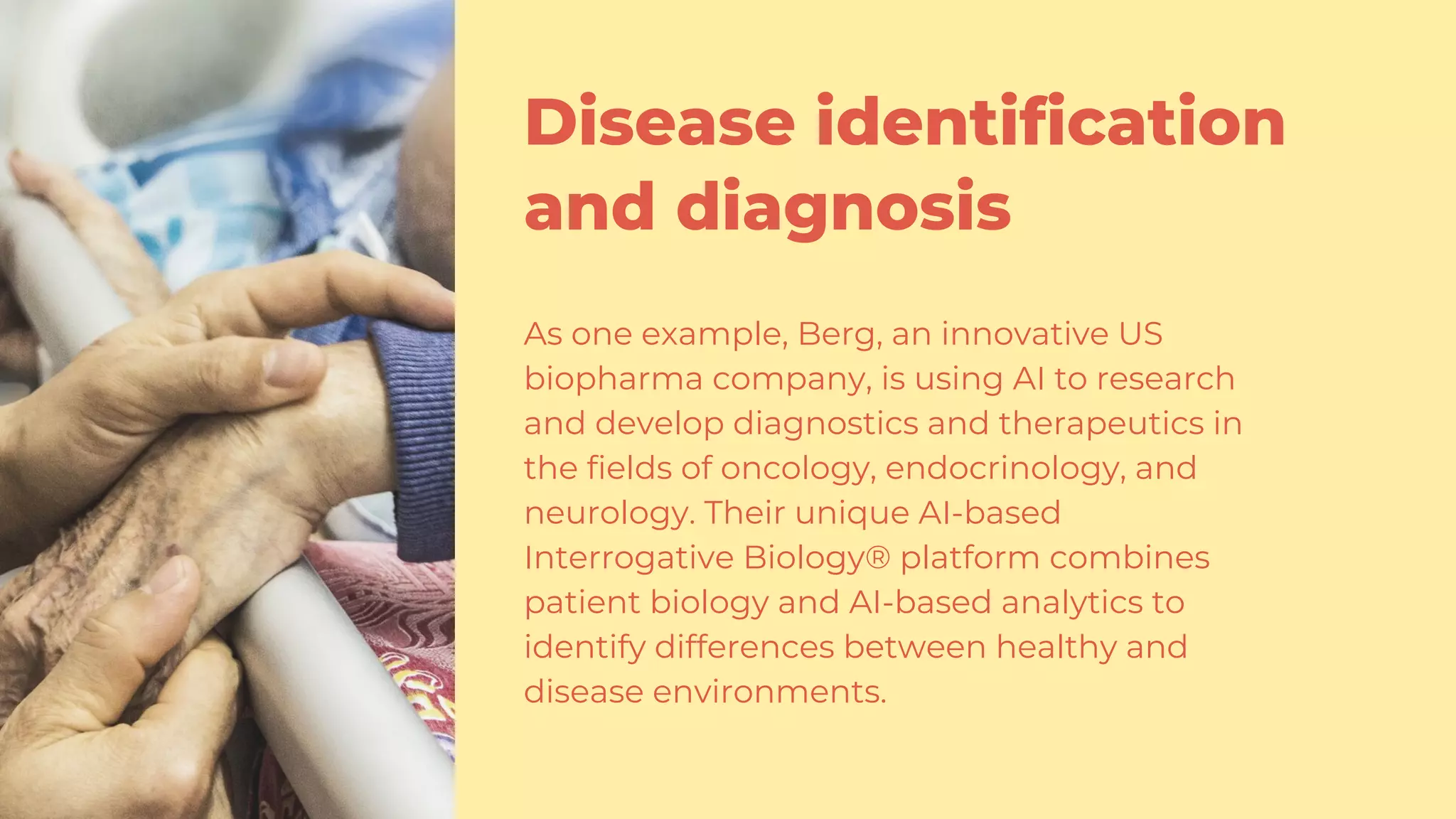
Disease identification
and diagnosis
As one example, Berg, an innovative US
biopharma company, is using AI to research
and develop diagnostics and therapeutics in
the fields of oncology, endocrinology, and
neurology. Their unique AI-based
Interrogative Biology® platform combines
patient biology and AI-based analytics to
identify differences between healthy and
disease environments.
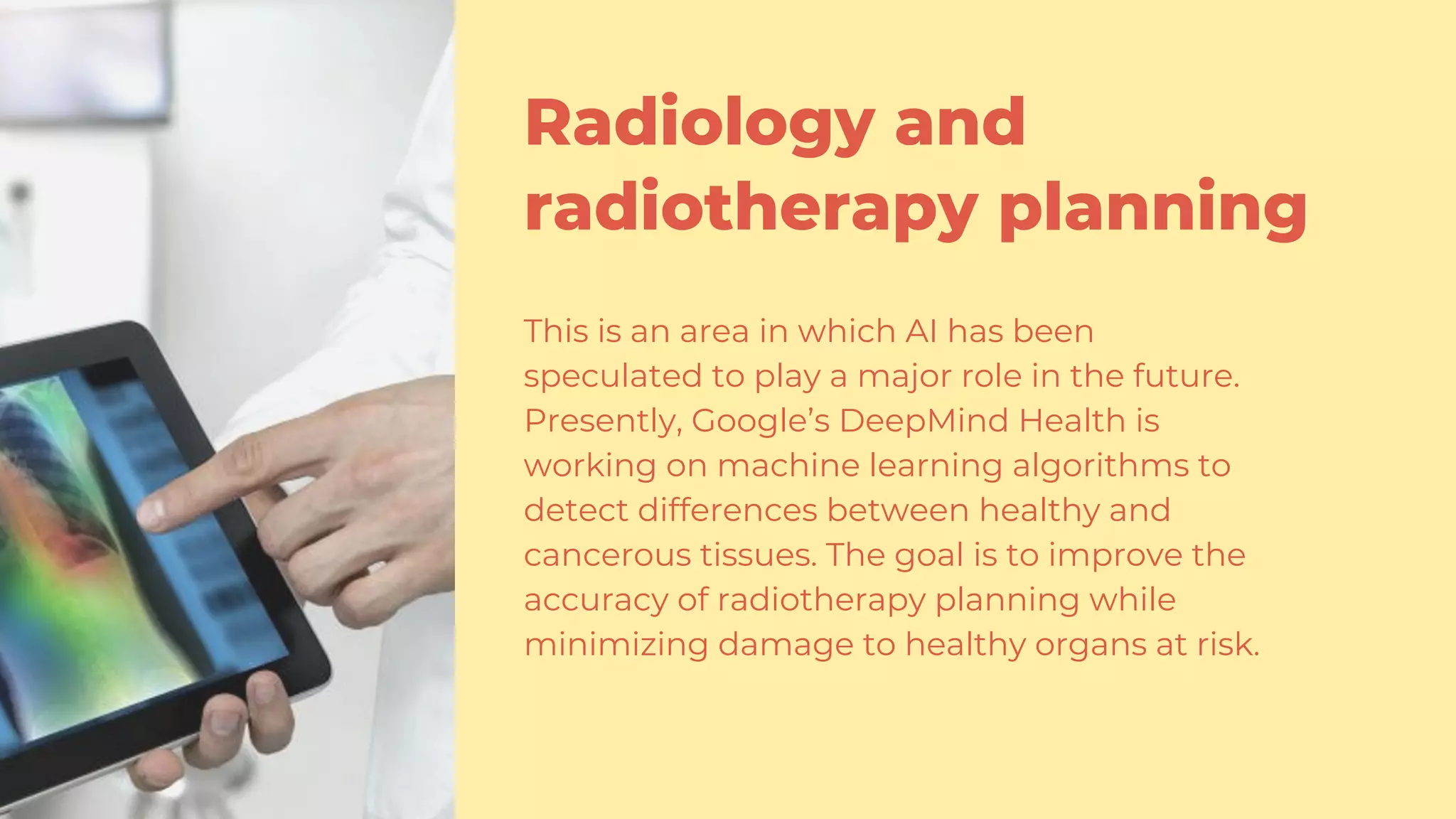
Radiology and
radiotherapy planning
This is an area in which AI has been
speculated to play a major role in the future.
Presently, Google’s DeepMind Health is
working on machine learning algorithms to
detect differences between healthy and
cancerous tissues. The goal is to improve the
accuracy of radiotherapy planning while
minimizing damage to healthy organs at risk.
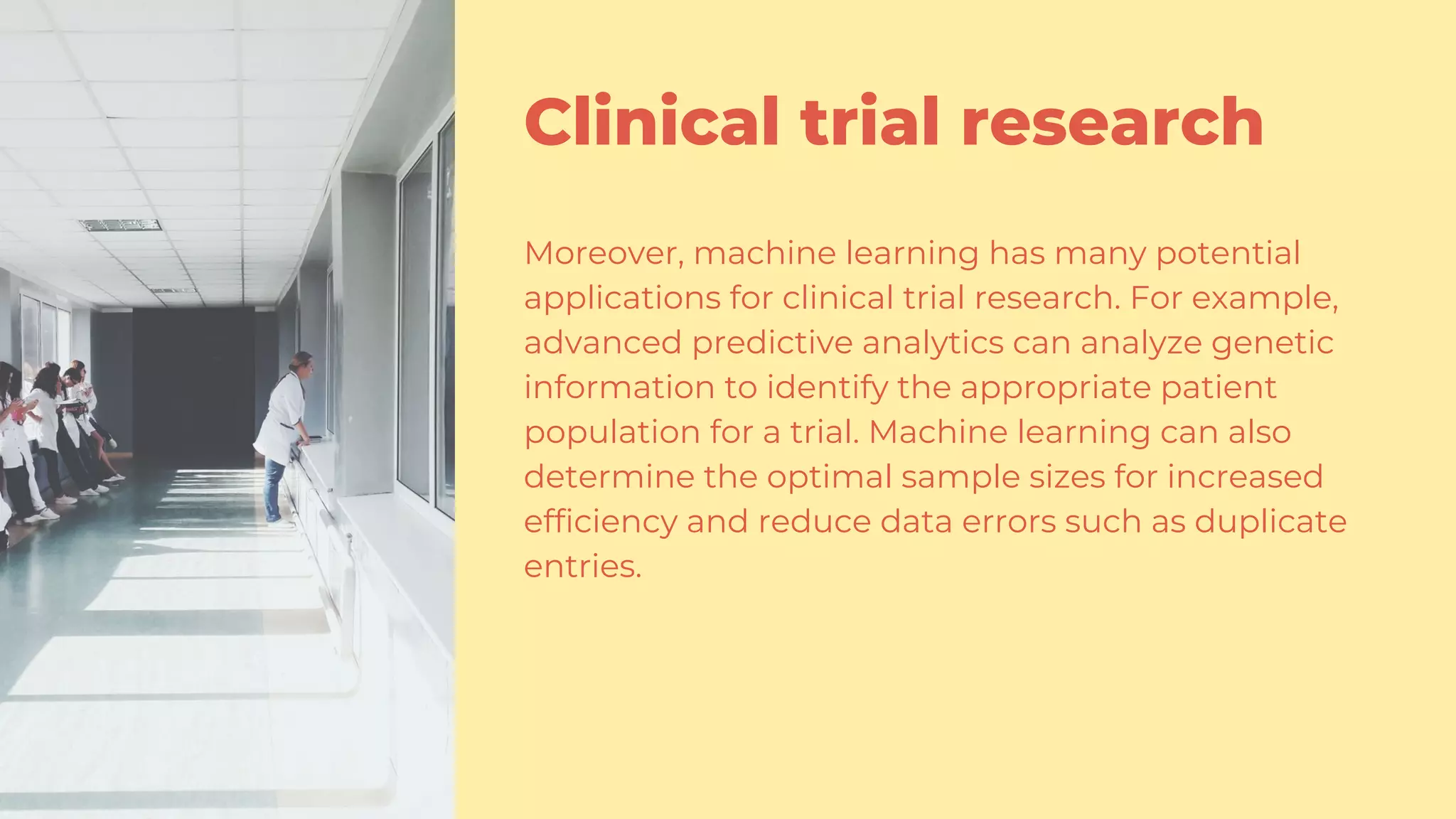
Clinical trial research
Moreover, machine learning has many potential
applications for clinical trial research. For example,
advanced predictive analytics can analyze genetic
information to identify the appropriate patient
population for a trial. Machine learning can also
determine the optimal sample sizes for increased
efficiency and reduce data errors such as duplicate
entries.
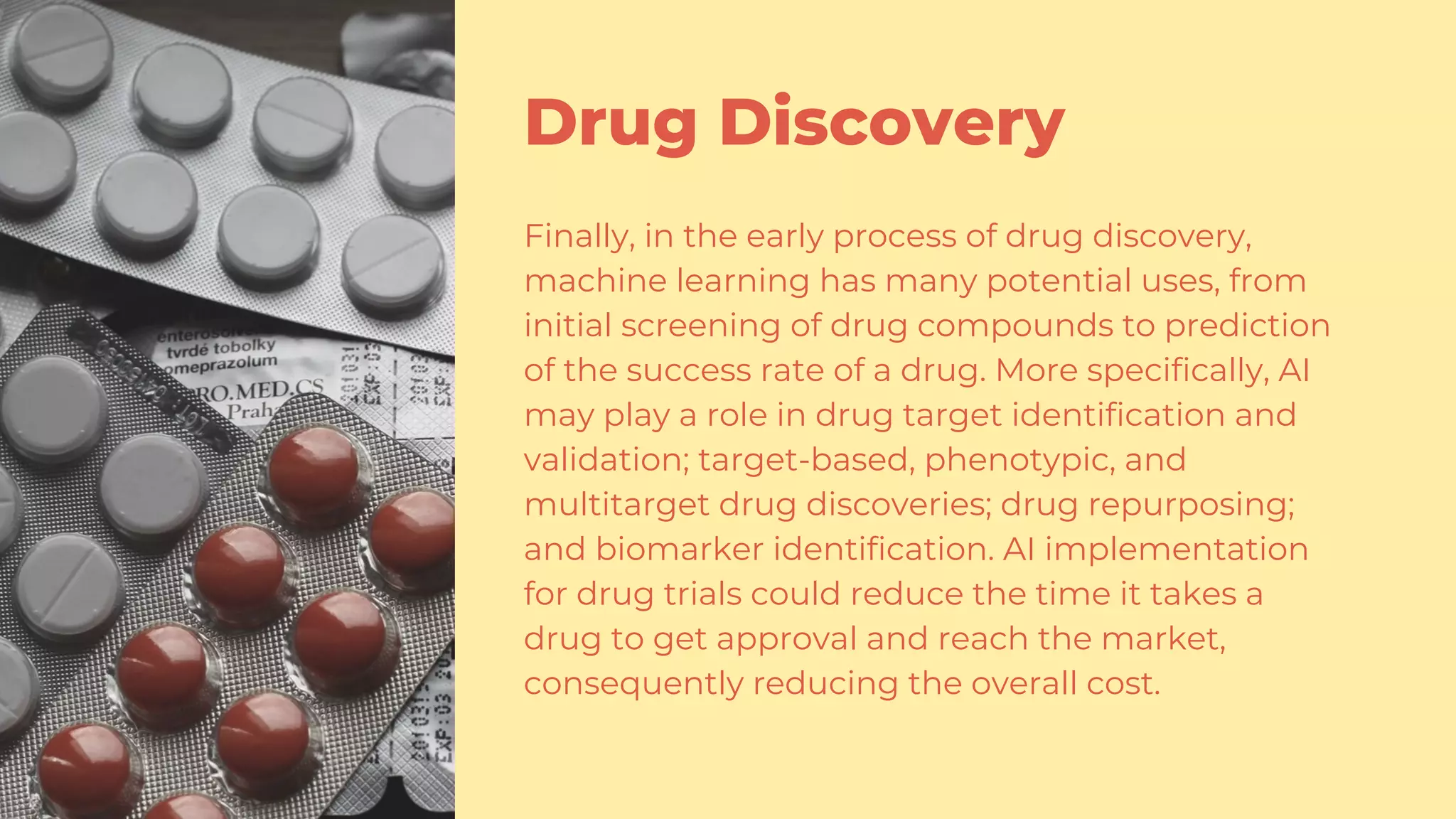
Drug Discovery
Finally, in the early process of drug discovery,
machine learning has many potential uses, from
initial screening of drug compounds to prediction
of the success rate of a drug. More specifically, AI
may play a role in drug target identification and
validation; target-based, phenotypic, and
multitarget drug discoveries; drug repurposing;
and biomarker identification. AI implementation
for drug trials could reduce the time it takes a
drug to get approval and reach the market,
consequently reducing the overall cost.
Our Social
Pages
FACEBOOK
www.facebook.com/tyronesystems
TWITTER
www.twitter.com/tyronesystems
BLOG
www.blog.tyronesystems.com
Thank You!

How Artificial Intelligence in Transforming Pharma

  • 1.
  • 2.
    In the bringingof the industries of Pharmacy in the 21st century, drug discovery and artificial intelligence is the key as there needs to be a basic shift.In the 21st century, for meeting the needs of patients and also society will be met if, there will be a dramatic shift in the current drug discovery process. Hence, it's repeatedly said how it'll help the industries to do R and D differently. During the early drug development process let the companies reach greater and efficient heights of success within a smaller period. On the other hand, if we really investigate more we find some really worth advantages of long term.The used resources and huge amount of money for the making of medicines and drugs and their processes will later be fetched more effectively as the delivery of medicines which can cure serious diseases will be taking place. All this takes place due to the current investment in the industry.
  • 3.
    Disease identification and diagnosis Asone example, Berg, an innovative US biopharma company, is using AI to research and develop diagnostics and therapeutics in the fields of oncology, endocrinology, and neurology. Their unique AI-based Interrogative Biology® platform combines patient biology and AI-based analytics to identify differences between healthy and disease environments.
  • 4.
    Radiology and radiotherapy planning Thisis an area in which AI has been speculated to play a major role in the future. Presently, Google’s DeepMind Health is working on machine learning algorithms to detect differences between healthy and cancerous tissues. The goal is to improve the accuracy of radiotherapy planning while minimizing damage to healthy organs at risk.
  • 5.
    Clinical trial research Moreover,machine learning has many potential applications for clinical trial research. For example, advanced predictive analytics can analyze genetic information to identify the appropriate patient population for a trial. Machine learning can also determine the optimal sample sizes for increased efficiency and reduce data errors such as duplicate entries.
  • 6.
    Drug Discovery Finally, inthe early process of drug discovery, machine learning has many potential uses, from initial screening of drug compounds to prediction of the success rate of a drug. More specifically, AI may play a role in drug target identification and validation; target-based, phenotypic, and multitarget drug discoveries; drug repurposing; and biomarker identification. AI implementation for drug trials could reduce the time it takes a drug to get approval and reach the market, consequently reducing the overall cost.
  • 7.