How Blockchain is
Revolutionising Healthcare
Industry’s Challenges of
Genomic Data Storage
and Protection?
PRESENTED BY TYRONE SYSTEMS
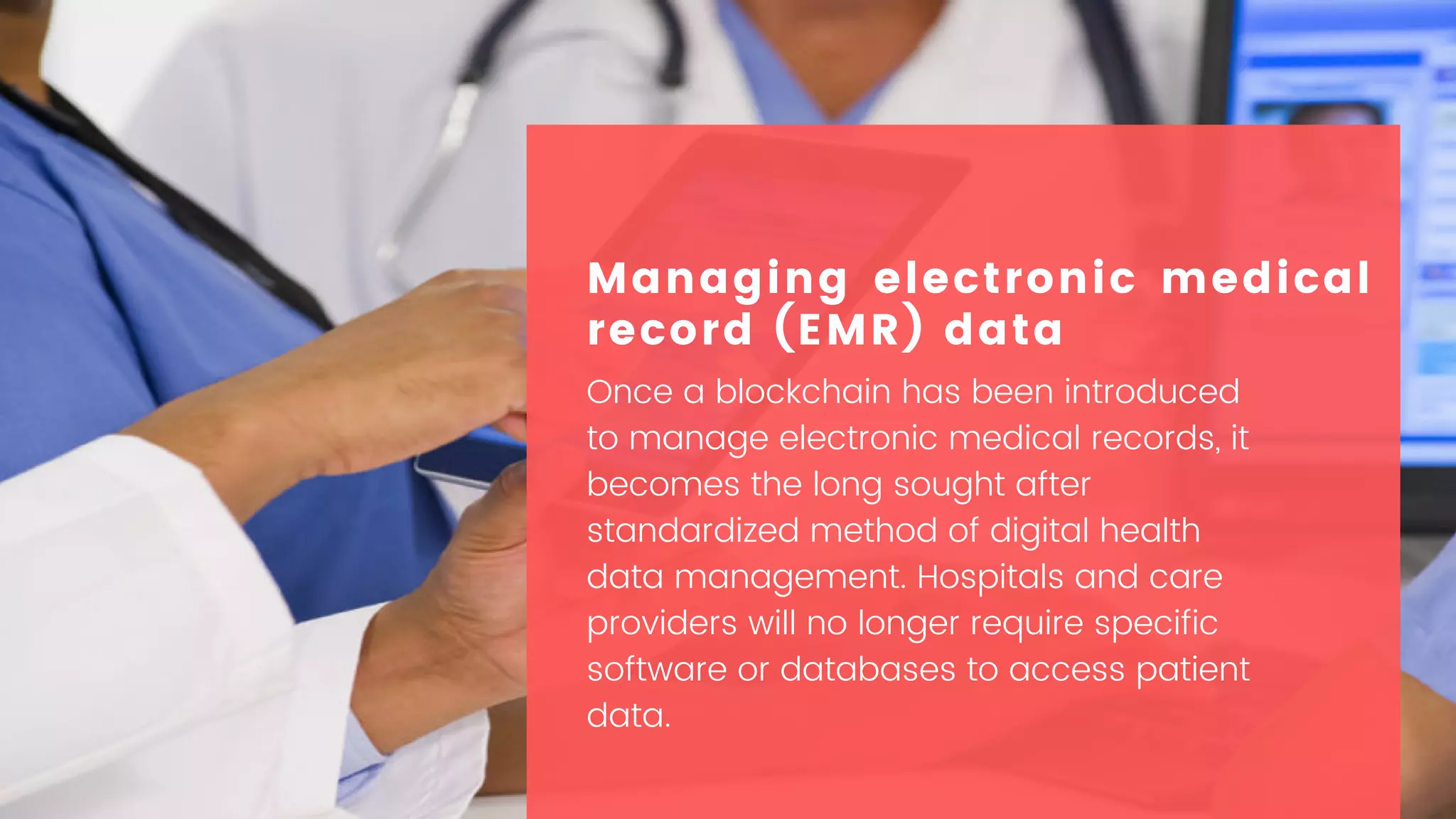
Once a blockchain has been introduced
to manage electronic medical records, it
becomes the long sought after
standardized method of digital health
data management. Hospitals and care
providers will no longer require specific
software or databases to access patient
data.
Managing electronic medical
record (EMR) data
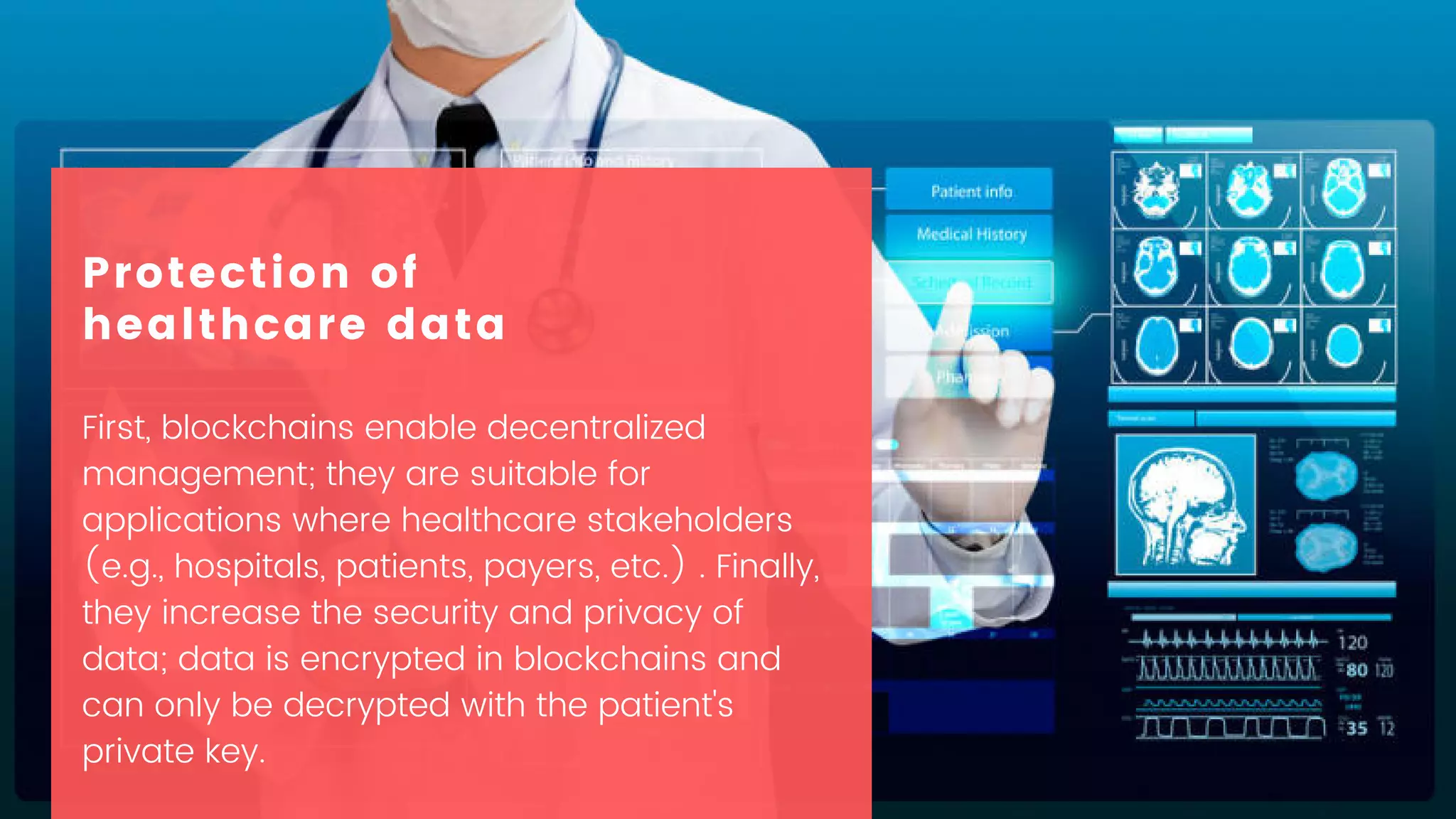
First, blockchains enable decentralized
management; they are suitable for
applications where healthcare stakeholders
(e.g., hospitals, patients, payers, etc.) . Finally,
they increase the security and privacy of
data; data is encrypted in blockchains and
can only be decrypted with the patient's
private key.
Protection of
healthcare data
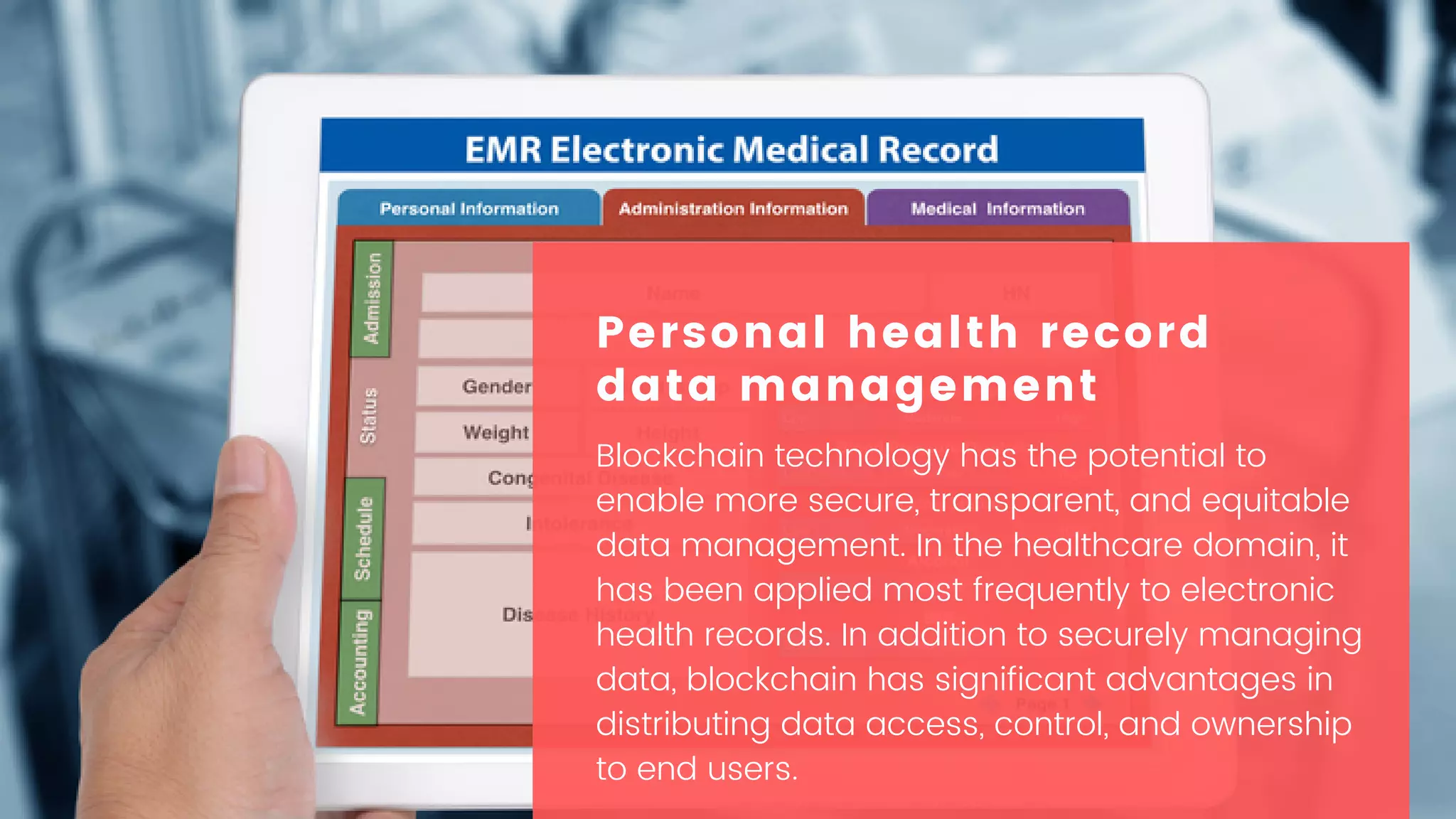
Blockchain technology has the potential to
enable more secure, transparent, and equitable
data management. In the healthcare domain, it
has been applied most frequently to electronic
health records. In addition to securely managing
data, blockchain has significant advantages in
distributing data access, control, and ownership
to end users.
Personal health record
data management
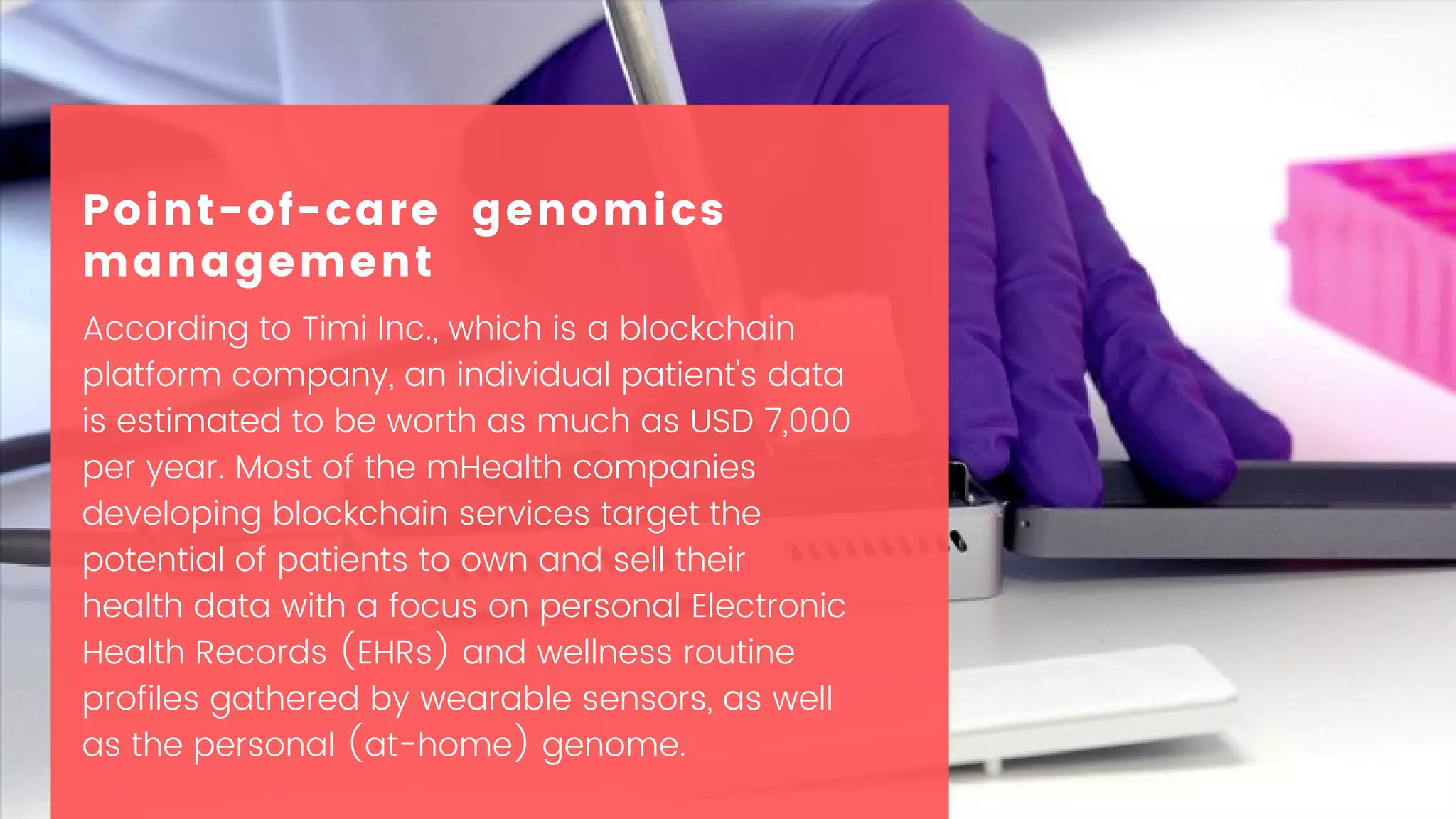
According to Timi Inc., which is a blockchain
platform company, an individual patient's data
is estimated to be worth as much as USD 7,000
per year. Most of the mHealth companies
developing blockchain services target the
potential of patients to own and sell their
health data with a focus on personal Electronic
Health Records (EHRs) and wellness routine
profiles gathered by wearable sensors, as well
as the personal (at-home) genome.
Point-of-care genomics
management
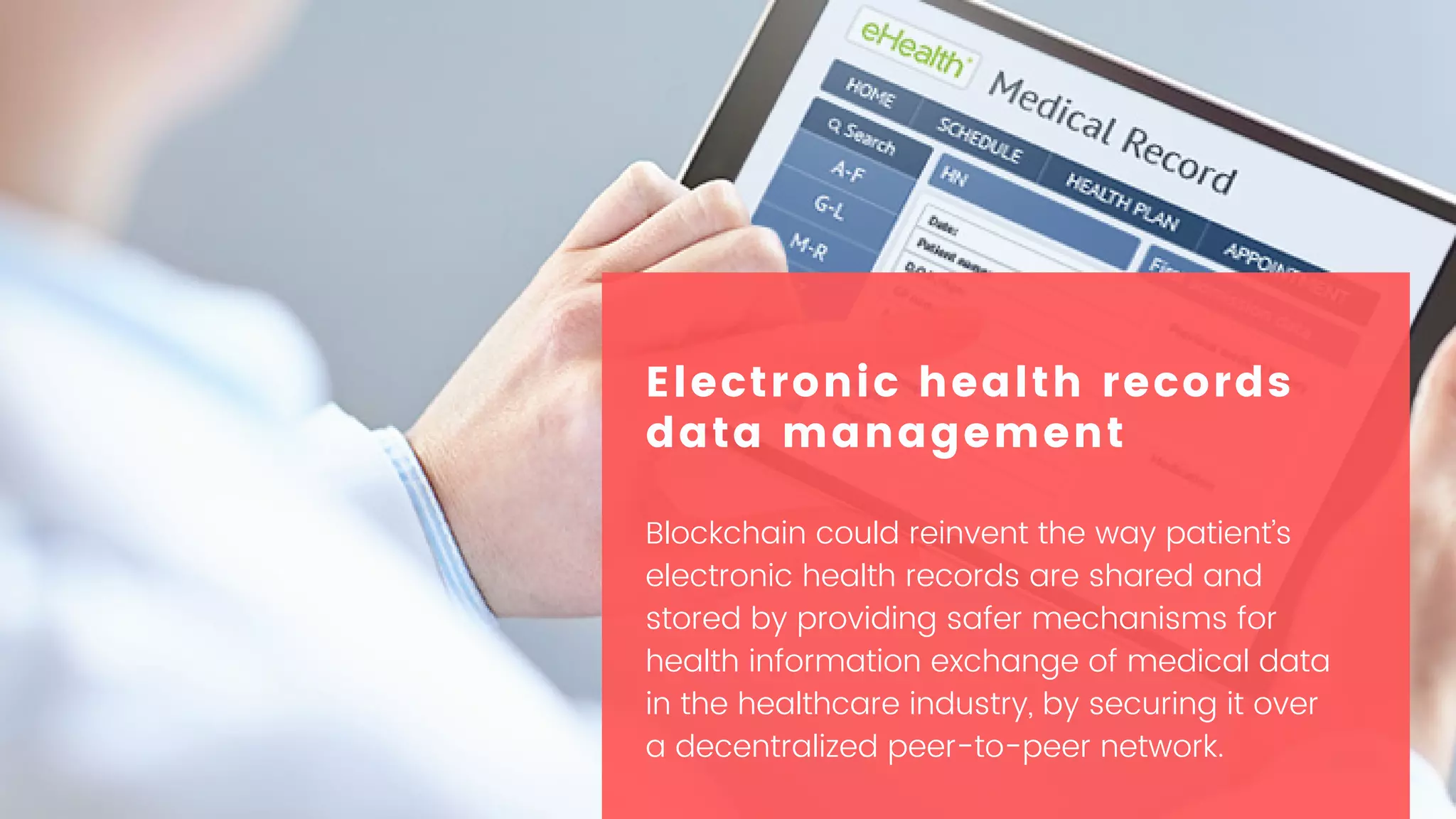
Blockchain could reinvent the way patient’s
electronic health records are shared and
stored by providing safer mechanisms for
health information exchange of medical data
in the healthcare industry, by securing it over
a decentralized peer-to-peer network.
Electronic health records
data management
Our Social
Pages
FACEBOOK
www.facebook.com/tyronesystems
TWITTER
www.twitter.com/tyronesystems
BLOG
www.blog.tyronesystems.com

How blockchain is revolutionising healthcare industry’s challenges of genomic data storage and protection

  • 1.
    How Blockchain is RevolutionisingHealthcare Industry’s Challenges of Genomic Data Storage and Protection? PRESENTED BY TYRONE SYSTEMS
  • 2.
    Once a blockchainhas been introduced to manage electronic medical records, it becomes the long sought after standardized method of digital health data management. Hospitals and care providers will no longer require specific software or databases to access patient data. Managing electronic medical record (EMR) data
  • 3.
    First, blockchains enabledecentralized management; they are suitable for applications where healthcare stakeholders (e.g., hospitals, patients, payers, etc.) . Finally, they increase the security and privacy of data; data is encrypted in blockchains and can only be decrypted with the patient's private key. Protection of healthcare data
  • 4.
    Blockchain technology hasthe potential to enable more secure, transparent, and equitable data management. In the healthcare domain, it has been applied most frequently to electronic health records. In addition to securely managing data, blockchain has significant advantages in distributing data access, control, and ownership to end users. Personal health record data management
  • 5.
    According to TimiInc., which is a blockchain platform company, an individual patient's data is estimated to be worth as much as USD 7,000 per year. Most of the mHealth companies developing blockchain services target the potential of patients to own and sell their health data with a focus on personal Electronic Health Records (EHRs) and wellness routine profiles gathered by wearable sensors, as well as the personal (at-home) genome. Point-of-care genomics management
  • 6.
    Blockchain could reinventthe way patient’s electronic health records are shared and stored by providing safer mechanisms for health information exchange of medical data in the healthcare industry, by securing it over a decentralized peer-to-peer network. Electronic health records data management
  • 7.