
How Artificial Intelligence Ai Assist In Medicine, An Example
Of Different Devices
Dr. Shazia Iqbal
Assistant Professor
Director of Medical Education Unit
VisionCollege of Medicine, Riyadh
siqbal@vision.edu.sa
View my Linkedin Profile
https://www.researchgate.net/profile/Shazia_Iqbal7
https://orcid.org/0000-0003-4890-5864
Objectives:
●Introduction
● history of Artificial intelligence
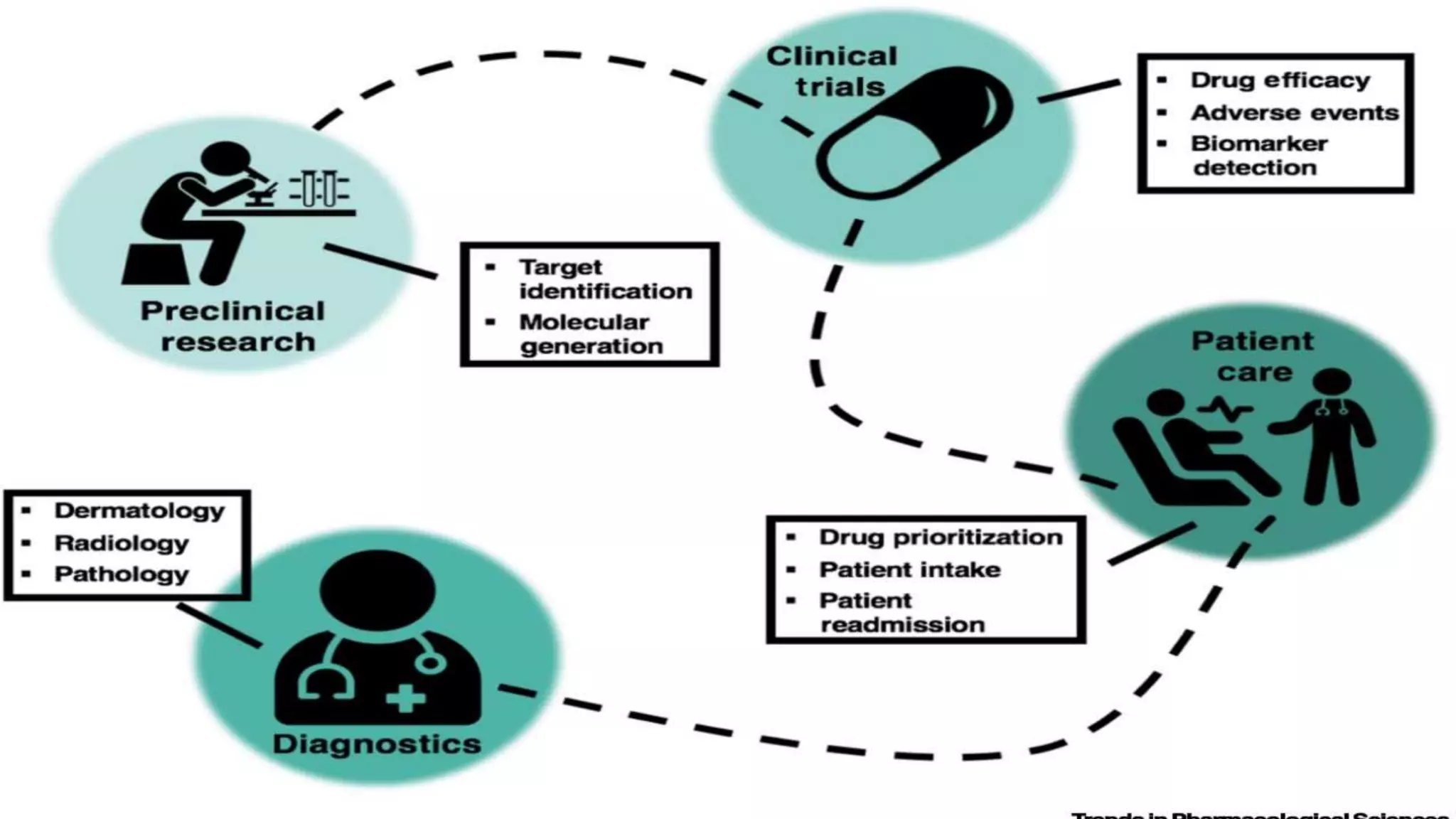
● AI in the medical field
● Example of AI in health care
● Advantages & Challenges and Ethical issues of AI
● AI Future
● Conclusion
● References
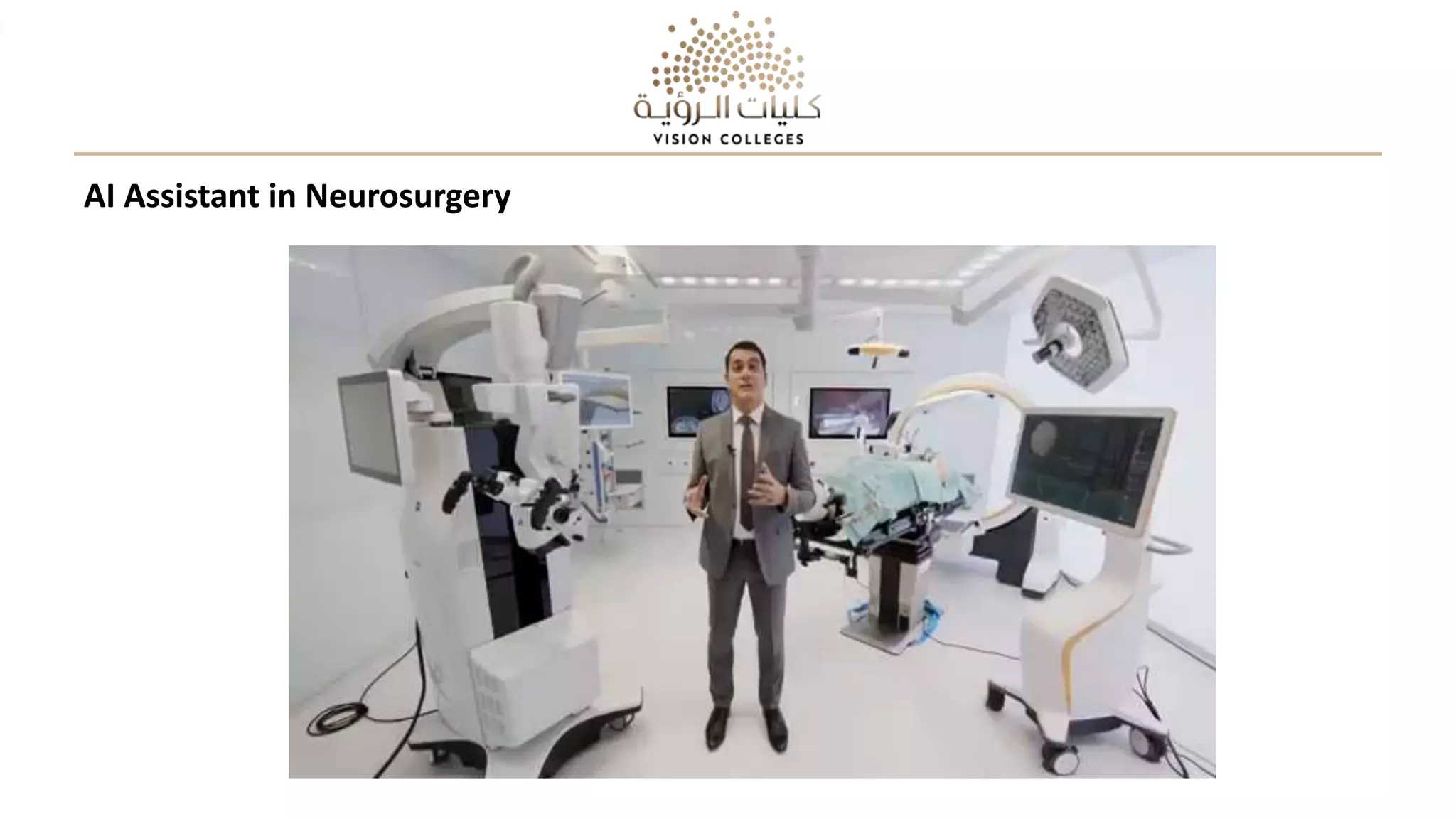
Robots are one of the first-born automated machines, develop to
perform various actions helping humans to complete various daily or
repetitive tasks in a short span of time.
And now using machine learning , robotics developers are
building AI robots that can better understand the various scenarios and
work more efficiently.
Introduction:
The term "Artificial Intelligence" ( AI ) is used to
describe machines that mimic "cognitive" functions
that humans associate with other human minds,
such as "learning" and "problem solving".
Terminology:
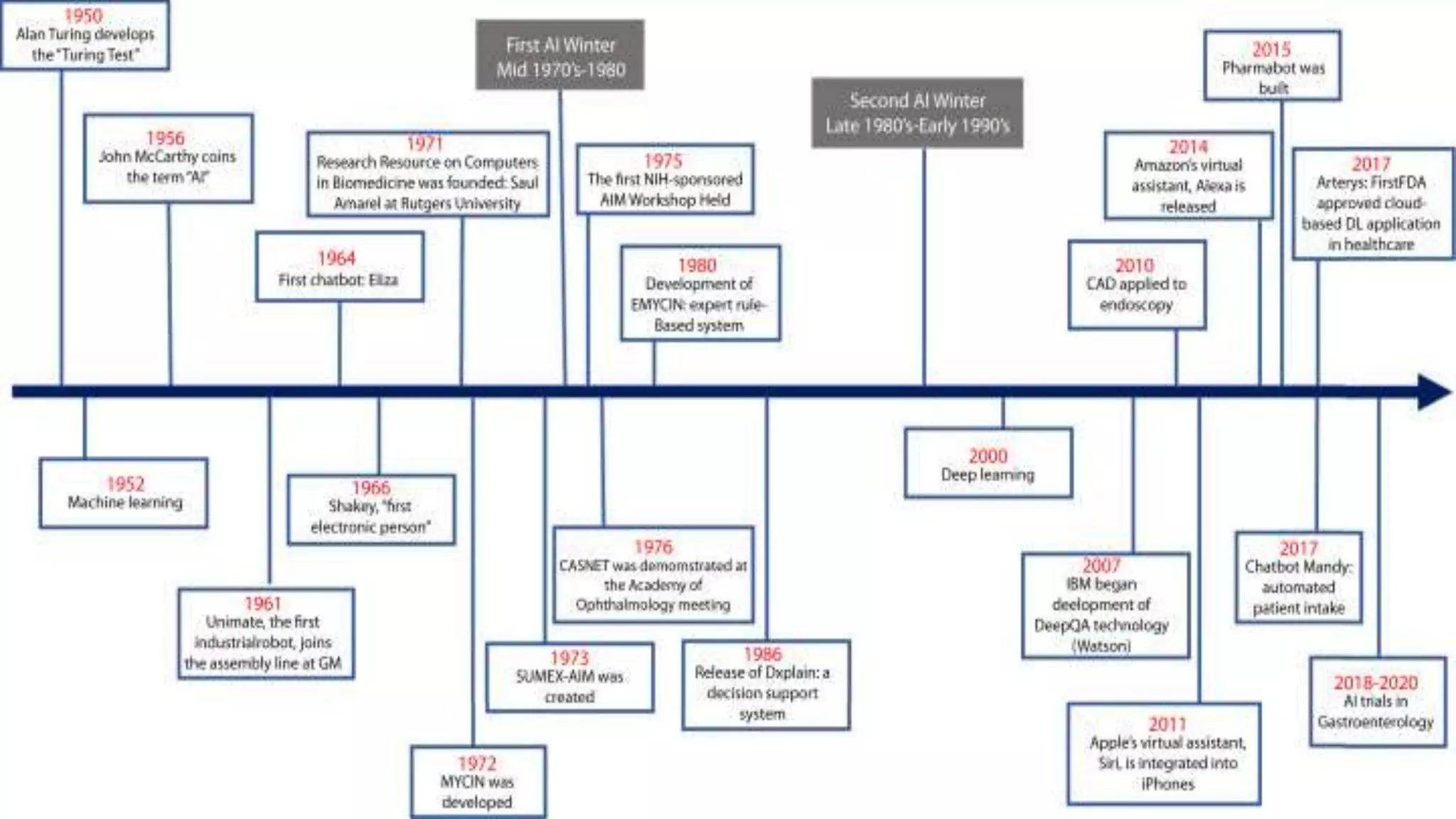
Artificial intelligence (AI) was first described in
1950; however, several limitations in early
models prevented widespread acceptance and
application to medicine. In the early 2000s, many
of these limitations were overcome by the advent
of deep learning
History:
Now that AI systems are capable of analyzing
complex algorithms and self-learning, we enter
a new age in medicine where AI can be applied
to clinical practice through risk assessment
models, improving diagnostic accuracy and
workflow efficiency.
History:
AI In The Medical Field
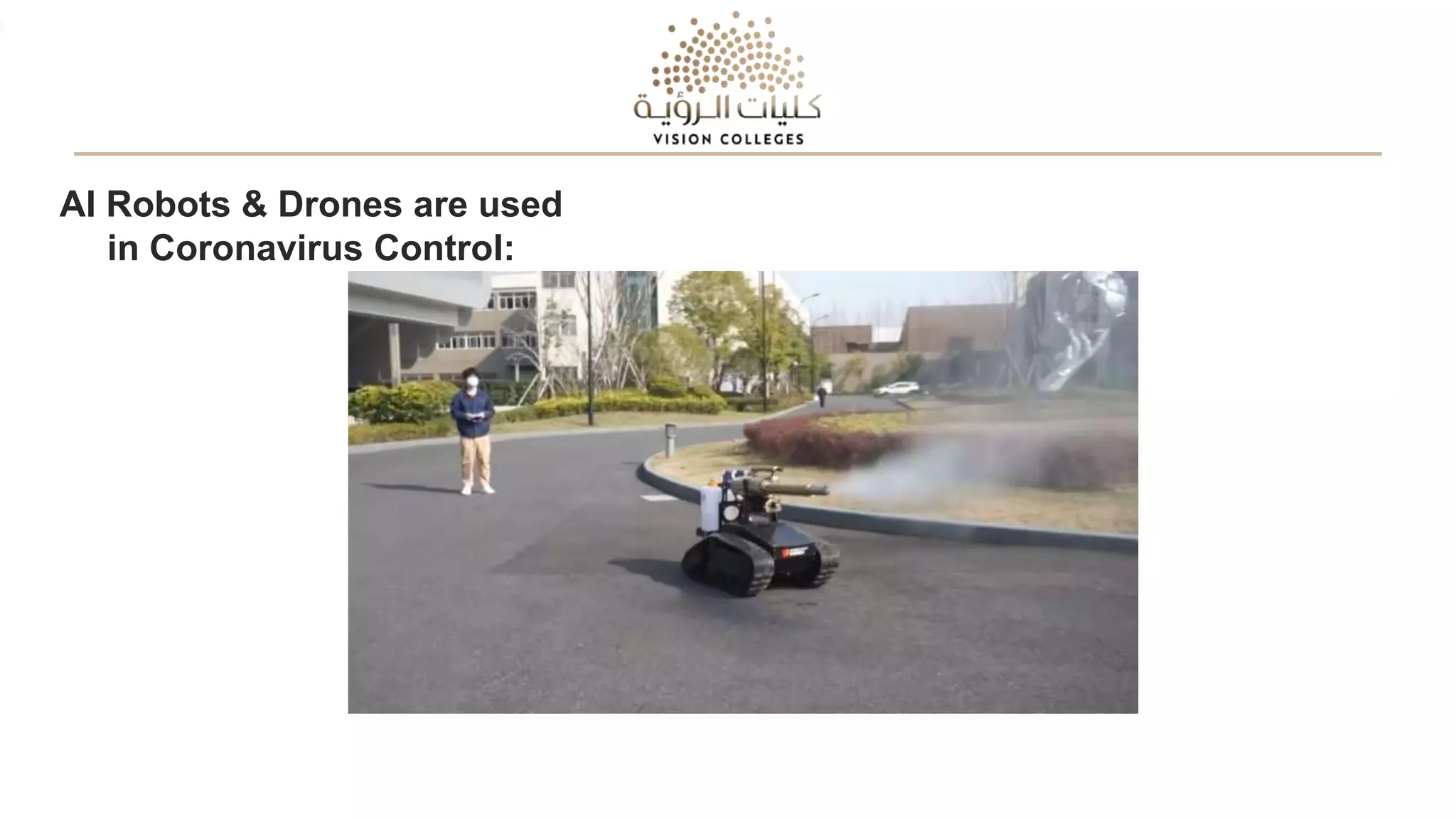
AI Robots & Drones are used in Coronavirus
Control:
AI integrated into the various systems, machines
and devices are making the healthcare system
more automated with an acceptable level of
accuracy.
And if machine learning engineers and data
scientists use more quality healthcare data to
develop such AI models, it would become easier
to predict or combat with such deadly diseases
AI Robots & Drones are used
in Coronavirus Control:
Robots for Transporting the Medical
Supplies:
Medical supplies and other essential items used
in hospitals, or medical centers can be now
supplied by these trained robots. Actually, robots
can be developed with self-navigation technology
, to move in the hospital premises to reach a
patient’s room or other places without human
help.
Robots for Transporting the Medical
Supplies:
Telepresence Physicians:
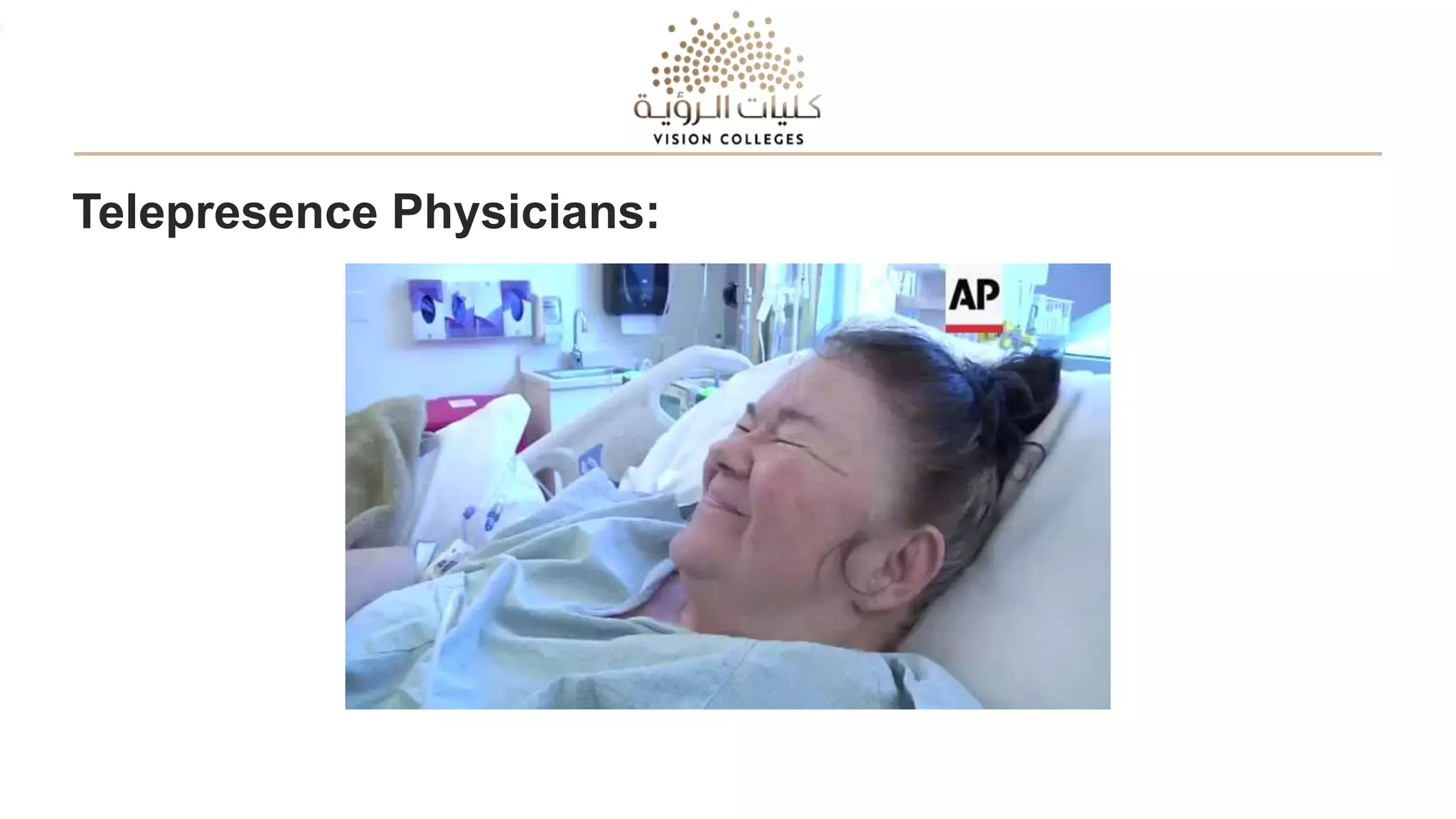
Telepresence physicians —
a kind of virtual reality physician is also used to examine and
treat patients from remote locations or rural areas.
Robots with Telepresence can provide the feeling of getting
consulted with a real doctor, making the two-way
communication possible among them.
Telepresence Physicians:
AI in radiology:
artificial intelligence in radiology is a tool, not a sentient
being. It is an investment into technology that allows for
ongoing improvements to diagnosis and patient care by
supporting the radiologist as they battle increasingly
weighty workloads
AI in radiology:
AI Assistant in Neurosurgery
AI in Dermatology
Artificial Intelligence Advantages:
 Improved accessibility
 Early diagnosis
 Increased speed and reduced costs
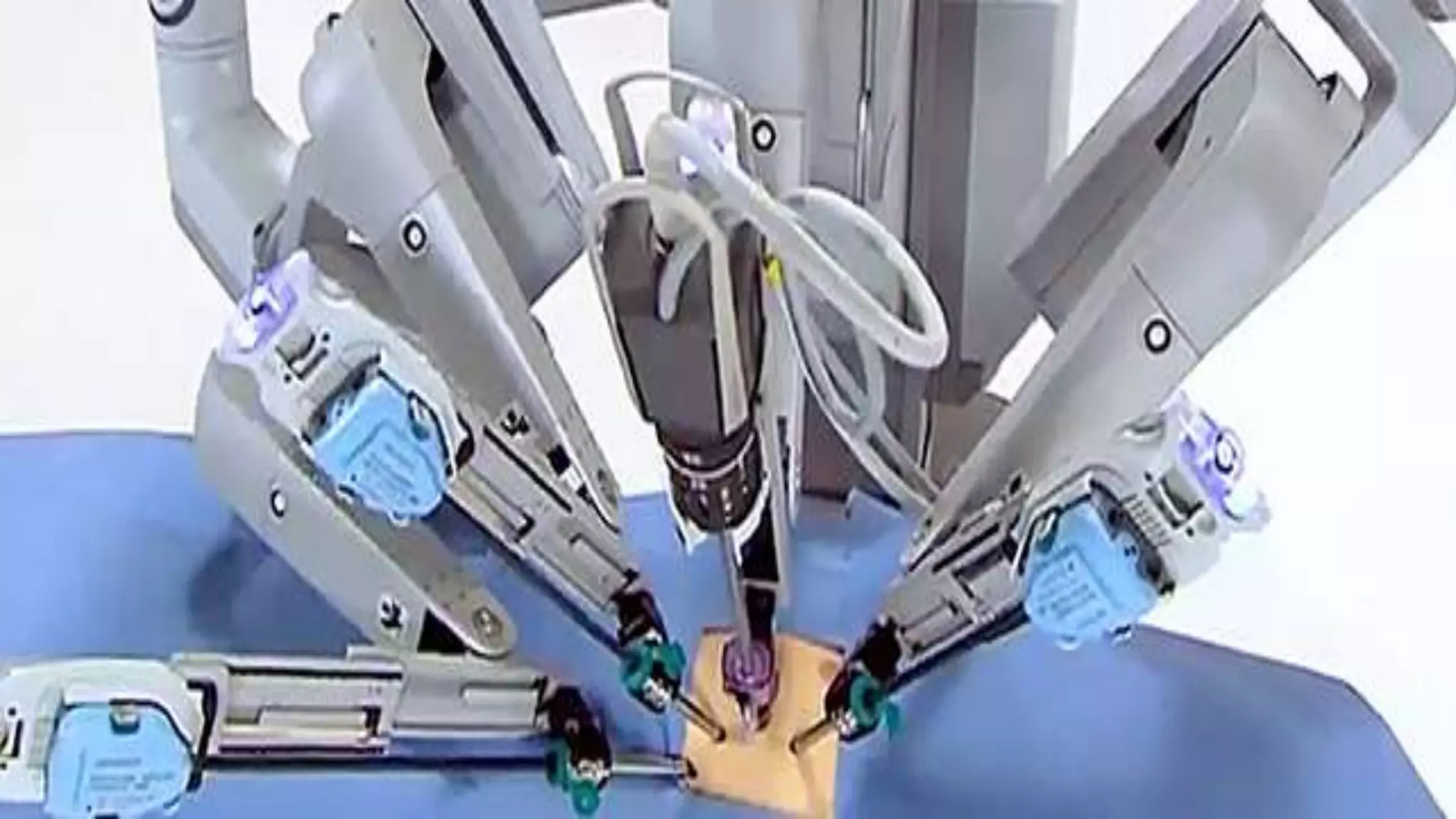
 Unique assistance in surgery
 Support human abilities and mental health
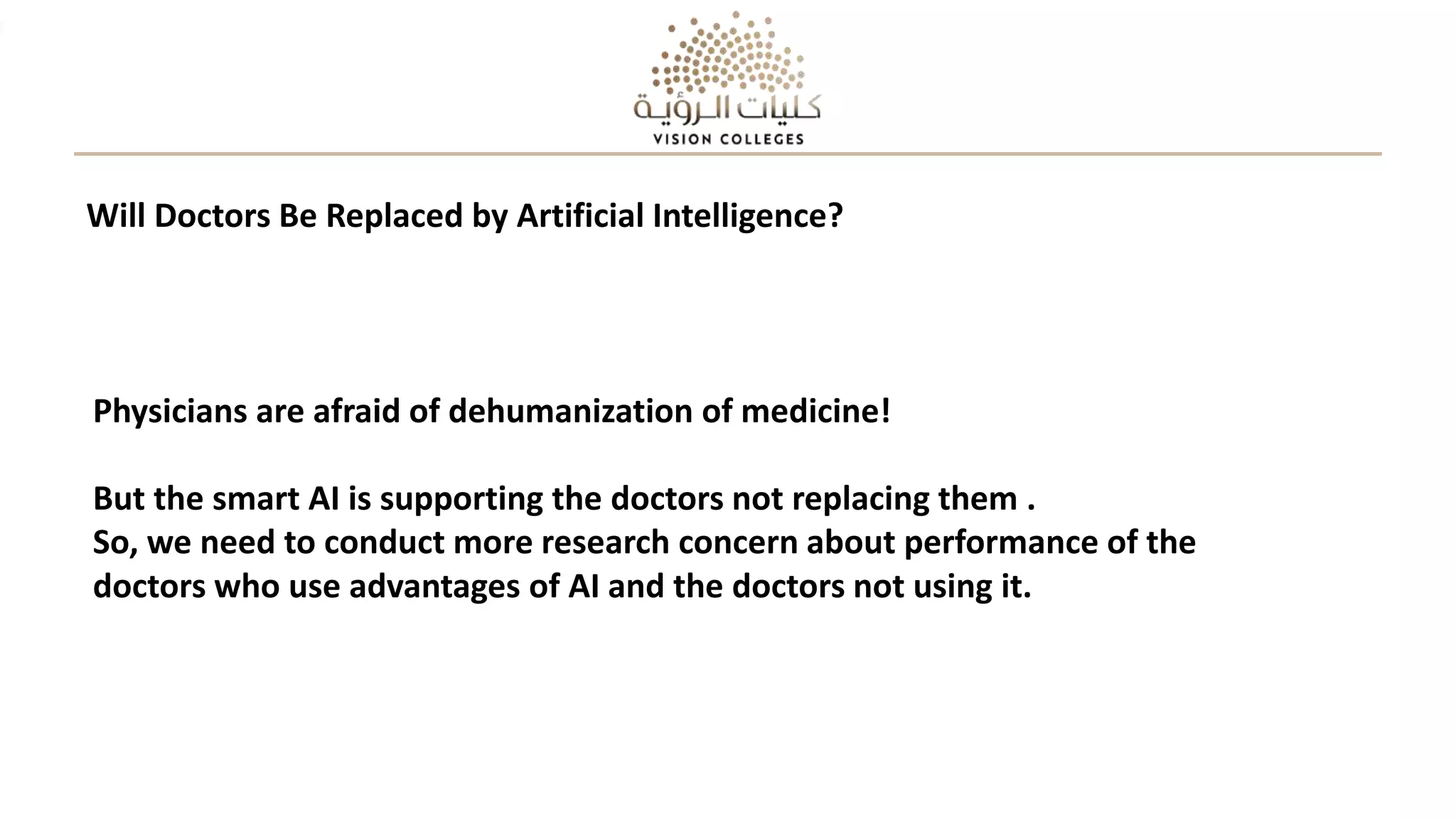
 Unavailable digitization of patients’ records (EHRs)
 Pre-operative planning,
 High costs
 New concepts
 Lack of internet facility at all conditions
 Lack of Governmental strategies
 Safety concerns
 Who will be responsible for harm caused by AI mistakes
 Fear of losing jobs
 Informed consent to use
 Safety and transparency
 Algorithmic fairness and biases
 Data privacy
Challenges & Ethical issues of AI
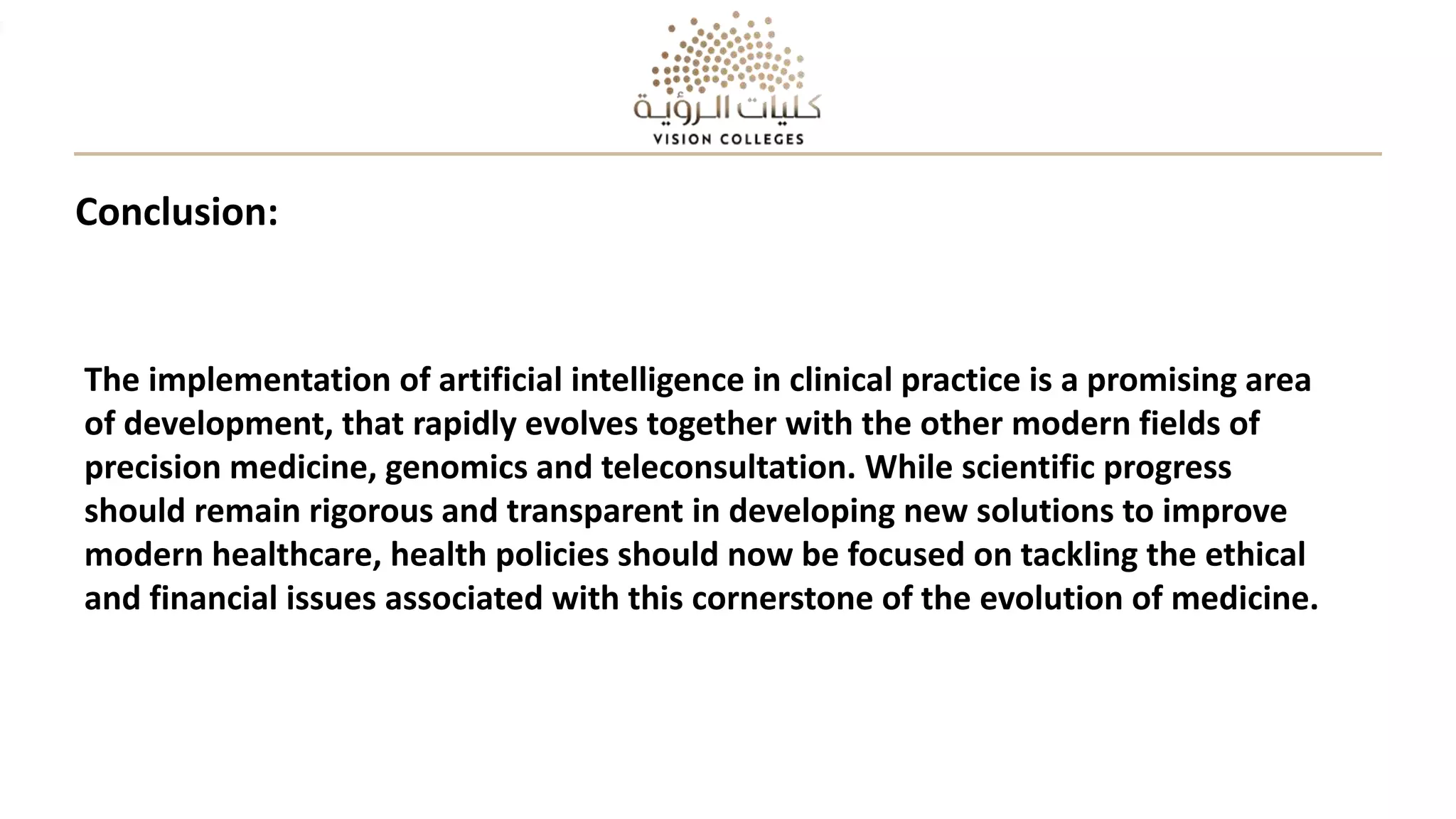
Physicians are afraid of dehumanization of medicine!
But the smart AI is supporting the doctors not replacing them .
So, we need to conduct more research concern about performance of the
doctors who use advantages of AI and the doctors not using it.
Will Doctors Be Replaced by Artificial Intelligence?
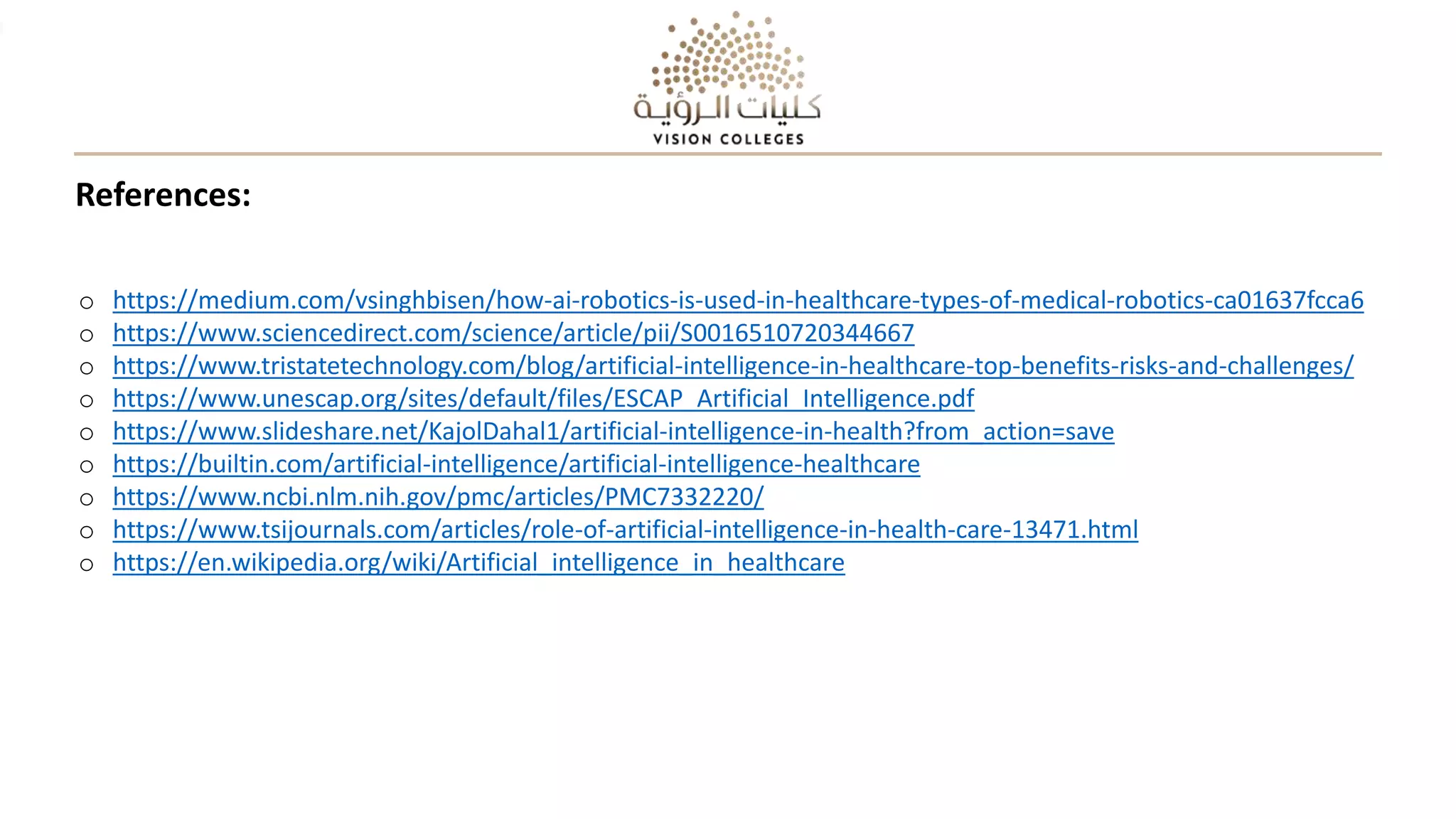
Conclusion:
The implementation of artificial intelligence in clinical practice is a promising area
of development, that rapidly evolves together with the other modern fields of
precision medicine, genomics and teleconsultation. While scientific progress
should remain rigorous and transparent in developing new solutions to improve
modern healthcare, health policies should now be focused on tackling the ethical
and financial issues associated with this cornerstone of the evolution of medicine.
References:
o https://medium.com/vsinghbisen/how-ai-robotics-is-used-in-healthcare-types-of-medical-robotics-ca01637fcca6
o https://www.sciencedirect.com/science/article/pii/S0016510720344667
o https://www.tristatetechnology.com/blog/artificial-intelligence-in-healthcare-top-benefits-risks-and-challenges/
o https://www.unescap.org/sites/default/files/ESCAP_Artificial_Intelligence.pdf
o https://www.slideshare.net/KajolDahal1/artificial-intelligence-in-health?from_action=save
o https://builtin.com/artificial-intelligence/artificial-intelligence-healthcare
o https://www.ncbi.nlm.nih.gov/pmc/articles/PMC7332220/
o https://www.tsijournals.com/articles/role-of-artificial-intelligence-in-health-care-13471.html
o https://en.wikipedia.org/wiki/Artificial_intelligence_in_healthcare

How artificial intelligence ai assist in medicine, an example of diffrent devices 28.4.2021

  • 1.
    How Artificial IntelligenceAi Assist In Medicine, An Example Of Different Devices Dr. Shazia Iqbal Assistant Professor Director of Medical Education Unit VisionCollege of Medicine, Riyadh siqbal@vision.edu.sa View my Linkedin Profile https://www.researchgate.net/profile/Shazia_Iqbal7 https://orcid.org/0000-0003-4890-5864
  • 2.
    Objectives: ●Introduction ● history ofArtificial intelligence ● AI in the medical field ● Example of AI in health care ● Advantages & Challenges and Ethical issues of AI ● AI Future ● Conclusion ● References
  • 3.
    Robots are oneof the first-born automated machines, develop to perform various actions helping humans to complete various daily or repetitive tasks in a short span of time. And now using machine learning , robotics developers are building AI robots that can better understand the various scenarios and work more efficiently. Introduction:
  • 4.
    The term "ArtificialIntelligence" ( AI ) is used to describe machines that mimic "cognitive" functions that humans associate with other human minds, such as "learning" and "problem solving". Terminology:
  • 5.
    Artificial intelligence (AI)was first described in 1950; however, several limitations in early models prevented widespread acceptance and application to medicine. In the early 2000s, many of these limitations were overcome by the advent of deep learning History:
  • 6.
    Now that AIsystems are capable of analyzing complex algorithms and self-learning, we enter a new age in medicine where AI can be applied to clinical practice through risk assessment models, improving diagnostic accuracy and workflow efficiency. History:
  • 8.
    AI In TheMedical Field
  • 10.
    AI Robots &Drones are used in Coronavirus Control: AI integrated into the various systems, machines and devices are making the healthcare system more automated with an acceptable level of accuracy. And if machine learning engineers and data scientists use more quality healthcare data to develop such AI models, it would become easier to predict or combat with such deadly diseases
  • 11.
    AI Robots &Drones are used in Coronavirus Control:
  • 12.
    Robots for Transportingthe Medical Supplies: Medical supplies and other essential items used in hospitals, or medical centers can be now supplied by these trained robots. Actually, robots can be developed with self-navigation technology , to move in the hospital premises to reach a patient’s room or other places without human help.
  • 13.
    Robots for Transportingthe Medical Supplies:
  • 14.
    Telepresence Physicians: Telepresence physicians— a kind of virtual reality physician is also used to examine and treat patients from remote locations or rural areas. Robots with Telepresence can provide the feeling of getting consulted with a real doctor, making the two-way communication possible among them.
  • 15.
  • 16.
    AI in radiology: artificialintelligence in radiology is a tool, not a sentient being. It is an investment into technology that allows for ongoing improvements to diagnosis and patient care by supporting the radiologist as they battle increasingly weighty workloads
  • 17.
  • 19.
    AI Assistant inNeurosurgery
  • 20.
  • 21.
    Artificial Intelligence Advantages: Improved accessibility  Early diagnosis  Increased speed and reduced costs  Unique assistance in surgery  Support human abilities and mental health
  • 22.
     Unavailable digitizationof patients’ records (EHRs)  Pre-operative planning,  High costs  New concepts  Lack of internet facility at all conditions  Lack of Governmental strategies  Safety concerns  Who will be responsible for harm caused by AI mistakes  Fear of losing jobs  Informed consent to use  Safety and transparency  Algorithmic fairness and biases  Data privacy Challenges & Ethical issues of AI
  • 23.
    Physicians are afraidof dehumanization of medicine! But the smart AI is supporting the doctors not replacing them . So, we need to conduct more research concern about performance of the doctors who use advantages of AI and the doctors not using it. Will Doctors Be Replaced by Artificial Intelligence?
  • 24.
    Conclusion: The implementation ofartificial intelligence in clinical practice is a promising area of development, that rapidly evolves together with the other modern fields of precision medicine, genomics and teleconsultation. While scientific progress should remain rigorous and transparent in developing new solutions to improve modern healthcare, health policies should now be focused on tackling the ethical and financial issues associated with this cornerstone of the evolution of medicine.
  • 25.
    References: o https://medium.com/vsinghbisen/how-ai-robotics-is-used-in-healthcare-types-of-medical-robotics-ca01637fcca6 o https://www.sciencedirect.com/science/article/pii/S0016510720344667 ohttps://www.tristatetechnology.com/blog/artificial-intelligence-in-healthcare-top-benefits-risks-and-challenges/ o https://www.unescap.org/sites/default/files/ESCAP_Artificial_Intelligence.pdf o https://www.slideshare.net/KajolDahal1/artificial-intelligence-in-health?from_action=save o https://builtin.com/artificial-intelligence/artificial-intelligence-healthcare o https://www.ncbi.nlm.nih.gov/pmc/articles/PMC7332220/ o https://www.tsijournals.com/articles/role-of-artificial-intelligence-in-health-care-13471.html o https://en.wikipedia.org/wiki/Artificial_intelligence_in_healthcare