











AI is increasingly being used in the healthcare sector to address various challenges. It has applications ranging from early disease detection using medical data mining to aiding drug discovery. While major technology companies like IBM, Google, and Microsoft are actively working on developing AI solutions for healthcare, there are also numerous startups in this space. However, adoption of AI in healthcare is still at an early stage due to challenges like lack of digitization of patient records in some regions and fears around job losses. As more data becomes available and technologies advance, AI is expected to play a transformative role in improving healthcare outcomes and efficiency.
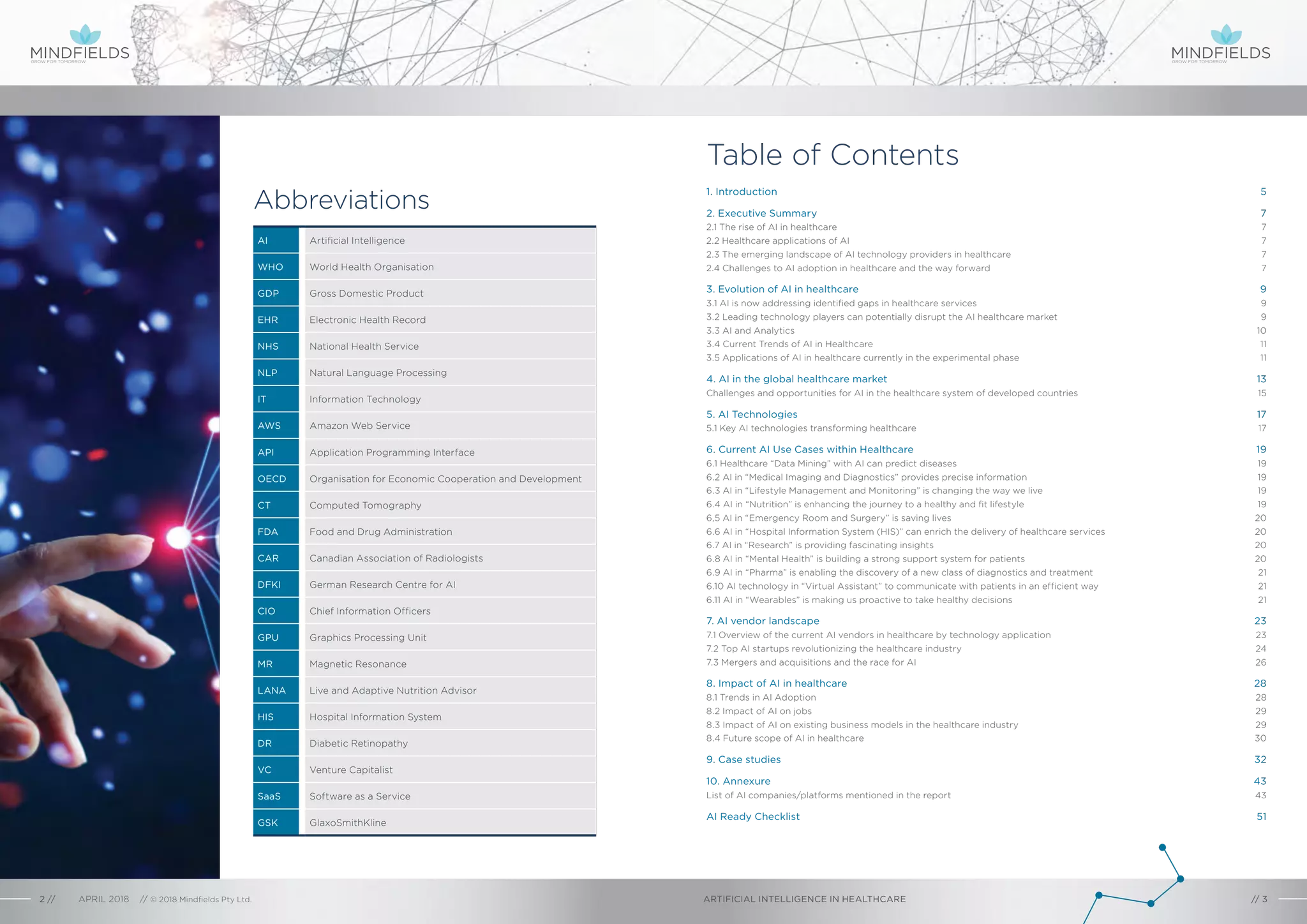
Introduces AI's impact on healthcare. Discusses its transformative potential, key players like IBM and Google, and advancements in patient-centered care.
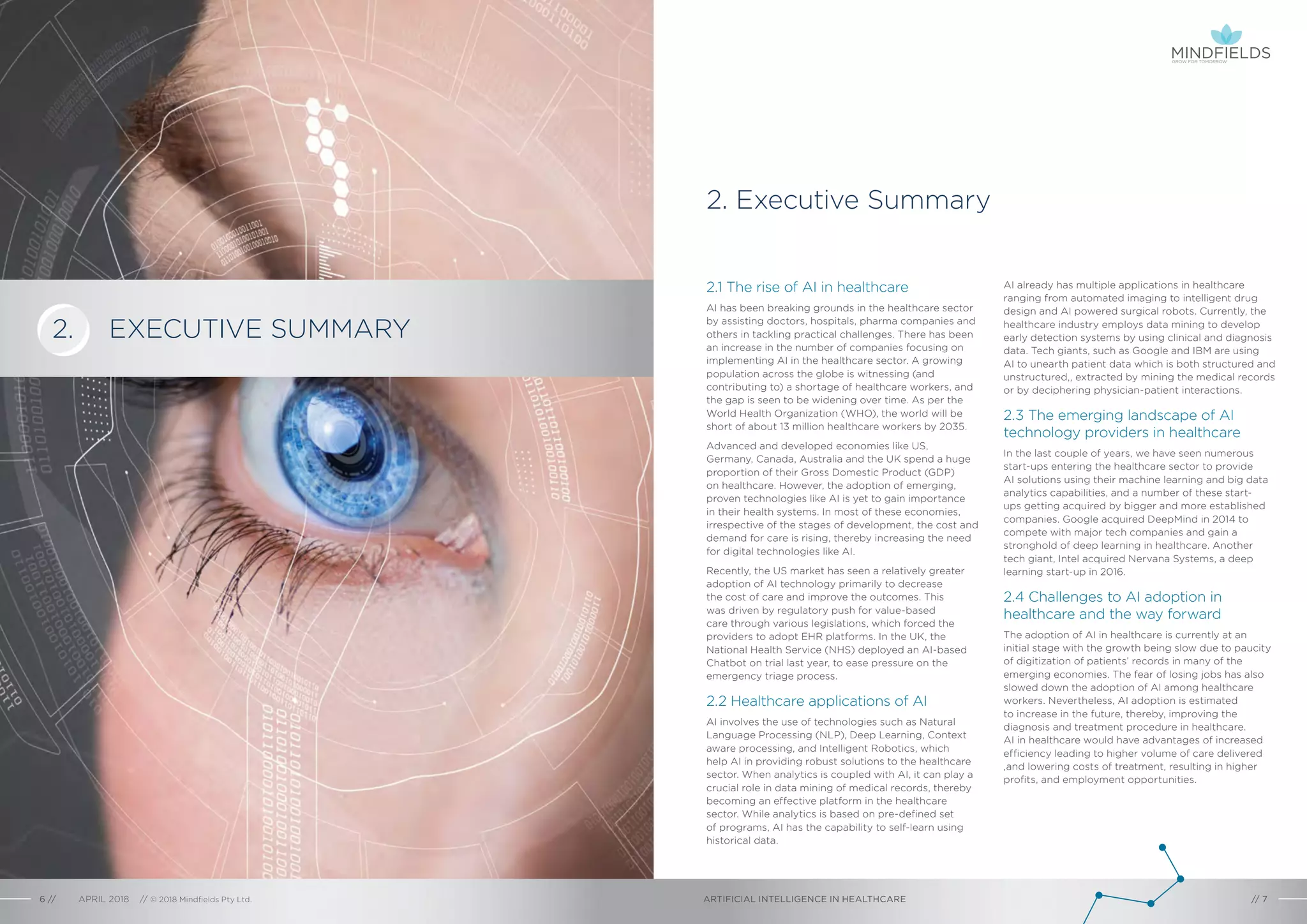
Details the rise of AI applications such as drug design and diagnostics. Outlines challenges like job loss fears and slow adoption due to data digitization.
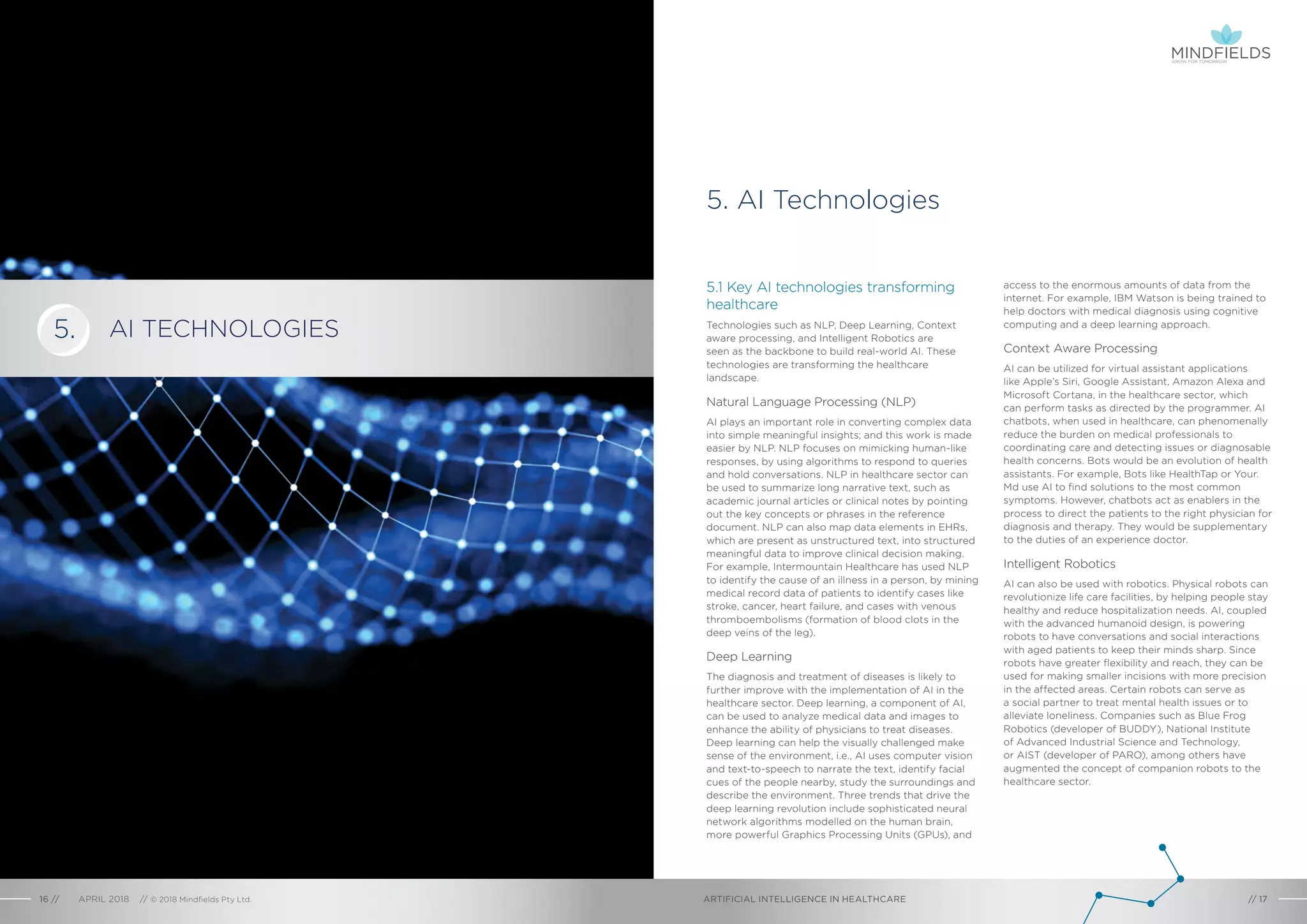
Explains how AI technologies like NLP and Deep Learning are reshaping healthcare. Prospective applications include diagnostics, drug discovery, and patient management.
Highlights AI use cases across diagnostics, surgery, hospital administration, mental health support, and personalized medicine based on current industrial examples.
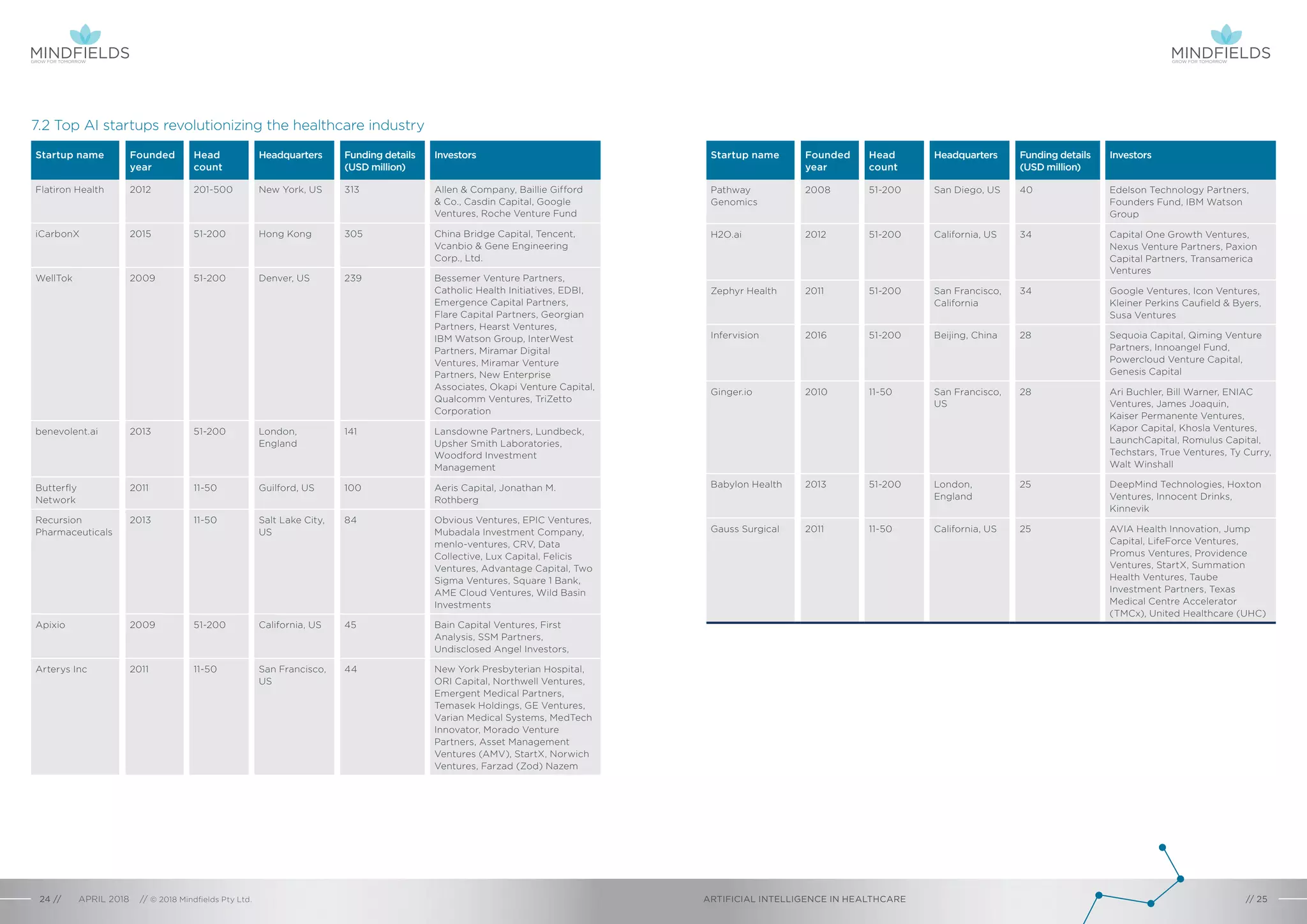
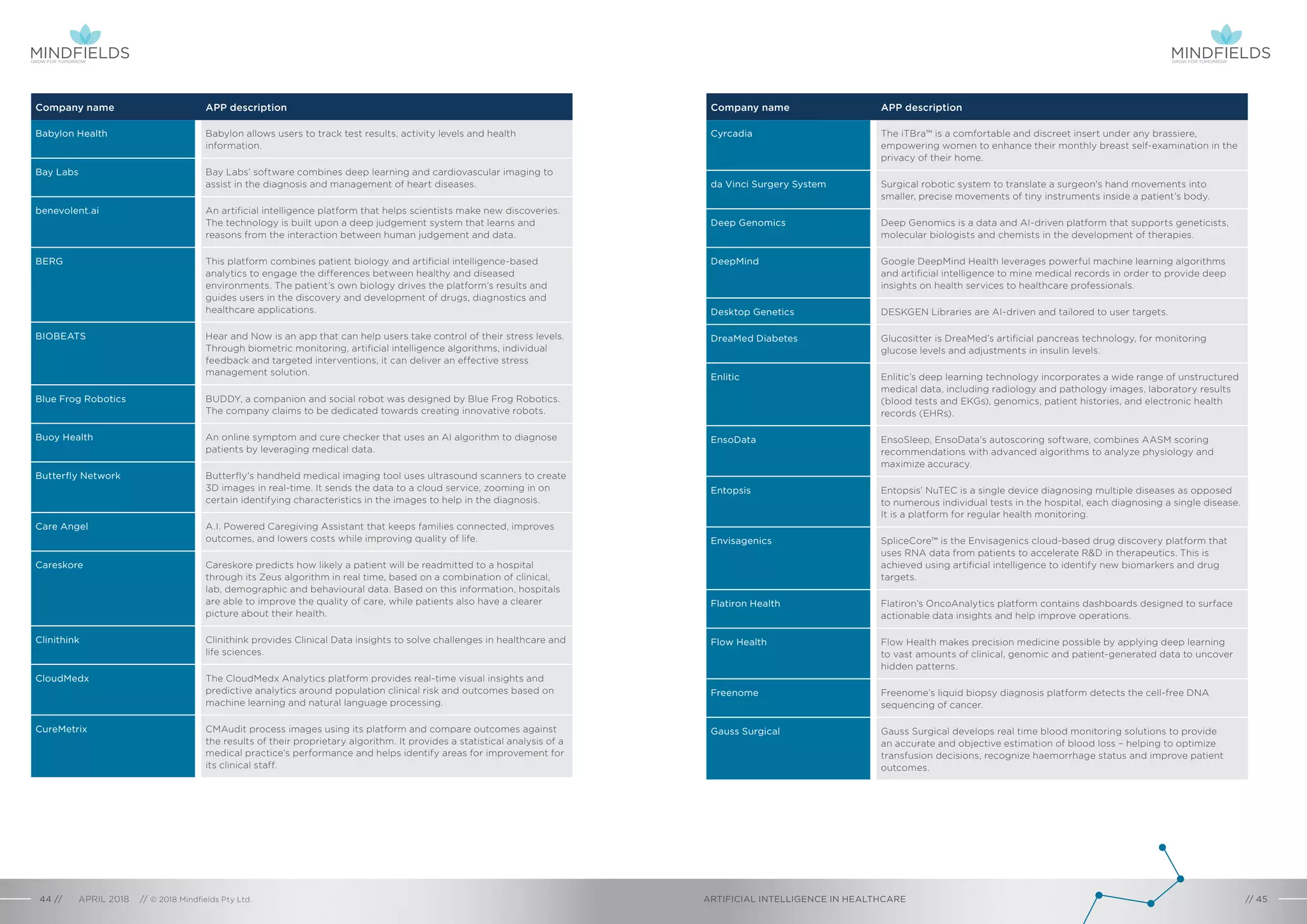
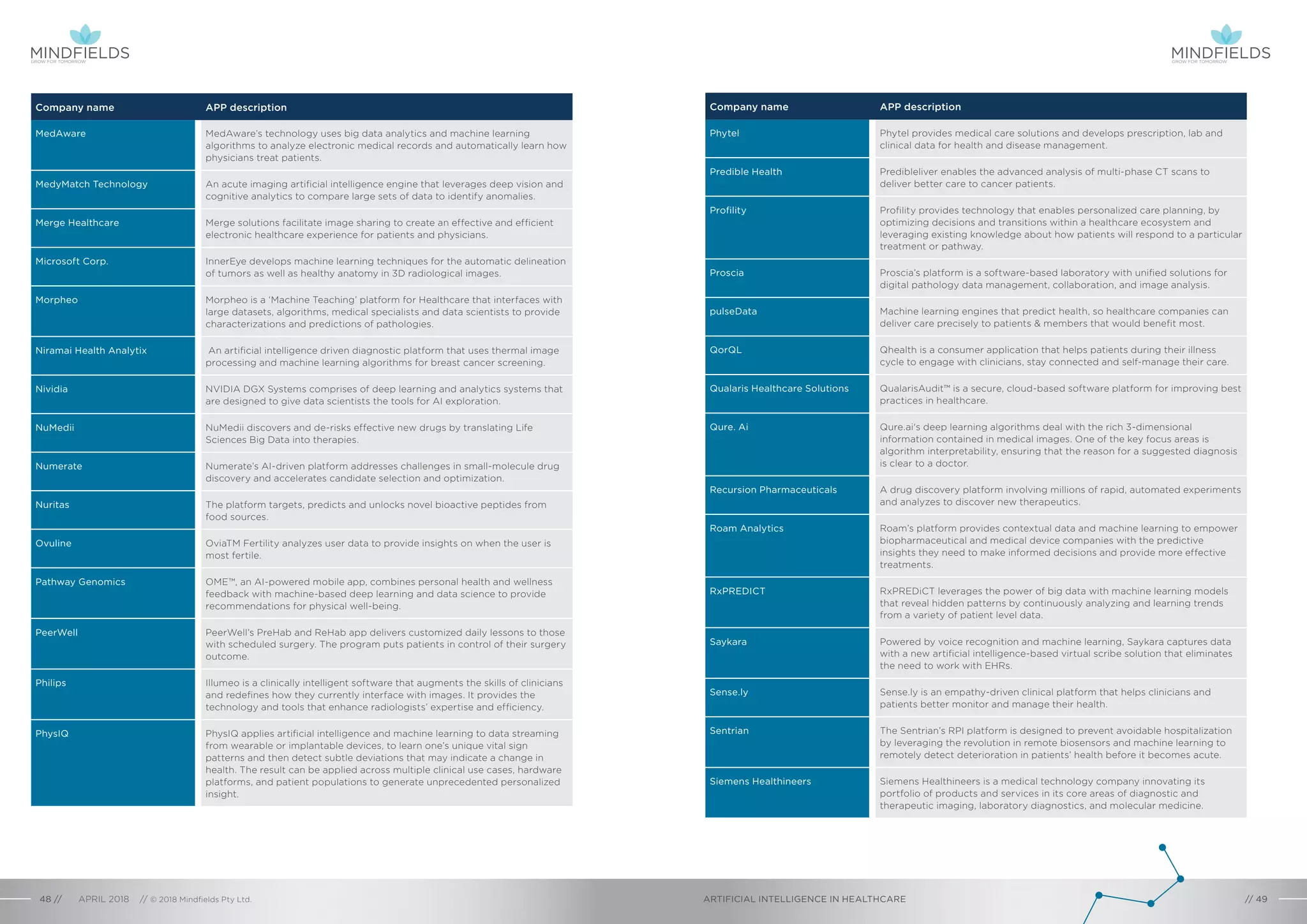
Discusses the landscape of AI vendors and startups, their roles in healthcare innovation, and key mergers and acquisitions in the industry.
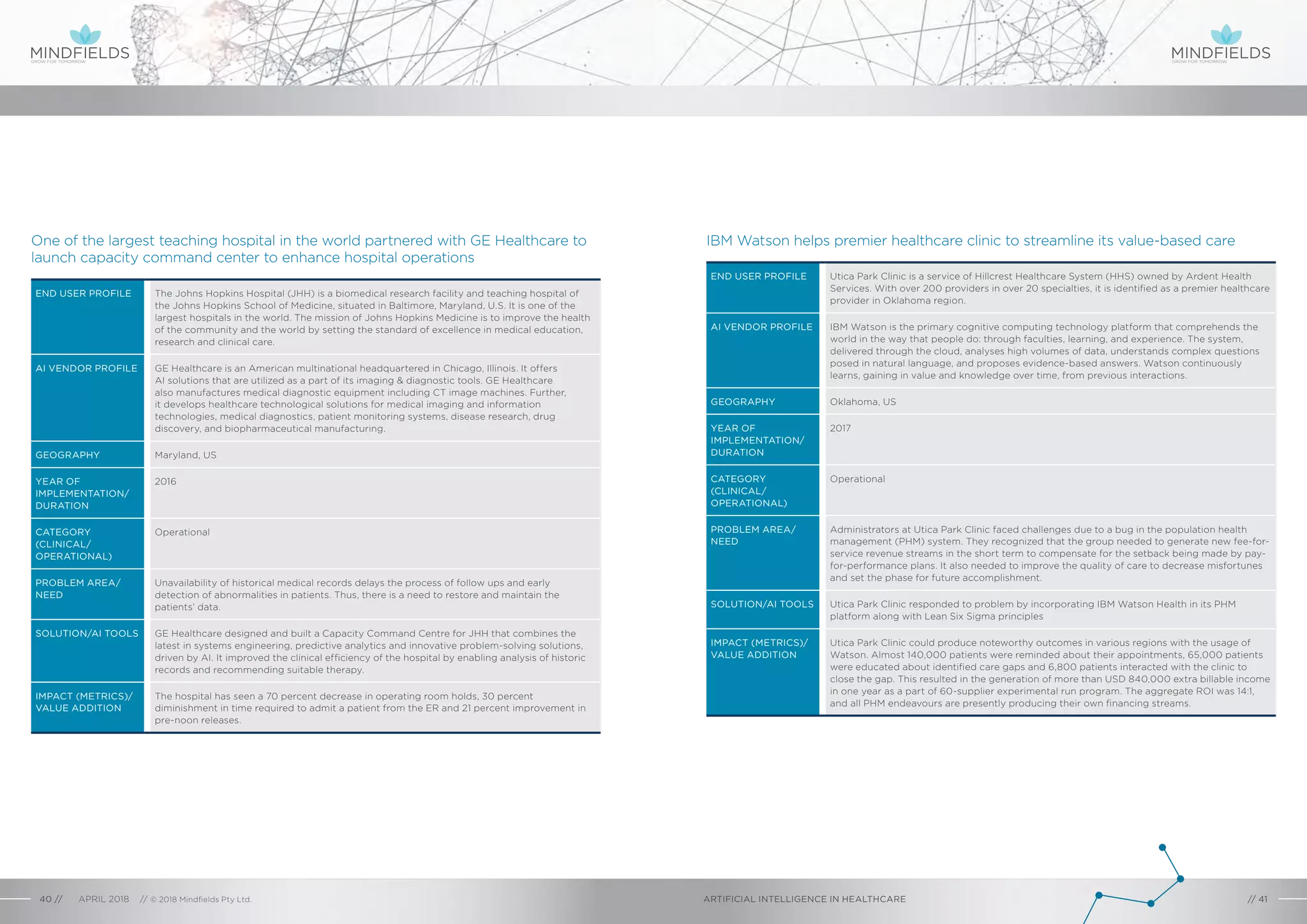
Examines AI's influence on healthcare operations, patient care enhancement, and overall workforce dynamics. Features case studies of successful AI implementations.
Provides a list of notable AI companies and platforms, alongside relevant contact information to support healthcare organizations in leveraging AI.


![Vibe Coding vs. Spec-Driven Development [Free Meetup]](https://cdn.slidesharecdn.com/ss_thumbnails/vibecodingvsspecdrivendevelopment-251209105622-43f455e7-thumbnail.jpg?width=640&height=640&fit=bounds)


