CONSTIPATION
      &
 Colon Cancer
What is Constipation?

• Constipation is a condition of the digestive
  system. The sufferer has hard feces that
  are difficult to expel. In most cases, this
  occurs because the colon has absorbed
  too much of the water from the food that is
  in the colon.
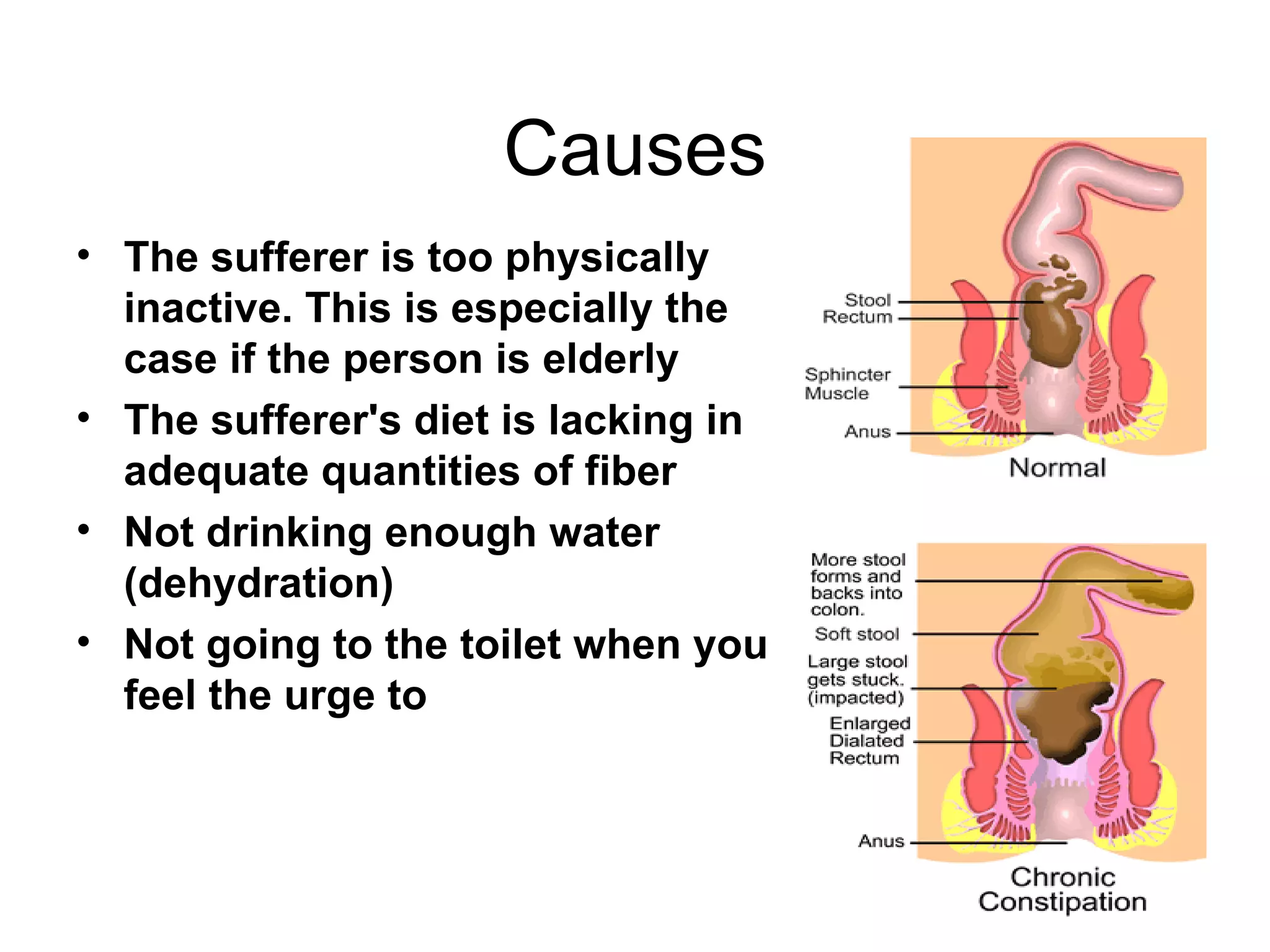
Causes
• The sufferer is too physically
  inactive. This is especially the
  case if the person is elderly
• The sufferer's diet is lacking in
  adequate quantities of fiber
• Not drinking enough water
  (dehydration)
• Not going to the toilet when you
  feel the urge to
What is the treatment for
           constipation?

• It is important to remember that the
  necessity to defecate at least once a day
  is a myth. Constipation happens when you
  want to go but are unable to evacuate the
  feces. In the majority of cases,
  constipation resolves itself without any
  treatment or risk to health.
Constipation in Older Adults
• Multiple medications may decrease peristalsis,
  cause water loss and interfere with intestinal
  absorption.
• Limited mobility or exercise
• Low intake of dietary fiber
• Difficulty with chewing, swallowing or ingesting
• Daily stool softeners suggested but regular
  laxatives should be avoided.
• Caution: Loose watery stools may not be
  diarrhea – could be severe constipation with
  leakage of H2O around blockage.
  – Assess for fecal impaction.
• Colon
  Cancer
What is Colon Cancer?
   Colon cancer is a common type of malignancy (cancer)
  in which there is uncontrolled growth of the cells that line
  the inside of the colon or rectum. Colon cancer is also
  called colorectal cancer.


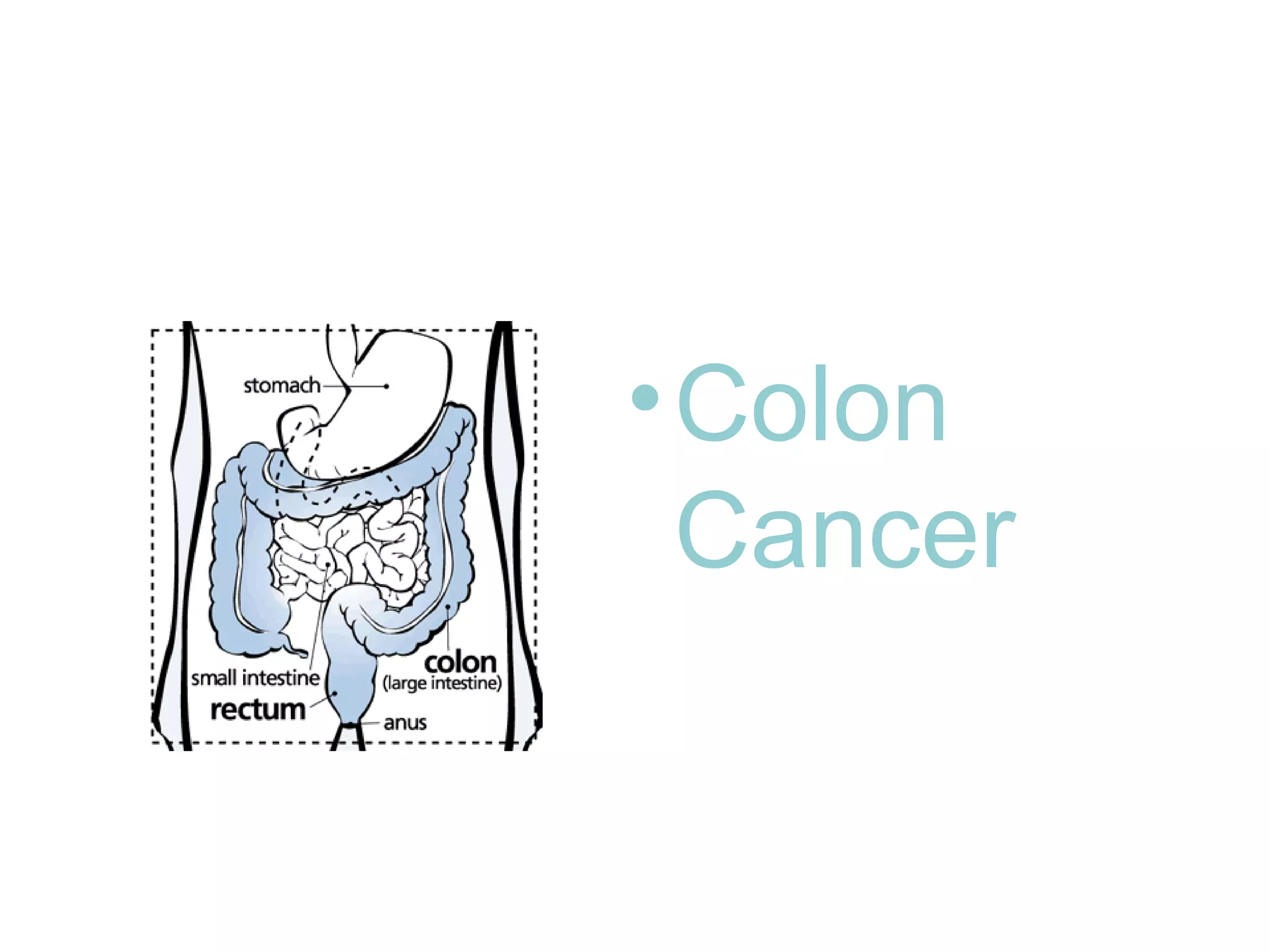
• The colon, also known as the large intestine, is the last
  part of the digestive tract.
• The rectum is the very end of the large intestine that
  opens at the anus.
What Causes Colon Cancer?

There are several causes for colorectal cancer
as well as factors that place certain individuals at
increased risk for the disease. There are known
genetic and environmental factors.
What Causes Colon Cancer?

People at risk for colorectal cancer:

• The biggest risk factor is age. Colon cancer is rare in
  those under 40 years. The rate of colorectal cancer
  detection begins to increase after age 40. Most
  colorectal cancer is diagnosed in those over 60 years.
• Have a diet high in fat and low in fiber.
• Have history of benign growths, such as polyps, that
  have been surgically removed.
• Have a prior history of colon or rectal cancer.
• Have disease or condition linked with increased risk.
Family History and the Role of
             Genetics
• You have a higher risk of developing
  colorectal cancer if:
  – One or more immediate family members were
    diagnosed with colorectal, uterine, or stomach
    cancer
  – Immediate family members include:
     • Parent
     • Sibling
     • Child
How long does it take cancer to develop,
     and what are your chances?
• In most people, colorectal cancers
  develop slowly over a period of several
  years.
  – 10 to 20 years
• Chances of developing colorectal cancer
  sometime in your life:
  – A man has a 1 in 17 chance.
  – A woman has a 1 in 18 chance.
Why does it develop?
• Colorectal cancer usually begins as a non-
  cancerous (or benign) polyp.
• A polyp
  – is a growth inside the colon or rectum that is
    not normal.
  – can be several types.
  – is not always cancerous.
Done by:
Sadman, Leonard

Home Econs

  • 1.
    CONSTIPATION & Colon Cancer
  • 2.
    What is Constipation? •Constipation is a condition of the digestive system. The sufferer has hard feces that are difficult to expel. In most cases, this occurs because the colon has absorbed too much of the water from the food that is in the colon.
  • 3.
    Causes • The suffereris too physically inactive. This is especially the case if the person is elderly • The sufferer's diet is lacking in adequate quantities of fiber • Not drinking enough water (dehydration) • Not going to the toilet when you feel the urge to
  • 4.
    What is thetreatment for constipation? • It is important to remember that the necessity to defecate at least once a day is a myth. Constipation happens when you want to go but are unable to evacuate the feces. In the majority of cases, constipation resolves itself without any treatment or risk to health.
  • 5.
    Constipation in OlderAdults • Multiple medications may decrease peristalsis, cause water loss and interfere with intestinal absorption. • Limited mobility or exercise • Low intake of dietary fiber • Difficulty with chewing, swallowing or ingesting • Daily stool softeners suggested but regular laxatives should be avoided. • Caution: Loose watery stools may not be diarrhea – could be severe constipation with leakage of H2O around blockage. – Assess for fecal impaction.
  • 6.
    • Colon Cancer
  • 7.
    What is ColonCancer? Colon cancer is a common type of malignancy (cancer) in which there is uncontrolled growth of the cells that line the inside of the colon or rectum. Colon cancer is also called colorectal cancer. • The colon, also known as the large intestine, is the last part of the digestive tract. • The rectum is the very end of the large intestine that opens at the anus.
  • 8.
    What Causes ColonCancer? There are several causes for colorectal cancer as well as factors that place certain individuals at increased risk for the disease. There are known genetic and environmental factors.
  • 9.
    What Causes ColonCancer? People at risk for colorectal cancer: • The biggest risk factor is age. Colon cancer is rare in those under 40 years. The rate of colorectal cancer detection begins to increase after age 40. Most colorectal cancer is diagnosed in those over 60 years. • Have a diet high in fat and low in fiber. • Have history of benign growths, such as polyps, that have been surgically removed. • Have a prior history of colon or rectal cancer. • Have disease or condition linked with increased risk.
  • 10.
    Family History andthe Role of Genetics • You have a higher risk of developing colorectal cancer if: – One or more immediate family members were diagnosed with colorectal, uterine, or stomach cancer – Immediate family members include: • Parent • Sibling • Child
  • 11.
    How long doesit take cancer to develop, and what are your chances? • In most people, colorectal cancers develop slowly over a period of several years. – 10 to 20 years • Chances of developing colorectal cancer sometime in your life: – A man has a 1 in 17 chance. – A woman has a 1 in 18 chance.
  • 12.
    Why does itdevelop? • Colorectal cancer usually begins as a non- cancerous (or benign) polyp. • A polyp – is a growth inside the colon or rectum that is not normal. – can be several types. – is not always cancerous.
  • 13.