.
• There are many urologic disorders and diseases. The following are a selection
of some of the diseases identified by the American Urological Association
Foundation (AUAF) as common.
• Benign prostatic hyperplasia (BPH) is an enlarged prostate. It is an increase in
the size of the prostate gland. BPH is very common in older men. It is not
caused by prostate cancer.
• The symptoms of BPH are due to the pressure that a larger prostate can place
on the urethra. The urethra is the narrow tube that carries urine from the
bladder and out of the body.
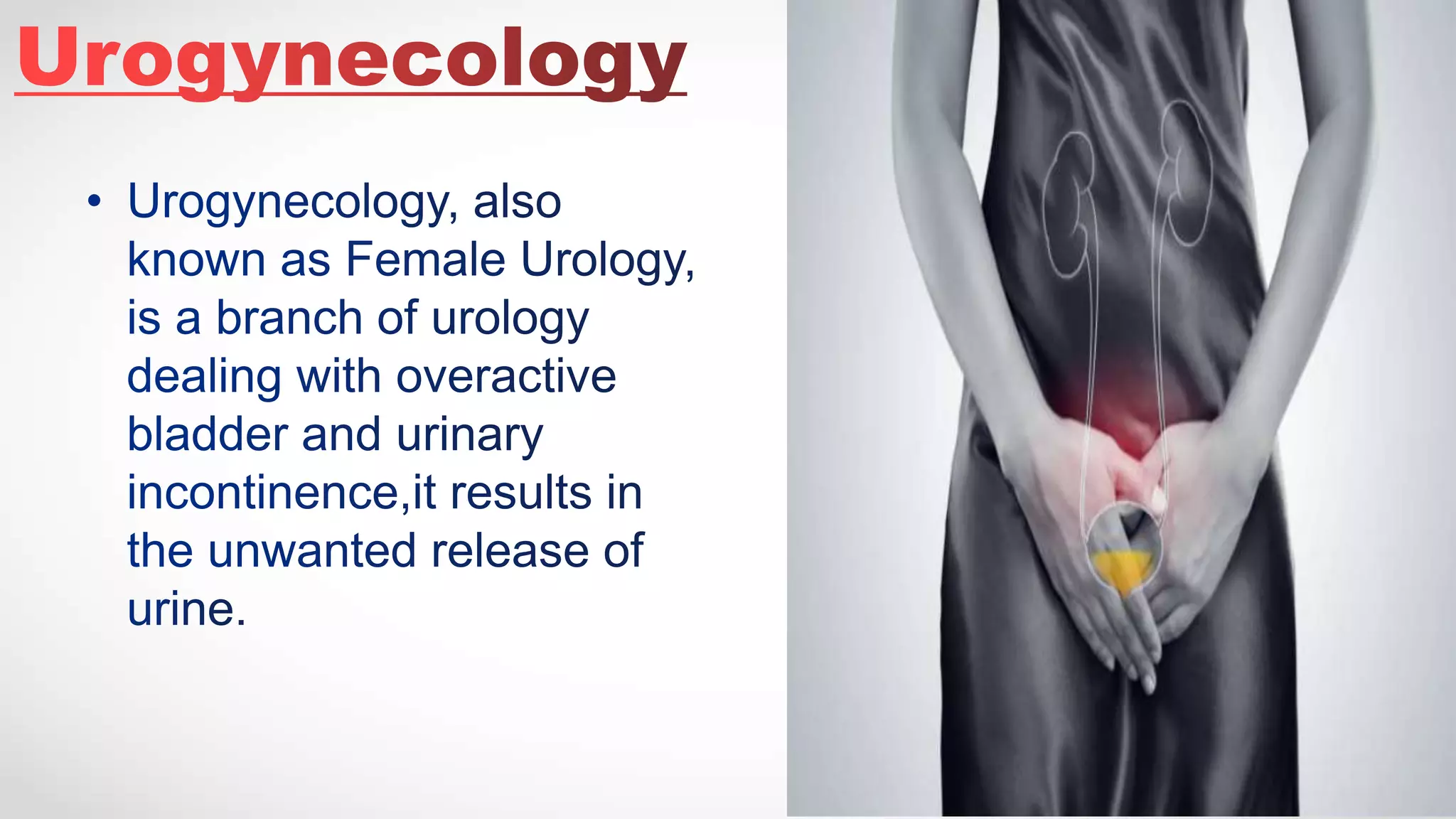
• Incontinence is a loss of bladder control. It results in the unwanted release of
urine. This condition can be inconvenient and embarrassing for sufferers. .
•
UTIs are the result of undesirable yeast, bacteria, or viruses that attack
the urinary tract and cause infection. They are much more common in
women, although men can get them too.
•
Stones develop in the kidneys when there are crystals in the urine and
small particles surround and collect on these crystals. Ureteral stones are
ones that move from the kidney into the ureter (the tubes that carry urine
from the kidneys to the bladder).
These stones can block urine flow and cause a considerable amount of
pain.
•
Urology department
Urology department
Urology department
Urology department

Urology department

  • 2.
  • 5.
    • There aremany urologic disorders and diseases. The following are a selection of some of the diseases identified by the American Urological Association Foundation (AUAF) as common. • Benign prostatic hyperplasia (BPH) is an enlarged prostate. It is an increase in the size of the prostate gland. BPH is very common in older men. It is not caused by prostate cancer. • The symptoms of BPH are due to the pressure that a larger prostate can place on the urethra. The urethra is the narrow tube that carries urine from the bladder and out of the body. • Incontinence is a loss of bladder control. It results in the unwanted release of urine. This condition can be inconvenient and embarrassing for sufferers. .
  • 6.
    • UTIs are theresult of undesirable yeast, bacteria, or viruses that attack the urinary tract and cause infection. They are much more common in women, although men can get them too. • Stones develop in the kidneys when there are crystals in the urine and small particles surround and collect on these crystals. Ureteral stones are ones that move from the kidney into the ureter (the tubes that carry urine from the kidneys to the bladder). These stones can block urine flow and cause a considerable amount of pain.
  • 16.