COLON CANCER
Nathan Kikku Mubiru Esq
Senior Medical laboratory scientific officer (MUST)
nathanonealie94@gmail.com
0773883837
Colon Cancer 101 Facts
 Colorectal cancer is the second leading cause of death
from cancer.
 The majority of these cancers and deaths could be prevented
by increasing awareness and screening according to
recommended guidelines.
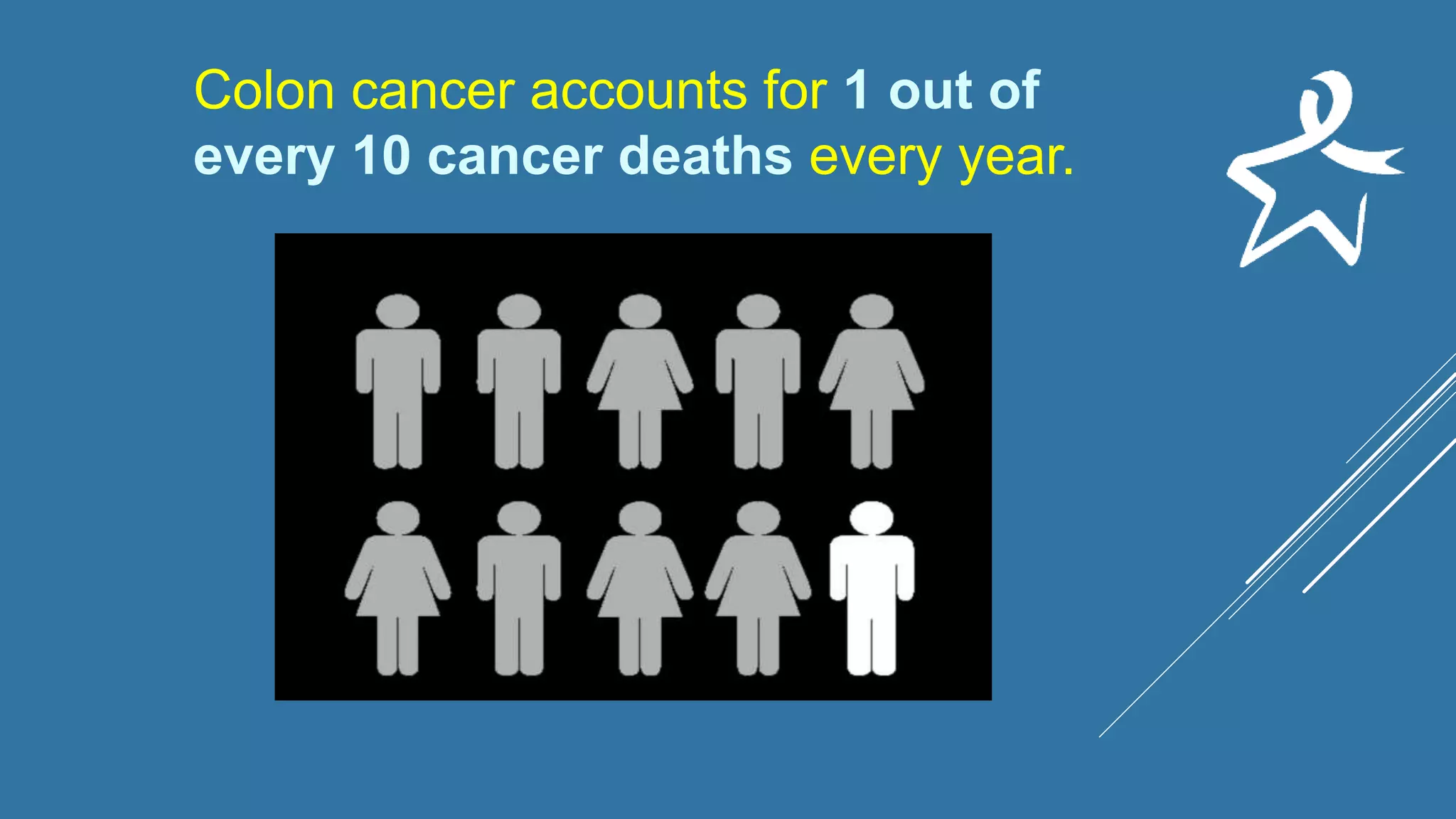
Colon cancer accounts for 1 out of
every 10 cancer deaths every year.
Colon Cancer
Also called “Colorectal cancer”
 Uncontrolled, abnormal cell growth
which starts in the colon or rectum
 These abnormal cells can form a mass
of tissue
 Usually begins as a noncancerous
polyp, that can, over time, become a
cancerous tumor.
Polyp:
A polyp is a growth that
shouldn’t be there. Most
colon polyps are harmless.
But over time, some colon
polyps can develop into
colon cancer, which could be
fatal if it is found in a late
stage.
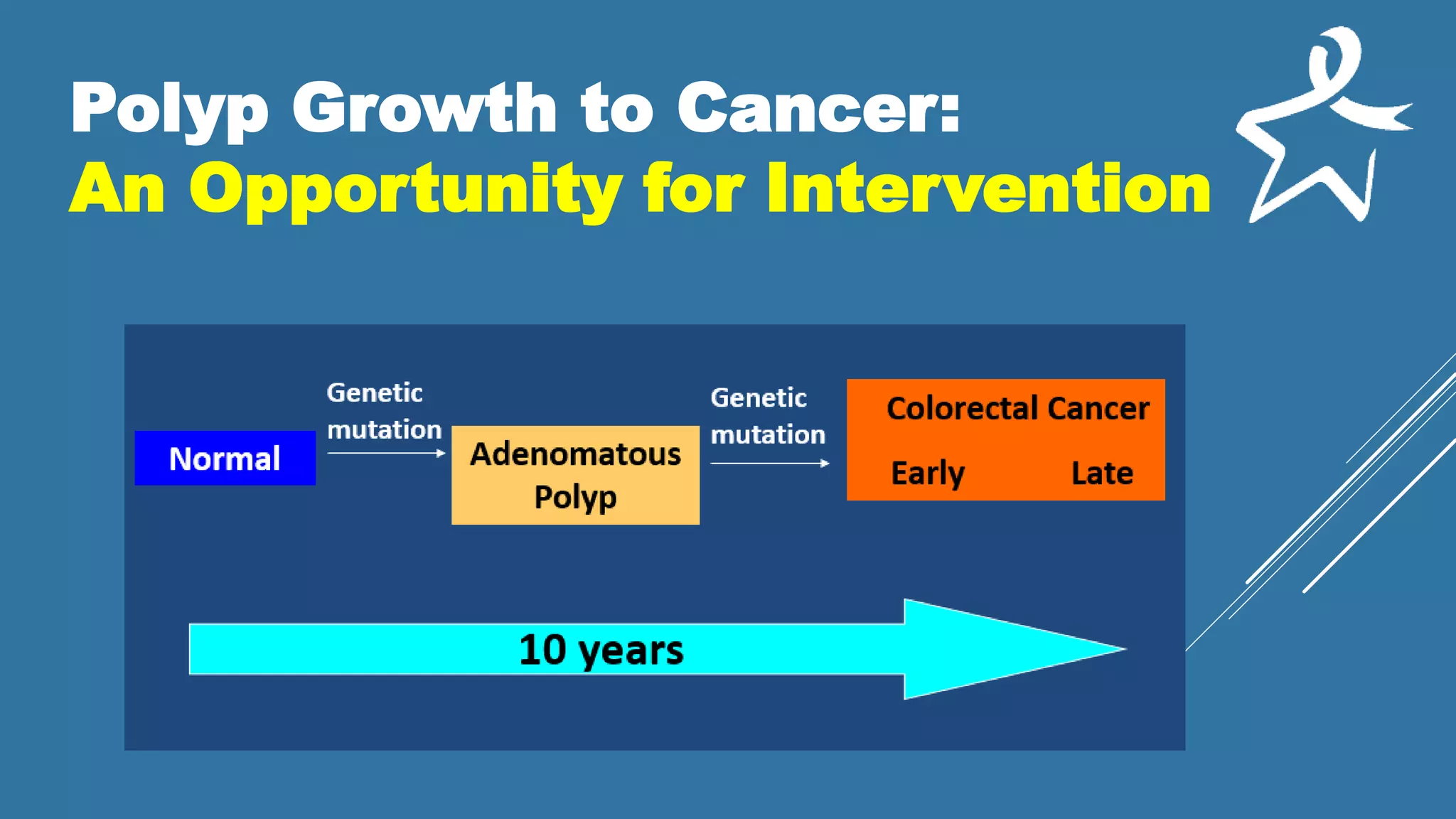
Polyp Growth to Cancer:
An Opportunity for Intervention
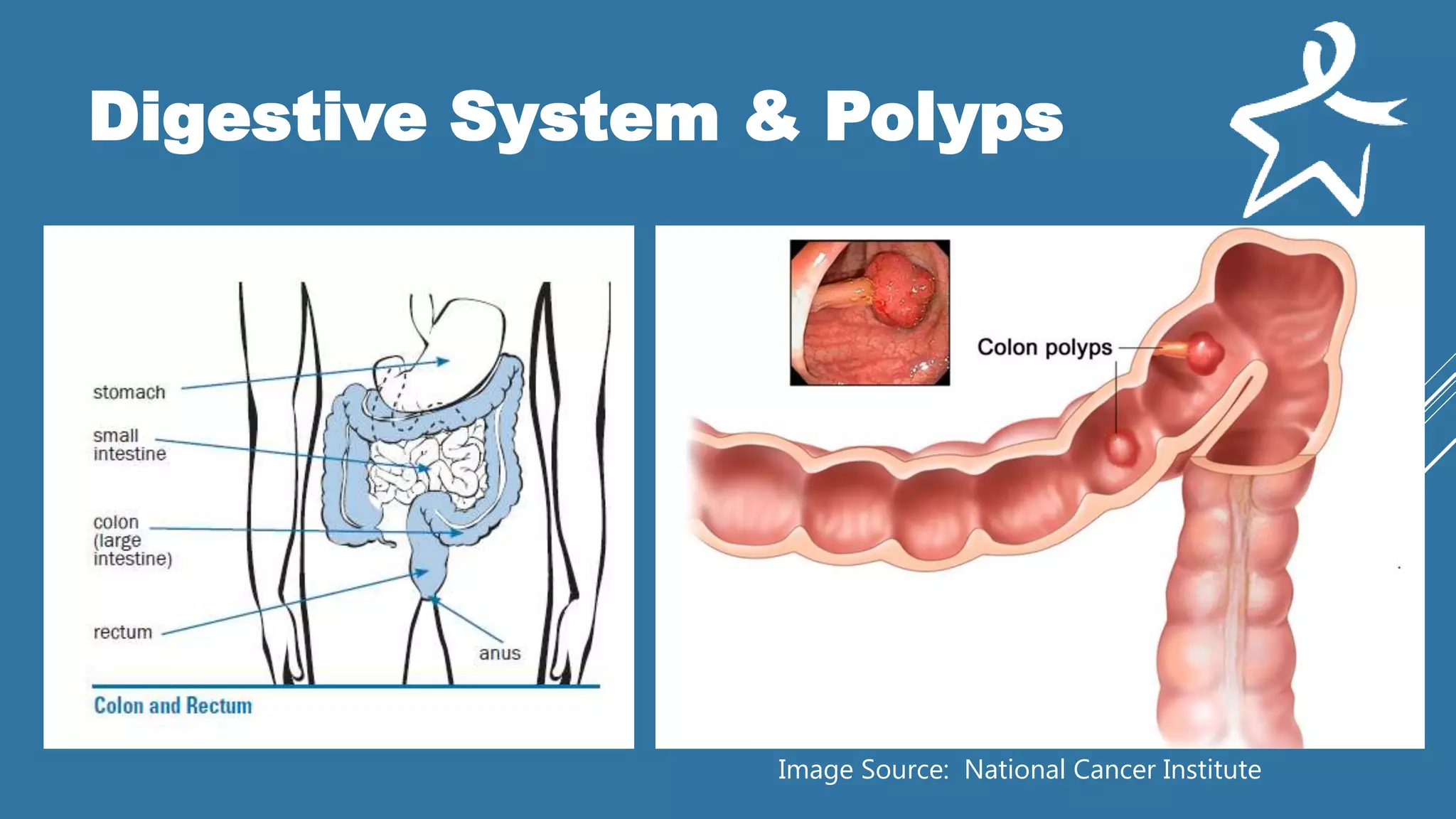
Digestive System & Polyps
Image Source: National Cancer Institute
Risk Factors for Colon Cancer
 Different cancers have different risk
factors
 Having a risk factor(s) does not mean
you will get cancer
 Certain risk factors increase a person’s
chance of developing a polyp(s) or
colorectal cancer
Risk Factor:
Anything that affects your chance of
getting a disease such as cancer.
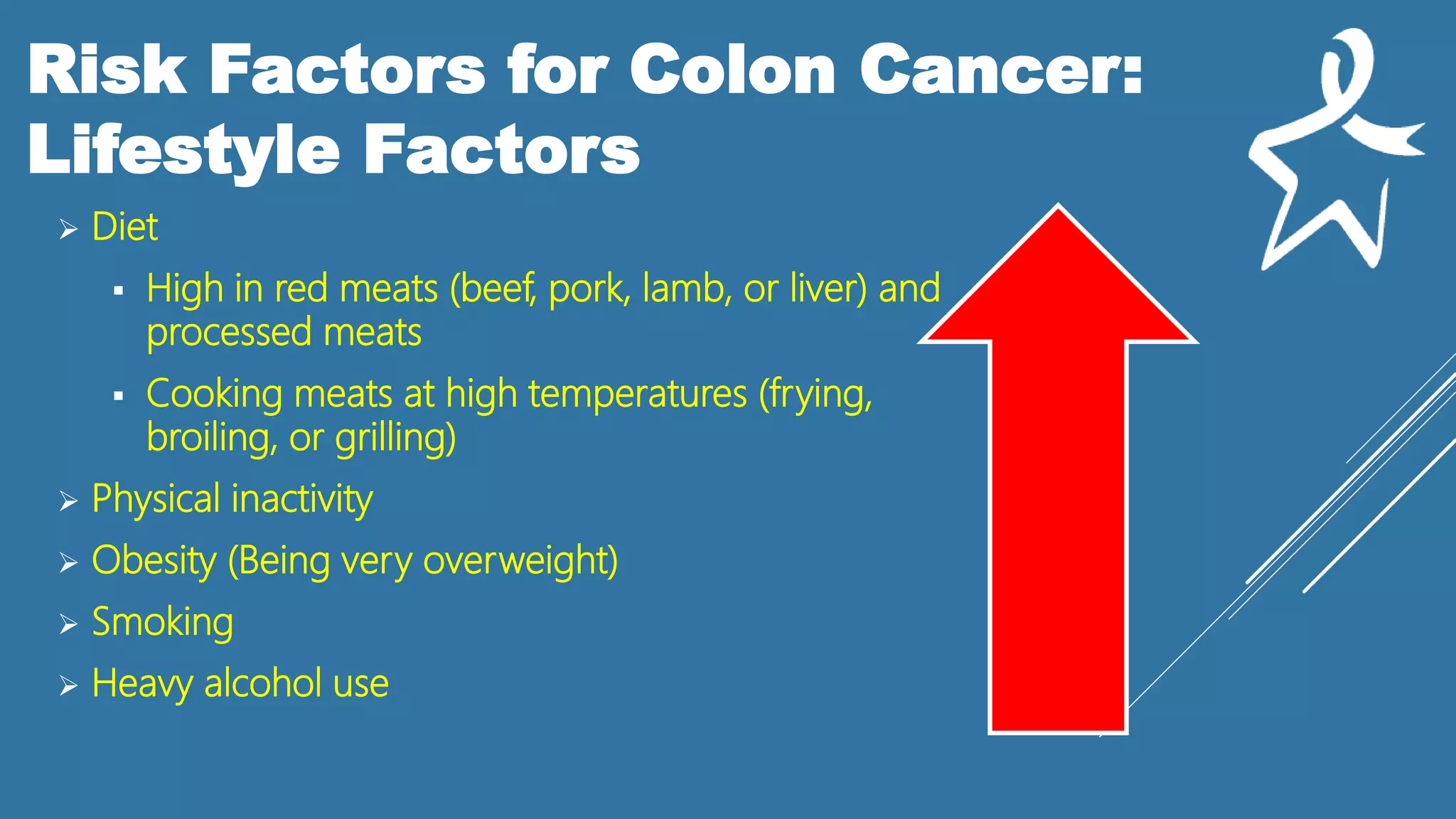
Risk Factors for Colon Cancer:
Lifestyle Factors
 Diet
 High in red meats (beef, pork, lamb, or liver) and
processed meats
 Cooking meats at high temperatures (frying,
broiling, or grilling)
 Physical inactivity
 Obesity (Being very overweight)
 Smoking
 Heavy alcohol use
Other Risk Factors
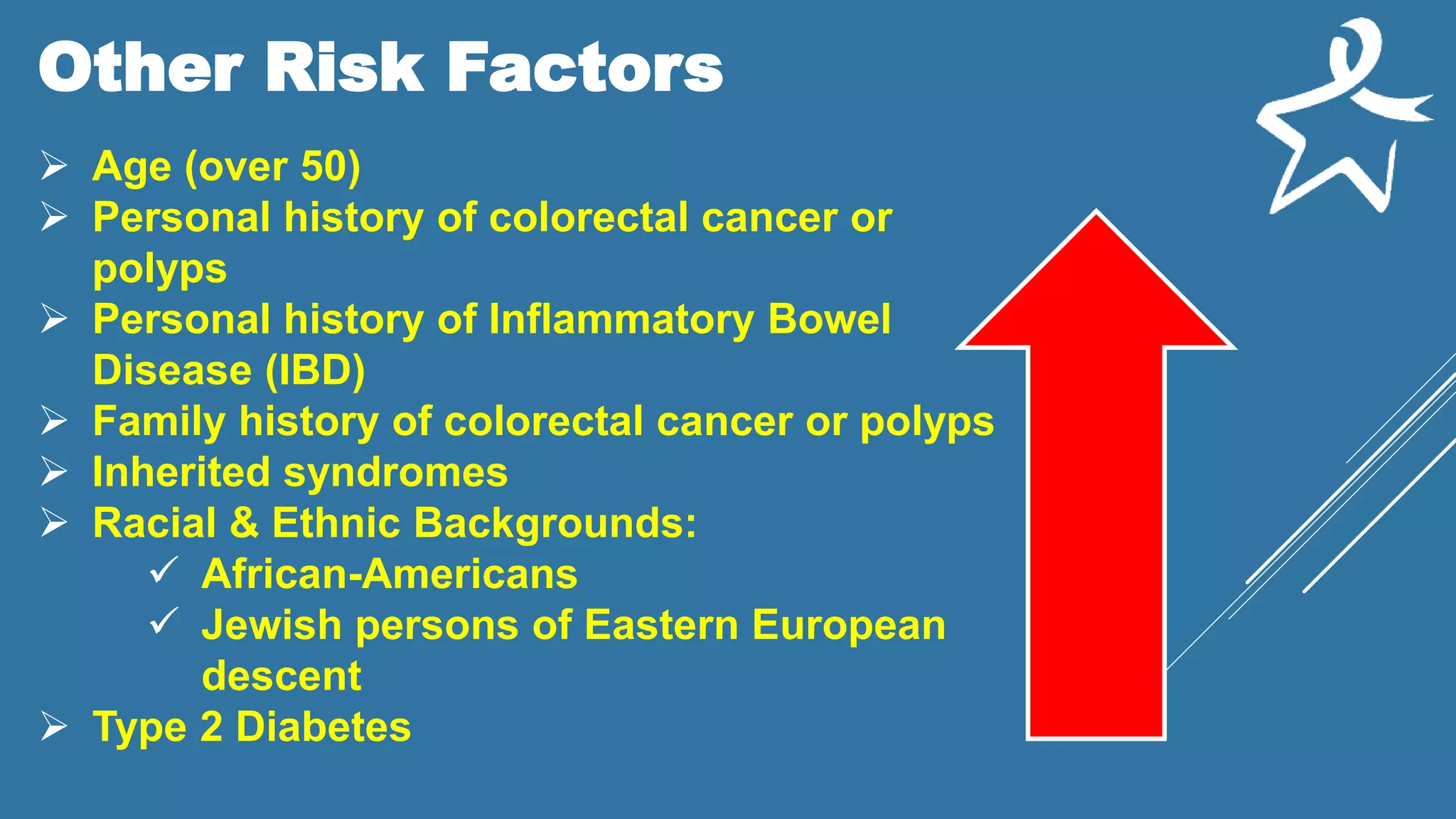
 Age (over 50)
 Personal history of colorectal cancer or
polyps
 Personal history of Inflammatory Bowel
Disease (IBD)
 Family history of colorectal cancer or polyps
 Inherited syndromes
 Racial & Ethnic Backgrounds:
 African-Americans
 Jewish persons of Eastern European
descent
 Type 2 Diabetes
Signs & Symptoms
Early colon cancer may have NO symptoms.
If symptoms are present, they may include:
 A change in bowel habits
 A feeling of needing a bowel movement
 Rectal bleeding
 Blood in the stool which may make it look dark
 Cramping or abdominal (belly) pain
 Weakness & fatigue
 Unintended weight loss
Schedule an appointment to talk to your health care provider if you have any of these symptoms.
Screening is Important
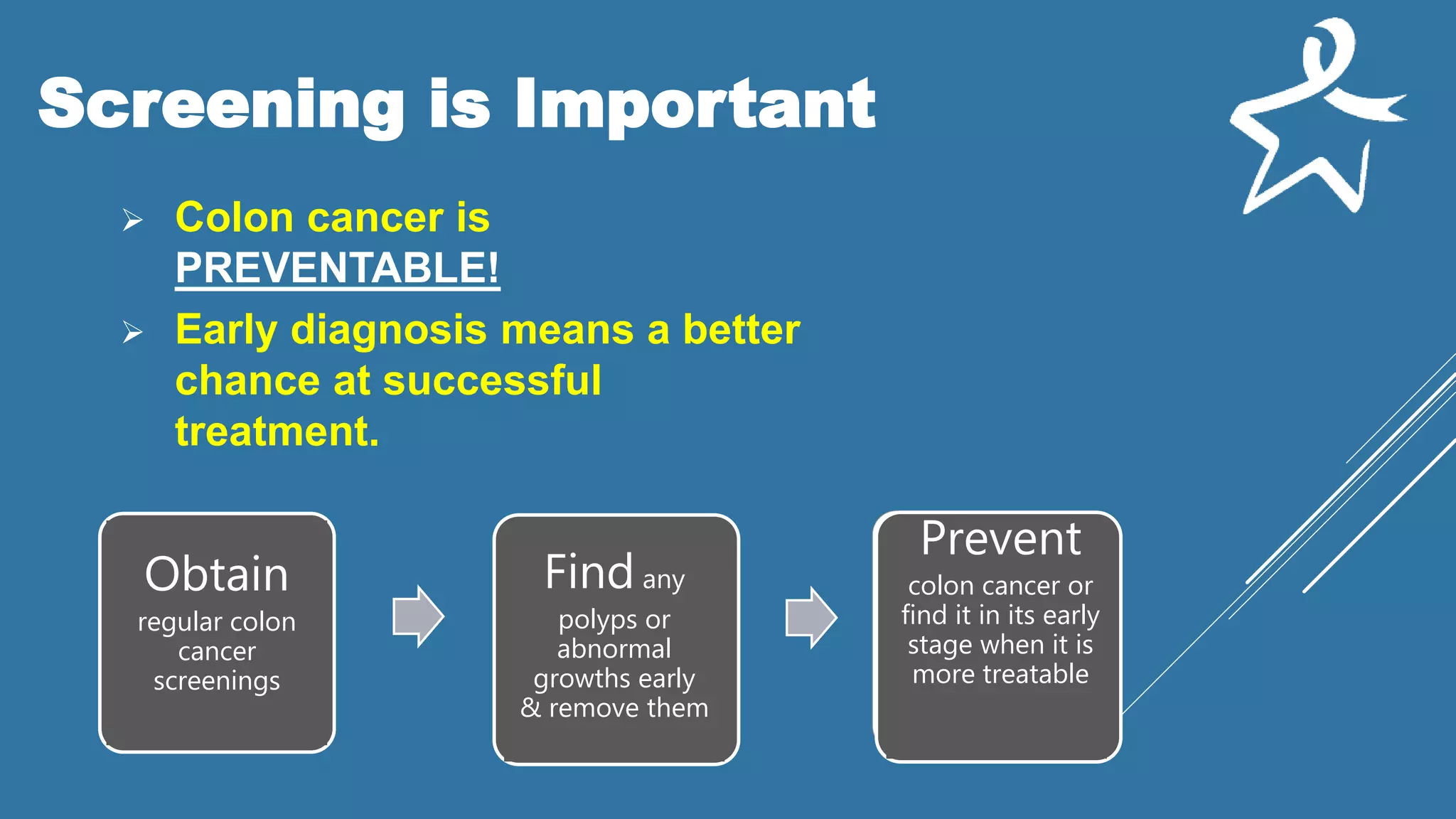
 Colon cancer is
PREVENTABLE!
 Early diagnosis means a better
chance at successful
treatment.
Obtain
regular colon
cancer
screenings
Find any
polyps or
abnormal
growths early
& remove them
Prevent
colon cancer or
find it in its early
stage when it is
more treatable
Who should be screened?
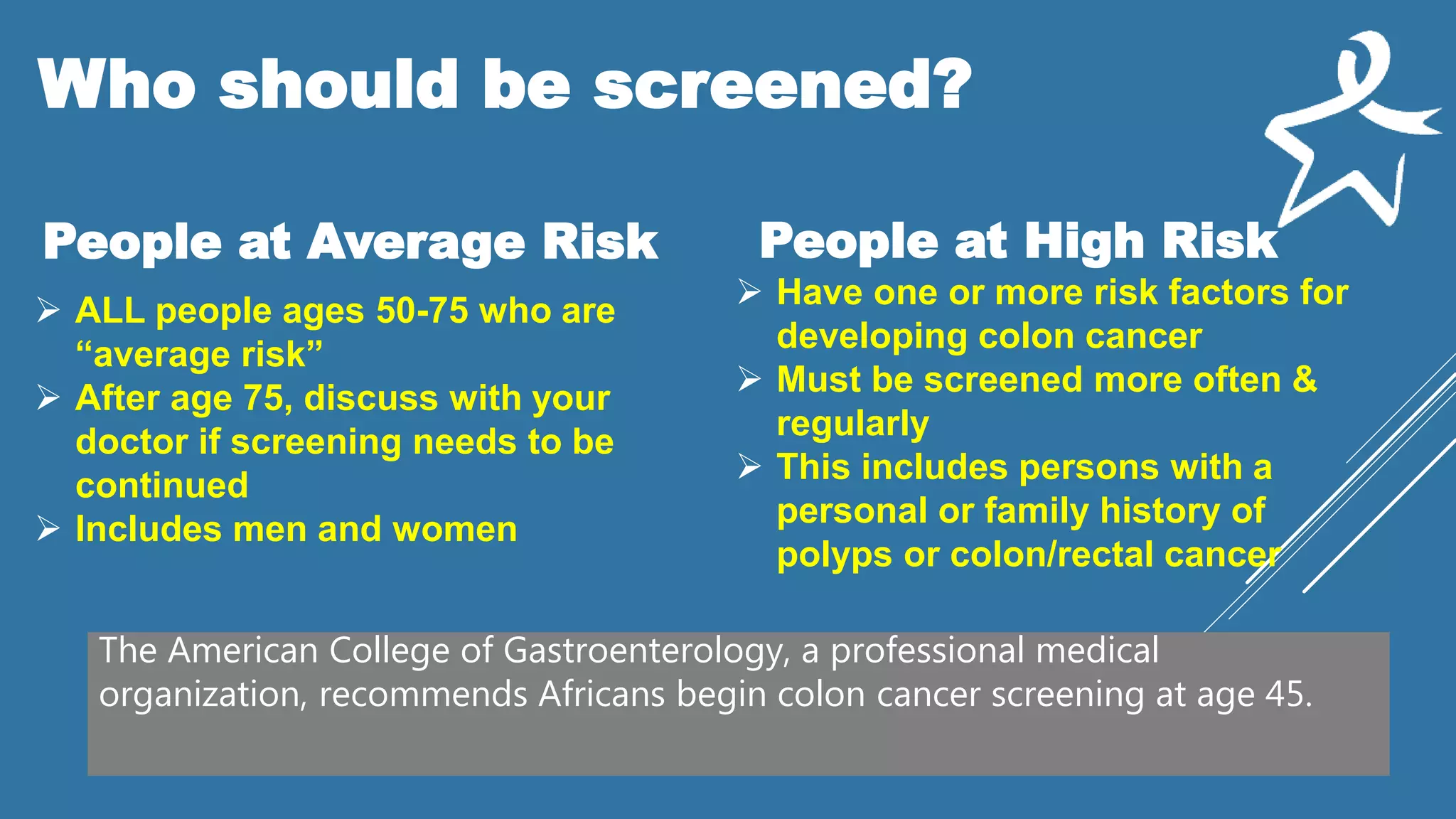
People at Average Risk People at High Risk
 ALL people ages 50-75 who are
“average risk”
 After age 75, discuss with your
doctor if screening needs to be
continued
 Includes men and women
 Have one or more risk factors for
developing colon cancer
 Must be screened more often &
regularly
 This includes persons with a
personal or family history of
polyps or colon/rectal cancer
The American College of Gastroenterology, a professional medical
organization, recommends Africans begin colon cancer screening at age 45.

Colorectal Cancer Basics for sensitisation

  • 1.
    COLON CANCER Nathan KikkuMubiru Esq Senior Medical laboratory scientific officer (MUST) nathanonealie94@gmail.com 0773883837
  • 2.
    Colon Cancer 101Facts  Colorectal cancer is the second leading cause of death from cancer.  The majority of these cancers and deaths could be prevented by increasing awareness and screening according to recommended guidelines.
  • 3.
    Colon cancer accountsfor 1 out of every 10 cancer deaths every year.
  • 4.
    Colon Cancer Also called“Colorectal cancer”  Uncontrolled, abnormal cell growth which starts in the colon or rectum  These abnormal cells can form a mass of tissue  Usually begins as a noncancerous polyp, that can, over time, become a cancerous tumor. Polyp: A polyp is a growth that shouldn’t be there. Most colon polyps are harmless. But over time, some colon polyps can develop into colon cancer, which could be fatal if it is found in a late stage.
  • 5.
    Polyp Growth toCancer: An Opportunity for Intervention
  • 6.
    Digestive System &Polyps Image Source: National Cancer Institute
  • 7.
    Risk Factors forColon Cancer  Different cancers have different risk factors  Having a risk factor(s) does not mean you will get cancer  Certain risk factors increase a person’s chance of developing a polyp(s) or colorectal cancer Risk Factor: Anything that affects your chance of getting a disease such as cancer.
  • 8.
    Risk Factors forColon Cancer: Lifestyle Factors  Diet  High in red meats (beef, pork, lamb, or liver) and processed meats  Cooking meats at high temperatures (frying, broiling, or grilling)  Physical inactivity  Obesity (Being very overweight)  Smoking  Heavy alcohol use
  • 9.
    Other Risk Factors Age (over 50)  Personal history of colorectal cancer or polyps  Personal history of Inflammatory Bowel Disease (IBD)  Family history of colorectal cancer or polyps  Inherited syndromes  Racial & Ethnic Backgrounds:  African-Americans  Jewish persons of Eastern European descent  Type 2 Diabetes
  • 10.
    Signs & Symptoms Earlycolon cancer may have NO symptoms. If symptoms are present, they may include:  A change in bowel habits  A feeling of needing a bowel movement  Rectal bleeding  Blood in the stool which may make it look dark  Cramping or abdominal (belly) pain  Weakness & fatigue  Unintended weight loss Schedule an appointment to talk to your health care provider if you have any of these symptoms.
  • 11.
    Screening is Important Colon cancer is PREVENTABLE!  Early diagnosis means a better chance at successful treatment. Obtain regular colon cancer screenings Find any polyps or abnormal growths early & remove them Prevent colon cancer or find it in its early stage when it is more treatable
  • 12.
    Who should bescreened? People at Average Risk People at High Risk  ALL people ages 50-75 who are “average risk”  After age 75, discuss with your doctor if screening needs to be continued  Includes men and women  Have one or more risk factors for developing colon cancer  Must be screened more often & regularly  This includes persons with a personal or family history of polyps or colon/rectal cancer The American College of Gastroenterology, a professional medical organization, recommends Africans begin colon cancer screening at age 45.

Editor's Notes

  • #4 Colon cancer accounts for nearly 10% of cancer deaths in the United States, or one out of every 10 cancer deaths.
  • #5 Colorectal cancer is a term used for cancer that starts in the colon or the rectum. These cancers can also be referred to separately as colon cancer or rectal cancer, depending on where they start.
  • #6 It is important to remember that the majority of polyps take a long time to develop (approximately 10 years), allowing us an opportunity to find them early through screening. Most polyps remain benign (noncancerous) and are often termed hyperplastic polyps. The likelihood that hyperplastic polyps will become cancer is very low. Other benign polyps are sometimes referred to as pre-cancerous.  These polyps are not malignant, themselves, but have a chance of becoming cancerous if not removed. Adenomas are polyps that usually grow on a stalk, resembling small mushrooms. They tend to grow slowly over a decade or more. The risk of an adenoma developing into cancer increases as the size increases and with the amount of time it has been growing in the colon. Adenomas that are malignant are called adenocarcinomas. In the very early stages, abnormal cells are contained inside the polyp and can be easily removed by colonoscopy before they develop into invasive cancer. However, as cancer cells grow and divide within the polyp, they can eventually invade nearby colon tissue and grow into and beyond the wall of the colon or rectum. If the cancer becomes advanced, the tumors will grow though all of the tissue layers of the colon rectum, and may metastasize, shedding cells into the circulatory system, spreading the cancer to other organs such as the liver and lungs.
  • #7 Here is a picture of colon polyps. Some polyps have a stalk and others do not. Inset shows a photo of a polyp with a stalk. These polyps would be removed during a colonoscopy by the health care provider and tested to see if they are cancerous.
  • #8 A risk factor is anything that affects your chance of getting a disease such as cancer. Different cancers have different risk factors. But risk factors don't tell us everything. Having a risk factor, or even several risk factors, does not mean that you will get the disease. And some people who get the disease may not have any known risk factors. Even if a person with colorectal cancer has a risk factor, it is often hard to know how much that risk factor might have contributed to the cancer. Researchers have found several risk factors that may increase a person's chance of developing colorectal polyps or colorectal cancer.
  • #9 Lifestyle-related factors Several lifestyle-related factors have been linked to colorectal cancer. In fact, the links between diet, weight, exercise and colorectal cancer risk are some of the strongest for any type of cancer. Certain types of diets A diet that is high in red meats (such as beef, pork, lamb, or liver) and processed meats (hot dogs and some luncheon meats) can increase colorectal cancer risk. Cooking meats at very high temperatures (frying, broiling, or grilling) creates chemicals that might increase cancer risks. Diets high in vegetables, fruits, and whole grains have been linked with a decreased risk of colorectal cancer, but fiber supplements do not seem to help. It's not clear if other dietary factors (for example, certain types of fats) affect colorectal cancer risk. Physical inactivity If you are not physically active, you have a greater chance of developing colorectal cancer. Increasing activity may help reduce your risk. Obesity If you are very overweight, your risk of developing and dying from colorectal cancer is increased. Obesity raises the risk of colon cancer in both men and women, but the link seems to be stronger in men. Smoking Long-term smokers are more likely than non-smokers to develop and die from colorectal cancer. Smoking is a well-known cause of lung cancer, but it is also linked to other cancers, like colorectal. There are resources in Kentucky for those interested in stopping smoking. Contact the Kentucky Cancer Program in your area to find out more about these programs or you can call the Quit Now Kentucky Line at 1-800-QUIT-NOW Heavy alcohol use Colorectal cancer has also been linked to the heavy use of alcohol. Alcohol use should be limited to no more than 2 drinks a day for men and 1 drink a day for women.
  • #10 Inflammatory bowel diseases include Crohn’s Disease and Ulcerative colitis. Certain inherited conditions such as Lynch disease (non hereditary Polyposis) increase your risk of colon cancer and other cancers.
  • #11 Colorectal cancer may cause one or more of these symptoms. A change in bowel habits, such as diarrhea, constipation, or narrowing of the stool, that lasts for more than a few days A feeling that you need to have a bowel movement that is not relieved by doing so Rectal bleeding Blood in the stool which may make it look dark Cramping or abdominal (belly) pain Weakness and fatigue Unintended weight loss Colorectal cancers can bleed. While sometimes the blood can be seen or cause the stool to become darker, often the stool looks normal. The blood loss can build up over time, though, and lead to low red blood cell counts (anemia). Sometimes the first sign of colorectal cancer is a blood test showing a low red blood cell count. Most of these problems are often caused by conditions other than colorectal cancer, such as infection, hemorrhoids, irritable bowel syndrome, or inflammatory bowel disease. Still, if you have any of these problems, it's important to see your doctor right away so the cause can be found and treated, if needed.
  • #12 Since early colon or rectal cancer may have no symptoms, it is important to obtain regular screenings before symptoms develop. Colorectal cancer is often found after symptoms appear, but most people with early colon or rectal cancer don't have symptoms of the disease. Symptoms usually only appear with more advanced disease. This is why getting the recommended screening tests before any symptoms develop is so important. Regular screening can often find colorectal cancer early, when it is most likely to be curable. In many people, screening can also prevent colorectal cancer altogether. This is because some polyps, or growths, can be found and removed before they have the chance to turn into cancer.
  • #13 People at average risk The American Cancer Society believes that preventing colorectal cancer (and not just finding it early) should be a major reason for getting tested. Having their polyps found and removed keeps some people from getting colorectal cancer. Tests that have the best chance of finding both polyps and cancer are preferred if these tests are available to you and you are willing to have them. Beginning at age 50, both men and women at average risk for developing colorectal cancer should be screened. People at increased or high risk If they are at an increased or high risk of colorectal cancer, they should begin colorectal cancer screening before age 50 and/or be screened more often. The following conditions make a person’s risk higher than average: A personal history of colorectal cancer or adenomatous polyps A personal history of inflammatory bowel disease (ulcerative colitis or Crohn's disease) A strong family history of colorectal cancer A known family history of a hereditary colorectal cancer syndrome such as familial adenomatous polyposis (FAP) ( a condition in which thousands of polyps may develop or hereditary non-polyposis colon cancer (HNPCC) (a condition which is not cancer, but in which a small number of polyps develop that puts you at greater risk for getting colon cancer.