PREHISTORY
Paleolíthic and Neolithic
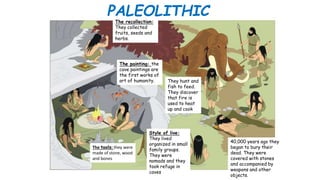
The recollection:
They collected
fruits, seeds and
herbs.
The painting: the
cave paintings are
the first works of
art of humanity.
The tools: they were
made of stone, wood
and bones
Style of live:
They lived
organized in small
family groups.
They were
nomads and they
took refuge in
caves
They hunt and
fish to feed.
They discover
that fire is
used to heat
up and cook
40,000 years ago they
began to bury their
dead. They were
covered with stones
and accompanied by
weapons and other
objects.
PALEOLITHIC
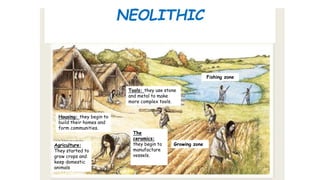
NEOLITHIC
Housing: they begin to
build their homes and
form communities.
Tools: they use stone
and metal to make
more complex tools.
Agriculture:
They started to
grow crops and
keep domestic
animals
Growing zone
Fishing zone
The
ceramics:
they begin to
manufacture
vessels.
HISTORY
1 - Ancient history
2 -The middle age
3 -The modern age
4 - Contemporary age
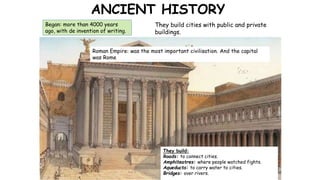
ANCIENT HISTORY
Began: more than 4000 years
ago, with de invention of writing.
They build cities with public and private
buildings.
Roman Empire: was the most important civilisation. And the capital
was Rome
They build:
Roads: to connect cities.
Amphiteatres: where people watched fights.
Aqueducts: to carry water to cities.
Bridges: over rivers.
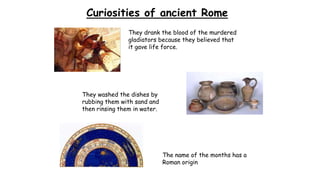
Curiosities of ancient Rome
They drank the blood of the murdered
gladiators because they believed that
it gave life force.
They washed the dishes by
rubbing them with sand and
then rinsing them in water.
The name of the months has a
Roman origin
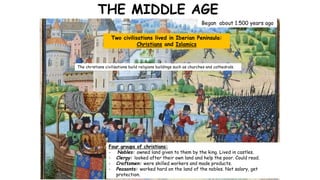
THE MIDDLE AGE
Began about 1.500 years ago
Two civilisations lived in Iberian Peninsula:
Christians and Islamics
The christians civilisations build religions buildings such as churches and cathedrals.
Four groups of christians:
- Nobles: owned land given to them by the king. Lived in castles.
- Clergy: looked after their own land and help the poor. Could read.
- Craftsmen: were skilled workers and made products.
- Peasants: worked hard on the land of the nobles. Not salary, get
protection.
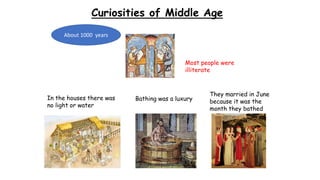
Curiosities of Middle Age
In the houses there was
no light or water
Bathing was a luxury
They married in June
because it was the
month they bathed
About 1000 years
Most people were
illiterate
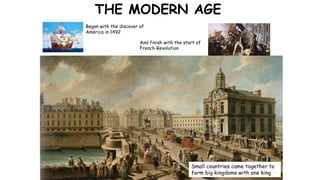
THE MODERN AGE
Began with the discover of
América in 1492
And finish with the start of
French Revolution
Small countries came together to
form big kingdoms with one king
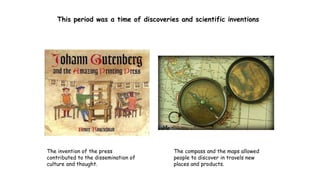
This period was a time of discoveries and scientific inventions
The invention of the press
contributed to the dissemination of
culture and thought.
The compass and the maps allowed
people to discover in travels new
places and products.
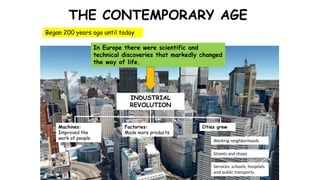
THE CONTEMPORARY AGE
Began 200 years ago until today
In Europe there were scientific and
technical discoveries that markedly changed
the way of life.
INDUSTRIAL
REVOLUTION
Machines:
Improved the
work of people
Factories:
Made more products.
Working neighborhoods
Cities grew
Services: schools, hospitals
and public transports.
Streets and shops
THE END
IKER PEREDA AYENSA
3º C

History

  • 1.
  • 2.
    The recollection: They collected fruits,seeds and herbs. The painting: the cave paintings are the first works of art of humanity. The tools: they were made of stone, wood and bones Style of live: They lived organized in small family groups. They were nomads and they took refuge in caves They hunt and fish to feed. They discover that fire is used to heat up and cook 40,000 years ago they began to bury their dead. They were covered with stones and accompanied by weapons and other objects. PALEOLITHIC
  • 3.
    NEOLITHIC Housing: they beginto build their homes and form communities. Tools: they use stone and metal to make more complex tools. Agriculture: They started to grow crops and keep domestic animals Growing zone Fishing zone The ceramics: they begin to manufacture vessels.
  • 4.
    HISTORY 1 - Ancienthistory 2 -The middle age 3 -The modern age 4 - Contemporary age
  • 5.
    ANCIENT HISTORY Began: morethan 4000 years ago, with de invention of writing. They build cities with public and private buildings. Roman Empire: was the most important civilisation. And the capital was Rome They build: Roads: to connect cities. Amphiteatres: where people watched fights. Aqueducts: to carry water to cities. Bridges: over rivers.
  • 6.
    Curiosities of ancientRome They drank the blood of the murdered gladiators because they believed that it gave life force. They washed the dishes by rubbing them with sand and then rinsing them in water. The name of the months has a Roman origin
  • 7.
    THE MIDDLE AGE Beganabout 1.500 years ago Two civilisations lived in Iberian Peninsula: Christians and Islamics The christians civilisations build religions buildings such as churches and cathedrals. Four groups of christians: - Nobles: owned land given to them by the king. Lived in castles. - Clergy: looked after their own land and help the poor. Could read. - Craftsmen: were skilled workers and made products. - Peasants: worked hard on the land of the nobles. Not salary, get protection.
  • 8.
    Curiosities of MiddleAge In the houses there was no light or water Bathing was a luxury They married in June because it was the month they bathed About 1000 years Most people were illiterate
  • 9.
    THE MODERN AGE Beganwith the discover of América in 1492 And finish with the start of French Revolution Small countries came together to form big kingdoms with one king
  • 10.
    This period wasa time of discoveries and scientific inventions The invention of the press contributed to the dissemination of culture and thought. The compass and the maps allowed people to discover in travels new places and products.
  • 11.
    THE CONTEMPORARY AGE Began200 years ago until today In Europe there were scientific and technical discoveries that markedly changed the way of life. INDUSTRIAL REVOLUTION Machines: Improved the work of people Factories: Made more products. Working neighborhoods Cities grew Services: schools, hospitals and public transports. Streets and shops
  • 12.
    THE END IKER PEREDAAYENSA 3º C