Tema 15
Esta etapa en la que las personas no conocían la escritura se llama  Prehistoria .  We know very little about the first humans that existed.   Much of what we know is from the  pictures  they left on rocks and caves.  Also from the few objects that have lasted until today including  carved stones ,  tools  and  pottery .
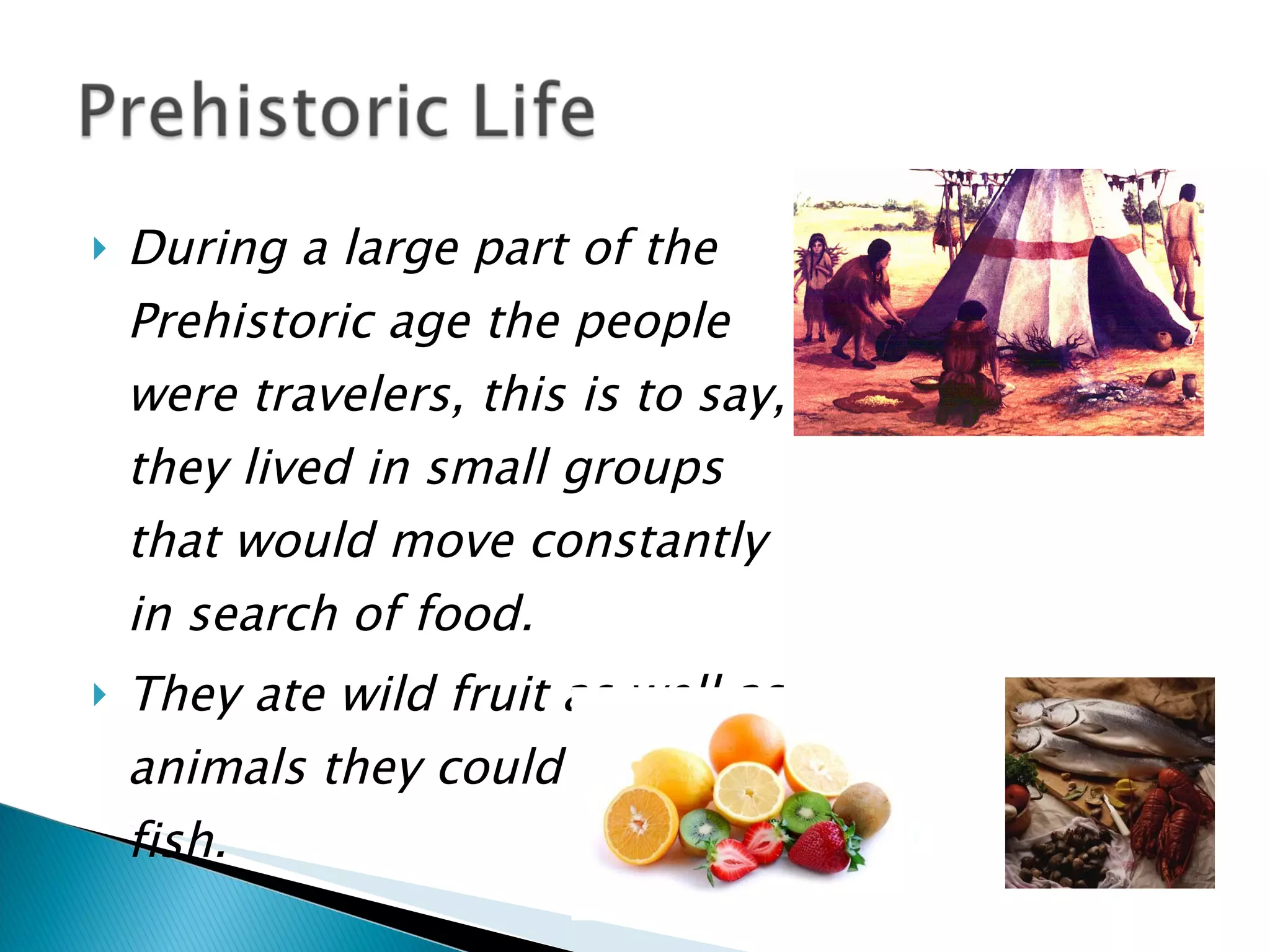
During a large part of the Prehistoric age the people were travelers, this is to say, they lived in small groups that would move constantly in search of food.  They ate wild fruit as well as animals they could hunt and fish.
Estos primeros grupos humanos vivían en cuevas en las que pintaban animales y escenas de caza, de baile… Carved stones and bones were used to construct  tools  and  arrow heads . Their largest discovery was the mastery of  fire .
At the end of the Prehistoric Age, the people learned to cultivate plants and domesticate animals, from this appeared agriculture and livestock.  Therefore, villages near the rivers surfaced where they had water and abundance of food.
Edad Antigua . Primeras civilizaciones con escritura.  Ancient Age:  The first civilizations with script. Edad Media . Comenzó hace mil quinientos años.  MiddleAge: Continued for some five hundred thousand  years.  Edad Moderna .  Comenzó hace quinientos años.  Modern Age started five hundred years ago. Edad Contemporánea . Comenzó hace unos doscientos años y llega hasta la actualidad.  The C ontempory Age started some two hundred years and lasts through present day.
La Edad Antigua comienza con las primeras civilizaciones que conocieron la escritura. De ellas, la que más nos ha influido ha sido la  civilización romana , que surgió en la actual Italia.
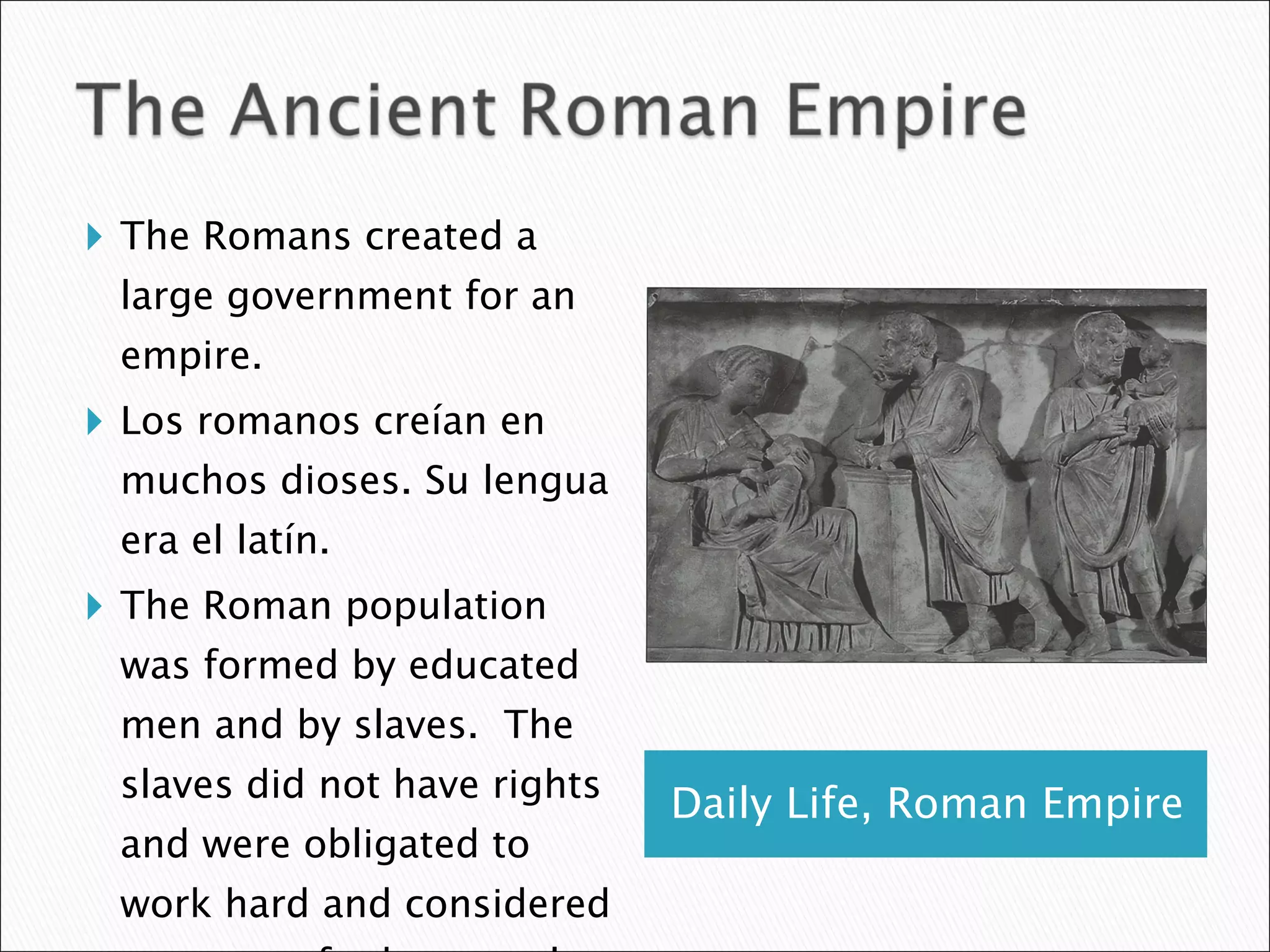
Daily Life, Roman Empire The Romans created a large government for an empire.  Los romanos creían en muchos dioses. Su lengua era el latín.  The Roman population was formed by educated men and by slaves.  The slaves did not have rights and were obligated to work hard and considered property of other people.
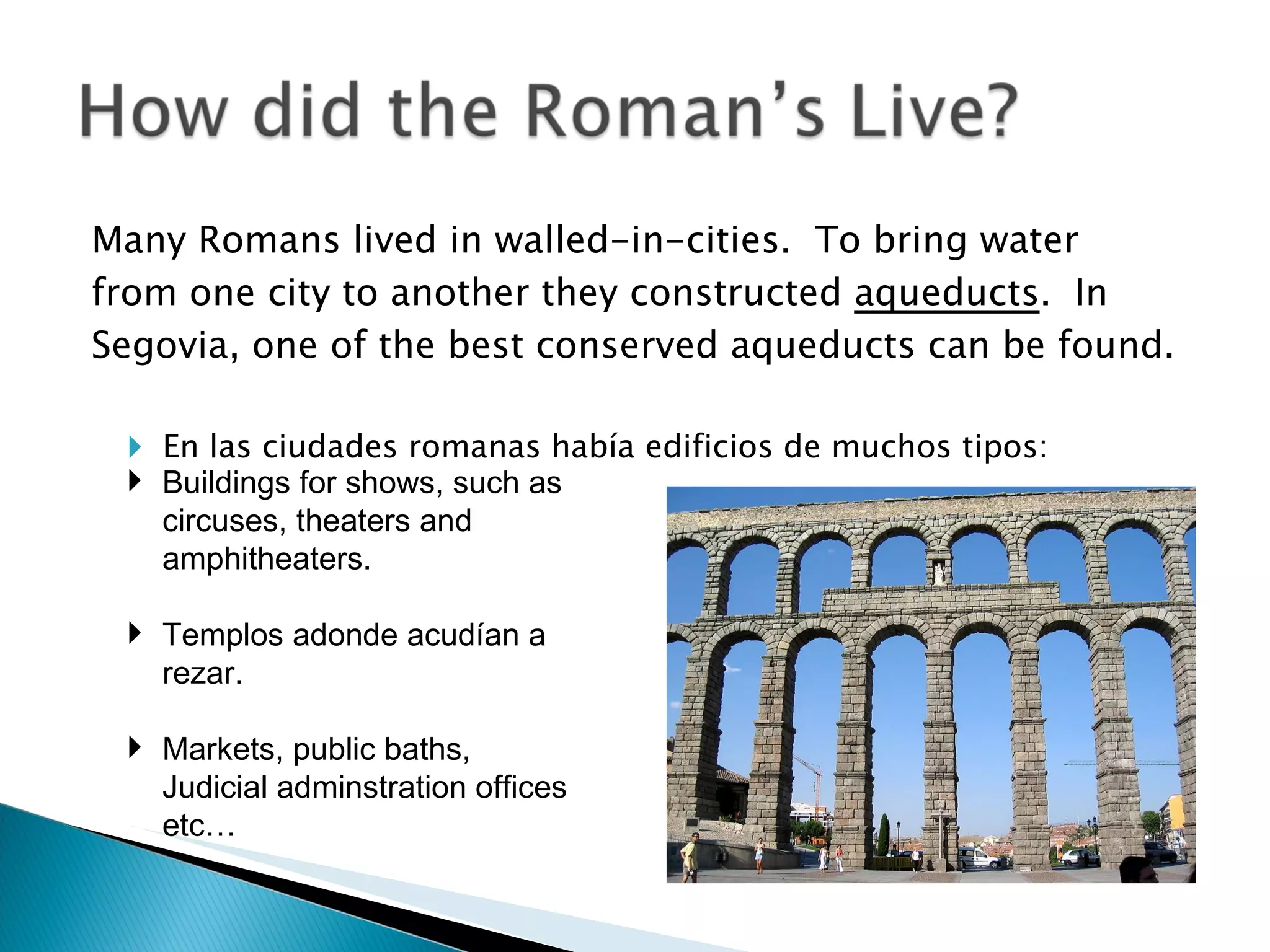
Many Romans lived in walled-in-cities.  To bring water from one city to another they constructed  aqueducts .  In Segovia, one of the best conserved aqueducts can be found. En las ciudades romanas había edificios de muchos tipos:  Buildings for shows, such as circuses, theaters and amphitheaters. Templos adonde acudían a rezar.  Markets, public baths, Judicial adminstration offices etc…
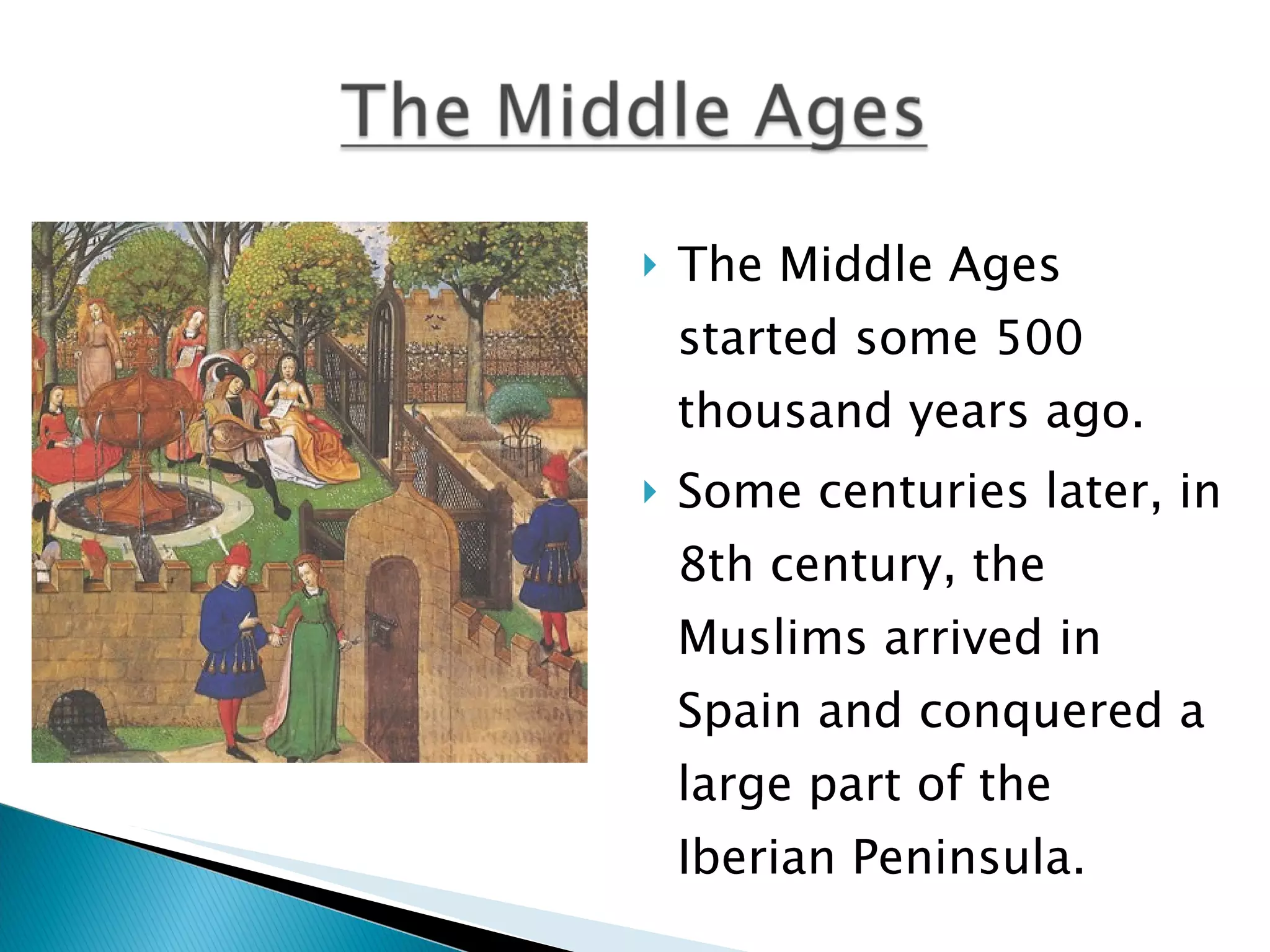
The Middle Ages started some 500 thousand years ago. Some centuries later, in 8th century, the Muslims arrived in Spain and conquered a large part of the Iberian Peninsula.
Los musulmanes . Su lengua era el árabe y su religión muchas edificaciones de esta época: palacios, mezquitas, castillos En Andalucía los musulmanes tuvieron una importante presencia en el pasado.  Los cristianos .  They occupied the northern part of the Iberian Peninsula.  The king was the highest authority figure. The kings and nobles were people of power, they lived in castles.
The discovery of America The Modern Age began some 500 years ago when the Spanish arrived in America by boat.  Other Europeans like the Portuguese and the British intended to discover faraway lands as well.  Therefore, they  established new marine routes and they explored all the seas. Commerce developed significantly.
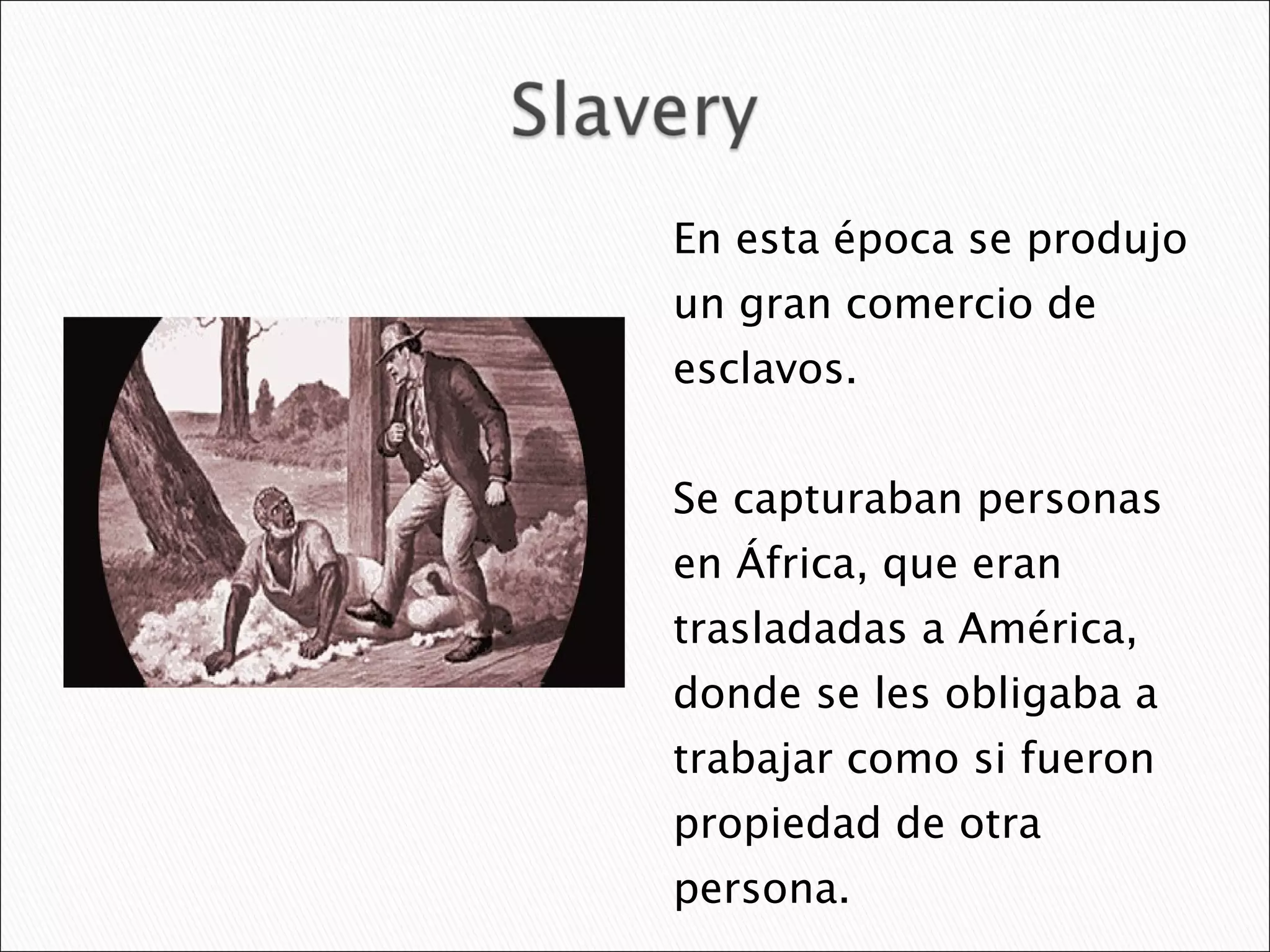
En esta época se produjo un gran comercio de esclavos.  Se capturaban personas en África, que eran trasladadas a América,  donde se les obligaba a trabajar como si fueron propiedad de otra persona.
This age started some 200 years ago At the beginning of the 9 th  Century the steam engine was invited.  Factories were installed in cities and many Europeans abandon the fields and went to live in the cities and work in the factories.  Steam engines were also used in  transportation leading to the emergence of trains, cars and  planes.
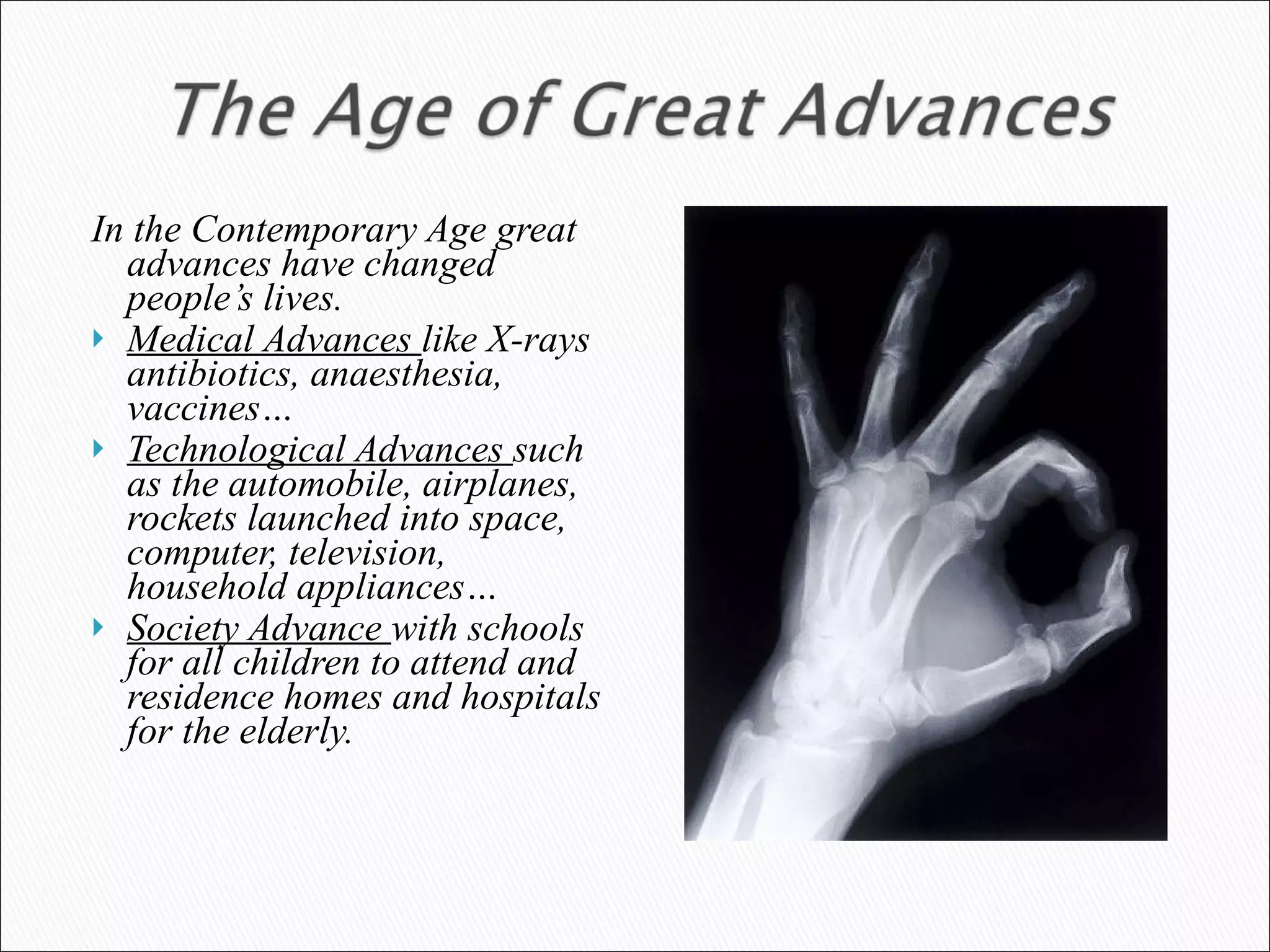
In the Contemporary Age great advances have changed people’s lives.  Medical Advances  like X-rays antibiotics, anaesthesia, vaccines… Technological Advances  such as the automobile, airplanes, rockets launched into space, computer, television, household appliances… Society Advance  with schools for all children to attend and residence homes and hospitals for the elderly.


Life In The Past

  • 1.
  • 2.
    Esta etapa enla que las personas no conocían la escritura se llama Prehistoria . We know very little about the first humans that existed. Much of what we know is from the pictures they left on rocks and caves. Also from the few objects that have lasted until today including carved stones , tools and pottery .
  • 3.
    During a largepart of the Prehistoric age the people were travelers, this is to say, they lived in small groups that would move constantly in search of food. They ate wild fruit as well as animals they could hunt and fish.
  • 4.
    Estos primeros gruposhumanos vivían en cuevas en las que pintaban animales y escenas de caza, de baile… Carved stones and bones were used to construct tools and arrow heads . Their largest discovery was the mastery of fire .
  • 5.
    At the endof the Prehistoric Age, the people learned to cultivate plants and domesticate animals, from this appeared agriculture and livestock. Therefore, villages near the rivers surfaced where they had water and abundance of food.
  • 6.
    Edad Antigua .Primeras civilizaciones con escritura. Ancient Age: The first civilizations with script. Edad Media . Comenzó hace mil quinientos años. MiddleAge: Continued for some five hundred thousand years. Edad Moderna . Comenzó hace quinientos años. Modern Age started five hundred years ago. Edad Contemporánea . Comenzó hace unos doscientos años y llega hasta la actualidad. The C ontempory Age started some two hundred years and lasts through present day.
  • 7.
    La Edad Antiguacomienza con las primeras civilizaciones que conocieron la escritura. De ellas, la que más nos ha influido ha sido la civilización romana , que surgió en la actual Italia.
  • 8.
    Daily Life, RomanEmpire The Romans created a large government for an empire. Los romanos creían en muchos dioses. Su lengua era el latín. The Roman population was formed by educated men and by slaves. The slaves did not have rights and were obligated to work hard and considered property of other people.
  • 9.
    Many Romans livedin walled-in-cities. To bring water from one city to another they constructed aqueducts . In Segovia, one of the best conserved aqueducts can be found. En las ciudades romanas había edificios de muchos tipos: Buildings for shows, such as circuses, theaters and amphitheaters. Templos adonde acudían a rezar. Markets, public baths, Judicial adminstration offices etc…
  • 10.
    The Middle Agesstarted some 500 thousand years ago. Some centuries later, in 8th century, the Muslims arrived in Spain and conquered a large part of the Iberian Peninsula.
  • 11.
    Los musulmanes .Su lengua era el árabe y su religión muchas edificaciones de esta época: palacios, mezquitas, castillos En Andalucía los musulmanes tuvieron una importante presencia en el pasado. Los cristianos . They occupied the northern part of the Iberian Peninsula. The king was the highest authority figure. The kings and nobles were people of power, they lived in castles.
  • 12.
    The discovery ofAmerica The Modern Age began some 500 years ago when the Spanish arrived in America by boat. Other Europeans like the Portuguese and the British intended to discover faraway lands as well. Therefore, they established new marine routes and they explored all the seas. Commerce developed significantly.
  • 13.
    En esta épocase produjo un gran comercio de esclavos. Se capturaban personas en África, que eran trasladadas a América, donde se les obligaba a trabajar como si fueron propiedad de otra persona.
  • 14.
    This age startedsome 200 years ago At the beginning of the 9 th Century the steam engine was invited. Factories were installed in cities and many Europeans abandon the fields and went to live in the cities and work in the factories. Steam engines were also used in transportation leading to the emergence of trains, cars and planes.
  • 15.
    In the ContemporaryAge great advances have changed people’s lives. Medical Advances like X-rays antibiotics, anaesthesia, vaccines… Technological Advances such as the automobile, airplanes, rockets launched into space, computer, television, household appliances… Society Advance with schools for all children to attend and residence homes and hospitals for the elderly.
  • 16.
  • 17.