Historic Background of
Management system Standards
Historic background


 Military standard’s in the 1960’s.


 ISO 9000 (QMS) in 1987 (Although started in 1979).


 ISO Established its Strategic Advisory Group on Environment
  (SAGE).
     Led to the establishment of ISO/TC 207 in 1993 for ISO
      14001 Standards.

 ISO 14001 (EMS) in 1996.
Historic
      background
 Development of other management system standard started in 1990s like:
     Dependability management
     Project management
     Software quality etc.
 With the Publication of ISO 14001 in 1996, a number of paper were presented
  to ISO concerning Integrated management system standard.
     This Led to the Establishment of an ISO Technical Advisory Group
      (TAG 12) which Recommended that ISO 14001 Should be Developed
      to be “Compatible”
Established ISO STANDARDS so far…
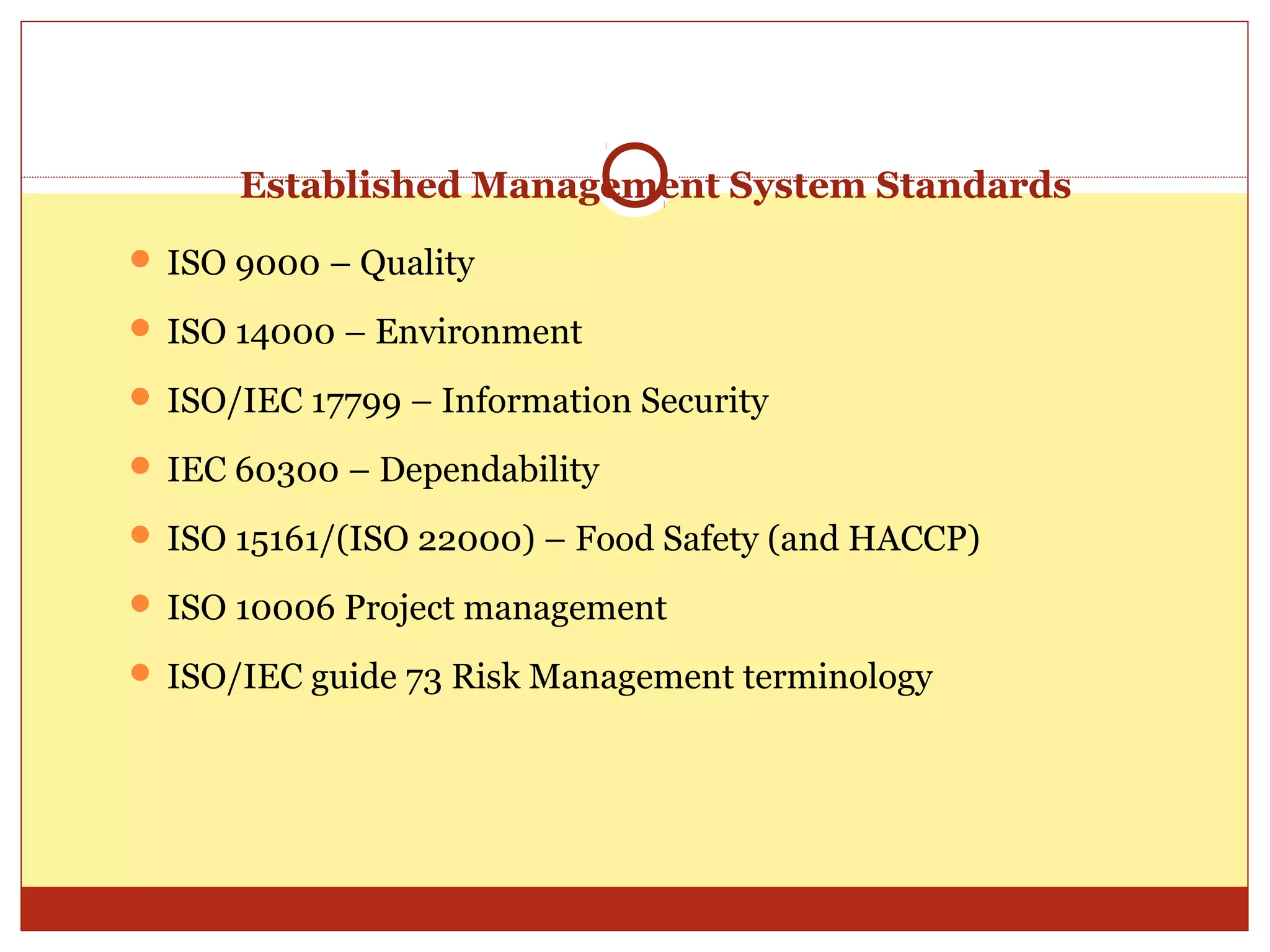
Established Management System Standards
 ISO 9000 – Quality

 ISO 14000 – Environment

 ISO/IEC 17799 – Information Security

 IEC 60300 – Dependability

 ISO 15161/(ISO 22000) – Food Safety (and HACCP)

 ISO 10006 Project management

 ISO/IEC guide 73 Risk Management terminology
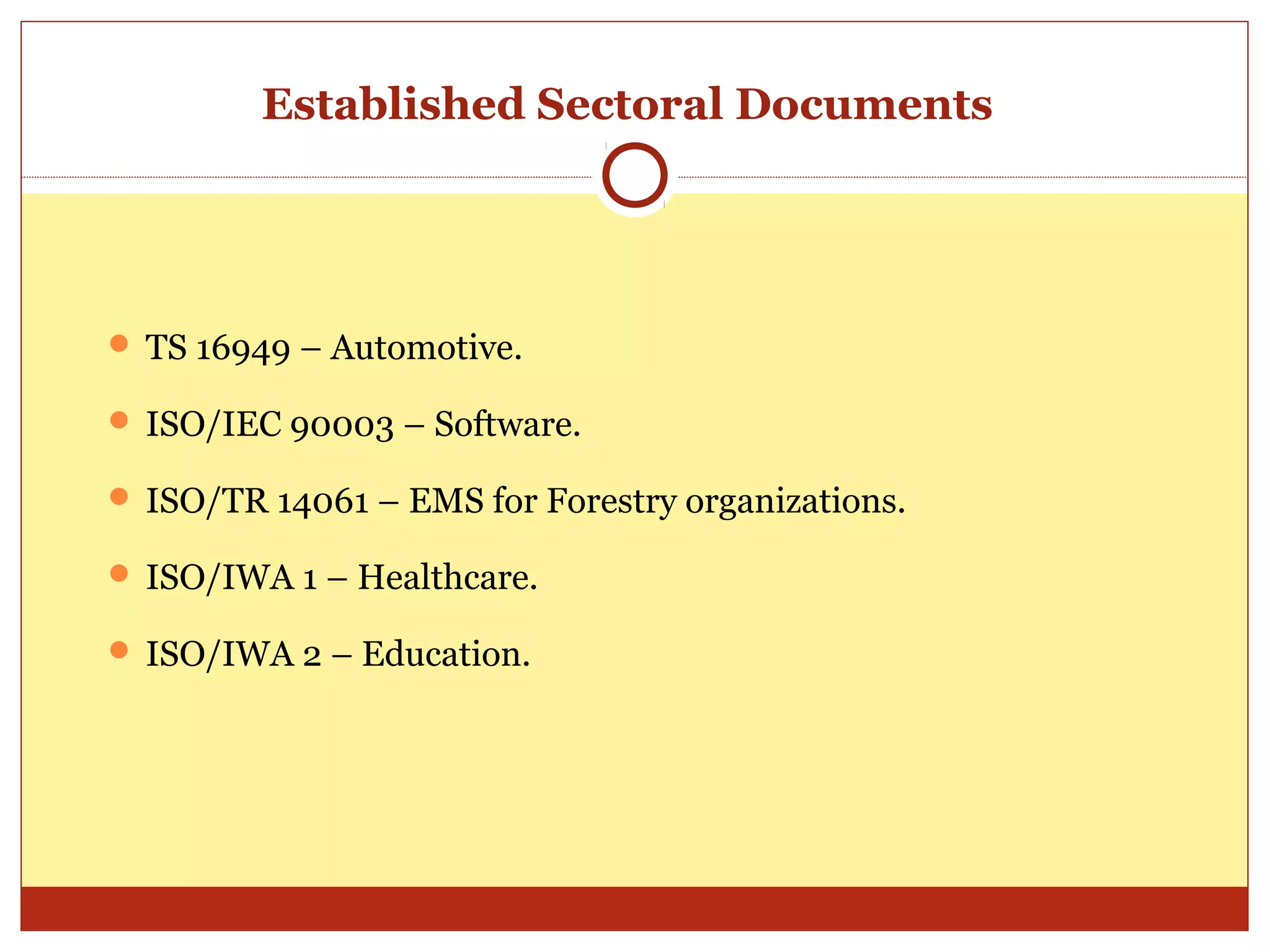
Established Sectoral Documents


 TS 16949 – Automotive.

 ISO/IEC 90003 – Software.

 ISO/TR 14061 – EMS for Forestry organizations.

 ISO/IWA 1 – Healthcare.

 ISO/IWA 2 – Education.
New Fields being considered at ISO

 Organizational (Corporate) Social Responsibility [OSR] Including:

     Business Ethics
     Sustainable Development
     Organizational (Corporate) Responsibility
     Social Accountability

 I.T. Services Management.
Representation of USERS in STANDARD MAKING
            was realized in 1997…
Amendment in ISO Constitution…


In 1997 Constitution included several “User
              Representatives”
USERS ADVISED ISO…
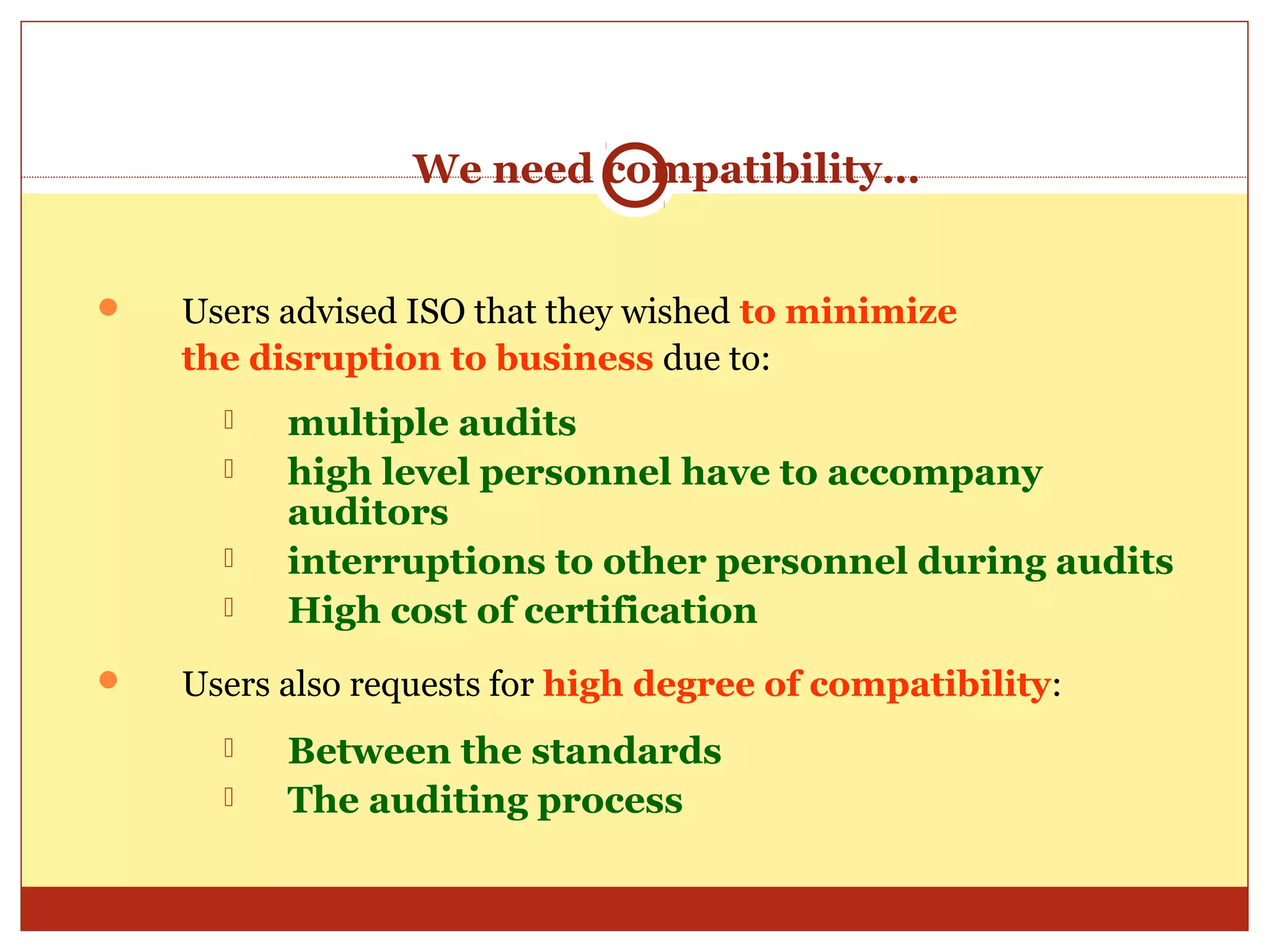
We need compatibility…


   Users advised ISO that they wished to minimize
    the disruption to business due to:
         multiple audits
         high level personnel have to accompany
          auditors
         interruptions to other personnel during audits
         High cost of certification
   Users also requests for high degree of compatibility:
         Between the standards
         The auditing process
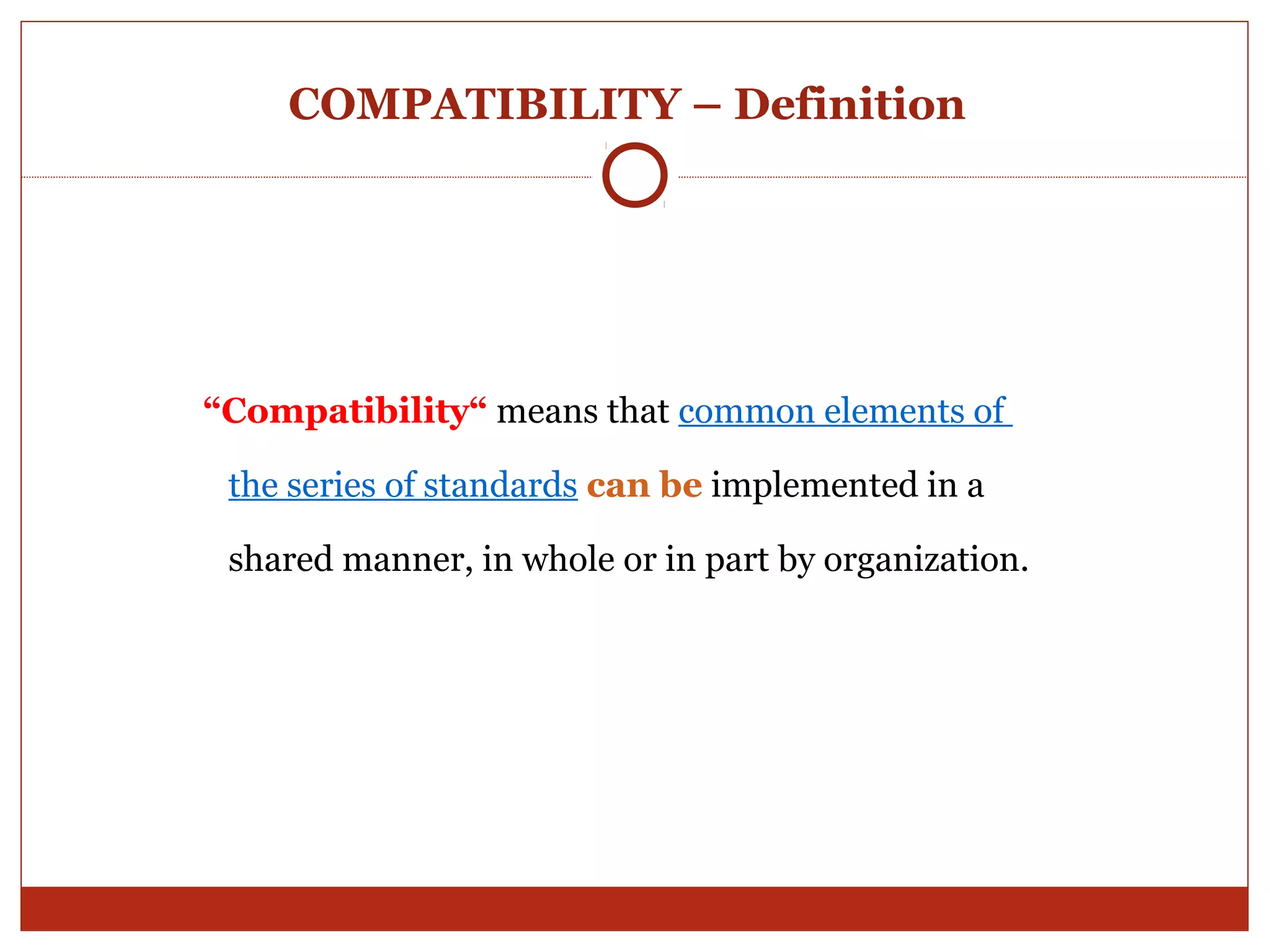
COMPATIBILITY – Definition


“Compatibility“ means that common elements of

 the series of standards can be implemented in a

 shared manner, in whole or in part by organization.
Lets see…


  What do we need to examine in the
     standards for Integration ?
What do we need to examine in the
             standards for Integration ?


Across the standards, we need to examine their:
    Basic principles
    Terminology
    General management system requirements
    Technology specific requirements
    Structure
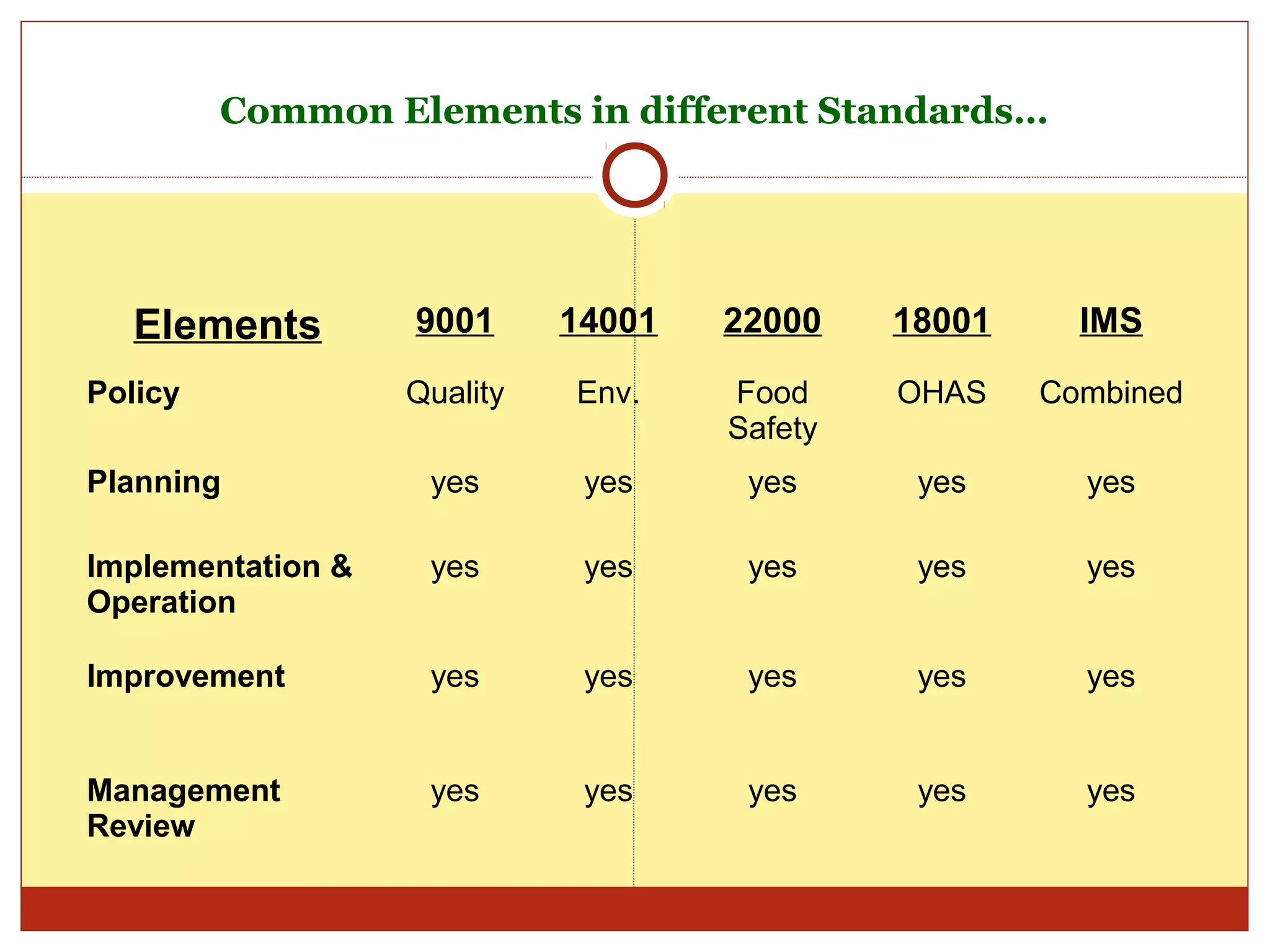
Common Elements in different Standards…


   Elements        9001      14001   22000    18001     IMS

Policy             Quality   Env.    Food     OHAS    Combined
                                     Safety
Planning            yes       yes     yes      yes      yes

Implementation &    yes       yes     yes      yes      yes
Operation

Improvement         yes       yes     yes      yes      yes


Management          yes       yes     yes      yes      yes
Review
CONCLUSION

Many things in different standards are very much
                     similar
Benefits of IMS
Benefits of an IMS:


 A unified view of the performance of the organization, instead of a
  stratified one.

 Reduces duplication and the costs associated with the
  administration of separate management systems

 Reduces potential for conflicting responsibilities and
  relationships
Benefits of an IMS


 Can increase operational efficiency


 Can improve internal and external communications


 May facilitate training and development


 Reduces audit times and audit frequencies
Key enablers for IMS…


 Leadership

 Change management

 Training and development

 Inclusion of TIMS requirements in the departmental
 goals

Historic background of ISO standards

  • 1.
  • 2.
    Historic background  Militarystandard’s in the 1960’s.  ISO 9000 (QMS) in 1987 (Although started in 1979).  ISO Established its Strategic Advisory Group on Environment (SAGE).  Led to the establishment of ISO/TC 207 in 1993 for ISO 14001 Standards.  ISO 14001 (EMS) in 1996.
  • 3.
    Historic background  Development of other management system standard started in 1990s like:  Dependability management  Project management  Software quality etc.  With the Publication of ISO 14001 in 1996, a number of paper were presented to ISO concerning Integrated management system standard.  This Led to the Establishment of an ISO Technical Advisory Group (TAG 12) which Recommended that ISO 14001 Should be Developed to be “Compatible”
  • 4.
  • 5.
    Established Management SystemStandards  ISO 9000 – Quality  ISO 14000 – Environment  ISO/IEC 17799 – Information Security  IEC 60300 – Dependability  ISO 15161/(ISO 22000) – Food Safety (and HACCP)  ISO 10006 Project management  ISO/IEC guide 73 Risk Management terminology
  • 6.
    Established Sectoral Documents TS 16949 – Automotive.  ISO/IEC 90003 – Software.  ISO/TR 14061 – EMS for Forestry organizations.  ISO/IWA 1 – Healthcare.  ISO/IWA 2 – Education.
  • 7.
    New Fields beingconsidered at ISO
  • 8.
    New Fields beingconsidered at ISO  Organizational (Corporate) Social Responsibility [OSR] Including:  Business Ethics  Sustainable Development  Organizational (Corporate) Responsibility  Social Accountability  I.T. Services Management.
  • 9.
    Representation of USERSin STANDARD MAKING was realized in 1997…
  • 10.
    Amendment in ISOConstitution… In 1997 Constitution included several “User Representatives”
  • 11.
  • 12.
    We need compatibility…  Users advised ISO that they wished to minimize the disruption to business due to:  multiple audits  high level personnel have to accompany auditors  interruptions to other personnel during audits  High cost of certification  Users also requests for high degree of compatibility:  Between the standards  The auditing process
  • 13.
    COMPATIBILITY – Definition “Compatibility“means that common elements of the series of standards can be implemented in a shared manner, in whole or in part by organization.
  • 14.
    Lets see… What do we need to examine in the standards for Integration ?
  • 15.
    What do weneed to examine in the standards for Integration ? Across the standards, we need to examine their:  Basic principles  Terminology  General management system requirements  Technology specific requirements  Structure
  • 16.
    Common Elements indifferent Standards… Elements 9001 14001 22000 18001 IMS Policy Quality Env. Food OHAS Combined Safety Planning yes yes yes yes yes Implementation & yes yes yes yes yes Operation Improvement yes yes yes yes yes Management yes yes yes yes yes Review
  • 17.
    CONCLUSION Many things indifferent standards are very much similar
  • 18.
  • 19.
    Benefits of anIMS:  A unified view of the performance of the organization, instead of a stratified one.  Reduces duplication and the costs associated with the administration of separate management systems  Reduces potential for conflicting responsibilities and relationships
  • 20.
    Benefits of anIMS  Can increase operational efficiency  Can improve internal and external communications  May facilitate training and development  Reduces audit times and audit frequencies
  • 21.
    Key enablers forIMS…  Leadership  Change management  Training and development  Inclusion of TIMS requirements in the departmental goals