Fire Fighting  in High-rise Buildings & Branches Ranjeet Kumar, Manager (Fire)
Fire Fighting in High Rise Buildings
High-rise building For the purpose of Fire Safety, all buildings 15 m or above in height shall be considered as high rise buildings (National Building Code of India 2005). Fire Safety in High Rise Buildings are implemented as per the requirement specified in by-laws of Local Govt. bodies in respect of High Rise Building.
Fire Safety Challenges Modern Open-floor Office Design Cubicle Work Stations Dwarf Partitions Movement of smoke within building – Stack Effect Central Air Conditioning System Difficulty in Reaching the Fire Seat Upper floors evacuation only from inside
More Challenges Access only through internal staircase beyond aerial apparatus reach Staircases is availed by fire-fighters and occupants simultaneously. Ventilation is complicated and critical. Reaction time is higher. Communication can be difficult Maintenance of in-built protection system
Preparedness Safe Operating Procedures (SOP) Staff Members Awareness Mock Drills Fire Prevention Procedures Fire Protection System Evacuation Facility Additional Resources
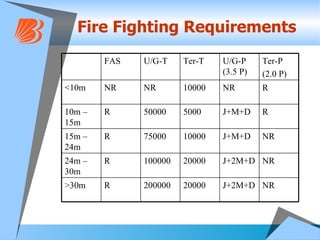
Fire Fighting Requirements NR J+2M+D 20000 200000 R >30m NR J+2M+D 20000 100000 R 24m – 30m NR J+M+D 10000 75000 R 15m – 24m R J+M+D 5000 50000 R 10m – 15m R NR 10000 NR NR <10m Ter-P (2.0 P) U/G-P (3.5 P) Ter-T U/G-T FAS
Safe Operating Procedure Identification of Key Personnel Level of response Accountability Safety Evacuation & Rescue Elevators / Stairwells / Ventilation Fire protection systems
Fire Fighting Assessing Fire Scene Attacking Fire Lobby Control Ventilation
Assessing a Fire Scene Seat of fire How will access be attained? Lay-out of building – stair / elevators Fire Hydrants – wet or dry? equipment to mitigate scene Ventilation Evacuation (Search & Rescue) Plan
Attacking a Fire Identify fire floor Attack on fire floor Life safety of persons in immediate danger Additional resources Establish support system
Lobby Control Evacuation through lobby area Instructions on PA System Accountability list of fire fighting personnel Building floor plans / keys Locating technical staff Monitoring audio visual alarms
Ventilation Shut-down HVAC Stairwell Pressurisation Creating opening at top as necessary Horizontal ventilation – breaking out window
Checks / Precautions Fire Fighting System in place & maintained (Extinguisher, Riser, Fire Alarm)  Safe Operating Procedure (SOP) in place  Staff members aware of fire fighting systems & SOPs Staircase / Lift Lobby free from any blockade Lobby pressurization, if enclosed HVAC Shut-off in case of Fire
Checks / Precautions Key personnel identified and informed as per SOP Refuge Area / Horizontal Exit  Assembly Point Mock Drill rehearsed NOC obtained from Municipal body Fire Control Room - Communication
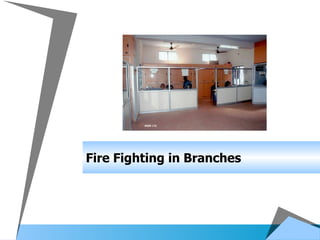
Fire Fighting in Branches
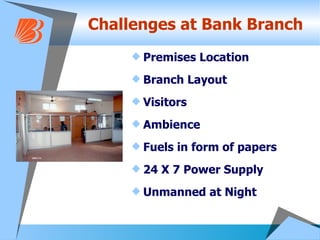
Challenges at Bank Branch Premises Location Branch Layout Visitors Ambience Fuels in form of papers 24 X 7 Power Supply Unmanned at Night
Preparedness at Branch Fire Safety Awareness / Mock Drills Pro-active Fire Prevention Steps No Smoking, Access Control Fire Protection System / Equipment Fire Extinguishers, Smoke Detectors Inspection/testing of fire protection system Emergency Action Plan Business Continuity
Electrical Safety Electrical Load within sanctioned load. Distribution as per usage like Lighting, Air-conditioner, UPS. Circuit Breaker for each distribution. Circuit Breaker for each Air-conditioner Ventilation / Cooling to the UPS.
Checks / Precautions Location / Layout Fire Extinguisher / Fire Alarm Safe Operating Procedure (SOP) as per Business Continuity Plan  Staff members aware of fire extinguisher operations & SOPs Exit free from any blockade Electrical Safety Electrical Audit & Compliance Communication Facility
THANK YOU. Be Safe Everyday  Let Safety Lead the Way

Highrise

  • 1.
    Fire Fighting in High-rise Buildings & Branches Ranjeet Kumar, Manager (Fire)
  • 2.
    Fire Fighting inHigh Rise Buildings
  • 3.
    High-rise building Forthe purpose of Fire Safety, all buildings 15 m or above in height shall be considered as high rise buildings (National Building Code of India 2005). Fire Safety in High Rise Buildings are implemented as per the requirement specified in by-laws of Local Govt. bodies in respect of High Rise Building.
  • 4.
    Fire Safety ChallengesModern Open-floor Office Design Cubicle Work Stations Dwarf Partitions Movement of smoke within building – Stack Effect Central Air Conditioning System Difficulty in Reaching the Fire Seat Upper floors evacuation only from inside
  • 5.
    More Challenges Accessonly through internal staircase beyond aerial apparatus reach Staircases is availed by fire-fighters and occupants simultaneously. Ventilation is complicated and critical. Reaction time is higher. Communication can be difficult Maintenance of in-built protection system
  • 6.
    Preparedness Safe OperatingProcedures (SOP) Staff Members Awareness Mock Drills Fire Prevention Procedures Fire Protection System Evacuation Facility Additional Resources
  • 7.
    Fire Fighting RequirementsNR J+2M+D 20000 200000 R >30m NR J+2M+D 20000 100000 R 24m – 30m NR J+M+D 10000 75000 R 15m – 24m R J+M+D 5000 50000 R 10m – 15m R NR 10000 NR NR <10m Ter-P (2.0 P) U/G-P (3.5 P) Ter-T U/G-T FAS
  • 8.
    Safe Operating ProcedureIdentification of Key Personnel Level of response Accountability Safety Evacuation & Rescue Elevators / Stairwells / Ventilation Fire protection systems
  • 9.
    Fire Fighting AssessingFire Scene Attacking Fire Lobby Control Ventilation
  • 10.
    Assessing a FireScene Seat of fire How will access be attained? Lay-out of building – stair / elevators Fire Hydrants – wet or dry? equipment to mitigate scene Ventilation Evacuation (Search & Rescue) Plan
  • 11.
    Attacking a FireIdentify fire floor Attack on fire floor Life safety of persons in immediate danger Additional resources Establish support system
  • 12.
    Lobby Control Evacuationthrough lobby area Instructions on PA System Accountability list of fire fighting personnel Building floor plans / keys Locating technical staff Monitoring audio visual alarms
  • 13.
    Ventilation Shut-down HVACStairwell Pressurisation Creating opening at top as necessary Horizontal ventilation – breaking out window
  • 14.
    Checks / PrecautionsFire Fighting System in place & maintained (Extinguisher, Riser, Fire Alarm) Safe Operating Procedure (SOP) in place Staff members aware of fire fighting systems & SOPs Staircase / Lift Lobby free from any blockade Lobby pressurization, if enclosed HVAC Shut-off in case of Fire
  • 15.
    Checks / PrecautionsKey personnel identified and informed as per SOP Refuge Area / Horizontal Exit Assembly Point Mock Drill rehearsed NOC obtained from Municipal body Fire Control Room - Communication
  • 16.
  • 17.
    Challenges at BankBranch Premises Location Branch Layout Visitors Ambience Fuels in form of papers 24 X 7 Power Supply Unmanned at Night
  • 18.
    Preparedness at BranchFire Safety Awareness / Mock Drills Pro-active Fire Prevention Steps No Smoking, Access Control Fire Protection System / Equipment Fire Extinguishers, Smoke Detectors Inspection/testing of fire protection system Emergency Action Plan Business Continuity
  • 19.
    Electrical Safety ElectricalLoad within sanctioned load. Distribution as per usage like Lighting, Air-conditioner, UPS. Circuit Breaker for each distribution. Circuit Breaker for each Air-conditioner Ventilation / Cooling to the UPS.
  • 20.
    Checks / PrecautionsLocation / Layout Fire Extinguisher / Fire Alarm Safe Operating Procedure (SOP) as per Business Continuity Plan Staff members aware of fire extinguisher operations & SOPs Exit free from any blockade Electrical Safety Electrical Audit & Compliance Communication Facility
  • 21.
    THANK YOU. BeSafe Everyday Let Safety Lead the Way