High Quality
    Learning Environment in the
    Early Years Foundation Stage


By: Anna Cylkowska ©           Presented at Pase International
Email: a.cylkowska@gmail.com   Conference - May 2012
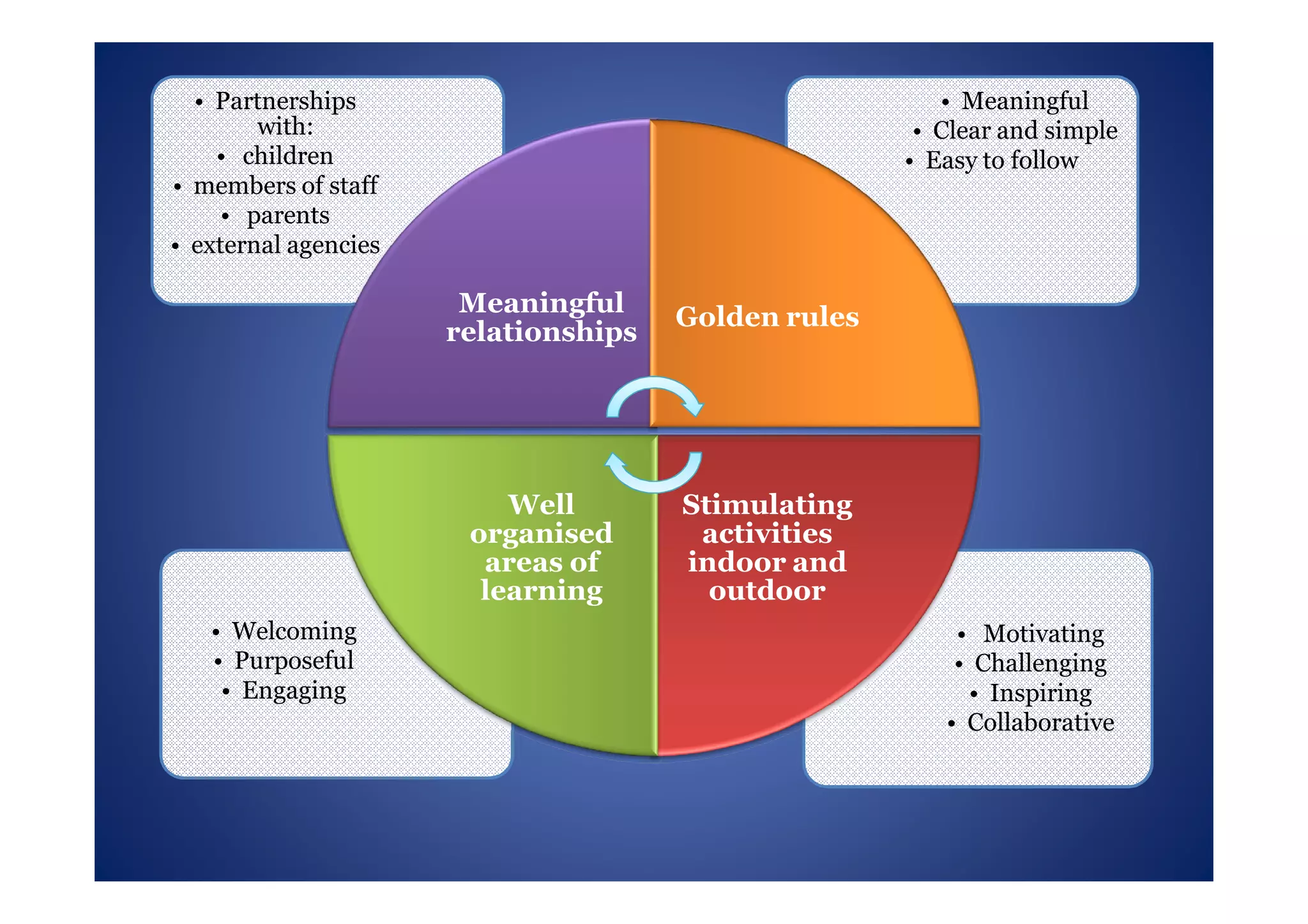
• Partnerships                                        • Meaningful
        with:                                         • Clear and simple
    • children                                       • Easy to follow
• members of staff
     • parents
• external agencies

                       Meaningful     Golden rules
                      relationships


                          Well        Stimulating
                       organised       activities
                        areas of      indoor and
                        learning        outdoor
   • Welcoming                                           • Motivating
   • Purposeful                                          • Challenging
    • Engaging                                            • Inspiring
                                                        • Collaborative
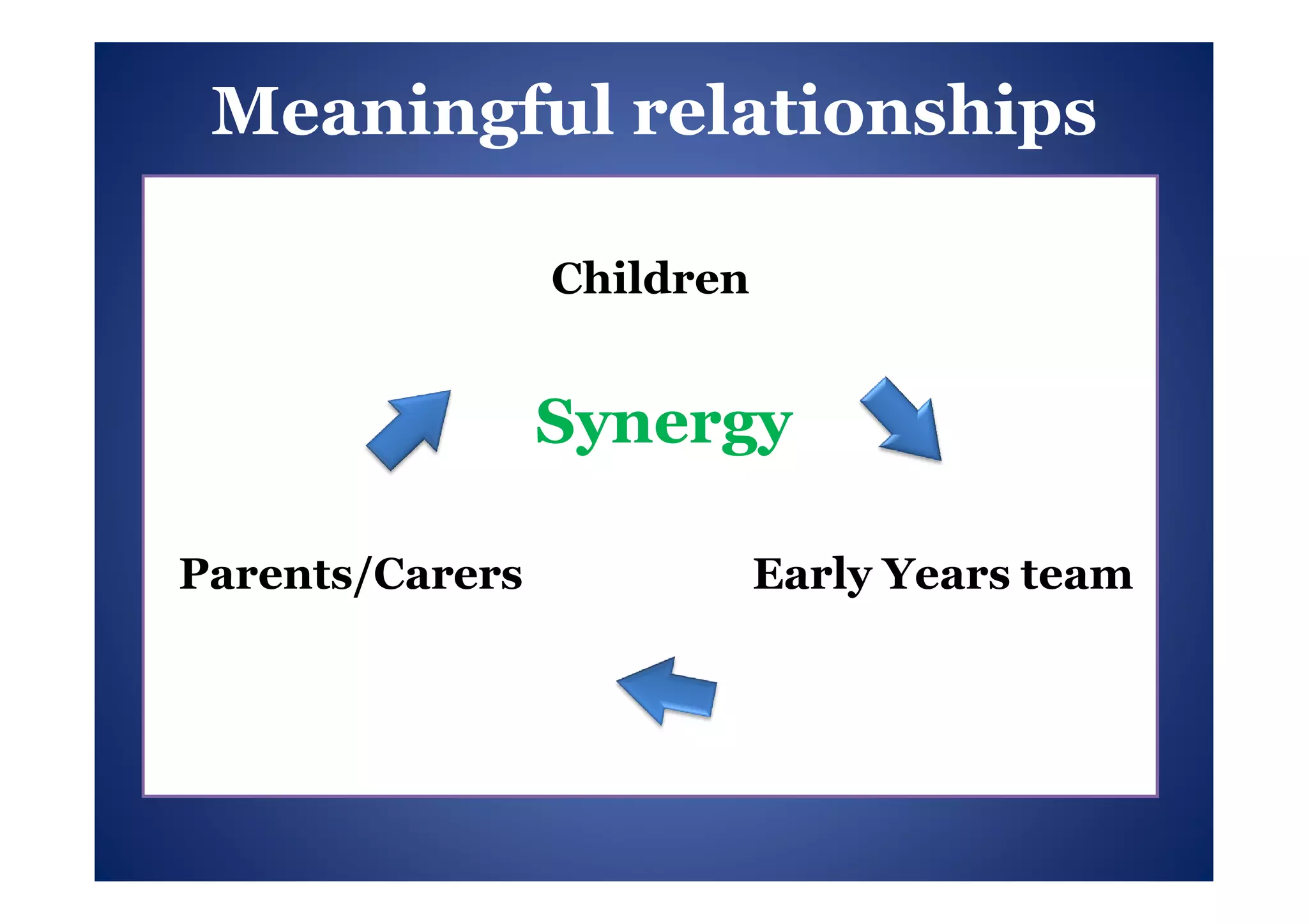
Meaningful relationships

                 Children


                 Synergy

Parents/Carers              Early Years team
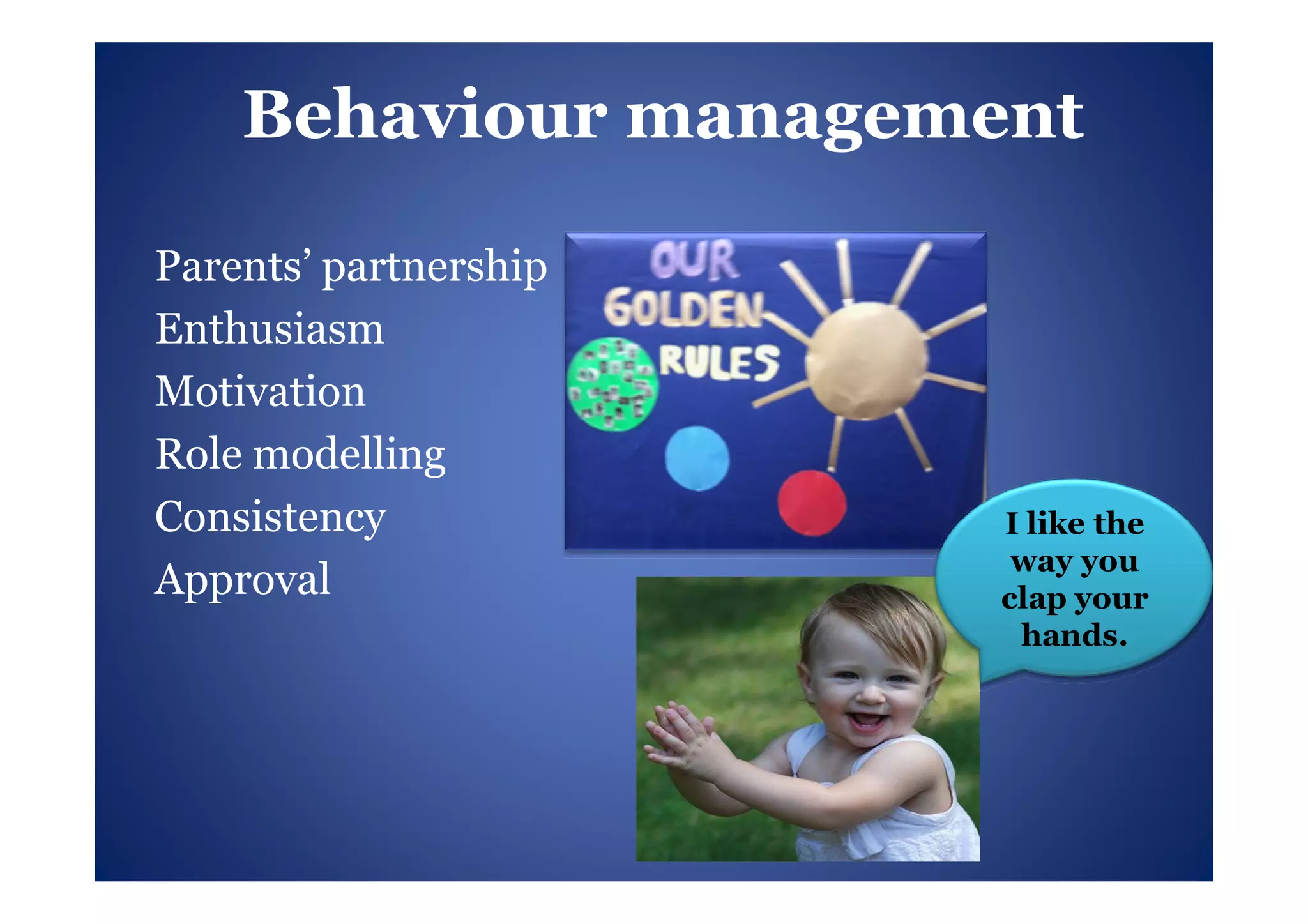
Behaviour management

Parents’ partnership
Enthusiasm
Motivation
Role modelling
Consistency            I like the
                        way you
Approval               clap your
                        hands.
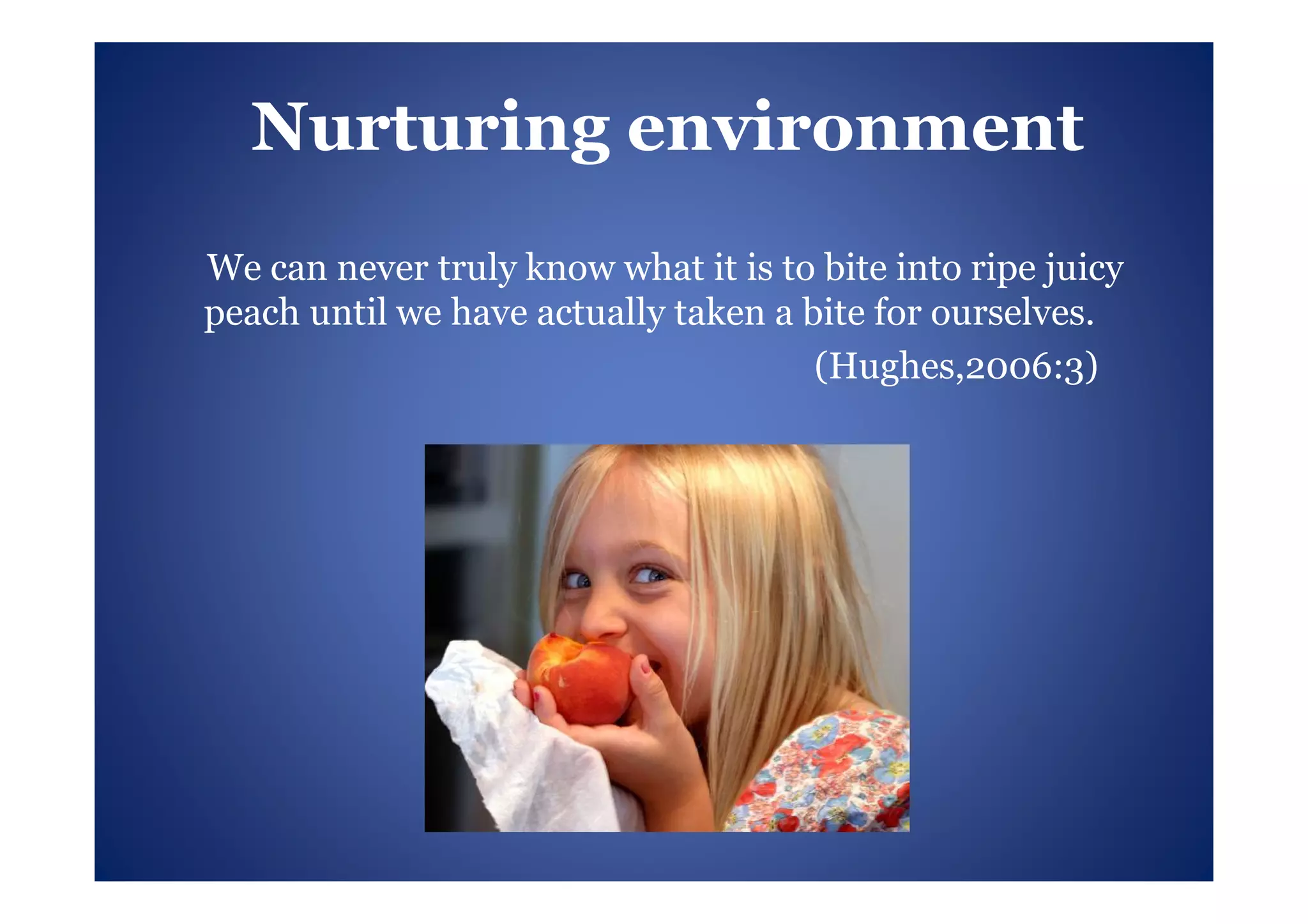
Nurturing environment
We can never truly know what it is to bite into ripe juicy
peach until we have actually taken a bite for ourselves.
                                      (Hughes,2006:3)
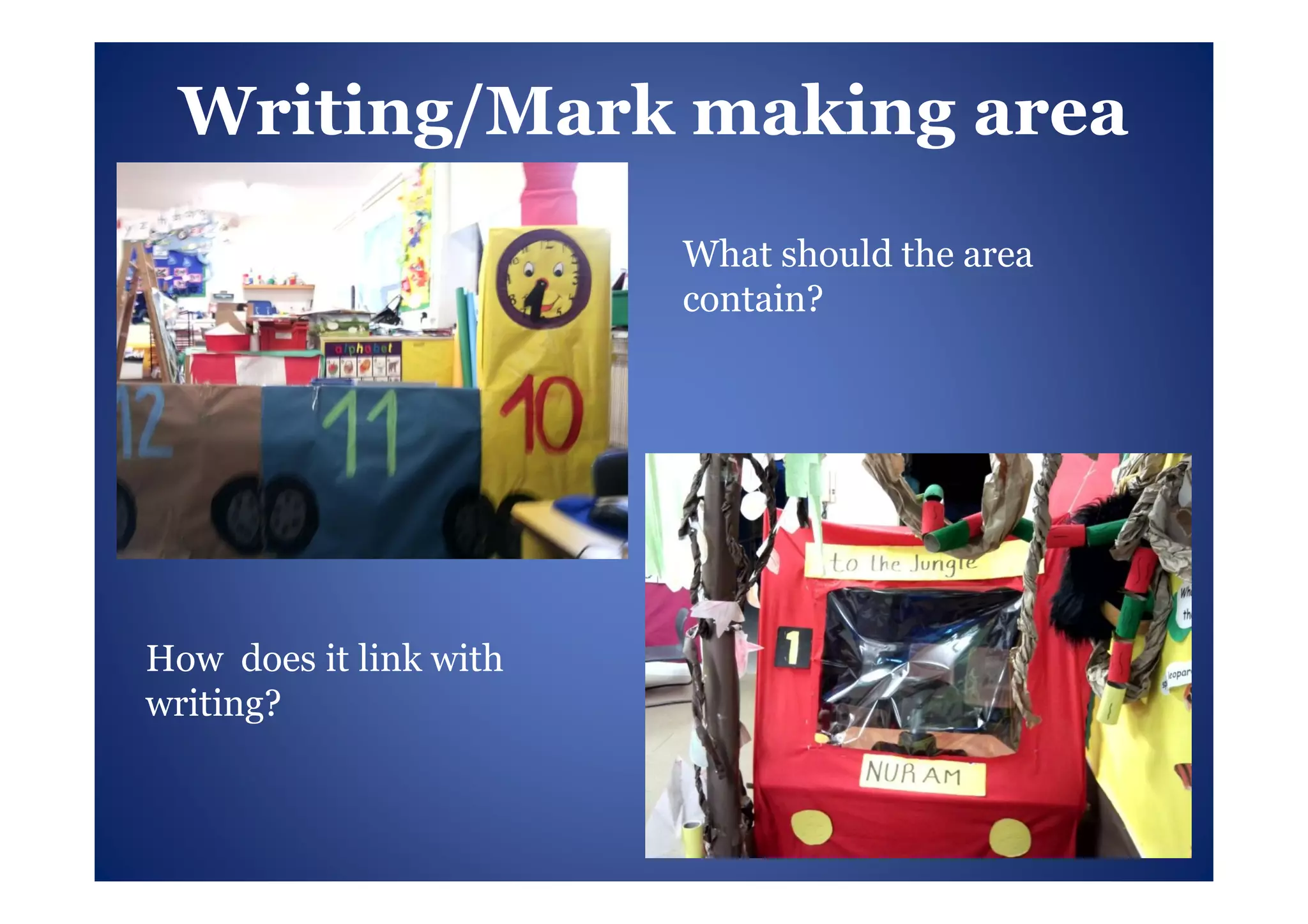
Writing/Mark making area
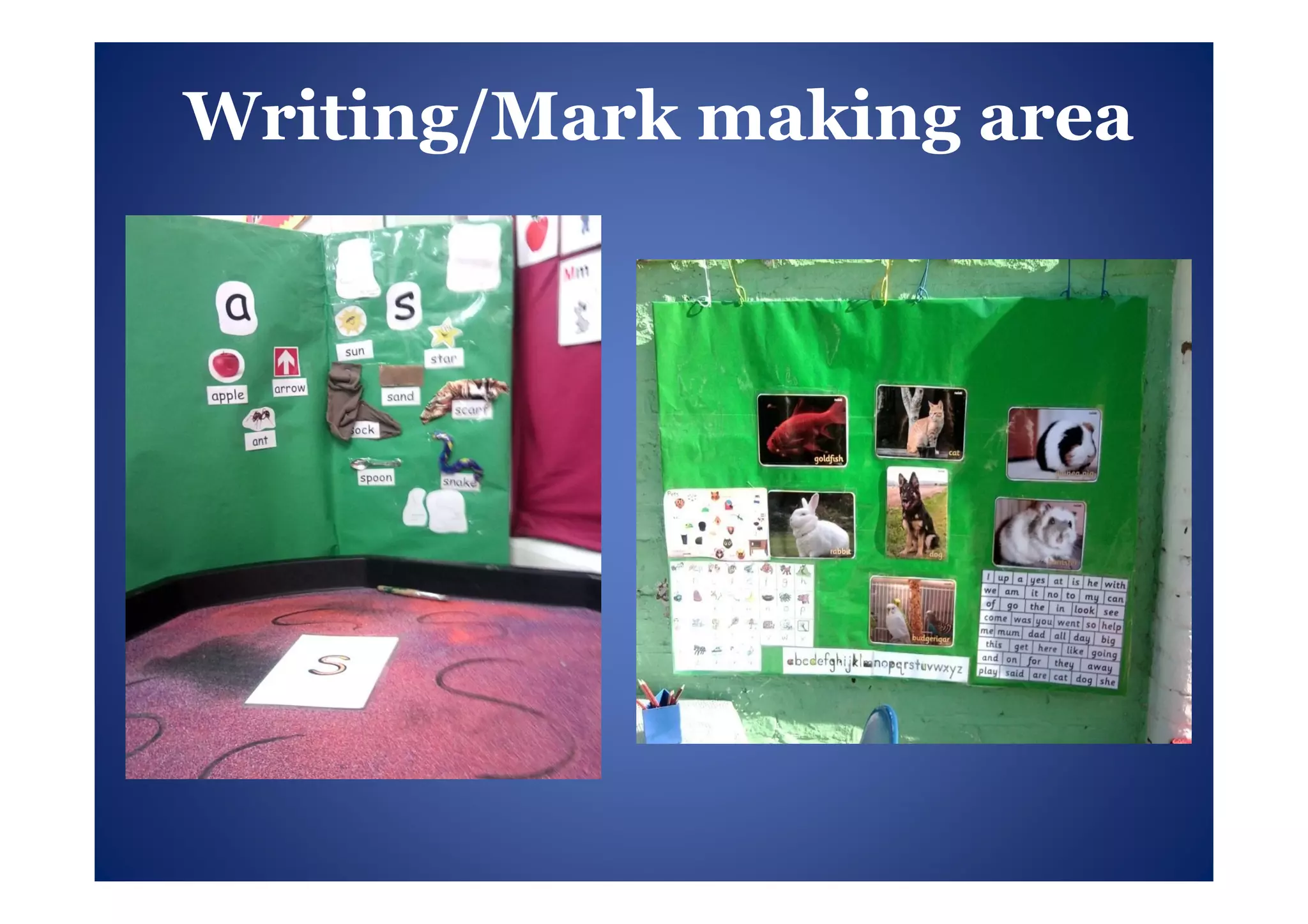
                        What should the area
                        contain?


How does it link with
writing?
Writing/Mark making area
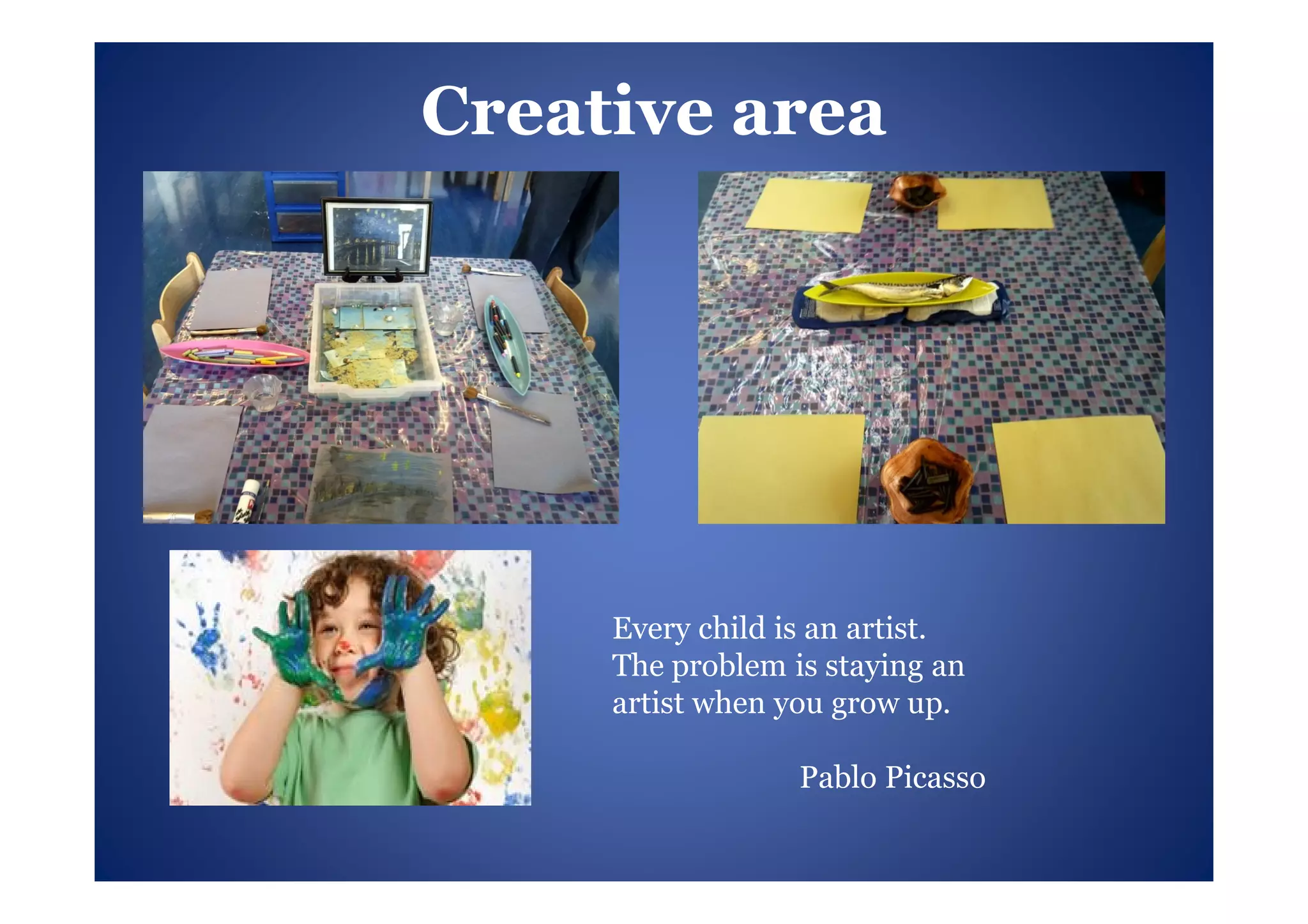
Creative area


     Every child is an artist.
     The problem is staying an
     artist when you grow up.

                  Pablo Picasso
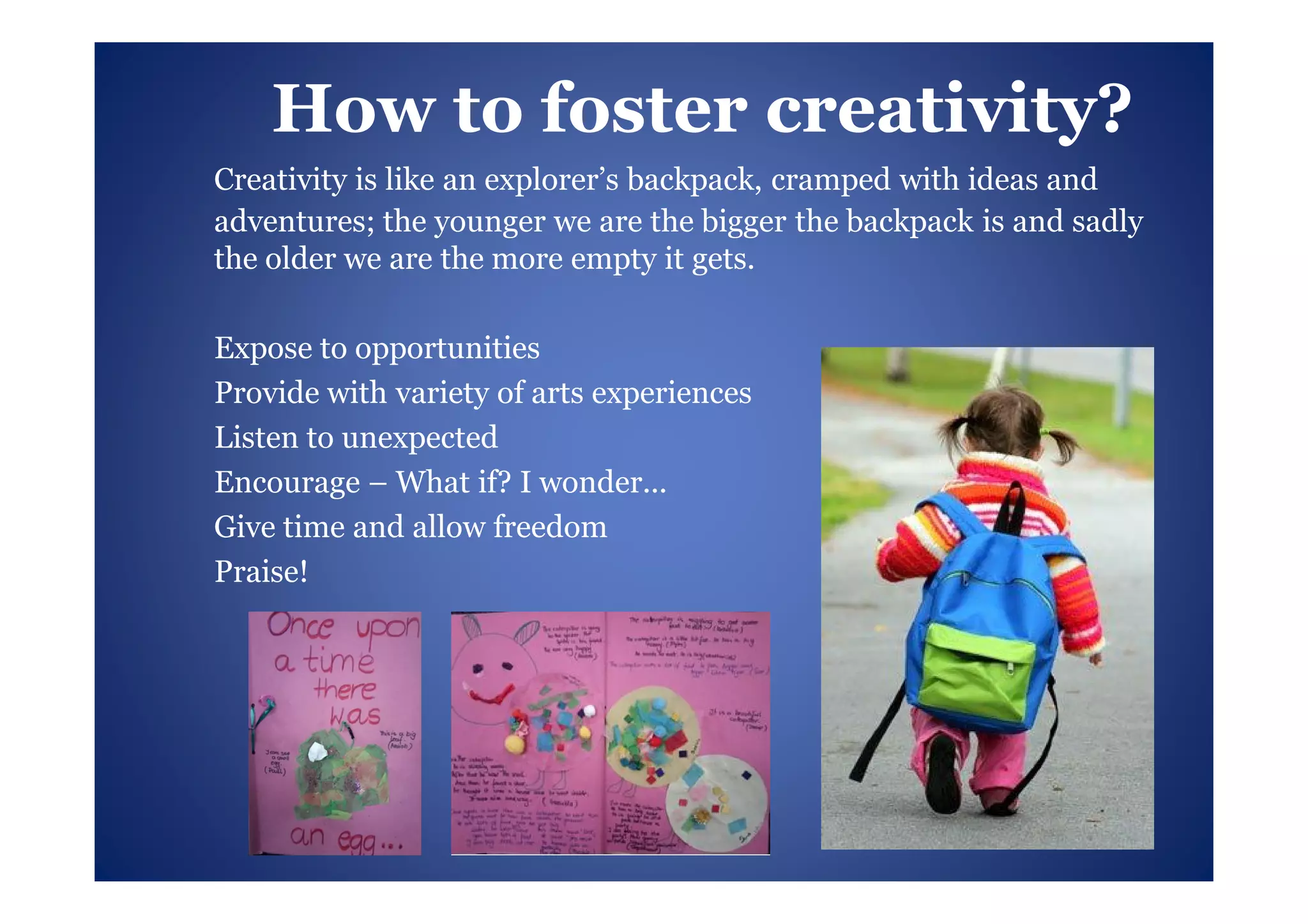
How to foster creativity?
Creativity is like an explorer’s backpack, cramped with ideas and
adventures; the younger we are the bigger the backpack is and sadly
the older we are the more empty it gets.

Expose to opportunities
Provide with variety of arts experiences
Listen to unexpected
Encourage – What if? I wonder...
Give time and allow freedom
Praise!
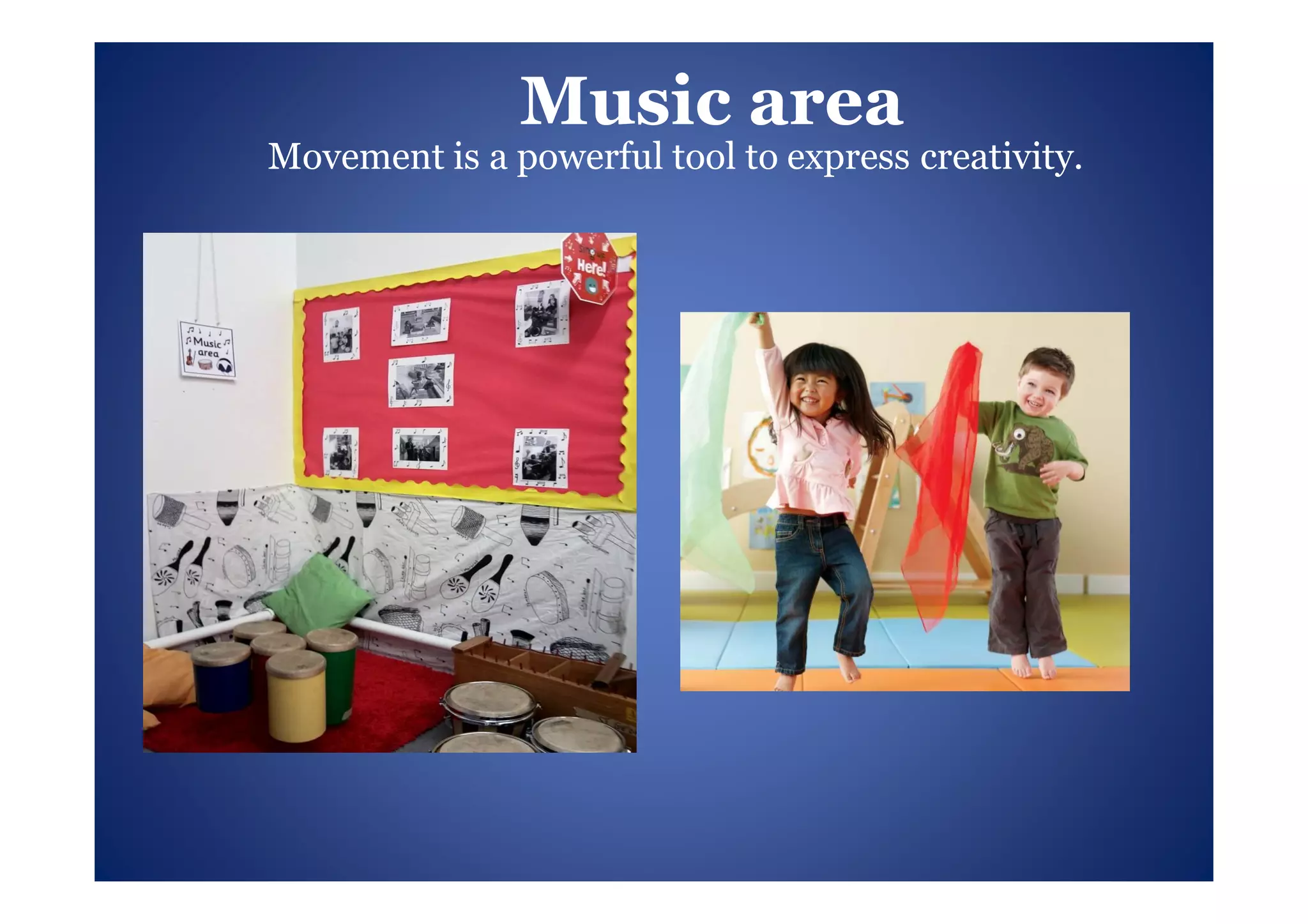
Music area
Movement is a powerful tool to express creativity.
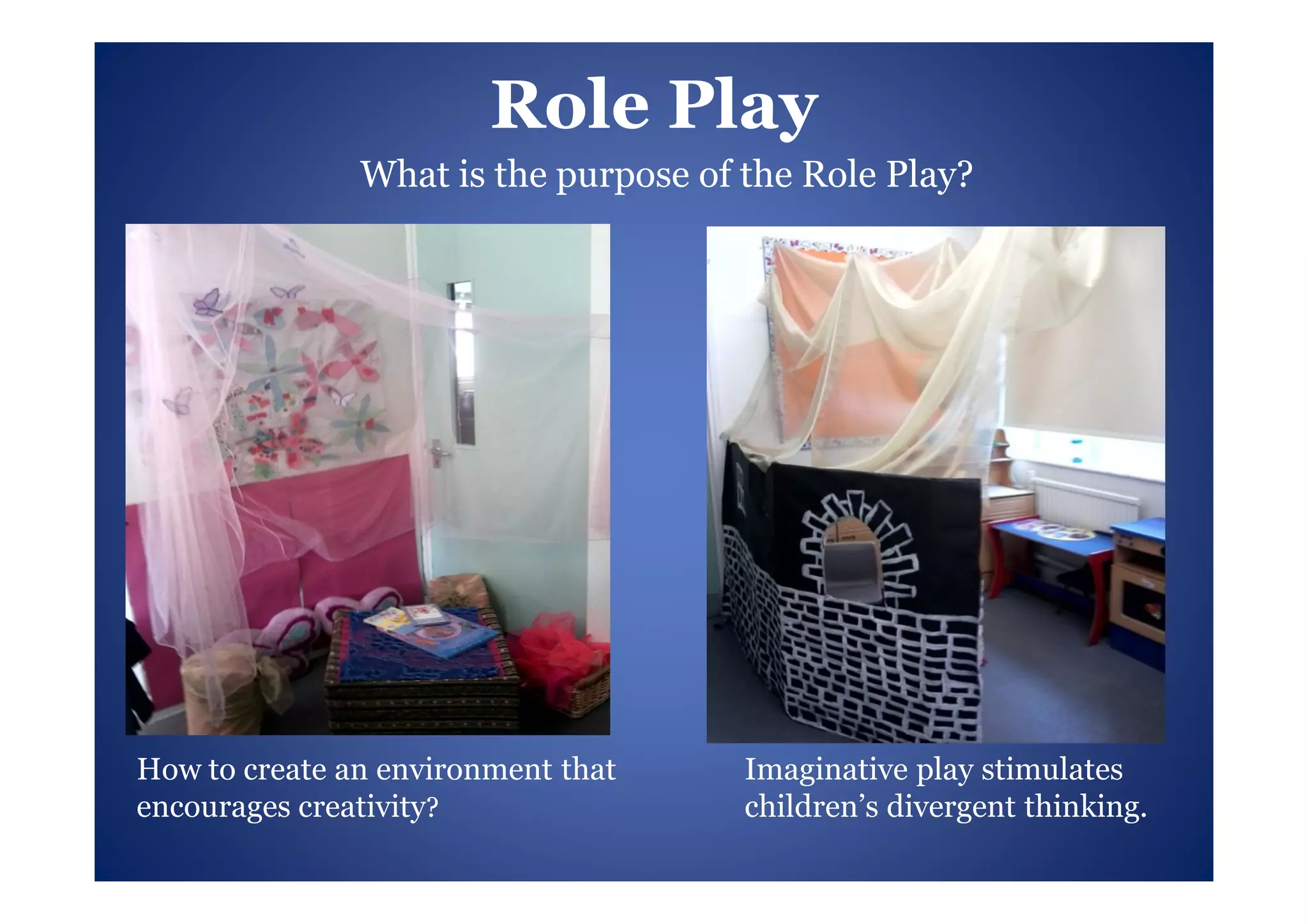
Role Play
               What is the purpose of the Role Play?


How to create an environment that     Imaginative play stimulates
encourages creativity?                children’s divergent thinking.
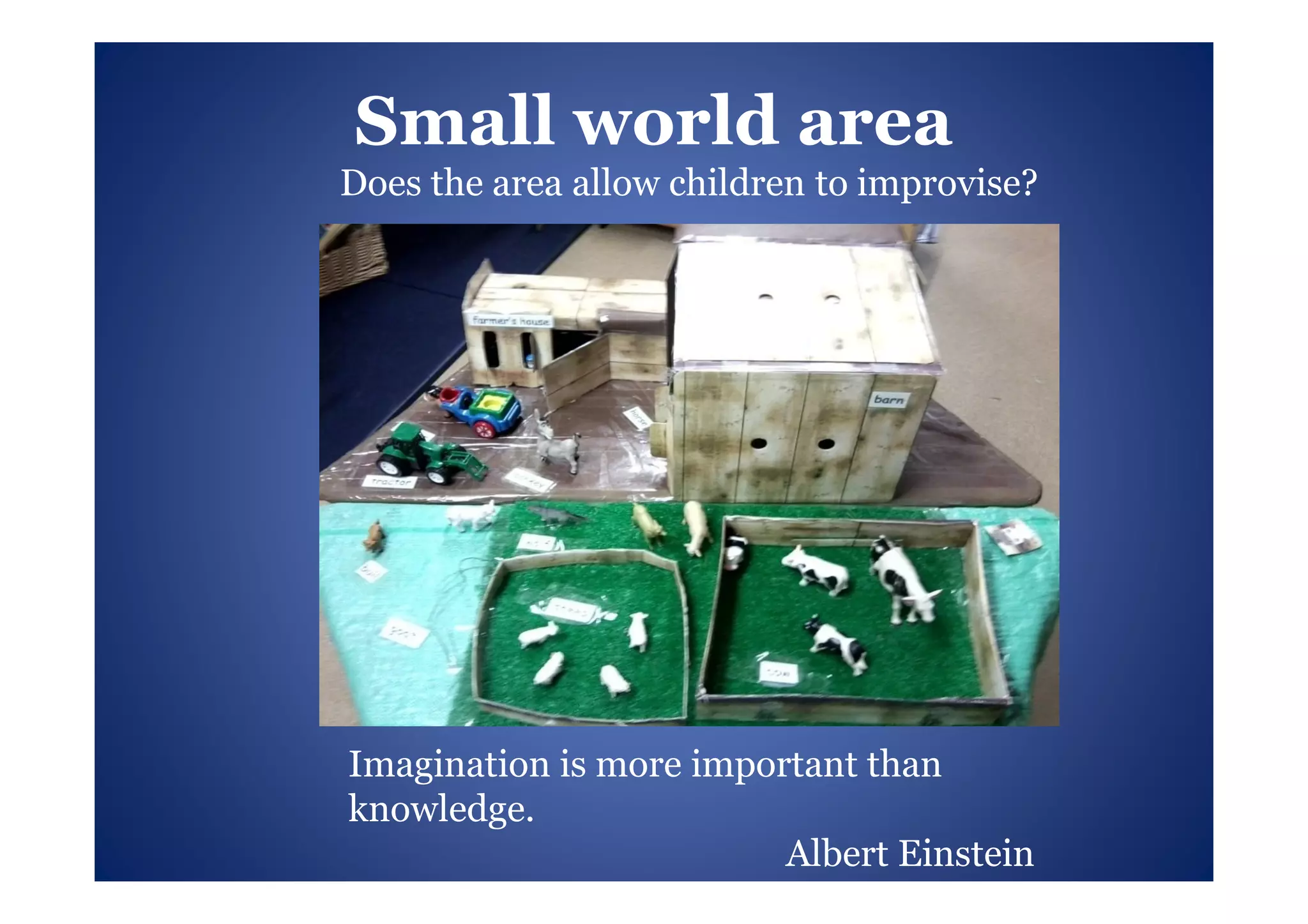
Small world area
Does the area allow children to improvise?


Imagination is more important than
knowledge.
                         Albert Einstein
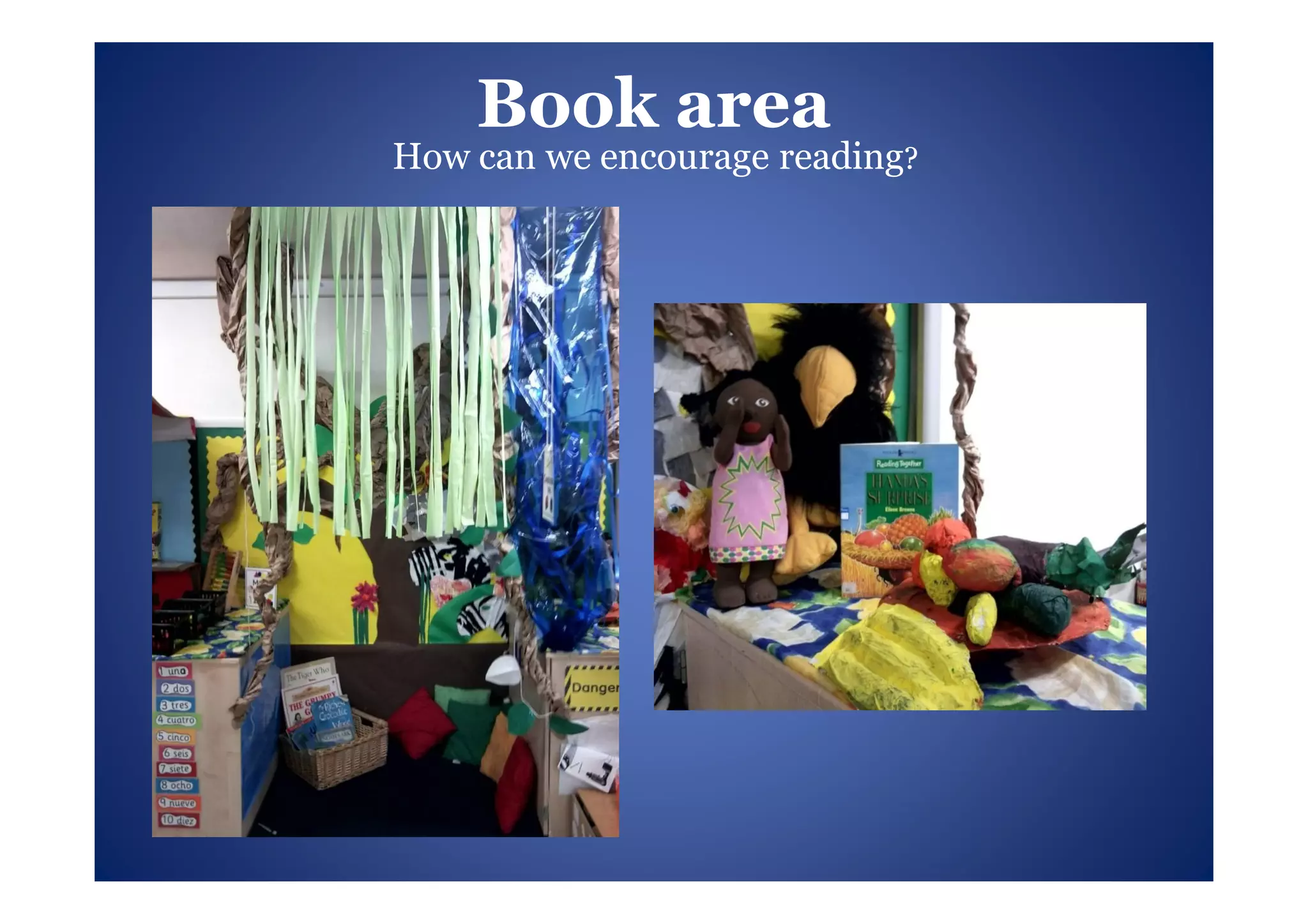
Book area
How can we encourage reading?
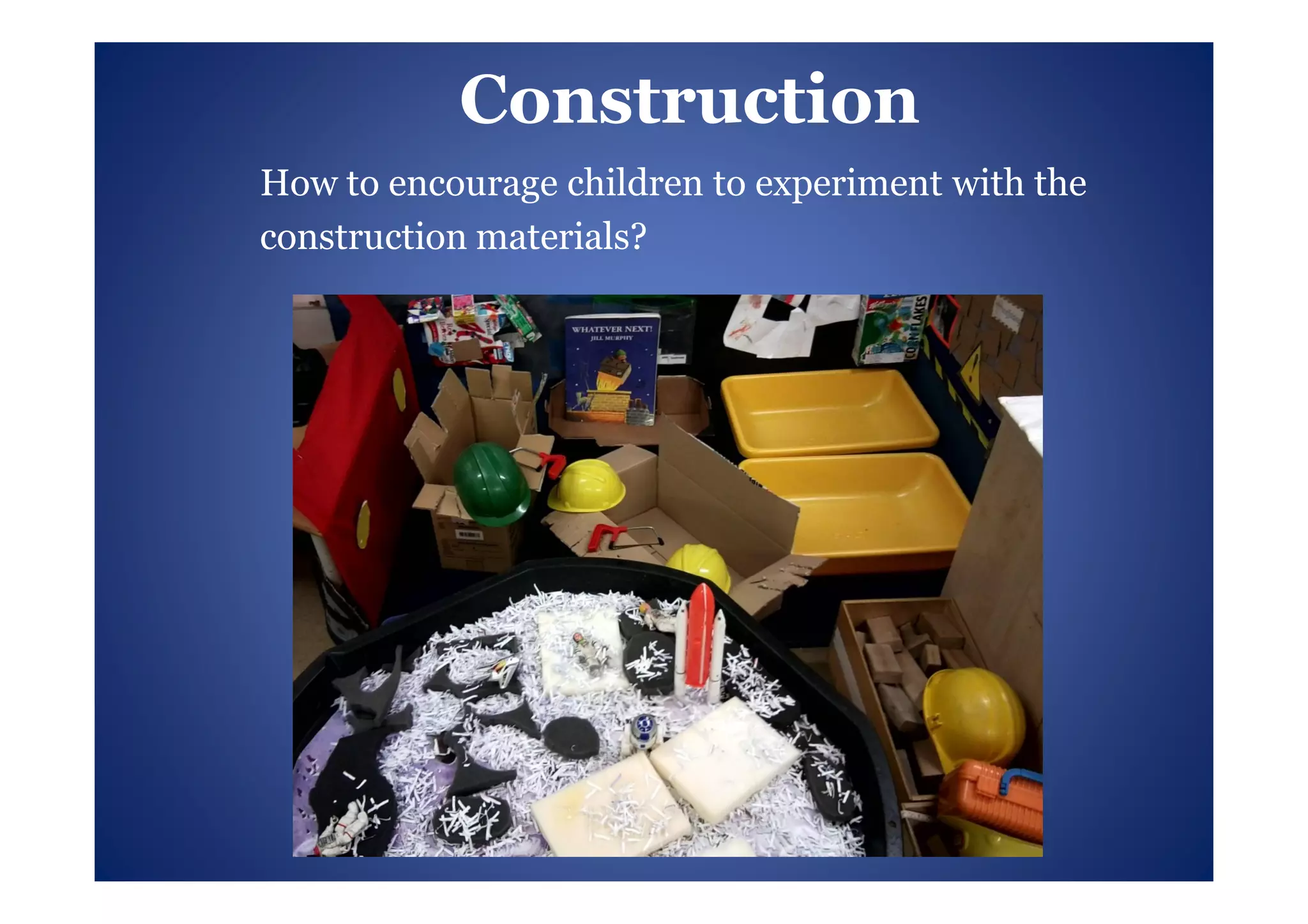
Construction
How to encourage children to experiment with the
construction materials?
Computer area
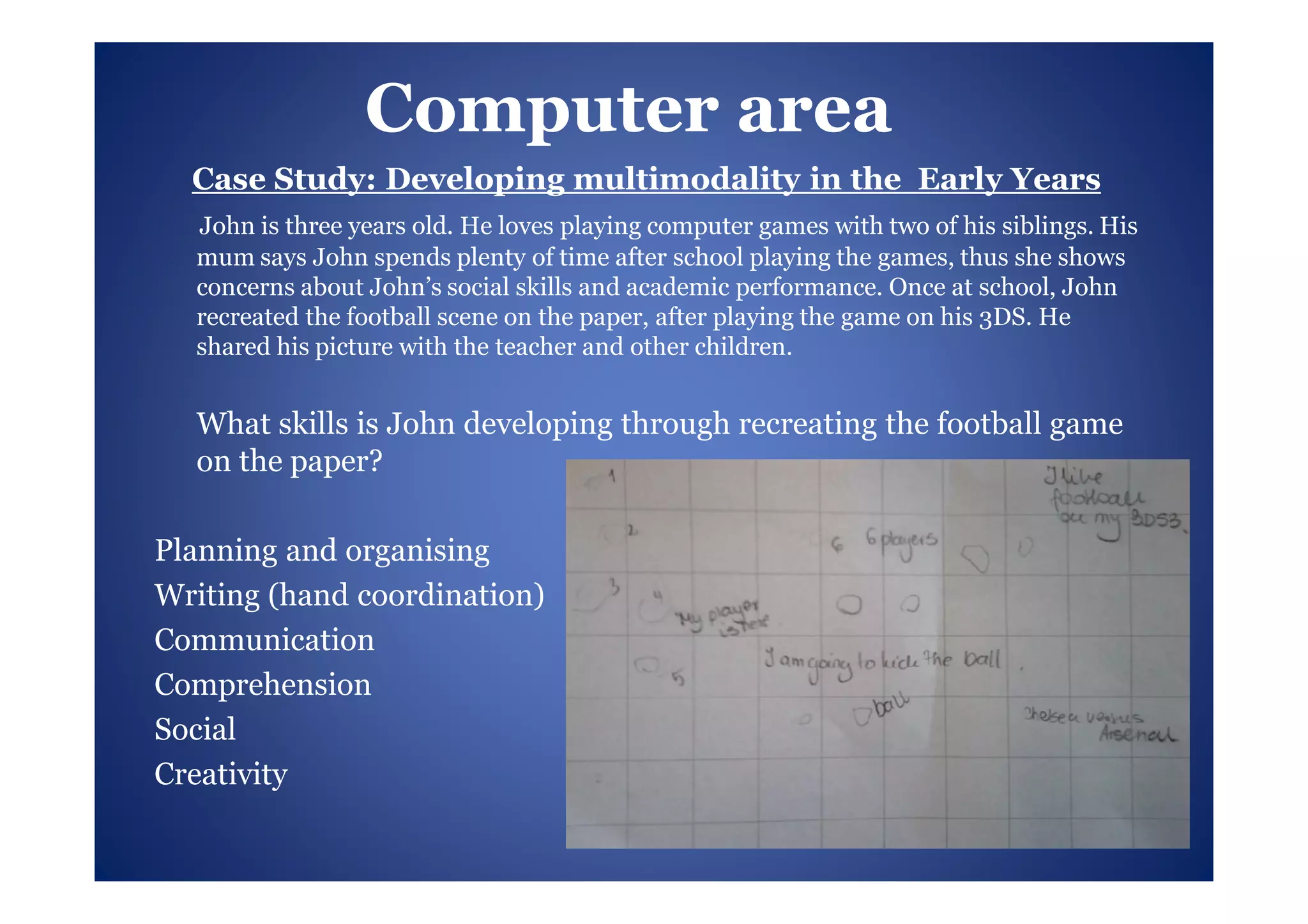
  Case Study: Developing multimodality in the Early Years
  John is three years old. He loves playing computer games with two of his siblings. His
  mum says John spends plenty of time after school playing the games, thus she shows
  concerns about John’s social skills and academic performance. Once at school, John
  recreated the football scene on the paper, after playing the game on his 3DS. He
  shared his picture with the teacher and other children.


  What skills is John developing through recreating the football game
  on the paper?

Planning and organising
Writing (hand coordination)
Communication
Comprehension
Social
Creativity
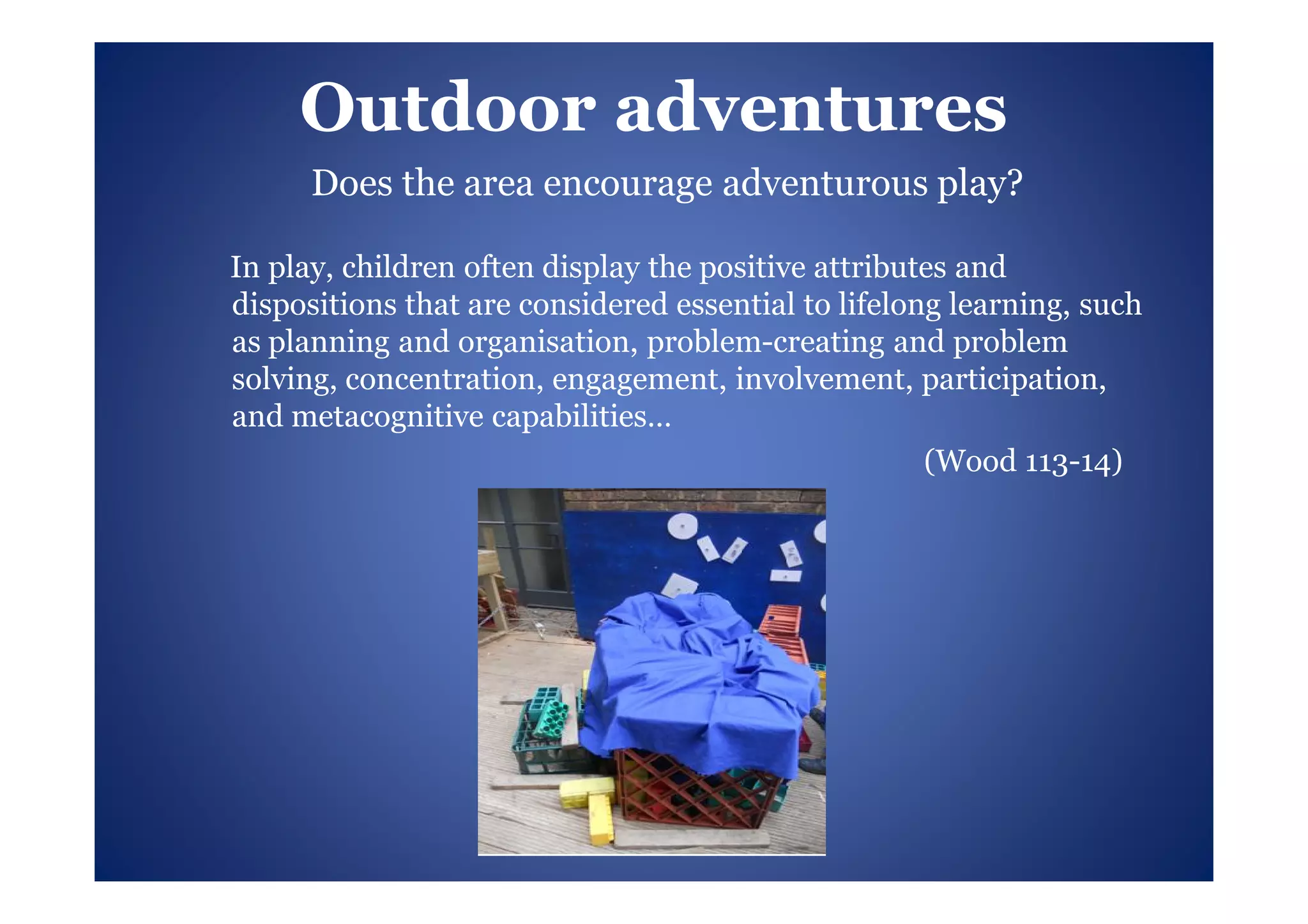
Outdoor adventures
      Does the area encourage adventurous play?

In play, children often display the positive attributes and
dispositions that are considered essential to lifelong learning, such
as planning and organisation, problem-creating and problem
solving, concentration, engagement, involvement, participation,
and metacognitive capabilities…
                                                     (Wood 113-14)
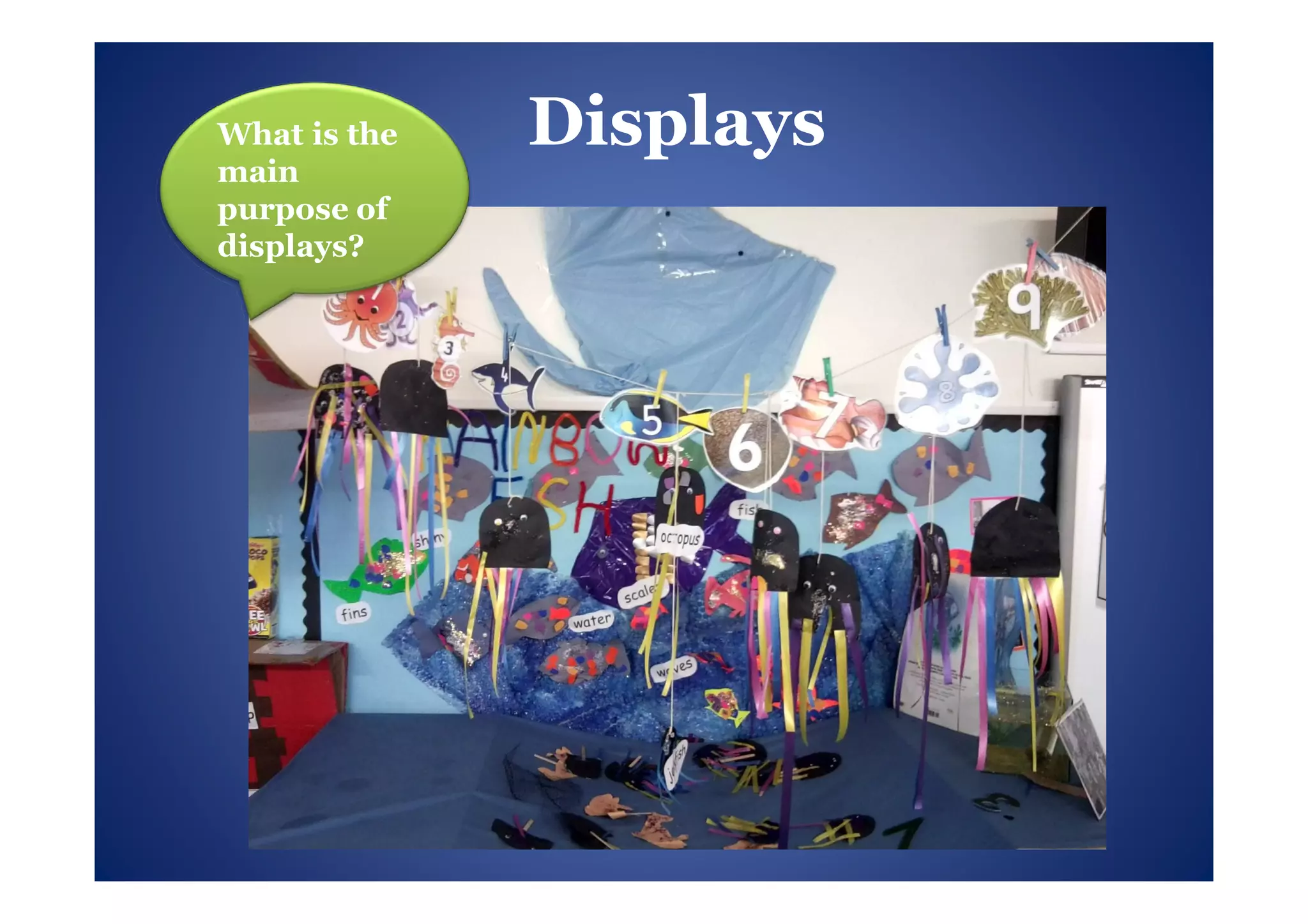
What is the   Displays
main
purpose of
displays?
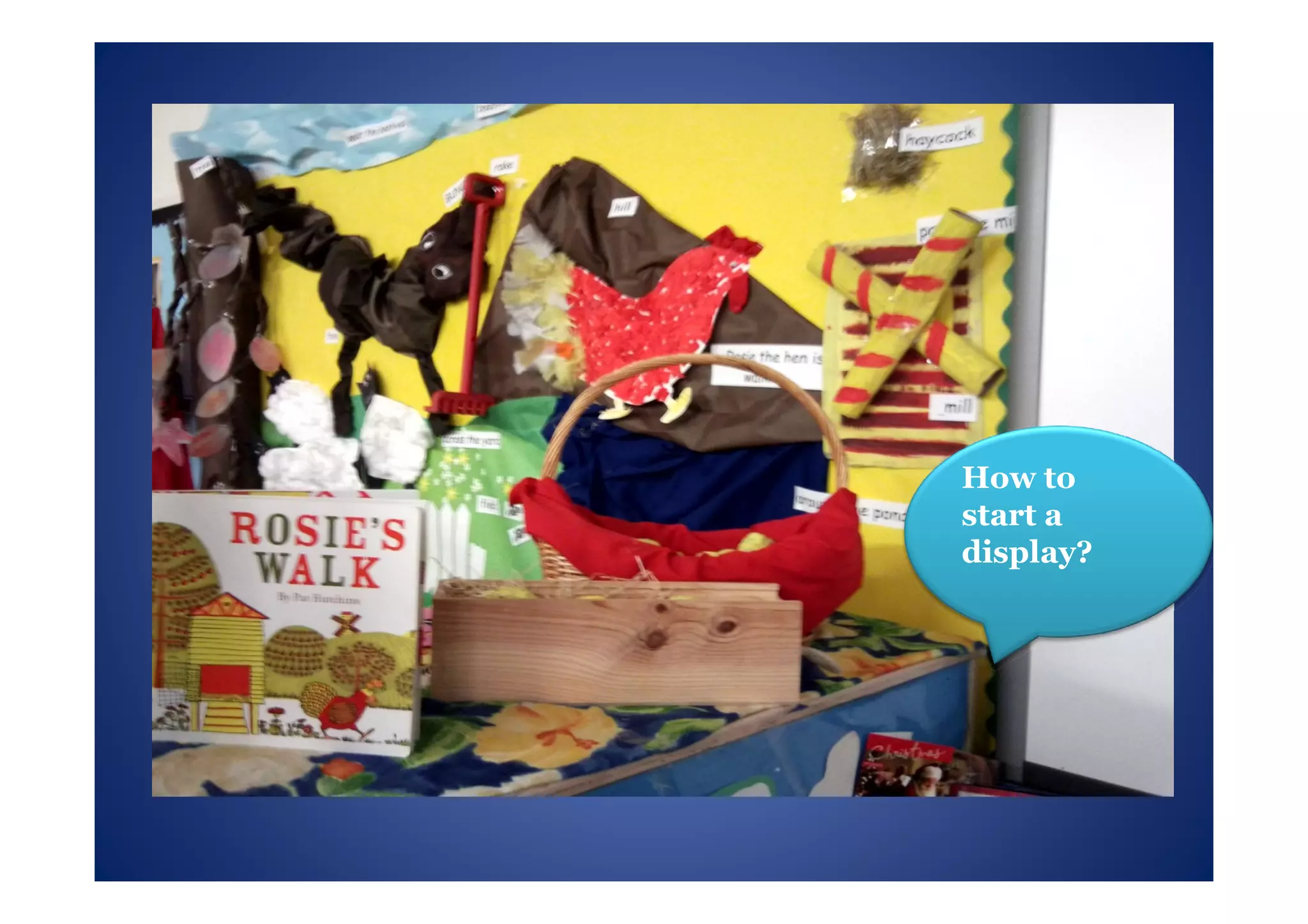
How to
start a
display?
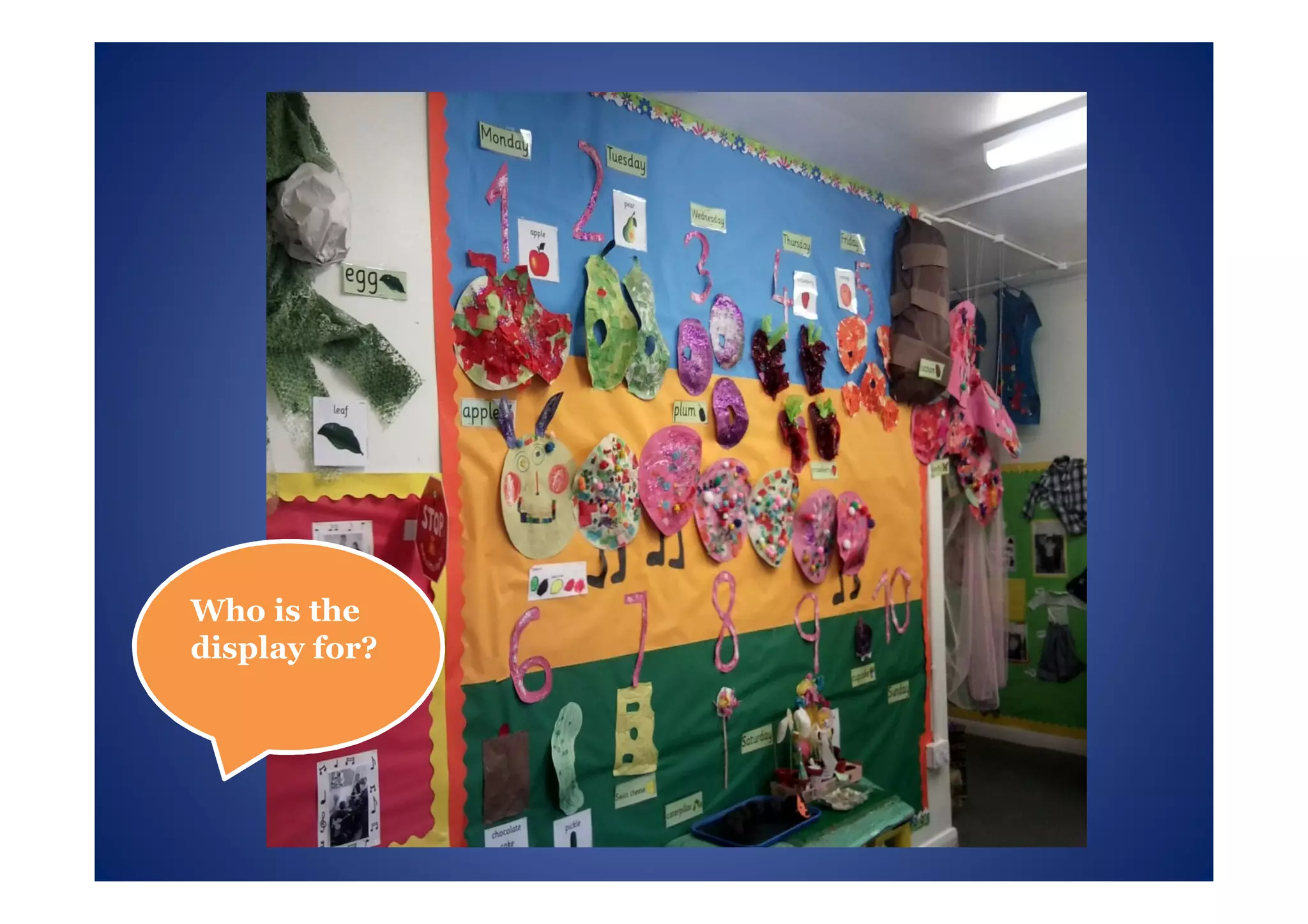
Who is the
display for?
Strong foundations in brain
       development
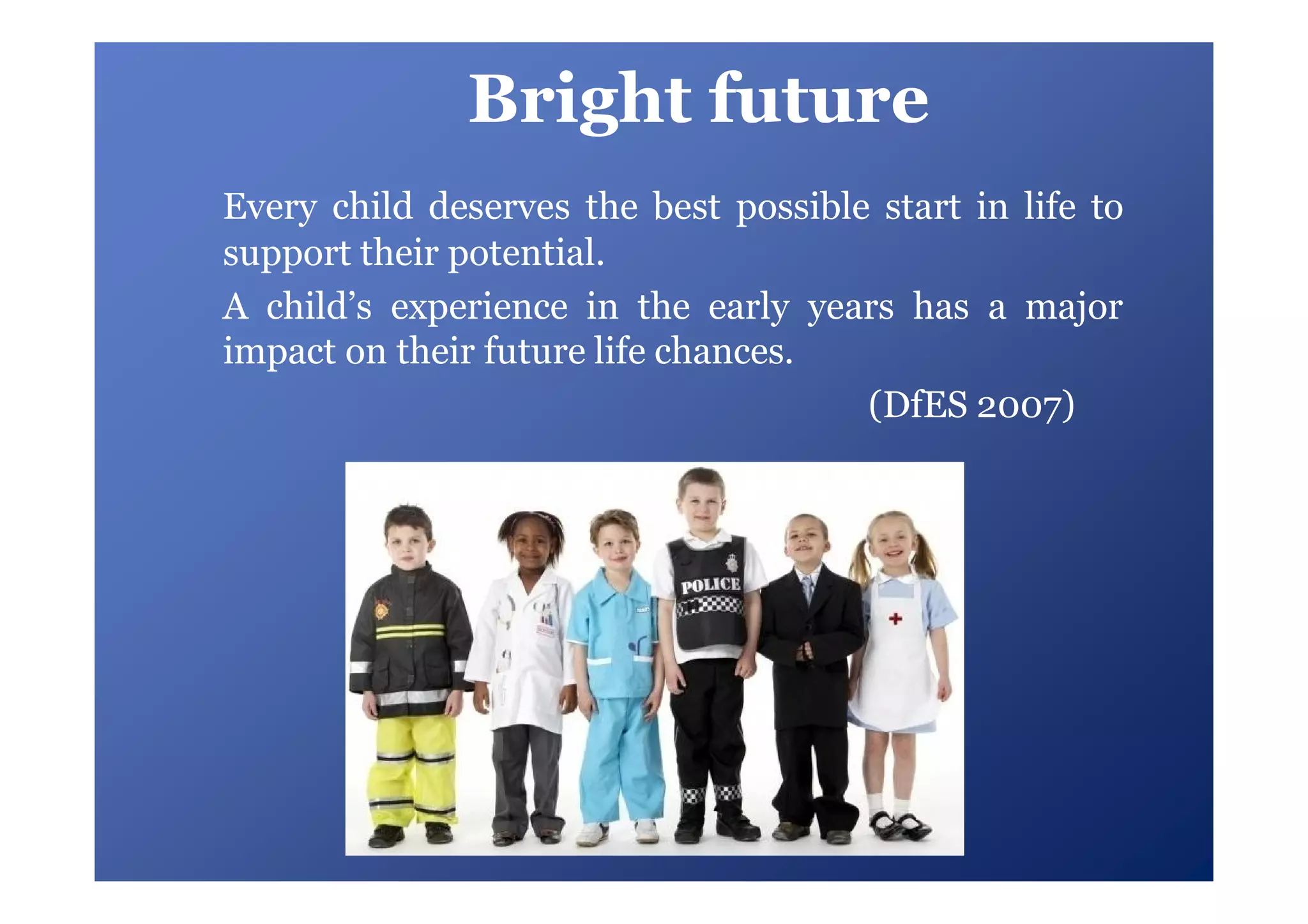
Bright future
Every child deserves the best possible start in life to
support their potential.
A child’s experience in the early years has a major
impact on their future life chances.
                                      (DfES 2007)
If we change one thing...

Can you think what you would like to focus on
changing/amending/ highlighting in your setting to
create a high quality learning environment?
Thank you for listening.
References
Athey, C (1999), Extending Thought In Young Children: A Parent- Teacher Partnership, London: Paul
Chapman .

Bilton, H (2002), Outdoor Learning in the Early Years: management and innovation, London:
Routledge.

Edwards, C., Gandini, L and Foreman, G. (ends) (1998) The hundreds languages of children: The
Reggio Emilia approach to early childhood education. New Jersey: Ablex.

Department for Education and Skills (DfES) (2003), Every Child Matters, London: HMSO.

Fisher, J (ed) (2002) The Foundations of Learning. Buckingham: Open University Press.

Moyles, J (ed) 2007, Early Years Foundations, Maidenhead: Open University Press.

Penn, H (ed) (2000) Early Childhood Services. Buckingham: Open University Press.

Pugh, G&B Duffy, (eds) (2005) Contemporary Issues in the Early Years, [4th edition] London: Sage.

Riley, J (ed) (2007) Learning in the early years: 3-7, London: Paul Chapman.
References
Rinaldi, C (2006), In dialogue with Reggio Emilia: listening, researching and learning, London:
RoutledgeFalmer.

Sylva K.,Taggart,B.,Siraj- Blatchford, I.,Totsika, V., ereky-Stevens, K., Gilden, R. And Bell, D. (2007),
‘Curricular quality and day-to-day learning activities in preschool’, International Journal of Early Years
Education, 1 (1):49-65.

Whalley, M and the Pen Green Centre Team (2007), Involving Parents in Their Children’s Learning,
London: Paul Chapman.

Picasso,P ‘ Every child is an artist. The problem is staying an artist when you grow up’.
http://twistedsifter.com/2012/03/15-famous-quotes-on-creativity/

Kay,J, Good Practice In The Early Years: Growing and Developing: Karen Hardy ‘We can never truly
know what it is to bite into ripe juicy peach until we have actually taken a bite for ourselves.

Pictures: http://ecep.uark.edu/ecep_docs/CC_logo.png
http://www.marlowetheatre.com/page/3200/The-Marlowe-Diddies/158,
http://farm1.static.flickr.com/99/312427606_defa0dfaa8.jpg
http://kidstraveldoc.com/wordpress/dr-neumanns-kids-travel-doc-10-tips-backpacks-children/
http://gymbobuzz.gymboreeclasses, http://apennedpoint.com/tag/medical-errors/
http://wonderopolis.org/category/future/
Recommended reading
Alexander, R (2009), Children, their world, their education: Final report of the Cambridge Primary
Review. London: Routledge.

Canning, N (2010), The Influence of the outdoor environment: den-making in three different contexts,
UK: Open University.

White, J (2009), Playing and Learning Outdoors, London: Routledge.

Pahl,K (2007) Creativity in events and practices: a lens for understanding children’s multimodal texts:
Blackwell Publishing.

High Quality Learning Environment in the EYFS

  • 1.
    High Quality Learning Environment in the Early Years Foundation Stage By: Anna Cylkowska © Presented at Pase International Email: a.cylkowska@gmail.com Conference - May 2012
  • 2.
    • Partnerships • Meaningful with: • Clear and simple • children • Easy to follow • members of staff • parents • external agencies Meaningful Golden rules relationships Well Stimulating organised activities areas of indoor and learning outdoor • Welcoming • Motivating • Purposeful • Challenging • Engaging • Inspiring • Collaborative
  • 3.
    Meaningful relationships Children Synergy Parents/Carers Early Years team
  • 4.
    Behaviour management Parents’ partnership Enthusiasm Motivation Rolemodelling Consistency I like the way you Approval clap your hands.
  • 5.
    Nurturing environment We cannever truly know what it is to bite into ripe juicy peach until we have actually taken a bite for ourselves. (Hughes,2006:3)
  • 6.
    Writing/Mark making area What should the area contain? How does it link with writing?
  • 7.
  • 8.
    Creative area Every child is an artist. The problem is staying an artist when you grow up. Pablo Picasso
  • 9.
    How to fostercreativity? Creativity is like an explorer’s backpack, cramped with ideas and adventures; the younger we are the bigger the backpack is and sadly the older we are the more empty it gets. Expose to opportunities Provide with variety of arts experiences Listen to unexpected Encourage – What if? I wonder... Give time and allow freedom Praise!
  • 10.
    Music area Movement isa powerful tool to express creativity.
  • 11.
    Role Play What is the purpose of the Role Play? How to create an environment that Imaginative play stimulates encourages creativity? children’s divergent thinking.
  • 12.
    Small world area Doesthe area allow children to improvise? Imagination is more important than knowledge. Albert Einstein
  • 13.
    Book area How canwe encourage reading?
  • 14.
    Construction How to encouragechildren to experiment with the construction materials?
  • 15.
    Computer area Case Study: Developing multimodality in the Early Years John is three years old. He loves playing computer games with two of his siblings. His mum says John spends plenty of time after school playing the games, thus she shows concerns about John’s social skills and academic performance. Once at school, John recreated the football scene on the paper, after playing the game on his 3DS. He shared his picture with the teacher and other children. What skills is John developing through recreating the football game on the paper? Planning and organising Writing (hand coordination) Communication Comprehension Social Creativity
  • 16.
    Outdoor adventures Does the area encourage adventurous play? In play, children often display the positive attributes and dispositions that are considered essential to lifelong learning, such as planning and organisation, problem-creating and problem solving, concentration, engagement, involvement, participation, and metacognitive capabilities… (Wood 113-14)
  • 17.
    What is the Displays main purpose of displays?
  • 18.
  • 19.
  • 20.
    Strong foundations inbrain development
  • 21.
    Bright future Every childdeserves the best possible start in life to support their potential. A child’s experience in the early years has a major impact on their future life chances. (DfES 2007)
  • 22.
    If we changeone thing... Can you think what you would like to focus on changing/amending/ highlighting in your setting to create a high quality learning environment?
  • 23.
    Thank you forlistening.
  • 24.
    References Athey, C (1999),Extending Thought In Young Children: A Parent- Teacher Partnership, London: Paul Chapman . Bilton, H (2002), Outdoor Learning in the Early Years: management and innovation, London: Routledge. Edwards, C., Gandini, L and Foreman, G. (ends) (1998) The hundreds languages of children: The Reggio Emilia approach to early childhood education. New Jersey: Ablex. Department for Education and Skills (DfES) (2003), Every Child Matters, London: HMSO. Fisher, J (ed) (2002) The Foundations of Learning. Buckingham: Open University Press. Moyles, J (ed) 2007, Early Years Foundations, Maidenhead: Open University Press. Penn, H (ed) (2000) Early Childhood Services. Buckingham: Open University Press. Pugh, G&B Duffy, (eds) (2005) Contemporary Issues in the Early Years, [4th edition] London: Sage. Riley, J (ed) (2007) Learning in the early years: 3-7, London: Paul Chapman.
  • 25.
    References Rinaldi, C (2006),In dialogue with Reggio Emilia: listening, researching and learning, London: RoutledgeFalmer. Sylva K.,Taggart,B.,Siraj- Blatchford, I.,Totsika, V., ereky-Stevens, K., Gilden, R. And Bell, D. (2007), ‘Curricular quality and day-to-day learning activities in preschool’, International Journal of Early Years Education, 1 (1):49-65. Whalley, M and the Pen Green Centre Team (2007), Involving Parents in Their Children’s Learning, London: Paul Chapman. Picasso,P ‘ Every child is an artist. The problem is staying an artist when you grow up’. http://twistedsifter.com/2012/03/15-famous-quotes-on-creativity/ Kay,J, Good Practice In The Early Years: Growing and Developing: Karen Hardy ‘We can never truly know what it is to bite into ripe juicy peach until we have actually taken a bite for ourselves. Pictures: http://ecep.uark.edu/ecep_docs/CC_logo.png http://www.marlowetheatre.com/page/3200/The-Marlowe-Diddies/158, http://farm1.static.flickr.com/99/312427606_defa0dfaa8.jpg http://kidstraveldoc.com/wordpress/dr-neumanns-kids-travel-doc-10-tips-backpacks-children/ http://gymbobuzz.gymboreeclasses, http://apennedpoint.com/tag/medical-errors/ http://wonderopolis.org/category/future/
  • 26.
    Recommended reading Alexander, R(2009), Children, their world, their education: Final report of the Cambridge Primary Review. London: Routledge. Canning, N (2010), The Influence of the outdoor environment: den-making in three different contexts, UK: Open University. White, J (2009), Playing and Learning Outdoors, London: Routledge. Pahl,K (2007) Creativity in events and practices: a lens for understanding children’s multimodal texts: Blackwell Publishing.