How Learning through Play is
Creating Systemic Change in
South Africa
CIES Annual Conference – March 7, 2016

Andrew Bollington	
Brent Hutcheson	
Kimberly Josephson	
Vidya Putcha
Overview
● Introduction and background on the LEGO Foundation	
● Global challenges in ECD & play-based learning	
● Context: South Africa	
● Implementing play-based learning	
● Discussion
2
The LEGO Foundation


Play Based Learning
From www.google.com – “play definition”
We’re re-defining play
Executive
function and self-
regulation skills are the
mental processes that
enable us to plan,focus
attention,remember
instructions,and juggle
multiple tasks
successfully.
http://developingchild.harvard.edu/key_concepts/executive_function
5
We’re 

re-imagining
learning
Skills employers most want in 20-something employees 

	 	
1. Ability to work in a team	
2. Ability to make decisions 

and solve problems	
3. Ability to plan, organize 

and prioritize work	
4. Ability to communicate verbally 	
5. Ability to obtain and process information	
!
National Association of Colleges and Employers, USA
6
Our aim is
to:
Re-define play and
re-imagine learning
Build a future in which learning through play empowers children

to become creative, engaged, life-long learners
We will focus
on:
Children aged 0-12, especially in early childhood
So that:

impact tested by our
research agenda
Children benefit from the transformative power of learning through play to
develop the intellectual, emotional, social, physical and creative skills to serve
them

their communities, and society

a lifetime
Play comes in
many shapes
and sizes
8
1. Physical play 2. Play with objects
3. Symbolic play 4. Pretence and
socio-dramatic play
5. Games with rules
Play


9
Play is a “way” to learn

not “what” you learn”
Playful
Learning
A playful state of mind – 

open, motivated, engaged
Learning to learn; (not behaving as if
Google doesn’t exist)
10
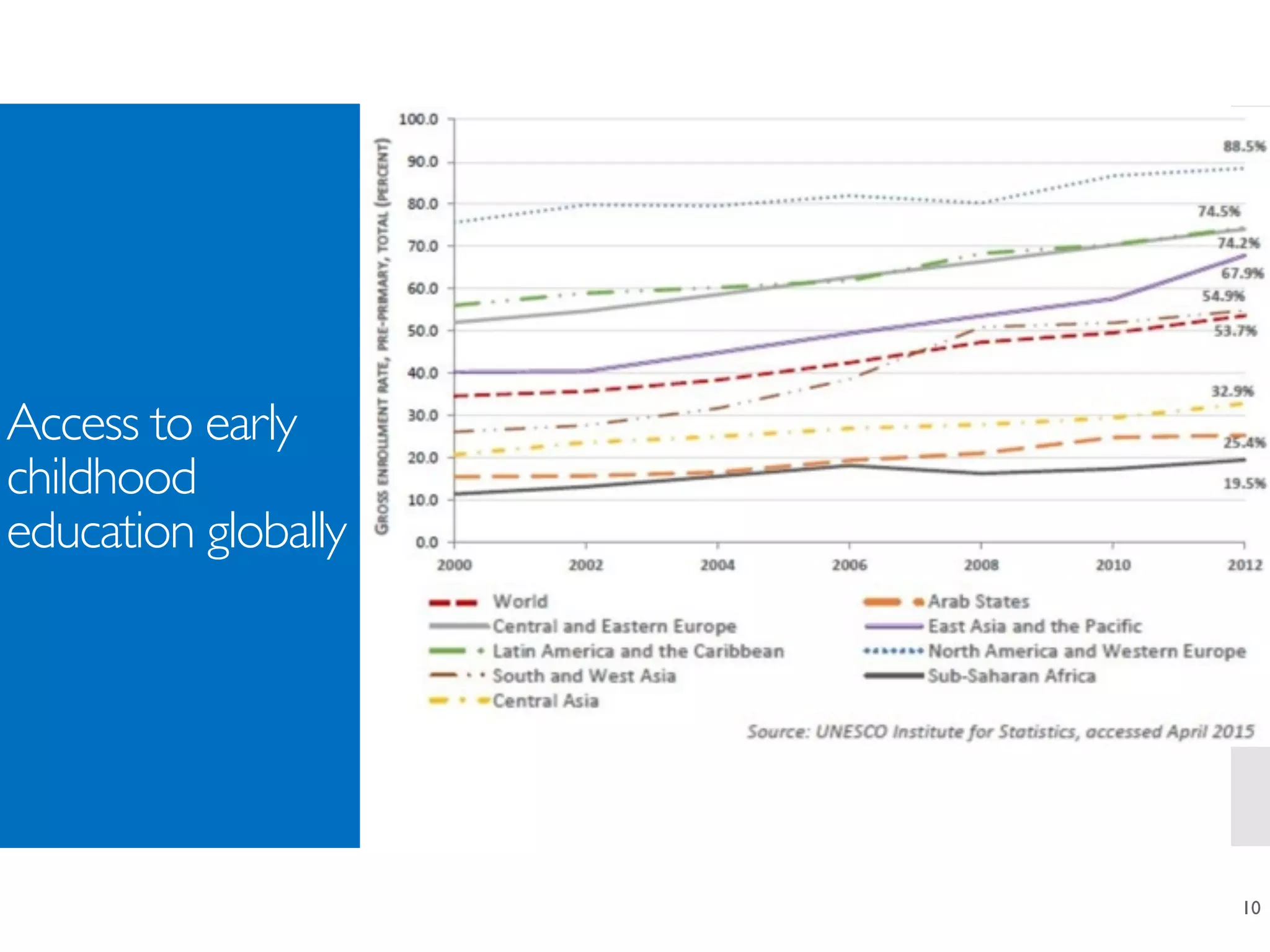
Access to early
childhood
education globally
11
Growing
evidence on the
importance of
ECD programs
Brain Science:	
● Brains are built over time, from the bottom up.	
● Importance of a “serve and return” 	
● Persistent stress affects brain architecture (Center on the
Developing Child, 2015)	
Evaluations of ECD programs:	
● A study of an early childhood stimulation program in Jamaica
found an impact 25 years later (Gertler, et.al. 2014)
12
Progress in global
policy dialogue
Source: https://sustainabledevelopment.un.org/?menu=1300
13
Numerous
challenges to
making SDG 4.2 a
reality
Financing	
!
●Estimates suggest that spending on one year of
high-quality pre-primary education alone in low
and lower middle income countries MUST
increase annually from:	
!
!
!
!
!
!
!
!
!
!
!
UNESCO, 2015.
2012	
$4.8 billion
2015-30	
$31.2 billion
14
Numerous
challenges to
making SDG 4.2 a
reality
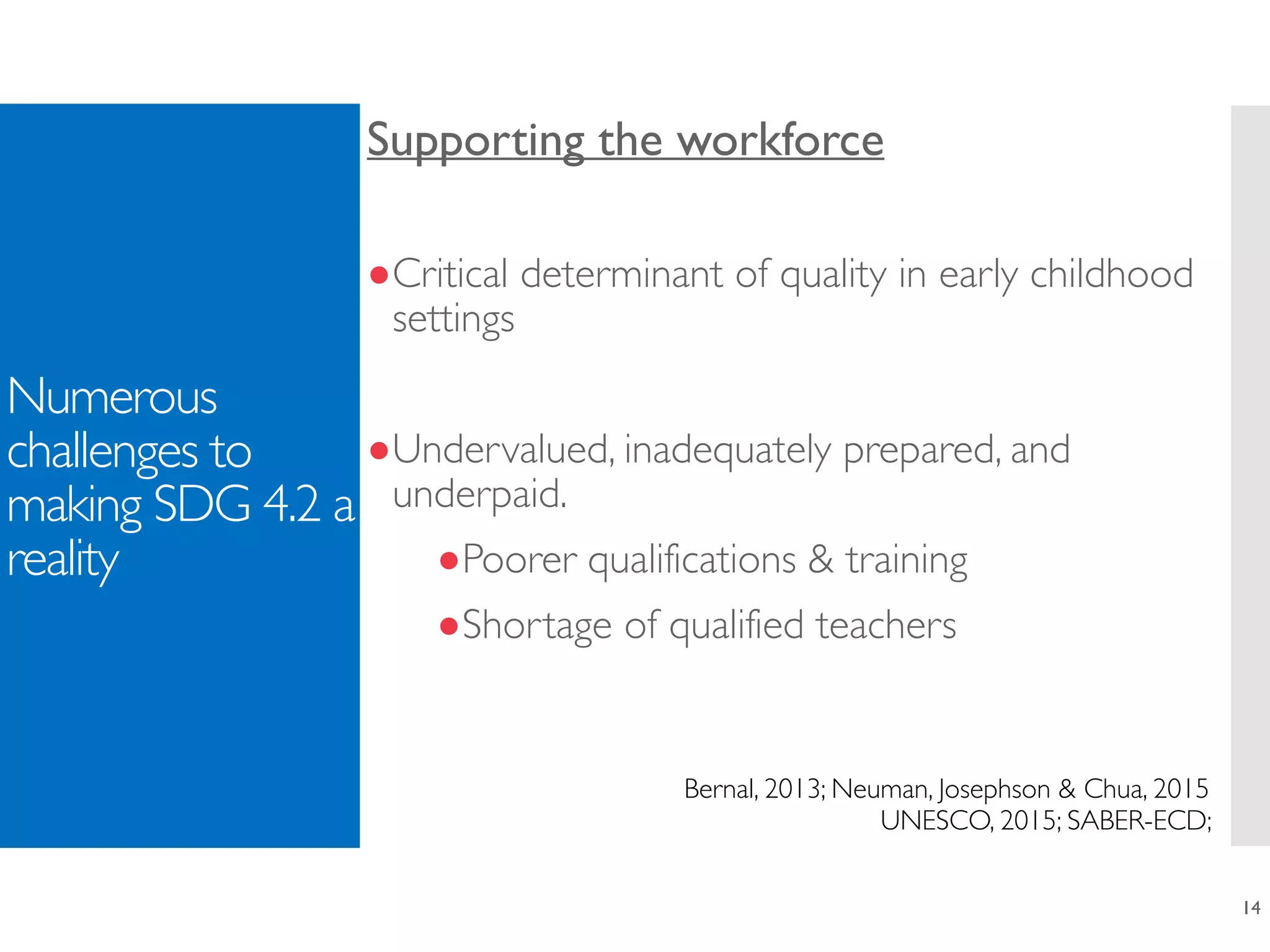
Supporting the workforce	
!
●Critical determinant of quality in early childhood
settings	
!
●Undervalued, inadequately prepared, and
underpaid.	
●Poorer qualifications & training	
●Shortage of qualified teachers
Bernal, 2013; Neuman, Josephson & Chua, 2015	
UNESCO, 2015; SABER-ECD;
“Schoolification”	
!
!
“…While increasing the amount of direct teaching
instruction for young children appears to provide
short-term outcomes in learning, research indicates
that these benefits are not sustained in the long
run. In fact, introducing formal learning too early for
young children can be counterproductive.”	
!
Kellock, 2015

!
15
Challenges in
early childhood
settings
The evidence on
child-centered
approaches
!
16
Kellock, 2015; Montie et al., 2006; 	
Mwaura et al., 2008; Neuman, Josephson, & Chua, 2015;
Free-choice and self-directed	
Small group activities	
Questioning	
Warm, responsive & supportive interactions	
Play
Self-regulation and control	
Language and literacy	
Numeracy	
Creativity and independence
Better academic performance	
Increased schooling and graduation rates	
Higher wages	
Lower crime rates
Innovative
programs
incorporating
play-based
learning
17
PUPA Early
Childhood
Development
(Brazil)
www.educationinnovations.org
High Scope Training of
Trainers Program (South
Africa)
Lively Minds Play Schemes
(Ghana, Uganda)
Kidogo (Kenya)
18
LEGO
Foundation
partnerships in
South Africa
●UNICEF South Africa	
●DG MurrayTrust “SmartStart”	
●The Bertha Centre for Social Innovation and
Entrepreneurship (University of CapeTown)	
●Care for Education	
●Training & Resources in Early Education (TREE)	
●Takalani Sesame
19
Context:South
Africa	
!
!
!
!
SCHOOLS
SCHOOLS
24
Private Schools
25
Private Schools
26
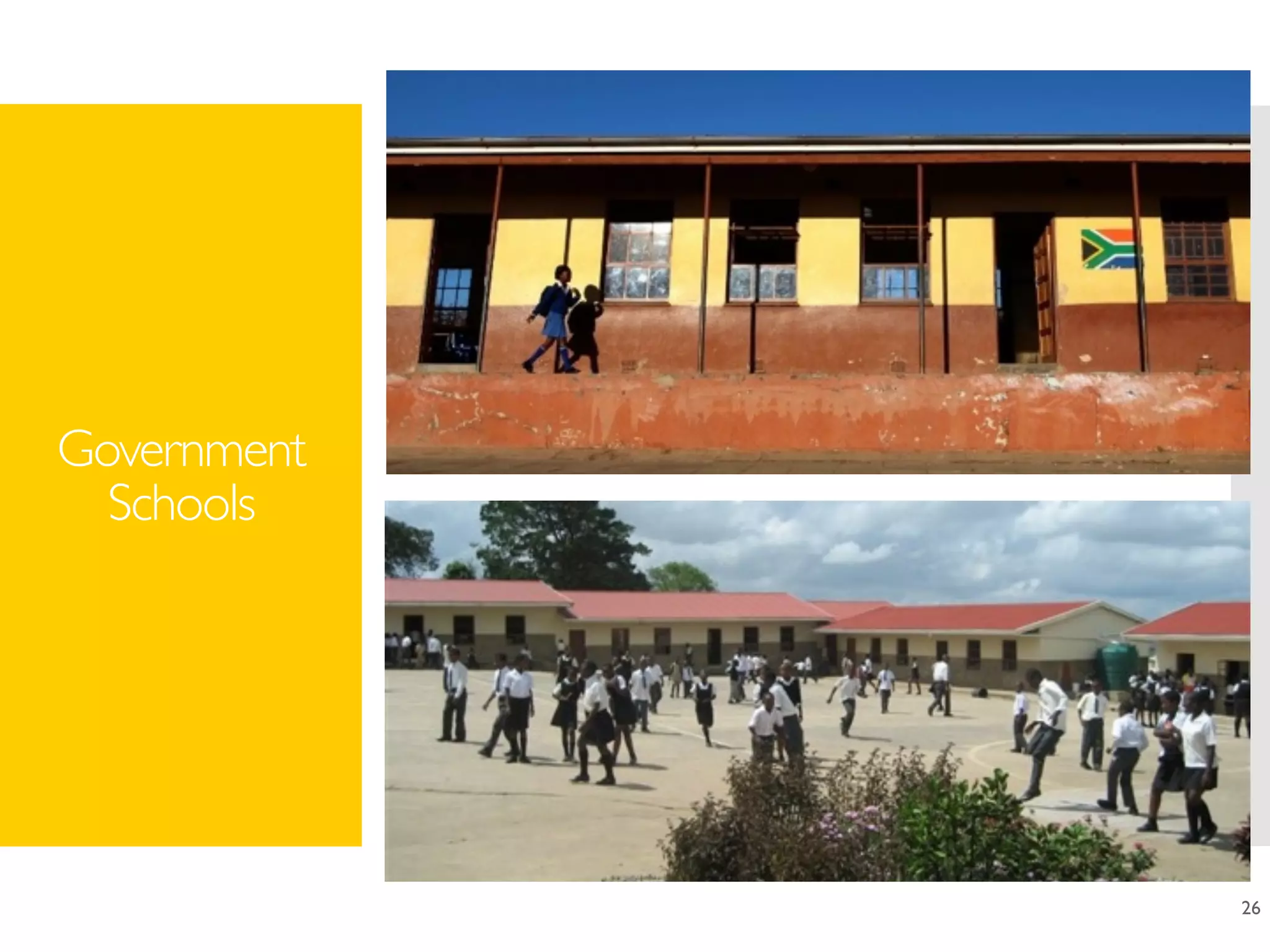
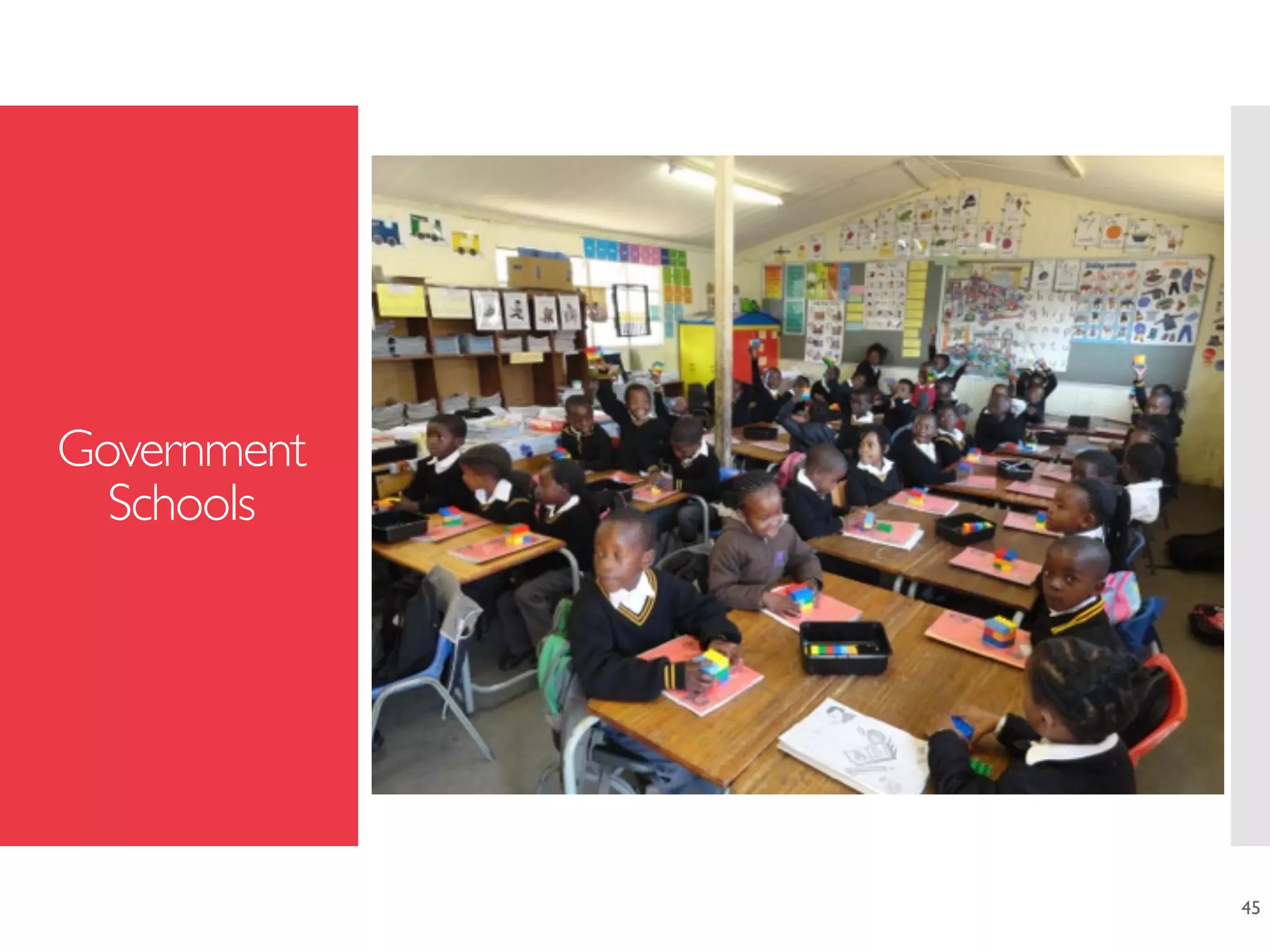
Government
Schools
27
Government
Schools
28
Government
Schools
29
Government
Schools
30
Government
Schools
31
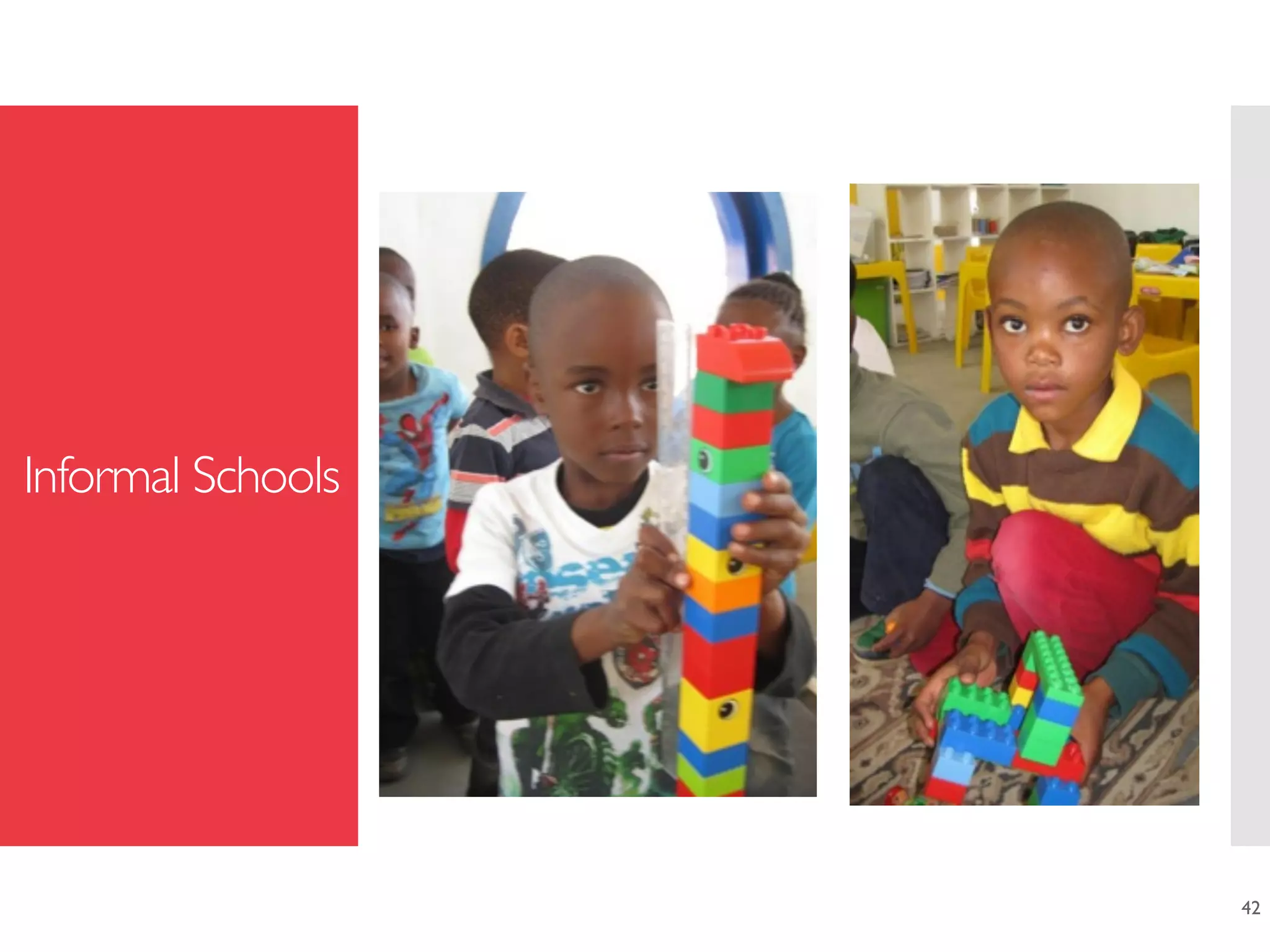
Informal Schools
32
Informal Schools
33
Informal Schools
34
Informal Schools
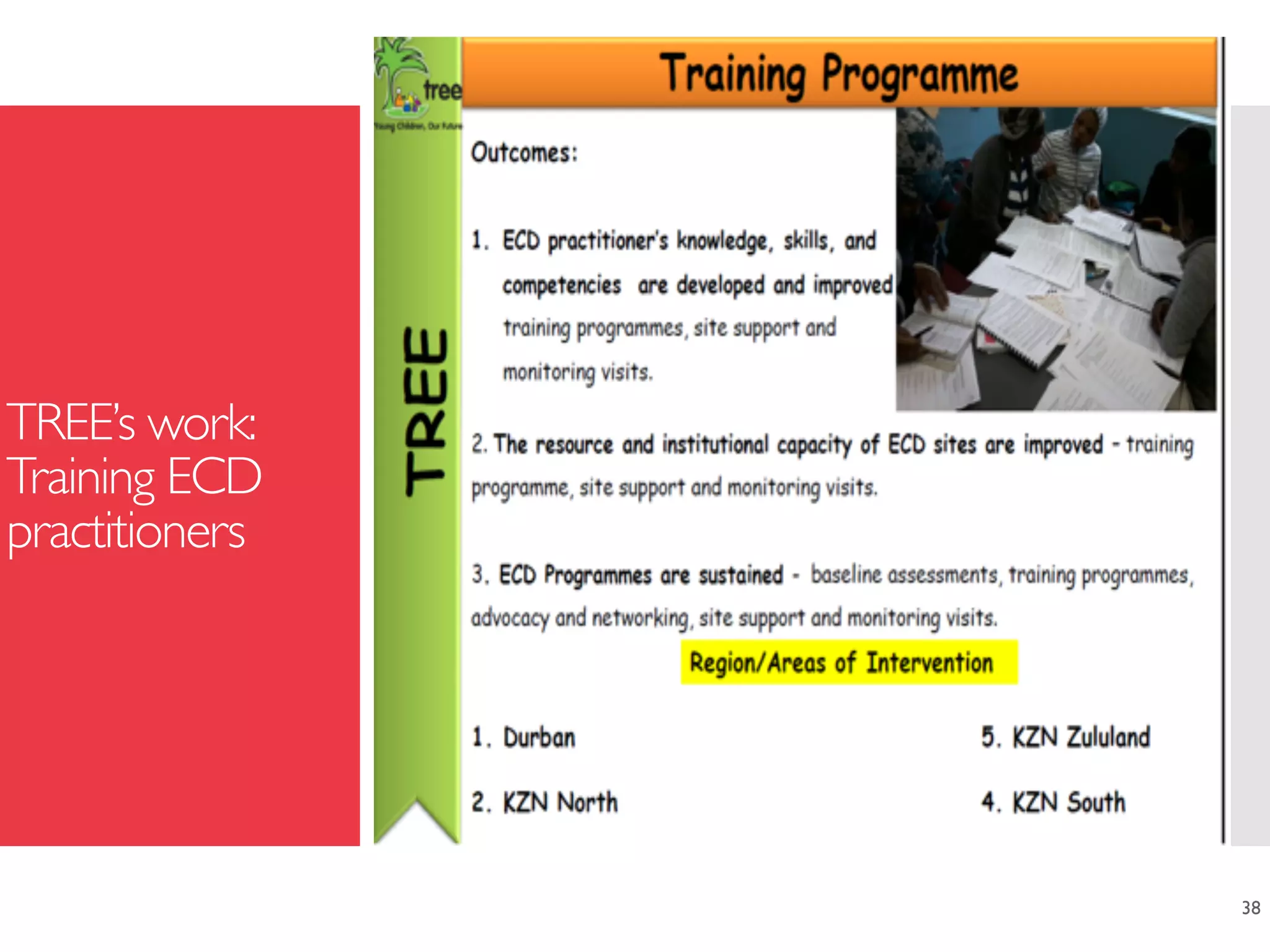
Training &
Resources in Early
Education (TREE)
35
Learning through play
A short video on
TREE’s work
36
TREE’s work:

Community- &
Home-Based
Interventions
37
TREE’s work:

Training ECD
practitioners
38
Care for
Education
39
40
Informal Schools
41
Informal Schools
42
Informal Schools
43
Informal Schools
44
Government
Schools
45
Government
Schools
46
Government
Schools
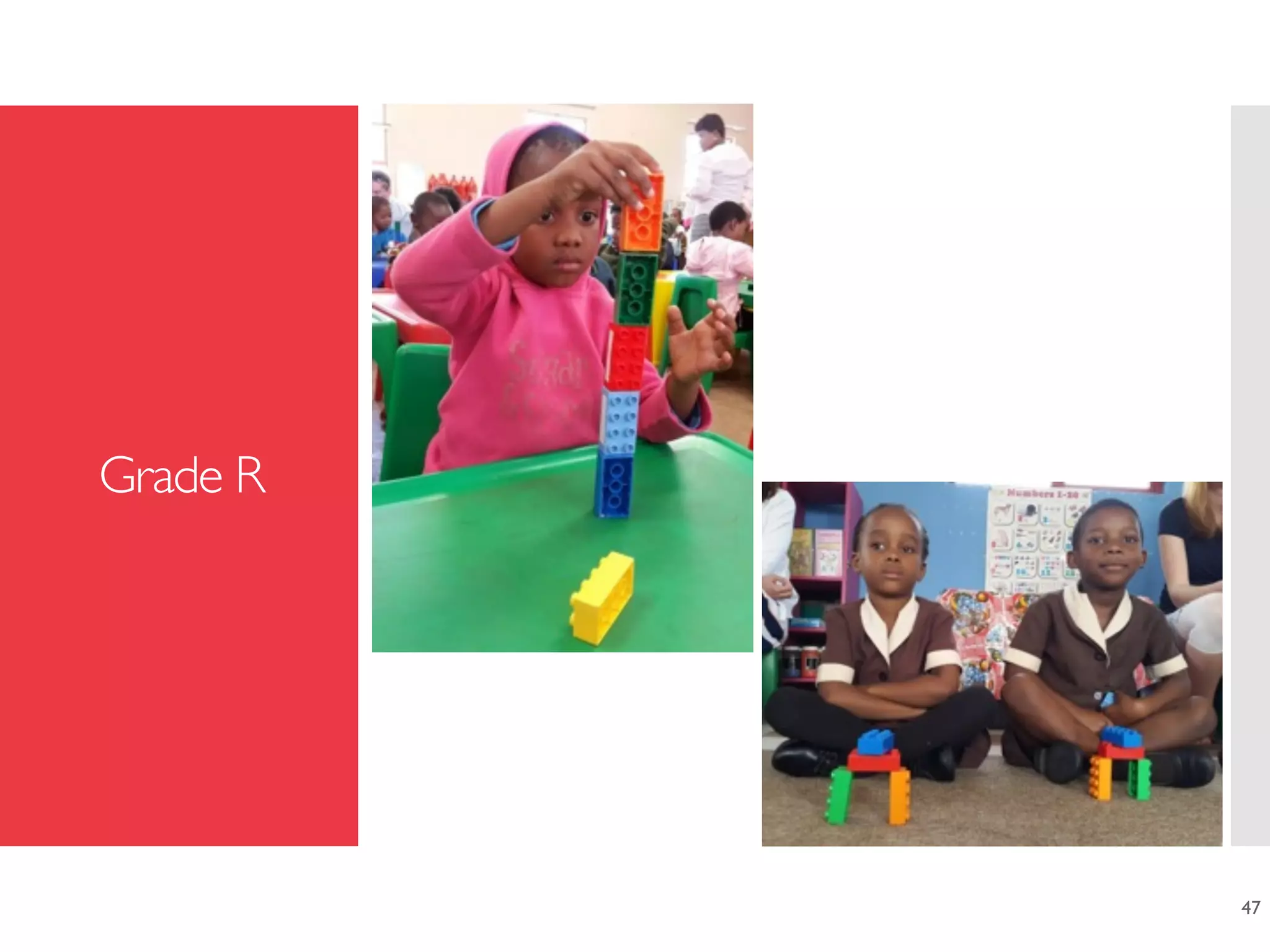
47
Grade R
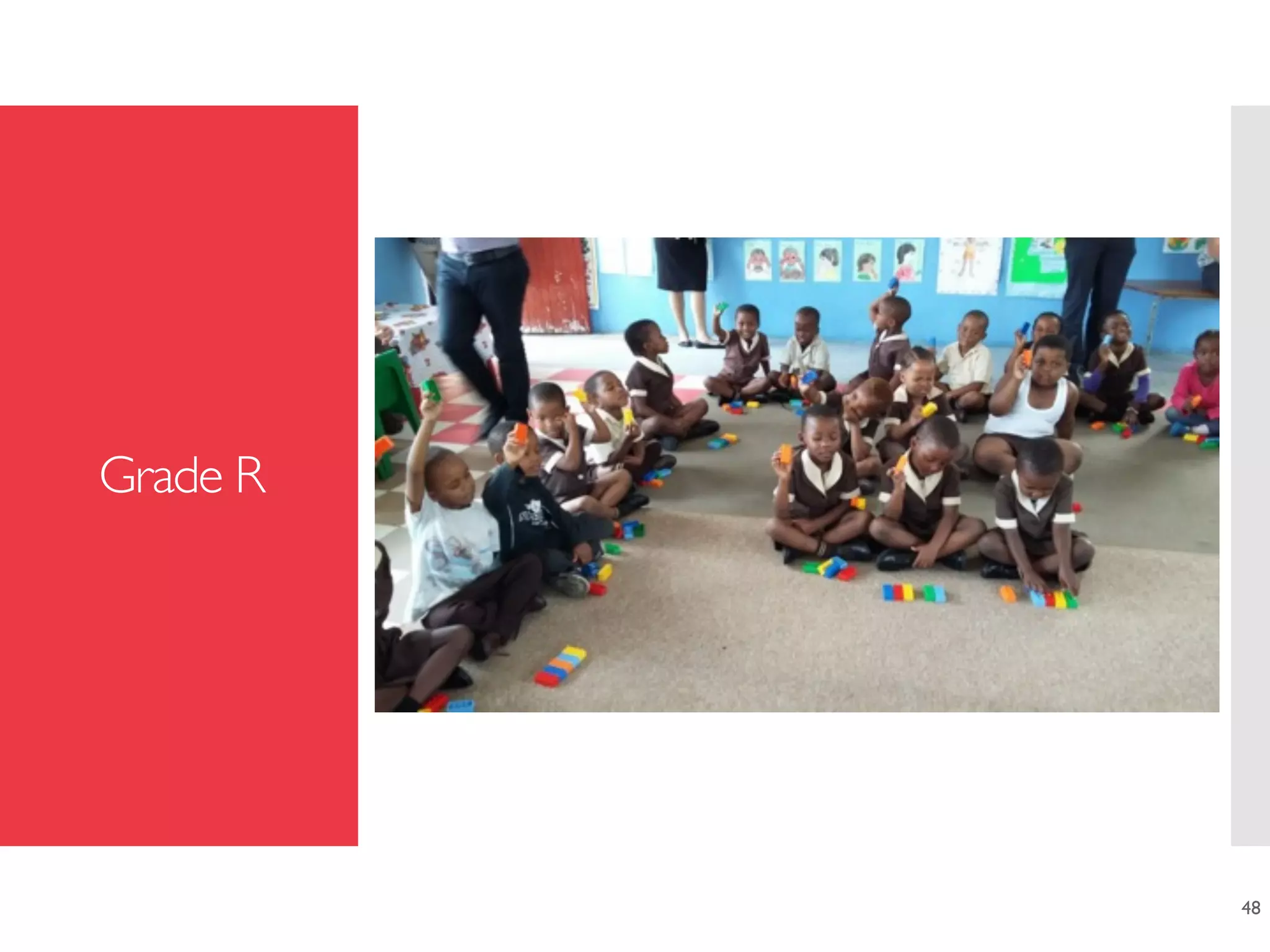
48
Grade R
49
Informal Schools
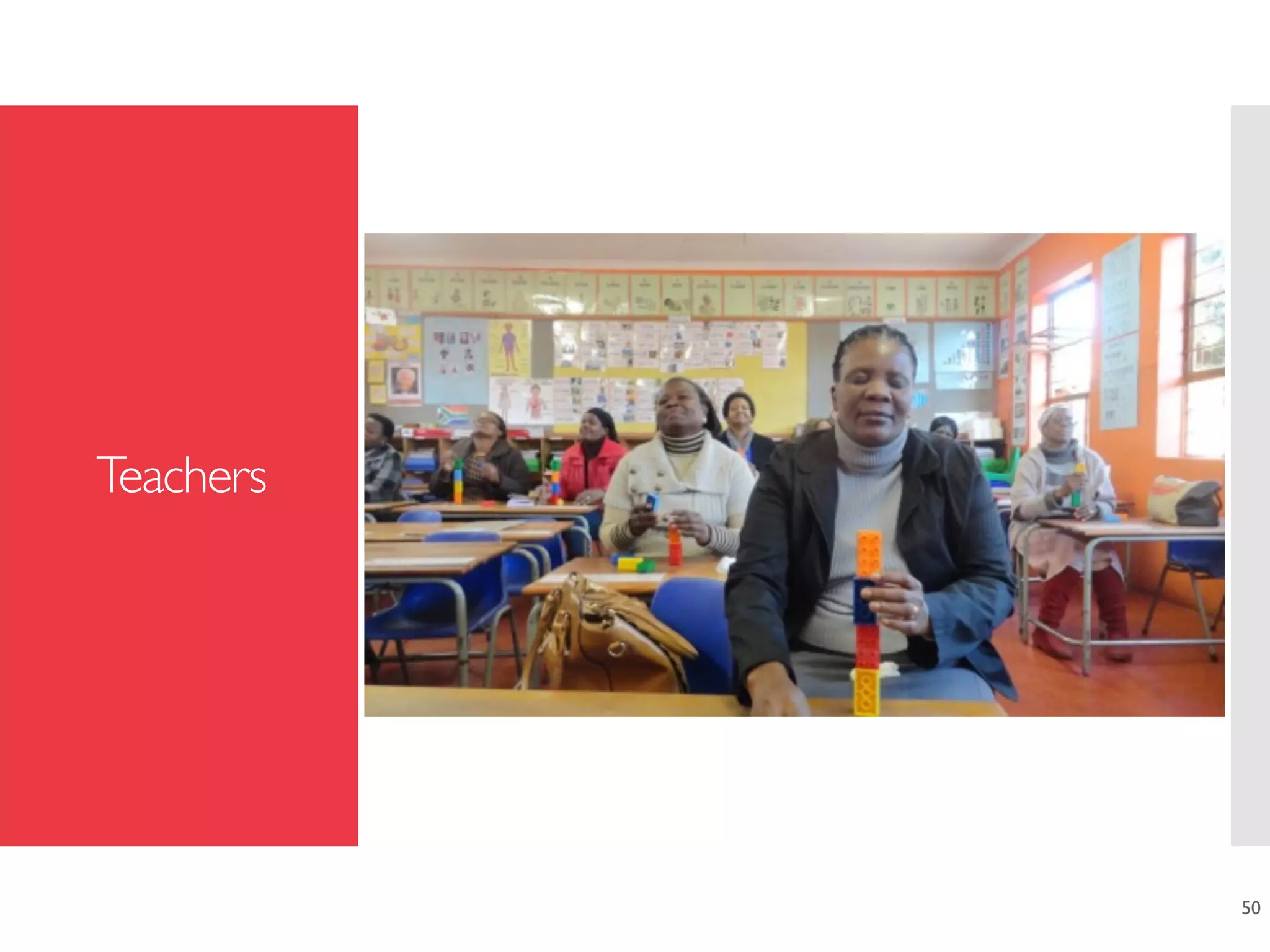
50
Teachers
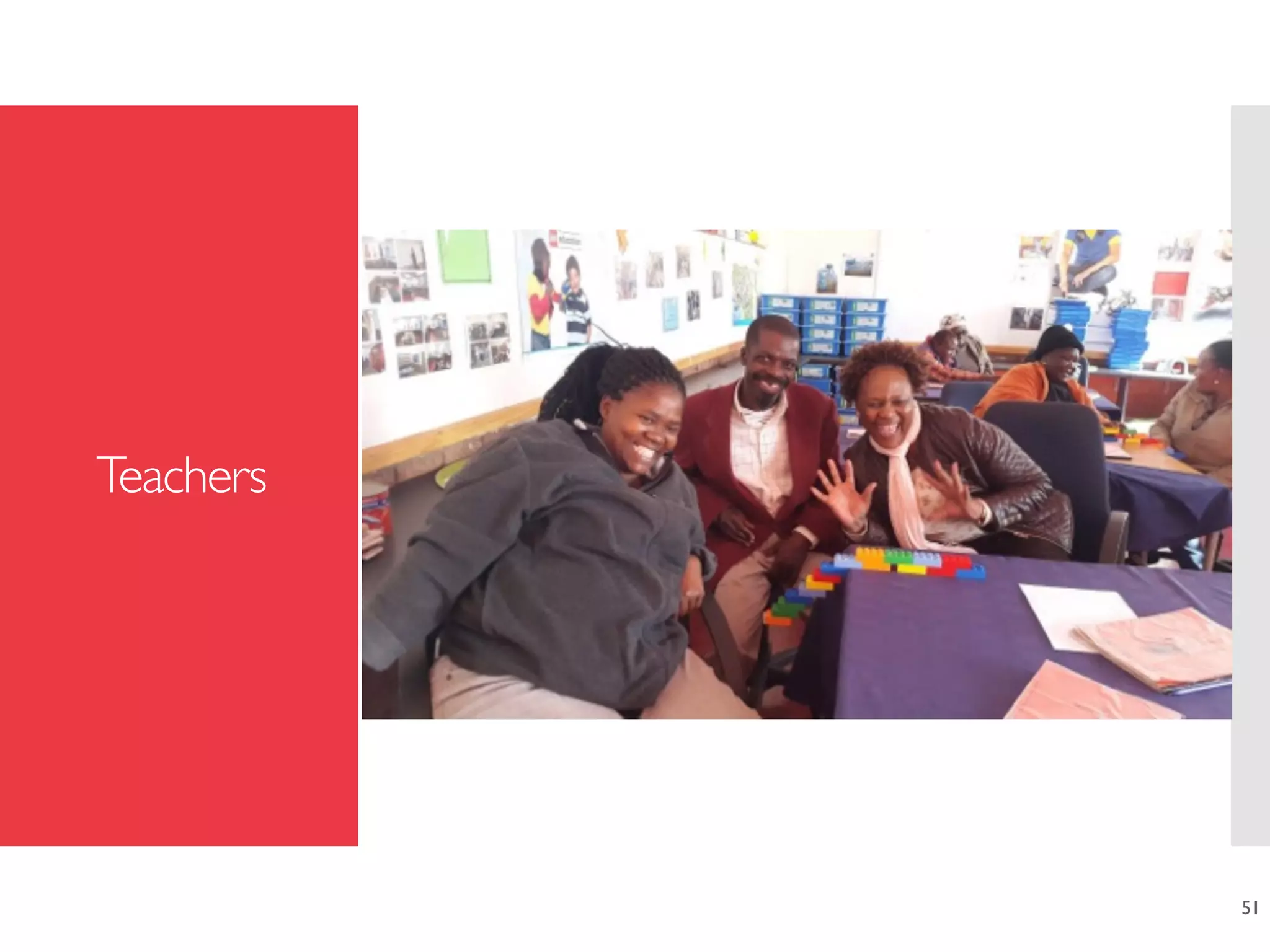
51
Teachers
52
Teachers
53
StudentTeachers
Questions or
comments?
andrew@bollington.net	
legofoundation@lego.com 	
brent@carefored.co.za 	
kjosephson@r4d.org	
vputcha@r4d.org	
54

Learning Through Play