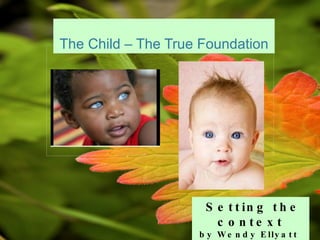
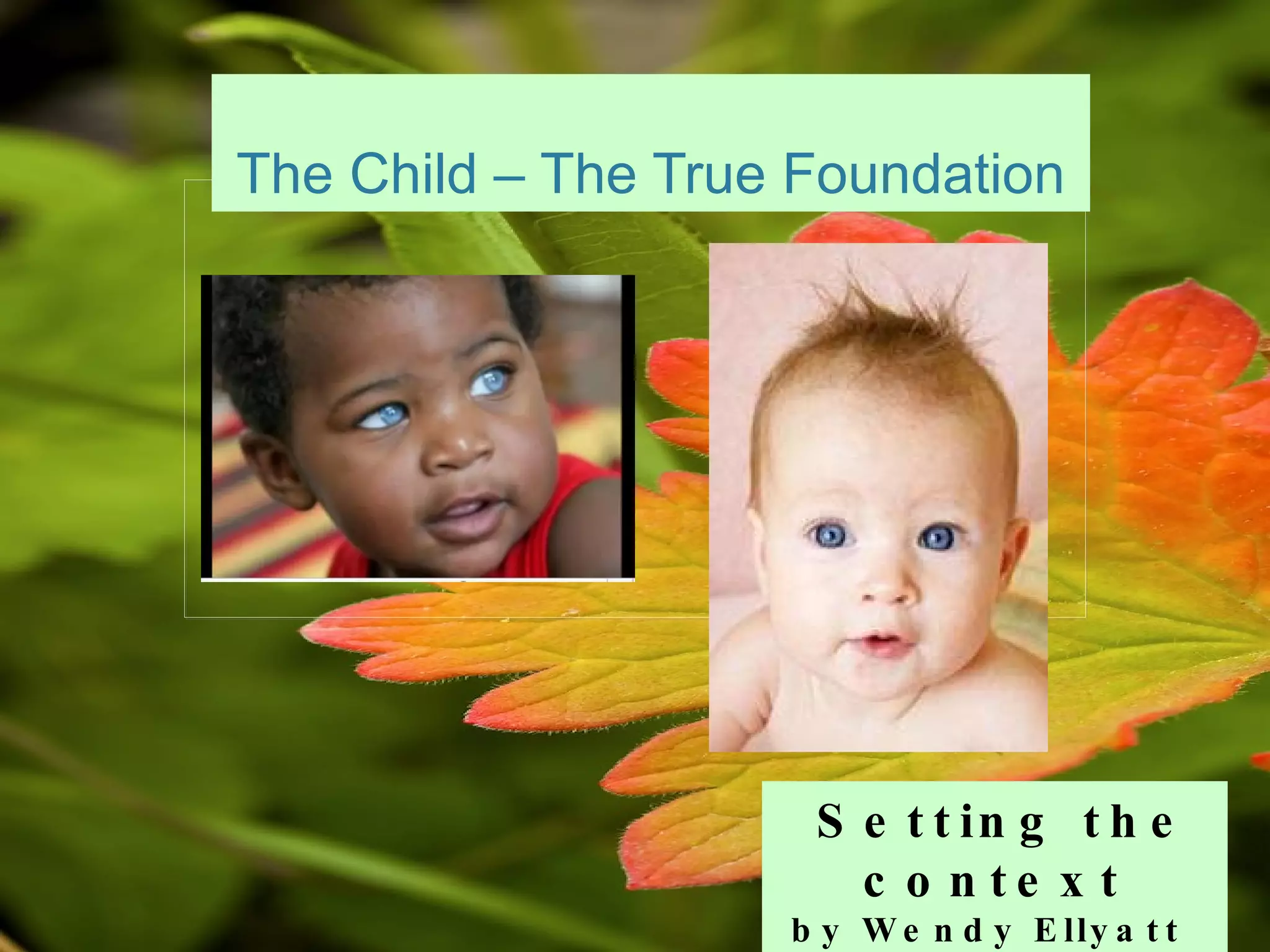
The Child – The True Foundation Setting the context by Wendy Ellyatt
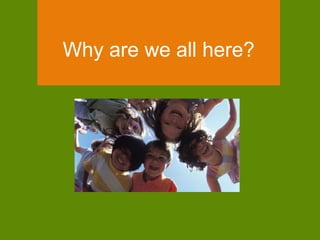
Why are we all here?
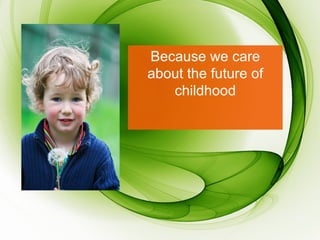
Because we care about the future of childhood
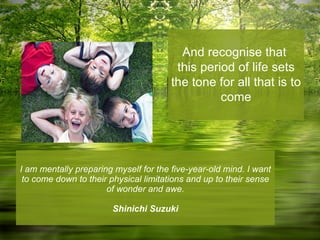
I am mentally preparing myself for the five-year-old mind. I want to come down to their physical limitations and up to their sense of wonder and awe. Shinichi Suzuki And recognise that  this period of life sets the tone for all that is to come
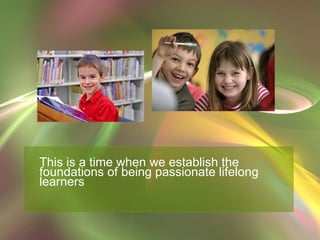
This is a time when we establish the foundations of being passionate lifelong learners
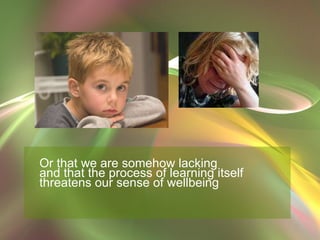
Or that we are somehow lacking  and that the process of learning itself  threatens our sense of wellbeing
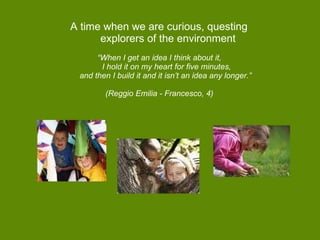
A time when we are curious, questing   explorers of the environment “ When I get an idea I think about it,   I hold it on my heart for five minutes,  and then I build it and it isn’t an idea any longer.”  (Reggio Emilia - Francesco, 4)
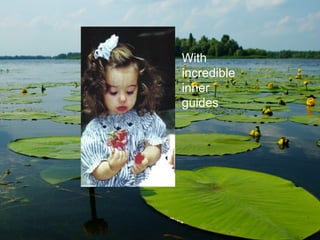
With  incredible inner  guides
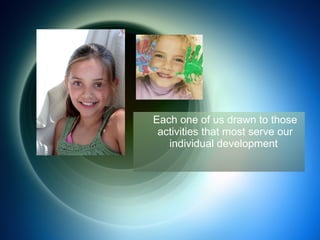
Each one of us drawn to those activities that most serve our individual development
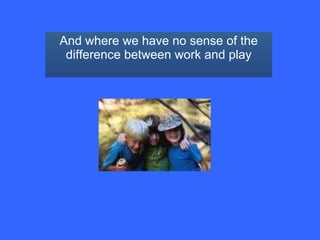
And where we have no sense of the difference between work and play
“ This is not a free journey, but neither is it a journey with rigid timetables and schedules. Rather, it is akin to a journey guided by a compass” Carla Rinaldi
What matters during this time?
That we see early childhood as an extraordinarily important and  distinct developmental phase of its own rather than a preparation for school
That we recognize logic and linguistic capacities as just two of many equally important areas of learning and understanding
That there are many non-written and verbal form of expressive language    The child  is made of one hundred.  The child has  a hundred languages  a hundred hands  a hundred thoughts  a hundred ways of thinking  of playing, of speaking     Loris Malaguzzi
And that focusing on any one or two compromises  an innate natural balance  that is almost certainly to the detriment of the others
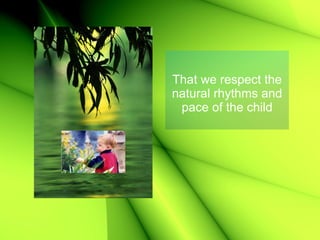
That we respect the natural rhythms and pace of the child
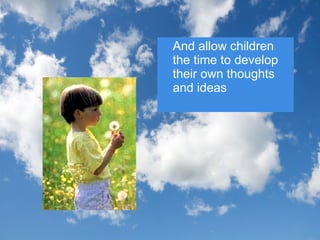
And allow children the time to develop their own thoughts and ideas
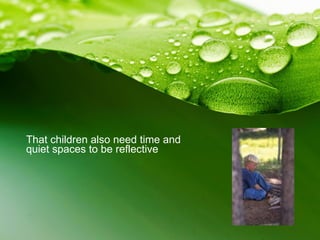
That children also need time and quiet spaces to be reflective
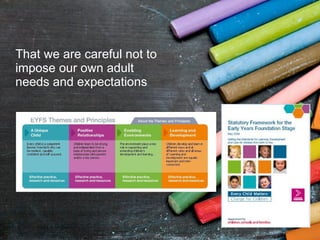
That we are careful not to impose our own adult needs and expectations
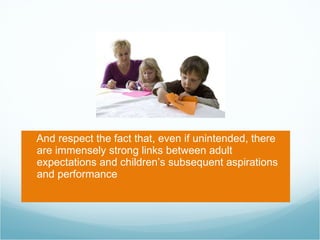
And respect the fact that, even if unintended, there are immensely strong links between adult expectations and children’s subsequent aspirations and performance
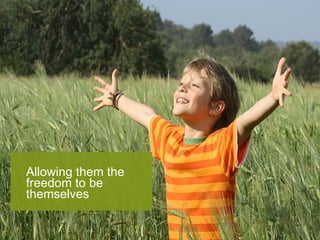
Allowing them the freedom to be themselves
Freedom from expectations Freedom from targets Freedom from fear Freedom to Grow Freedom to Unfold Freedom to Be “ Accept the children with reverence, educate them with love, send them forth in freedom.” Rudolf Steiner
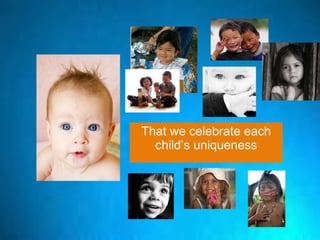
That we celebrate each child’s uniqueness
And ensure that children see failure as simply feedback from an ongoing learning process rather than something to be feared and a measure of their worth
What do we need to ensure?
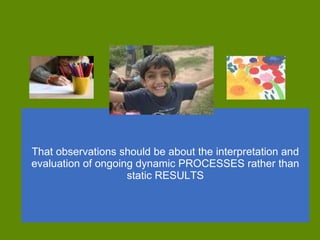
That observations should be about the interpretation and evaluation of ongoing dynamic PROCESSES rather than static RESULTS  
That we recognize our own cultural conditioning and do not value adult priorities over children’s natural developmental tendencies
That it’s about HOW children learn rather than WHAT they learn  
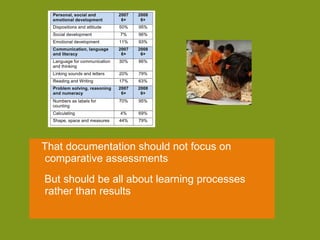
That documentation should not focus on comparative assessments But should be all about learning processes rather than results
That we recognize children as amazing natural learners with their own rights – the source and constructors of their own development
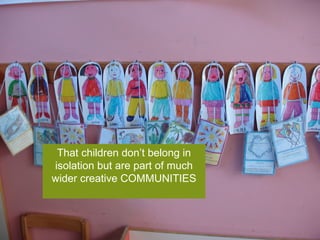
That children don’t belong in isolation but are part of much wider creative COMMUNITIES
That include NATURE
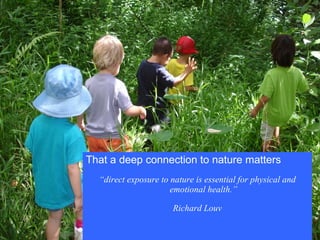
That a deep connection to nature matters “ direct exposure to nature is essential for physical and emotional health.” Richard Louv
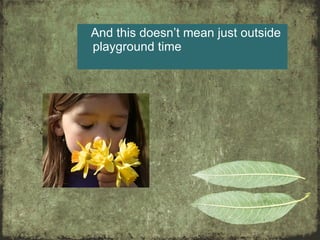
And this doesn’t mean just outside playground time
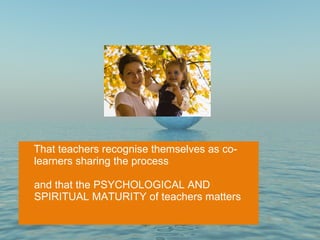
That teachers recognise themselves as co-learners sharing the process and that the PSYCHOLOGICAL AND SPIRITUAL MATURITY of teachers matters
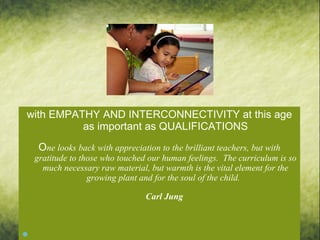
with EMPATHY AND INTERCONNECTIVITY at this age as important as QUALIFICATIONS O ne looks back with appreciation to the brilliant teachers, but with gratitude to those who touched our human feelings.  The curriculum is so much necessary raw material, but warmth is the vital element for the growing plant and for the soul of the child.   Carl Jung      
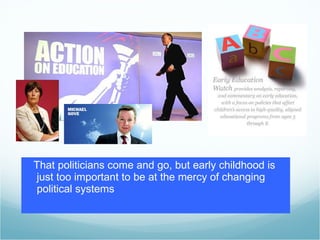
That politicians come and go, but early childhood is just too important to be at the mercy of changing political systems
And that, despite millions of pounds being spent, we need to recognise that the needs and essential nature of the child remain the same ‘ To aid life, leaving it free, however, that is the basic task of the educator.” Maria Montessori
“ Education is not the filling of a pail, but the lighting of a fire”  William Butler Yeats
 

Thechildthetruefoundation

  • 1.
    The Child –The True Foundation Setting the context by Wendy Ellyatt
  • 2.
    Why are weall here?
  • 3.
    Because we careabout the future of childhood
  • 4.
    I am mentallypreparing myself for the five-year-old mind. I want to come down to their physical limitations and up to their sense of wonder and awe. Shinichi Suzuki And recognise that this period of life sets the tone for all that is to come
  • 5.
    This is atime when we establish the foundations of being passionate lifelong learners
  • 6.
    Or that weare somehow lacking and that the process of learning itself threatens our sense of wellbeing
  • 7.
    A time whenwe are curious, questing explorers of the environment “ When I get an idea I think about it, I hold it on my heart for five minutes, and then I build it and it isn’t an idea any longer.” (Reggio Emilia - Francesco, 4)
  • 8.
    With incredibleinner guides
  • 9.
    Each one ofus drawn to those activities that most serve our individual development
  • 10.
    And where wehave no sense of the difference between work and play
  • 11.
    “ This isnot a free journey, but neither is it a journey with rigid timetables and schedules. Rather, it is akin to a journey guided by a compass” Carla Rinaldi
  • 12.
  • 13.
    That we seeearly childhood as an extraordinarily important and distinct developmental phase of its own rather than a preparation for school
  • 14.
    That we recognizelogic and linguistic capacities as just two of many equally important areas of learning and understanding
  • 15.
    That there aremany non-written and verbal form of expressive language   The child is made of one hundred. The child has a hundred languages a hundred hands a hundred thoughts a hundred ways of thinking of playing, of speaking Loris Malaguzzi
  • 16.
    And that focusingon any one or two compromises an innate natural balance that is almost certainly to the detriment of the others
  • 17.
    That we respectthe natural rhythms and pace of the child
  • 18.
    And allow childrenthe time to develop their own thoughts and ideas
  • 19.
    That children alsoneed time and quiet spaces to be reflective
  • 20.
    That we arecareful not to impose our own adult needs and expectations
  • 21.
    And respect thefact that, even if unintended, there are immensely strong links between adult expectations and children’s subsequent aspirations and performance
  • 22.
    Allowing them thefreedom to be themselves
  • 23.
    Freedom from expectationsFreedom from targets Freedom from fear Freedom to Grow Freedom to Unfold Freedom to Be “ Accept the children with reverence, educate them with love, send them forth in freedom.” Rudolf Steiner
  • 24.
    That we celebrateeach child’s uniqueness
  • 25.
    And ensure thatchildren see failure as simply feedback from an ongoing learning process rather than something to be feared and a measure of their worth
  • 26.
    What do weneed to ensure?
  • 27.
    That observations shouldbe about the interpretation and evaluation of ongoing dynamic PROCESSES rather than static RESULTS  
  • 28.
    That we recognizeour own cultural conditioning and do not value adult priorities over children’s natural developmental tendencies
  • 29.
    That it’s aboutHOW children learn rather than WHAT they learn  
  • 30.
    That documentation shouldnot focus on comparative assessments But should be all about learning processes rather than results
  • 31.
    That we recognizechildren as amazing natural learners with their own rights – the source and constructors of their own development
  • 32.
    That children don’tbelong in isolation but are part of much wider creative COMMUNITIES
  • 33.
  • 34.
    That a deepconnection to nature matters “ direct exposure to nature is essential for physical and emotional health.” Richard Louv
  • 35.
    And this doesn’tmean just outside playground time
  • 36.
    That teachers recognisethemselves as co-learners sharing the process and that the PSYCHOLOGICAL AND SPIRITUAL MATURITY of teachers matters
  • 37.
    with EMPATHY ANDINTERCONNECTIVITY at this age as important as QUALIFICATIONS O ne looks back with appreciation to the brilliant teachers, but with gratitude to those who touched our human feelings.  The curriculum is so much necessary raw material, but warmth is the vital element for the growing plant and for the soul of the child.  Carl Jung    
  • 38.
    That politicians comeand go, but early childhood is just too important to be at the mercy of changing political systems
  • 39.
    And that, despitemillions of pounds being spent, we need to recognise that the needs and essential nature of the child remain the same ‘ To aid life, leaving it free, however, that is the basic task of the educator.” Maria Montessori
  • 40.
    “ Education isnot the filling of a pail, but the lighting of a fire” William Butler Yeats
  • 41.