Changes In Respiratory System With
Various Physiological Conditions
Dr. Anand Kumar Bansal
Junior Resident
Department Of Pulmonary Medicine
Topics
High-Altitude Physiology
Deep Sea Diving And Effects Of Increased
Barometric Pressure
Changes In Respiratory System During
Pregnancy
Physiological Changes Of Respiratory System
With Exercise
Physiological Changes Of Respiratory System
With Aging
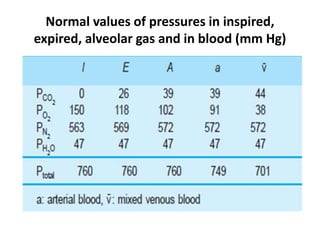
Normal values of pressures in inspired,
expired, alveolar gas and in blood (mm Hg)
High-Altitude Physiology
ALTITUDE TYPE FROM SEA-LEVEL (In feet)
• HIGH - 8,000 – 12,000
• VERY HIGH - 12,000 – 18,000
• EXTREMELY HIGH - Above 18,000
• An estimated 40 million people travel each year
to altitudes > 8000 ft (2500 m) and as many or
more travel to altitude for leisure and sports, and
work in mines, military or border operations.
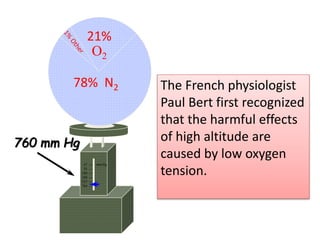
760 mm Hg
47 --- mm/Hg
95 ---
190 ---
380 ---
523 ---
760 ---
21%
O2
78% N2 The French physiologist
Paul Bert first recognized
that the harmful effects
of high altitude are
caused by low oxygen
tension.
• Atmospheric composition of air remains
almost constant (upto 30,000 ft) but PO2
decreases with increasing altitude with FIO2
equivalent to 17% O2 at 8000 ft, down to 8%
O2 at the summit of Everest (appox. 29,028 ft)
• Hypoxemia causes the physiologic responses
and illnesses.
• Altitude-related exposure to cold and extreme
exercise may also contribute to illness
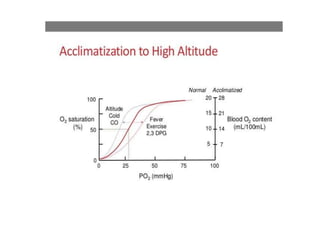
• The adaptive changes to high altitude are
collectively termed as Acclimatization
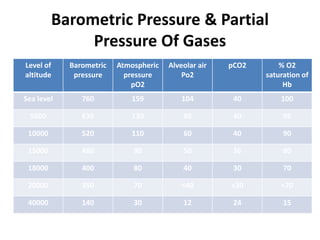
Level of
altitude
Barometric
pressure
Atmospheric
pressure
pO2
Alveolar air
Po2
pCO2 % O2
saturation of
Hb
Sea level 760 159 104 40 100
5000 630 130 80 40 95
10000 520 110 60 40 90
15000 480 90 50 36 80
18000 400 80 40 30 70
20000 350 70 <40 <30 <70
40000 140 30 12 24 15
Barometric Pressure & Partial
Pressure Of Gases
Pulmonary Adaptation to High Altitude
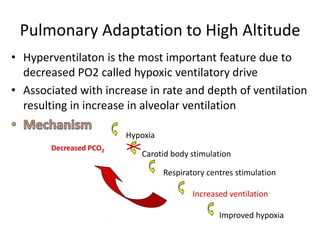
• Hyperventilaton is the most important feature due to
decreased PO2 called hypoxic ventilatory drive
• Associated with increase in rate and depth of ventilation
resulting in increase in alveolar ventilation
Hypoxia
Carotid body stimulation
Respiratory centres stimulation
Increased ventilation
Improved hypoxia
Decreased PCO2
• Despite decrease in blood oxygen content, the delivery of
oxygen to tissues is maintained by increased cardiac output
and increased red cell mass (hypoxia induced
erythropoietin secretion)
• The alveolar hypoxia triggers hypoxic pulmonary
vasoconstriction to maintain ventilation perfusion
relationship and this causes a rise in pulmonary arterial
pressure. This is important in the pathogenesis of HAPE and
altitude related pulmonary hypertension
• Cheyne-Stokes Respiration - Above 10,000 ft (3,000 m) most
people experience a periodic breathing during sleep. The
pattern begins with a few shallow breaths increases to
deep sighing respirations  falls off rapidly
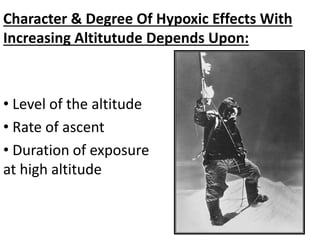
Character & Degree Of Hypoxic Effects With
Increasing Altitutude Depends Upon:
• Level of the altitude
• Rate of ascent
• Duration of exposure
at high altitude
COMMON CLINICAL DISORDERS OF HIGH
ALTITUDE
Acute High-altitude illnesss
– High-altitude headache (HAH)
– Acute mountain sickness (AMS)
– High altitude cerebral oedema (HACE)
– High altitude pulmonary oedema (HAPE)
Chronic High-altitude illnesss
-- Chronic mountain sickness (CMS)
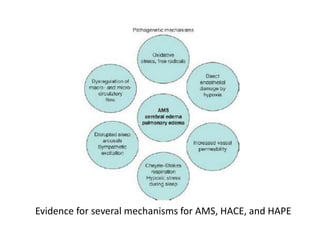
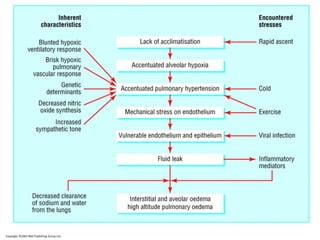
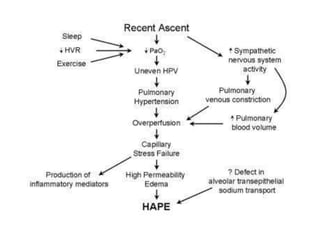
Evidence for several mechanisms for AMS, HACE, and HAPE
High-altitude Headache
• High-altitude headache (HAH) is very
common, and is exacerbated by insufficient
hydration in the setting of increased water
loss with hyperventilation, overexertion, and
insufficient energy intake, particularly in those
who have experienced HAH on a previous visit
to altitude.
• Acetaminophen or ibuprofen with hydration
will improve this symptom.
Acute Mountain Sickness
• Acute mountain sickness (AMS) occurs after 4 to 36 hours of
altitude exposure.
• Symptoms are headache (usually frontal), nausea, vomiting,
irritability, malaise, insomnia, and poor climbing performance.
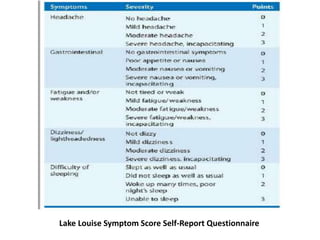
• The Lake Louise Symptom Score Questionnaire is the most
common and useful self administered tool to determine the
severity of AMS. A score of 4 and more is considered AMS, a
score of 10 and more is considered severe and requires
immediate intervention
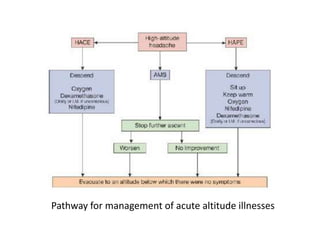
Management
• The key element is to limit the elevation change per day to
less than 400 m/d. A slow rate of ascent is the best way to
prevent AMS.
• Adequate hydration should be encouraged, and 2 L of extra fluid
per day is advised
• Mild AMS is self-limiting and usually lasts about 3 days, so
treatment is not mandatory
• If the symptoms progress, the patient should descend.
• If descent is delayed, acetazolamide (250 mg at bedtime or 125 mg
bid) is generally considered first-line treatment; dexamethasone at
a dose of 4 mg every 6 hours can be used in sulfaallergic individuals.
• A combination of the two agents can be used for rapidly evolving
symptoms. These drugs are continued for a few days at altitude.
• For sleep disturbances, temazepam is effective in reducing
recurrent central apnea and arousals, and appears safe to use,
without any measurable adverse effects the next day.
Lake Louise Symptom Score Self-Report Questionnaire
High-altitude Cerebral Edema
• Signature symptoms are dizziness, severe almost unbearable
headache, and vomiting. Ataxia is common, and a positive
Romberg sign is present. Somnolence, stupor, and changes in
pupillary responsiveness mark the onset of a fatal stage.
• In the absence of treatment, the condition will progress to coma
and mortality will be high.
• HACE can occur even in the relative absence of AMS symptoms
• Concurrent signs of pulmonary edema may also be noted.
• Descent is critical. While awaiting evacuation, supplemental oxygen
should be given. Every 1% increase in oxygen concentration above
21% reduces the equivalent altitude by about 300 m.
• Administration of dexamethasone (4–8 mg), intramuscularly in
severe cases, or orally in less severe cases, helps reduce cerebral
edema and should be given while awaiting evacuation; doses can
be repeated every 6hours
High-altitude Pulmonary Edema
• A typical patient is a fit young man who has climbed rapidly and is
energetic on arrival.
• Prevalence estimates are 0.5% to 2.0% of those rapidly ascending to
altitude.
• A cough develops, which is initially dry, then productive of frothy white
sputum, later becoming blood tinged. The climber may complain of chest
discomfort. The pulse and respiratory rate are increased, and auscultation
of the chest reveals crackles at the bases. An elevated jugular venous
pressure and peripheral edema may be seen.
• As breathing becomes “bubbly” due to pulmonary edema, cyanosis
develops.
• In the absence of definitive treatment, hypoxemia progresses to
respiratory failure, and coma and death ensue.
• High-altitude pulmonary edema (HAPE) may occur independently of AMS.
Mechanism
• HAPE is caused by migration of fluid into extravasal space through
endothelial damage along with shear stresses produced by increased
cardiac output and pulmonary artery pressure.
Prevention
• In those who have experienced HAPE before, use of nifedipine
prophylactically (20 mg twice daily prior to ascent, then three times daily)
appears to lower significantly the incidence of HAPE.
Treatment
• Descent is critical for survival.
• Initial medical treatment while the subject awaits descent includes strict
rest and supplemental oxygen.
• Nifedipine (10 mg sublingually) may be used. If clinically significant
hypotension does not occur with the first dose of nifedipine, its
administration can be repeated every 15 to 30 minutes
Copyright ©2003 BMJ Publishing Group Ltd.
Barry, P W et al. BMJ 2003;326:915-919
No Caption Found
Pathway for management of acute altitude illnesses
Chronic Mountain Sickness
• The defining feature is extreme polycythemia, with
hemoglobin concentrations as high as 23 g/dL and
hematocrits as high as 83%.
• Patients may have vague neuropsychological complaints,
including headache, dizziness, somnolence, fatigue, difficulty
in concentration, and loss of mental acuity.
• The condition of CMS is quite different from AMS. Excessive
erythrocytosis associated with a lower oxygen saturation and
hypoxic ventilatory response with relative hypercapnia are
the main features of CMS, followed by right ventricular
enlargement, pulmonary hypertension, and remodeling of
pulmonary arterioles.
• Descent to sea level is the definitive treatment.
• However, for those who wish to remain at altitude for family
or economic reasons, phlebotomy and administration of
supplemental oxygen are beneficial.
Deep Sea Diving And Effects Of
Increased Barometric Pressure
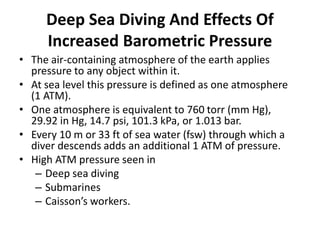
• The air-containing atmosphere of the earth applies
pressure to any object within it.
• At sea level this pressure is defined as one atmosphere
(1 ATM).
• One atmosphere is equivalent to 760 torr (mm Hg),
29.92 in Hg, 14.7 psi, 101.3 kPa, or 1.013 bar.
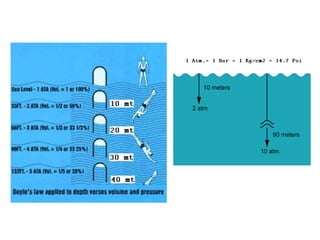
• Every 10 m or 33 ft of sea water (fsw) through which a
diver descends adds an additional 1 ATM of pressure.
• High ATM pressure seen in
– Deep sea diving
– Submarines
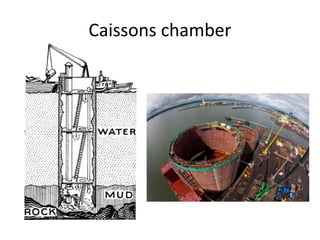
– Caisson’s workers.
Physiological Problems Under Depth
• Due to mechanical
effects
• Due to effect of high
pressure on
respiratory gases.
Physiological Problems Due To Mechanical
Effects Of High Atmospheric Pressure
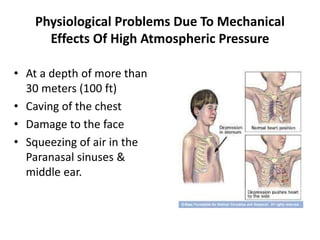
• At a depth of more than
30 meters (100 ft)
• Caving of the chest
• Damage to the face
• Squeezing of air in the
Paranasal sinuses &
middle ear.
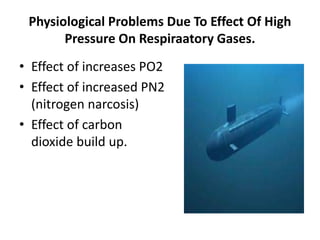
Physiological Problems Due To Effect Of High
Pressure On Respiraatory Gases.
• Effect of increases PO2
• Effect of increased PN2
(nitrogen narcosis)
• Effect of carbon
dioxide build up.
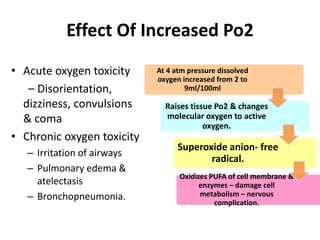
Effect Of Increased Po2
• Acute oxygen toxicity
– Disorientation,
dizziness, convulsions
& coma
• Chronic oxygen toxicity
– Irritation of airways
– Pulmonary edema &
atelectasis
– Bronchopneumonia.
At 4 atm pressure dissolved
oxygen increased from 2 to
9ml/100ml
Raises tissue Po2 & changes
molecular oxygen to active
oxygen.
Superoxide anion- free
radical.
Oxidizes PUFA of cell membrane &
enzymes – damage cell
metabolism – nervous
complication.
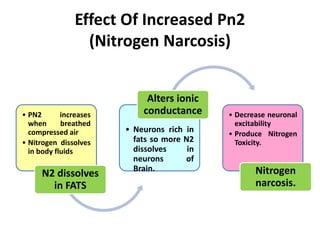
Effect Of Increased Pn2
(Nitrogen Narcosis)
• PN2 increases
when breathed
compressed air
• Nitrogen dissolves
in body fluids
N2 dissolves
in FATS
• Neurons rich in
fats so more N2
dissolves in
neurons of
Brain.
Alters ionic
conductance • Decrease neuronal
excitability
• Produce Nitrogen
Toxicity.
Nitrogen
narcosis.
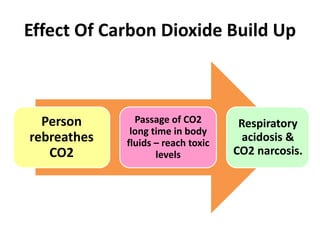
Effect Of Carbon Dioxide Build Up
Person
rebreathes
CO2
Passage of CO2
long time in body
fluids – reach toxic
levels
Respiratory
acidosis &
CO2 narcosis.
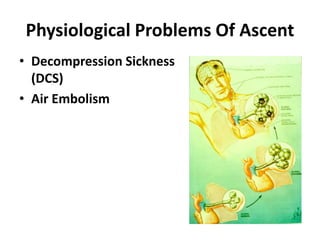
Physiological Problems Of Ascent
• Decompression Sickness
(DCS)
• Air Embolism
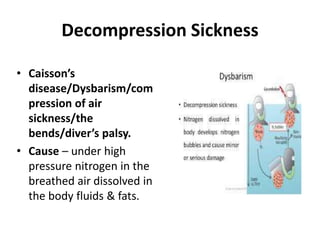
Decompression Sickness
• Caisson’s
disease/Dysbarism/com
pression of air
sickness/the
bends/diver’s palsy.
• Cause – under high
pressure nitrogen in the
breathed air dissolved in
the body fluids & fats.
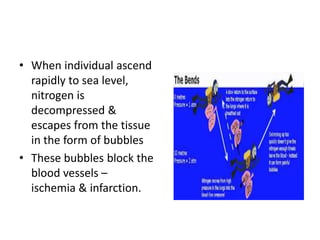
• When individual ascend
rapidly to sea level,
nitrogen is
decompressed &
escapes from the tissue
in the form of bubbles
• These bubbles block the
blood vessels –
ischemia & infarction.
Caissons chamber
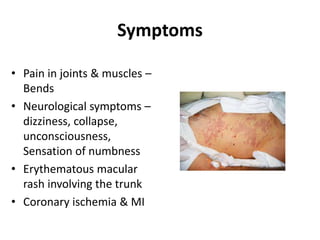
Symptoms
• Pain in joints & muscles –
Bends
• Neurological symptoms –
dizziness, collapse,
unconsciousness,
Sensation of numbness
• Erythematous macular
rash involving the trunk
• Coronary ischemia & MI
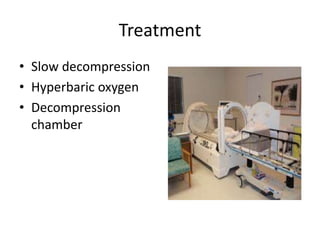
Treatment
• Slow decompression
• Hyperbaric oxygen
• Decompression
chamber
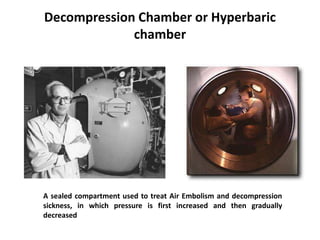
Decompression Chamber or Hyperbaric
chamber
A sealed compartment used to treat Air Embolism and decompression
sickness, in which pressure is first increased and then gradually
decreased
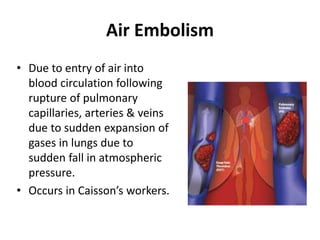
Air Embolism
• Due to entry of air into
blood circulation following
rupture of pulmonary
capillaries, arteries & veins
due to sudden expansion of
gases in lungs due to
sudden fall in atmospheric
pressure.
• Occurs in Caisson’s workers.
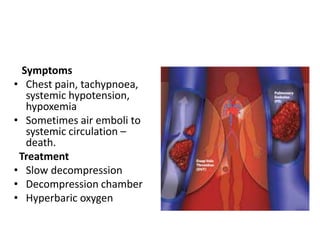
Symptoms
• Chest pain, tachypnoea,
systemic hypotension,
hypoxemia
• Sometimes air emboli to
systemic circulation –
death.
Treatment
• Slow decompression
• Decompression chamber
• Hyperbaric oxygen
Prevention of Physiological Problems Occuring
at Depth & Ascent
Measures for short duration dive up to 20 meters
 Take rapid & deep breaths before diving – CO2 washes out – N2
does not get enough time to dissolve – O2 toxicity not occur.
Measures for deeper & longer dives
 Use of breathing apparatus – gives gas to breath & either
dissolves CO2 ( close circuits) or bubbles out in water (open
circuits)
 SCUBA DIVING ( Self-Contained-Underwater-Breathing-
Apparatus)
 Use of breathing mixtures containing helium & low oxygen
concentration – prevent O2 toxicity.
 Slow ascent or use of Decompression chamber
Changes In Respiratory System During
Pregnancy
• The anatomic and physiological changes of
pregnancy have major pulmonary and
cardiovascular consequences throughout the
gestation.
• An understanding of these changes is
necessary since inappropriate diagnosis and
interventions may occur in the absence of this
knowledge.
Anatomic changes of normal
pregnancy
Upper Airways
• Hyperemia, friability, mucosal edema, and
hypersecretion of the airway mucosa -- most
pronounced in the upper airways, especially during the
third trimester.
• Nasal obstruction, epistaxis, sneezing episodes, and
vocal changes may occur, and these may worsen when
the individual lies down.
• Nasal and sinusoidal polyposis is often seen and tends
to recur in women with each pregnancy.
• Nasal obstruction may contribute to upper airway
obstruction during sleep, leading to snoring and
even obstructive sleep apnea.
• The physiological causes of nasal mucosal
changes appear to be predominantly mediated by
estrogens.
• Estrogens increase tissue hydration and edema.
They also cause capillary congestion and
hyperplastic and hypersecretory mucous glands.
Lower airways
• Mucosal changes that affect the upper airways may also occur in
the central portion of the airway, such as the larynx and trachea.
• Nonspecific complaints of airway irritation, such as irritant cough or
sputum production.
• The enlarging uterus produces upward displacement of the
diaphragm → increase in the anteroposterior and transverse
diameters of the thoracic cage
• Diaphragm may be elevated up to 4 cm, but diaphragmatic function
is not impaired
• Thoracic cage circumference increase by upto 6 cm
• Progressive relaxation of the ligamentous attachments
of the ribs broadens the subcostal angle from 60-70
degrees to around 100-110 degrees.
• The shortening and widening of the thoracic cavity
results in upward and lateral displacement of the
cardiac apex on chest radiography.
• Abdominal muscles have a decreased tone and are less
active during the pregnancy, causing respiration to be
more thoracic and less diaphragmatic.
Physiological changes of normal
pregnancy
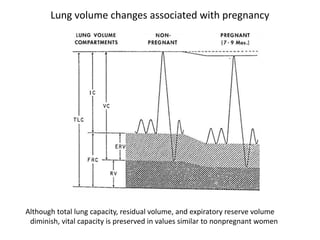
• Enlarging uterus cause serial changes in lung volumes
• The dead space volume increases due to relaxation of
musculature of the trachea and the bronchi by
progesterone
• Tidal volume increases gradually by 35-50% as the
pregnancy progresses
• Total lung capacity (TLC) is reduced slightly (4 to 5%) by
the elevation of diaphragm
• The functional residual capacity (FRC) residual volume
(RV), and expiratory reserve volume (ERV), all decrease
by about 10-20% due to anatomical changes in the
thoracic cage
• Inspiratory capacity (IC) increases by 5-10%
• The forced vital capacity (FVC) is largely unaltered till later
in pregnancy as the widened chest diameters counter the
effects of the raised diaphragm
• FEV1/FVC ratio is usually not affected. Therefore, the
dyspnea of normal pregnancy is not responsive to
bronchodilators
• Lung compliance does not change significantly but
compliance of the thoracic cage decreases
• In early pregnancy Diffusing capacity is either unchanged or
slightly increased. During rest of pregnancy, the diffusing
capacity decreases
• Oxygen consumption start increasing from first trimester
and reaches a maximum of 20% - 30% by term.
• Increase in respiratory minute volume by appox. 26%
associtaed with the increase in tidal volume with a normal
or increased respiratory rate
• As the respiartory minute volume increases
“hyperventilation of pregnancy” occurs which results in a
respiratory alkalosis with compensatory renal excretion of
bicarbonate
• PCO2 falls to levels of 28 to 32 mmHg
• Bicarbonate decreases to 18 to 21 mEq/L
• Arterial pH is maintained in the range of 7.40 to 7.45
• This maternal hyperventilation is considered a protective
measure that prevents the fetus from excessive levels of
CO2
Lung volume changes associated with pregnancy
Although total lung capacity, residual volume, and expiratory reserve volume
diminish, vital capacity is preserved in values similar to nonpregnant women
Physiologic Dyspnea of Pregnancy
• The increase in minute ventilation that accompanies
pregnancy is often perceived as shortness of breath.
• Shortness of breath at rest or with mild exertion is so
common that it is often referred to as ‘‘physiologic
dyspnea.’’
• The increase in minute ventilation and the load imposed by
the enlarging uterus cause an increase in the work of
breathing.
• Other factors contribute to the sensation of dyspnea
include increased pulmonary blood volume, anemia, and
nasal congestion
• Differentiate the normal dyspnea of pregnancy from
that due to disease pathology.
• Pathologic dyspnea : increased respiratory rate greater
than 20 breaths per minute, arterial PCO2 less than 28
or greater than 35 mm of Hg, hypoxemia or abnormal
measures on forced expiratory spirometry, or cardiac
echocardiography
• Abrupt or paroxysmal episodes of dyspnea suggest an
abnormal condition
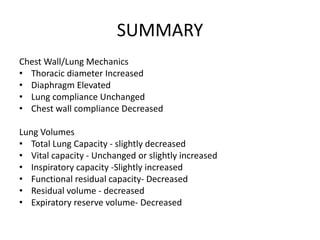
SUMMARY
Chest Wall/Lung Mechanics
• Thoracic diameter Increased
• Diaphragm Elevated
• Lung compliance Unchanged
• Chest wall compliance Decreased
Lung Volumes
• Total Lung Capacity - slightly decreased
• Vital capacity - Unchanged or slightly increased
• Inspiratory capacity -Slightly increased
• Functional residual capacity- Decreased
• Residual volume - decreased
• Expiratory reserve volume- Decreased
Spirometry
• FEV1 Unchanged
• FVC Unchanged
• FEV1/FVC Unchanged
Ventilation
• Minute ventilation Increased
• Tidal volume Increased
• Respiratory rate Unchanged
Gas Exchange
• DCO Unchanged or slightly decreased
Blood gases
• pH 7.40 to 7.45
• PaCO2 decreased to 28 to 32 mmHg
• Bicarbonate Slightly decreased (18 to 21
mEq/L)
Physiological Changes Of Respiratory
System With Exercise
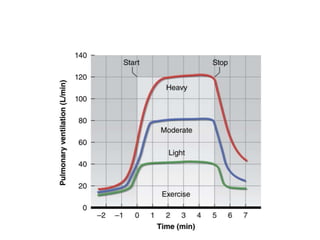
• As exercise commences pulmonary ventilation (breathing)
increases in direct proportion to the intensity and metabolic
needs of the exercise.
• Ventilation increases to meet the demands of exercise
through the following two methods:
1. An increase in ‘tidal volume’ which refers to the quantity
of air that is inhaled and exhaled with every breath.
2. An increase in the ‘respiration or breathing rate’ which
refers to how many times a person completes an inhalation
and exhalation every minute.
• If the exercise is intense, breathing rates may increase from a
typical resting rate of 15 breaths per minute up to 40 – 50
breaths per minute.
• Immediate  in ventilation
– Begins before muscle contractions
– Due to cerebral input to the respiratory center in the
anticipation of the increased needs depending on
the past experiences and afferent impulses from
proprioceptors in muscles, tendons and joints
• Gradual second phase of  in ventilation
– Driven by chemical changes in arterial blood
–  CO2, H+ sensed by chemoreceptors
– Right atrial stretch receptors
• Ventilation increase proportional to metabolic
needs of muscle
– At low-exercise intensity, only tidal volume 
– At high-exercise intensity, rate also 
• Ventilation recovery after exercise delayed
– Recovery takes several minutes (may take upto 90
minutes)
– May be regulated by blood pH, PCO2, temperature
Increased Tidal Volume
• Tidal volume increases from 10% to 50-
60% of vital capacity with increasing
exercise intensity to supply oxygen to
working muscles.
INCREASED Pulmonary Ventilation
• While the level of maximum ventilation
achieved is dependent on the intensity
of exercise, it is seldom beyond 20 times
the resting level, i.e. upto 100 to 110 L.
• The maximum breathing capacity is
about 150 to 170L in an average person.
• There is still sufficient reserve available
for extreme circumstances such as
exercise at high altitudes and in extreme
environments.
Decreased ratio of Dead Space (VD) to Tidal Volume (VT)
• Airway resistance decreases owing to bronchodilation as soon as
exercise begins. Likewise, the ratio of dead space (VD) to tidal
volume (VT) decreases. The drop in VD/VT is moderate at low-to-
moderate exercise intensities. The VD itself changes minimally with
bronchodilation, the change in ratio being largely due to the
increased VT. This is advantageous, as it results in greater alveolar
ventilation for given minute ventilation.
No Change to Vital Capacity
• Lung volume remains unchanged, as it can not be increased as a
short term effect to exercise.
Increased Alveolocapillary Gradient for
O2
• Increased extraction of oxygen in
the exercising tissues results in a fall
in the mixed venous PO2 of blood
reaching the right side of the heart,
from a normal of 40 mm Hg to 25
mm Hg or even less.
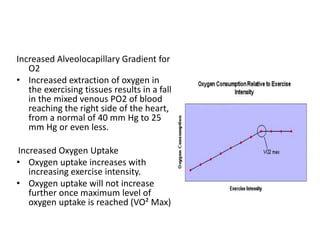
Increased Oxygen Uptake
• Oxygen uptake increases with
increasing exercise intensity.
• Oxygen uptake will not increase
further once maximum level of
oxygen uptake is reached (VO² Max)
Increase in Diffusion Capacity for O2
• Upto 3 times on exercise
• Results from recruitment of underperfused pulmonary capillary
beds due to increased blood flow and pulmonary artery pressure
• The pulmonary blood flow increases from a normal of 5.5 L/min to
as much as 20–35 L/min.
Increased Efforts From Ribcage Muscles and Diaphragm
• Diaphragm and intercostal muscles will work harder to enable
increased expansion and contraction of thoracic cavity.
• The increased movement of the cavity can accommodate an
increased air volume, required to supply active muscles with oxygen
Physiological Changes Of Respiratory
System With Aging
Basic changes that affect lung function are-
• Decrease respiratory muscle strength.
• Decrease in elastic recoil of lung tissue.
• Stiffening of chest wall and calcification of costal
cartilages.
• Decrease in size of intervertebral spaces.
• Loss of alveolar surface area and pulmonary
capillary blood volume.
These effects may present singly or in combination
Anatomical change
• Air space size increases due to senile
emphysema.
• Compliance
- Chest wall compliance decreased.
- Lung compliance - increased to normal
- Total respiratory compliance decreased
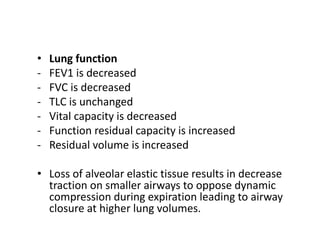
• Lung function
- FEV1 is decreased
- FVC is decreased
- TLC is unchanged
- Vital capacity is decreased
- Function residual capacity is increased
- Residual volume is increased
• Loss of alveolar elastic tissue results in decrease
traction on smaller airways to oppose dynamic
compression during expiration leading to airway
closure at higher lung volumes.
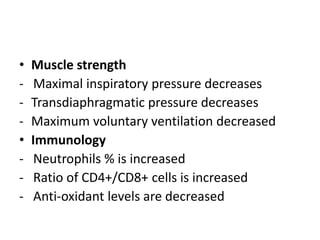
• Muscle strength
- Maximal inspiratory pressure decreases
- Transdiaphragmatic pressure decreases
- Maximum voluntary ventilation decreased
• Immunology
- Neutrophils % is increased
- Ratio of CD4+/CD8+ cells is increased
- Anti-oxidant levels are decreased
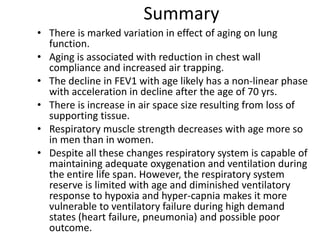
Summary
• There is marked variation in effect of aging on lung
function.
• Aging is associated with reduction in chest wall
compliance and increased air trapping.
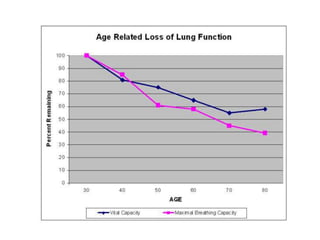
• The decline in FEV1 with age likely has a non-linear phase
with acceleration in decline after the age of 70 yrs.
• There is increase in air space size resulting from loss of
supporting tissue.
• Respiratory muscle strength decreases with age more so
in men than in women.
• Despite all these changes respiratory system is capable of
maintaining adequate oxygenation and ventilation during
the entire life span. However, the respiratory system
reserve is limited with age and diminished ventilatory
response to hypoxia and hyper-capnia makes it more
vulnerable to ventilatory failure during high demand
states (heart failure, pneumonia) and possible poor
outcome.
THANK YOU !!!

Changes in Respiratory System with Various Physiological Conditions

  • 1.
    Changes In RespiratorySystem With Various Physiological Conditions Dr. Anand Kumar Bansal Junior Resident Department Of Pulmonary Medicine
  • 2.
    Topics High-Altitude Physiology Deep SeaDiving And Effects Of Increased Barometric Pressure Changes In Respiratory System During Pregnancy Physiological Changes Of Respiratory System With Exercise Physiological Changes Of Respiratory System With Aging
  • 3.
    Normal values ofpressures in inspired, expired, alveolar gas and in blood (mm Hg)
  • 4.
    High-Altitude Physiology ALTITUDE TYPEFROM SEA-LEVEL (In feet) • HIGH - 8,000 – 12,000 • VERY HIGH - 12,000 – 18,000 • EXTREMELY HIGH - Above 18,000 • An estimated 40 million people travel each year to altitudes > 8000 ft (2500 m) and as many or more travel to altitude for leisure and sports, and work in mines, military or border operations.
  • 5.
    760 mm Hg 47--- mm/Hg 95 --- 190 --- 380 --- 523 --- 760 --- 21% O2 78% N2 The French physiologist Paul Bert first recognized that the harmful effects of high altitude are caused by low oxygen tension.
  • 6.
    • Atmospheric compositionof air remains almost constant (upto 30,000 ft) but PO2 decreases with increasing altitude with FIO2 equivalent to 17% O2 at 8000 ft, down to 8% O2 at the summit of Everest (appox. 29,028 ft) • Hypoxemia causes the physiologic responses and illnesses. • Altitude-related exposure to cold and extreme exercise may also contribute to illness • The adaptive changes to high altitude are collectively termed as Acclimatization
  • 7.
    Level of altitude Barometric pressure Atmospheric pressure pO2 Alveolar air Po2 pCO2% O2 saturation of Hb Sea level 760 159 104 40 100 5000 630 130 80 40 95 10000 520 110 60 40 90 15000 480 90 50 36 80 18000 400 80 40 30 70 20000 350 70 <40 <30 <70 40000 140 30 12 24 15 Barometric Pressure & Partial Pressure Of Gases
  • 8.
    Pulmonary Adaptation toHigh Altitude • Hyperventilaton is the most important feature due to decreased PO2 called hypoxic ventilatory drive • Associated with increase in rate and depth of ventilation resulting in increase in alveolar ventilation Hypoxia Carotid body stimulation Respiratory centres stimulation Increased ventilation Improved hypoxia Decreased PCO2
  • 9.
    • Despite decreasein blood oxygen content, the delivery of oxygen to tissues is maintained by increased cardiac output and increased red cell mass (hypoxia induced erythropoietin secretion) • The alveolar hypoxia triggers hypoxic pulmonary vasoconstriction to maintain ventilation perfusion relationship and this causes a rise in pulmonary arterial pressure. This is important in the pathogenesis of HAPE and altitude related pulmonary hypertension • Cheyne-Stokes Respiration - Above 10,000 ft (3,000 m) most people experience a periodic breathing during sleep. The pattern begins with a few shallow breaths increases to deep sighing respirations  falls off rapidly
  • 11.
    Character & DegreeOf Hypoxic Effects With Increasing Altitutude Depends Upon: • Level of the altitude • Rate of ascent • Duration of exposure at high altitude
  • 12.
    COMMON CLINICAL DISORDERSOF HIGH ALTITUDE Acute High-altitude illnesss – High-altitude headache (HAH) – Acute mountain sickness (AMS) – High altitude cerebral oedema (HACE) – High altitude pulmonary oedema (HAPE) Chronic High-altitude illnesss -- Chronic mountain sickness (CMS)
  • 13.
    Evidence for severalmechanisms for AMS, HACE, and HAPE
  • 14.
    High-altitude Headache • High-altitudeheadache (HAH) is very common, and is exacerbated by insufficient hydration in the setting of increased water loss with hyperventilation, overexertion, and insufficient energy intake, particularly in those who have experienced HAH on a previous visit to altitude. • Acetaminophen or ibuprofen with hydration will improve this symptom.
  • 15.
    Acute Mountain Sickness •Acute mountain sickness (AMS) occurs after 4 to 36 hours of altitude exposure. • Symptoms are headache (usually frontal), nausea, vomiting, irritability, malaise, insomnia, and poor climbing performance. • The Lake Louise Symptom Score Questionnaire is the most common and useful self administered tool to determine the severity of AMS. A score of 4 and more is considered AMS, a score of 10 and more is considered severe and requires immediate intervention Management • The key element is to limit the elevation change per day to less than 400 m/d. A slow rate of ascent is the best way to prevent AMS.
  • 16.
    • Adequate hydrationshould be encouraged, and 2 L of extra fluid per day is advised • Mild AMS is self-limiting and usually lasts about 3 days, so treatment is not mandatory • If the symptoms progress, the patient should descend. • If descent is delayed, acetazolamide (250 mg at bedtime or 125 mg bid) is generally considered first-line treatment; dexamethasone at a dose of 4 mg every 6 hours can be used in sulfaallergic individuals. • A combination of the two agents can be used for rapidly evolving symptoms. These drugs are continued for a few days at altitude. • For sleep disturbances, temazepam is effective in reducing recurrent central apnea and arousals, and appears safe to use, without any measurable adverse effects the next day.
  • 17.
    Lake Louise SymptomScore Self-Report Questionnaire
  • 18.
    High-altitude Cerebral Edema •Signature symptoms are dizziness, severe almost unbearable headache, and vomiting. Ataxia is common, and a positive Romberg sign is present. Somnolence, stupor, and changes in pupillary responsiveness mark the onset of a fatal stage. • In the absence of treatment, the condition will progress to coma and mortality will be high. • HACE can occur even in the relative absence of AMS symptoms • Concurrent signs of pulmonary edema may also be noted. • Descent is critical. While awaiting evacuation, supplemental oxygen should be given. Every 1% increase in oxygen concentration above 21% reduces the equivalent altitude by about 300 m. • Administration of dexamethasone (4–8 mg), intramuscularly in severe cases, or orally in less severe cases, helps reduce cerebral edema and should be given while awaiting evacuation; doses can be repeated every 6hours
  • 19.
    High-altitude Pulmonary Edema •A typical patient is a fit young man who has climbed rapidly and is energetic on arrival. • Prevalence estimates are 0.5% to 2.0% of those rapidly ascending to altitude. • A cough develops, which is initially dry, then productive of frothy white sputum, later becoming blood tinged. The climber may complain of chest discomfort. The pulse and respiratory rate are increased, and auscultation of the chest reveals crackles at the bases. An elevated jugular venous pressure and peripheral edema may be seen. • As breathing becomes “bubbly” due to pulmonary edema, cyanosis develops. • In the absence of definitive treatment, hypoxemia progresses to respiratory failure, and coma and death ensue. • High-altitude pulmonary edema (HAPE) may occur independently of AMS.
  • 20.
    Mechanism • HAPE iscaused by migration of fluid into extravasal space through endothelial damage along with shear stresses produced by increased cardiac output and pulmonary artery pressure. Prevention • In those who have experienced HAPE before, use of nifedipine prophylactically (20 mg twice daily prior to ascent, then three times daily) appears to lower significantly the incidence of HAPE. Treatment • Descent is critical for survival. • Initial medical treatment while the subject awaits descent includes strict rest and supplemental oxygen. • Nifedipine (10 mg sublingually) may be used. If clinically significant hypotension does not occur with the first dose of nifedipine, its administration can be repeated every 15 to 30 minutes
  • 21.
    Copyright ©2003 BMJPublishing Group Ltd. Barry, P W et al. BMJ 2003;326:915-919 No Caption Found
  • 23.
    Pathway for managementof acute altitude illnesses
  • 24.
    Chronic Mountain Sickness •The defining feature is extreme polycythemia, with hemoglobin concentrations as high as 23 g/dL and hematocrits as high as 83%. • Patients may have vague neuropsychological complaints, including headache, dizziness, somnolence, fatigue, difficulty in concentration, and loss of mental acuity. • The condition of CMS is quite different from AMS. Excessive erythrocytosis associated with a lower oxygen saturation and hypoxic ventilatory response with relative hypercapnia are the main features of CMS, followed by right ventricular enlargement, pulmonary hypertension, and remodeling of pulmonary arterioles. • Descent to sea level is the definitive treatment. • However, for those who wish to remain at altitude for family or economic reasons, phlebotomy and administration of supplemental oxygen are beneficial.
  • 25.
    Deep Sea DivingAnd Effects Of Increased Barometric Pressure • The air-containing atmosphere of the earth applies pressure to any object within it. • At sea level this pressure is defined as one atmosphere (1 ATM). • One atmosphere is equivalent to 760 torr (mm Hg), 29.92 in Hg, 14.7 psi, 101.3 kPa, or 1.013 bar. • Every 10 m or 33 ft of sea water (fsw) through which a diver descends adds an additional 1 ATM of pressure. • High ATM pressure seen in – Deep sea diving – Submarines – Caisson’s workers.
  • 27.
    Physiological Problems UnderDepth • Due to mechanical effects • Due to effect of high pressure on respiratory gases.
  • 28.
    Physiological Problems DueTo Mechanical Effects Of High Atmospheric Pressure • At a depth of more than 30 meters (100 ft) • Caving of the chest • Damage to the face • Squeezing of air in the Paranasal sinuses & middle ear.
  • 29.
    Physiological Problems DueTo Effect Of High Pressure On Respiraatory Gases. • Effect of increases PO2 • Effect of increased PN2 (nitrogen narcosis) • Effect of carbon dioxide build up.
  • 30.
    Effect Of IncreasedPo2 • Acute oxygen toxicity – Disorientation, dizziness, convulsions & coma • Chronic oxygen toxicity – Irritation of airways – Pulmonary edema & atelectasis – Bronchopneumonia. At 4 atm pressure dissolved oxygen increased from 2 to 9ml/100ml Raises tissue Po2 & changes molecular oxygen to active oxygen. Superoxide anion- free radical. Oxidizes PUFA of cell membrane & enzymes – damage cell metabolism – nervous complication.
  • 31.
    Effect Of IncreasedPn2 (Nitrogen Narcosis) • PN2 increases when breathed compressed air • Nitrogen dissolves in body fluids N2 dissolves in FATS • Neurons rich in fats so more N2 dissolves in neurons of Brain. Alters ionic conductance • Decrease neuronal excitability • Produce Nitrogen Toxicity. Nitrogen narcosis.
  • 32.
    Effect Of CarbonDioxide Build Up Person rebreathes CO2 Passage of CO2 long time in body fluids – reach toxic levels Respiratory acidosis & CO2 narcosis.
  • 33.
    Physiological Problems OfAscent • Decompression Sickness (DCS) • Air Embolism
  • 34.
    Decompression Sickness • Caisson’s disease/Dysbarism/com pressionof air sickness/the bends/diver’s palsy. • Cause – under high pressure nitrogen in the breathed air dissolved in the body fluids & fats.
  • 35.
    • When individualascend rapidly to sea level, nitrogen is decompressed & escapes from the tissue in the form of bubbles • These bubbles block the blood vessels – ischemia & infarction.
  • 36.
  • 37.
    Symptoms • Pain injoints & muscles – Bends • Neurological symptoms – dizziness, collapse, unconsciousness, Sensation of numbness • Erythematous macular rash involving the trunk • Coronary ischemia & MI
  • 38.
    Treatment • Slow decompression •Hyperbaric oxygen • Decompression chamber
  • 39.
    Decompression Chamber orHyperbaric chamber A sealed compartment used to treat Air Embolism and decompression sickness, in which pressure is first increased and then gradually decreased
  • 40.
    Air Embolism • Dueto entry of air into blood circulation following rupture of pulmonary capillaries, arteries & veins due to sudden expansion of gases in lungs due to sudden fall in atmospheric pressure. • Occurs in Caisson’s workers.
  • 41.
    Symptoms • Chest pain,tachypnoea, systemic hypotension, hypoxemia • Sometimes air emboli to systemic circulation – death. Treatment • Slow decompression • Decompression chamber • Hyperbaric oxygen
  • 42.
    Prevention of PhysiologicalProblems Occuring at Depth & Ascent Measures for short duration dive up to 20 meters  Take rapid & deep breaths before diving – CO2 washes out – N2 does not get enough time to dissolve – O2 toxicity not occur. Measures for deeper & longer dives  Use of breathing apparatus – gives gas to breath & either dissolves CO2 ( close circuits) or bubbles out in water (open circuits)  SCUBA DIVING ( Self-Contained-Underwater-Breathing- Apparatus)  Use of breathing mixtures containing helium & low oxygen concentration – prevent O2 toxicity.  Slow ascent or use of Decompression chamber
  • 43.
    Changes In RespiratorySystem During Pregnancy • The anatomic and physiological changes of pregnancy have major pulmonary and cardiovascular consequences throughout the gestation. • An understanding of these changes is necessary since inappropriate diagnosis and interventions may occur in the absence of this knowledge.
  • 44.
    Anatomic changes ofnormal pregnancy Upper Airways • Hyperemia, friability, mucosal edema, and hypersecretion of the airway mucosa -- most pronounced in the upper airways, especially during the third trimester. • Nasal obstruction, epistaxis, sneezing episodes, and vocal changes may occur, and these may worsen when the individual lies down. • Nasal and sinusoidal polyposis is often seen and tends to recur in women with each pregnancy.
  • 45.
    • Nasal obstructionmay contribute to upper airway obstruction during sleep, leading to snoring and even obstructive sleep apnea. • The physiological causes of nasal mucosal changes appear to be predominantly mediated by estrogens. • Estrogens increase tissue hydration and edema. They also cause capillary congestion and hyperplastic and hypersecretory mucous glands.
  • 46.
    Lower airways • Mucosalchanges that affect the upper airways may also occur in the central portion of the airway, such as the larynx and trachea. • Nonspecific complaints of airway irritation, such as irritant cough or sputum production. • The enlarging uterus produces upward displacement of the diaphragm → increase in the anteroposterior and transverse diameters of the thoracic cage • Diaphragm may be elevated up to 4 cm, but diaphragmatic function is not impaired • Thoracic cage circumference increase by upto 6 cm
  • 47.
    • Progressive relaxationof the ligamentous attachments of the ribs broadens the subcostal angle from 60-70 degrees to around 100-110 degrees. • The shortening and widening of the thoracic cavity results in upward and lateral displacement of the cardiac apex on chest radiography. • Abdominal muscles have a decreased tone and are less active during the pregnancy, causing respiration to be more thoracic and less diaphragmatic.
  • 48.
    Physiological changes ofnormal pregnancy • Enlarging uterus cause serial changes in lung volumes • The dead space volume increases due to relaxation of musculature of the trachea and the bronchi by progesterone • Tidal volume increases gradually by 35-50% as the pregnancy progresses • Total lung capacity (TLC) is reduced slightly (4 to 5%) by the elevation of diaphragm • The functional residual capacity (FRC) residual volume (RV), and expiratory reserve volume (ERV), all decrease by about 10-20% due to anatomical changes in the thoracic cage • Inspiratory capacity (IC) increases by 5-10%
  • 49.
    • The forcedvital capacity (FVC) is largely unaltered till later in pregnancy as the widened chest diameters counter the effects of the raised diaphragm • FEV1/FVC ratio is usually not affected. Therefore, the dyspnea of normal pregnancy is not responsive to bronchodilators • Lung compliance does not change significantly but compliance of the thoracic cage decreases • In early pregnancy Diffusing capacity is either unchanged or slightly increased. During rest of pregnancy, the diffusing capacity decreases • Oxygen consumption start increasing from first trimester and reaches a maximum of 20% - 30% by term.
  • 50.
    • Increase inrespiratory minute volume by appox. 26% associtaed with the increase in tidal volume with a normal or increased respiratory rate • As the respiartory minute volume increases “hyperventilation of pregnancy” occurs which results in a respiratory alkalosis with compensatory renal excretion of bicarbonate • PCO2 falls to levels of 28 to 32 mmHg • Bicarbonate decreases to 18 to 21 mEq/L • Arterial pH is maintained in the range of 7.40 to 7.45 • This maternal hyperventilation is considered a protective measure that prevents the fetus from excessive levels of CO2
  • 51.
    Lung volume changesassociated with pregnancy Although total lung capacity, residual volume, and expiratory reserve volume diminish, vital capacity is preserved in values similar to nonpregnant women
  • 52.
    Physiologic Dyspnea ofPregnancy • The increase in minute ventilation that accompanies pregnancy is often perceived as shortness of breath. • Shortness of breath at rest or with mild exertion is so common that it is often referred to as ‘‘physiologic dyspnea.’’ • The increase in minute ventilation and the load imposed by the enlarging uterus cause an increase in the work of breathing. • Other factors contribute to the sensation of dyspnea include increased pulmonary blood volume, anemia, and nasal congestion
  • 53.
    • Differentiate thenormal dyspnea of pregnancy from that due to disease pathology. • Pathologic dyspnea : increased respiratory rate greater than 20 breaths per minute, arterial PCO2 less than 28 or greater than 35 mm of Hg, hypoxemia or abnormal measures on forced expiratory spirometry, or cardiac echocardiography • Abrupt or paroxysmal episodes of dyspnea suggest an abnormal condition
  • 54.
    SUMMARY Chest Wall/Lung Mechanics •Thoracic diameter Increased • Diaphragm Elevated • Lung compliance Unchanged • Chest wall compliance Decreased Lung Volumes • Total Lung Capacity - slightly decreased • Vital capacity - Unchanged or slightly increased • Inspiratory capacity -Slightly increased • Functional residual capacity- Decreased • Residual volume - decreased • Expiratory reserve volume- Decreased
  • 55.
    Spirometry • FEV1 Unchanged •FVC Unchanged • FEV1/FVC Unchanged Ventilation • Minute ventilation Increased • Tidal volume Increased • Respiratory rate Unchanged
  • 56.
    Gas Exchange • DCOUnchanged or slightly decreased Blood gases • pH 7.40 to 7.45 • PaCO2 decreased to 28 to 32 mmHg • Bicarbonate Slightly decreased (18 to 21 mEq/L)
  • 57.
    Physiological Changes OfRespiratory System With Exercise • As exercise commences pulmonary ventilation (breathing) increases in direct proportion to the intensity and metabolic needs of the exercise. • Ventilation increases to meet the demands of exercise through the following two methods: 1. An increase in ‘tidal volume’ which refers to the quantity of air that is inhaled and exhaled with every breath. 2. An increase in the ‘respiration or breathing rate’ which refers to how many times a person completes an inhalation and exhalation every minute. • If the exercise is intense, breathing rates may increase from a typical resting rate of 15 breaths per minute up to 40 – 50 breaths per minute.
  • 58.
    • Immediate in ventilation – Begins before muscle contractions – Due to cerebral input to the respiratory center in the anticipation of the increased needs depending on the past experiences and afferent impulses from proprioceptors in muscles, tendons and joints • Gradual second phase of  in ventilation – Driven by chemical changes in arterial blood –  CO2, H+ sensed by chemoreceptors – Right atrial stretch receptors
  • 59.
    • Ventilation increaseproportional to metabolic needs of muscle – At low-exercise intensity, only tidal volume  – At high-exercise intensity, rate also  • Ventilation recovery after exercise delayed – Recovery takes several minutes (may take upto 90 minutes) – May be regulated by blood pH, PCO2, temperature
  • 61.
    Increased Tidal Volume •Tidal volume increases from 10% to 50- 60% of vital capacity with increasing exercise intensity to supply oxygen to working muscles. INCREASED Pulmonary Ventilation • While the level of maximum ventilation achieved is dependent on the intensity of exercise, it is seldom beyond 20 times the resting level, i.e. upto 100 to 110 L. • The maximum breathing capacity is about 150 to 170L in an average person. • There is still sufficient reserve available for extreme circumstances such as exercise at high altitudes and in extreme environments.
  • 62.
    Decreased ratio ofDead Space (VD) to Tidal Volume (VT) • Airway resistance decreases owing to bronchodilation as soon as exercise begins. Likewise, the ratio of dead space (VD) to tidal volume (VT) decreases. The drop in VD/VT is moderate at low-to- moderate exercise intensities. The VD itself changes minimally with bronchodilation, the change in ratio being largely due to the increased VT. This is advantageous, as it results in greater alveolar ventilation for given minute ventilation. No Change to Vital Capacity • Lung volume remains unchanged, as it can not be increased as a short term effect to exercise.
  • 63.
    Increased Alveolocapillary Gradientfor O2 • Increased extraction of oxygen in the exercising tissues results in a fall in the mixed venous PO2 of blood reaching the right side of the heart, from a normal of 40 mm Hg to 25 mm Hg or even less. Increased Oxygen Uptake • Oxygen uptake increases with increasing exercise intensity. • Oxygen uptake will not increase further once maximum level of oxygen uptake is reached (VO² Max)
  • 64.
    Increase in DiffusionCapacity for O2 • Upto 3 times on exercise • Results from recruitment of underperfused pulmonary capillary beds due to increased blood flow and pulmonary artery pressure • The pulmonary blood flow increases from a normal of 5.5 L/min to as much as 20–35 L/min. Increased Efforts From Ribcage Muscles and Diaphragm • Diaphragm and intercostal muscles will work harder to enable increased expansion and contraction of thoracic cavity. • The increased movement of the cavity can accommodate an increased air volume, required to supply active muscles with oxygen
  • 65.
    Physiological Changes OfRespiratory System With Aging Basic changes that affect lung function are- • Decrease respiratory muscle strength. • Decrease in elastic recoil of lung tissue. • Stiffening of chest wall and calcification of costal cartilages. • Decrease in size of intervertebral spaces. • Loss of alveolar surface area and pulmonary capillary blood volume. These effects may present singly or in combination
  • 66.
    Anatomical change • Airspace size increases due to senile emphysema. • Compliance - Chest wall compliance decreased. - Lung compliance - increased to normal - Total respiratory compliance decreased
  • 67.
    • Lung function -FEV1 is decreased - FVC is decreased - TLC is unchanged - Vital capacity is decreased - Function residual capacity is increased - Residual volume is increased • Loss of alveolar elastic tissue results in decrease traction on smaller airways to oppose dynamic compression during expiration leading to airway closure at higher lung volumes.
  • 68.
    • Muscle strength -Maximal inspiratory pressure decreases - Transdiaphragmatic pressure decreases - Maximum voluntary ventilation decreased • Immunology - Neutrophils % is increased - Ratio of CD4+/CD8+ cells is increased - Anti-oxidant levels are decreased
  • 69.
    Summary • There ismarked variation in effect of aging on lung function. • Aging is associated with reduction in chest wall compliance and increased air trapping. • The decline in FEV1 with age likely has a non-linear phase with acceleration in decline after the age of 70 yrs. • There is increase in air space size resulting from loss of supporting tissue. • Respiratory muscle strength decreases with age more so in men than in women. • Despite all these changes respiratory system is capable of maintaining adequate oxygenation and ventilation during the entire life span. However, the respiratory system reserve is limited with age and diminished ventilatory response to hypoxia and hyper-capnia makes it more vulnerable to ventilatory failure during high demand states (heart failure, pneumonia) and possible poor outcome.
  • 71.