Introduction
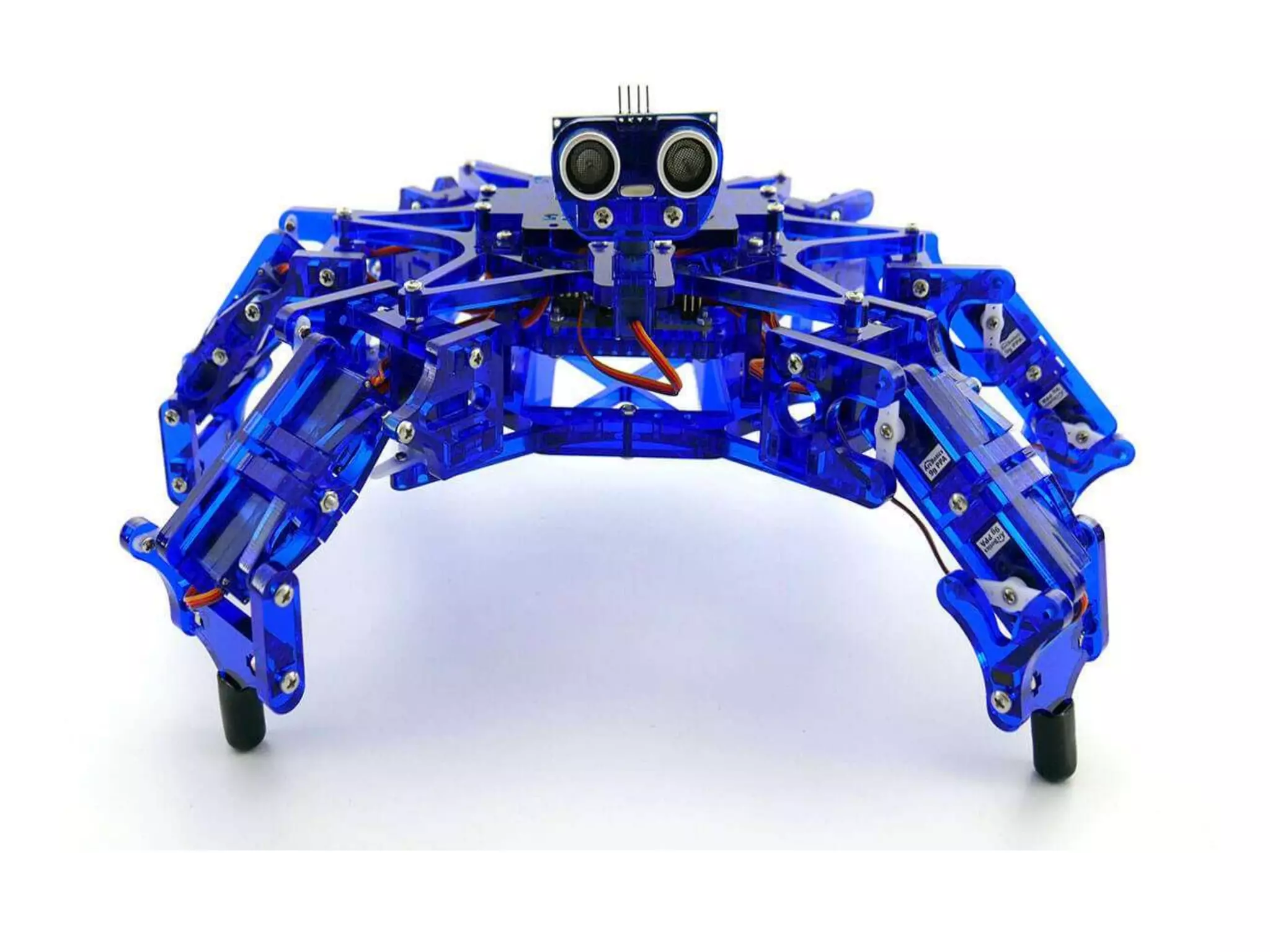
The aim of the project is to build a six-legged
walking robot that is capable of performing basic
tasks, such as walking forward, backward,
rotation, and sidewalk. This robot would serve as a
18-DOF spider robot consist of 6 legs each one
have ‘three’ degrees of freedom, it describes the
kinematic of a hexapod robot. Under certain task-
specific assumption, it is shown that the complex
18-DOF model can be simplified , resulting in an
abstract model.
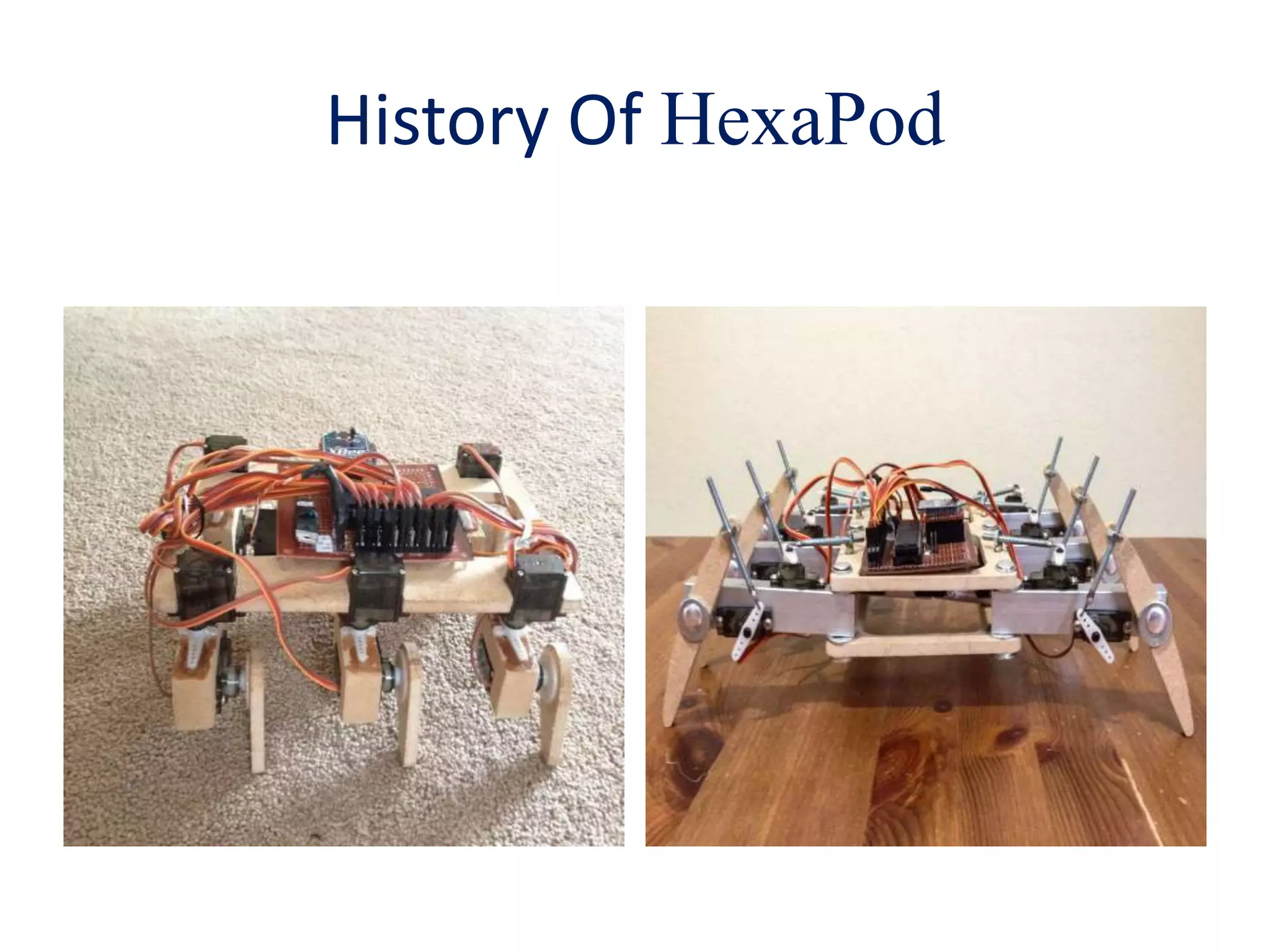
History Of HexaPod
Application
Hexapods may be used to test biological theories about insect locomotion and motor
control. Application examples:
Flight and motion simulators
Search and Rescue robots
Manufacturing automation
Positioning of parabolic antennas
Handling technology
Other applications and current research
Advantages
• While wheeled robots are faster on level ground
than legged robots, hexapods are the fastest of the
legged robots
• Hexapods are also superior to wheeled robots
• Having maneuverable legs
• In comparison to other multi-legged robots,
hexapods have a higher degree of stability
• Hexapods also show robustness
* Because of all of these benefits, hexapod robots
are becoming more and more common.
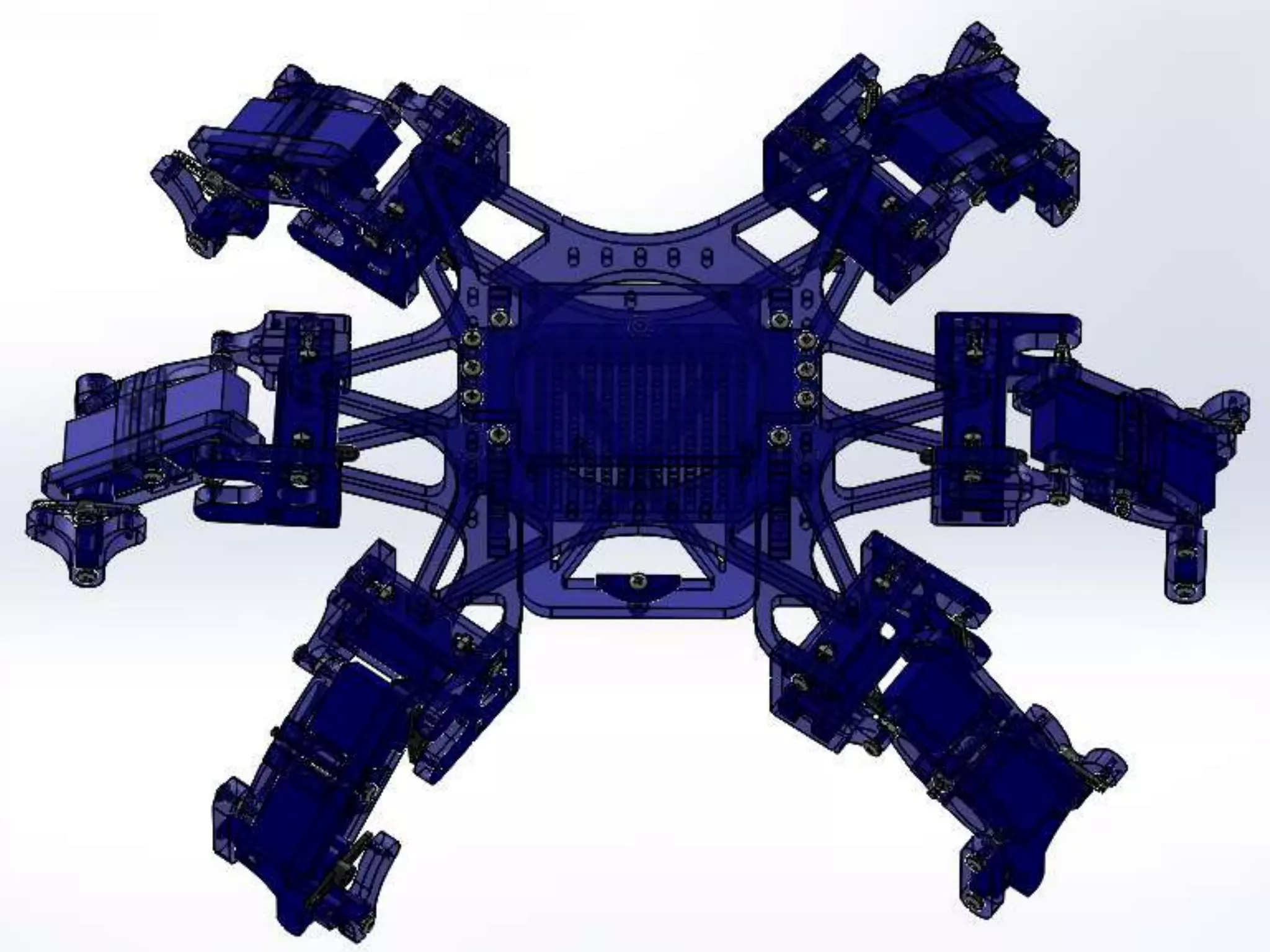
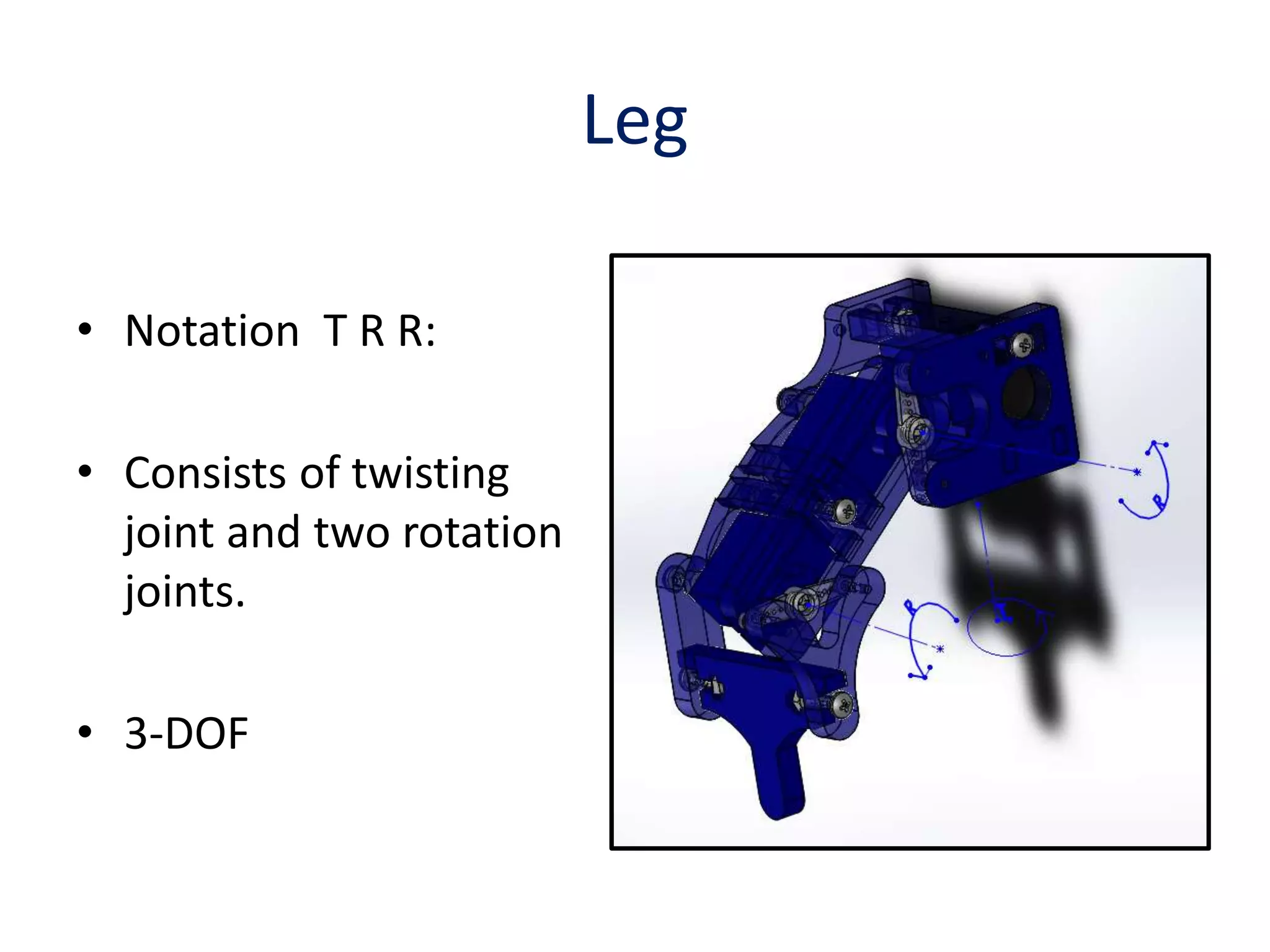
Leg
• Notation T R R:
• Consists of twisting
joint and two rotation
joints.
• 3-DOF
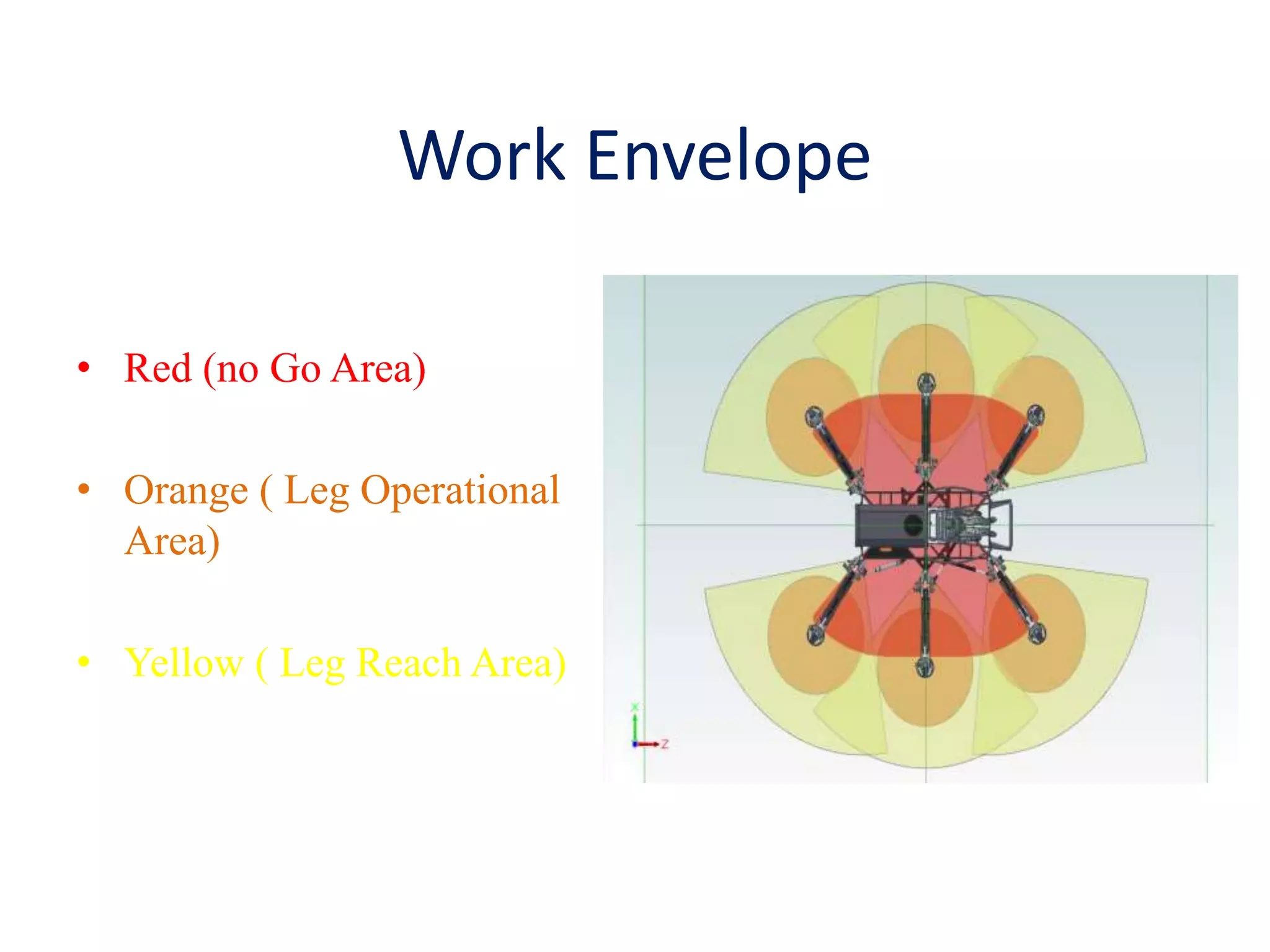
Work Envelope
• Red (no Go Area)
• Orange ( Leg Operational
Area)
• Yellow ( Leg Reach Area)
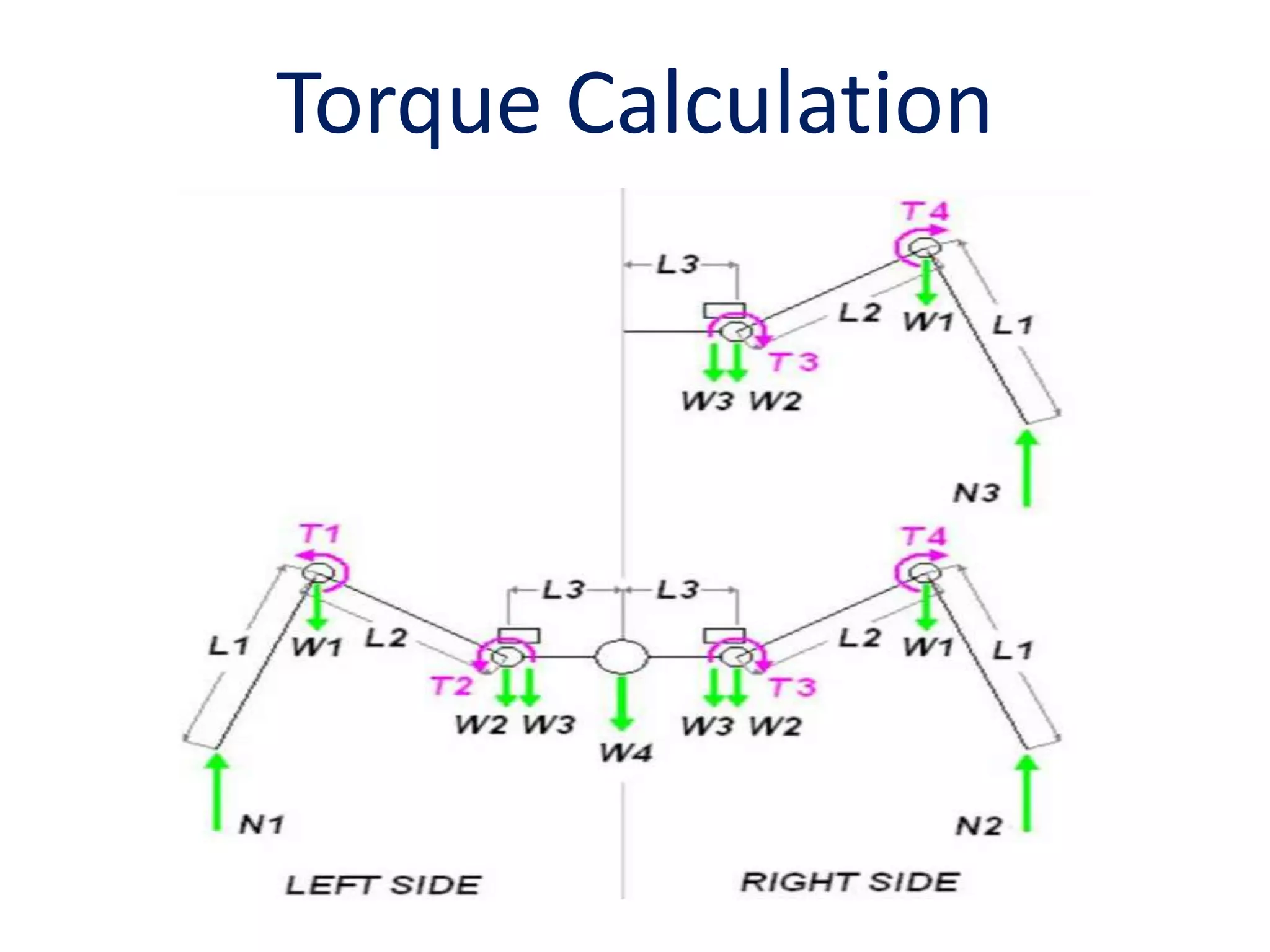
Torque Calculation
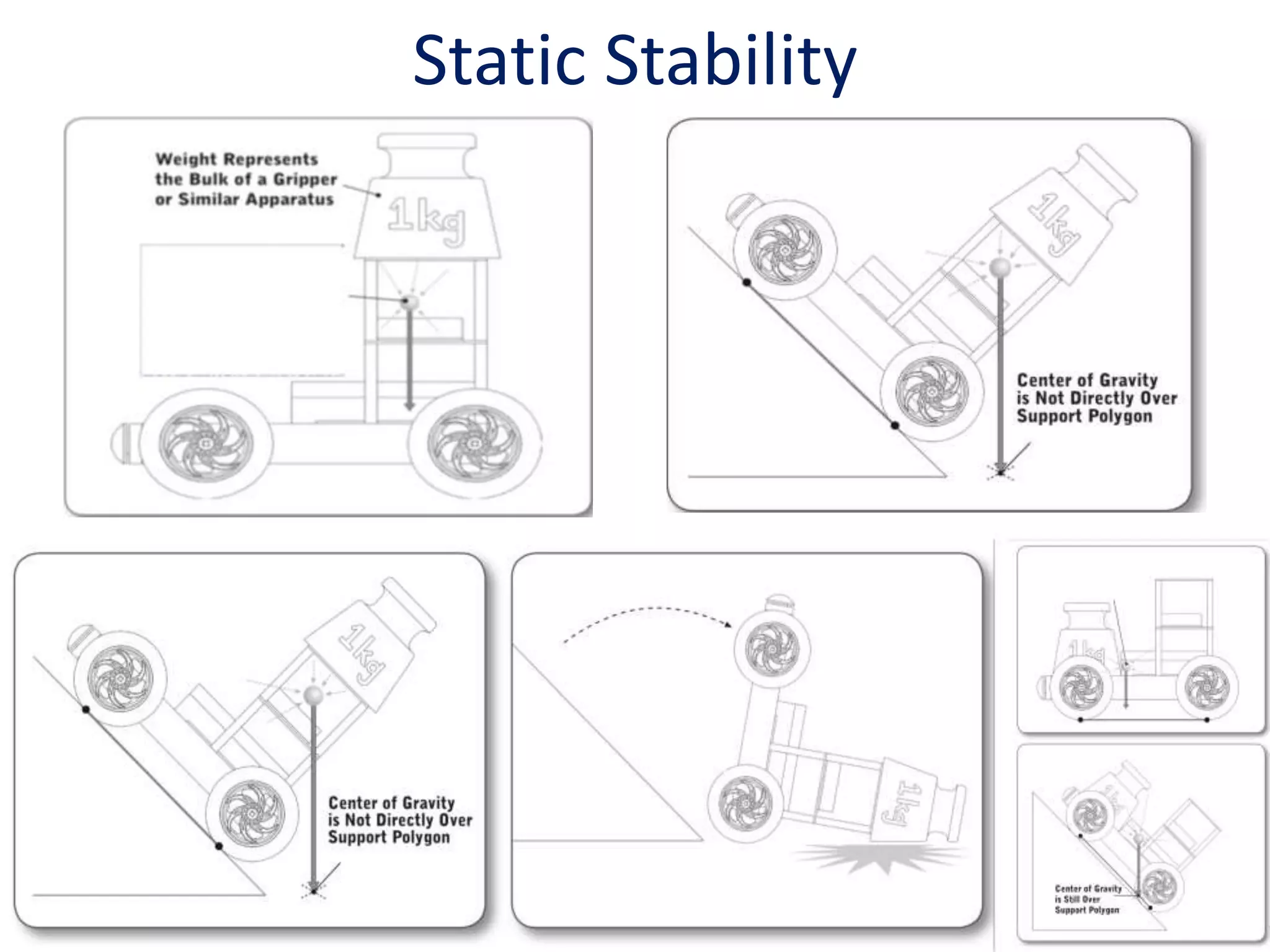
Static Stability
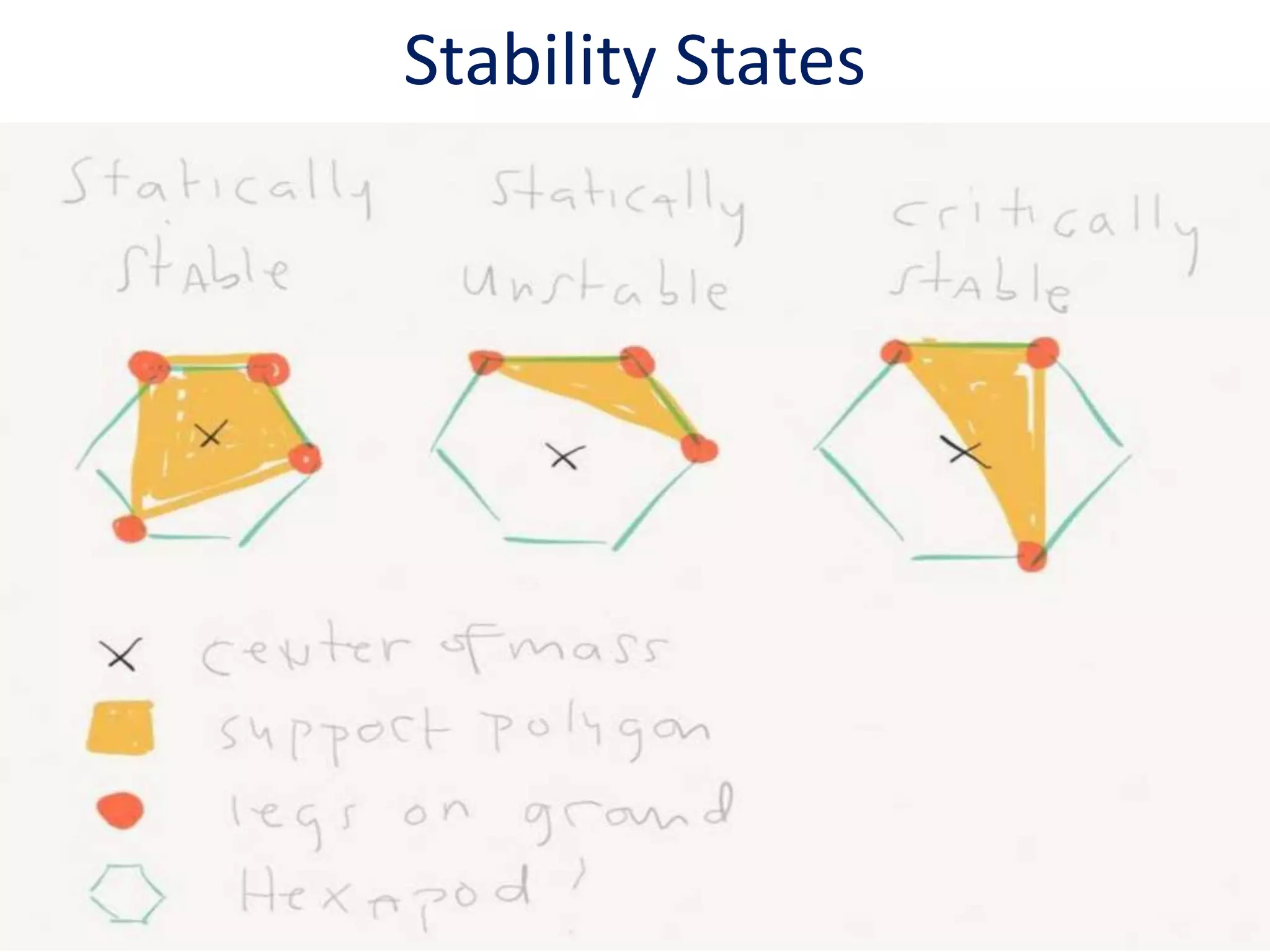
Stability States
Actuators
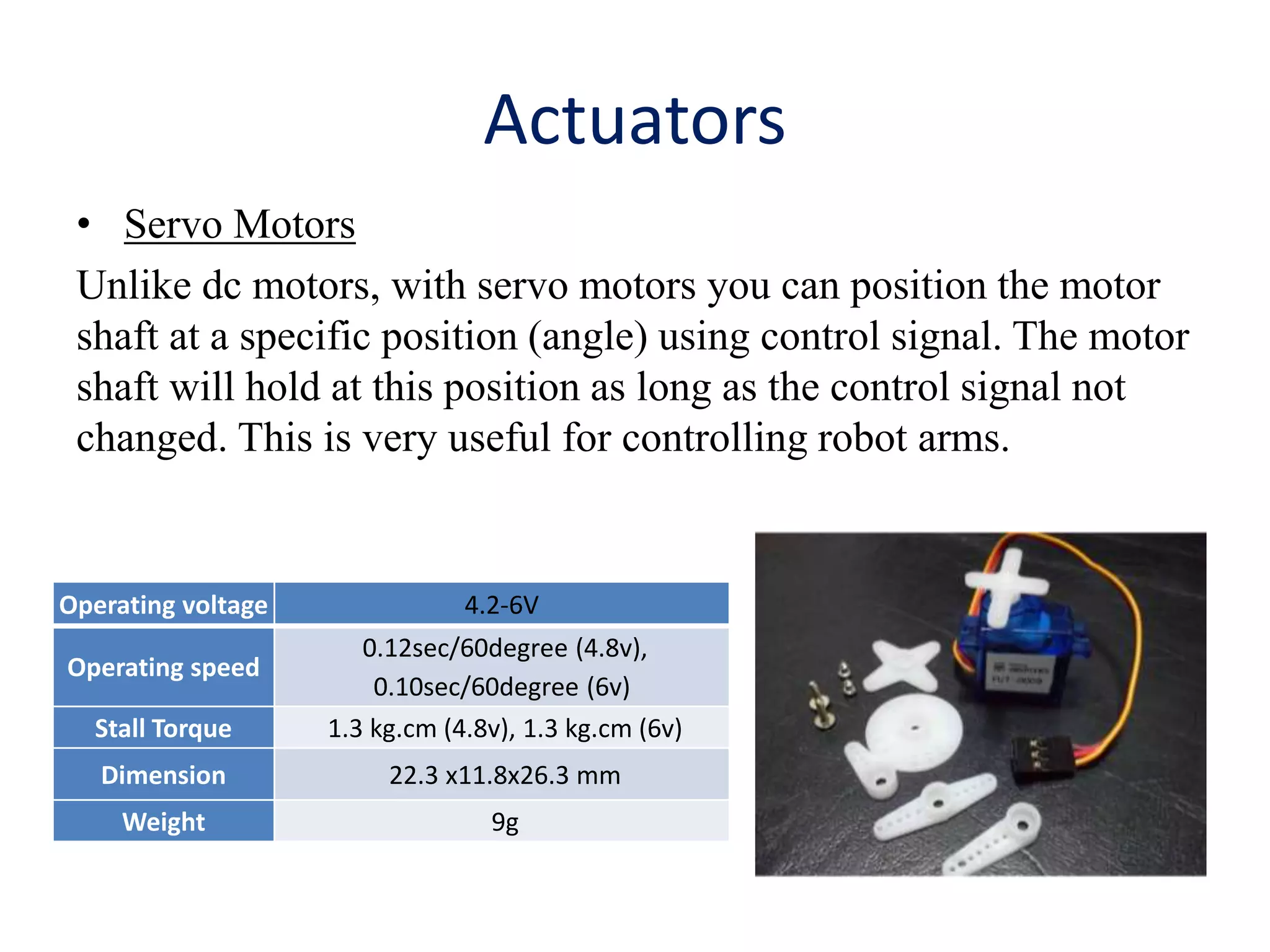
• Servo Motors
Unlike dc motors, with servo motors you can position the motor
shaft at a specific position (angle) using control signal. The motor
shaft will hold at this position as long as the control signal not
changed. This is very useful for controlling robot arms.
Operating voltage 4.2-6V
Operating speed
0.12sec/60degree (4.8v),
0.10sec/60degree (6v)
Stall Torque 1.3 kg.cm (4.8v), 1.3 kg.cm (6v)
Dimension 22.3 x11.8x26.3 mm
Weight 9g
Inverse Kinematics
• how legs is moving and how it stretched. Inverse Kinematics
is a big word for a simple concept. "Kinematics" refers to
modeling the position of something (in this case, a robot's leg).
• to calculate what each joint variable is? (If we desire that the
hand be located at a particular point)
• What you are given : the length of each link the position of
some point on the robot
• What you can find : the angles of joint needed to obtain that
position
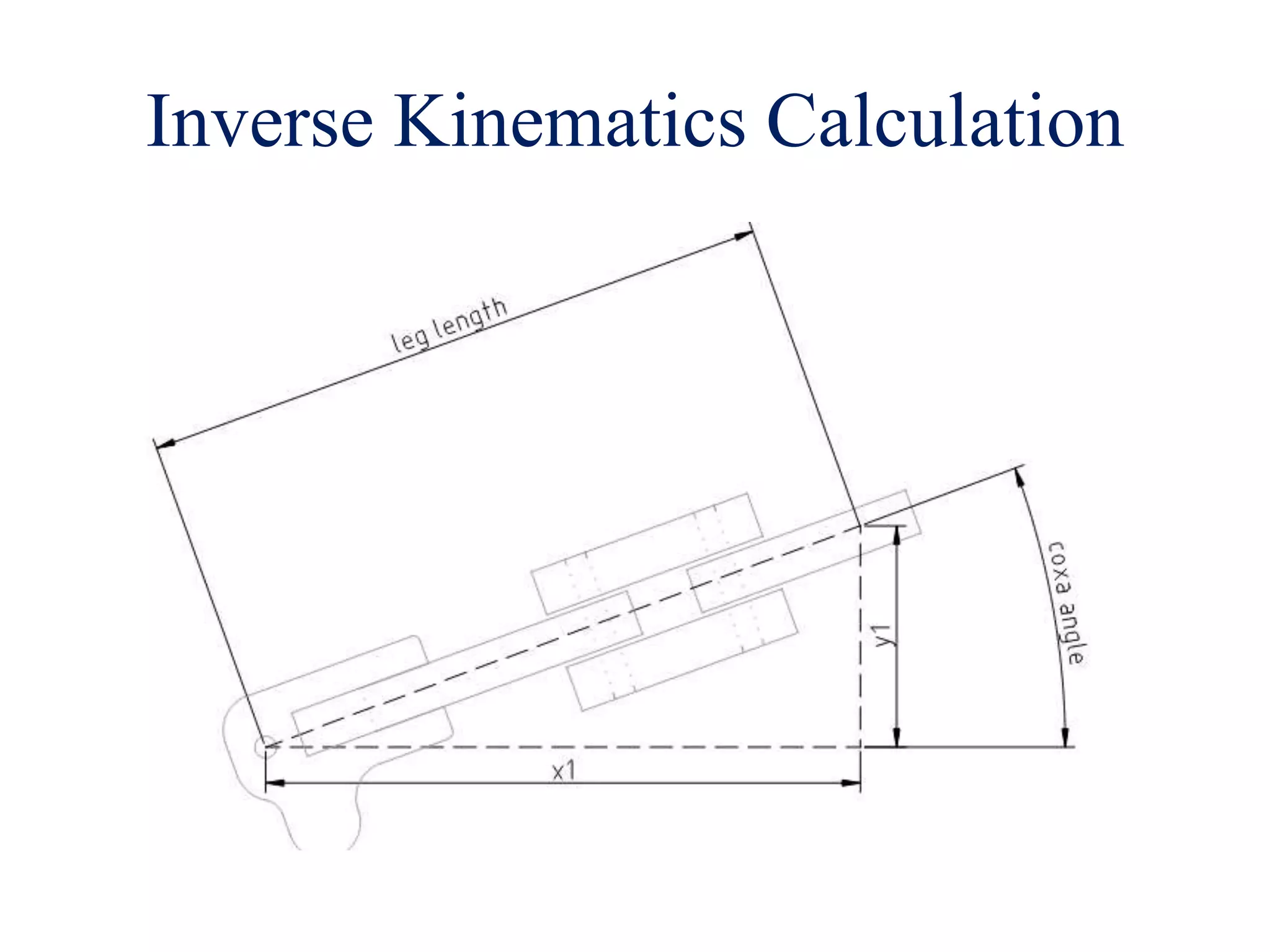
Inverse Kinematics Calculation
• Leg extension =
(femur height + coxa height − z)2+(leg length − coxa length)2
• 𝐴 = tan−1
(
Leg length – coxa length
Coxa height + femur height – Z
)
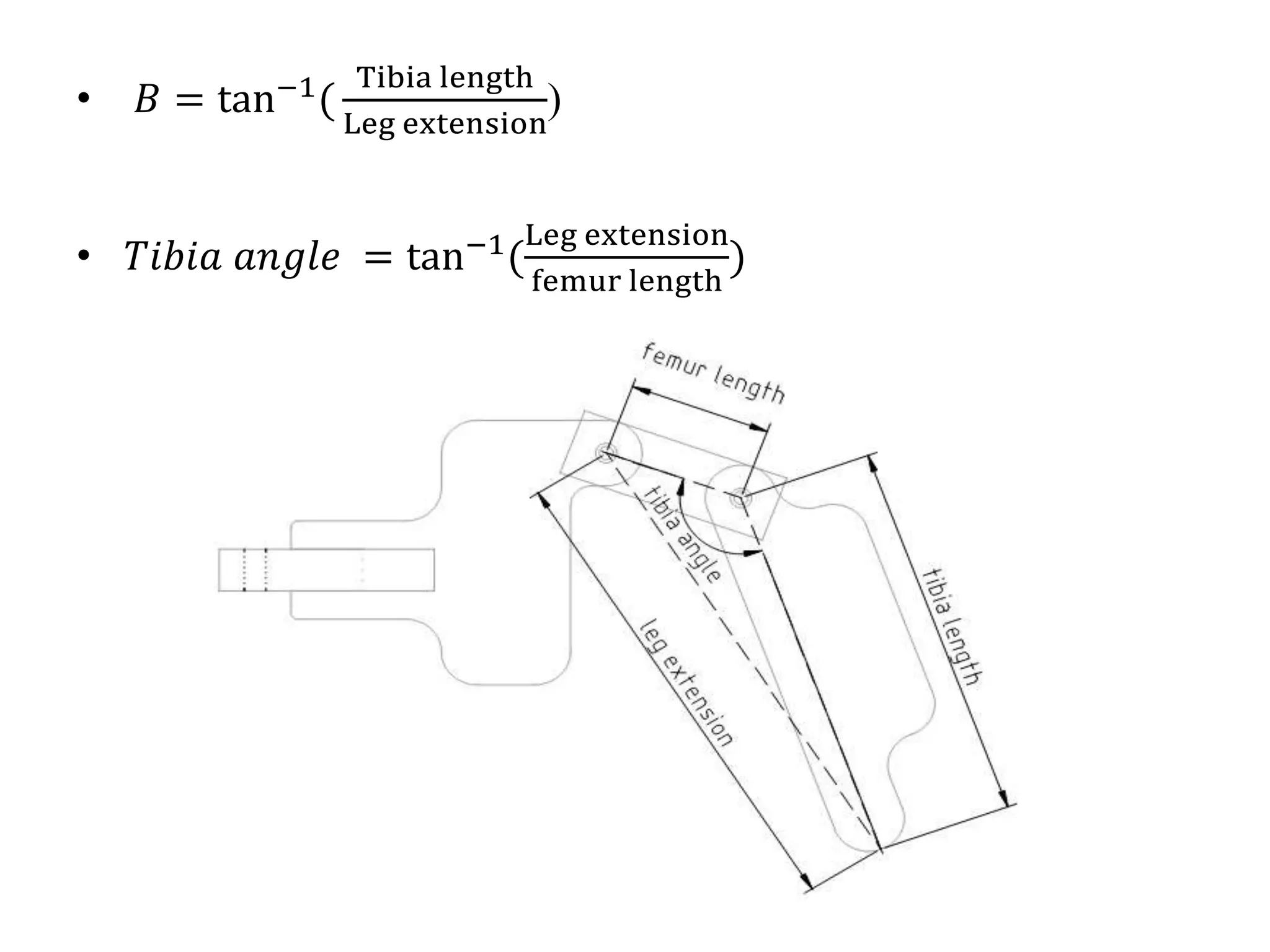
• 𝐵 = tan−1
(
Tibia length
Leg extension
)
• 𝑇𝑖𝑏𝑖𝑎 𝑎𝑛𝑔𝑙𝑒 = tan−1(
Leg extension
femur length
)
Robot Programing
• Textural programing language to enter commands
into robot controller.
• Improved output capabilities to control external
equipment.
• Communication with supervisory computers.

Hexa pod presentation-robot

  • 2.
    Introduction The aim ofthe project is to build a six-legged walking robot that is capable of performing basic tasks, such as walking forward, backward, rotation, and sidewalk. This robot would serve as a 18-DOF spider robot consist of 6 legs each one have ‘three’ degrees of freedom, it describes the kinematic of a hexapod robot. Under certain task- specific assumption, it is shown that the complex 18-DOF model can be simplified , resulting in an abstract model.
  • 3.
  • 5.
    Application Hexapods may beused to test biological theories about insect locomotion and motor control. Application examples: Flight and motion simulators Search and Rescue robots Manufacturing automation Positioning of parabolic antennas Handling technology Other applications and current research
  • 6.
    Advantages • While wheeledrobots are faster on level ground than legged robots, hexapods are the fastest of the legged robots • Hexapods are also superior to wheeled robots • Having maneuverable legs • In comparison to other multi-legged robots, hexapods have a higher degree of stability • Hexapods also show robustness * Because of all of these benefits, hexapod robots are becoming more and more common.
  • 7.
    Leg • Notation TR R: • Consists of twisting joint and two rotation joints. • 3-DOF
  • 8.
    Work Envelope • Red(no Go Area) • Orange ( Leg Operational Area) • Yellow ( Leg Reach Area)
  • 9.
  • 10.
  • 12.
  • 13.
    Actuators • Servo Motors Unlikedc motors, with servo motors you can position the motor shaft at a specific position (angle) using control signal. The motor shaft will hold at this position as long as the control signal not changed. This is very useful for controlling robot arms. Operating voltage 4.2-6V Operating speed 0.12sec/60degree (4.8v), 0.10sec/60degree (6v) Stall Torque 1.3 kg.cm (4.8v), 1.3 kg.cm (6v) Dimension 22.3 x11.8x26.3 mm Weight 9g
  • 14.
    Inverse Kinematics • howlegs is moving and how it stretched. Inverse Kinematics is a big word for a simple concept. "Kinematics" refers to modeling the position of something (in this case, a robot's leg). • to calculate what each joint variable is? (If we desire that the hand be located at a particular point) • What you are given : the length of each link the position of some point on the robot • What you can find : the angles of joint needed to obtain that position
  • 15.
  • 16.
    • Leg extension= (femur height + coxa height − z)2+(leg length − coxa length)2 • 𝐴 = tan−1 ( Leg length – coxa length Coxa height + femur height – Z )
  • 17.
    • 𝐵 =tan−1 ( Tibia length Leg extension ) • 𝑇𝑖𝑏𝑖𝑎 𝑎𝑛𝑔𝑙𝑒 = tan−1( Leg extension femur length )
  • 18.
    Robot Programing • Texturalprograming language to enter commands into robot controller. • Improved output capabilities to control external equipment. • Communication with supervisory computers.