MANAGEMENT OF HER2+VE EBC:
NEOADJUVANT CHEMOTHERAPY
DR. R. RAJKUMAR D.M.
MEDICAL ONCOLOGIST
VELAMMAL SPECIALITY
HOSPITALS
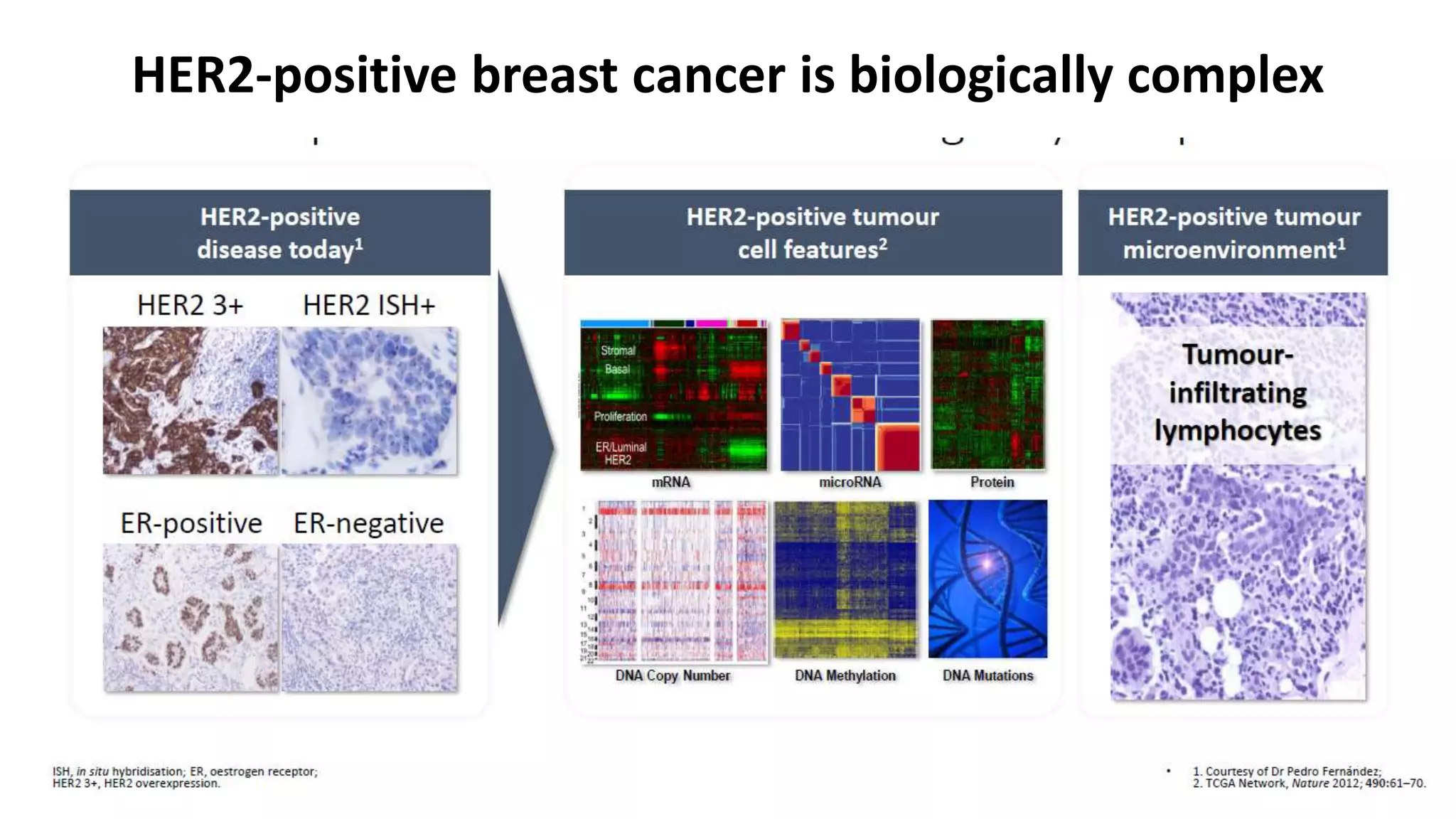
HER2-positive breast cancer is biologically complex
The Prognosis of HER2+ Disease Is Poor
Without Trastuzumab
Sørlie. PNAS. 2003;100:8418.
Luminal A
Luminal B
Basal
HER2+
Censored
Mos
ProbabilityofOS
P < .01
0 24 48 72 96
1.0
0.8
0.6
0.4
0.2
0
Response to Chemo in Locally Advanced
Breast Cancer by Subtype (n = 72)
Current treatment landscape for HER2 Positive breast cancer1
[1] NCCN Guidelines® for Breast Cancer Version 3.2020;
[2] https://www.fda.gov/drugs/resources-information-approved-drugs/fda-approves-fam-trastuzumab-deruxtecan-nxki-unresectable-or-metastatic-her2-positive-breast-cancer
[3] https://www.fda.gov/drugs/resources-information-approved-drugs/fda-approves-tucatinib-patients-her2-positive-metastatic-breast-cancer
EARLY-STAGE BREAST CANCER
Neoadjuvant Adjuvant
Chemo + Trastuzumab
+ Pertuzumab
Chemo + Trastuzumab
Chemo + Trastuzumab
+ Pertuzumab
Neratinib after adjuvant
chemo + Trastuzumab
T-DM1 for non-pCR
after neoadjuvant chemo
METASTATIC BREAST CANCER
2nd line 3rd line and beyond1st line
Taxane +
Trastuzumab
+ Pertuzumab
Capecitabine + Lapatinib/
Trastuzumab
Trastuzumab deruxtecan
(T-DXd)2
T-DM1
Lapatinib + Trastuzumab
Capecitabine + Neratinib
Tucatinib + Capecitabine +
Trastuzumab3
ESMO Guidelines
do not reflect the
latest agents in 3rd
line treatment as
they are only
approved in the
US2,3
Evolution of Neoadjuvant Therapy
Reserved for patients with inoperable, locally
advanced BC to enable surgery1
• Chemotherapy
• Endocrine therapy
THEN
Now
Used for patients with inoperable, locally advanced
BC or for those with operable BC at high risk of
recurrence1,2
• Targeted therapies
• Chemotherapy
• Endocrine therapy
1. Cain H, et al. Clin Oncol (R Coll Radiol) 2017; 2. Teshome M, et al. Surg Oncol Clin N Am 2014.
Why neoadjuvant therapy?
1. Kaufmann, et al. Ann Surg Oncol 2012; 2. Abt, et al. JAMA Surg 2014;
3. Jeevan, et al. BMJ 2012; 4. Cortazar et al. Lancet 2014
Facilitates surgery by
shrinking tumour
 Increases breast conservation rate
 Reduces the complications of surgery
 Reduces the need for revision for residual tumour
 Treatment of choice for inflammatory and inoperable breast cancer
Risk prediction for
relapse (pCR)
 Pathological complete response (pCR)
 Betterlong-term outcomes for patients who achieve a pCR
compared with patients who do not achieve a pCR
Response-adjusted
therapy
 Ability to directly assess response to therapy and change treatment
if needed
 sparing the patient inactive but toxic chemotherapy
 allowing a switch to potentially more effective alternative
regimens • Adjuvant TDM1(HER2)
• Adjuvant Cap (TNBC)
Treatment Marker Clinical outcome
During/after therapy
• Chemotherapy
• Endocrine therapy
• Anti-HER2 therapy
• Local control
• DFS
• OS
Neoadjuvant systemic therapy:
Response evaluation
Wolmark N, et al. 2001
Budzar A, et al. 2005
Bear H, et al. 2006
Budzar A, et al. 2007
Untch M, et al. 2012
• Response
• Clinical (CR, PR, SD, PD)
• Pathological (pCR, non-pCR)
• Molecular
• e.g. Ki-67, CTC, etc.
• Imaging
• PET, MRI, etc.
Pathological Complete Response
(pCR)
pCR is widely used to evaluate response to neoadjuvant therapy
pCR is broadly defined as the absence of cancer
cells after tumour resection
Responseis ultimately
assessedonresected
tumour specimens
If noresidualcanceris found,
neoadjuvanttreatment
hasresulted in a pCR;
exactdefinitions of pCR vary
Commonly
called
Breast pCR (bpCR) Total pCR (tpCR)
GermanBreastGroup
(GBG) pCR
TNM code ypT0/is ypT0/is N0 ypT0/N0
Definition
Absence of invasive cancer
in thebreast
(irrespectiveof ductal
carcinoma in situ or nodal
involvement)
Absence of invasive cancer
in thebreast andaxillary
nodes,(irrespectiveof ductal
carcinoma in situ)
Absence of invasive cancer
and in situcancer in the
breastand
axillary nodes
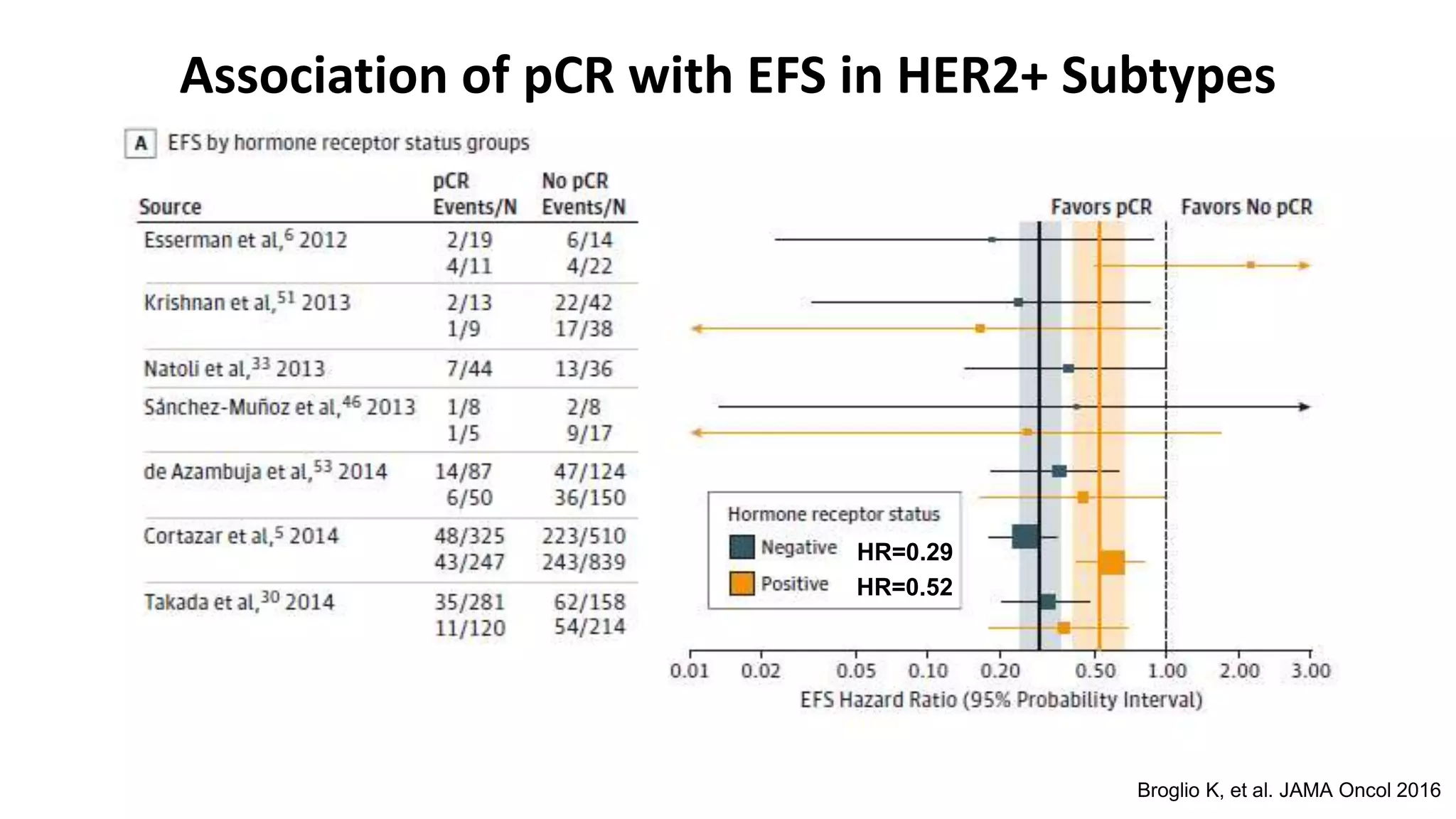
Association of pCR with EFS in HER2+ Subtypes
HR=0.29
HR=0.52
Broglio K, et al. JAMA Oncol 2016
Neoadjuvant Trastuzumab significantly increases pCR rates
Buzdar A, et al. J Clin Oncol 2005
Neoadjuvant Trastuzumab
NOAH Study; similar EFS and OS than adjuvant
Gianni L, et al. Lancet Oncol 2014
Neoadjuvant Trastuzumab
NOAH Study- EFS and OS
Gianni L, et al. Lancet Oncol 2014
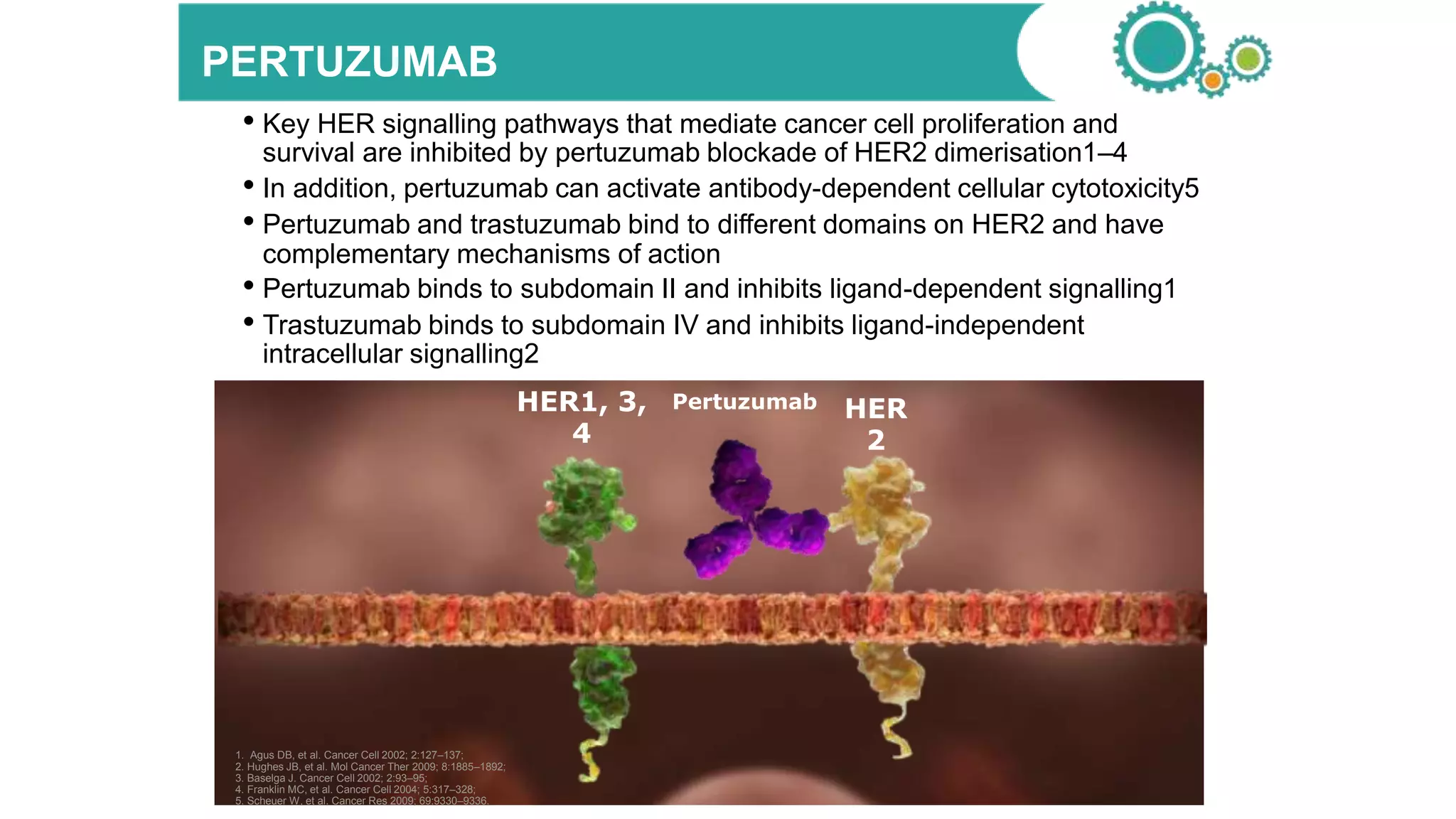
HER
2
HER1, 3,
4
Pertuzumab
PERTUZUMAB
1. Agus DB, et al. Cancer Cell 2002; 2:127–137;
2. Hughes JB, et al. Mol Cancer Ther 2009; 8:1885–1892;
3. Baselga J. Cancer Cell 2002; 2:93–95;
4. Franklin MC, et al. Cancer Cell 2004; 5:317–328;
5. Scheuer W, et al. Cancer Res 2009; 69:9330–9336.
• Key HER signalling pathways that mediate cancer cell proliferation and
survival are inhibited by pertuzumab blockade of HER2 dimerisation1–4
• In addition, pertuzumab can activate antibody-dependent cellular cytotoxicity5
• Pertuzumab and trastuzumab bind to different domains on HER2 and have
complementary mechanisms of action
• Pertuzumab binds to subdomain II and inhibits ligand-dependent signalling1
• Trastuzumab binds to subdomain IV and inhibits ligand-independent
intracellular signalling2
Gianni L. et al. Lancet Oncol 2012
S
U
R
G
E
R
Y
Study dosing: q3w x 4
TH (n=107)
docetaxel (75100 mg/m2)
trastuzumab (86 mg/kg)
THP (n=107)
docetaxel (75100 mg/m2)
trastuzumab (86 mg/kg)
pertuzumab (840420 mg)
HP (n=107)
trastuzumab (86 mg/kg)
pertuzumab (840420 mg)
TP (n=96)
docetaxel (75100 mg/m2)
pertuzumab (840420 mg)
HER2+ patients with operable
(T2–3, N0–1, M0) or
locally advanced
(T2–3, N2–3, M0 or T4a–c, any N, M0)
or
inflammatory
(T4d, any N,M0) breast cancer
Chemo-naïve & primary tumors >2cm
(N=417)
A randomized, multicenter, open-label phase II study
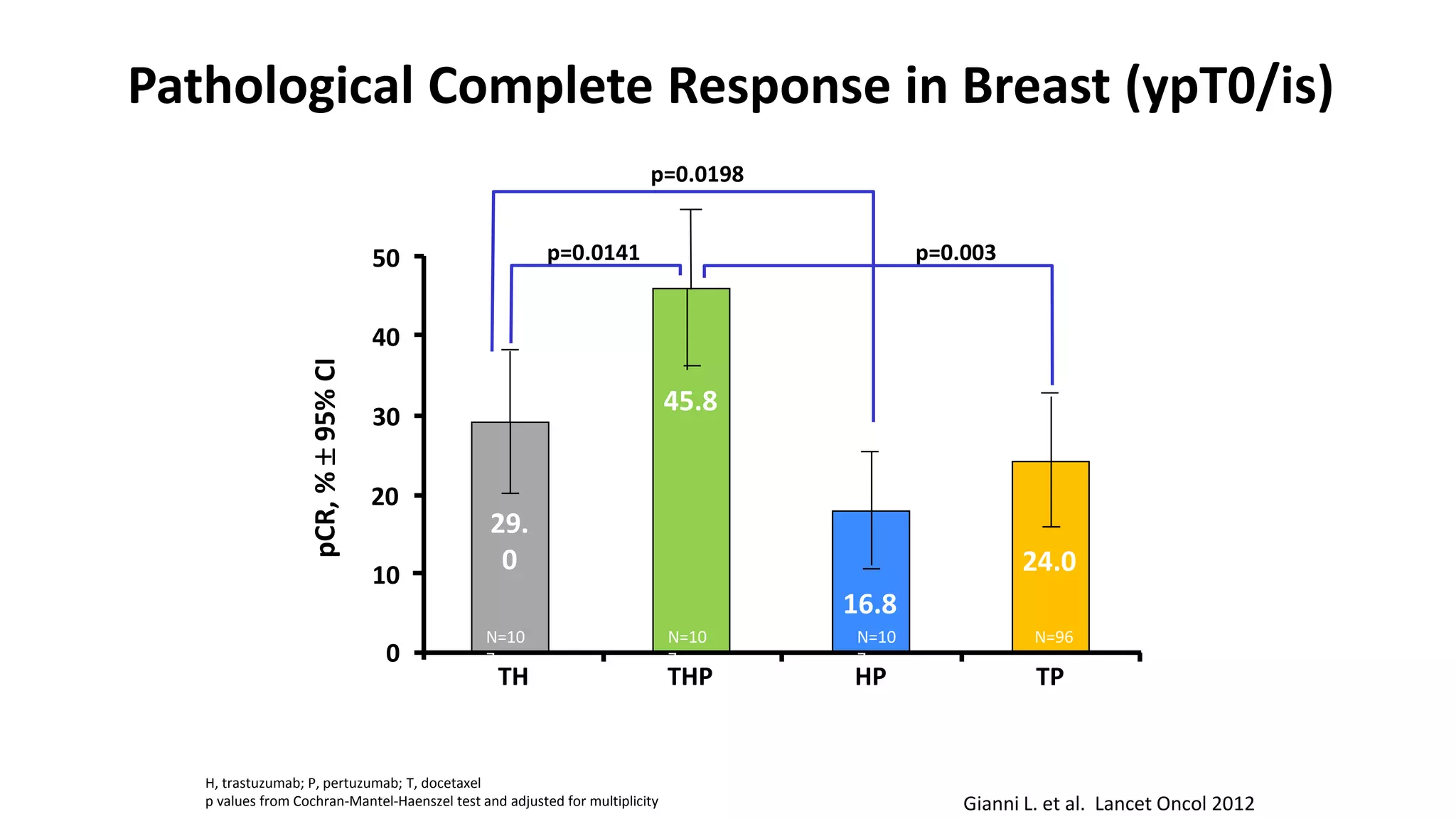
• Primary endpoint: Comparison of pCR rates in breast (ypT0/is) ( (TH vs THP - TH vs HP - THP vs TP)
• Secondary endpoints: pCR in breast and nodes (ypT0/is ypN0), Clinical response rate, Time to clinical response,
Breast conservation surgery rate and Safety
Can we improve pCR? Double antiHER2 therapy: NeoSphere study
H, trastuzumab; P, pertuzumab; T, docetaxel
p values from Cochran-Mantel-Haenszel test and adjusted for multiplicity
p=0.0198
TH THP HP TP
p=0.014150
40
30
20
10
0
pCR,%95%CI
p=0.003
29.
0
45.8
16.8
24.0
N=10
7
N=10
7
N=10
7
N=96
Gianni L. et al. Lancet Oncol 2012
Pathological Complete Response in Breast (ypT0/is)
n at risk
tpCR 94 91 83 79 76 55
No tpCR 323 287 262 244 234 178
NeoSphere: PFS by tpCR, all treatment arms combined – ITT
population
Kaplan–Meier curves are truncated at 60 months (the end of scheduled follow-up). However, summary statistics shown here take into account
all follow-ups. One late event occurred in the ‘no tpCR’ group due to PD at 71 months;
one late event occurred in the tpCR group, a death due to an unrelated cerebrovascular accident without PD at 76 months
CI, confidence interval; PFS, progression-free survival; H, trastuzumab; HR, hazard ratio; ITT, intent-to-treat;
P, pertuzumab; T, docetaxel; tpCR, total pathological complete response
PFS(%)
Time (months)
0
10
30
50
70
80
90
100
20
40
60
0 12 24 36 48 60
No tpCR tpCR
n = 323 n = 94
5-year PFS, % (95% CI) 76 (71–81) 85 (76–91)
HR (95% CI) 0.54 (0.29–1.00)
tpCR
No tpCR
Gianni L, et al. Lancet Oncol 2016 Published Online May 11, 2016
BERENICE Study
Swain S, et al. SABCS 2016
BERENICE Study
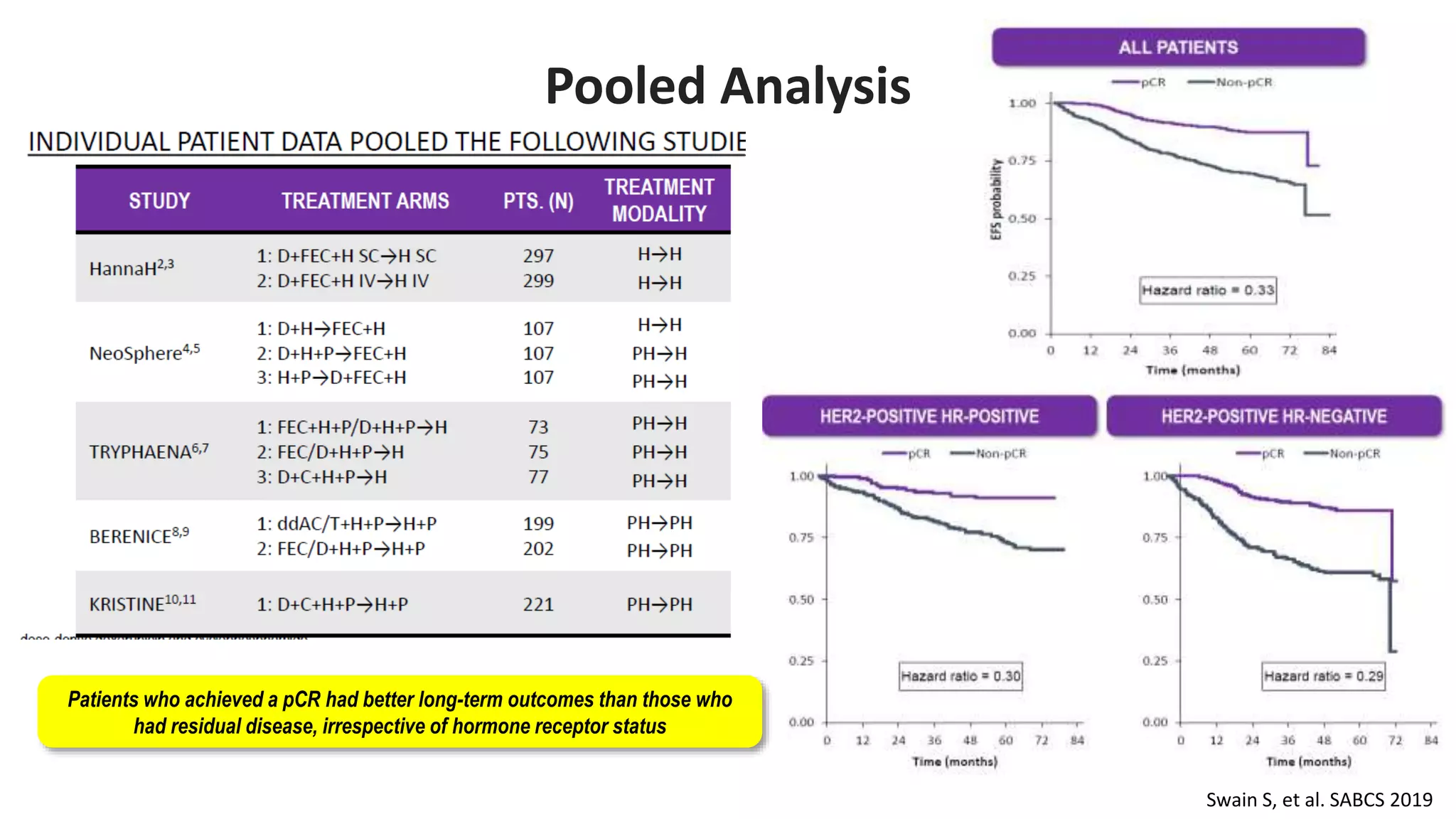
Pooled Analysis
Swain S, et al. SABCS 2019
Patients who achieved a pCR had better long-term outcomes than those who
had residual disease, irrespective of hormone receptor status
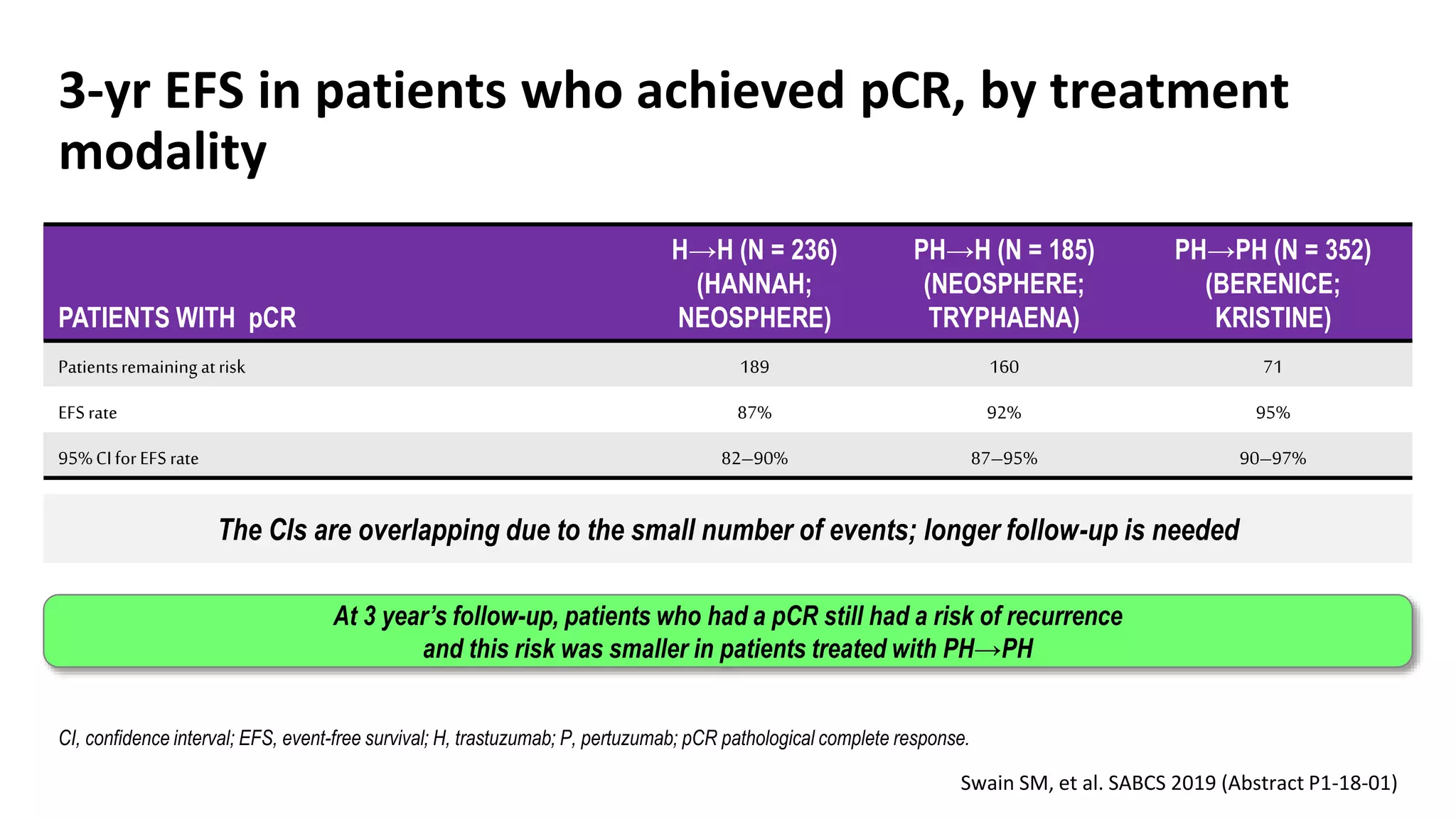
3-yr EFS in patients who achieved pCR, by treatment
modality
• Swain SM, etal. SABCS2019(AbstractP1-18-01).
Swain SM, et al. SABCS 2019 (Abstract P1-18-01)
The CIs are overlapping due to the small number of events; longer follow-up is needed
At 3 year’s follow-up, patients who had a pCR still had a risk of recurrence
and this risk was smaller in patients treated with PH→PH
PATIENTS WITH pCR
H→H (N = 236)
(HANNAH;
NEOSPHERE)
PH→H (N = 185)
(NEOSPHERE;
TRYPHAENA)
PH→PH (N = 352)
(BERENICE;
KRISTINE)
Patientsremaining atrisk 189 160 71
EFS rate 87% 92% 95%
95%CIforEFS rate 82–90% 87–95% 90–97%
CI, confidence interval; EFS, event-free survival; H, trastuzumab; P, pertuzumab; pCR pathological complete response.
Summaryofpooled analysis of HER2+ eBCwho achieve a pathological complete
response(pCR) afterdifferent types of HER2-targeted therapy
• Overall, patients who attained a pCR had a better long-term outcome compared with those with
residual disease, regardless of hormone receptor status or clinical stage
• Some patients who had a pCR still had a risk of recurrence; therefore, standard of care should
be given, and further efforts should be made to define prognostic factors for recurrence
• A limitation of this analysis was the larger number of patients with stage II disease at baseline
and shorter follow-up in the PH→PH group compared to the other groups
• EFS appears to be the highest in those treated with PH→PH and the effect appears to remain
after adjusting for imbalances in baseline risk factors
– Follow-up analysis with more mature data planned
Swain SM, et al. SABCS 2019 (Abstract P1-18-01)
EFS, event-free survival; pCR, pathological complete response; PH, pertuzumab-trastuzumab
Dual antiHER2 blockade (Chemotherapy free regimens)
1. Gianni L et al. Lancet Oncol 2012. 2. Rimawi MF, et al. J Clin Oncol 2013. 3. Llombart-Cussac A, et al. Lancet Oncol 2017. 4.
Rimawi MF, et al. SABCS 2014
Study and regimen Duration Total pCR: pCR HR+ pCR HR-
Neosphere1
Pertuzumab + Trastuzumab 12 weeks 16.8* 5.9* 27.3*
TBCRC-0062 (66 patients)
Lapatinib + Trastuzumab (+ endocrine if HR+) 12 weeks 27* 21* 36*
PAMELA3 (N = 151 patients))
Lapatinib + Trastuzumab (+ endocrine if HR+) 18 weeks 30* 18.2* 43.2*
TBCRC0234$ (33 patients)
Lapatinib + Trastuzumab (+ endocrine if HR+) 12 weeks 12* 9* 20*
TBCRC0234$ (61 patients)
Lapatinib + Trastuzumab (+ endocrine if HR+) 24 weeks 28* 33* 18*
HR, hormone receptor
*pCR in breast only
$Randomized 12 vs 24 weeks
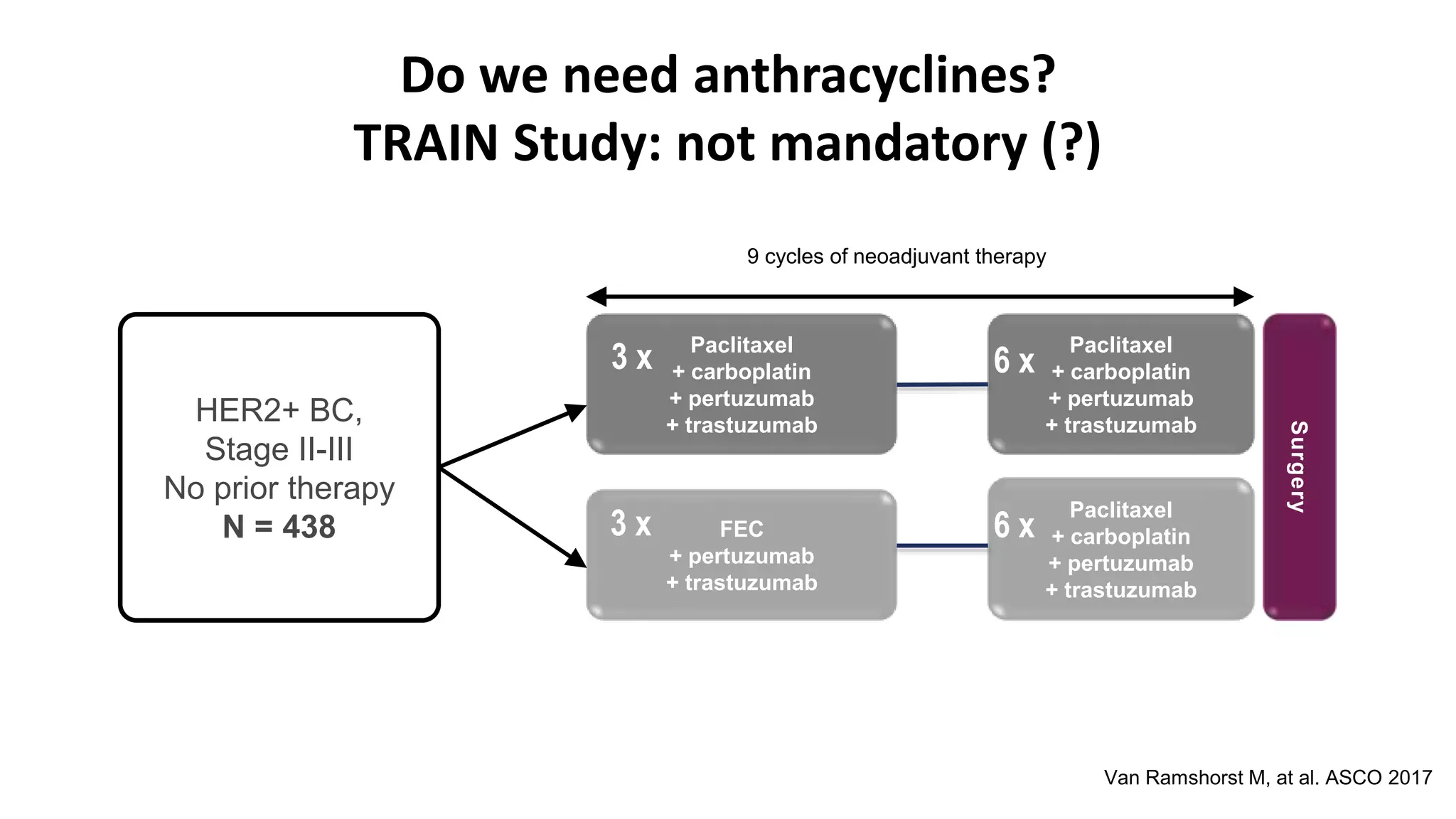
Do we need anthracyclines?
TRAIN Study: not mandatory (?)
HER2+ BC,
Stage II-III
No prior therapy
N = 438
Paclitaxel
+ carboplatin
+ pertuzumab
+ trastuzumab
FEC
+ pertuzumab
+ trastuzumab
Paclitaxel
+ carboplatin
+ pertuzumab
+ trastuzumab
Paclitaxel
+ carboplatin
+ pertuzumab
+ trastuzumab
Surgery
9 cycles of neoadjuvant therapy
3 x 6 x
3 x 6 x
Van Ramshorst M, at al. ASCO 2017
Do we need anthracyclines?
TRAIN Study: not mandatory (?)
Van Ramshorst M, at al. ASCO 2017
00%
10%
20%
30%
40%
50%
60%
70%
80%
90%
100%
Anthracyclines Non anthracyclines
P=0.75
pCRrate(ypT0/is,ypN0)
67% 68%
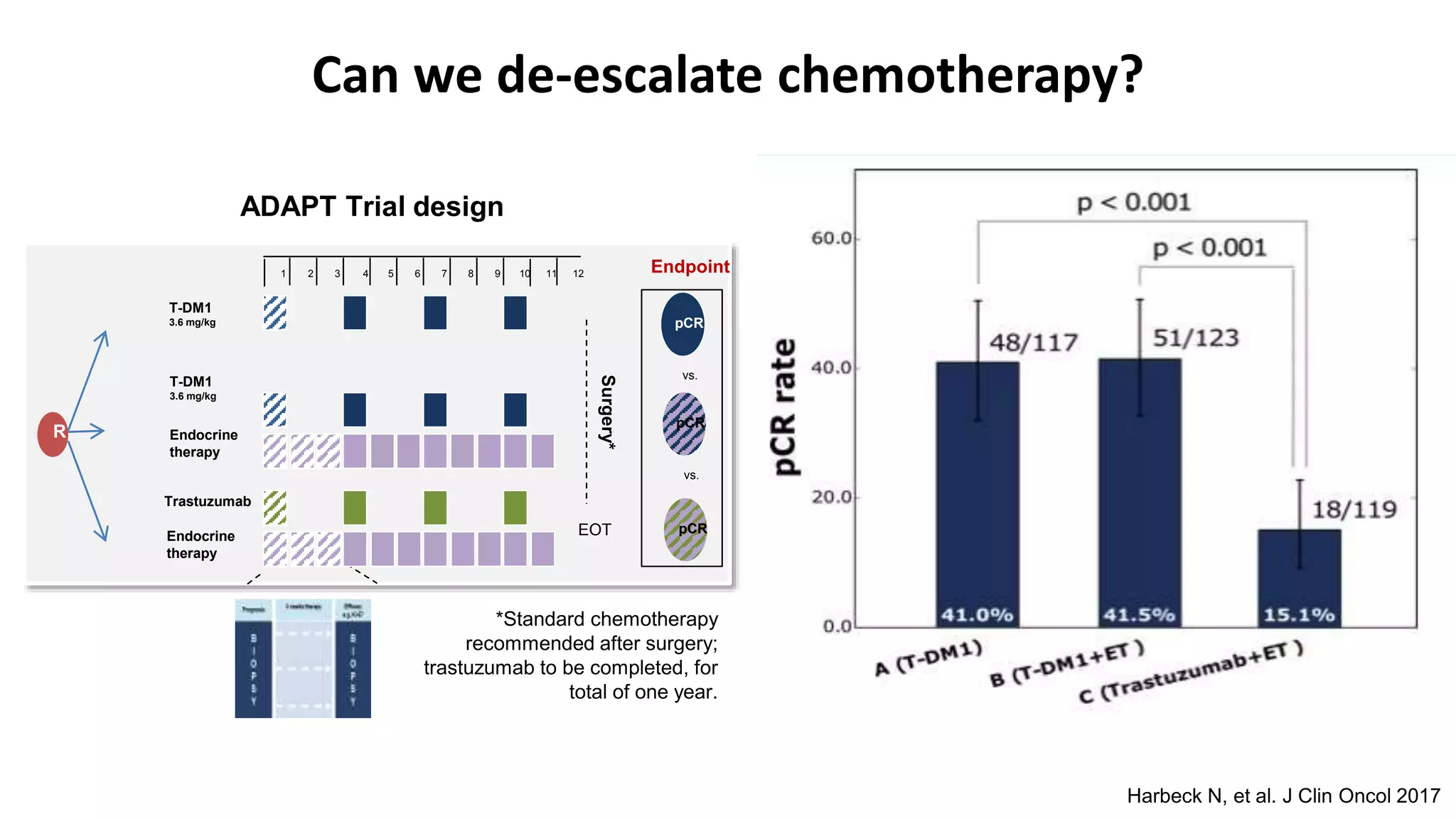
Can we de-escalate chemotherapy?
Harbeck N, et al. J Clin Oncol 2017
pCR
vs.
Surgery*
EOT pCR
Endpoint1 2 3 4 5 6 7 8 9 10 11 12
T-DM1
3.6 mg/kg
Trastuzumab
Endocrine
therapy
pCR
vs.
Endocrine
therapy
T-DM1
3.6 mg/kg
R
*Standard chemotherapy
recommended after surgery;
trastuzumab to be completed, for
total of one year.
ADAPT Trial design
Can we de-escalate chemotherapy?
HER2-positive,
operable, locally advanced or
inflammatory
eBC (>2 cm)
N = 444
Docetaxel
+ carboplatin
+ pertuzumab
+ trastuzumab
T-DM1 + pertuzumab
Surgery
Pertuzumab
+ trastuzumab
T-DM1
+ pertuzumab
Follow-up
6 cycles of neoadjuvant therapy
ITT population
TCHP
(n = 221)
KP
(n = 223)
p-value
pCR rate
Overall, % (95% CI) 55.7 (48.8–62.3) 44.4 (37.8–51.2) 0.0155
ER+, % 43.8 35.1
ER–, % 73.2 54.2
Hurvitz S, et al. ASCO 2016
KRISTINE: pCR rates after neoadjuvant T-DM1 + P vs. TCHP
Thank you

Her2 nact aug 20 - copy

  • 1.
    MANAGEMENT OF HER2+VEEBC: NEOADJUVANT CHEMOTHERAPY DR. R. RAJKUMAR D.M. MEDICAL ONCOLOGIST VELAMMAL SPECIALITY HOSPITALS
  • 2.
    HER2-positive breast canceris biologically complex
  • 3.
    The Prognosis ofHER2+ Disease Is Poor Without Trastuzumab Sørlie. PNAS. 2003;100:8418. Luminal A Luminal B Basal HER2+ Censored Mos ProbabilityofOS P < .01 0 24 48 72 96 1.0 0.8 0.6 0.4 0.2 0 Response to Chemo in Locally Advanced Breast Cancer by Subtype (n = 72)
  • 4.
    Current treatment landscapefor HER2 Positive breast cancer1 [1] NCCN Guidelines® for Breast Cancer Version 3.2020; [2] https://www.fda.gov/drugs/resources-information-approved-drugs/fda-approves-fam-trastuzumab-deruxtecan-nxki-unresectable-or-metastatic-her2-positive-breast-cancer [3] https://www.fda.gov/drugs/resources-information-approved-drugs/fda-approves-tucatinib-patients-her2-positive-metastatic-breast-cancer EARLY-STAGE BREAST CANCER Neoadjuvant Adjuvant Chemo + Trastuzumab + Pertuzumab Chemo + Trastuzumab Chemo + Trastuzumab + Pertuzumab Neratinib after adjuvant chemo + Trastuzumab T-DM1 for non-pCR after neoadjuvant chemo METASTATIC BREAST CANCER 2nd line 3rd line and beyond1st line Taxane + Trastuzumab + Pertuzumab Capecitabine + Lapatinib/ Trastuzumab Trastuzumab deruxtecan (T-DXd)2 T-DM1 Lapatinib + Trastuzumab Capecitabine + Neratinib Tucatinib + Capecitabine + Trastuzumab3 ESMO Guidelines do not reflect the latest agents in 3rd line treatment as they are only approved in the US2,3
  • 5.
    Evolution of NeoadjuvantTherapy Reserved for patients with inoperable, locally advanced BC to enable surgery1 • Chemotherapy • Endocrine therapy THEN Now Used for patients with inoperable, locally advanced BC or for those with operable BC at high risk of recurrence1,2 • Targeted therapies • Chemotherapy • Endocrine therapy 1. Cain H, et al. Clin Oncol (R Coll Radiol) 2017; 2. Teshome M, et al. Surg Oncol Clin N Am 2014.
  • 6.
    Why neoadjuvant therapy? 1.Kaufmann, et al. Ann Surg Oncol 2012; 2. Abt, et al. JAMA Surg 2014; 3. Jeevan, et al. BMJ 2012; 4. Cortazar et al. Lancet 2014 Facilitates surgery by shrinking tumour  Increases breast conservation rate  Reduces the complications of surgery  Reduces the need for revision for residual tumour  Treatment of choice for inflammatory and inoperable breast cancer Risk prediction for relapse (pCR)  Pathological complete response (pCR)  Betterlong-term outcomes for patients who achieve a pCR compared with patients who do not achieve a pCR Response-adjusted therapy  Ability to directly assess response to therapy and change treatment if needed  sparing the patient inactive but toxic chemotherapy  allowing a switch to potentially more effective alternative regimens • Adjuvant TDM1(HER2) • Adjuvant Cap (TNBC)
  • 7.
    Treatment Marker Clinicaloutcome During/after therapy • Chemotherapy • Endocrine therapy • Anti-HER2 therapy • Local control • DFS • OS Neoadjuvant systemic therapy: Response evaluation Wolmark N, et al. 2001 Budzar A, et al. 2005 Bear H, et al. 2006 Budzar A, et al. 2007 Untch M, et al. 2012 • Response • Clinical (CR, PR, SD, PD) • Pathological (pCR, non-pCR) • Molecular • e.g. Ki-67, CTC, etc. • Imaging • PET, MRI, etc.
  • 8.
  • 9.
    pCR is widelyused to evaluate response to neoadjuvant therapy pCR is broadly defined as the absence of cancer cells after tumour resection Responseis ultimately assessedonresected tumour specimens If noresidualcanceris found, neoadjuvanttreatment hasresulted in a pCR; exactdefinitions of pCR vary Commonly called Breast pCR (bpCR) Total pCR (tpCR) GermanBreastGroup (GBG) pCR TNM code ypT0/is ypT0/is N0 ypT0/N0 Definition Absence of invasive cancer in thebreast (irrespectiveof ductal carcinoma in situ or nodal involvement) Absence of invasive cancer in thebreast andaxillary nodes,(irrespectiveof ductal carcinoma in situ) Absence of invasive cancer and in situcancer in the breastand axillary nodes
  • 10.
    Association of pCRwith EFS in HER2+ Subtypes HR=0.29 HR=0.52 Broglio K, et al. JAMA Oncol 2016
  • 11.
    Neoadjuvant Trastuzumab significantlyincreases pCR rates Buzdar A, et al. J Clin Oncol 2005
  • 12.
    Neoadjuvant Trastuzumab NOAH Study;similar EFS and OS than adjuvant Gianni L, et al. Lancet Oncol 2014
  • 13.
    Neoadjuvant Trastuzumab NOAH Study-EFS and OS Gianni L, et al. Lancet Oncol 2014
  • 14.
    HER 2 HER1, 3, 4 Pertuzumab PERTUZUMAB 1. AgusDB, et al. Cancer Cell 2002; 2:127–137; 2. Hughes JB, et al. Mol Cancer Ther 2009; 8:1885–1892; 3. Baselga J. Cancer Cell 2002; 2:93–95; 4. Franklin MC, et al. Cancer Cell 2004; 5:317–328; 5. Scheuer W, et al. Cancer Res 2009; 69:9330–9336. • Key HER signalling pathways that mediate cancer cell proliferation and survival are inhibited by pertuzumab blockade of HER2 dimerisation1–4 • In addition, pertuzumab can activate antibody-dependent cellular cytotoxicity5 • Pertuzumab and trastuzumab bind to different domains on HER2 and have complementary mechanisms of action • Pertuzumab binds to subdomain II and inhibits ligand-dependent signalling1 • Trastuzumab binds to subdomain IV and inhibits ligand-independent intracellular signalling2
  • 15.
    Gianni L. etal. Lancet Oncol 2012 S U R G E R Y Study dosing: q3w x 4 TH (n=107) docetaxel (75100 mg/m2) trastuzumab (86 mg/kg) THP (n=107) docetaxel (75100 mg/m2) trastuzumab (86 mg/kg) pertuzumab (840420 mg) HP (n=107) trastuzumab (86 mg/kg) pertuzumab (840420 mg) TP (n=96) docetaxel (75100 mg/m2) pertuzumab (840420 mg) HER2+ patients with operable (T2–3, N0–1, M0) or locally advanced (T2–3, N2–3, M0 or T4a–c, any N, M0) or inflammatory (T4d, any N,M0) breast cancer Chemo-naïve & primary tumors >2cm (N=417) A randomized, multicenter, open-label phase II study • Primary endpoint: Comparison of pCR rates in breast (ypT0/is) ( (TH vs THP - TH vs HP - THP vs TP) • Secondary endpoints: pCR in breast and nodes (ypT0/is ypN0), Clinical response rate, Time to clinical response, Breast conservation surgery rate and Safety Can we improve pCR? Double antiHER2 therapy: NeoSphere study
  • 16.
    H, trastuzumab; P,pertuzumab; T, docetaxel p values from Cochran-Mantel-Haenszel test and adjusted for multiplicity p=0.0198 TH THP HP TP p=0.014150 40 30 20 10 0 pCR,%95%CI p=0.003 29. 0 45.8 16.8 24.0 N=10 7 N=10 7 N=10 7 N=96 Gianni L. et al. Lancet Oncol 2012 Pathological Complete Response in Breast (ypT0/is)
  • 17.
    n at risk tpCR94 91 83 79 76 55 No tpCR 323 287 262 244 234 178 NeoSphere: PFS by tpCR, all treatment arms combined – ITT population Kaplan–Meier curves are truncated at 60 months (the end of scheduled follow-up). However, summary statistics shown here take into account all follow-ups. One late event occurred in the ‘no tpCR’ group due to PD at 71 months; one late event occurred in the tpCR group, a death due to an unrelated cerebrovascular accident without PD at 76 months CI, confidence interval; PFS, progression-free survival; H, trastuzumab; HR, hazard ratio; ITT, intent-to-treat; P, pertuzumab; T, docetaxel; tpCR, total pathological complete response PFS(%) Time (months) 0 10 30 50 70 80 90 100 20 40 60 0 12 24 36 48 60 No tpCR tpCR n = 323 n = 94 5-year PFS, % (95% CI) 76 (71–81) 85 (76–91) HR (95% CI) 0.54 (0.29–1.00) tpCR No tpCR Gianni L, et al. Lancet Oncol 2016 Published Online May 11, 2016
  • 18.
    BERENICE Study Swain S,et al. SABCS 2016
  • 19.
    Swain S, etal. SABCS 2016 BERENICE Study
  • 20.
    Pooled Analysis Swain S,et al. SABCS 2019 Patients who achieved a pCR had better long-term outcomes than those who had residual disease, irrespective of hormone receptor status
  • 21.
    3-yr EFS inpatients who achieved pCR, by treatment modality • Swain SM, etal. SABCS2019(AbstractP1-18-01). Swain SM, et al. SABCS 2019 (Abstract P1-18-01) The CIs are overlapping due to the small number of events; longer follow-up is needed At 3 year’s follow-up, patients who had a pCR still had a risk of recurrence and this risk was smaller in patients treated with PH→PH PATIENTS WITH pCR H→H (N = 236) (HANNAH; NEOSPHERE) PH→H (N = 185) (NEOSPHERE; TRYPHAENA) PH→PH (N = 352) (BERENICE; KRISTINE) Patientsremaining atrisk 189 160 71 EFS rate 87% 92% 95% 95%CIforEFS rate 82–90% 87–95% 90–97% CI, confidence interval; EFS, event-free survival; H, trastuzumab; P, pertuzumab; pCR pathological complete response.
  • 22.
    Summaryofpooled analysis ofHER2+ eBCwho achieve a pathological complete response(pCR) afterdifferent types of HER2-targeted therapy • Overall, patients who attained a pCR had a better long-term outcome compared with those with residual disease, regardless of hormone receptor status or clinical stage • Some patients who had a pCR still had a risk of recurrence; therefore, standard of care should be given, and further efforts should be made to define prognostic factors for recurrence • A limitation of this analysis was the larger number of patients with stage II disease at baseline and shorter follow-up in the PH→PH group compared to the other groups • EFS appears to be the highest in those treated with PH→PH and the effect appears to remain after adjusting for imbalances in baseline risk factors – Follow-up analysis with more mature data planned Swain SM, et al. SABCS 2019 (Abstract P1-18-01) EFS, event-free survival; pCR, pathological complete response; PH, pertuzumab-trastuzumab
  • 23.
    Dual antiHER2 blockade(Chemotherapy free regimens) 1. Gianni L et al. Lancet Oncol 2012. 2. Rimawi MF, et al. J Clin Oncol 2013. 3. Llombart-Cussac A, et al. Lancet Oncol 2017. 4. Rimawi MF, et al. SABCS 2014 Study and regimen Duration Total pCR: pCR HR+ pCR HR- Neosphere1 Pertuzumab + Trastuzumab 12 weeks 16.8* 5.9* 27.3* TBCRC-0062 (66 patients) Lapatinib + Trastuzumab (+ endocrine if HR+) 12 weeks 27* 21* 36* PAMELA3 (N = 151 patients)) Lapatinib + Trastuzumab (+ endocrine if HR+) 18 weeks 30* 18.2* 43.2* TBCRC0234$ (33 patients) Lapatinib + Trastuzumab (+ endocrine if HR+) 12 weeks 12* 9* 20* TBCRC0234$ (61 patients) Lapatinib + Trastuzumab (+ endocrine if HR+) 24 weeks 28* 33* 18* HR, hormone receptor *pCR in breast only $Randomized 12 vs 24 weeks
  • 24.
    Do we needanthracyclines? TRAIN Study: not mandatory (?) HER2+ BC, Stage II-III No prior therapy N = 438 Paclitaxel + carboplatin + pertuzumab + trastuzumab FEC + pertuzumab + trastuzumab Paclitaxel + carboplatin + pertuzumab + trastuzumab Paclitaxel + carboplatin + pertuzumab + trastuzumab Surgery 9 cycles of neoadjuvant therapy 3 x 6 x 3 x 6 x Van Ramshorst M, at al. ASCO 2017
  • 25.
    Do we needanthracyclines? TRAIN Study: not mandatory (?) Van Ramshorst M, at al. ASCO 2017 00% 10% 20% 30% 40% 50% 60% 70% 80% 90% 100% Anthracyclines Non anthracyclines P=0.75 pCRrate(ypT0/is,ypN0) 67% 68%
  • 26.
    Can we de-escalatechemotherapy? Harbeck N, et al. J Clin Oncol 2017 pCR vs. Surgery* EOT pCR Endpoint1 2 3 4 5 6 7 8 9 10 11 12 T-DM1 3.6 mg/kg Trastuzumab Endocrine therapy pCR vs. Endocrine therapy T-DM1 3.6 mg/kg R *Standard chemotherapy recommended after surgery; trastuzumab to be completed, for total of one year. ADAPT Trial design
  • 27.
    Can we de-escalatechemotherapy? HER2-positive, operable, locally advanced or inflammatory eBC (>2 cm) N = 444 Docetaxel + carboplatin + pertuzumab + trastuzumab T-DM1 + pertuzumab Surgery Pertuzumab + trastuzumab T-DM1 + pertuzumab Follow-up 6 cycles of neoadjuvant therapy ITT population TCHP (n = 221) KP (n = 223) p-value pCR rate Overall, % (95% CI) 55.7 (48.8–62.3) 44.4 (37.8–51.2) 0.0155 ER+, % 43.8 35.1 ER–, % 73.2 54.2 Hurvitz S, et al. ASCO 2016 KRISTINE: pCR rates after neoadjuvant T-DM1 + P vs. TCHP
  • 29.