RADAR ON RCC
DR.R.RAJKUMAR D.M
CONSULTANT MEDICAL
ONCOLOGIST
VELAMMAL SPECIALITY
HOSPITALS
CASE PRESENTATION
→
→
→
→
→
→
CASE PRESENTATION
→
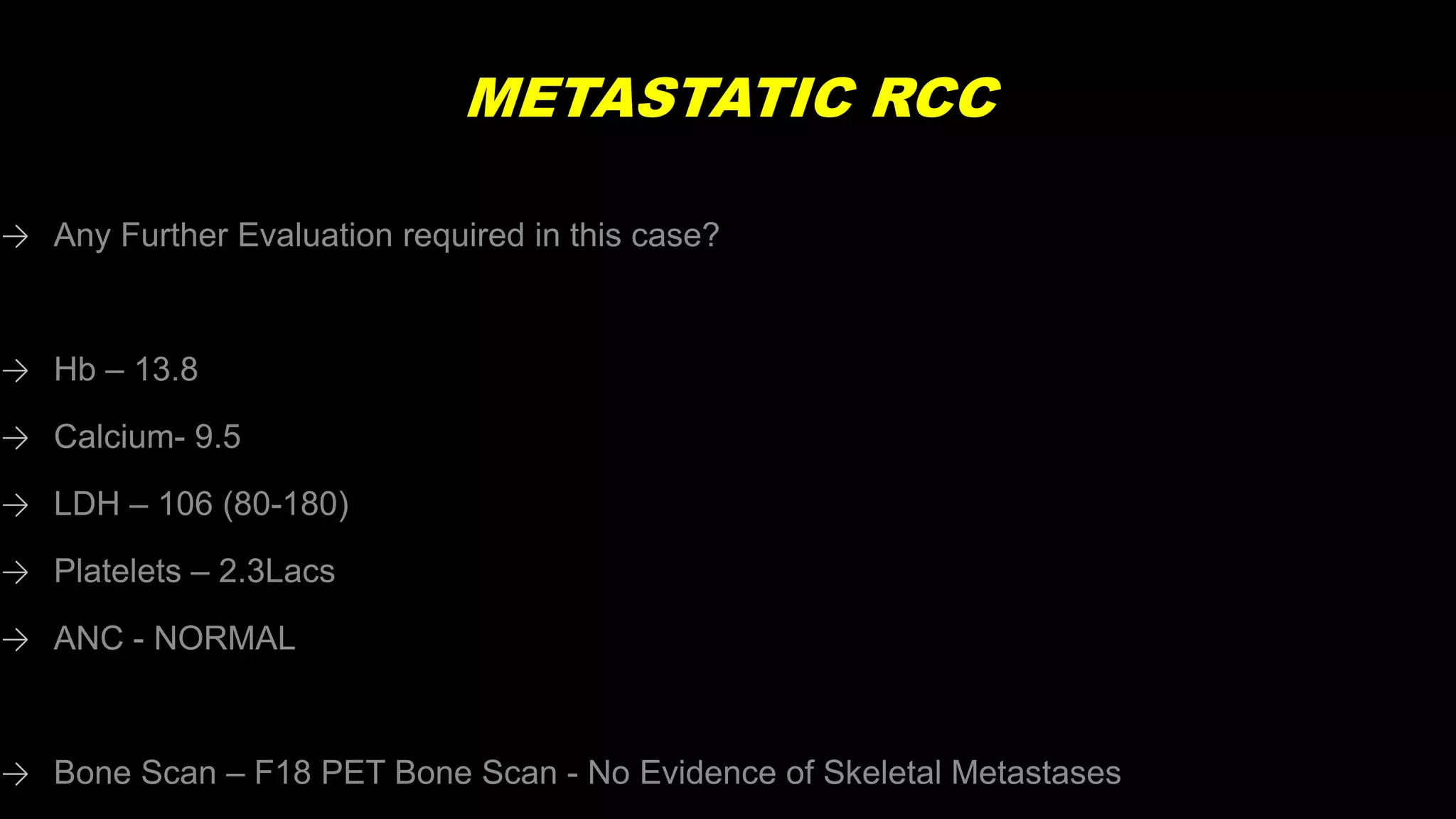
METASTATIC RCC
→
→
→
→
→
→
→
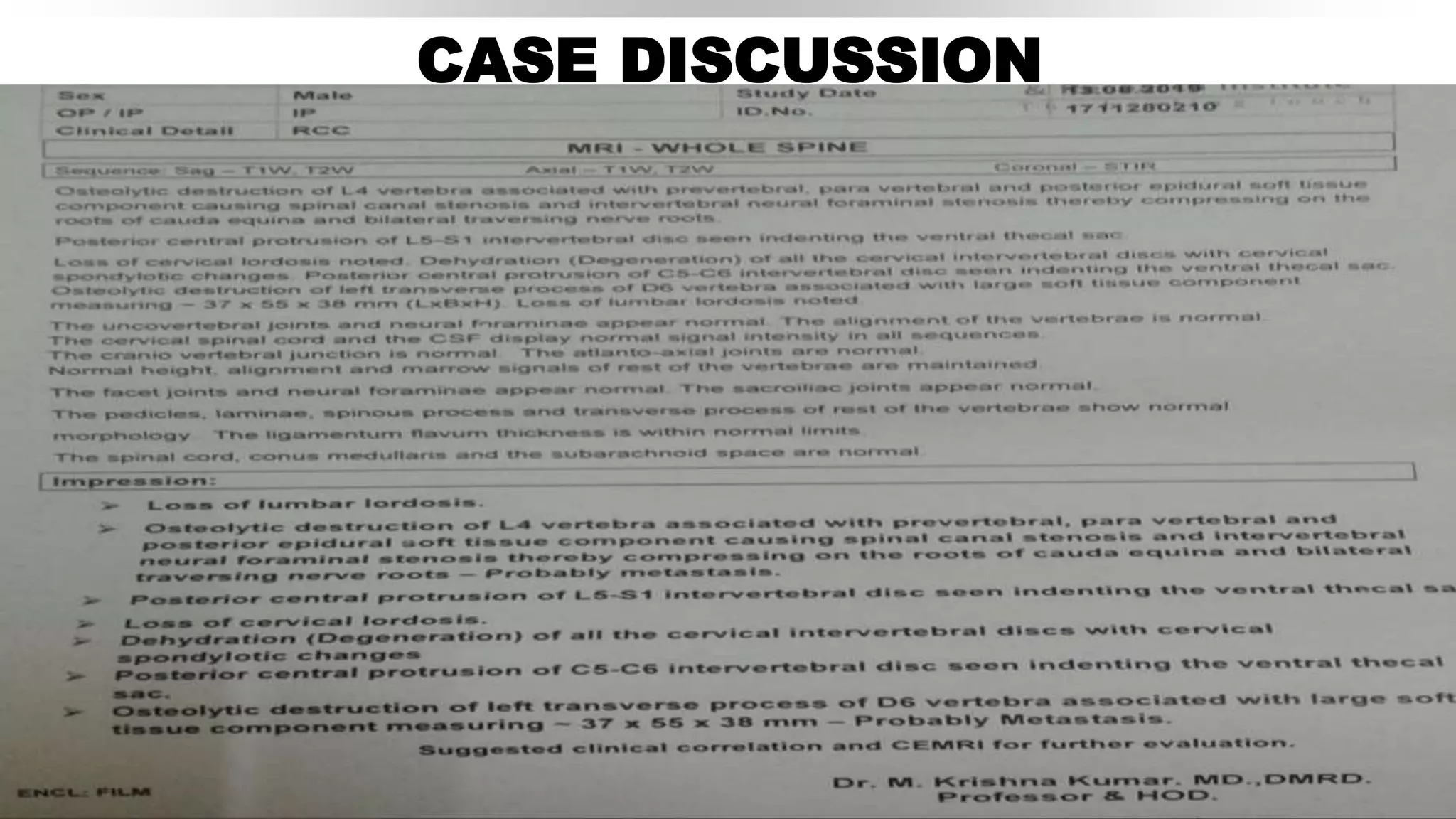
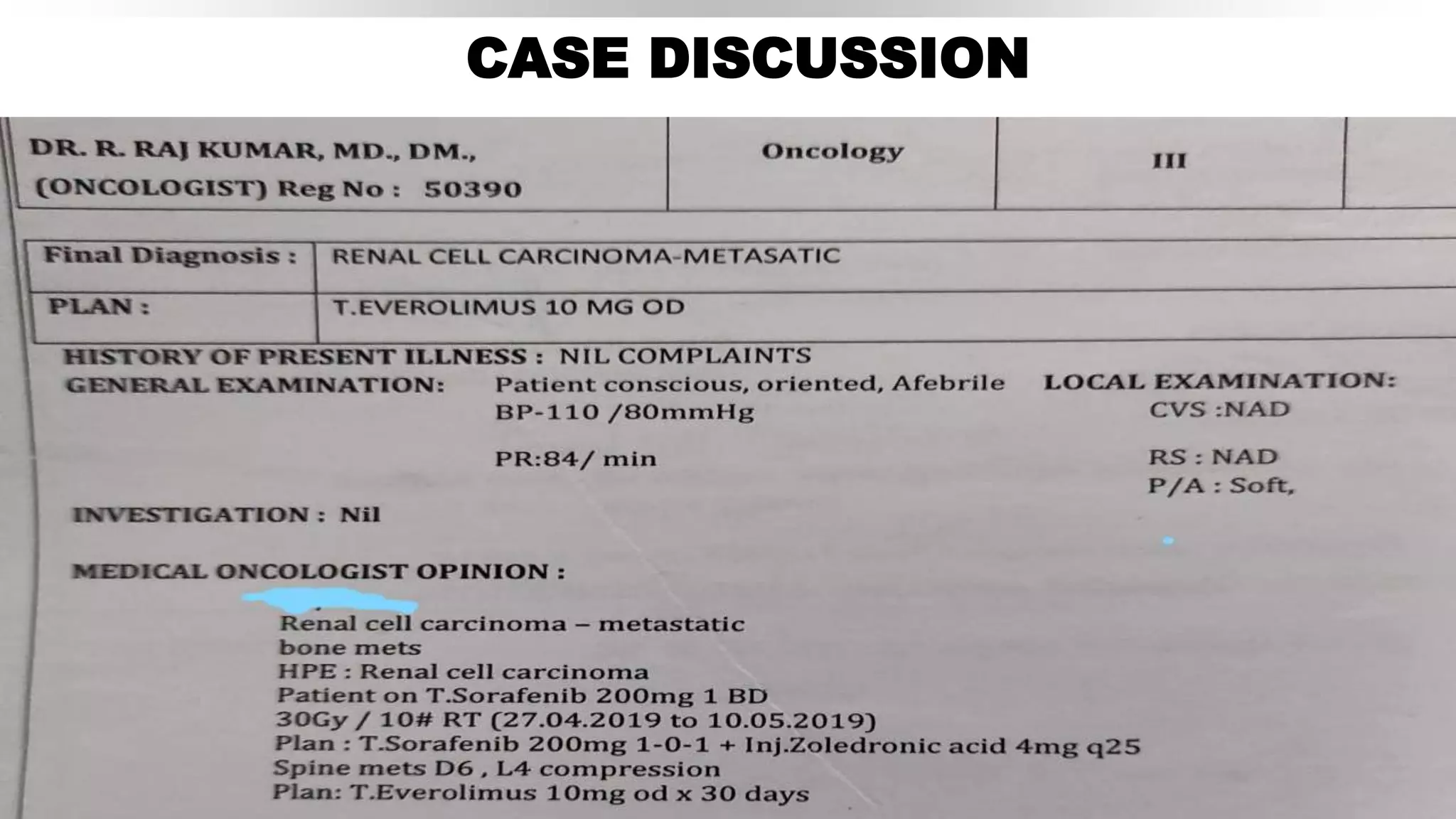
CASE DISCUSSION
CASE DISCUSSION
CASE PRESENTATION
→
THE NEXT STEP FOR THIS PATIENT ?
1.
2.
CASE PRESENTATION
→
→
→
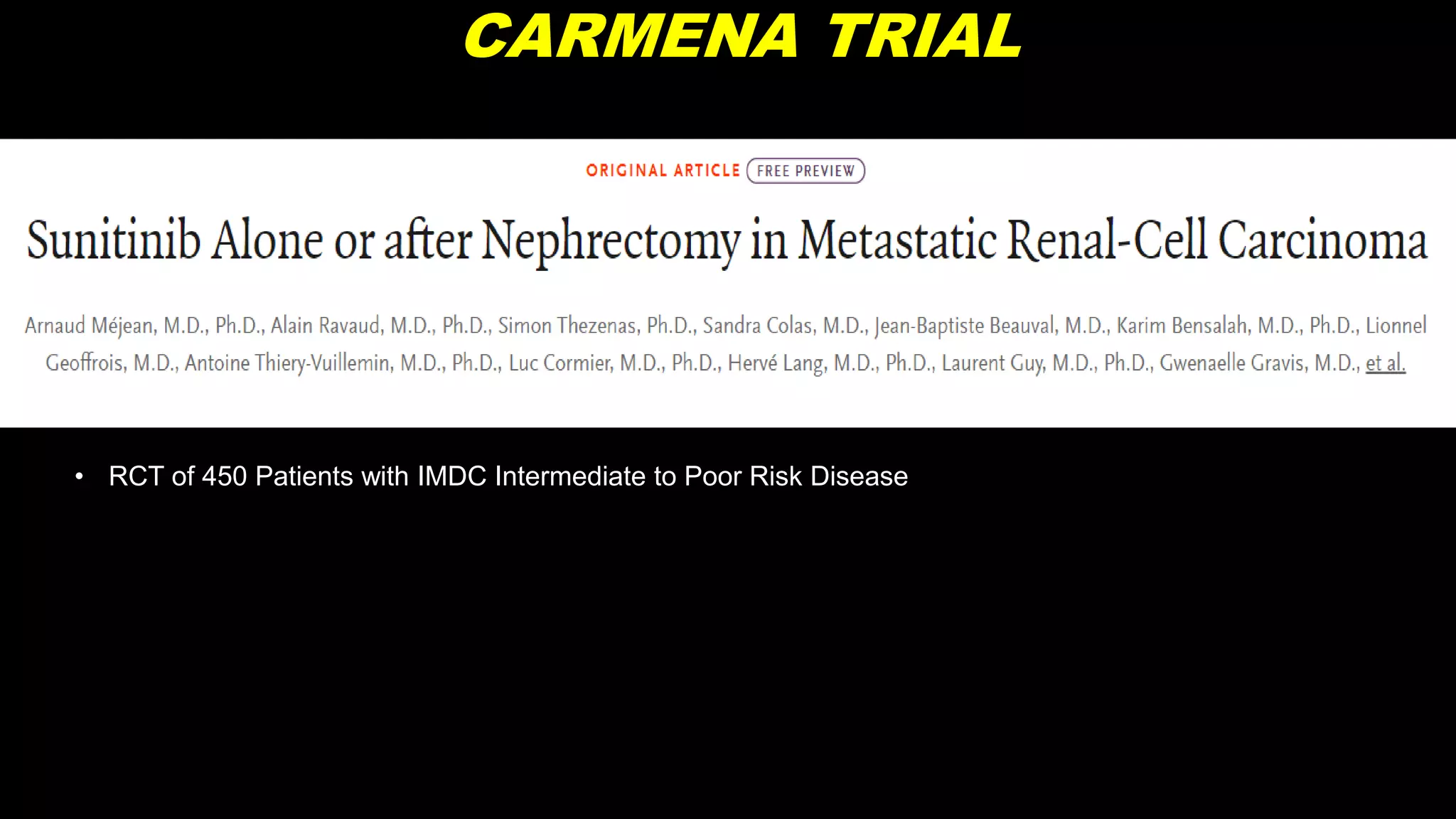
CARMENA TRIAL
• RCT of 450 Patients with IMDC Intermediate to Poor Risk Disease
CARMENA: Prospective, Multicenter, Open-Label,
Randomized Phase III Noninferiority Study
 Multicenter, randomized, open-label noninferiority phase III trial
 Primary endpoint: OS
 Secondary endpoints: PFS, ORR (RECIST v1.1), clinical benefit, safety
Follow-up for
minimum of 2 yrs
Nephrectomy
(n = 226)
Sunitinib 50 mg QD* 4 wks on/2 wks off
(n = 224)
Confirmed metastatic clear-cell RCC/biopsy;
ECOG PS 0/1; amenable to nephrectomy
eligible for sunitinib; brain metastases
absent/controlled by treatment;
no prior systemic therapy for RCC
Intermediate / poor -risk disease
(N = 450)
Stratified by center, MSKCC risk group (intermediate vs high risk)
*Dose reductions/interruptions allowed for managing AEs.
Sunitinib 50 mg QD*
4 wks on/2 wks off
(n = 226)
3-6 wks
Méjean. ASCO 2018. Abstr LBA3. Méjean. NEJM. 2018;379:417.
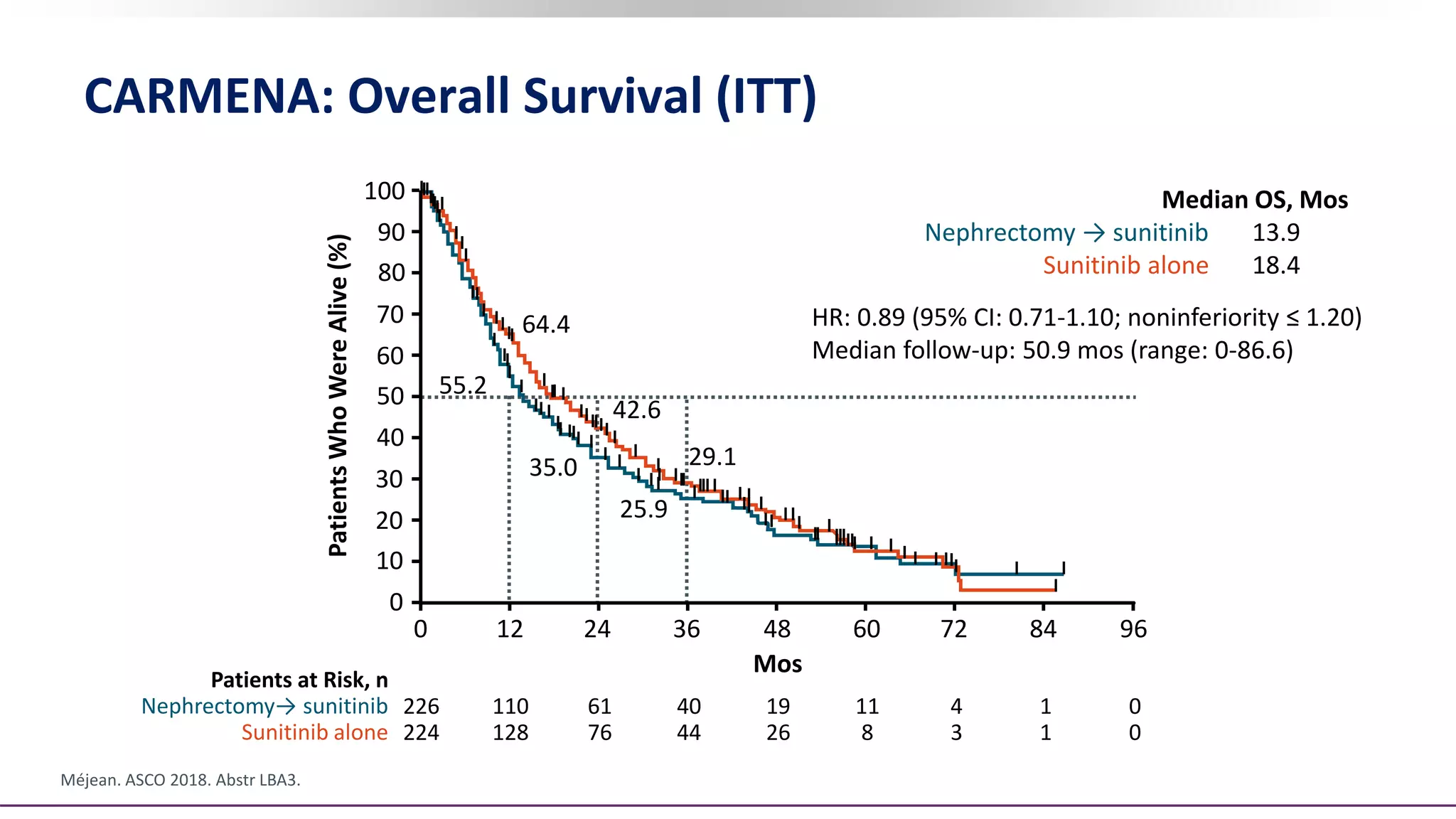
CARMENA: Overall Survival (ITT)
HR: 0.89 (95% CI: 0.71-1.10; noninferiority ≤ 1.20)
Median follow-up: 50.9 mos (range: 0-86.6)
Méjean. ASCO 2018. Abstr LBA3.
Median OS, Mos
Nephrectomy → sunitinib 13.9
Sunitinib alone 18.4
0
10
20
30
40
50
60
70
80
90
100
Patients
Who
Were
Alive
(%)
Mos
0 12 24 36 48 60 72 84 96
Patients at Risk, n
Nephrectomy→ sunitinib
Sunitinib alone
226
224
110
128
61
76
40
44
19
26
11
8
4
3
1
1
0
0
64.4
42.6
29.1
55.2
35.0
25.9
Considerations for Nephrectomy
RESULTS AND CONCLUSIONS
→
→
MERITS & DE-MERITS OF THE STUDY
→
→
→
→
→
What are the prognostic indicators in mRCC do you
consider while choosing the treatment options ?
Do you do risk stratification of your patients
in clinical practice..?
→
→
→
COMPARISON OF MSKCC AND IMDC PROGNOSTIC
MODELS FOR RCC
IMDC (HENG) CRITERIA FOR METASTATIC RCC
International Kidney Cancer Coalition. Heng. JCO. 2009;27:5794.
IMDC (HENG) CRITERIA FOR METASTATIC RCC
CASE DISCUSSION
CHOICE OF SYSTEMIC THERAPY
 TKI
 IO
 IO+TKI
HOW TO CHOOSE AMONG
EXPANDING SYSTEMIC OPTIONS IN mRCC
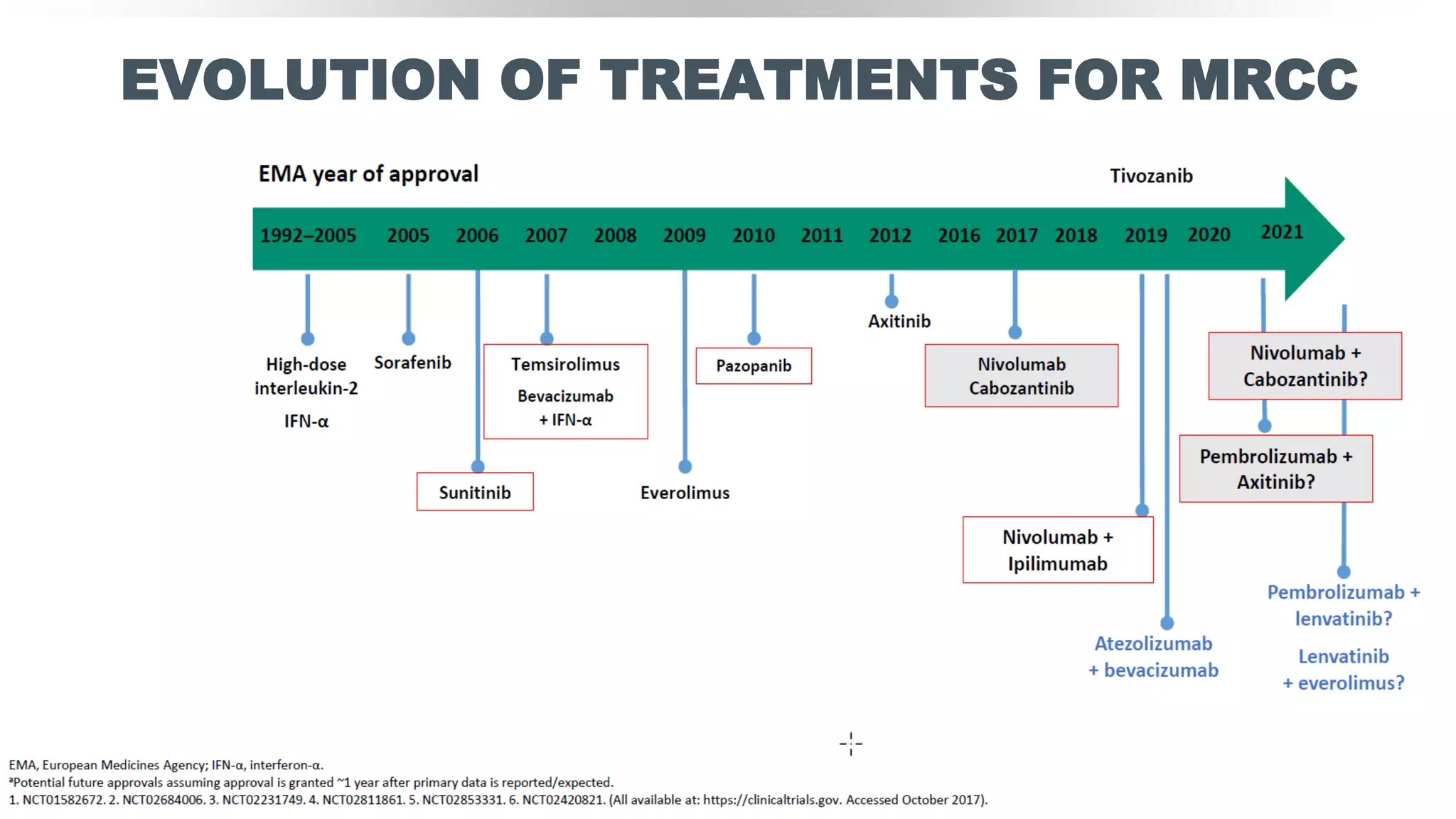
EVOLUTION OF TREATMENTS FOR MRCC
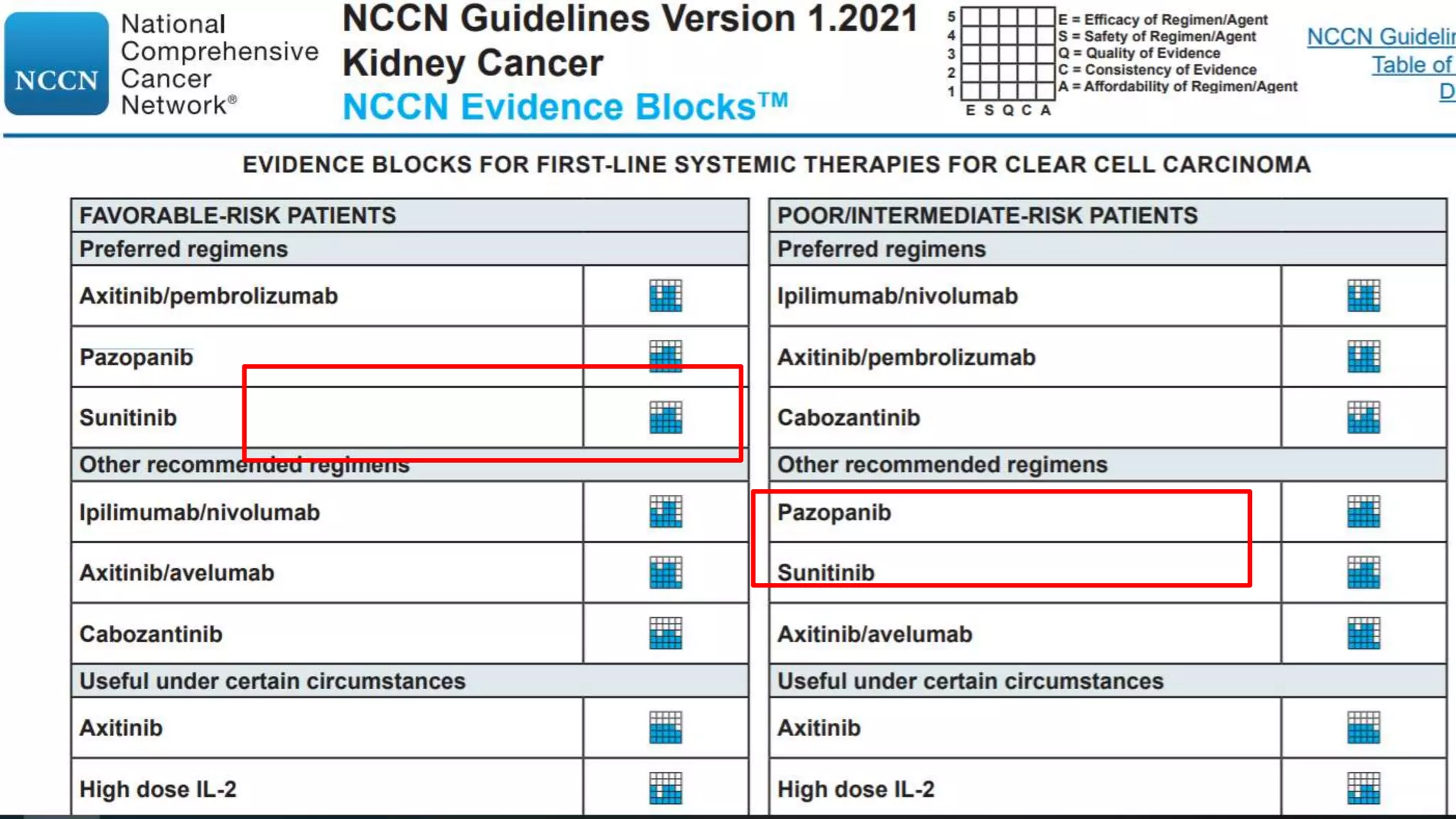
Referenced with permission from the NCCN Clinical Practice Guidelines in Oncology (NCCN Guidelines®) for Kidney Cancer V4.2021. © National Comprehensive Cancer Network, Inc
2021. All rights reserved. Accessed June 13, 2021. To view the most recent and complete version of the guideline, go online to NCCN.org.
CheckMate 214: OS and Response by IMDC Risk
Category
Tannir. ASCO GU 2020. Abstr 609.
OS in Intermediate-Risk and Poor-Risk Patients OS in Favorable-Risk Patients
Nivolumab + ipilimumab (n = 425)
Sunitinib (n = 422)
Outcome in
Favorable-Risk Patients
Nivolumab + Ipilimumab
(n = 125)
Sunitinib
(n = 124)
HR (95% CI) P Value
ORR, % (95% CI) 29 54 -- < .0001
Median PFS, mos (95% CI) 17.8 (10.3-20.7) 27.7 (23.2-34.5) 1.62 (1.14-2.32) < .01
100
80
60
40
20
0
OS
(%)
0 3 6 9 12151821242730333639424548515457
60%
47%
39%
74%
60%
52%
HR: 0.66 (95% CI: 0.55-0.80; P < .0001)
Mos
70%
100
80
60
40
20
0
OS
(%)
0 3 6 9 12151821242730333639424548515457
Mos
88%
80%
93%
85%
73%
Nivolumab + ipilimumab (n = 125)
Sunitinib (n = 124)
HR: 1.19 (95% CI: 0.77-1.85; P = .44)
KEYNOTE-426: First-line Pembrolizumab + Axitinib vs
Sunitinib in Advanced or Metastatic RCC
HR: 0.63 (95% CI: 0.50-0.81;
P = .0001)
Median OS, Mo
Pembro + Axi NR
Sunitinib 28.8 (23.7-34.3)
Powles. Lancet Oncol. 2020;21:1563. Slide credit: clinicaloptions.com
Mo
80
60
40
20
0
69.2%
42
0 6 12 18 24 30 36
100
OS
(%)
Patients at Risk, n
Pembro + Axi
Sunitinib
294
289
274
250
254
213
220
188
195
160
100
74
11
7
0
0
55.8
86.7%
72.0%
INTERMEDIATE / POOR RISK
KEYNOTE-426: First-line Pembrolizumab + Axitinib vs

Sunitinib in Advanced or Metastatic RCC
HR: 1.06 (95% CI: 0.60-1.86;
P = .58*)
Mo
Patients at Risk, n
Pembro + Axi
Sunitinib
OS
(%)
100
80
60
40
20
0
87.7%
Events, n Median
Pembro + Axi 26 NR
Sunitinib 24 NR
42
0 6 12 18 24 30 36
138
131
134
129
131
123
126
118
110
108
63
60
12
9
0
0
Powles. Lancet Oncol. 2020;21:1563.
*Nominal P value.
Slide credit: clinicaloptions.com
85.3%
94.6%
95.6%
FAVORABLE RISK
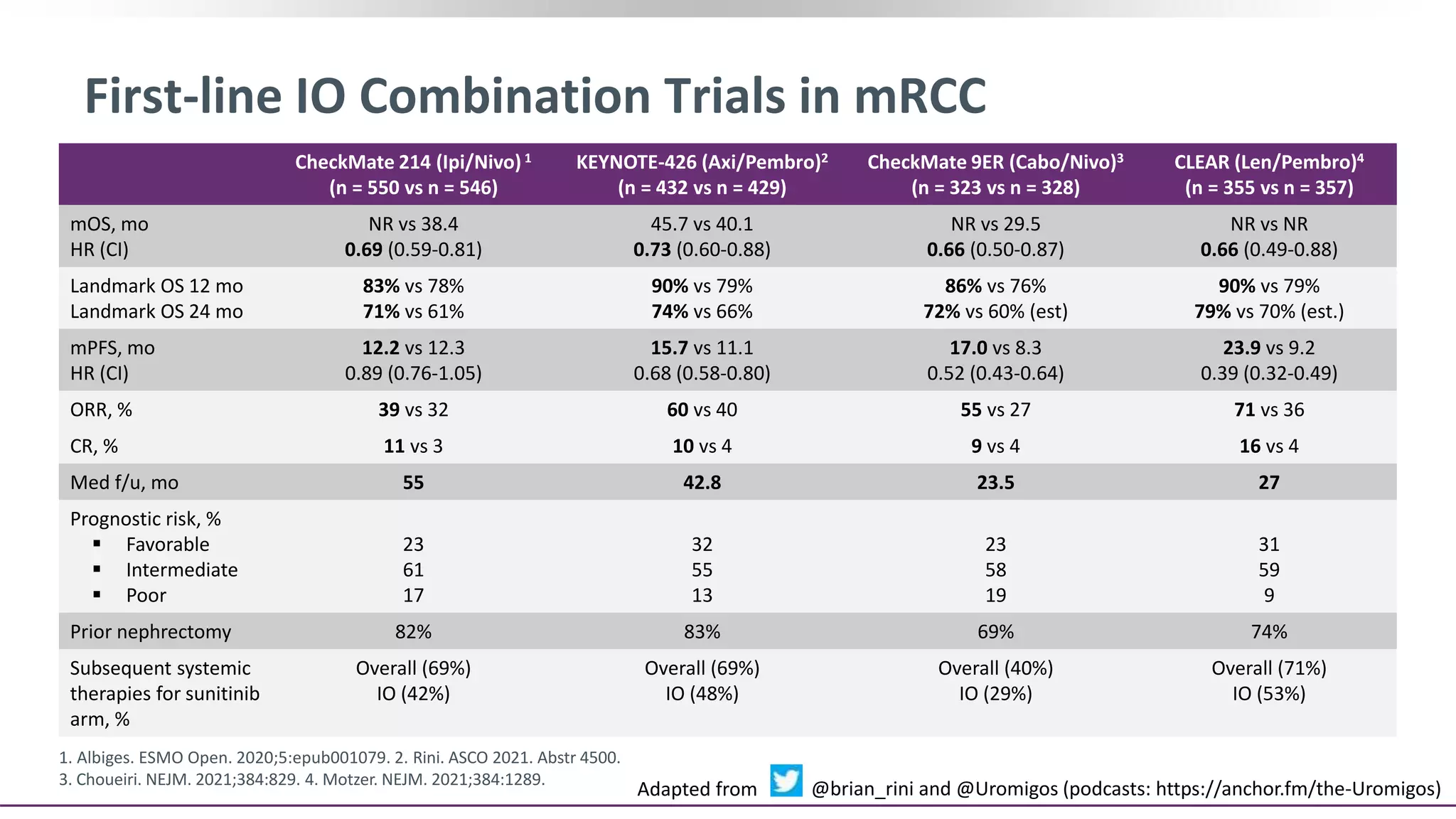
First-line IO Combination Trials in mRCC
CheckMate 214 (Ipi/Nivo) 1
(n = 550 vs n = 546)
KEYNOTE-426 (Axi/Pembro)2
(n = 432 vs n = 429)
CheckMate 9ER (Cabo/Nivo)3
(n = 323 vs n = 328)
CLEAR (Len/Pembro)4
(n = 355 vs n = 357)
mOS, mo
HR (CI)
NR vs 38.4
0.69 (0.59-0.81)
45.7 vs 40.1
0.73 (0.60-0.88)
NR vs 29.5
0.66 (0.50-0.87)
NR vs NR
0.66 (0.49-0.88)
Landmark OS 12 mo
Landmark OS 24 mo
83% vs 78%
71% vs 61%
90% vs 79%
74% vs 66%
86% vs 76%
72% vs 60% (est)
90% vs 79%
79% vs 70% (est.)
mPFS, mo
HR (CI)
12.2 vs 12.3
0.89 (0.76-1.05)
15.7 vs 11.1
0.68 (0.58-0.80)
17.0 vs 8.3
0.52 (0.43-0.64)
23.9 vs 9.2
0.39 (0.32-0.49)
ORR, % 39 vs 32 60 vs 40 55 vs 27 71 vs 36
CR, % 11 vs 3 10 vs 4 9 vs 4 16 vs 4
Med f/u, mo 55 42.8 23.5 27
Prognostic risk, %
 Favorable
 Intermediate
 Poor
23
61
17
32
55
13
23
58
19
31
59
9
Prior nephrectomy 82% 83% 69% 74%
Subsequent systemic
therapies for sunitinib
arm, %
Overall (69%)
IO (42%)
Overall (69%)
IO (48%)
Overall (40%)
IO (29%)
Overall (71%)
IO (53%)
1. Albiges. ESMO Open. 2020;5:epub001079. 2. Rini. ASCO 2021. Abstr 4500.
3. Choueiri. NEJM. 2021;384:829. 4. Motzer. NEJM. 2021;384:1289.
@brian_rini and @Uromigos (podcasts: https://anchor.fm/the-Uromigos)
Adapted from
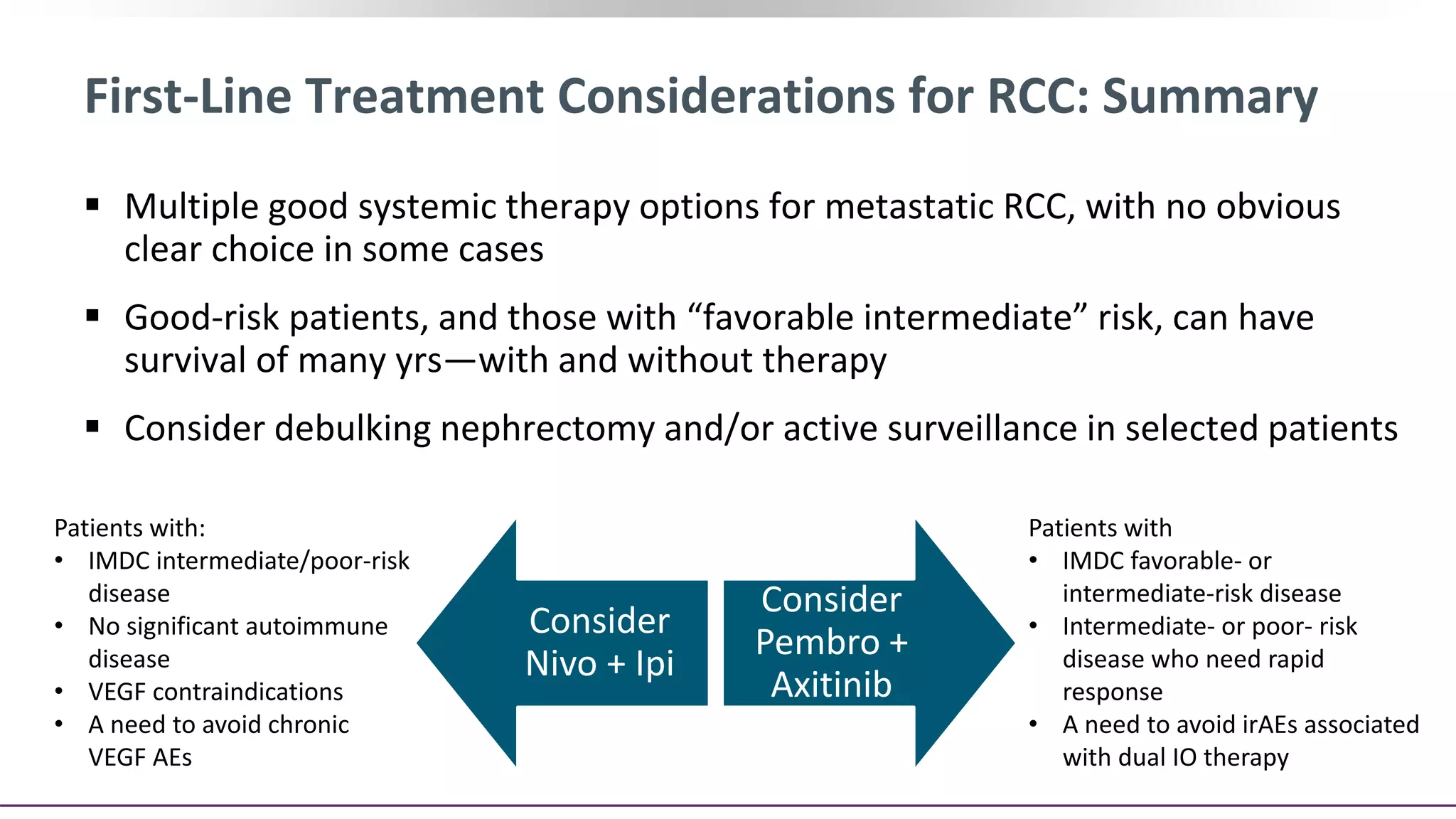
First-Line Treatment Considerations for RCC: Summary
 Multiple good systemic therapy options for metastatic RCC, with no obvious
clear choice in some cases
 Good-risk patients, and those with “favorable intermediate” risk, can have
survival of many yrs—with and without therapy
 Consider debulking nephrectomy and/or active surveillance in selected patients
Patients with:
• IMDC intermediate/poor-risk
disease
• No significant autoimmune
disease
• VEGF contraindications
• A need to avoid chronic
VEGF AEs
Consider
Nivo + Ipi
Patients with
• IMDC favorable- or
intermediate-risk disease
• Intermediate- or poor- risk
disease who need rapid
response
• A need to avoid irAEs associated
with dual IO therapy
Consider
Pembro +
Axitinib
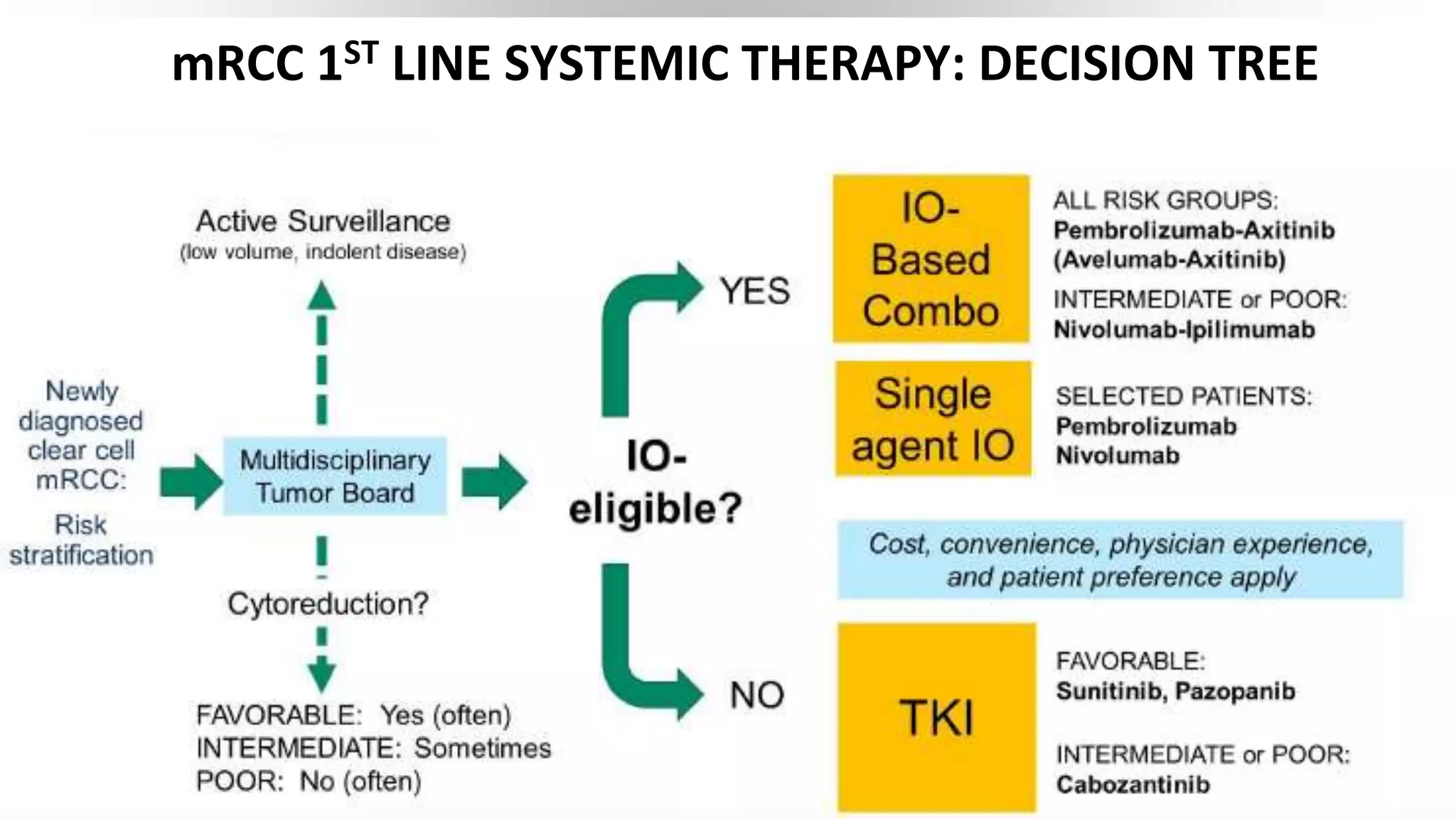
mRCC 1ST LINE SYSTEMIC THERAPY: DECISION TREE
CASE PRESENTATION
CASE DISCUSSION
CASE DISCUSSION
 STARTED ON PALLIATIVE RT
 10/30GY
CASE DISCUSSION
CHOICE OF SYSTEMIC THERAPY
 TKI
 IO
 IO+TKI
 mTOR
 TKI+mTOR
 Anti VEGF monolonal antibodies
HOW DO YOU CHOOSE THE TREATMENT
IN mRCC AFTER PROGRESSION?
SEQUENCING OF AGENTS 5 YEARS BACK…
mTOR
inhibitor
VEGF
TKI mTORi
TKI TKI
Sunitinib
Pazopanib
Axitinib
Sorafenib
Everolimus
mTORi
TKI TKI
SIMPLER TIMES
SEQUENCING OF AGENTS IN 2020
VEGF
+
mTORi
VEGF
TKI
CPI
+
Bev
CPI
+
CPI
CPI
CPI
+ TKI
Pivotal Randomized Trials in Clear-Cell RCC
Post TKI Therapy
Parameter
RECORD-1[1,2] AXIS[3,4] METEOR[5,6] CheckMate 025[7] LEN EVE[8]
Everolimus
vs
Placebo
Axitinib
vs
Sorafenib
Cabozantinib
vs
Everolimus
Nivolumab
vs
Everolimus
Lenvatinib + Everolimus
vs
Everolimus
Patients, n 410 723 658 821 153
MSKCC risk, %
 Good 29 28 46 36 23
 Intermediate 56 37 42 49 36
 Poor 15 33 13 15 40
Prior TKI Anti-VEGF Sunitinib Anti-VEGF Anti-VEGF Anti-VEGF
Line of therapy 2nd or beyond 2nd 2nd or beyond 2nd or 3rd 2nd
ORR, % 2 vs 0 19 vs 9 21 vs 5 25 vs 5 43 vs 3
Median OS, mos 14.8 vs 14.0 20.1 vs 19.2 21.4 vs 17.1 25.0 vs 19.6 25.5 vs 15.4
Slide credit: clinicaloptions.com
1. Motzer. Lancet. 2008;372:449. 2. Motzer. Cancer 2010;116:4256. 3. Rini. Lancet. 2011;378:1931. 4. Motzer. Lancet Oncol. 2013;14:552.
5. Choueiri. NEJM. 2015;373:1814. 6. Motzer. Br J Cancer. 2018;118:1176. 7. Motzer. NEJM. 2015;373:1803. 8. Motzer. Lancet. 2015;16:1473.
Phase III Phase II
Referenced with permission from the NCCN Clinical Practice Guidelines in Oncology (NCCN Guidelines®) for Kidney Cancer V2.2020. © National Comprehensive Cancer Network, Inc
2020. All rights reserved. Accessed June 10, 2020. To view the most recent and complete version of the guideline, go online to NCCN.org.
dHudes. NEJM 2007;356:2271-2281.
WHEN WOULD YOU PREFER THE LENVATINIB +
EVEROLIMUS COMBINATION IN THE
MANAGEMENT OF mRCC?
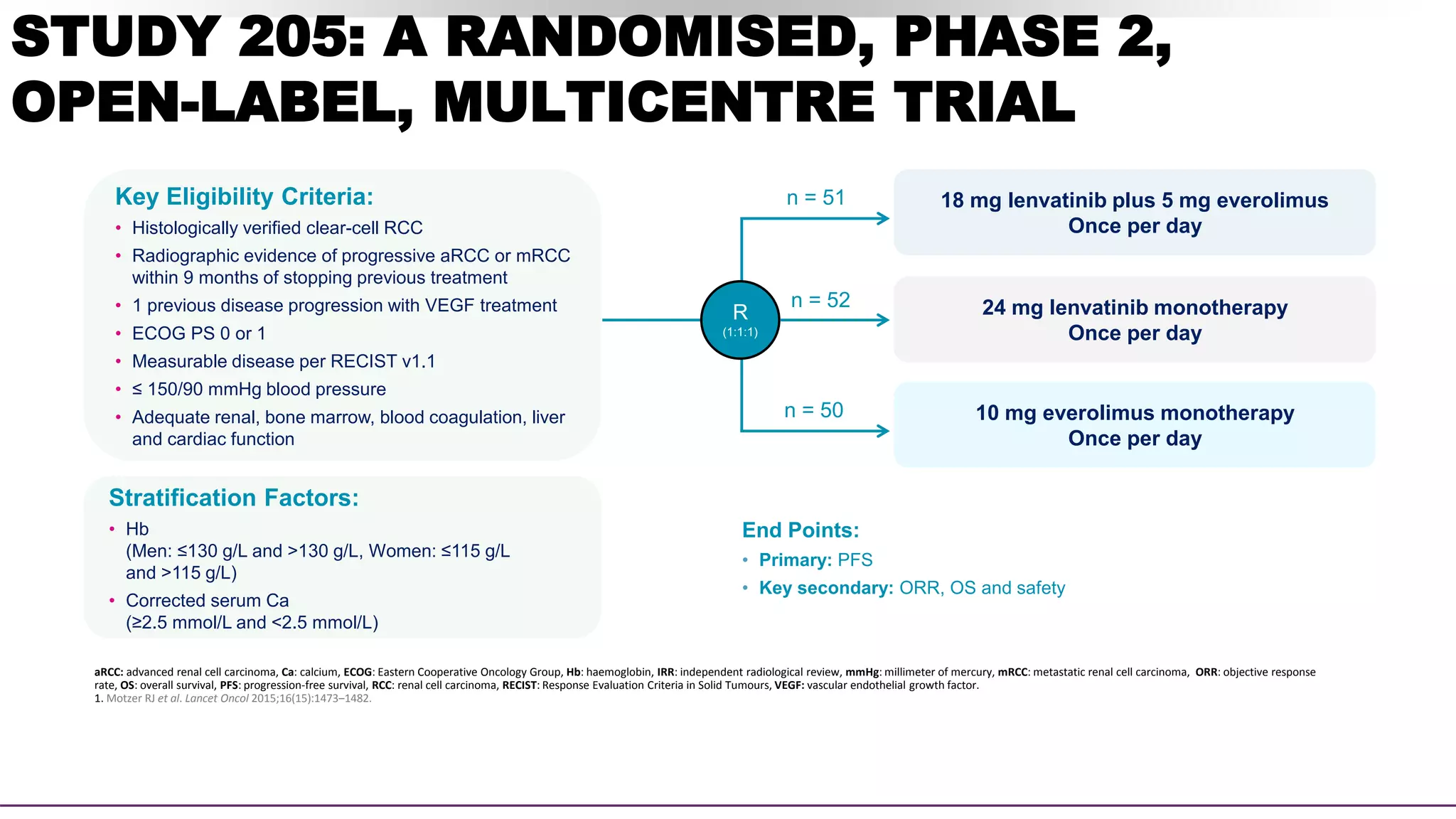
STUDY 205: A RANDOMISED, PHASE 2,
OPEN-LABEL, MULTICENTRE TRIAL
aRCC: advanced renal cell carcinoma, Ca: calcium, ECOG: Eastern Cooperative Oncology Group, Hb: haemoglobin, IRR: independent radiological review, mmHg: millimeter of mercury, mRCC: metastatic renal cell carcinoma, ORR: objective response
rate, OS: overall survival, PFS: progression-free survival, RCC: renal cell carcinoma, RECIST: Response Evaluation Criteria in Solid Tumours, VEGF: vascular endothelial growth factor.
1. Motzer RJ et al. Lancet Oncol 2015;16(15):1473‒1482.
Key Eligibility Criteria:
• Histologically verified clear-cell RCC
• Radiographic evidence of progressive aRCC or mRCC
within 9 months of stopping previous treatment
• 1 previous disease progression with VEGF treatment
• ECOG PS 0 or 1
• Measurable disease per RECIST v1.1
• ≤ 150/90 mmHg blood pressure
• Adequate renal, bone marrow, blood coagulation, liver
and cardiac function
Stratification Factors:
• Hb
(Men: ≤130 g/L and >130 g/L, Women: ≤115 g/L
and >115 g/L)
• Corrected serum Ca
(≥2.5 mmol/L and <2.5 mmol/L)
End Points:
• Primary: PFS
• Key secondary: ORR, OS and safety
18 mg lenvatinib plus 5 mg everolimus
Once per day
10 mg everolimus monotherapy
Once per day
R
(1:1:1)
24 mg lenvatinib monotherapy
Once per day
n = 51
n = 50
n = 52
PRIMARY ENDPOINT – PROGRESSION-FREE
SURVIVAL
CI: confidence interval, HR: hazard ratio.
1. Motzer RJ et al. Lancet Oncol 2015;16(15):1473‒1482.
PFS was significantly
prolonged with
lenvatinib plus
everolimus, compared
with everolimus alone
(p=0.0005)1
• Approximately 9
additional months of
PFS benefit1
• 60% reduction in the
risk of
progression or death1
SECONDARY ENDPOINT – ORR
Assessed by Investigator review per RECIST v1.1
CI.
Lenvatinib plus
everolimus
(n=51)
Lenvatinib
monotherapy
(n=52)
Everolimus
monotherapy
(n=50)
OBJECTIVE RESPONSE
Events 22 (43%) 14 (27%) 3 (6%)
95% CI 29–58 16–41 1–17
Best overall response
Complete
response
1 (2%) 0 0
Partial response 21 (41%) 14 (27%) 3 (6%)
Stable disease 21 (41%) 27 (52%) 31 (62%)
Progressive
disease
2 (4%) 3 (6%) 12 (24%)
Not assessed 6 (12%) 8 (15%) 4 (8%)
43% ORR
for lenvatinib plus
everolimus vs 6% with
everolimus alone
(rate ratio [RR] 7·2, 95% CI:
2·3–22·5; p<0·0001)1
Lenvatinib plus everolimus
• Duration of response was
13.0 months1
• Time to response was 1.9
months2
SECONDARY ENDPOINT – ORR
Treatment Group:
Lenvatinib 18 mg plus Everolimus 5 mg
Treatment Group:
Lenvatinib 24 mg
Treatment Group:
Everolimus 10 mg
Figure S1. Maximum percentage change in sum of diameters of target lesions, for A) lenvatinib/everolimus combination arm, B) lenvatinib , and C) everolimus.
More patients in the lenvatinib plus everolimus group experienced measurable tumour shrinkage vs
those treated with everolimus alone
CASE DISCUSSION
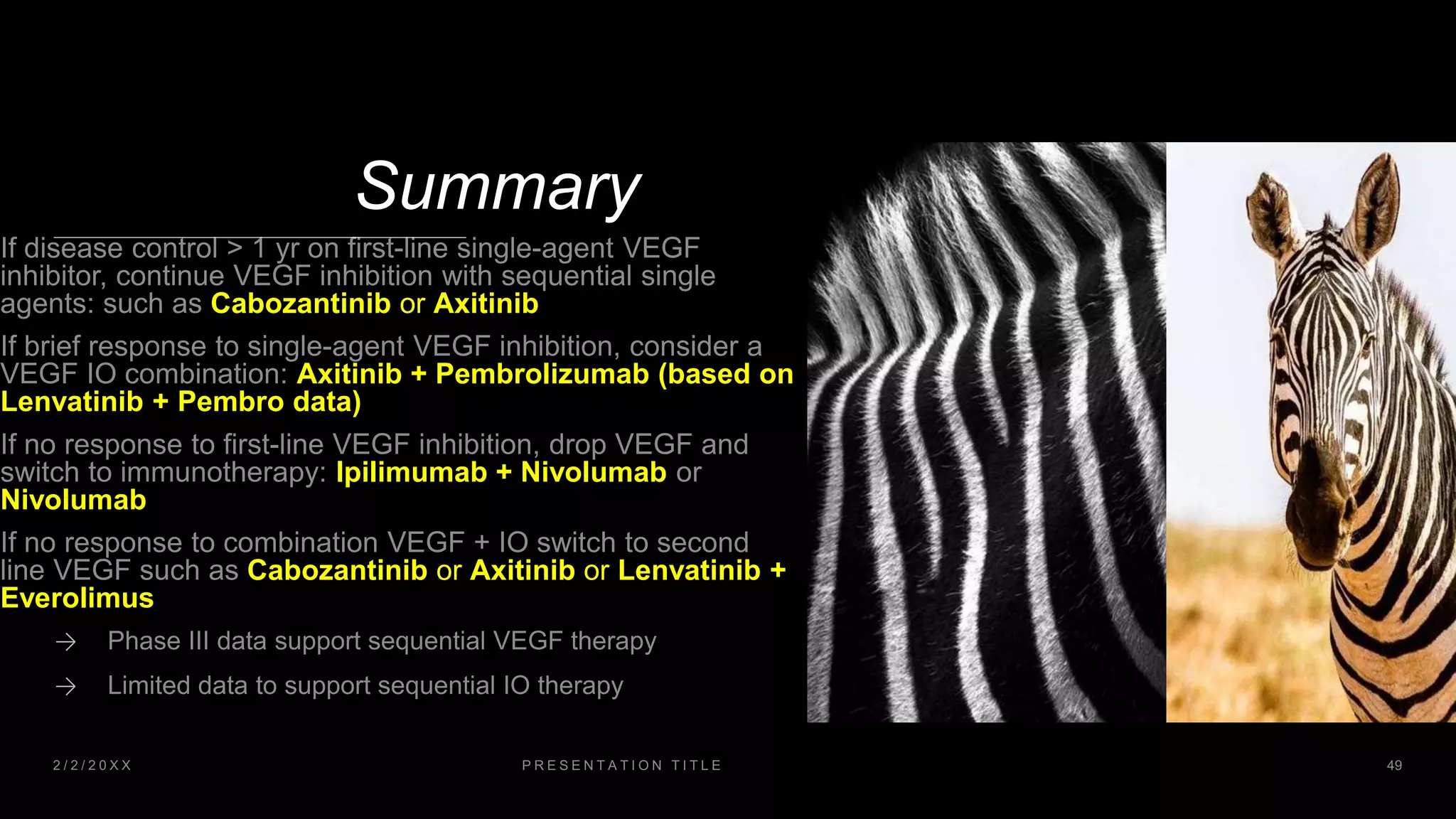
Summary
Cabozantinib or Axitinib
Axitinib + Pembrolizumab (based on
Lenvatinib + Pembro data)
Ipilimumab + Nivolumab
Nivolumab
Cabozantinib or Axitinib or Lenvatinib +
Everolimus
→
→
Thank you

Radar on rcc

  • 1.
    RADAR ON RCC DR.R.RAJKUMARD.M CONSULTANT MEDICAL ONCOLOGIST VELAMMAL SPECIALITY HOSPITALS
  • 2.
  • 3.
  • 4.
  • 5.
  • 6.
  • 7.
  • 8.
  • 9.
    THE NEXT STEPFOR THIS PATIENT ? 1. 2.
  • 10.
  • 11.
    CARMENA TRIAL • RCTof 450 Patients with IMDC Intermediate to Poor Risk Disease
  • 12.
    CARMENA: Prospective, Multicenter,Open-Label, Randomized Phase III Noninferiority Study  Multicenter, randomized, open-label noninferiority phase III trial  Primary endpoint: OS  Secondary endpoints: PFS, ORR (RECIST v1.1), clinical benefit, safety Follow-up for minimum of 2 yrs Nephrectomy (n = 226) Sunitinib 50 mg QD* 4 wks on/2 wks off (n = 224) Confirmed metastatic clear-cell RCC/biopsy; ECOG PS 0/1; amenable to nephrectomy eligible for sunitinib; brain metastases absent/controlled by treatment; no prior systemic therapy for RCC Intermediate / poor -risk disease (N = 450) Stratified by center, MSKCC risk group (intermediate vs high risk) *Dose reductions/interruptions allowed for managing AEs. Sunitinib 50 mg QD* 4 wks on/2 wks off (n = 226) 3-6 wks Méjean. ASCO 2018. Abstr LBA3. Méjean. NEJM. 2018;379:417.
  • 13.
    CARMENA: Overall Survival(ITT) HR: 0.89 (95% CI: 0.71-1.10; noninferiority ≤ 1.20) Median follow-up: 50.9 mos (range: 0-86.6) Méjean. ASCO 2018. Abstr LBA3. Median OS, Mos Nephrectomy → sunitinib 13.9 Sunitinib alone 18.4 0 10 20 30 40 50 60 70 80 90 100 Patients Who Were Alive (%) Mos 0 12 24 36 48 60 72 84 96 Patients at Risk, n Nephrectomy→ sunitinib Sunitinib alone 226 224 110 128 61 76 40 44 19 26 11 8 4 3 1 1 0 0 64.4 42.6 29.1 55.2 35.0 25.9
  • 14.
  • 15.
  • 16.
    MERITS & DE-MERITSOF THE STUDY → → → → →
  • 18.
    What are theprognostic indicators in mRCC do you consider while choosing the treatment options ?
  • 19.
    Do you dorisk stratification of your patients in clinical practice..? → → →
  • 20.
    COMPARISON OF MSKCCAND IMDC PROGNOSTIC MODELS FOR RCC
  • 21.
    IMDC (HENG) CRITERIAFOR METASTATIC RCC International Kidney Cancer Coalition. Heng. JCO. 2009;27:5794.
  • 22.
    IMDC (HENG) CRITERIAFOR METASTATIC RCC
  • 23.
    CASE DISCUSSION CHOICE OFSYSTEMIC THERAPY  TKI  IO  IO+TKI
  • 24.
    HOW TO CHOOSEAMONG EXPANDING SYSTEMIC OPTIONS IN mRCC
  • 25.
  • 26.
    Referenced with permissionfrom the NCCN Clinical Practice Guidelines in Oncology (NCCN Guidelines®) for Kidney Cancer V4.2021. © National Comprehensive Cancer Network, Inc 2021. All rights reserved. Accessed June 13, 2021. To view the most recent and complete version of the guideline, go online to NCCN.org.
  • 28.
    CheckMate 214: OSand Response by IMDC Risk Category Tannir. ASCO GU 2020. Abstr 609. OS in Intermediate-Risk and Poor-Risk Patients OS in Favorable-Risk Patients Nivolumab + ipilimumab (n = 425) Sunitinib (n = 422) Outcome in Favorable-Risk Patients Nivolumab + Ipilimumab (n = 125) Sunitinib (n = 124) HR (95% CI) P Value ORR, % (95% CI) 29 54 -- < .0001 Median PFS, mos (95% CI) 17.8 (10.3-20.7) 27.7 (23.2-34.5) 1.62 (1.14-2.32) < .01 100 80 60 40 20 0 OS (%) 0 3 6 9 12151821242730333639424548515457 60% 47% 39% 74% 60% 52% HR: 0.66 (95% CI: 0.55-0.80; P < .0001) Mos 70% 100 80 60 40 20 0 OS (%) 0 3 6 9 12151821242730333639424548515457 Mos 88% 80% 93% 85% 73% Nivolumab + ipilimumab (n = 125) Sunitinib (n = 124) HR: 1.19 (95% CI: 0.77-1.85; P = .44)
  • 29.
    KEYNOTE-426: First-line Pembrolizumab+ Axitinib vs Sunitinib in Advanced or Metastatic RCC HR: 0.63 (95% CI: 0.50-0.81; P = .0001) Median OS, Mo Pembro + Axi NR Sunitinib 28.8 (23.7-34.3) Powles. Lancet Oncol. 2020;21:1563. Slide credit: clinicaloptions.com Mo 80 60 40 20 0 69.2% 42 0 6 12 18 24 30 36 100 OS (%) Patients at Risk, n Pembro + Axi Sunitinib 294 289 274 250 254 213 220 188 195 160 100 74 11 7 0 0 55.8 86.7% 72.0% INTERMEDIATE / POOR RISK
  • 30.
    KEYNOTE-426: First-line Pembrolizumab+ Axitinib vs Sunitinib in Advanced or Metastatic RCC HR: 1.06 (95% CI: 0.60-1.86; P = .58*) Mo Patients at Risk, n Pembro + Axi Sunitinib OS (%) 100 80 60 40 20 0 87.7% Events, n Median Pembro + Axi 26 NR Sunitinib 24 NR 42 0 6 12 18 24 30 36 138 131 134 129 131 123 126 118 110 108 63 60 12 9 0 0 Powles. Lancet Oncol. 2020;21:1563. *Nominal P value. Slide credit: clinicaloptions.com 85.3% 94.6% 95.6% FAVORABLE RISK
  • 31.
    First-line IO CombinationTrials in mRCC CheckMate 214 (Ipi/Nivo) 1 (n = 550 vs n = 546) KEYNOTE-426 (Axi/Pembro)2 (n = 432 vs n = 429) CheckMate 9ER (Cabo/Nivo)3 (n = 323 vs n = 328) CLEAR (Len/Pembro)4 (n = 355 vs n = 357) mOS, mo HR (CI) NR vs 38.4 0.69 (0.59-0.81) 45.7 vs 40.1 0.73 (0.60-0.88) NR vs 29.5 0.66 (0.50-0.87) NR vs NR 0.66 (0.49-0.88) Landmark OS 12 mo Landmark OS 24 mo 83% vs 78% 71% vs 61% 90% vs 79% 74% vs 66% 86% vs 76% 72% vs 60% (est) 90% vs 79% 79% vs 70% (est.) mPFS, mo HR (CI) 12.2 vs 12.3 0.89 (0.76-1.05) 15.7 vs 11.1 0.68 (0.58-0.80) 17.0 vs 8.3 0.52 (0.43-0.64) 23.9 vs 9.2 0.39 (0.32-0.49) ORR, % 39 vs 32 60 vs 40 55 vs 27 71 vs 36 CR, % 11 vs 3 10 vs 4 9 vs 4 16 vs 4 Med f/u, mo 55 42.8 23.5 27 Prognostic risk, %  Favorable  Intermediate  Poor 23 61 17 32 55 13 23 58 19 31 59 9 Prior nephrectomy 82% 83% 69% 74% Subsequent systemic therapies for sunitinib arm, % Overall (69%) IO (42%) Overall (69%) IO (48%) Overall (40%) IO (29%) Overall (71%) IO (53%) 1. Albiges. ESMO Open. 2020;5:epub001079. 2. Rini. ASCO 2021. Abstr 4500. 3. Choueiri. NEJM. 2021;384:829. 4. Motzer. NEJM. 2021;384:1289. @brian_rini and @Uromigos (podcasts: https://anchor.fm/the-Uromigos) Adapted from
  • 32.
    First-Line Treatment Considerationsfor RCC: Summary  Multiple good systemic therapy options for metastatic RCC, with no obvious clear choice in some cases  Good-risk patients, and those with “favorable intermediate” risk, can have survival of many yrs—with and without therapy  Consider debulking nephrectomy and/or active surveillance in selected patients Patients with: • IMDC intermediate/poor-risk disease • No significant autoimmune disease • VEGF contraindications • A need to avoid chronic VEGF AEs Consider Nivo + Ipi Patients with • IMDC favorable- or intermediate-risk disease • Intermediate- or poor- risk disease who need rapid response • A need to avoid irAEs associated with dual IO therapy Consider Pembro + Axitinib
  • 33.
    mRCC 1ST LINESYSTEMIC THERAPY: DECISION TREE
  • 34.
  • 35.
  • 36.
    CASE DISCUSSION  STARTEDON PALLIATIVE RT  10/30GY
  • 37.
    CASE DISCUSSION CHOICE OFSYSTEMIC THERAPY  TKI  IO  IO+TKI  mTOR  TKI+mTOR  Anti VEGF monolonal antibodies
  • 38.
    HOW DO YOUCHOOSE THE TREATMENT IN mRCC AFTER PROGRESSION?
  • 39.
    SEQUENCING OF AGENTS5 YEARS BACK… mTOR inhibitor VEGF TKI mTORi TKI TKI Sunitinib Pazopanib Axitinib Sorafenib Everolimus mTORi TKI TKI SIMPLER TIMES
  • 40.
    SEQUENCING OF AGENTSIN 2020 VEGF + mTORi VEGF TKI CPI + Bev CPI + CPI CPI CPI + TKI
  • 41.
    Pivotal Randomized Trialsin Clear-Cell RCC Post TKI Therapy Parameter RECORD-1[1,2] AXIS[3,4] METEOR[5,6] CheckMate 025[7] LEN EVE[8] Everolimus vs Placebo Axitinib vs Sorafenib Cabozantinib vs Everolimus Nivolumab vs Everolimus Lenvatinib + Everolimus vs Everolimus Patients, n 410 723 658 821 153 MSKCC risk, %  Good 29 28 46 36 23  Intermediate 56 37 42 49 36  Poor 15 33 13 15 40 Prior TKI Anti-VEGF Sunitinib Anti-VEGF Anti-VEGF Anti-VEGF Line of therapy 2nd or beyond 2nd 2nd or beyond 2nd or 3rd 2nd ORR, % 2 vs 0 19 vs 9 21 vs 5 25 vs 5 43 vs 3 Median OS, mos 14.8 vs 14.0 20.1 vs 19.2 21.4 vs 17.1 25.0 vs 19.6 25.5 vs 15.4 Slide credit: clinicaloptions.com 1. Motzer. Lancet. 2008;372:449. 2. Motzer. Cancer 2010;116:4256. 3. Rini. Lancet. 2011;378:1931. 4. Motzer. Lancet Oncol. 2013;14:552. 5. Choueiri. NEJM. 2015;373:1814. 6. Motzer. Br J Cancer. 2018;118:1176. 7. Motzer. NEJM. 2015;373:1803. 8. Motzer. Lancet. 2015;16:1473. Phase III Phase II
  • 42.
    Referenced with permissionfrom the NCCN Clinical Practice Guidelines in Oncology (NCCN Guidelines®) for Kidney Cancer V2.2020. © National Comprehensive Cancer Network, Inc 2020. All rights reserved. Accessed June 10, 2020. To view the most recent and complete version of the guideline, go online to NCCN.org. dHudes. NEJM 2007;356:2271-2281.
  • 43.
    WHEN WOULD YOUPREFER THE LENVATINIB + EVEROLIMUS COMBINATION IN THE MANAGEMENT OF mRCC?
  • 44.
    STUDY 205: ARANDOMISED, PHASE 2, OPEN-LABEL, MULTICENTRE TRIAL aRCC: advanced renal cell carcinoma, Ca: calcium, ECOG: Eastern Cooperative Oncology Group, Hb: haemoglobin, IRR: independent radiological review, mmHg: millimeter of mercury, mRCC: metastatic renal cell carcinoma, ORR: objective response rate, OS: overall survival, PFS: progression-free survival, RCC: renal cell carcinoma, RECIST: Response Evaluation Criteria in Solid Tumours, VEGF: vascular endothelial growth factor. 1. Motzer RJ et al. Lancet Oncol 2015;16(15):1473‒1482. Key Eligibility Criteria: • Histologically verified clear-cell RCC • Radiographic evidence of progressive aRCC or mRCC within 9 months of stopping previous treatment • 1 previous disease progression with VEGF treatment • ECOG PS 0 or 1 • Measurable disease per RECIST v1.1 • ≤ 150/90 mmHg blood pressure • Adequate renal, bone marrow, blood coagulation, liver and cardiac function Stratification Factors: • Hb (Men: ≤130 g/L and >130 g/L, Women: ≤115 g/L and >115 g/L) • Corrected serum Ca (≥2.5 mmol/L and <2.5 mmol/L) End Points: • Primary: PFS • Key secondary: ORR, OS and safety 18 mg lenvatinib plus 5 mg everolimus Once per day 10 mg everolimus monotherapy Once per day R (1:1:1) 24 mg lenvatinib monotherapy Once per day n = 51 n = 50 n = 52
  • 45.
    PRIMARY ENDPOINT –PROGRESSION-FREE SURVIVAL CI: confidence interval, HR: hazard ratio. 1. Motzer RJ et al. Lancet Oncol 2015;16(15):1473‒1482. PFS was significantly prolonged with lenvatinib plus everolimus, compared with everolimus alone (p=0.0005)1 • Approximately 9 additional months of PFS benefit1 • 60% reduction in the risk of progression or death1
  • 46.
    SECONDARY ENDPOINT –ORR Assessed by Investigator review per RECIST v1.1 CI. Lenvatinib plus everolimus (n=51) Lenvatinib monotherapy (n=52) Everolimus monotherapy (n=50) OBJECTIVE RESPONSE Events 22 (43%) 14 (27%) 3 (6%) 95% CI 29–58 16–41 1–17 Best overall response Complete response 1 (2%) 0 0 Partial response 21 (41%) 14 (27%) 3 (6%) Stable disease 21 (41%) 27 (52%) 31 (62%) Progressive disease 2 (4%) 3 (6%) 12 (24%) Not assessed 6 (12%) 8 (15%) 4 (8%) 43% ORR for lenvatinib plus everolimus vs 6% with everolimus alone (rate ratio [RR] 7·2, 95% CI: 2·3–22·5; p<0·0001)1 Lenvatinib plus everolimus • Duration of response was 13.0 months1 • Time to response was 1.9 months2
  • 47.
    SECONDARY ENDPOINT –ORR Treatment Group: Lenvatinib 18 mg plus Everolimus 5 mg Treatment Group: Lenvatinib 24 mg Treatment Group: Everolimus 10 mg Figure S1. Maximum percentage change in sum of diameters of target lesions, for A) lenvatinib/everolimus combination arm, B) lenvatinib , and C) everolimus. More patients in the lenvatinib plus everolimus group experienced measurable tumour shrinkage vs those treated with everolimus alone
  • 48.
  • 49.
    Summary Cabozantinib or Axitinib Axitinib+ Pembrolizumab (based on Lenvatinib + Pembro data) Ipilimumab + Nivolumab Nivolumab Cabozantinib or Axitinib or Lenvatinib + Everolimus → →
  • 50.

Editor's Notes

  • #13 AE, adverse event; ECOG, Eastern Cooperative Oncology Group; mets, metastases; MSKCC, Memorial Sloan Kettering Cancer Center; PS, performance status; RCC, renal cell carcinoma; RECIST, Response Evaluation Criteria in Solid Tumors.
  • #14 ITT, intention-to-treat.
  • #15 PS, performance status.
  • #17 Take Home Message is that We should now select patients for cytoreductive nephrectomy and should avoid in bulky primaries which might potentially delay onset of systemic treatment. Inclusion of Immune Check Point inhibitors in the therapeutic armamentarium may throw a different light altogether
  • #22 IMDC, International Metastatic Renal Cell Carcinoma Database; LLN, lower limit of normal; RCC, renal cell carcinoma; ULN, upper limit of normal.
  • #29 IMDC, International Metastatic Renal Cell Carcinoma Database Consortium.
  • #30 Axi, axitinib; NR, not reached; Pembro, pembrolizumab; OS, overall survival; RCC, renal cell carcinoma.
  • #31 Axi, axitinib; NR, not reached; Pembro, pembrolizumab; OS, overall survival; RCC, renal cell carcinoma.
  • #32 Axi, axitinib; Cabo, cabozantinib; CR, complete response; f/u, follow-up; IO, immuno-oncology; ITT, intention-to-treat; Len, lenvatinib; mOS, median overall survival; mPFS, medial progression-free survival; mRCC, metastatic renal cell carcinoma; Nivo, nivolumab; NR, not reached; ORR, overall response rate; Pembro, pembrolizumab.
  • #33 AE, adverse event; IMDC, International Metastatic Renal Cell Carcinoma Database; IO, immuno-oncology; Ipi, ipilimumab; Nivo, nivolumab; Pembro, pembrolizumab; RCC, renal cell carcinoma.
  • #42 MSKCC, Memorial Sloan Kettering Cancer Center; RCC, renal cell carcinoma.