The Oncotype DX Breast
Recurrence Score
Presented by
Dr. Ahmed Mjali
Hematology /Oncology
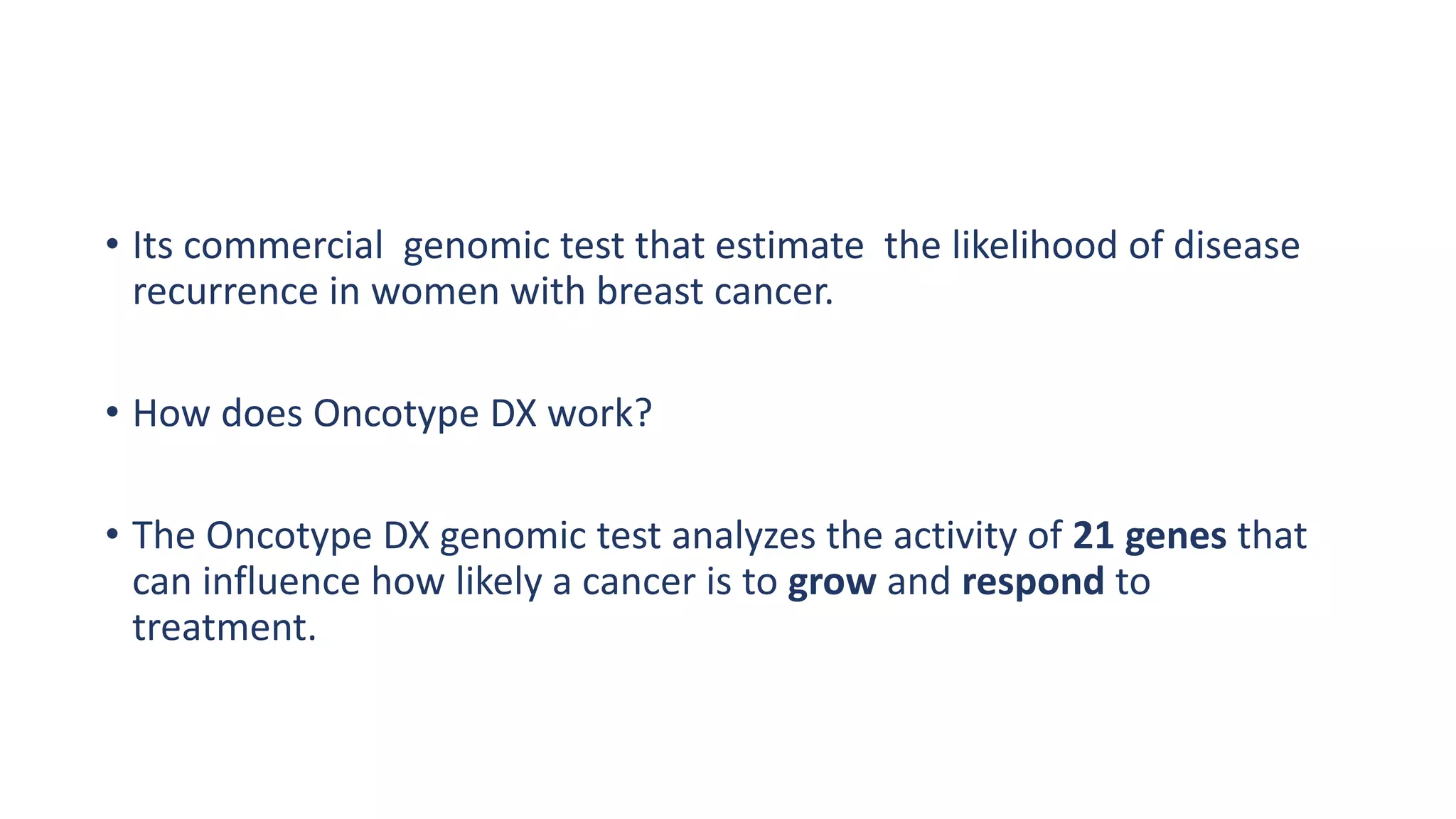
• Its commercial genomic test that estimate the likelihood of disease
recurrence in women with breast cancer.
• How does Oncotype DX work?
• The Oncotype DX genomic test analyzes the activity of 21 genes that
can influence how likely a cancer is to grow and respond to
treatment.
3
Oncotype DX Recurrence Scoreresult:
calculated from 21 different genes
16 CANCER RELATED GENES
Paik et al. N Engl J Med. 2004;351:2817-2826.
ER
PR
Bcl2
SCUBE2
GRB7
HER2
Ki-67
STK15
Survivin
Cyclin B1
MYBL2
Stromelysin 3
Cathepsin L2
GSTM1
CD68
BAG1
Beta-actin GAPDH RPLPO GUS TFRC
5 REFERENCE GENES
Estrogen Proliferation HER2 Invasion Others
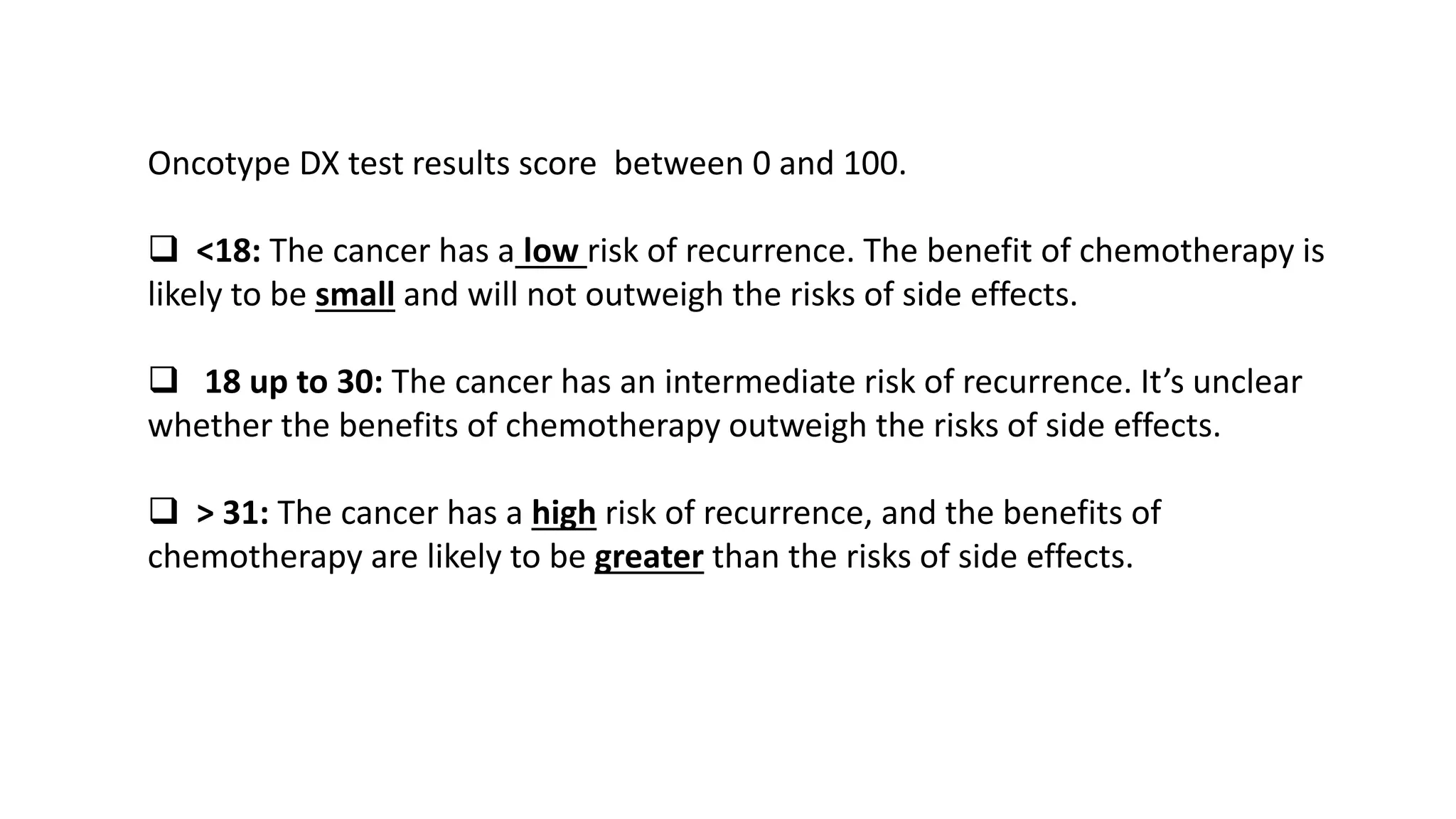
Oncotype DX test results score between 0 and 100.
 <18: The cancer has a low risk of recurrence. The benefit of chemotherapy is
likely to be small and will not outweigh the risks of side effects.
 18 up to 30: The cancer has an intermediate risk of recurrence. It’s unclear
whether the benefits of chemotherapy outweigh the risks of side effects.
 > 31: The cancer has a high risk of recurrence, and the benefits of
chemotherapy are likely to be greater than the risks of side effects.
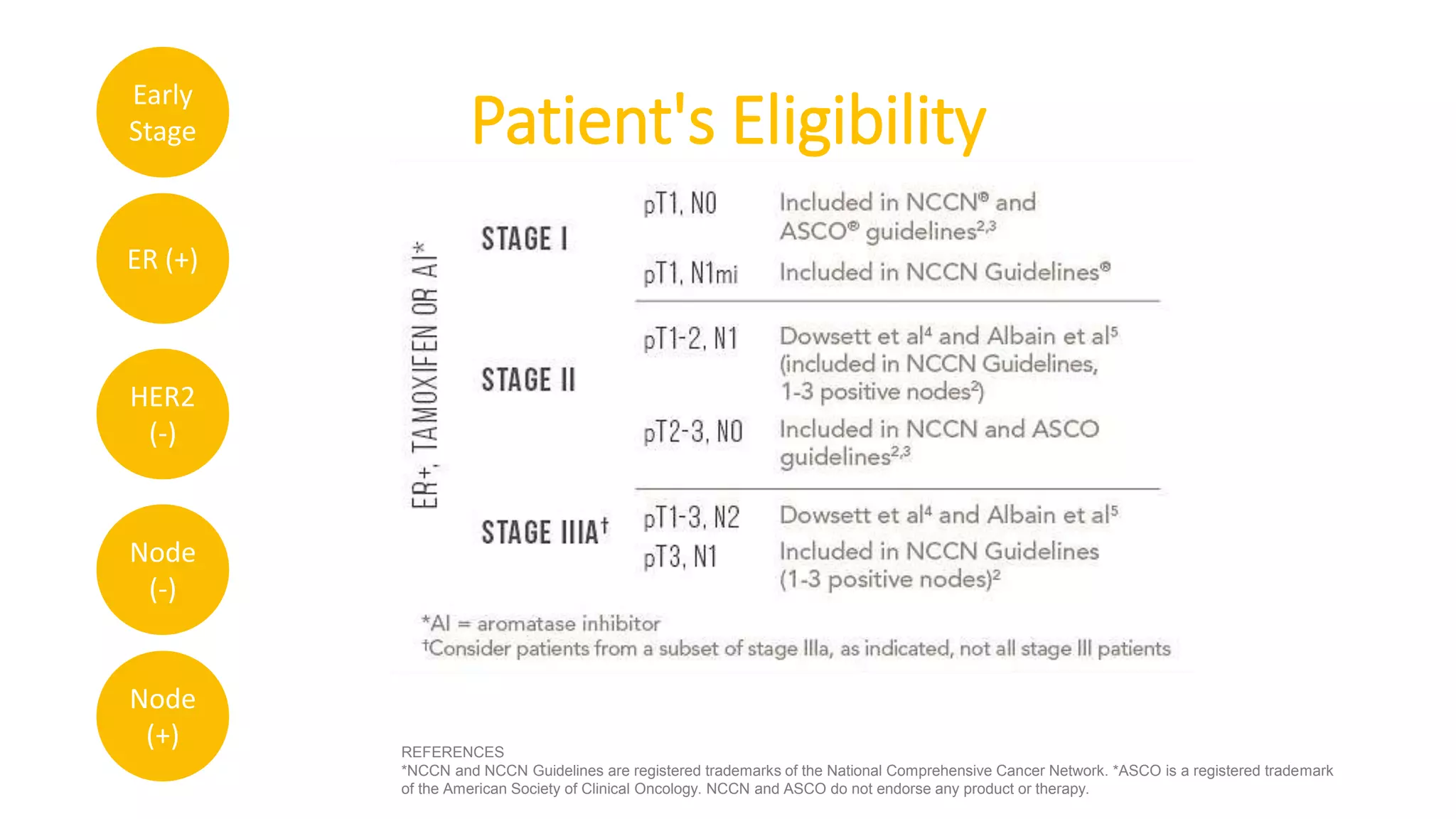
Patient's Eligibility
Early
Stage
ER (+)
HER2
(-)
Node
(-)
Node
(+) REFERENCES
*NCCN and NCCN Guidelines are registered trademarks of the National Comprehensive Cancer Network. *ASCO is a registered trademark
of the American Society of Clinical Oncology. NCCN and ASCO do not endorse any product or therapy.
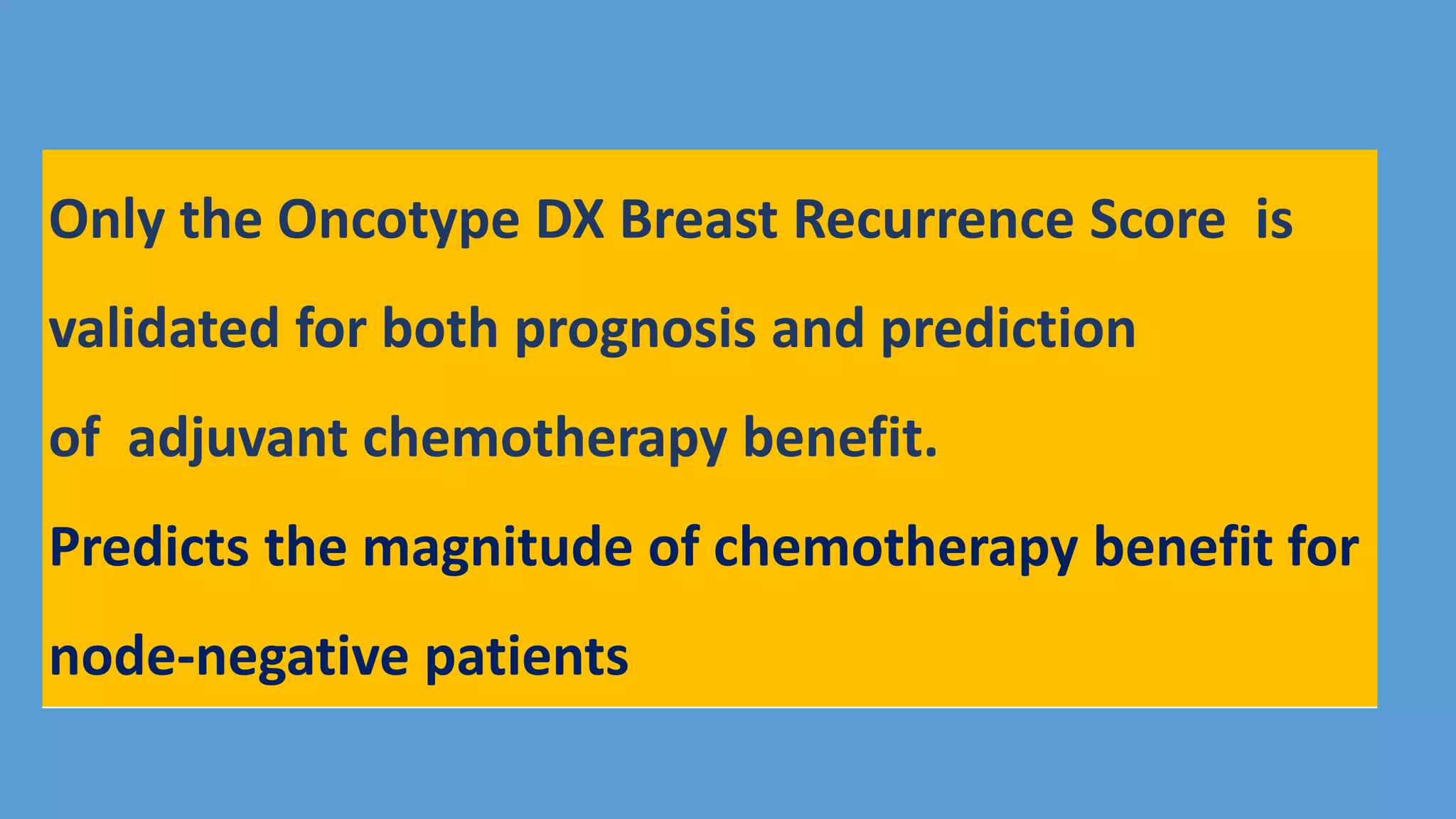
Only the Oncotype DX Breast Recurrence Score is
validated for both prognosis and prediction
of adjuvant chemotherapy benefit.
Predicts the magnitude of chemotherapy benefit for
node-negative patients
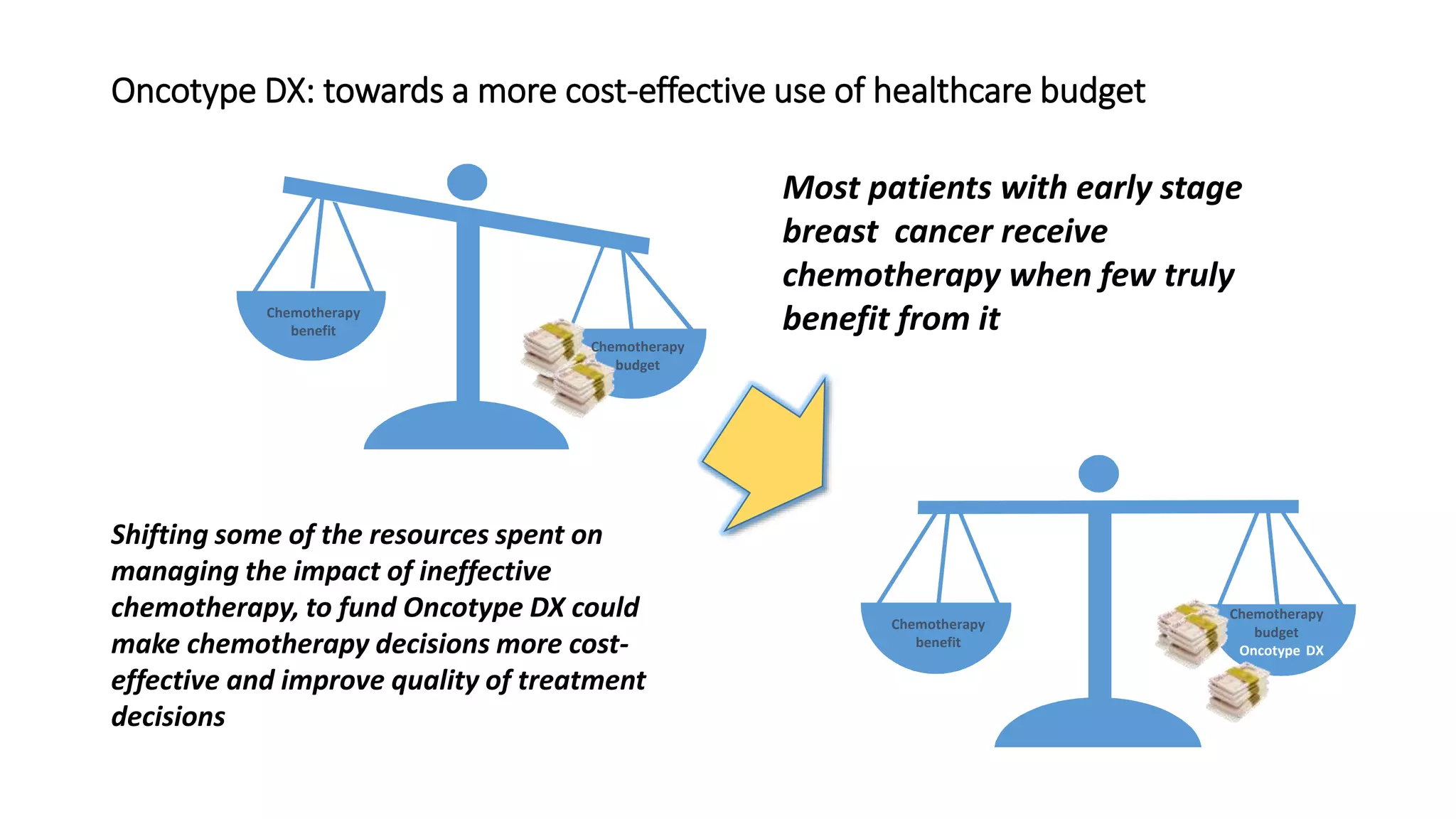
Oncotype DX: towards a more cost-effective use of healthcare budget
Chemotherapy
budget
Chemotherapy
benefit
Chemotherapy
budget
Chemotherapy
benefit
Oncotype DX
Most patients with early stage
breast cancer receive
chemotherapy when few truly
benefit from it
Shifting some of the resources spent on
managing the impact of ineffective
chemotherapy, to fund Oncotype DX could
make chemotherapy decisions more cost-
effective and improve quality of treatment
decisions
9

Oncotype dx presentation

  • 1.
    The Oncotype DXBreast Recurrence Score Presented by Dr. Ahmed Mjali Hematology /Oncology
  • 2.
    • Its commercialgenomic test that estimate the likelihood of disease recurrence in women with breast cancer. • How does Oncotype DX work? • The Oncotype DX genomic test analyzes the activity of 21 genes that can influence how likely a cancer is to grow and respond to treatment.
  • 3.
    3 Oncotype DX RecurrenceScoreresult: calculated from 21 different genes 16 CANCER RELATED GENES Paik et al. N Engl J Med. 2004;351:2817-2826. ER PR Bcl2 SCUBE2 GRB7 HER2 Ki-67 STK15 Survivin Cyclin B1 MYBL2 Stromelysin 3 Cathepsin L2 GSTM1 CD68 BAG1 Beta-actin GAPDH RPLPO GUS TFRC 5 REFERENCE GENES Estrogen Proliferation HER2 Invasion Others
  • 4.
    Oncotype DX testresults score between 0 and 100.  <18: The cancer has a low risk of recurrence. The benefit of chemotherapy is likely to be small and will not outweigh the risks of side effects.  18 up to 30: The cancer has an intermediate risk of recurrence. It’s unclear whether the benefits of chemotherapy outweigh the risks of side effects.  > 31: The cancer has a high risk of recurrence, and the benefits of chemotherapy are likely to be greater than the risks of side effects.
  • 5.
    Patient's Eligibility Early Stage ER (+) HER2 (-) Node (-) Node (+)REFERENCES *NCCN and NCCN Guidelines are registered trademarks of the National Comprehensive Cancer Network. *ASCO is a registered trademark of the American Society of Clinical Oncology. NCCN and ASCO do not endorse any product or therapy.
  • 7.
    Only the OncotypeDX Breast Recurrence Score is validated for both prognosis and prediction of adjuvant chemotherapy benefit. Predicts the magnitude of chemotherapy benefit for node-negative patients
  • 8.
    Oncotype DX: towardsa more cost-effective use of healthcare budget Chemotherapy budget Chemotherapy benefit Chemotherapy budget Chemotherapy benefit Oncotype DX Most patients with early stage breast cancer receive chemotherapy when few truly benefit from it Shifting some of the resources spent on managing the impact of ineffective chemotherapy, to fund Oncotype DX could make chemotherapy decisions more cost- effective and improve quality of treatment decisions
  • 9.