PANEL DISCUSSION ON aRCC
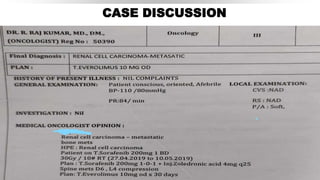
CASE DISCUSSION
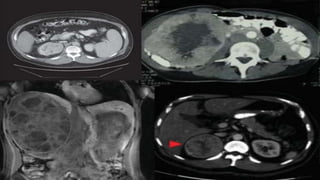
• 64-yr-old man presents with right flank pain, no hematuria
• Past medical history includes:
• Mild hypertension (140/85 mmHg, not on medication),
hypercholesterolemia, no other cardiac history
• 20 pack-yr smoker
• Family history: negative for cancer
• Physical exam: right flank fullness, otherwise normal
• ECOG PS 0
• Labs: hemoglobin: 11.0 g/dL, ANC and platelets normal,
creatinine: 1.2 mg/dL, LDH: 287 U/L, calcium normal
CASE DISCUSSION
Role of Percutaneous Needle Biopsy
1. YES
2. NO
WHAT IS THE NEXT STEP FOR THIS
PATIENT ?
1. Radical Nephrectomy
2. Start Systemic therapy
CASE DISCUSSION
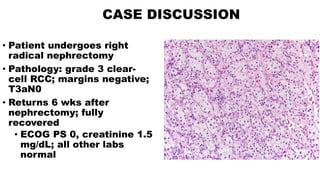
• Patient undergoes right
radical nephrectomy
• Pathology: grade 3 clear-
cell RCC; margins negative;
T3aN0
• Returns 6 wks after
nephrectomy; fully
recovered
• ECOG PS 0, creatinine 1.5
mg/dL; all other labs
normal
WHAT IS ROLE OF ADJUVANT THERAPY
IN THIS PATIENT..?
 ADJUVANT THERAPY INDICATED
 NO EVIDENCE
 EQUIVOCAL
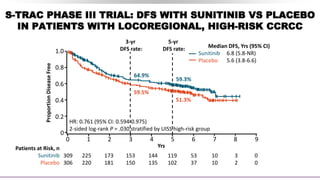
S-TRAC PHASE III TRIAL: DFS WITH SUNITINIB VS PLACEBO
IN PATIENTS WITH LOCOREGIONAL, HIGH-RISK CCRCC
51.3%
59.5%
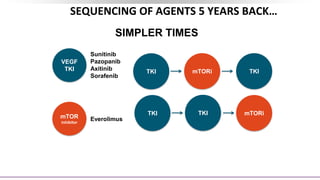
5-yr
DFS rate: Median DFS, Yrs (95% CI)
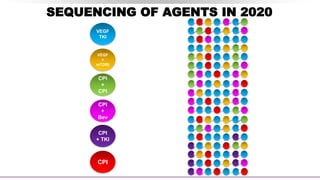
Sunitinib 6.8 (5.8-NR)
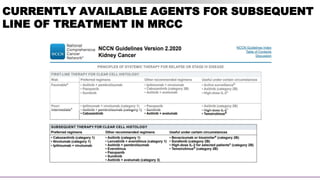
Placebo 5.6 (3.8-6.6)
Yrs
HR: 0.761 (95% CI: 0.594-0.975)
2-sided log-rank P = .030 stratified by UISS high-risk group
3-yr
DFS rate:
64.9%
59.3%
1.0
0.8
0.6
0.4
0.2
0
0 1 2 3 4 5 6 7 8 9
Patients at Risk, n
Sunitinib
Placebo
309
306
225
220
173
181
153
150
144
135
119
102
53
37
10
10
3
2
0
0
Proportion
Disease
Free
PUBLISHED TYROSINE KINASE INHIBITOR
ADJUVANT TRIALS
Trial Therapy N Histology Stage
Starting
Dose
Minimum
Dose
DFS OS
ASSURE[1] Sunitinib
Sorafenib
Placebo
1943 79% ccRCC
> pT1b, G3-4,
or N+
50 or 37.5
mg (Su)/
400 mg
(So)
25 mg
(Su)/40 mg
(So)
No No
S-TRAC[2] Sunitinib
Placebo
615 ccRCC > pT3b or N+ 50 mg 37.5 mg Yes No
PROTECT[3] Pazopanib
Placebo
1538
ccRCC or
mostly
ccRCC
pT2 (G3-4), ≥
pT3, or N+
600 mg 400 mg No No
ONGOING PHASE III ADJUVANT TRIALS:
IMMUNOTHERAPY VS PLACEBO
Parameter
IMmotion010[1]
(NCT03024996)
PROSPER[2] (NCT03055013)
KEYNOTE-564[3]
(NCT03142334)
CheckMate 914[4]
(NCT03138512)
Drug Atezolizumab Nivolumab Pembrolizumab Nivolumab + ipilimumab
Histology
Clear-cell ± sarcomatoid
histology
RCC of any histology
Clear-cell ± sarcomatoid
features
Clear-cell ± sarcomatoid
features
Dose duration 1 yr
2 doses prior to surgery and
adjuvant nivolumab for 9
mos
1 yr 6 mos
Risk
classification
T2 grade 4, T3a grade 3/4,
T3b/c any grade, T4 any grade,
or TxN+ any grade
Clinical stage ≥ T2 or
any N+
pT2, grade 4; pT3/4, any
grade; N+ M0; M1 NED
pT2aN0, grade 3-4; pT2b-T4;
N+
Primary
endpoint
DFS RFS at 5 yrs DFS DFS
BICR Yes Yes Yes Yes
Status Active, recruiting Active, recruiting Active, recruiting Active, recruiting
1.
CASE DISCUSSION
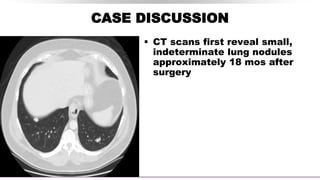
 CT scans first reveal small,
indeterminate lung nodules
approximately 18 mos after
surgery
CASE DISCUSSION
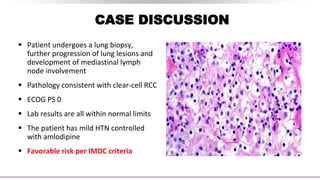
 Patient undergoes a lung biopsy,
further progression of lung lesions and
development of mediastinal lymph
node involvement
 Pathology consistent with clear-cell RCC
 ECOG PS 0
 Lab results are all within normal limits
 The patient has mild HTN controlled
with amlodipine
 Favorable risk per IMDC criteria
Do you do risk stratification of your patients
in clinical practice..?
 If Yes, which one do you prefer
‒ IMDC
‒ MSKCC
WHAT ARE THE PROGNOSTIC
INDICATORS IN mRCC DO YOU
CONSIDER WHILE CHOOSING THE
TREATMENT OPTIONS ?
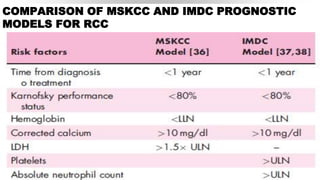
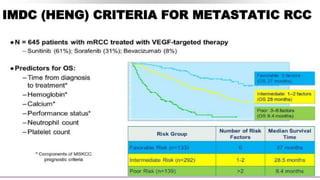
COMPARISON OF MSKCC AND IMDC PROGNOSTIC
MODELS FOR RCC
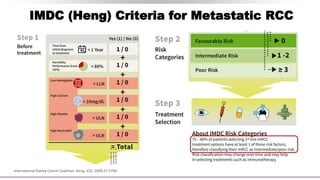
IMDC (Heng) Criteria for Metastatic RCC
International Kidney Cancer Coalition. Heng. JCO. 2009;27:5794.
IMDC (HENG) CRITERIA FOR METASTATIC RCC
IS THERE ANY ROLE OF ACTIVE
SURVEILLANCE..?
 YES
 NO
 MAY BE
 NOT SURE
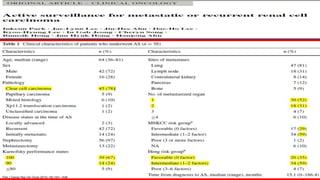
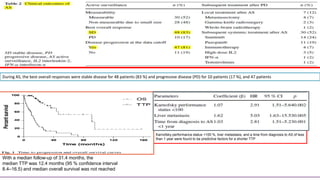
Park J Cancer Res Clin Oncol (2014) 140:1421–1428
During AS, the best overall responses were stable disease for 48 patients (83 %) and progressive disease (PD) for 10 patients (17 %), and 47 patients
With a median follow-up of 31.4 months, the
median TTP was 12.4 months (95 % confidence interval
8.4–16.5) and median overall survival was not reached
Karnofsky performance status <100 %, liver metastasis, and a time from diagnosis to AS of less
than 1 year were found to be predictive factors for a shorter TTP
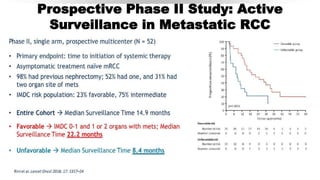
Prospective Phase II Study: Active
Surveillance in Metastatic RCC
CASE DISCUSSION
 Lung nodules become more prominent over time, and the
patient is asking about the need to start therapy 3 yrs after
nephrectomy
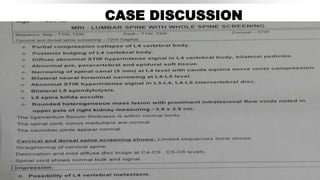
CASE DISCUSSION
CASE DISCUSSION
CHOICE OF SYSTEMIC THERAPY
 TKI
 IO
 IO+TKI
HOW TO CHOOSE AMONG
EXPANDING SYSTEMIC OPTIONS IN mRCC
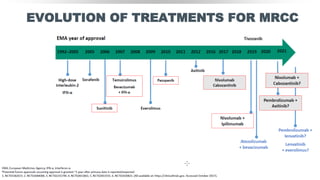
EVOLUTION OF TREATMENTS FOR MRCC
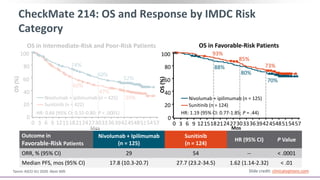
CheckMate 214: OS and Response by IMDC Risk
Category
Tannir. ASCO GU 2020. Abstr 609. Slide credit: clinicaloptions.com
OS in Intermediate-Risk and Poor-Risk Patients OS in Favorable-Risk Patients
Nivolumab + ipilimumab (n = 425)
Sunitinib (n = 422)
Outcome in
Favorable-Risk Patients
Nivolumab + Ipilimumab
(n = 125)
Sunitinib
(n = 124)
HR (95% CI) P Value
ORR, % (95% CI) 29 54 -- < .0001
Median PFS, mos (95% CI) 17.8 (10.3-20.7) 27.7 (23.2-34.5) 1.62 (1.14-2.32) < .01
100
80
60
40
20
0
OS
(%)
0 3 6 9 12151821242730333639424548515457
60%
47%
39%
74%
60%
52%
HR: 0.66 (95% CI: 0.55-0.80; P < .0001)
Mos
70%
100
80
60
40
20
0
OS
(%)
0 3 6 9 12151821242730333639424548515457
Mos
88%
80%
93%
85%
73%
Nivolumab + ipilimumab (n = 125)
Sunitinib (n = 124)
HR: 1.19 (95% CI: 0.77-1.85; P = .44)
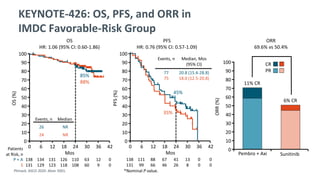
KEYNOTE-426: OS, PFS, and ORR in
IMDC Favorable-Risk Group
OS
HR: 1.06 (95% CI: 0.60-1.86)
PFS
HR: 0.76 (95% CI: 0.57-1.09)
Mos
Patients
at Risk, n
P + A
S
Plimack. ASCO 2020. Abstr 5001.
ORR
(%)
ORR
69.6% vs 50.4%
Pembro + Axi Sunitinib
11% CR
6% CR
CR
PR
100
90
80
70
60
50
40
30
20
10
0
OS
(%)
100
90
80
70
60
50
40
30
20
10
0
85%
88%
Events, n Median
26 NR
24 NR
42
0 6 12 18 24 30 36
138
131
134
129
131
123
126
118
110
108
63
60
12
9
0
0
*Nominal P value.
Mos
PFS
(%)
100
90
80
70
60
50
30
20
10
0
45%
42
0 6 12 18 24 30 36
138
131
111
99
88
66
67
46
41
26
13
8
0
0
0
0
Events, n
77
75
Median, Mos
(95% CI)
20.8 (15.4-28.8)
18.0 (12.5-20.8)
40
35%
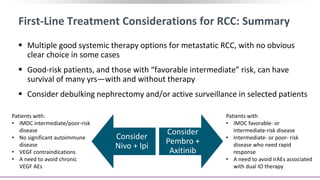
First-Line Treatment Considerations for RCC: Summary
 Multiple good systemic therapy options for metastatic RCC, with no obvious
clear choice in some cases
 Good-risk patients, and those with “favorable intermediate” risk, can have
survival of many yrs—with and without therapy
 Consider debulking nephrectomy and/or active surveillance in selected patients
Patients with:
• IMDC intermediate/poor-risk
disease
• No significant autoimmune
disease
• VEGF contraindications
• A need to avoid chronic
VEGF AEs
Consider
Nivo + Ipi
Patients with
• IMDC favorable- or
intermediate-risk disease
• Intermediate- or poor- risk
disease who need rapid
response
• A need to avoid irAEs associated
with dual IO therapy
Consider
Pembro +
Axitinib
CASE DISCUSSION
CASE DISCUSSION
CASE DISCUSSION
CASE DISCUSSION
 STARTED ON PALLIATIVE RT
 10/30GY
CASE DISCUSSION
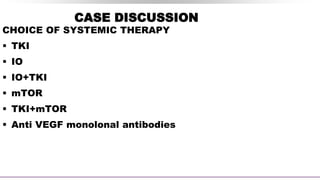
CHOICE OF SYSTEMIC THERAPY
 TKI
 IO
 IO+TKI
 mTOR
 TKI+mTOR
 Anti VEGF monolonal antibodies
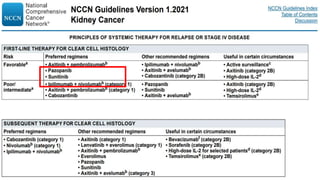
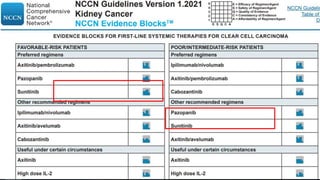
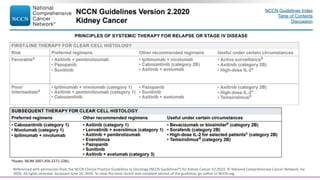
Referenced with permission from the NCCN Clinical Practice Guidelines in Oncology (NCCN Guidelines®) for Kidney Cancer V2.2020. © National Comprehensive Cancer Network, Inc
2020. All rights reserved. Accessed June 10, 2020. To view the most recent and complete version of the guideline, go online to NCCN.org.
dHudes. NEJM 2007;356:2271-2281.
Pivotal Randomized Trials in Clear-Cell RCC
Post TKI Therapy
Parameter
RECORD-1[1,2] AXIS[3,4] METEOR[5,6] CheckMate 025[7] LEN EVE[8]
Everolimus
vs
Placebo
Axitinib
vs
Sorafenib
Cabozantinib
vs
Everolimus
Nivolumab
vs
Everolimus
Lenvatinib + Everolimus
vs
Everolimus
Patients, n 410 723 658 821 153
MSKCC risk, %
 Good 29 28 46 36 23
 Intermediate 56 37 42 49 36
 Poor 15 33 13 15 40
Prior TKI Anti-VEGF Sunitinib Anti-VEGF Anti-VEGF Anti-VEGF
Line of therapy 2nd or beyond 2nd 2nd or beyond 2nd or 3rd 2nd
ORR, % 2 vs 0 19 vs 9 21 vs 5 25 vs 5 43 vs 3
Median OS, mos 14.8 vs 14.0 20.1 vs 19.2 21.4 vs 17.1 25.0 vs 19.6 25.5 vs 15.4
Slide credit: clinicaloptions.com
1. Motzer. Lancet. 2008;372:449. 2. Motzer. Cancer 2010;116:4256. 3. Rini. Lancet. 2011;378:1931. 4. Motzer. Lancet Oncol. 2013;14:552.
5. Choueiri. NEJM. 2015;373:1814. 6. Motzer. Br J Cancer. 2018;118:1176. 7. Motzer. NEJM. 2015;373:1803. 8. Motzer. Lancet. 2015;16:1473.
Phase III Phase II
CASE DISCUSSION
HOW DO YOU CHOOSE THE TREATMENT
IN mRCC AFTER PROGRESSION?
SEQUENCING OF AGENTS 5 YEARS BACK…
mTOR
inhibitor
VEGF
TKI mTORi
TKI TKI
Sunitinib
Pazopanib
Axitinib
Sorafenib
Everolimus
mTORi
TKI TKI
SIMPLER TIMES
SEQUENCING OF AGENTS IN 2020
VEGF
+
mTORi
VEGF
TKI
CPI
+
Bev
CPI
+
CPI
CPI
CPI
+ TKI
CURRENTLY AVAILABLE AGENTS FOR SUBSEQUENT
LINE OF TREATMENT IN MRCC
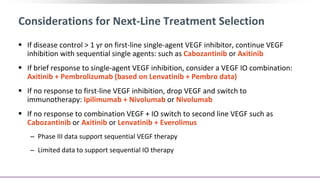
Considerations for Next-Line Treatment Selection
 If disease control > 1 yr on first-line single-agent VEGF inhibitor, continue VEGF
inhibition with sequential single agents: such as Cabozantinib or Axitinib
 If brief response to single-agent VEGF inhibition, consider a VEGF IO combination:
Axitinib + Pembrolizumab (based on Lenvatinib + Pembro data)
 If no response to first-line VEGF inhibition, drop VEGF and switch to
immunotherapy: Ipilimumab + Nivolumab or Nivolumab
 If no response to combination VEGF + IO switch to second line VEGF such as
Cabozantinib or Axitinib or Lenvatinib + Everolimus
‒ Phase III data support sequential VEGF therapy
‒ Limited data to support sequential IO therapy
WHEN WOULD YOU PREFER THE LENVATINIB +
EVEROLIMUS COMBINATION IN THE
MANAGEMENT OF mRCC?
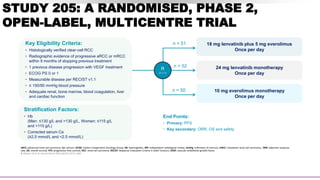
STUDY 205: A RANDOMISED, PHASE 2,
OPEN-LABEL, MULTICENTRE TRIAL
aRCC: advanced renal cell carcinoma, Ca: calcium, ECOG: Eastern Cooperative Oncology Group, Hb: haemoglobin, IRR: independent radiological review, mmHg: millimeter of mercury, mRCC: metastatic renal cell carcinoma, ORR: objective response
rate, OS: overall survival, PFS: progression-free survival, RCC: renal cell carcinoma, RECIST: Response Evaluation Criteria in Solid Tumours, VEGF: vascular endothelial growth factor.
1. Motzer RJ et al. Lancet Oncol 2015;16(15):1473‒1482.
Key Eligibility Criteria:
• Histologically verified clear-cell RCC
• Radiographic evidence of progressive aRCC or mRCC
within 9 months of stopping previous treatment
• 1 previous disease progression with VEGF treatment
• ECOG PS 0 or 1
• Measurable disease per RECIST v1.1
• ≤ 150/90 mmHg blood pressure
• Adequate renal, bone marrow, blood coagulation, liver
and cardiac function
Stratification Factors:
• Hb
(Men: ≤130 g/L and >130 g/L, Women: ≤115 g/L
and >115 g/L)
• Corrected serum Ca
(≥2.5 mmol/L and <2.5 mmol/L)
End Points:
• Primary: PFS
• Key secondary: ORR, OS and safety
18 mg lenvatinib plus 5 mg everolimus
Once per day
10 mg everolimus monotherapy
Once per day
R
(1:1:1)
24 mg lenvatinib monotherapy
Once per day
n = 51
n = 50
n = 52
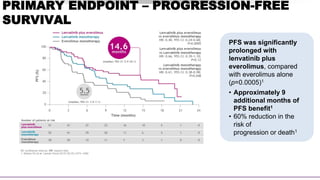
PRIMARY ENDPOINT – PROGRESSION-FREE
SURVIVAL
CI: confidence interval, HR: hazard ratio.
1. Motzer RJ et al. Lancet Oncol 2015;16(15):1473‒1482.
PFS was significantly
prolonged with
lenvatinib plus
everolimus, compared
with everolimus alone
(p=0.0005)1
• Approximately 9
additional months of
PFS benefit1
• 60% reduction in the
risk of
progression or death1
SECONDARY ENDPOINT – ORR
Assessed by Investigator review per RECIST v1.1
CI.
Lenvatinib plus
everolimus
(n=51)
Lenvatinib
monotherapy
(n=52)
Everolimus
monotherapy
(n=50)
OBJECTIVE RESPONSE
Events 22 (43%) 14 (27%) 3 (6%)
95% CI 29–58 16–41 1–17
Best overall response
Complete
response
1 (2%) 0 0
Partial response 21 (41%) 14 (27%) 3 (6%)
Stable disease 21 (41%) 27 (52%) 31 (62%)
Progressive
disease
2 (4%) 3 (6%) 12 (24%)
Not assessed 6 (12%) 8 (15%) 4 (8%)
43% ORR
for lenvatinib plus
everolimus vs 6% with
everolimus alone
(rate ratio [RR] 7·2, 95% CI:
2·3–22·5; p<0·0001)1
Lenvatinib plus everolimus
• Duration of response was
13.0 months1
• Time to response was 1.9
months2
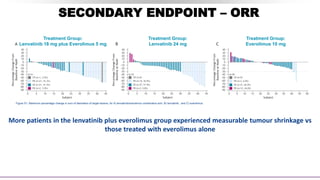
SECONDARY ENDPOINT – ORR
Treatment Group:
Lenvatinib 18 mg plus Everolimus 5 mg
Treatment Group:
Lenvatinib 24 mg
Treatment Group:
Everolimus 10 mg
Figure S1. Maximum percentage change in sum of diameters of target lesions, for A) lenvatinib/everolimus combination arm, B) lenvatinib , and C) everolimus.
More patients in the lenvatinib plus everolimus group experienced measurable tumour shrinkage vs
those treated with everolimus alone
THANK YOU

Panel discussion on a rcc

  • 1.
  • 2.
    CASE DISCUSSION • 64-yr-oldman presents with right flank pain, no hematuria • Past medical history includes: • Mild hypertension (140/85 mmHg, not on medication), hypercholesterolemia, no other cardiac history • 20 pack-yr smoker • Family history: negative for cancer • Physical exam: right flank fullness, otherwise normal • ECOG PS 0 • Labs: hemoglobin: 11.0 g/dL, ANC and platelets normal, creatinine: 1.2 mg/dL, LDH: 287 U/L, calcium normal
  • 4.
    CASE DISCUSSION Role ofPercutaneous Needle Biopsy 1. YES 2. NO
  • 5.
    WHAT IS THENEXT STEP FOR THIS PATIENT ? 1. Radical Nephrectomy 2. Start Systemic therapy
  • 6.
    CASE DISCUSSION • Patientundergoes right radical nephrectomy • Pathology: grade 3 clear- cell RCC; margins negative; T3aN0 • Returns 6 wks after nephrectomy; fully recovered • ECOG PS 0, creatinine 1.5 mg/dL; all other labs normal
  • 7.
    WHAT IS ROLEOF ADJUVANT THERAPY IN THIS PATIENT..?  ADJUVANT THERAPY INDICATED  NO EVIDENCE  EQUIVOCAL
  • 8.
    S-TRAC PHASE IIITRIAL: DFS WITH SUNITINIB VS PLACEBO IN PATIENTS WITH LOCOREGIONAL, HIGH-RISK CCRCC 51.3% 59.5% 5-yr DFS rate: Median DFS, Yrs (95% CI) Sunitinib 6.8 (5.8-NR) Placebo 5.6 (3.8-6.6) Yrs HR: 0.761 (95% CI: 0.594-0.975) 2-sided log-rank P = .030 stratified by UISS high-risk group 3-yr DFS rate: 64.9% 59.3% 1.0 0.8 0.6 0.4 0.2 0 0 1 2 3 4 5 6 7 8 9 Patients at Risk, n Sunitinib Placebo 309 306 225 220 173 181 153 150 144 135 119 102 53 37 10 10 3 2 0 0 Proportion Disease Free
  • 9.
    PUBLISHED TYROSINE KINASEINHIBITOR ADJUVANT TRIALS Trial Therapy N Histology Stage Starting Dose Minimum Dose DFS OS ASSURE[1] Sunitinib Sorafenib Placebo 1943 79% ccRCC > pT1b, G3-4, or N+ 50 or 37.5 mg (Su)/ 400 mg (So) 25 mg (Su)/40 mg (So) No No S-TRAC[2] Sunitinib Placebo 615 ccRCC > pT3b or N+ 50 mg 37.5 mg Yes No PROTECT[3] Pazopanib Placebo 1538 ccRCC or mostly ccRCC pT2 (G3-4), ≥ pT3, or N+ 600 mg 400 mg No No
  • 10.
    ONGOING PHASE IIIADJUVANT TRIALS: IMMUNOTHERAPY VS PLACEBO Parameter IMmotion010[1] (NCT03024996) PROSPER[2] (NCT03055013) KEYNOTE-564[3] (NCT03142334) CheckMate 914[4] (NCT03138512) Drug Atezolizumab Nivolumab Pembrolizumab Nivolumab + ipilimumab Histology Clear-cell ± sarcomatoid histology RCC of any histology Clear-cell ± sarcomatoid features Clear-cell ± sarcomatoid features Dose duration 1 yr 2 doses prior to surgery and adjuvant nivolumab for 9 mos 1 yr 6 mos Risk classification T2 grade 4, T3a grade 3/4, T3b/c any grade, T4 any grade, or TxN+ any grade Clinical stage ≥ T2 or any N+ pT2, grade 4; pT3/4, any grade; N+ M0; M1 NED pT2aN0, grade 3-4; pT2b-T4; N+ Primary endpoint DFS RFS at 5 yrs DFS DFS BICR Yes Yes Yes Yes Status Active, recruiting Active, recruiting Active, recruiting Active, recruiting 1.
  • 11.
    CASE DISCUSSION  CTscans first reveal small, indeterminate lung nodules approximately 18 mos after surgery
  • 12.
    CASE DISCUSSION  Patientundergoes a lung biopsy, further progression of lung lesions and development of mediastinal lymph node involvement  Pathology consistent with clear-cell RCC  ECOG PS 0  Lab results are all within normal limits  The patient has mild HTN controlled with amlodipine  Favorable risk per IMDC criteria
  • 13.
    Do you dorisk stratification of your patients in clinical practice..?  If Yes, which one do you prefer ‒ IMDC ‒ MSKCC
  • 14.
    WHAT ARE THEPROGNOSTIC INDICATORS IN mRCC DO YOU CONSIDER WHILE CHOOSING THE TREATMENT OPTIONS ?
  • 15.
    COMPARISON OF MSKCCAND IMDC PROGNOSTIC MODELS FOR RCC
  • 16.
    IMDC (Heng) Criteriafor Metastatic RCC International Kidney Cancer Coalition. Heng. JCO. 2009;27:5794.
  • 17.
    IMDC (HENG) CRITERIAFOR METASTATIC RCC
  • 18.
    IS THERE ANYROLE OF ACTIVE SURVEILLANCE..?  YES  NO  MAY BE  NOT SURE
  • 19.
    Park J CancerRes Clin Oncol (2014) 140:1421–1428
  • 20.
    During AS, thebest overall responses were stable disease for 48 patients (83 %) and progressive disease (PD) for 10 patients (17 %), and 47 patients With a median follow-up of 31.4 months, the median TTP was 12.4 months (95 % confidence interval 8.4–16.5) and median overall survival was not reached Karnofsky performance status <100 %, liver metastasis, and a time from diagnosis to AS of less than 1 year were found to be predictive factors for a shorter TTP
  • 21.
    Prospective Phase IIStudy: Active Surveillance in Metastatic RCC
  • 22.
    CASE DISCUSSION  Lungnodules become more prominent over time, and the patient is asking about the need to start therapy 3 yrs after nephrectomy
  • 23.
  • 24.
    CASE DISCUSSION CHOICE OFSYSTEMIC THERAPY  TKI  IO  IO+TKI
  • 25.
    HOW TO CHOOSEAMONG EXPANDING SYSTEMIC OPTIONS IN mRCC
  • 26.
  • 29.
    CheckMate 214: OSand Response by IMDC Risk Category Tannir. ASCO GU 2020. Abstr 609. Slide credit: clinicaloptions.com OS in Intermediate-Risk and Poor-Risk Patients OS in Favorable-Risk Patients Nivolumab + ipilimumab (n = 425) Sunitinib (n = 422) Outcome in Favorable-Risk Patients Nivolumab + Ipilimumab (n = 125) Sunitinib (n = 124) HR (95% CI) P Value ORR, % (95% CI) 29 54 -- < .0001 Median PFS, mos (95% CI) 17.8 (10.3-20.7) 27.7 (23.2-34.5) 1.62 (1.14-2.32) < .01 100 80 60 40 20 0 OS (%) 0 3 6 9 12151821242730333639424548515457 60% 47% 39% 74% 60% 52% HR: 0.66 (95% CI: 0.55-0.80; P < .0001) Mos 70% 100 80 60 40 20 0 OS (%) 0 3 6 9 12151821242730333639424548515457 Mos 88% 80% 93% 85% 73% Nivolumab + ipilimumab (n = 125) Sunitinib (n = 124) HR: 1.19 (95% CI: 0.77-1.85; P = .44)
  • 30.
    KEYNOTE-426: OS, PFS,and ORR in IMDC Favorable-Risk Group OS HR: 1.06 (95% CI: 0.60-1.86) PFS HR: 0.76 (95% CI: 0.57-1.09) Mos Patients at Risk, n P + A S Plimack. ASCO 2020. Abstr 5001. ORR (%) ORR 69.6% vs 50.4% Pembro + Axi Sunitinib 11% CR 6% CR CR PR 100 90 80 70 60 50 40 30 20 10 0 OS (%) 100 90 80 70 60 50 40 30 20 10 0 85% 88% Events, n Median 26 NR 24 NR 42 0 6 12 18 24 30 36 138 131 134 129 131 123 126 118 110 108 63 60 12 9 0 0 *Nominal P value. Mos PFS (%) 100 90 80 70 60 50 30 20 10 0 45% 42 0 6 12 18 24 30 36 138 131 111 99 88 66 67 46 41 26 13 8 0 0 0 0 Events, n 77 75 Median, Mos (95% CI) 20.8 (15.4-28.8) 18.0 (12.5-20.8) 40 35%
  • 32.
    First-Line Treatment Considerationsfor RCC: Summary  Multiple good systemic therapy options for metastatic RCC, with no obvious clear choice in some cases  Good-risk patients, and those with “favorable intermediate” risk, can have survival of many yrs—with and without therapy  Consider debulking nephrectomy and/or active surveillance in selected patients Patients with: • IMDC intermediate/poor-risk disease • No significant autoimmune disease • VEGF contraindications • A need to avoid chronic VEGF AEs Consider Nivo + Ipi Patients with • IMDC favorable- or intermediate-risk disease • Intermediate- or poor- risk disease who need rapid response • A need to avoid irAEs associated with dual IO therapy Consider Pembro + Axitinib
  • 33.
  • 34.
  • 35.
  • 36.
    CASE DISCUSSION  STARTEDON PALLIATIVE RT  10/30GY
  • 37.
    CASE DISCUSSION CHOICE OFSYSTEMIC THERAPY  TKI  IO  IO+TKI  mTOR  TKI+mTOR  Anti VEGF monolonal antibodies
  • 38.
    Referenced with permissionfrom the NCCN Clinical Practice Guidelines in Oncology (NCCN Guidelines®) for Kidney Cancer V2.2020. © National Comprehensive Cancer Network, Inc 2020. All rights reserved. Accessed June 10, 2020. To view the most recent and complete version of the guideline, go online to NCCN.org. dHudes. NEJM 2007;356:2271-2281.
  • 39.
    Pivotal Randomized Trialsin Clear-Cell RCC Post TKI Therapy Parameter RECORD-1[1,2] AXIS[3,4] METEOR[5,6] CheckMate 025[7] LEN EVE[8] Everolimus vs Placebo Axitinib vs Sorafenib Cabozantinib vs Everolimus Nivolumab vs Everolimus Lenvatinib + Everolimus vs Everolimus Patients, n 410 723 658 821 153 MSKCC risk, %  Good 29 28 46 36 23  Intermediate 56 37 42 49 36  Poor 15 33 13 15 40 Prior TKI Anti-VEGF Sunitinib Anti-VEGF Anti-VEGF Anti-VEGF Line of therapy 2nd or beyond 2nd 2nd or beyond 2nd or 3rd 2nd ORR, % 2 vs 0 19 vs 9 21 vs 5 25 vs 5 43 vs 3 Median OS, mos 14.8 vs 14.0 20.1 vs 19.2 21.4 vs 17.1 25.0 vs 19.6 25.5 vs 15.4 Slide credit: clinicaloptions.com 1. Motzer. Lancet. 2008;372:449. 2. Motzer. Cancer 2010;116:4256. 3. Rini. Lancet. 2011;378:1931. 4. Motzer. Lancet Oncol. 2013;14:552. 5. Choueiri. NEJM. 2015;373:1814. 6. Motzer. Br J Cancer. 2018;118:1176. 7. Motzer. NEJM. 2015;373:1803. 8. Motzer. Lancet. 2015;16:1473. Phase III Phase II
  • 40.
  • 41.
    HOW DO YOUCHOOSE THE TREATMENT IN mRCC AFTER PROGRESSION?
  • 42.
    SEQUENCING OF AGENTS5 YEARS BACK… mTOR inhibitor VEGF TKI mTORi TKI TKI Sunitinib Pazopanib Axitinib Sorafenib Everolimus mTORi TKI TKI SIMPLER TIMES
  • 43.
    SEQUENCING OF AGENTSIN 2020 VEGF + mTORi VEGF TKI CPI + Bev CPI + CPI CPI CPI + TKI
  • 44.
    CURRENTLY AVAILABLE AGENTSFOR SUBSEQUENT LINE OF TREATMENT IN MRCC
  • 45.
    Considerations for Next-LineTreatment Selection  If disease control > 1 yr on first-line single-agent VEGF inhibitor, continue VEGF inhibition with sequential single agents: such as Cabozantinib or Axitinib  If brief response to single-agent VEGF inhibition, consider a VEGF IO combination: Axitinib + Pembrolizumab (based on Lenvatinib + Pembro data)  If no response to first-line VEGF inhibition, drop VEGF and switch to immunotherapy: Ipilimumab + Nivolumab or Nivolumab  If no response to combination VEGF + IO switch to second line VEGF such as Cabozantinib or Axitinib or Lenvatinib + Everolimus ‒ Phase III data support sequential VEGF therapy ‒ Limited data to support sequential IO therapy
  • 46.
    WHEN WOULD YOUPREFER THE LENVATINIB + EVEROLIMUS COMBINATION IN THE MANAGEMENT OF mRCC?
  • 47.
    STUDY 205: ARANDOMISED, PHASE 2, OPEN-LABEL, MULTICENTRE TRIAL aRCC: advanced renal cell carcinoma, Ca: calcium, ECOG: Eastern Cooperative Oncology Group, Hb: haemoglobin, IRR: independent radiological review, mmHg: millimeter of mercury, mRCC: metastatic renal cell carcinoma, ORR: objective response rate, OS: overall survival, PFS: progression-free survival, RCC: renal cell carcinoma, RECIST: Response Evaluation Criteria in Solid Tumours, VEGF: vascular endothelial growth factor. 1. Motzer RJ et al. Lancet Oncol 2015;16(15):1473‒1482. Key Eligibility Criteria: • Histologically verified clear-cell RCC • Radiographic evidence of progressive aRCC or mRCC within 9 months of stopping previous treatment • 1 previous disease progression with VEGF treatment • ECOG PS 0 or 1 • Measurable disease per RECIST v1.1 • ≤ 150/90 mmHg blood pressure • Adequate renal, bone marrow, blood coagulation, liver and cardiac function Stratification Factors: • Hb (Men: ≤130 g/L and >130 g/L, Women: ≤115 g/L and >115 g/L) • Corrected serum Ca (≥2.5 mmol/L and <2.5 mmol/L) End Points: • Primary: PFS • Key secondary: ORR, OS and safety 18 mg lenvatinib plus 5 mg everolimus Once per day 10 mg everolimus monotherapy Once per day R (1:1:1) 24 mg lenvatinib monotherapy Once per day n = 51 n = 50 n = 52
  • 48.
    PRIMARY ENDPOINT –PROGRESSION-FREE SURVIVAL CI: confidence interval, HR: hazard ratio. 1. Motzer RJ et al. Lancet Oncol 2015;16(15):1473‒1482. PFS was significantly prolonged with lenvatinib plus everolimus, compared with everolimus alone (p=0.0005)1 • Approximately 9 additional months of PFS benefit1 • 60% reduction in the risk of progression or death1
  • 49.
    SECONDARY ENDPOINT –ORR Assessed by Investigator review per RECIST v1.1 CI. Lenvatinib plus everolimus (n=51) Lenvatinib monotherapy (n=52) Everolimus monotherapy (n=50) OBJECTIVE RESPONSE Events 22 (43%) 14 (27%) 3 (6%) 95% CI 29–58 16–41 1–17 Best overall response Complete response 1 (2%) 0 0 Partial response 21 (41%) 14 (27%) 3 (6%) Stable disease 21 (41%) 27 (52%) 31 (62%) Progressive disease 2 (4%) 3 (6%) 12 (24%) Not assessed 6 (12%) 8 (15%) 4 (8%) 43% ORR for lenvatinib plus everolimus vs 6% with everolimus alone (rate ratio [RR] 7·2, 95% CI: 2·3–22·5; p<0·0001)1 Lenvatinib plus everolimus • Duration of response was 13.0 months1 • Time to response was 1.9 months2
  • 50.
    SECONDARY ENDPOINT –ORR Treatment Group: Lenvatinib 18 mg plus Everolimus 5 mg Treatment Group: Lenvatinib 24 mg Treatment Group: Everolimus 10 mg Figure S1. Maximum percentage change in sum of diameters of target lesions, for A) lenvatinib/everolimus combination arm, B) lenvatinib , and C) everolimus. More patients in the lenvatinib plus everolimus group experienced measurable tumour shrinkage vs those treated with everolimus alone
  • 51.

Editor's Notes

  • #7 ECOG PS, Eastern Cooperative Oncology Group performance status.
  • #9 NR, not reported; UISS, University of California Los Angeles Integrated Staging System.
  • #10 ccRCC, clear cell renal cell carcinoma; DFS, disease-free survival; OS, overall survival; SO, sorafenib; Su, sunitinib.  
  • #11 ccRCC, clear cell renal cell carcinoma; DFS, disease-free survival; OS, overall survival; SO, sorafenib; Su, sunitinib.
  • #13 ECOG PS, Eastern Cooperative Oncology Group performance status; IMDC, International Metastatic RCC Database Consortium
  • #17 IMDC, International Metastatic Renal Cell Carcinoma Database; LLN, lower limit of normal; RCC, renal cell carcinoma; ULN, upper limit of normal.
  • #30 IMDC, International Metastatic Renal Cell Carcinoma Database Consortium.
  • #31 A, axitinib; Axi, axitinib; IMDC, International Metastatic RCC Database Consortium; NR, not reached; P, pembrolizumab; Pembro, pembrolizumab; S, sunitinib.
  • #33 AE, adverse event; IMDC, International Metastatic Renal Cell Carcinoma Database; IO, immuno-oncology; Ipi, ipilimumab; Nivo, nivolumab; Pembro, pembrolizumab; RCC, renal cell carcinoma.
  • #40 MSKCC, Memorial Sloan Kettering Cancer Center; RCC, renal cell carcinoma.
  • #46 IO, immuno-oncology.