AN N U A L G L O B AL E V E N T TO R AI S E AWAR E N E S S O F V I R AL
H E PAT I T I S
WORLDHEPATITIS DAY
28TH JULY 2019
“ IN V E S T IN E L IM IN AT IN G
H E PAT IT IS ”
M E E Q AT G E N E R A L H O S P ITA L .
M A D IN A H
OBJECTIVES OF WORLDHEPATITS DAY
1. To involve as many people as possible to focus together on this
issue.
2. Raising awareness about various types of Hepatitis and their
mode of transmission.
3. Educate people about prevention, diagnosis, and control of
Hepatitis.
4. Spread awareness about Hepatitis A and B vaccines & treatment
options available.
5. Increase number of skilled medical professionals in order to
enhance quality care.
“WHO” FACT SHEET FACT SHEET
• Viral hepatitis B and C are major health challenges, affecting
325 million people globally. They are root causes of liver
cancer, leading to 1.34 million deaths every year.
• It is the second major killer infectious disease after
tuberculosis, and 9 times more people are infected with
hepatitis than HIV.
• Hepatitis is preventable, treatable, and in the case of hepatitis
C, curable. However, over 80% of people living with hepatitis
are lacking prevention, testing and treatment services.
WHAT IS HEPATITIS?
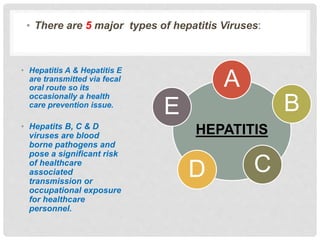
• Hepatitis A & Hepatitis E
are transmitted via fecal
oral route so its
occasionally a health
care prevention issue.
• Hepatits B, C & D
viruses are blood
borne pathogens and
pose a significant risk
of healthcare
associated
transmission or
occupational exposure
for healthcare
personnel.
HEPATITIS
A
B
CD
E
• There are 5 major types of hepatitis Viruses:
INFECTION CONTROLCHALLENGES
Healthcare facilities are at risk of transmission of hepatitis
because of :
Breaches in infection control measures
Exposures to asymptomatic carriers
Contaminated needles and equipments
Unsafe injection practices.
Understanding the epidemiology, and pathogenesis of viral
hepatitis can help in development of prevention strategies to
protect patients, health care providers and visitors.
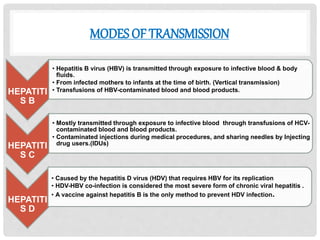
MODES OF TRANSMISSION
HEPATITI
S B
• Hepatitis B virus (HBV) is transmitted through exposure to infective blood & body
fluids.
• From infected mothers to infants at the time of birth. (Vertical transmission)
• Transfusions of HBV-contaminated blood and blood products.
HEPATITI
S C
• Mostly transmitted through exposure to infective blood through transfusions of HCV-
contaminated blood and blood products.
• Contaminated injections during medical procedures, and sharing needles by Injecting
drug users.(IDUs)
HEPATITI
S D
• Caused by the hepatitis D virus (HDV) that requires HBV for its replication
• HDV-HBV co-infection is considered the most severe form of chronic viral hepatitis .
• A vaccine against hepatitis B is the only method to prevent HDV infection.
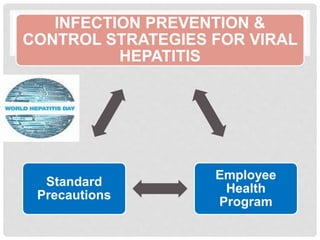
INFECTION PREVENTION &
CONTROL STRATEGIES FOR VIRAL
HEPATITIS
Employee
Health
Program
Standard
Precautions
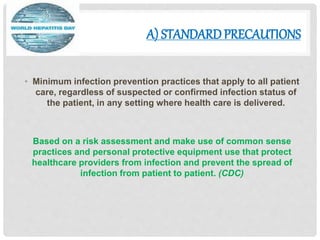
A) STANDARDPRECAUTIONS
• Minimum infection prevention practices that apply to all patient
care, regardless of suspected or confirmed infection status of
the patient, in any setting where health care is delivered.
Based on a risk assessment and make use of common sense
practices and personal protective equipment use that protect
healthcare providers from infection and prevent the spread of
infection from patient to patient. (CDC)
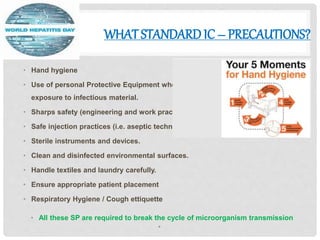
WHAT STANDARDIC – PRECAUTIONS?
• Hand hygiene
• Use of personal Protective Equipment whenever there is possible risk of
exposure to infectious material.
• Sharps safety (engineering and work practice controls).
• Safe injection practices (i.e. aseptic technique for parenteral medications).
• Sterile instruments and devices.
• Clean and disinfected environmental surfaces.
• Handle textiles and laundry carefully.
• Ensure appropriate patient placement
• Respiratory Hygiene / Cough ettiquette
• All these SP are required to break the cycle of microorganism transmission
•
B) EMPLOYEE HEALTHPROGRAM
• EHC provides pre‐employment counseling and screening,
immunization, post exposure management and work restriction.
• All employees have a baseline screening for hepatitis B, hepatitis C,
HIV and tuberculosis (TB).
• There is an implemented system for reporting, follow up, and
management of sharp or needle stick injuries and blood or body
fluid exposures.
• The Employee health clinic team regularly monitors different types
of staff exposure and recommend corrective actions to prevent
recurrence.
• There are regular training activities for employee health program.
TAKE HOME Message
 Educate and raise awareness among people about the causes and
consequences of Hepatitis on World Hepatitis Day.
 infection control precautions within health care facilities and
community settings can prevent transmission of viral hepatitis.
 Safe injection practices can protect against HBV and HCV
transmission.
 Occupational safety measures prevent transmission of viral
hepatitis to health care workers.
THANK YOU

Hepatitis a virus

  • 1.
    AN N UA L G L O B AL E V E N T TO R AI S E AWAR E N E S S O F V I R AL H E PAT I T I S WORLDHEPATITIS DAY 28TH JULY 2019 “ IN V E S T IN E L IM IN AT IN G H E PAT IT IS ” M E E Q AT G E N E R A L H O S P ITA L . M A D IN A H
  • 2.
    OBJECTIVES OF WORLDHEPATITSDAY 1. To involve as many people as possible to focus together on this issue. 2. Raising awareness about various types of Hepatitis and their mode of transmission. 3. Educate people about prevention, diagnosis, and control of Hepatitis. 4. Spread awareness about Hepatitis A and B vaccines & treatment options available. 5. Increase number of skilled medical professionals in order to enhance quality care.
  • 3.
    “WHO” FACT SHEETFACT SHEET • Viral hepatitis B and C are major health challenges, affecting 325 million people globally. They are root causes of liver cancer, leading to 1.34 million deaths every year. • It is the second major killer infectious disease after tuberculosis, and 9 times more people are infected with hepatitis than HIV. • Hepatitis is preventable, treatable, and in the case of hepatitis C, curable. However, over 80% of people living with hepatitis are lacking prevention, testing and treatment services.
  • 4.
    WHAT IS HEPATITIS? •Hepatitis A & Hepatitis E are transmitted via fecal oral route so its occasionally a health care prevention issue. • Hepatits B, C & D viruses are blood borne pathogens and pose a significant risk of healthcare associated transmission or occupational exposure for healthcare personnel. HEPATITIS A B CD E • There are 5 major types of hepatitis Viruses:
  • 5.
    INFECTION CONTROLCHALLENGES Healthcare facilitiesare at risk of transmission of hepatitis because of : Breaches in infection control measures Exposures to asymptomatic carriers Contaminated needles and equipments Unsafe injection practices. Understanding the epidemiology, and pathogenesis of viral hepatitis can help in development of prevention strategies to protect patients, health care providers and visitors.
  • 6.
    MODES OF TRANSMISSION HEPATITI SB • Hepatitis B virus (HBV) is transmitted through exposure to infective blood & body fluids. • From infected mothers to infants at the time of birth. (Vertical transmission) • Transfusions of HBV-contaminated blood and blood products. HEPATITI S C • Mostly transmitted through exposure to infective blood through transfusions of HCV- contaminated blood and blood products. • Contaminated injections during medical procedures, and sharing needles by Injecting drug users.(IDUs) HEPATITI S D • Caused by the hepatitis D virus (HDV) that requires HBV for its replication • HDV-HBV co-infection is considered the most severe form of chronic viral hepatitis . • A vaccine against hepatitis B is the only method to prevent HDV infection.
  • 7.
    INFECTION PREVENTION & CONTROLSTRATEGIES FOR VIRAL HEPATITIS Employee Health Program Standard Precautions
  • 8.
    A) STANDARDPRECAUTIONS • Minimuminfection prevention practices that apply to all patient care, regardless of suspected or confirmed infection status of the patient, in any setting where health care is delivered. Based on a risk assessment and make use of common sense practices and personal protective equipment use that protect healthcare providers from infection and prevent the spread of infection from patient to patient. (CDC)
  • 9.
    WHAT STANDARDIC –PRECAUTIONS? • Hand hygiene • Use of personal Protective Equipment whenever there is possible risk of exposure to infectious material. • Sharps safety (engineering and work practice controls). • Safe injection practices (i.e. aseptic technique for parenteral medications). • Sterile instruments and devices. • Clean and disinfected environmental surfaces. • Handle textiles and laundry carefully. • Ensure appropriate patient placement • Respiratory Hygiene / Cough ettiquette • All these SP are required to break the cycle of microorganism transmission •
  • 10.
    B) EMPLOYEE HEALTHPROGRAM •EHC provides pre‐employment counseling and screening, immunization, post exposure management and work restriction. • All employees have a baseline screening for hepatitis B, hepatitis C, HIV and tuberculosis (TB). • There is an implemented system for reporting, follow up, and management of sharp or needle stick injuries and blood or body fluid exposures. • The Employee health clinic team regularly monitors different types of staff exposure and recommend corrective actions to prevent recurrence. • There are regular training activities for employee health program.
  • 11.
    TAKE HOME Message Educate and raise awareness among people about the causes and consequences of Hepatitis on World Hepatitis Day.  infection control precautions within health care facilities and community settings can prevent transmission of viral hepatitis.  Safe injection practices can protect against HBV and HCV transmission.  Occupational safety measures prevent transmission of viral hepatitis to health care workers.
  • 12.