BY- Dr. ANMOL RAHEJA
 Hepatic encephalopathy is a
neuropsychiatric syndrome,
 secondary to acute or chronic hepatic
failure or due to portal-systemic shunt.
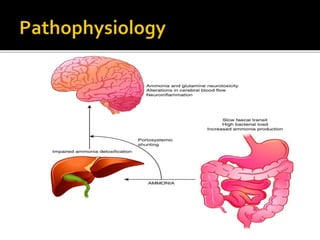
 The toxic substances absorbed from the
intestine are either not metabolized by the
failing liver or bypass the liver through portal-
systemic shunts.
 Thus, these harmful substances (mainly
ammonia, mercaptans, short chain fatty acids
and false neurotransmitters) reach the
central nervous system and result in
alteration in consciousness and other
manifestations.
1. The alteration in sensorium may range from mild
confusion and disordered sleep patterns to deep
coma (hepatic coma).
2. Flapping tremor (asterixis)
3. fetor hepaticus are usually present.
 • Gastrointestinal bleeding
 • Increased protein in the diet
 • Constipation
 • Uremia
 • Hypokalemia and alkalosis
 •Vigorous paracentesis
 • Infections
 • Drugs (diuretics, sedatives, hypnotics)
 • Portal-systemic shunt (TIPSS or surgery)
 General :-
 :1.The precipitating factors should be identified
and removed.
 2. Protein should be withheld from the diet in
severe cases or restricted to less than 20g/day.
However, the amount of protein in the diet is
increased gradually once the patient improves.
 Vegetable proteins are preferred over animal
proteins.
 Constipation should be avoided.
 SPECIFIC:-
 Lactulose
 Abx-ORAL NEOMYCIN,
METRONIDAZOLE,
RIFAXIMIN .
 Sedatives and hypnotics should be avoided.
 Zinc
 Liver transplantation may be considered in
nonresponding patients.

HEPATIC ENCEPHALOPATHY

  • 1.
  • 2.
     Hepatic encephalopathyis a neuropsychiatric syndrome,  secondary to acute or chronic hepatic failure or due to portal-systemic shunt.
  • 3.
     The toxicsubstances absorbed from the intestine are either not metabolized by the failing liver or bypass the liver through portal- systemic shunts.  Thus, these harmful substances (mainly ammonia, mercaptans, short chain fatty acids and false neurotransmitters) reach the central nervous system and result in alteration in consciousness and other manifestations.
  • 5.
    1. The alterationin sensorium may range from mild confusion and disordered sleep patterns to deep coma (hepatic coma). 2. Flapping tremor (asterixis) 3. fetor hepaticus are usually present.
  • 6.
     • Gastrointestinalbleeding  • Increased protein in the diet  • Constipation  • Uremia  • Hypokalemia and alkalosis  •Vigorous paracentesis  • Infections  • Drugs (diuretics, sedatives, hypnotics)  • Portal-systemic shunt (TIPSS or surgery)
  • 7.
     General :- :1.The precipitating factors should be identified and removed.  2. Protein should be withheld from the diet in severe cases or restricted to less than 20g/day. However, the amount of protein in the diet is increased gradually once the patient improves.  Vegetable proteins are preferred over animal proteins.  Constipation should be avoided.
  • 8.
     SPECIFIC:-  Lactulose Abx-ORAL NEOMYCIN, METRONIDAZOLE, RIFAXIMIN .  Sedatives and hypnotics should be avoided.  Zinc  Liver transplantation may be considered in nonresponding patients.