Cirrhosis 
Harindu Udapitiya, 
Temporary Lecturer, 
Division of Pharmacology.
Overveiw 
1. What is cirrhosis 
2. Types 
3. Etiology 
4. Clinical presentation 
5. Investigations 
6. Complications 
7. Management
1.What is Cirrhosis 
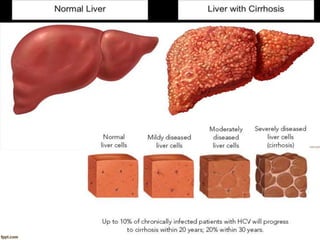
• Cirrhosis is a consequence of chronic 
liver disease, characterized by 
replacement of liver tissue by 
fibrosis, scar tissue and regenerative 
nodules leading to loss of liver 
function and disruption of the liver 
architecture.
2.Types of cirrhosis 
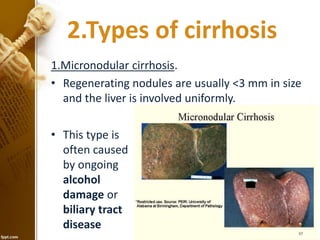
1.Micronodular cirrhosis. 
• Regenerating nodules are usually <3 mm in size 
and the liver is involved uniformly. 
• This type is 
often caused 
by ongoing 
alcohol 
damage or 
biliary tract 
disease
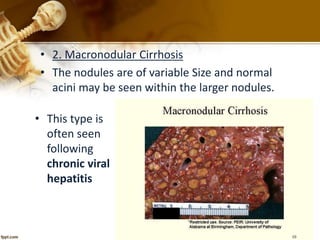
• 2. Macronodular Cirrhosis 
• The nodules are of variable Size and normal 
acini may be seen within the larger nodules. 
• This type is 
often seen 
following 
chronic viral 
hepatitis
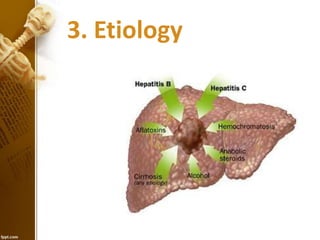
3. Etiology
1. Drugs and toxins 
Alcohol, methotrexate, isoniazid, 
methyldopa 
2. infections 
Hepatitis B and C , Schistosoma japonicum 
3. autoimmune 
PBC, autoimmune hepatitis, PSC 
4. metabolic 
Wilson’s disease, haemochromatosis, alpha 
1 antitrypsin, porphyria
5. Biliary obstruction 
Cystic fibrosis, atresia, strictures, gall stones 
6. vascular 
Chronic right heart failure, Budd Chiari 
syndrome 
7. miscellaneous 
Sarcoidosis, intestinal by- pass surgery for 
obesity 
8. unknown 
cryptogenic
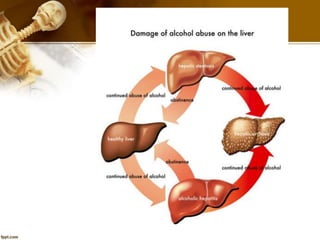
• Alcoholic liver disease 60-70% 
• Viral hepatitis 10% 
• Biliary disease 5-10% 
• Primary hemochromatosis 5% 
• Cryptogenic cirrhosis 10-15% 
• Wilson’s, alpha 1AT def rare
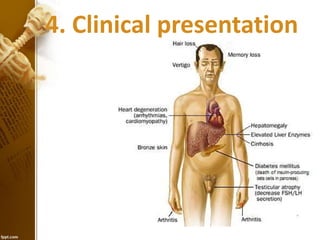
4. Clinical presentation
Symptoms 
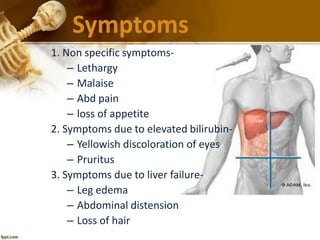
1. Non specific symptoms- 
– Lethargy 
– Malaise 
– Abd pain 
– loss of appetite 
2. Symptoms due to elevated bilirubin- 
– Yellowish discoloration of eyes 
– Pruritus 
3. Symptoms due to liver failure- 
– Leg edema 
– Abdominal distension 
– Loss of hair
4. Symptoms due to complications 
– Haemoptysis-UGI bleeding 
– Altered behavior-HE 
– Worsening abd pain-SBP
Signs 
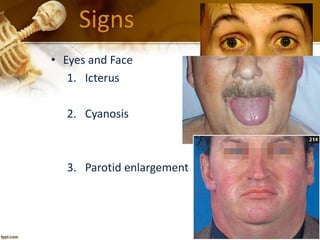
• Eyes and Face 
1. Icterus 
2. Cyanosis 
3. Parotid enlargement
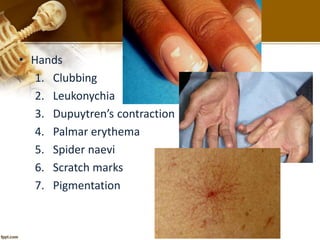
• Hands 
1. Clubbing 
2. Leukonychia 
3. Dupuytren’s contraction 
4. Palmar erythema 
5. Spider naevi 
6. Scratch marks 
7. Pigmentation
• Chest 
1. Los of axillary hair 
2. Spider naevi 
3. Gynaecomastia
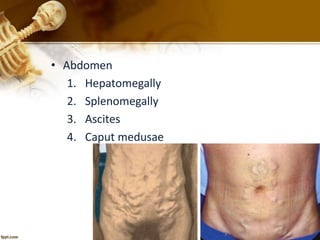
• Abdomen 
1. Hepatomegally 
2. Splenomegally 
3. Ascites 
4. Caput medusae
• Legs 
1. Oedema 
2. Loss of hair on the shins 
• Genitalia 
1. Testiculat atrophy
4. Investigations 
• 1. Investigations for diagnosis 
• 2. Investigations for etiology 
• 3. Investigations for 
severity/complication
1. Investigations for diagnosis 
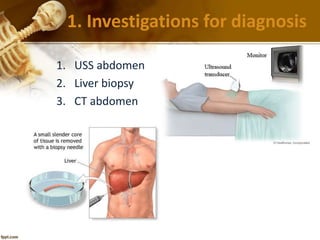
1. USS abdomen 
2. Liver biopsy 
3. CT abdomen
2. Investigations for etiology 
1.Viral hepatitis 
– Hepatitis B and C serology 
2.Autoimmune hepatitis 
– Anti LKM antibody, anti smooth muscle antibody, IgG 
3.Alpha 1 antitrypsin deficiency 
– Alpha 1 antitrypsin level, phenotype testing 
4.Wilson’s disease 
– Reduced serum Cu and Caeruloplasmin; increased 24 hr 
Cu excretion 
5.haemochromatosis 
– s. ferritin 
6.Hepatocellular carcinoma 
– Alpha feto protein level 
– USS 
7.Primary billiary cirrhosis 
-serum IgM level
3. Investigations for 
severity/complication 
1.liver function tests 
Serum Albumin 
Coagulatory profile/PT 
Serum billirubin 
2.Liver biochemistry 
AST(SGOT) 
ALT(SGPT) 
ALP-biliary canaliculi damage 
Gamma GT-hepatobilliary damage 
Hepatocellular damage 
3.Plt count-alcoholic thrombocytopaenia 
4.UGI endoscopy-variceal bleeding
5.Peritoneal fluid analysis-SBP 
6.USS-ascites, portal hypertension 
7.Renal function tests(SE,S.cre)-hepatorenal 
syndrome
5. Management 
1.Supportive Management 
2.Treatment for specific etiology 
3.Treatment for complications
1.Supportive Management 
1.Proper Nutrition 
2.Manage bleeding-transfusion, fluid 
3.Abdominal paracentesis 
4.Tx for itching 
5.Regular excersise
2.Treatment for specific etiology 
1.Viral-antivirals 
2.Alcohol-stop alcohol 
3. Wilson's disease-chelation therapy 
4.Billiary obstruction-relieve obstruction 
5.Vascular-manage HF
3.Treatment for complications 
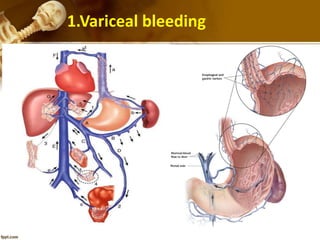
1.Variceal bleeding 
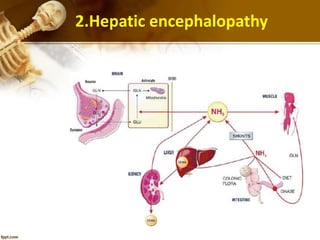
2.Hepatic encephalopathy 
3.Hepatorenal syndrome 
4.Ascites 
5.Spontaneous bacterial peritonitis
1.Variceal bleeding
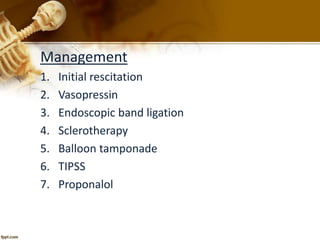
Management 
1. Initial rescitation 
2. Vasopressin 
3. Endoscopic band ligation 
4. Sclerotherapy 
5. Balloon tamponade 
6. TIPSS 
7. Proponalol
2.Hepatic encephalopathy
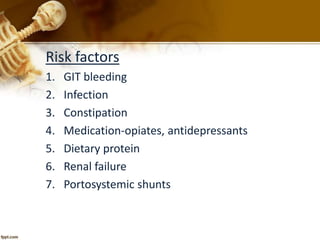
Risk factors 
1. GIT bleeding 
2. Infection 
3. Constipation 
4. Medication-opiates, antidepressants 
5. Dietary protein 
6. Renal failure 
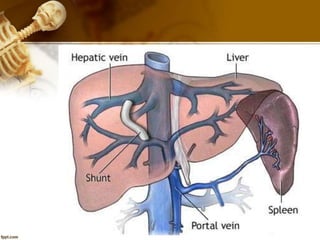
7. Portosystemic shunts
Management 
1. Low protein diet 
2. Lactulose 
3. Antibiotis-neomycin, metranidazole 
4. LOLA, Zinc 
5. Sodium Benzoate 
6. General measures
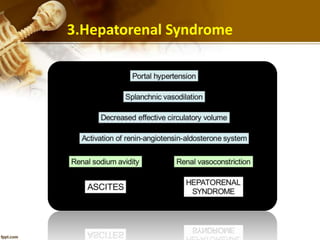
3.Hepatorenal Syndrome
Management 
1. Liver transplantation 
2. Agonists of vasopressin-ornipressin and terlipressin 
3. Dopamine 
4. Renal vasoconstrictor antagonists-Saralasin 
5. Surgical shunts
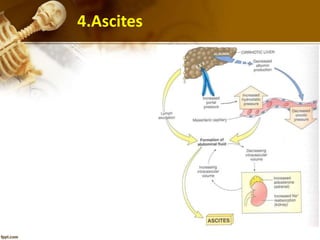
4.Ascites
Management 
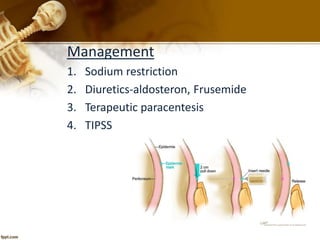
1. Sodium restriction 
2. Diuretics-aldosteron, Frusemide 
3. Terapeutic paracentesis 
4. TIPSS
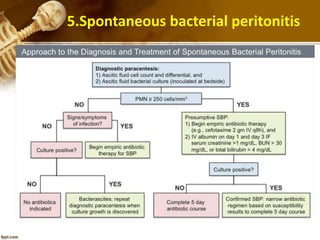
5.Spontaneous bacterial peritonitis
Management 
• Start Tx with cefotaxime 2g 8 hrly 
• Change antibiotic according to culture report
6. Prognosis 
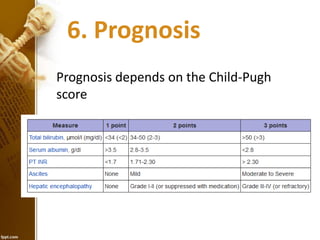
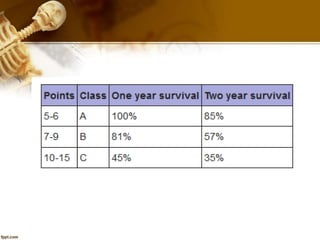
Prognosis depends on the Child-Pugh 
score
Summery 
1. Pathology 
2. Etiology 
3. Clinical presentation 
4. Investigations 
5. Complications 
6. Management 
7. Prognosis
Cirrhosis
Cirrhosis

Cirrhosis

  • 1.
    Cirrhosis Harindu Udapitiya, Temporary Lecturer, Division of Pharmacology.
  • 2.
    Overveiw 1. Whatis cirrhosis 2. Types 3. Etiology 4. Clinical presentation 5. Investigations 6. Complications 7. Management
  • 3.
    1.What is Cirrhosis • Cirrhosis is a consequence of chronic liver disease, characterized by replacement of liver tissue by fibrosis, scar tissue and regenerative nodules leading to loss of liver function and disruption of the liver architecture.
  • 5.
    2.Types of cirrhosis 1.Micronodular cirrhosis. • Regenerating nodules are usually <3 mm in size and the liver is involved uniformly. • This type is often caused by ongoing alcohol damage or biliary tract disease
  • 6.
    • 2. MacronodularCirrhosis • The nodules are of variable Size and normal acini may be seen within the larger nodules. • This type is often seen following chronic viral hepatitis
  • 7.
  • 8.
    1. Drugs andtoxins Alcohol, methotrexate, isoniazid, methyldopa 2. infections Hepatitis B and C , Schistosoma japonicum 3. autoimmune PBC, autoimmune hepatitis, PSC 4. metabolic Wilson’s disease, haemochromatosis, alpha 1 antitrypsin, porphyria
  • 9.
    5. Biliary obstruction Cystic fibrosis, atresia, strictures, gall stones 6. vascular Chronic right heart failure, Budd Chiari syndrome 7. miscellaneous Sarcoidosis, intestinal by- pass surgery for obesity 8. unknown cryptogenic
  • 10.
    • Alcoholic liverdisease 60-70% • Viral hepatitis 10% • Biliary disease 5-10% • Primary hemochromatosis 5% • Cryptogenic cirrhosis 10-15% • Wilson’s, alpha 1AT def rare
  • 12.
  • 13.
    Symptoms 1. Nonspecific symptoms- – Lethargy – Malaise – Abd pain – loss of appetite 2. Symptoms due to elevated bilirubin- – Yellowish discoloration of eyes – Pruritus 3. Symptoms due to liver failure- – Leg edema – Abdominal distension – Loss of hair
  • 14.
    4. Symptoms dueto complications – Haemoptysis-UGI bleeding – Altered behavior-HE – Worsening abd pain-SBP
  • 15.
    Signs • Eyesand Face 1. Icterus 2. Cyanosis 3. Parotid enlargement
  • 16.
    • Hands 1.Clubbing 2. Leukonychia 3. Dupuytren’s contraction 4. Palmar erythema 5. Spider naevi 6. Scratch marks 7. Pigmentation
  • 17.
    • Chest 1.Los of axillary hair 2. Spider naevi 3. Gynaecomastia
  • 18.
    • Abdomen 1.Hepatomegally 2. Splenomegally 3. Ascites 4. Caput medusae
  • 19.
    • Legs 1.Oedema 2. Loss of hair on the shins • Genitalia 1. Testiculat atrophy
  • 20.
    4. Investigations •1. Investigations for diagnosis • 2. Investigations for etiology • 3. Investigations for severity/complication
  • 21.
    1. Investigations fordiagnosis 1. USS abdomen 2. Liver biopsy 3. CT abdomen
  • 22.
    2. Investigations foretiology 1.Viral hepatitis – Hepatitis B and C serology 2.Autoimmune hepatitis – Anti LKM antibody, anti smooth muscle antibody, IgG 3.Alpha 1 antitrypsin deficiency – Alpha 1 antitrypsin level, phenotype testing 4.Wilson’s disease – Reduced serum Cu and Caeruloplasmin; increased 24 hr Cu excretion 5.haemochromatosis – s. ferritin 6.Hepatocellular carcinoma – Alpha feto protein level – USS 7.Primary billiary cirrhosis -serum IgM level
  • 23.
    3. Investigations for severity/complication 1.liver function tests Serum Albumin Coagulatory profile/PT Serum billirubin 2.Liver biochemistry AST(SGOT) ALT(SGPT) ALP-biliary canaliculi damage Gamma GT-hepatobilliary damage Hepatocellular damage 3.Plt count-alcoholic thrombocytopaenia 4.UGI endoscopy-variceal bleeding
  • 24.
    5.Peritoneal fluid analysis-SBP 6.USS-ascites, portal hypertension 7.Renal function tests(SE,S.cre)-hepatorenal syndrome
  • 25.
    5. Management 1.SupportiveManagement 2.Treatment for specific etiology 3.Treatment for complications
  • 26.
    1.Supportive Management 1.ProperNutrition 2.Manage bleeding-transfusion, fluid 3.Abdominal paracentesis 4.Tx for itching 5.Regular excersise
  • 27.
    2.Treatment for specificetiology 1.Viral-antivirals 2.Alcohol-stop alcohol 3. Wilson's disease-chelation therapy 4.Billiary obstruction-relieve obstruction 5.Vascular-manage HF
  • 28.
    3.Treatment for complications 1.Variceal bleeding 2.Hepatic encephalopathy 3.Hepatorenal syndrome 4.Ascites 5.Spontaneous bacterial peritonitis
  • 29.
  • 30.
    Management 1. Initialrescitation 2. Vasopressin 3. Endoscopic band ligation 4. Sclerotherapy 5. Balloon tamponade 6. TIPSS 7. Proponalol
  • 31.
  • 32.
    Risk factors 1.GIT bleeding 2. Infection 3. Constipation 4. Medication-opiates, antidepressants 5. Dietary protein 6. Renal failure 7. Portosystemic shunts
  • 33.
    Management 1. Lowprotein diet 2. Lactulose 3. Antibiotis-neomycin, metranidazole 4. LOLA, Zinc 5. Sodium Benzoate 6. General measures
  • 34.
  • 35.
    Management 1. Livertransplantation 2. Agonists of vasopressin-ornipressin and terlipressin 3. Dopamine 4. Renal vasoconstrictor antagonists-Saralasin 5. Surgical shunts
  • 36.
  • 37.
    Management 1. Sodiumrestriction 2. Diuretics-aldosteron, Frusemide 3. Terapeutic paracentesis 4. TIPSS
  • 39.
  • 40.
    Management • StartTx with cefotaxime 2g 8 hrly • Change antibiotic according to culture report
  • 41.
    6. Prognosis Prognosisdepends on the Child-Pugh score
  • 43.
    Summery 1. Pathology 2. Etiology 3. Clinical presentation 4. Investigations 5. Complications 6. Management 7. Prognosis

Editor's Notes

  • #34 L ornitine L aspartate
  • #38 Transjugular intrahepatic portosys shunt