History
•
•
•
•
•

4th Post op day
Nausea +
Vomiting:3episodes
Abdomen distended
Not passed flatus or motion
Post Surgical Gastroparesis
Presenter-Dr.Amit Goswami
Introduction
• Post prandial nausea and vomiting and

gastric atony without mechanical
obstruction

• Pathogenesis not well explained
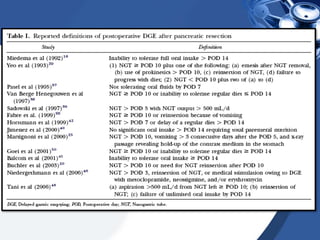
• Definition varies
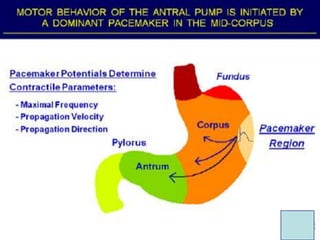
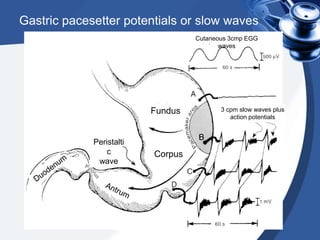
Gastric pacesetter potentials or slow waves
Cutaneous 3cmp EGG
waves

Fundus

Peristalti
c
wave

Corpus

3 cpm slow waves plus
action potentials
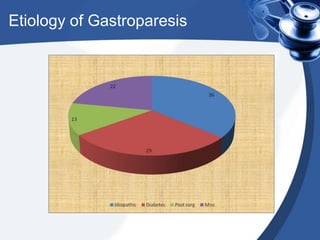
Etiology of Gastroparesis
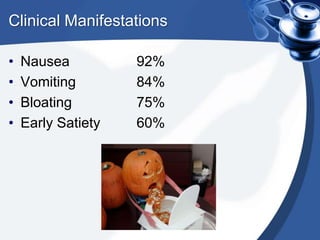
Clinical Manifestations
•
•
•
•

Nausea
Vomiting
Bloating
Early Satiety

92%
84%
75%
60%
Gastroparesis Cardinal Symptom Index
(GCSI)
• Each parameter scored on 0-5 scale
1. Nausea
2. Retching
3. Vomiting
4. Stomach Fullness
5. Not able to finish normal-sized meal
6. Feeling excessively full after meals
7. Loss of appetite
8. Bloating (feeling like you need to loosen your
clothes)
9.Stomach or belly visibly larger
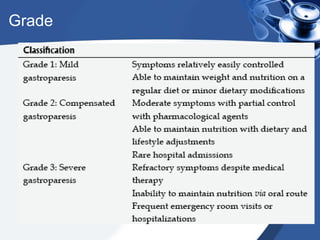
Grade
Post Surgical Gastroparesis
Incidence
• Peptic ulcer surgery with vagotomy
• Gastrectomy(0.4%-5%)
• Pancreatoduodenectomy(20-50%)
• Pancreatic cancer cryoablation(50-70%)
• Heart and lung transplantation
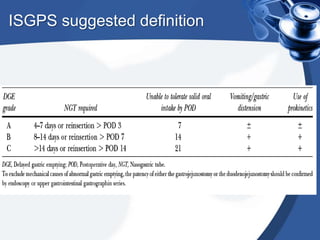
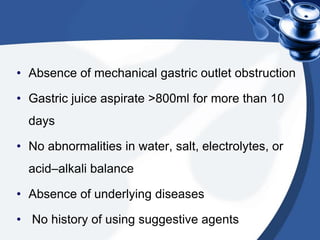
ISGPS suggested definition
• Absence of mechanical gastric outlet obstruction
• Gastric juice aspirate >800ml for more than 10
days

• No abnormalities in water, salt, electrolytes, or
acid–alkali balance
• Absence of underlying diseases
• No history of using suggestive agents
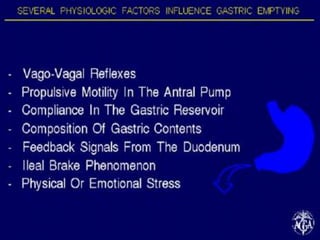
Pathogenesis-Surgical factors
• Multifactorial
• Denervation and resulting atony in gastric
remnant (Frederic et al.)
• Effect of vagotomy in proximal and distal
stomach
• Loss of vagal suppression on ectopic

intestinal pacemaker
• Associated procedures
Neuroendocrine and molecular factors
• Hyperglycemia
• Autonomic neuropathy
• Surgical stress-catecholamines
• Low motilin(absence of duodenum)
• Damage to ICC
• Hypothyrodism
Evaluation
• History
• Abdominal distention, Succussion
splash
• Clues to other etiologies
• Lab Tests
Evaluation
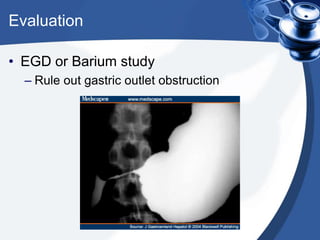
• EGD or Barium study
– Rule out gastric outlet obstruction
Evaluation
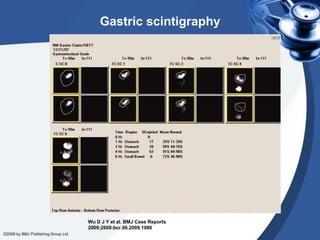
• Gastric Scintigraphy
– Gold standard
– 99M Tc Sulfur colloid bound to solid food
– Lack of standard criteria between institutions
• T1/2 or time intervals
• Different diagnostic criteria determined at each
institution
– Delay of 2 SD vs. 1.5 SD vs. 1 SD

• Different Meals
• Different patient positions
Gastric scintigraphy

Wu D J Y et al. BMJ Case Reports
2009;2009:bcr.06.2009.1986
©2009 by BMJ Publishing Group Ltd
Problems with Scintigraphy
• Radiation exposure
• Expensive
• Lack of standardization
–
–
–
–

differences in meals used
patient positioning
frequency and duration of imaging
Differences in quantitative data reported
• T1/2, rate of emptying, retention at different time points

• Lack of normal values
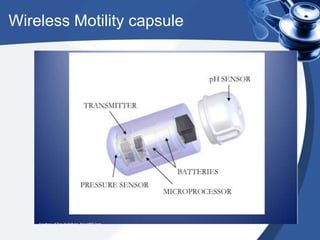
Wireless Motility capsule
WMC
1. Gastric emptying time
2. Small bowel transit time
3. Colonic transit time
4. Whole gut transit time
5. Amplitude of distal antral and duodenojejunal
contractions

6. Amplitude of phasic contractions of colon
7. Intragastric acidity
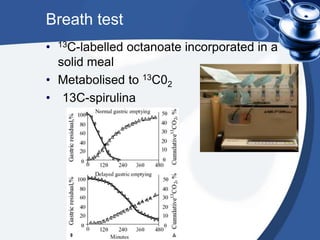
Breath test
•

13C-labelled

octanoate incorporated in a

solid meal
• Metabolised to 13C02
• 13C-spirulina
Complementary modalities
• Antroduodenal Manometry
• Electrogastrography
Treatment
• Correct fluid, electrolyte, and nutritional

deficiencies;
• Identify and rectify the underlying cause

of gastroparesis;
• Reduce symptoms-Ryle’s tube
Dietary Recommendation
• Increasing liquid nutrient content of the

meal
• Minimized fats and fiber intake

• Restricted meal size
• Alcohol to be avoided
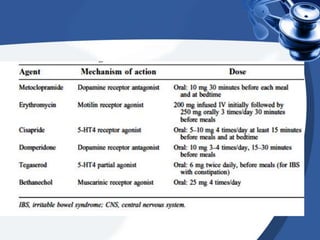
Prokinetic Agents
• Enhance antral contractility
• Correct gastric dysrhythmias

• Improve antroduodenal coordination
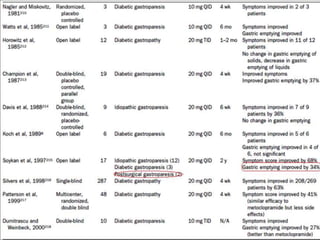
Metoclopramide
• Antiemetic effect: D2,5-HT3
antagonism
• Prokinetic effect: +Ach release

• 5-HT4 receptor agonist
– Increase LES pressure/fundic tone

– Increase antral contractions
• Prokinetic effect limited to proximal GIT
• Effective for short term treatment
• Parenteral form available
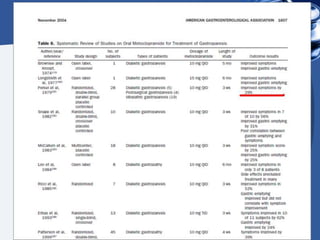
• Nine trials
Pa rkman HP, Ha s l e r WL, F i s h e r RS . Ame r i c a n
Gastroenterological Association technical review on the
diagnosis and treatment of gastroparesis. Gastroenterology
2004; 127: 1592-1622
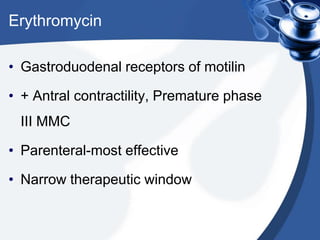
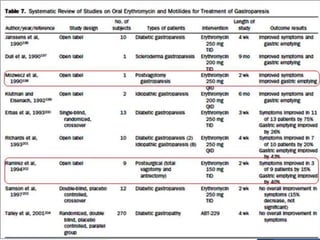
Erythromycin
• Gastroduodenal receptors of motilin

• + Antral contractility, Premature phase
III MMC

• Parenteral-most effective
• Narrow therapeutic window
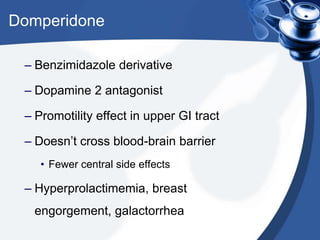
Domperidone
– Benzimidazole derivative

– Dopamine 2 antagonist
– Promotility effect in upper GI tract

– Doesn’t cross blood-brain barrier
• Fewer central side effects

– Hyperprolactimemia, breast
engorgement, galactorrhea
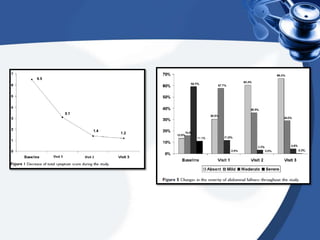
Levosulpiride
• Selective D2 blocker, moderate 5HT4
agonist
• Superior than placebo
• Superior to Domperidone and
Metoclopramide in functional dyspepsia

Mansi C, Savarino V, Vigneri S, et al. Gastrokinetic effects of levosulpiride
in dyspeptic patients with diabetic gastroparesis.Am J Gastroenterol
1995; 90: 1989±93.
Antiemetic Agents

• May be needed for additional nausea
relief
• Role in gastroparesis not well
established
Botulinum Toxin
• Intrapyloric injection

Gastric emptying(decreased release of
excitatory transmitter)
• No controlled study
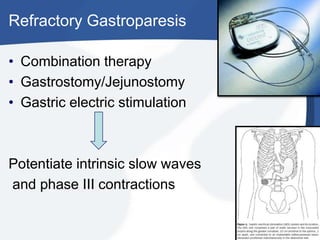
Refractory Gastroparesis
• Combination therapy
• Gastrostomy/Jejunostomy
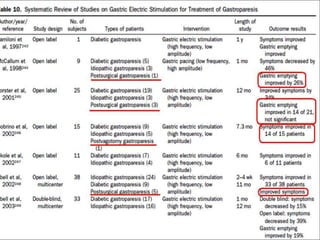
• Gastric electric stimulation

Potentiate intrinsic slow waves
and phase III contractions
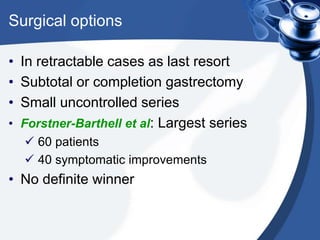
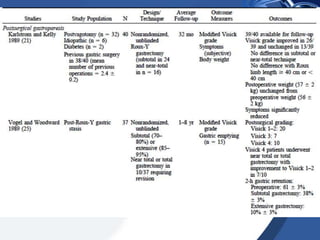
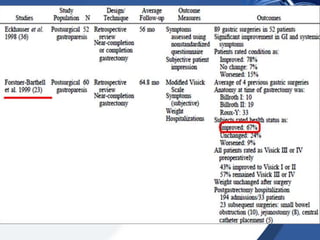
Surgical options
• In retractable cases as last resort
• Subtotal or completion gastrectomy
• Small uncontrolled series
• Forstner-Barthell et al: Largest series
 60 patients
 40 symptomatic improvements

• No definite winner
Take Home Message
• Etiology and pathogenesis not well explained

• Diet and lifestyle alterations, prokinetics and
anti-nausea medications are the mainstay of
therapy
• Novel medications and device are currently
being studied and offer promise
• Evidence based investigation required
Post surgical gastroparesis

Post surgical gastroparesis

  • 1.
    History • • • • • 4th Post opday Nausea + Vomiting:3episodes Abdomen distended Not passed flatus or motion
  • 2.
  • 3.
    Introduction • Post prandialnausea and vomiting and gastric atony without mechanical obstruction • Pathogenesis not well explained • Definition varies
  • 5.
    Gastric pacesetter potentialsor slow waves Cutaneous 3cmp EGG waves Fundus Peristalti c wave Corpus 3 cpm slow waves plus action potentials
  • 7.
  • 8.
  • 9.
    Gastroparesis Cardinal SymptomIndex (GCSI) • Each parameter scored on 0-5 scale 1. Nausea 2. Retching 3. Vomiting 4. Stomach Fullness 5. Not able to finish normal-sized meal 6. Feeling excessively full after meals 7. Loss of appetite 8. Bloating (feeling like you need to loosen your clothes) 9.Stomach or belly visibly larger
  • 10.
  • 11.
  • 12.
    Incidence • Peptic ulcersurgery with vagotomy • Gastrectomy(0.4%-5%) • Pancreatoduodenectomy(20-50%) • Pancreatic cancer cryoablation(50-70%) • Heart and lung transplantation
  • 14.
  • 15.
    • Absence ofmechanical gastric outlet obstruction • Gastric juice aspirate >800ml for more than 10 days • No abnormalities in water, salt, electrolytes, or acid–alkali balance • Absence of underlying diseases • No history of using suggestive agents
  • 16.
    Pathogenesis-Surgical factors • Multifactorial •Denervation and resulting atony in gastric remnant (Frederic et al.) • Effect of vagotomy in proximal and distal stomach • Loss of vagal suppression on ectopic intestinal pacemaker • Associated procedures
  • 17.
    Neuroendocrine and molecularfactors • Hyperglycemia • Autonomic neuropathy • Surgical stress-catecholamines • Low motilin(absence of duodenum) • Damage to ICC • Hypothyrodism
  • 18.
    Evaluation • History • Abdominaldistention, Succussion splash • Clues to other etiologies • Lab Tests
  • 19.
    Evaluation • EGD orBarium study – Rule out gastric outlet obstruction
  • 20.
    Evaluation • Gastric Scintigraphy –Gold standard – 99M Tc Sulfur colloid bound to solid food – Lack of standard criteria between institutions • T1/2 or time intervals • Different diagnostic criteria determined at each institution – Delay of 2 SD vs. 1.5 SD vs. 1 SD • Different Meals • Different patient positions
  • 21.
    Gastric scintigraphy Wu DJ Y et al. BMJ Case Reports 2009;2009:bcr.06.2009.1986 ©2009 by BMJ Publishing Group Ltd
  • 22.
    Problems with Scintigraphy •Radiation exposure • Expensive • Lack of standardization – – – – differences in meals used patient positioning frequency and duration of imaging Differences in quantitative data reported • T1/2, rate of emptying, retention at different time points • Lack of normal values
  • 23.
  • 24.
    WMC 1. Gastric emptyingtime 2. Small bowel transit time 3. Colonic transit time 4. Whole gut transit time 5. Amplitude of distal antral and duodenojejunal contractions 6. Amplitude of phasic contractions of colon 7. Intragastric acidity
  • 25.
    Breath test • 13C-labelled octanoate incorporatedin a solid meal • Metabolised to 13C02 • 13C-spirulina
  • 26.
    Complementary modalities • AntroduodenalManometry • Electrogastrography
  • 27.
    Treatment • Correct fluid,electrolyte, and nutritional deficiencies; • Identify and rectify the underlying cause of gastroparesis; • Reduce symptoms-Ryle’s tube
  • 28.
    Dietary Recommendation • Increasingliquid nutrient content of the meal • Minimized fats and fiber intake • Restricted meal size • Alcohol to be avoided
  • 29.
    Prokinetic Agents • Enhanceantral contractility • Correct gastric dysrhythmias • Improve antroduodenal coordination
  • 31.
    Metoclopramide • Antiemetic effect:D2,5-HT3 antagonism • Prokinetic effect: +Ach release • 5-HT4 receptor agonist – Increase LES pressure/fundic tone – Increase antral contractions
  • 32.
    • Prokinetic effectlimited to proximal GIT • Effective for short term treatment • Parenteral form available • Nine trials Pa rkman HP, Ha s l e r WL, F i s h e r RS . Ame r i c a n Gastroenterological Association technical review on the diagnosis and treatment of gastroparesis. Gastroenterology 2004; 127: 1592-1622
  • 34.
    Erythromycin • Gastroduodenal receptorsof motilin • + Antral contractility, Premature phase III MMC • Parenteral-most effective • Narrow therapeutic window
  • 36.
    Domperidone – Benzimidazole derivative –Dopamine 2 antagonist – Promotility effect in upper GI tract – Doesn’t cross blood-brain barrier • Fewer central side effects – Hyperprolactimemia, breast engorgement, galactorrhea
  • 38.
    Levosulpiride • Selective D2blocker, moderate 5HT4 agonist • Superior than placebo • Superior to Domperidone and Metoclopramide in functional dyspepsia Mansi C, Savarino V, Vigneri S, et al. Gastrokinetic effects of levosulpiride in dyspeptic patients with diabetic gastroparesis.Am J Gastroenterol 1995; 90: 1989±93.
  • 40.
    Antiemetic Agents • Maybe needed for additional nausea relief • Role in gastroparesis not well established
  • 41.
    Botulinum Toxin • Intrapyloricinjection Gastric emptying(decreased release of excitatory transmitter) • No controlled study
  • 42.
    Refractory Gastroparesis • Combinationtherapy • Gastrostomy/Jejunostomy • Gastric electric stimulation Potentiate intrinsic slow waves and phase III contractions
  • 44.
    Surgical options • Inretractable cases as last resort • Subtotal or completion gastrectomy • Small uncontrolled series • Forstner-Barthell et al: Largest series  60 patients  40 symptomatic improvements • No definite winner
  • 47.
  • 48.
    • Etiology andpathogenesis not well explained • Diet and lifestyle alterations, prokinetics and anti-nausea medications are the mainstay of therapy • Novel medications and device are currently being studied and offer promise • Evidence based investigation required