CARDIAC
PROCEDURES
By
Andrew Streidenberger
Electrocardiogram

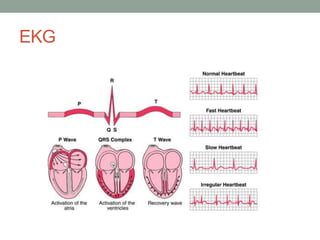
• It is also called an EKG or ECG, is a simple, painless test
    that records the heart's electrical activity. To understand
    this test, it helps to understand how the heart works.
•   An EKG shows:
•   How fast your heart is beating
•   Whether the rhythm of your heartbeat is steady or
    irregular
•   The strength and timing of electrical signals as they pass
    through each part of your heart
EKG
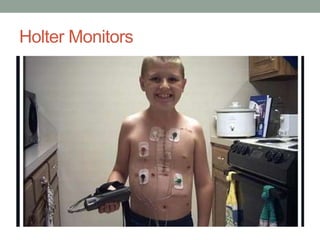
Holter Monitors
• Holter and event monitors are medical devices that record
  the heart's electrical activity. Doctors most often use these
  monitors to diagnose arrhythmias.
• Holter is also used to detect silent myocardial ischemia. In
  this condition, not enough oxygen-rich blood reaches the
  heart muscle. "Silent" means that no symptoms occur.
• Holters are small, portable devices. You can wear one
  while you do your normal daily activities. This allows the
  monitor to record your heart for a longer time than an
  EKG.
Holter Monitors
12 Lead Electrocardiogram
• The 12 Lead EKG can reveal whether the heartbeat starts in the
    correct place in the heart. The test also shows how long it takes for
    electrical signals to travel through the heart. Delays in signal travel
    time may suggest heart block or long QT syndrome.
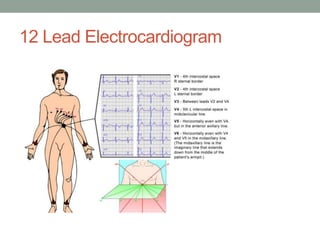
•   A nurse or technician will attach soft, sticky patches called electrodes
    to the skin of your chest, arms, and legs. The patches are about the
    size of a quarter.
•   Often, 12 patches are attached to your body. This helps detect your
    heart's electrical activity from many areas at the same time. The
    nurse may have to shave areas of your skin to help the patches stick.
•   After the patches are placed on your skin, you'll lie still on a table
    while the patches detect your heart's electrical signals. A machine will
    record these signals on graph paper or display them on a screen.
•   The entire test will take about 10 minutes.
12 Lead Electrocardiogram
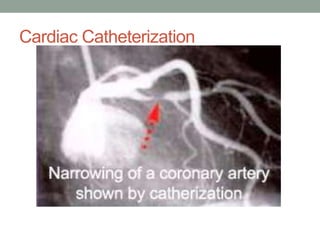
Cardiac Catheterization
• Cardiac catheterization is a medical procedure used to
  diagnose and treat some heart conditions.
• A long, thin, flexible tube called a catheter is put into a
  blood vessel in your arm, groin (upper thigh), or neck and
  threaded to your heart. Through the catheter, your doctor
  can do diagnostic tests and treatments on your heart.
Cardiac Catheterization
The End

Heart procedures

  • 1.
  • 2.
    Electrocardiogram • It isalso called an EKG or ECG, is a simple, painless test that records the heart's electrical activity. To understand this test, it helps to understand how the heart works. • An EKG shows: • How fast your heart is beating • Whether the rhythm of your heartbeat is steady or irregular • The strength and timing of electrical signals as they pass through each part of your heart
  • 3.
  • 4.
    Holter Monitors • Holterand event monitors are medical devices that record the heart's electrical activity. Doctors most often use these monitors to diagnose arrhythmias. • Holter is also used to detect silent myocardial ischemia. In this condition, not enough oxygen-rich blood reaches the heart muscle. "Silent" means that no symptoms occur. • Holters are small, portable devices. You can wear one while you do your normal daily activities. This allows the monitor to record your heart for a longer time than an EKG.
  • 5.
  • 6.
    12 Lead Electrocardiogram •The 12 Lead EKG can reveal whether the heartbeat starts in the correct place in the heart. The test also shows how long it takes for electrical signals to travel through the heart. Delays in signal travel time may suggest heart block or long QT syndrome. • A nurse or technician will attach soft, sticky patches called electrodes to the skin of your chest, arms, and legs. The patches are about the size of a quarter. • Often, 12 patches are attached to your body. This helps detect your heart's electrical activity from many areas at the same time. The nurse may have to shave areas of your skin to help the patches stick. • After the patches are placed on your skin, you'll lie still on a table while the patches detect your heart's electrical signals. A machine will record these signals on graph paper or display them on a screen. • The entire test will take about 10 minutes.
  • 7.
  • 8.
    Cardiac Catheterization • Cardiaccatheterization is a medical procedure used to diagnose and treat some heart conditions. • A long, thin, flexible tube called a catheter is put into a blood vessel in your arm, groin (upper thigh), or neck and threaded to your heart. Through the catheter, your doctor can do diagnostic tests and treatments on your heart.
  • 9.
  • 10.