 The Left Ventricular Assist Device is a type
mechanical circulatory assist device that is used to
support heart function and blood flow in people who
have weakened hearts.
 The device takes blood from the left ventricle to the
aorta and then to the body and vital organs, just as a
normal healthy heart would
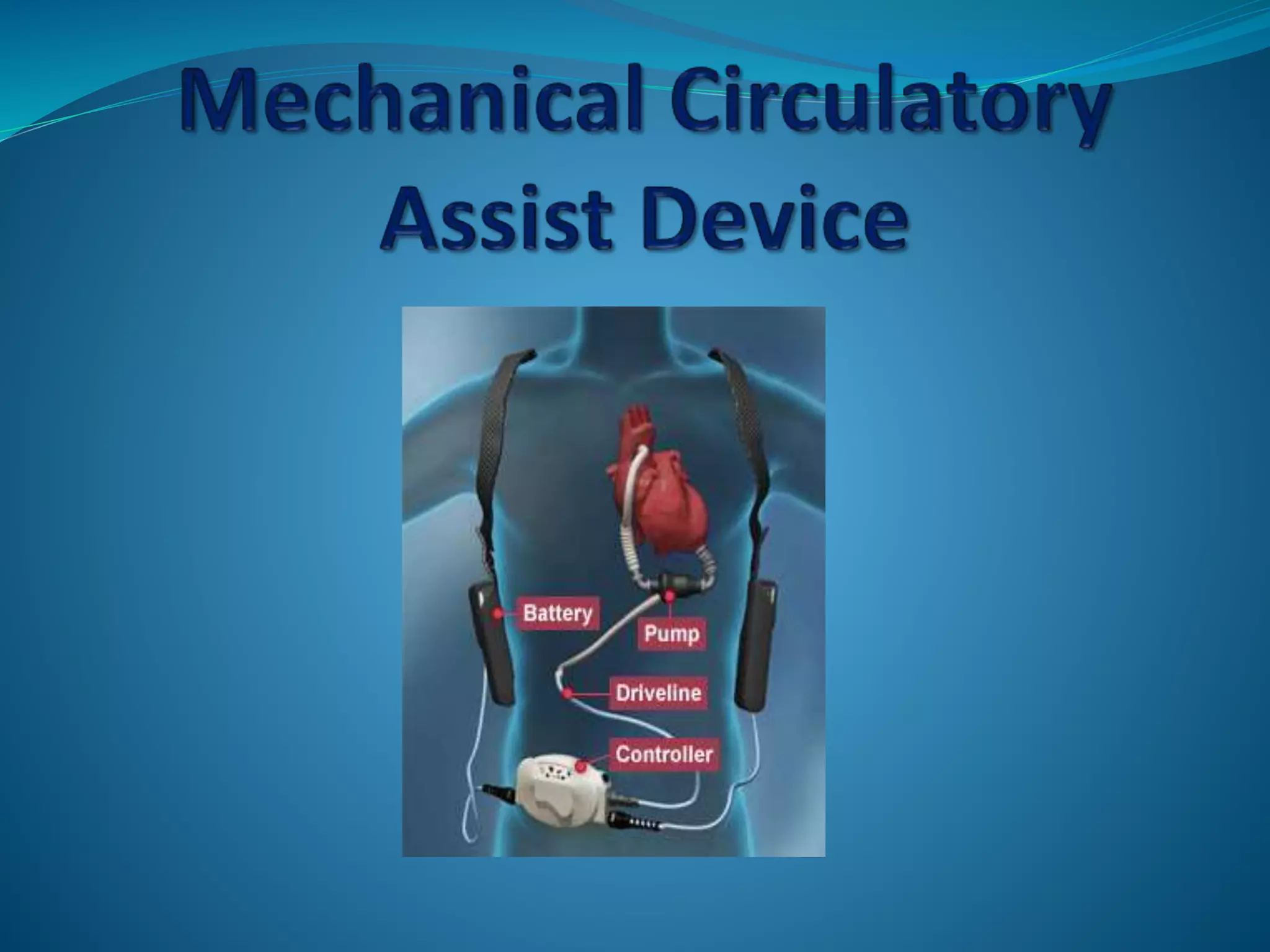
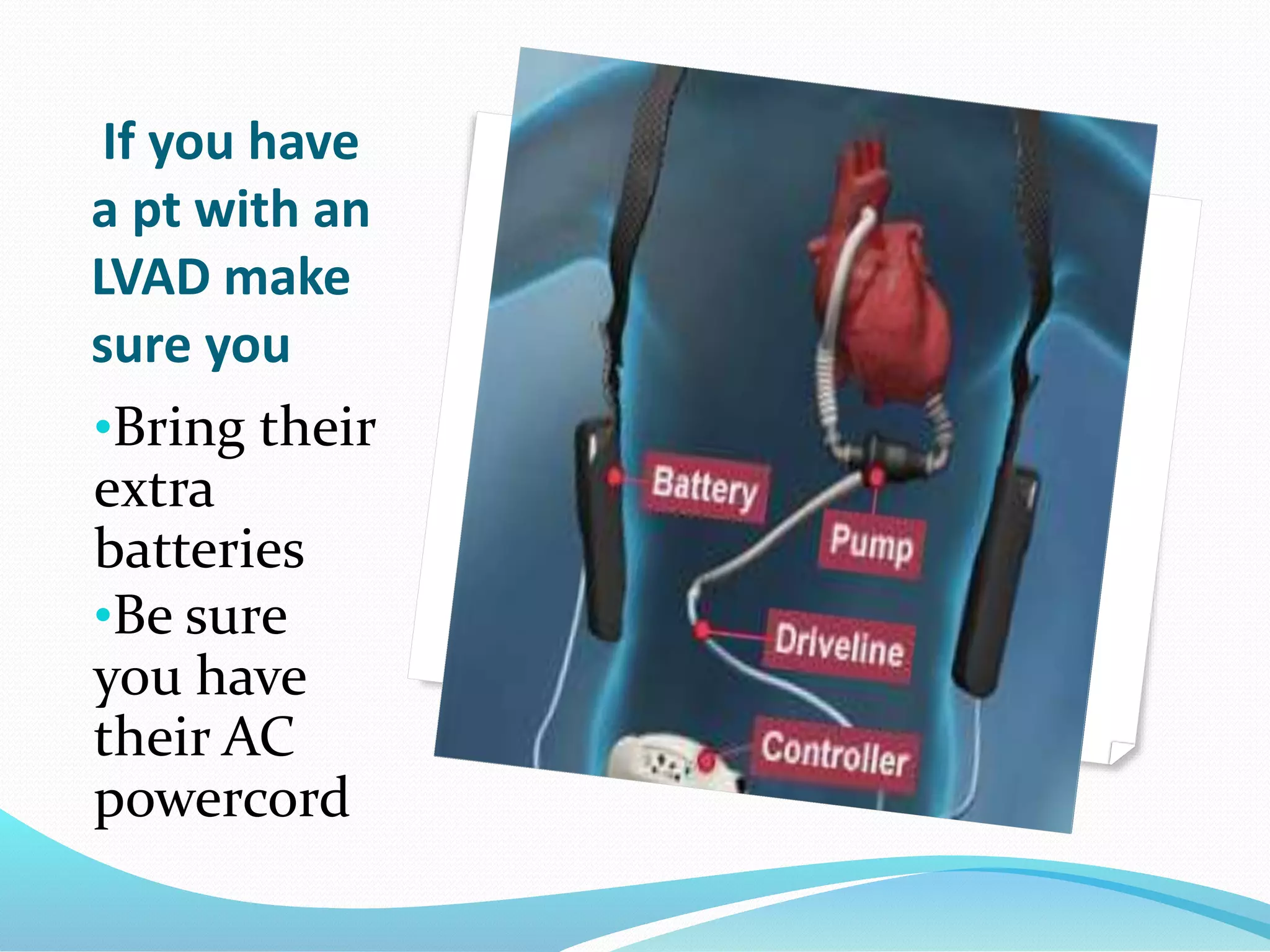
The VAD has four components that
are both internal and external
1.The pump
2.The driveline
3.The controller
4.The batteries
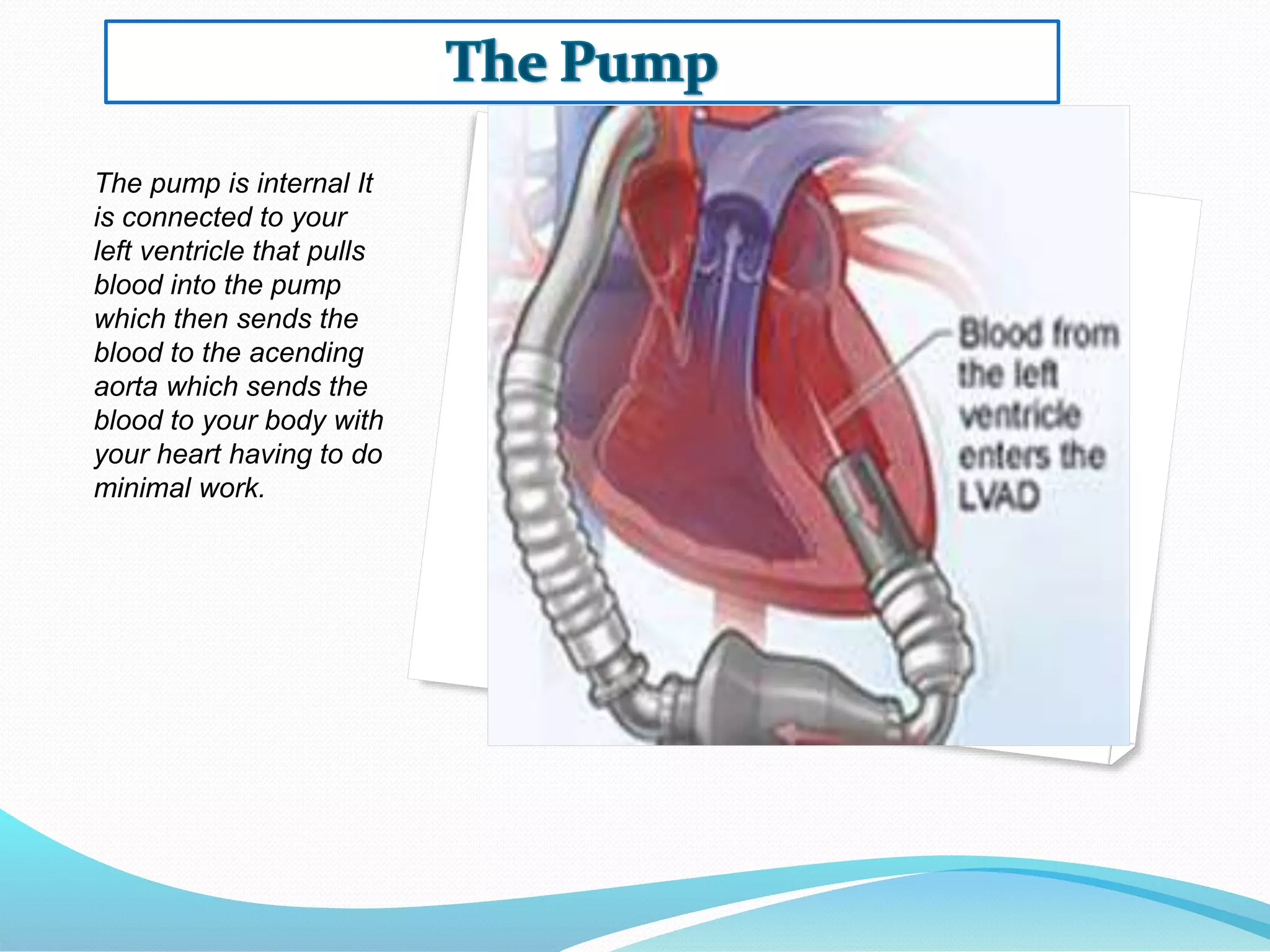
The pump is internal It
is connected to your
left ventricle that pulls
blood into the pump
which then sends the
blood to the acending
aorta which sends the
blood to your body with
your heart having to do
minimal work.
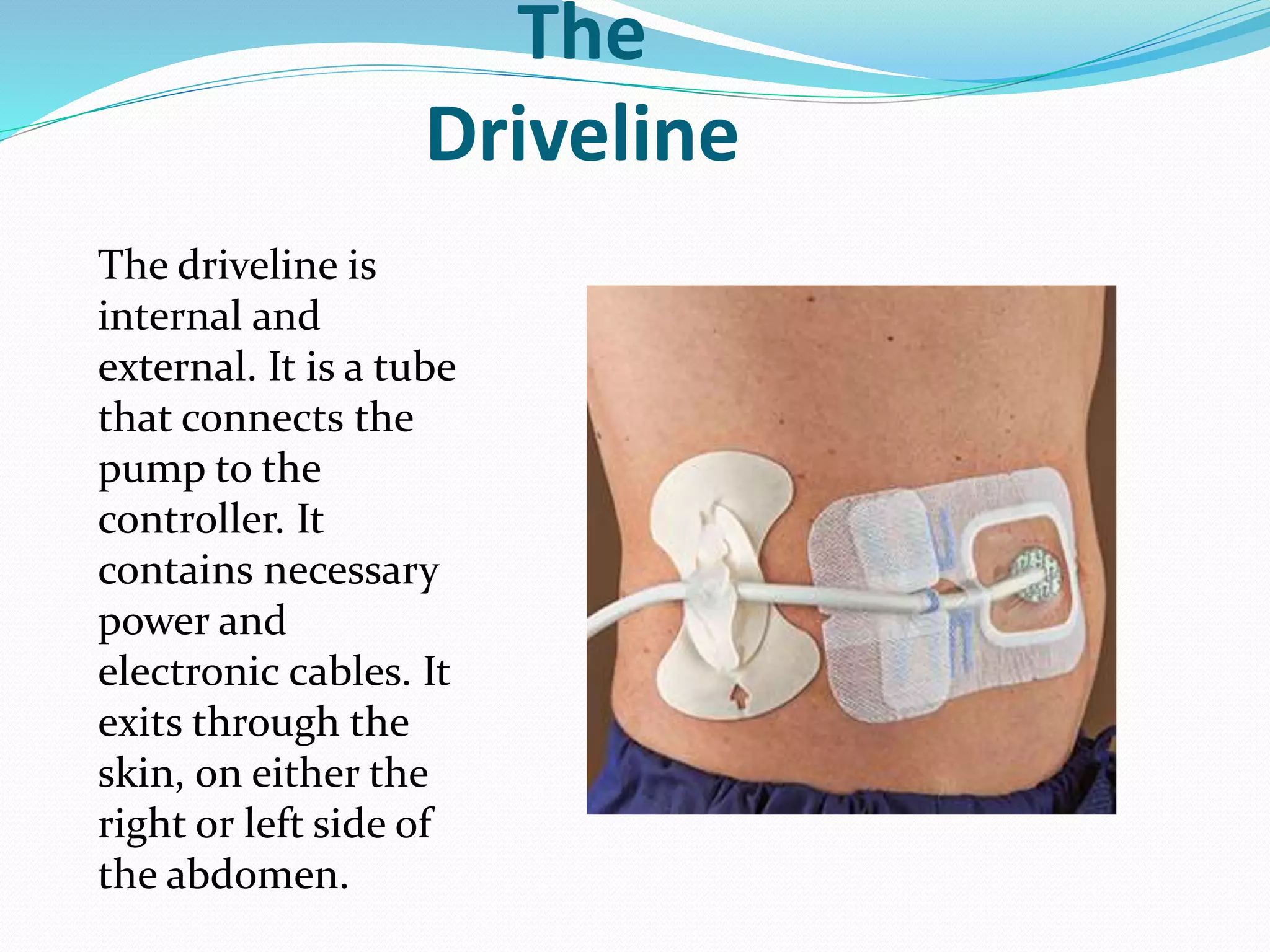
The
Driveline
The driveline is
internal and
external. It is a tube
that connects the
pump to the
controller. It
contains necessary
power and
electronic cables. It
exits through the
skin, on either the
right or left side of
the abdomen.
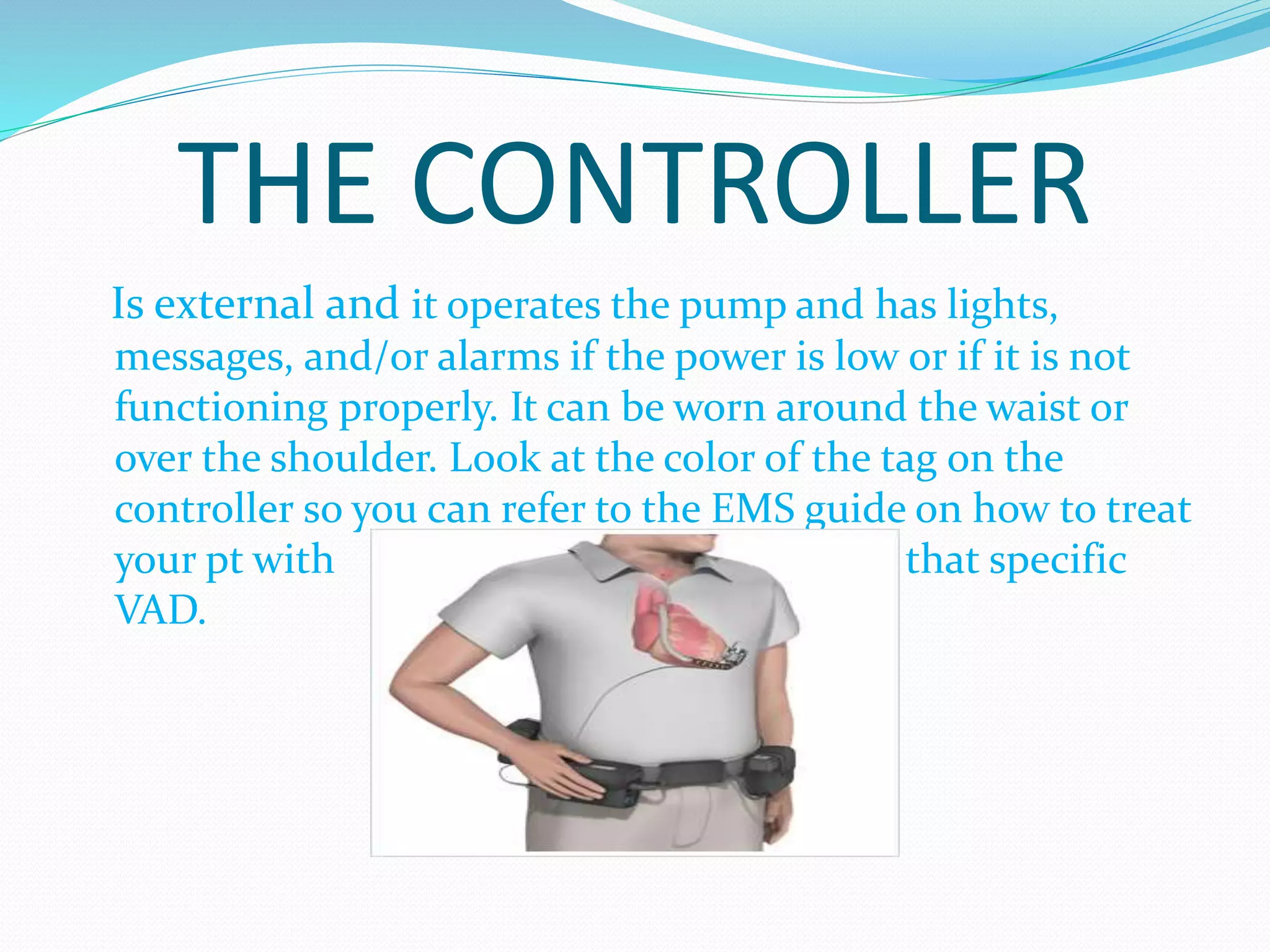
THE CONTROLLER
Is external and it operates the pump and has lights,
messages, and/or alarms if the power is low or if it is not
functioning properly. It can be worn around the waist or
over the shoulder. Look at the color of the tag on the
controller so you can refer to the EMS guide on how to treat
your pt with that specific
VAD.
Options for Power
Batteries AC power sources
 The batteries are charged using
a device specific battery charger.
The controller and/or batteries
will show you how much power
the batteries have left and alert
you when they need to be
changed. When the patient is
outside of their home they need
to have extra fully charged
batteries with them. Depending
on their specific VAD device, the
batteries may be in a pack along
with the controller or carried in
a holster over their shoulders.
 When the patient sleeping or
about to sleep, they need to
connect the VAD to the device-
specific electrical power source
to eliminate the chance of
battery power loss while
sleeping. The electrical power
source should include a backup
battery (possibly internal) in
case there is a power outage. The
device may also come with a DC
adaptor, which will allow them
to power their VAD in a car.
If you have
a pt with an
LVAD make
sure you
•Bring their
extra
batteries
•Be sure
you have
their AC
powercord
When assessing a pt with an LVAD
start with your normal assessment
intervene as necessary
 Initial
assessment
• Airway
assessment
• Attach cardiac
monitor and
pulse ox
Then assess specifically for
the VAD
1. Aucultate heart sounds to determine if the device is
functioning. If it is a continuous flow device you should hear a
“whirling sound”
2. Assess the device for any alarms
3. Find the color tag on the controller so you can identify the
specific device in the ems guide for LVAD devices
4. Intervene appropriately based on the type of alarm, color tag
and what the EMS guide says for that VAD
5. Initiate IV of NS or LR
6. Assess v/s if possible
7. Optimal way to assess v/s is us the mean b/p with a doppler if
no doppler is available and you are able to obtain on with the
NIBP then us the MEAN of that.
8. You may or may not be able to detect a b/p. If you cannot you
will instead rely on the pts LOC and the skin color and
condition. Pulse may or may not be palpable.
Cardiac Arrest LVAD PT
If your pt is unconscious,
unresponsive to stimuli and
pulseless listen to the pts chest. If
you hear the whirling sound of the
LVAD, DO NOT PREFORM CPR. If
you cannot hear the device then
CPR should be performed per
cardiac arrest protocol.
 Yes you can do a 12 lead and defibrillate as you would given
the situation
 Treat all STEMI and chest pain complaints as you would
using the Chest Pain Protocol
 Transport to closest VAD center if possible, otherwise to
the closest hospital if pt is hemodynamically unstable or to
the hospital of choice if pt is stable.
 If you suspect the pt is dehydrated bolus 250cc of NS with a
max of 500cc until pt is normotensive . Be sure to
continuously check lung sounds and watch for signs of
CHF. If pt starts to have signs of CHF discontinue fluid
bolus.
LVAD pt should have all
medications that a non LVAD
pt with heart failure would
have including blood
thinners to help prevent the
development of clots.
When taking care of a pt always
remember:
ALL VAD pt and their families/caretakers
have been well educated on the VAD and the
care along with it. If you have any questions
ask the pt or the family. If it is an emergent
situation or the pt is unable to answer
questions bring a family member with you.
More information on pts with a VAD
 Some complications pts can have when they have a VAD
can be but are not limited to driveline infections, pump
clotting or device failure.
 The type of pts that have VADS or that can receive a VAD is
pts with advanced heart failure not responding to optimal
medical management, pts waiting to get a heart transplant,
or pts with end-stage heart failure used as “destination
therapy” when they are not transplant candidates
 There is no weight limit for pts to receive a VAD however
the ideal BMI is below 35.
 Pts who have a VAD can extend their life up to 7 years or
longer than if they did not have it.

Left ventricular assist device

  • 2.
     The LeftVentricular Assist Device is a type mechanical circulatory assist device that is used to support heart function and blood flow in people who have weakened hearts.  The device takes blood from the left ventricle to the aorta and then to the body and vital organs, just as a normal healthy heart would
  • 3.
    The VAD hasfour components that are both internal and external 1.The pump 2.The driveline 3.The controller 4.The batteries
  • 4.
    The pump isinternal It is connected to your left ventricle that pulls blood into the pump which then sends the blood to the acending aorta which sends the blood to your body with your heart having to do minimal work.
  • 5.
    The Driveline The driveline is internaland external. It is a tube that connects the pump to the controller. It contains necessary power and electronic cables. It exits through the skin, on either the right or left side of the abdomen.
  • 6.
    THE CONTROLLER Is externaland it operates the pump and has lights, messages, and/or alarms if the power is low or if it is not functioning properly. It can be worn around the waist or over the shoulder. Look at the color of the tag on the controller so you can refer to the EMS guide on how to treat your pt with that specific VAD.
  • 7.
    Options for Power BatteriesAC power sources  The batteries are charged using a device specific battery charger. The controller and/or batteries will show you how much power the batteries have left and alert you when they need to be changed. When the patient is outside of their home they need to have extra fully charged batteries with them. Depending on their specific VAD device, the batteries may be in a pack along with the controller or carried in a holster over their shoulders.  When the patient sleeping or about to sleep, they need to connect the VAD to the device- specific electrical power source to eliminate the chance of battery power loss while sleeping. The electrical power source should include a backup battery (possibly internal) in case there is a power outage. The device may also come with a DC adaptor, which will allow them to power their VAD in a car.
  • 8.
    If you have apt with an LVAD make sure you •Bring their extra batteries •Be sure you have their AC powercord
  • 9.
    When assessing apt with an LVAD start with your normal assessment intervene as necessary  Initial assessment • Airway assessment • Attach cardiac monitor and pulse ox
  • 10.
    Then assess specificallyfor the VAD 1. Aucultate heart sounds to determine if the device is functioning. If it is a continuous flow device you should hear a “whirling sound” 2. Assess the device for any alarms 3. Find the color tag on the controller so you can identify the specific device in the ems guide for LVAD devices 4. Intervene appropriately based on the type of alarm, color tag and what the EMS guide says for that VAD 5. Initiate IV of NS or LR 6. Assess v/s if possible 7. Optimal way to assess v/s is us the mean b/p with a doppler if no doppler is available and you are able to obtain on with the NIBP then us the MEAN of that. 8. You may or may not be able to detect a b/p. If you cannot you will instead rely on the pts LOC and the skin color and condition. Pulse may or may not be palpable.
  • 11.
    Cardiac Arrest LVADPT If your pt is unconscious, unresponsive to stimuli and pulseless listen to the pts chest. If you hear the whirling sound of the LVAD, DO NOT PREFORM CPR. If you cannot hear the device then CPR should be performed per cardiac arrest protocol.
  • 12.
     Yes youcan do a 12 lead and defibrillate as you would given the situation  Treat all STEMI and chest pain complaints as you would using the Chest Pain Protocol  Transport to closest VAD center if possible, otherwise to the closest hospital if pt is hemodynamically unstable or to the hospital of choice if pt is stable.  If you suspect the pt is dehydrated bolus 250cc of NS with a max of 500cc until pt is normotensive . Be sure to continuously check lung sounds and watch for signs of CHF. If pt starts to have signs of CHF discontinue fluid bolus.
  • 13.
    LVAD pt shouldhave all medications that a non LVAD pt with heart failure would have including blood thinners to help prevent the development of clots.
  • 14.
    When taking careof a pt always remember: ALL VAD pt and their families/caretakers have been well educated on the VAD and the care along with it. If you have any questions ask the pt or the family. If it is an emergent situation or the pt is unable to answer questions bring a family member with you.
  • 15.
    More information onpts with a VAD  Some complications pts can have when they have a VAD can be but are not limited to driveline infections, pump clotting or device failure.  The type of pts that have VADS or that can receive a VAD is pts with advanced heart failure not responding to optimal medical management, pts waiting to get a heart transplant, or pts with end-stage heart failure used as “destination therapy” when they are not transplant candidates  There is no weight limit for pts to receive a VAD however the ideal BMI is below 35.  Pts who have a VAD can extend their life up to 7 years or longer than if they did not have it.