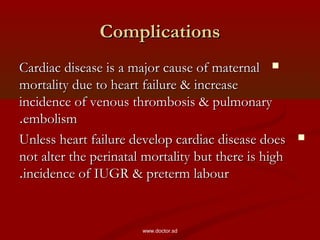
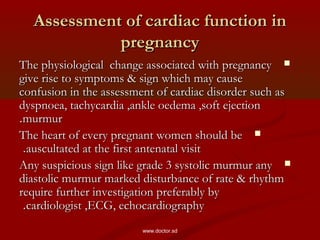
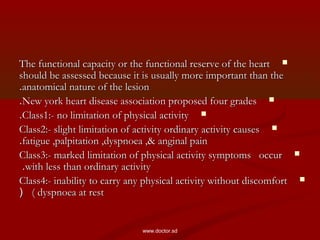
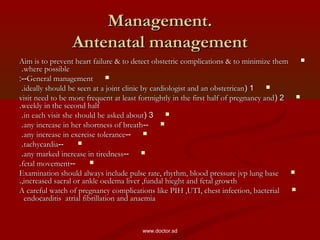
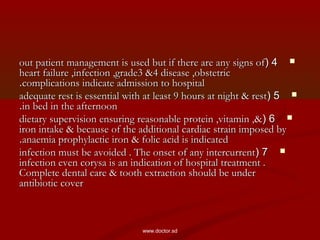
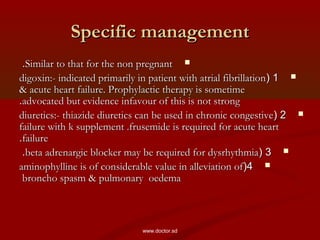
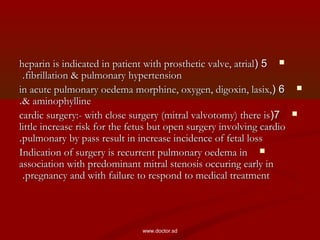
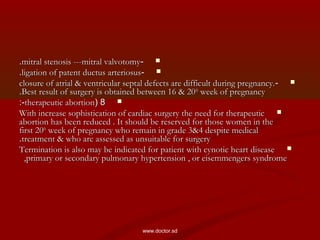
Pregnancy places additional strain on the heart due to cardiovascular changes. There is a steady increase in blood volume reaching 40% by 36 weeks, along with increased cardiac output. Incidence of heart disease in pregnancy is about 0.5-1%, with the majority of cases being rheumatic heart disease. Complications include heart failure, venous thrombosis, and pulmonary embolism. Assessment of cardiac function is important during pregnancy. Management involves monitoring for signs of heart failure or infection, ensuring adequate rest, and providing specific treatments as needed.



![Cardiovascular disease students [compatibility mode]](https://cdn.slidesharecdn.com/ss_thumbnails/cardiovasculardisease-studentscompatibilitymode-130509054709-phpapp02-thumbnail.jpg?width=640&height=640&fit=bounds)


