Pregnancy and
Heart diseases
 Dr.Safoin Kadi
 Consultant cardiologist at Al-Hayat medical center.
 D.I.S. Cardiovascular diseases.
 D.U. Echocardiography.
 D.U.Vascular echodoppler.
 D.U. Congenital and pediatric cardiology.
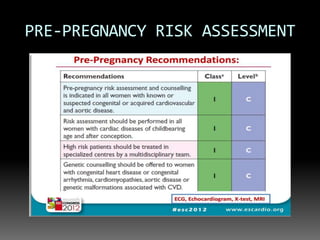
PRE-PREGNANCY RISK ASSESSMENT
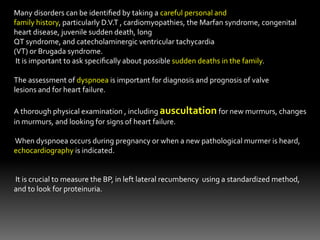
Many disorders can be identified by taking a careful personal and
family history, particularly D.V.T , cardiomyopathies, the Marfan syndrome, congenital
heart disease, juvenile sudden death, long
QT syndrome, and catecholaminergic ventricular tachycardia
(VT) or Brugada syndrome.
It is important to ask specifically about possible sudden deaths in the family.
The assessment of dyspnoea is important for diagnosis and prognosis of valve
lesions and for heart failure.
A thorough physical examination , including auscultation for new murmurs, changes
in murmurs, and looking for signs of heart failure.

When dyspnoea occurs during pregnancy or when a new pathological murmer is heard,
echocardiography is indicated.
It is crucial to measure the BP, in left lateral recumbency using a standardized method,
and to look for proteinuria.
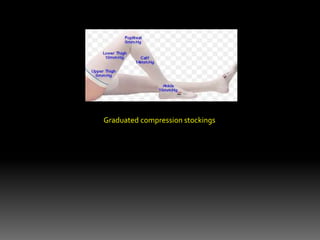
Graduated compression stockings
COMPRESSION STOCKING
PRESCRIPTION
1-SIZE
2-PRESSURE
3-LEVEL
VARICES
 30-40% OF PREGNANTWOMEN .
 We have to determine the type the severity
and the need for treatment or preventive
measures for each one of them.
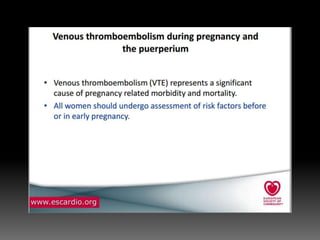
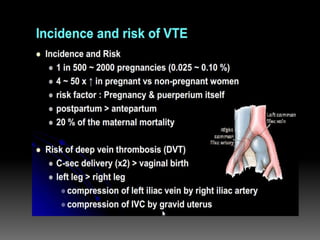
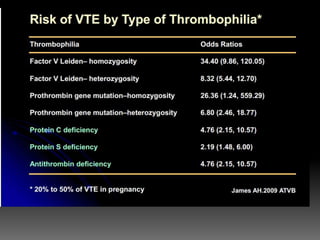
Pregnancy induces a series of haemostatic changes, with
an increase in concentration of coagulation factors,
fibrinogen, and platelet adhesiveness, as well as
diminished fibrinolysis, which lead
to hypercoagulability and an increased risk of
thrombo-embolic events.
In addition, obstruction to venous return
by the enlarging uterus causes stasis and a further rise in
risk of thrombo-embolism.
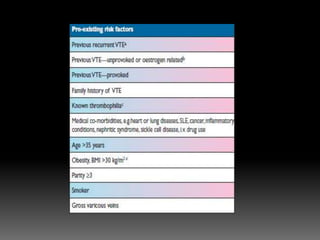
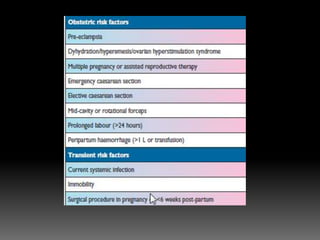
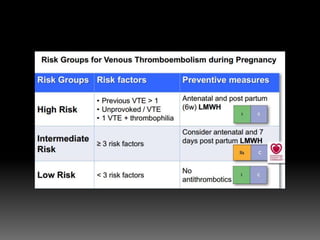
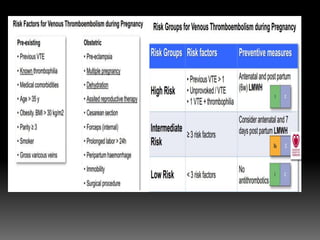
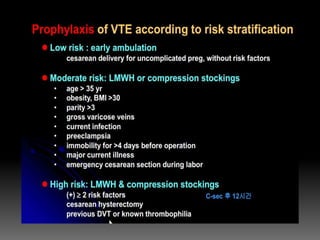
THROMBO EMBOLIC RISK
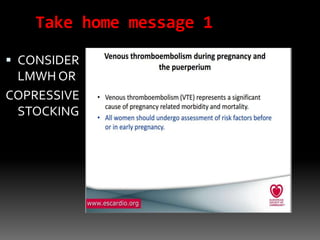
Take home message 1
 CONSIDER
LMWH OR
COPRESSIVE
STOCKING
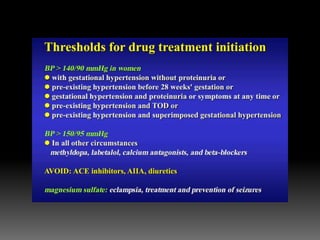
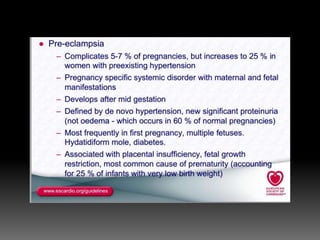
Hypertension
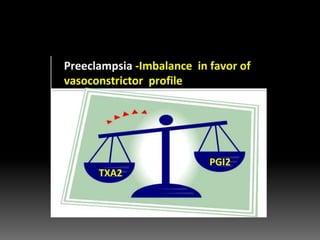
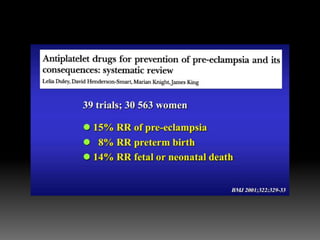
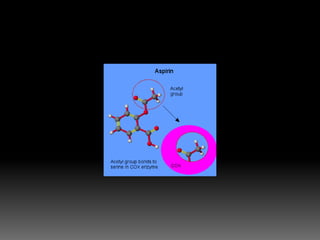
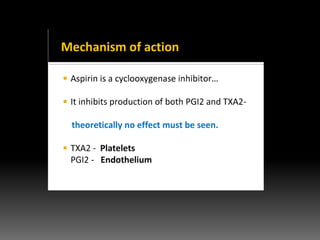
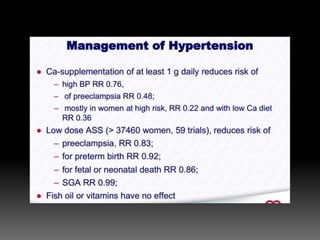
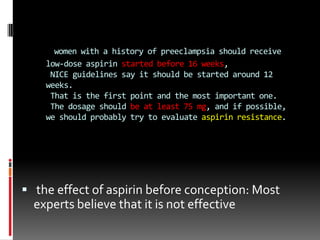
women with a history of preeclampsia should receive
low-dose aspirin started before 16 weeks,
NICE guidelines say it should be started around 12
weeks.
That is the first point and the most important one.
The dosage should be at least 75 mg, and if possible,
we should probably try to evaluate aspirin resistance.
 the effect of aspirin before conception: Most
experts believe that it is not effective
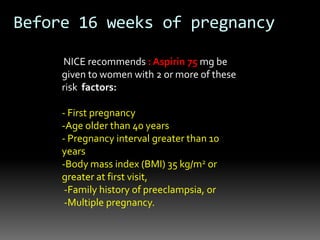
NICE recommends : Aspirin 75 mg be
given to women with 2 or more of these
risk factors:
- First pregnancy
-Age older than 40 years
- Pregnancy interval greater than 10
years
-Body mass index (BMI) 35 kg/m2 or
greater at first visit,
-Family history of preeclampsia, or
-Multiple pregnancy.
Before 16 weeks of pregnancy
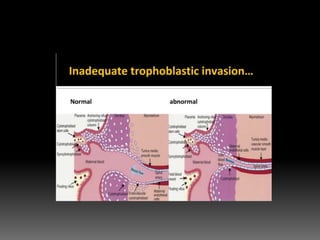
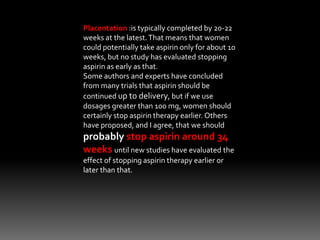
Placentation :is typically completed by 20-22
weeks at the latest.That means that women
could potentially take aspirin only for about 10
weeks, but no study has evaluated stopping
aspirin as early as that.
Some authors and experts have concluded
from many trials that aspirin should be
continued up to delivery, but if we use
dosages greater than 100 mg, women should
certainly stop aspirin therapy earlier. Others
have proposed, and I agree, that we should
probably stop aspirin around 34
weeks until new studies have evaluated the
effect of stopping aspirin therapy earlier or
later than that.
TAKE HOME MESSAGE 2
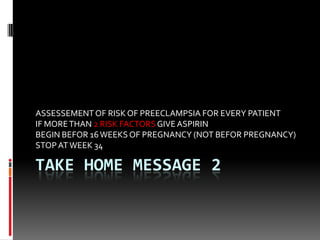
ASSESSEMENTOF RISK OF PREECLAMPSIA FOR EVERY PATIENT
IF MORETHAN 2 RISK FACTORS GIVEASPIRIN
BEGIN BEFOR 16WEEKSOF PREGNANCY (NOT BEFOR PREGNANCY)
STOPATWEEK 34
DYSPNEA
TAKE HOME MESSAGE 3
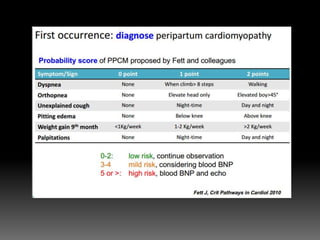
DYSPNEAASSESSEMENT IS FOLLOWED BY BNPAND
ECHOCARDIOGRAPHY.
TAKE HOME MESSAGE 4
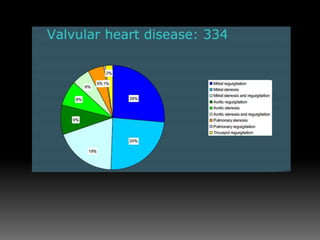
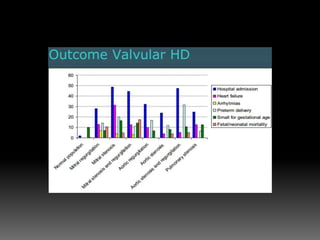
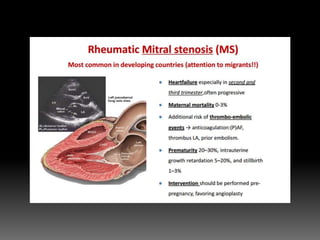
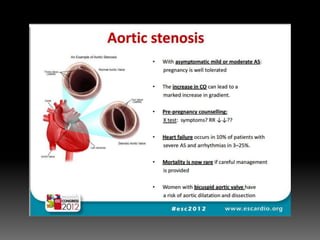
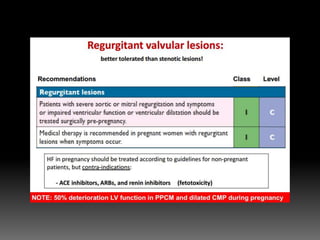
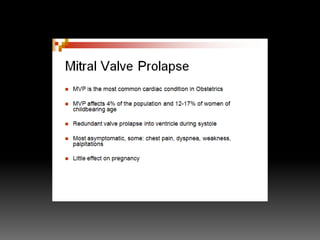
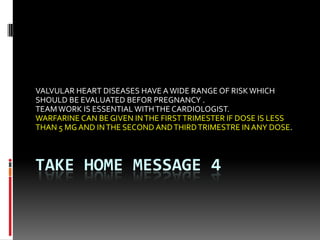
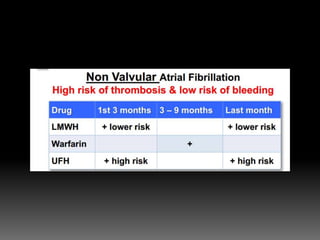
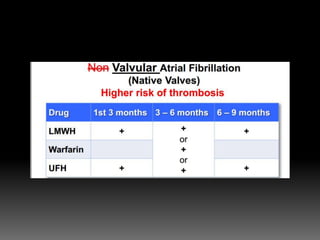
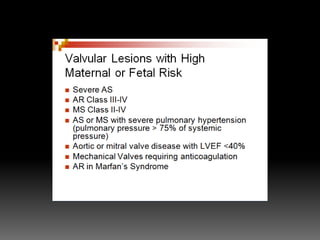
VALVULAR HEART DISEASES HAVE AWIDE RANGE OF RISKWHICH
SHOULD BE EVALUATED BEFOR PREGNANCY .
TEAMWORK IS ESSENTIAL WITHTHE CARDIOLOGIST.
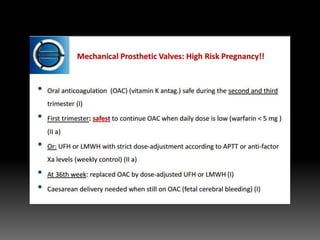
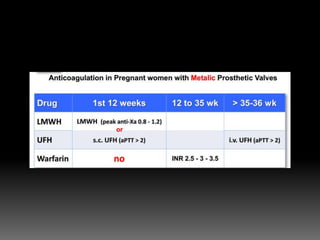
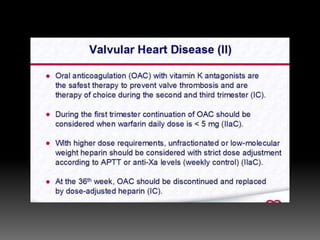
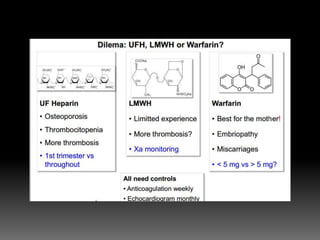
WARFARINE CAN BE GIVEN INTHE FIRSTTRIMESTER IF DOSE IS LESS
THAN 5 MG AND INTHE SECOND ANDTHIRDTRIMESTRE IN ANY DOSE.
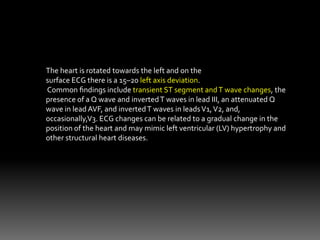
The heart is rotated towards the left and on the
surface ECG there is a 15–20 left axis deviation.
Common findings include transient ST segment andT wave changes, the
presence of a Q wave and invertedT waves in lead III, an attenuated Q
wave in lead AVF, and invertedT waves in leadsV1,V2, and,
occasionally,V3. ECG changes can be related to a gradual change in the
position of the heart and may mimic left ventricular (LV) hypertrophy and
other structural heart diseases.
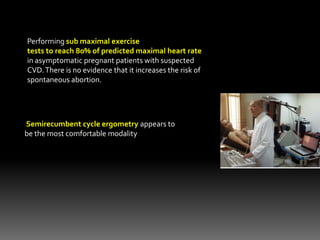
Performing sub maximal exercise
tests to reach 80% of predicted maximal heart rate
in asymptomatic pregnant patients with suspected
CVD.There is no evidence that it increases the risk of
spontaneous abortion.
Semirecumbent cycle ergometry appears to
be the most comfortable modality
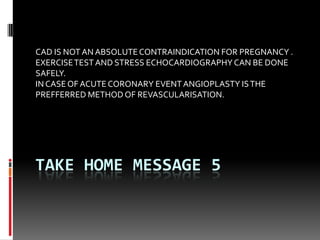
TAKE HOME MESSAGE 5
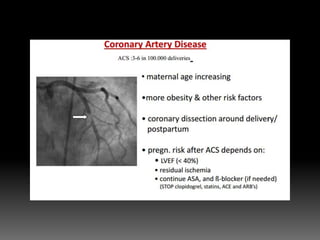
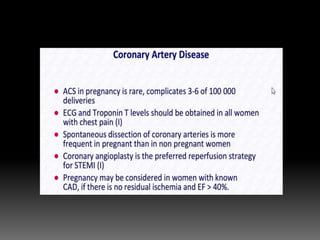
CAD IS NOT AN ABSOLUTECONTRAINDICATION FOR PREGNANCY .
EXERCISETEST AND STRESS ECHOCARDIOGRAPHY CAN BE DONE
SAFELY.
INCASE OF ACUTE CORONARY EVENTANGIOPLASTY ISTHE
PREFFERRED METHOD OF REVASCULARISATION.
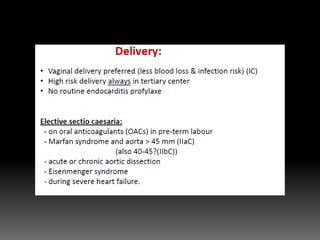
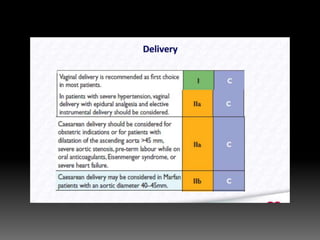
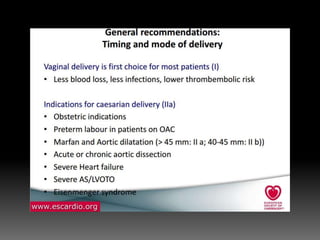
In general, caesarean delivery is reserved for
obstetric indications.
TAKE HOME MESSAGE 6
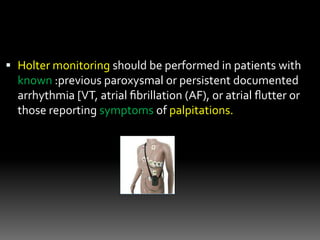
 Holter monitoring should be performed in patients with
known :previous paroxysmal or persistent documented
arrhythmia [VT, atrial fibrillation (AF), or atrial flutter or
those reporting symptoms of palpitations.
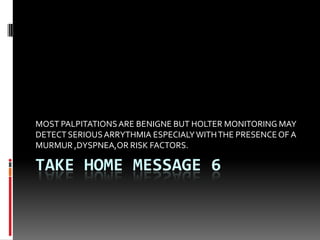
TAKE HOME MESSAGE 6
MOST PALPITATIONSARE BENIGNE BUT HOLTER MONITORING MAY
DETECT SERIOUSARRYTHMIA ESPECIALYWITHTHE PRESENCEOF A
MURMUR ,DYSPNEA,OR RISK FACTORS.
Pregnancy and heart diseases

Pregnancy and heart diseases

  • 1.
    Pregnancy and Heart diseases Dr.Safoin Kadi  Consultant cardiologist at Al-Hayat medical center.  D.I.S. Cardiovascular diseases.  D.U. Echocardiography.  D.U.Vascular echodoppler.  D.U. Congenital and pediatric cardiology.
  • 9.
  • 11.
    Many disorders canbe identified by taking a careful personal and family history, particularly D.V.T , cardiomyopathies, the Marfan syndrome, congenital heart disease, juvenile sudden death, long QT syndrome, and catecholaminergic ventricular tachycardia (VT) or Brugada syndrome. It is important to ask specifically about possible sudden deaths in the family. The assessment of dyspnoea is important for diagnosis and prognosis of valve lesions and for heart failure. A thorough physical examination , including auscultation for new murmurs, changes in murmurs, and looking for signs of heart failure. When dyspnoea occurs during pregnancy or when a new pathological murmer is heard, echocardiography is indicated. It is crucial to measure the BP, in left lateral recumbency using a standardized method, and to look for proteinuria.
  • 21.
  • 22.
  • 23.
    VARICES  30-40% OFPREGNANTWOMEN .  We have to determine the type the severity and the need for treatment or preventive measures for each one of them.
  • 24.
    Pregnancy induces aseries of haemostatic changes, with an increase in concentration of coagulation factors, fibrinogen, and platelet adhesiveness, as well as diminished fibrinolysis, which lead to hypercoagulability and an increased risk of thrombo-embolic events. In addition, obstruction to venous return by the enlarging uterus causes stasis and a further rise in risk of thrombo-embolism. THROMBO EMBOLIC RISK
  • 28.
    Take home message1  CONSIDER LMWH OR COPRESSIVE STOCKING
  • 29.
  • 37.
    women with ahistory of preeclampsia should receive low-dose aspirin started before 16 weeks, NICE guidelines say it should be started around 12 weeks. That is the first point and the most important one. The dosage should be at least 75 mg, and if possible, we should probably try to evaluate aspirin resistance.  the effect of aspirin before conception: Most experts believe that it is not effective
  • 38.
    NICE recommends :Aspirin 75 mg be given to women with 2 or more of these risk factors: - First pregnancy -Age older than 40 years - Pregnancy interval greater than 10 years -Body mass index (BMI) 35 kg/m2 or greater at first visit, -Family history of preeclampsia, or -Multiple pregnancy. Before 16 weeks of pregnancy
  • 39.
    Placentation :is typicallycompleted by 20-22 weeks at the latest.That means that women could potentially take aspirin only for about 10 weeks, but no study has evaluated stopping aspirin as early as that. Some authors and experts have concluded from many trials that aspirin should be continued up to delivery, but if we use dosages greater than 100 mg, women should certainly stop aspirin therapy earlier. Others have proposed, and I agree, that we should probably stop aspirin around 34 weeks until new studies have evaluated the effect of stopping aspirin therapy earlier or later than that.
  • 43.
    TAKE HOME MESSAGE2 ASSESSEMENTOF RISK OF PREECLAMPSIA FOR EVERY PATIENT IF MORETHAN 2 RISK FACTORS GIVEASPIRIN BEGIN BEFOR 16WEEKSOF PREGNANCY (NOT BEFOR PREGNANCY) STOPATWEEK 34
  • 44.
  • 50.
    TAKE HOME MESSAGE3 DYSPNEAASSESSEMENT IS FOLLOWED BY BNPAND ECHOCARDIOGRAPHY.
  • 60.
    TAKE HOME MESSAGE4 VALVULAR HEART DISEASES HAVE AWIDE RANGE OF RISKWHICH SHOULD BE EVALUATED BEFOR PREGNANCY . TEAMWORK IS ESSENTIAL WITHTHE CARDIOLOGIST. WARFARINE CAN BE GIVEN INTHE FIRSTTRIMESTER IF DOSE IS LESS THAN 5 MG AND INTHE SECOND ANDTHIRDTRIMESTRE IN ANY DOSE.
  • 64.
    The heart isrotated towards the left and on the surface ECG there is a 15–20 left axis deviation. Common findings include transient ST segment andT wave changes, the presence of a Q wave and invertedT waves in lead III, an attenuated Q wave in lead AVF, and invertedT waves in leadsV1,V2, and, occasionally,V3. ECG changes can be related to a gradual change in the position of the heart and may mimic left ventricular (LV) hypertrophy and other structural heart diseases.
  • 65.
    Performing sub maximalexercise tests to reach 80% of predicted maximal heart rate in asymptomatic pregnant patients with suspected CVD.There is no evidence that it increases the risk of spontaneous abortion. Semirecumbent cycle ergometry appears to be the most comfortable modality
  • 66.
    TAKE HOME MESSAGE5 CAD IS NOT AN ABSOLUTECONTRAINDICATION FOR PREGNANCY . EXERCISETEST AND STRESS ECHOCARDIOGRAPHY CAN BE DONE SAFELY. INCASE OF ACUTE CORONARY EVENTANGIOPLASTY ISTHE PREFFERRED METHOD OF REVASCULARISATION.
  • 70.
    In general, caesareandelivery is reserved for obstetric indications. TAKE HOME MESSAGE 6
  • 72.
     Holter monitoringshould be performed in patients with known :previous paroxysmal or persistent documented arrhythmia [VT, atrial fibrillation (AF), or atrial flutter or those reporting symptoms of palpitations.
  • 76.
    TAKE HOME MESSAGE6 MOST PALPITATIONSARE BENIGNE BUT HOLTER MONITORING MAY DETECT SERIOUSARRYTHMIA ESPECIALYWITHTHE PRESENCEOF A MURMUR ,DYSPNEA,OR RISK FACTORS.